Polyurethane Wet Lamination Interfacial Shear Decay under Cyclic Temperature and Humidity Exposure
Cyclic heat and humidity drive moisture plasticization and hydrolytic ester cleavage in wet-laminated polyurethane, causing progressive interfacial shear failure.
Bond
Applying a wet polyurethane dispersion or solvent-based precursor to a flexible substrate sets off competing processes: surface wetting, solvent evaporation, substrate penetration, and chemical crosslinking. In wet lamination ~ where at least one porous substrate such as paperboard or permeable film allows carrier liquids to escape ~ the adhesive establishes contact through liquid flow. Spreading depends directly on the surface energy difference between adhesive and substrate.
Achieving complete contact across microscopic surface asperities requires the adhesive’s surface tension to sit below the substrate’s critical surface energy. Unmodified polyethylene terephthalate films typically show surface energies around 42 mN/m, while corona-treated polyolefins reach 38 to 44 mN/m. Liquid polyurethane formulations engineered for wet application operate between 30 and 35 mN/m, allowing rapid wetting over treated surfaces.
Primary chemical bonding and secondary physical attraction develop together as the wet film cures into a solid matrix. Terminal free isocyanate groups in the prepolymers react with active hydrogen donors on the substrate. Cellulosic paperboard, for instance, offers abundant hydroxyl groups that form covalent urethane linkages.
Simultaneously, secondary forces ~ dipole-dipole attraction, London dispersion forces, and hydrogen bonding ~ form between carbamate groups in the polyurethane backbone and polar sites on the substrate. These physical interactions build green strength before the solvent fully evaporates, while ultimate mechanical strength depends on crosslinking through the bulk polymer and across the narrow interface.
Interfacial Mechanics at the Wet Phase Boundary
Adhesion across the laminate boundary develops through three distinct mechanical zones. The central bulk layer exhibits isotropic properties governed by polyol architecture and hard-segment concentration. Flanking this core are two gradient transition zones where polymer chains interact physically and chemically with each substrate.
Trapped solvent or moisture inside these narrow regions compromises structural integrity. Applied with smooth or micro-gravure cylinders, liquid polyurethane yields dry coat weights from 1.5 g/m² for lightweight foil laminates up to 4.5 g/m² for heavy-duty barrier pouches.
When liquid adhesive penetrates paperboard fibers, mechanical interlocking occurs as the polymer solidifies inside surface pores. Non-porous films like biaxially oriented polypropylene depend almost entirely on polar chemical affinity and anchor patterns created by surface treatment. Poor treatment or incomplete drying leaves unreacted functional groups exposed at the interface, while microscopic voids from evaporated solvent create localized stress concentrators under load.
Evaluating wet lamination setups across film substrates shows that surface tension matching remains essential. Corona treatment degrades over time during storage, eventually dropping film surface energy below the threshold for complete wetting. Higher coat weights cannot compensate for poor surface energy matching; thicker adhesive layers merely lengthen the diffusion path for carrier liquids, raising the risk of solvent entrapment.
Standard gravure application of a two-component aliphatic polyurethane at 3.2 g/m² dry coat weight yields an initial room-temperature lap shear strength of 4.8 MPa after seventy-two hours of cure at 23°C and 50 percent relative humidity.
Crosslink Network Formation and Initial Green Strength
Polyurethane networks gain structural rigidity through phase-separated hard and soft segments. Hard segments ~ built from reacted diisocyanates such as monomeric diphenylmethane diisocyanate or toluene diisocyanate and short-chain extenders ~ aggregate through hydrogen bonding into crystalline or paracrystalline domains that act as physical crosslinks. Soft segments of long-chain polyether, polyester, or polycarbonate polyols provide flexibility and recovery.
Their balance governs the dynamic shear modulus of the cured film.
The rate of green strength development determines viable converting line speeds in wet lamination. Early resistance to delamination depends on solvent evaporation rate, polymer molecular weight, and initial phase separation. In two-component systems, reactions between polyol hydroxyls and polyisocyanate groups build three-dimensional networks over several days.
Primary conversion reaches 80 percent within twenty-four hours, though full mechanical strength requires extended curing in hot rooms held at 40°C to 50°C.
Uncured polyurethane retains a low glass transition temperature and high chain mobility, leaving the bond susceptible to creep under web tension. Stresses from handling and rewinding accumulate in the wet adhesive layer. If web tension exceeds the immediate green shear strength, micro-delamination sets in before crosslinking finishes.
- Interfacial Micro-Voiding manifests as microscopic air or solvent bubbles trapped at the substrate boundary during rapid drying, weakening anchor sites.
- Substrate Crown Depressions occur when paperboard density variations cause uneven adhesive absorption, leaving areas with deficient coat weight.
- Corona Decay Boundary Failure results from applying polar adhesives onto polyolefin film whose surface treatment has dropped below 38 mN/m during extended storage.
- Incomplete Phase Separation arises when improper thermal curing prevents hard segments from segregating into domains, leaving a soft polymer layer with low shear modulus.
Conversion efficiency hinges on maintaining stoichiometric balance between functional groups. Excess monomeric isocyanate increases moisture-curing potential but forms brittle biuret and allophanate structures on exposure to atmospheric water. Deficient isocyanate leaves unreacted polyol, permanently lowering crosslink density and elastic modulus.
Off-spec adhesive mixes frequently fail field aging despite passing initial off-line peel tests, with interfacial debonding stemming from improper corona treatment, residual printing ink solvents, formulation imbalance, or incomplete crosslinking inside the curing chamber.
Hydrolysis
Moisture entering a cured polyurethane adhesive initiates chemical cleavage of ester linkages in the backbone. Polyester-based polyurethanes offer high mechanical strength, good oil resistance, and clarity, making them common in performance laminates. Atmospheric water vapor diffuses through flexible films and dissolves into the amorphous soft-segment phase.
The absorbed water attacks ester groups through nucleophilic substitution, cleaving them into carboxylic acid end-groups and alcohol fragments.
Hydrolytic degradation is autocatalytic. The creation of free carboxylic acid groups lowers local pH within the adhesive, accelerating further ester cleavage. Hydrolysis starts slowly but speeds up exponentially as acid concentration rises.
Polyether-based polyurethanes display far greater hydrolytic stability because ether linkages resist water attack, though they have lower tensile strength and poorer resistance to photo-oxidation.
Cleavage Mechanics of Isocyanate Chains
Water molecules entering the adhesive interact directly with urethane, urea, and residual isocyanate groups. Urethane linkages break down under elevated heat and humidity, producing primary amines, carbon dioxide, and polyol fragments. Urea linkages formed during moisture curing resist hydrolysis better than urethanes, but still degrade under continuous thermal and moisture stress.
As crosslinks break, the average molecular weight between crosslinks falls, driving down bulk shear modulus.
Interfacial degradation accelerates when moisture accumulates directly at the substrate-adhesive boundary. Hydrophilic paperboard absorbs ambient humidity and acts as an internal reservoir feeding water into the interface. Covalent bonds between isocyanates and paperboard hydroxyls undergo hydrolytic cleavage, severing the chemical bridges anchoring the adhesive.
Failure modes then shift from cohesive tearing within the paperboard to adhesive debonding at the interface.
In laboratory evaluations, adhesive retention dropped by 42 percent after five hundred cyclic thermal exposures. Water molecules act as plasticizers even before chemical cleavage occurs, disrupting hydrogen bonding between hard segments and increasing free volume and chain mobility. This plasticization depresses the glass transition temperature, softening the matrix and lowering interfacial shear yield strength long before permanent bond scission takes place.
Continuous exposure to 50°C and 90 percent relative humidity depresses the glass transition temperature of polyester-polyurethane laminating adhesives by up to 18°C within 120 hours.
Polyol Architecture and Moisture Resistance
Polyol selection depends on expected operating conditions. Polycaprolactone polyols contain fewer ester groups than standard adipate polyesters, providing better resistance to hydrolysis. Polycarbonate polyols show the highest hydrolytic and thermal stability among hydroxyl-terminated systems due to their stable carbonate structure, though raw material costs limit them to demanding applications.
Hydrophobic dimer fatty acid polyols improve water resistance by sterically shielding ester groups.
Linear aliphatic polyols pack tightly into crystalline domains that slow moisture diffusion. Branched polyols disrupt this packing, creating pathways that accelerate water penetration into the bulk polymer. Dynamic moisture exposure drives repeated swelling and contraction, generating internal volumetric strain across the bond line.
If plasticization drops the glass transition temperature below operating conditions, the adhesive shifts from a glassy or semi-crystalline state to a rubbery state. Shear modulus drops by orders of magnitude. Under continuous shear loads, the rubbery polymer deforms plastically, leading to interfacial creep and delamination.
Hydrolytic degradation in polyurethane adhesives follows several distinct failure mechanisms:
- Autocatalytic Polyester Cleavage begins when absorbed moisture splits ester linkages, generating free carboxylic acid groups that accelerate further chain scission.
- Interfacial Hydrogen Bond Displacement occurs as water molecules displace carbamate-to-substrate hydrogen bonds, breaking physical adhesion before backbone cleavage begins.
- Plasticization-Induced Creep causes rapid elastic modulus loss as water swells the soft-segment matrix, dropping the glass transition temperature below ambient levels.
- Hydrolytic Urethane Scission breaks hard-segment crosslinks under elevated temperature and humidity, converting the cured polymer into low-viscosity oligomeric residue.
Using standard polyester-polyurethanes in packaging destined for humid tropical routes regularly leads to failure. Interfacial shear strength drops quickly once carboxylic acid levels cross the autocatalytic threshold, resulting in delamination, product recalls, and rejected shipments.
| Polymer Chemistry | Polyol Backbone Type | Initial Lap Shear (MPa) | Post-Hydrolysis Shear (MPa) | Glass Transition Shift (°C) |
|---|---|---|---|---|
| 1K Solventborne PU | Standard Adipate Polyester | 5.2 | 1.1 | -22 |
| 2K Waterborne PUD | Aliphatic Polyether | 4.1 | 3.2 | -6 |
| 2K Solventless PU | Polycaprolactone Polyester | 5.8 | 3.9 | -11 |
| 2K Solventborne PU | Aliphatic Polycarbonate | 6.4 | 5.9 | -3 |

Dynamics
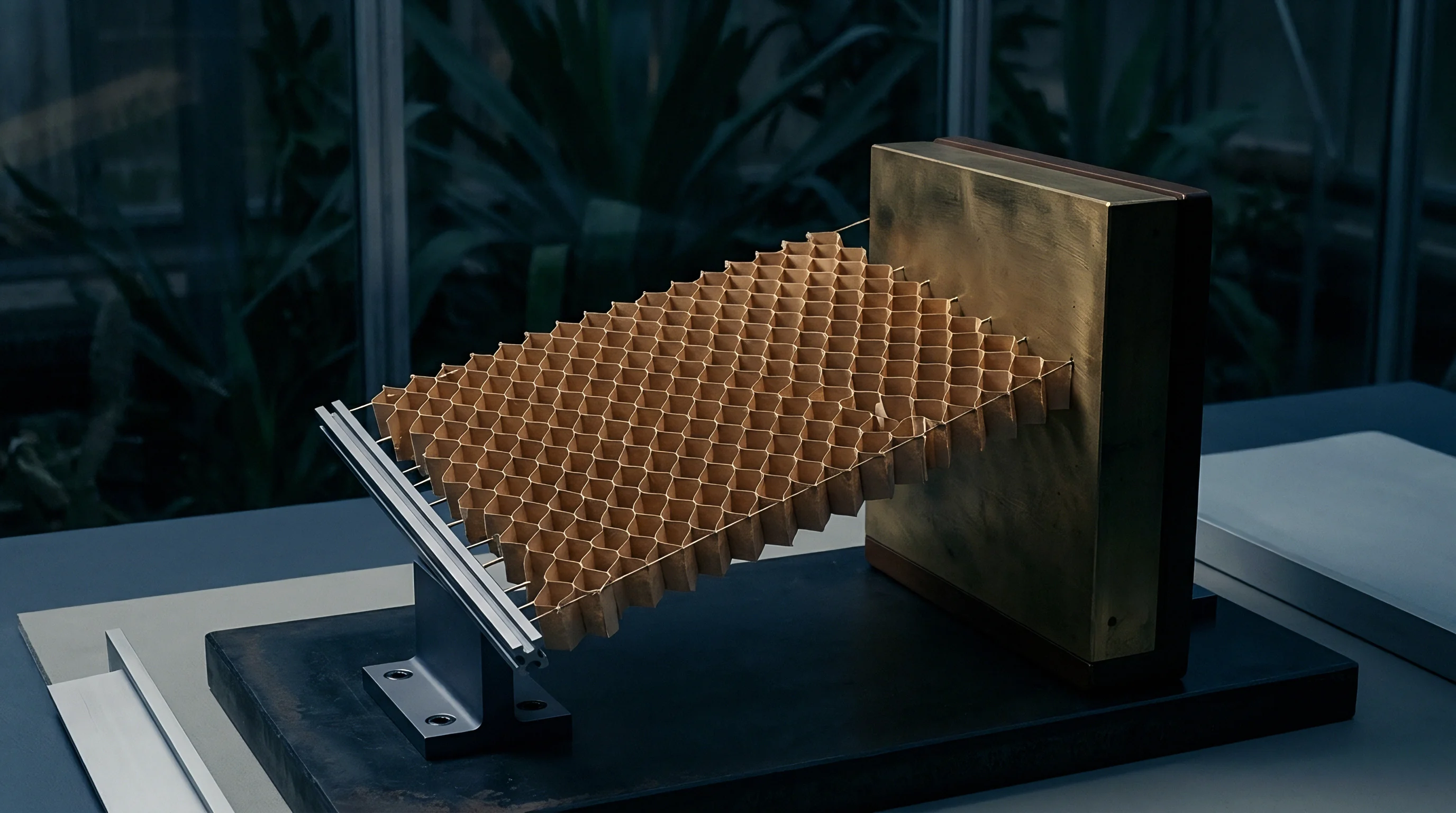
Subjecting a wet-laminated composite to fluctuating temperature and relative humidity generates severe thermo-hygroscopic stresses across the bond line. The substrates and adhesive expand at fundamentally different rates. Paperboard swells significantly with moisture but changes little with temperature.
Flexible films like polyethylene or polypropylene do the opposite ~ they show high thermal expansion but negligible moisture response. Polyurethane adhesives sit between these extremes, combining moderate thermal expansion with high moisture absorption.
Temperature changes trigger immediate differential thermal expansion through the laminate stack. Rapid heating expands the polymer film while the paperboard substrate remains dimensionally stable, concentrating shear stresses at the laminate edges. At the same time, rising humidity drives moisture into the paperboard, causing it to swell laterally and in thickness.
Sandwiched between expanding paperboard and stable film, the adhesive absorbs heavy internal shear forces as it restrains relative movement.
Thermo-Hygroscopic Shear Strain Induction
Environmental cycling compounds mechanical stress through out-of-phase thermal and hygroscopic expansion waves. During thermal ramp-ups at high relative humidity, heat penetrates thin barrier films much faster than moisture diffuses into thick paperboard cores. Film expansion occurs almost instantly, generating immediate shear stress.
As moisture gradually permeates the paperboard, hygroscopic swelling generates opposing shear vectors, subjecting the adhesive layer to continuous reversals in strain direction.
Micro-cracks initiate at stress concentration points during strain reversals. Microscopic defects, surface asperities, and trapped air voids serve as fatigue initiation sites. High humidity depresses the yield strength of the plasticized polyurethane, lowering the energy needed to drive crack growth along the interface.
Over hundreds of cycles, micro-cracks coalesce into macro-delamination fronts that destroy the laminate’s structural integrity.
Residual solvent left in the adhesive layer from high line speeds acts as a non-reactive diluent. Trapped solvent lowers initial crosslink density, increases water solubility, and accelerates thermo-hygroscopic fatigue. Heat drives this solvent toward the interface, forming micro-blisters that weaken boundary adhesion.
Standard contract specifications require laminated barrier packaging to retain a minimum of 2.0 N/15mm peel strength following twenty complete thermal-humidity cycles per IEC 60068-2-38 guidelines.
Does Solvent Trapping Accelerate Interfacial Hydrolysis?
Residual carrier solvents alter moisture diffusion kinetics inside cured polyurethane films. Polar solvents like ethyl acetate, methyl ethyl ketone, or ethanol attract atmospheric moisture through hydrogen bonding. During high-humidity cycling, incoming water aggregates around trapped solvent pockets rather than distributing evenly through the matrix.
These localized spikes in water concentration create aggressive micro-environments for hydrolysis.
Concentrated moisture speeds up ester cleavage in adjacent soft segments, while trapped solvent increases chain mobility and lowers the activation energy for hydrolysis. As polymer chains break down into low-molecular-weight fragments, osmotic pressure builds within solvent pockets. This pressure eventually forces interfacial separation, appearing as micro-bubbles across printed and unprinted areas alike.
Cyclic stress combined with hydrolytic chain scission reduces the interface’s critical energy release rate. Every expansion cycle drives crack tips further across plasticized boundary regions, with damage accumulating irreversibly during storage following environmental exposure.
Several interactive variables govern cyclic stress decay at the interface:
- Differential Expansion Mismatch arises when high-expansion films bonded to moisture-sensitive paperboard generate continuous shear across the adhesive layer.
- Phase-Lagged Stress Vectors develop as rapid heat conduction precedes slow moisture diffusion, continually shifting the direction of interfacial shear strain.
- Osmotic Bubble Micro-Cavitation occurs when trapped polar solvent attracts water to the interface, forcing physical separation under osmotic pressure.
- Viscoelastic Stress Relaxation Loss occurs when plasticized adhesives lose the ability to store elastic strain energy, undergoing permanent viscous deformation under cyclic load.
Thermo-hygroscopic shear decay presents a major hurdle when producing barrier packaging for tropical cold-chain distribution. Moving goods between cold storage (-20°C) and humid loading docks (+35°C, 85% RH) generates dynamic stresses that degrade standard polyurethane formulations within days. The exact point where viscoelastic energy dissipation fails to protect the interface ~ triggering runaway crack propagation across varying paperboard densities ~ remains a key operational variable.
| Conditioning Protocol | Temperature Range (°C) | Humidity Range (% RH) | Initial Lap Shear (MPa) | Shear Retention at 500 Cycles (%) |
|---|---|---|---|---|
| Isothermal Steady State | +23 Constant | 50 Constant | 5.5 | 98.2 |
| Tropical Steady State | +50 Constant | 90 Constant | 5.5 | 64.1 |
| Moderate Thermal Cycling | +10 to +40 | 40 to 80 | 5.5 | 71.5 |
| Extreme Thermo-Hygroscopic | -20 to +60 | 20 to 95 | 5.5 | 28.4 |
| Test methodology executed per modified IEC 60068-2-38 procedure using 200 µm paperboard laminated to 12 µm PET with 3.0 g/m² 2K solventborne PU adhesive. | ||||
Testing
Validating resistance to shear decay requires testing protocols that separate environmental degradation from mechanical testing artifacts. Standard room-temperature peel tests do not predict dynamic aging in actual distribution channels. Modern quality protocols rely on accelerated cyclic aging chambers combined with mechanical testing to establish bond retention curves over time, measuring both bulk property loss and interfacial debonding.
Lap shear testing per modified ISO 4587 measures peak shear stress across rigid and semi-rigid laminates. Standard specimens feature a defined overlap area, typically 12.5 mm by 25.0 mm, loaded in tension at a constant crosshead speed of 50 mm/min. For thin flexible film laminates, T-peel testing per ISO 11339 isolates peel force per unit width, while dynamic mechanical thermal analysis combines flexural and shear stress to map viscoelastic behavior across a temperature range.
Lap Shear and Peel Protocols under Environmental Stress
Conditioning atmospheres must replicate actual transit conditions to yield useful data. Standard ISO 187 conditioning (+23°C, 50% RH) gives baseline values for cured laminates. Accelerated testing subjects samples to alternating thermal and humidity cycles, such as twelve-hour dwells at +50°C and 90 percent relative humidity followed by twelve hours at -10°C without humidity control.
This cycling forces condensed water into microscopic fissures along the bond line.
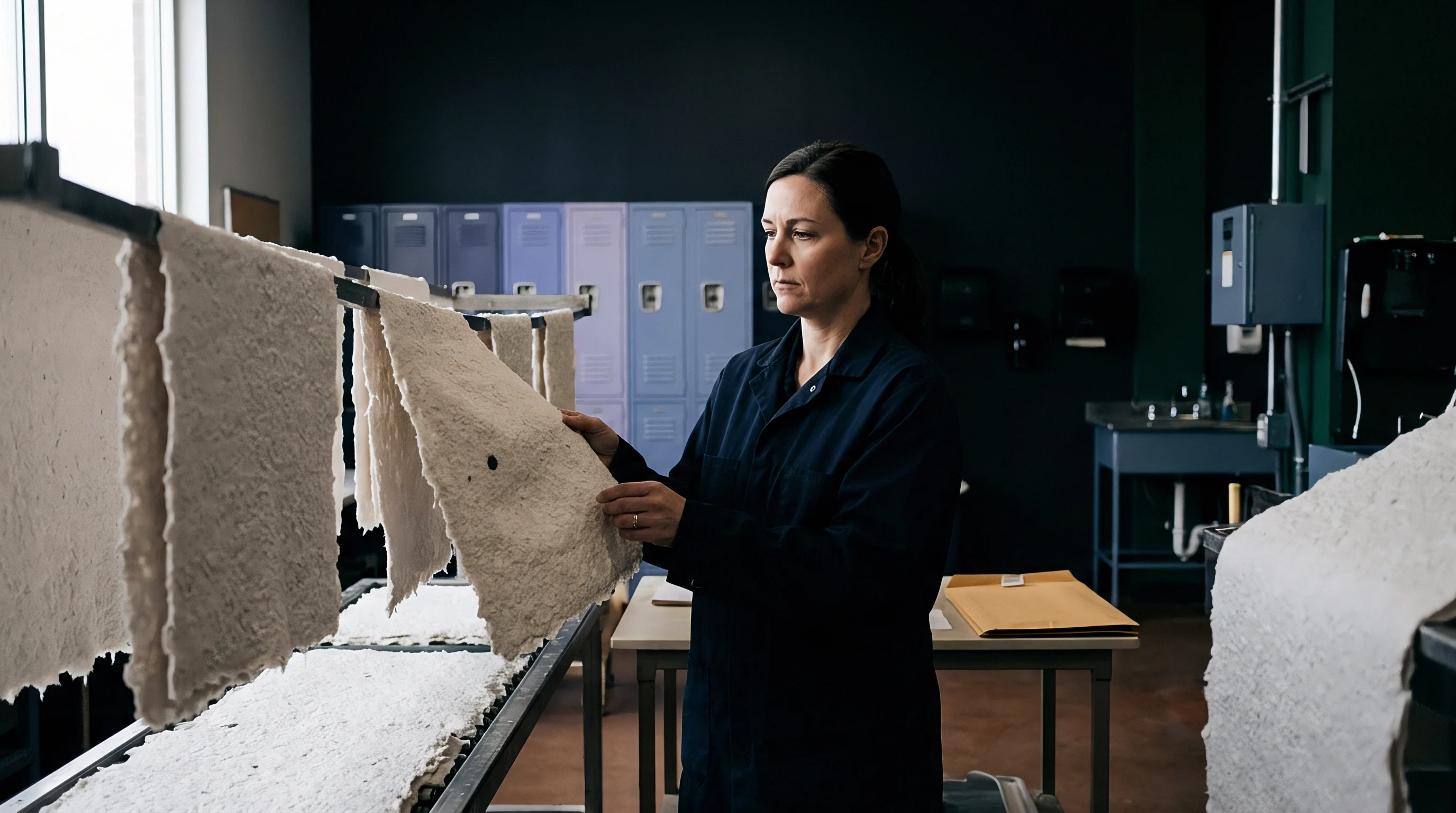
Peel strength profiles track clear shifts in failure modes over time. Fully cured, unaged laminates typically fail cohesively within the paperboard, tearing fibers. As hydrolytic and thermo-hygroscopic decay progress, failure shifts to cohesive cleavage within the adhesive layer.
In advanced stages, complete interfacial separation occurs, and the film peels cleanly from the substrate without pulling fibers.
Measuring peel strength at fifty-cycle intervals generates exponential decay curves. Curve fitting provides characteristic decay constants, allowing engineers to project five-year shelf life integrity from three-week chamber trials.
Dynamic mechanical thermal analysis measures storage modulus (E’), loss modulus (E”), and loss factor tan delta across ramps from -50°C to +150°C. Shifts in the tan delta peak track glass transition changes driven by plasticization or crosslink scission, while a broader peak points to structural heterogeneity from localized hydrolysis.
Quantifying interfacial degradation follows a standard test sequence:
- Cut laminated roll stock into test strips measuring 15 mm by 200 mm parallel and perpendicular to machine grain direction.
- Condition baseline specimens under ISO 187 standard atmosphere (+23°C, 50% RH) for seventy-two hours before initial testing.
- Load aging specimens into environmental chambers configured for automated temperature and relative humidity cycling.
- Extract specimen sets at intervals of 50, 100, 250, and 500 complete environmental cycles.
- Re-condition extracted specimens under ISO 187 conditions for exactly four hours to stabilize thermal effects without driving out absorbed moisture.
- Mount specimens in universal testing instruments fitted with pneumatic grips set to specified clamping pressure.
- Execute T-peel or lap shear loading to failure while recording force-displacement curves.
- Examine failure surfaces under 40x optical magnification to categorize failure modes as fiber tear, cohesive adhesive cleavage, or interfacial debonding.
Lamination specifications that omit post-aging failure mode classifications risk severe quality disputes. High residual force readings often stem from mechanical friction between stiffened film edges rather than true interfacial chemical adhesion. Requiring mandatory post-aging fiber tear minimums resolves quality ambiguities before volume production begins.
Quality assurance contracts typically state environmental qualification standards directly: The laminated substrate shall maintain a minimum of 75 percent of its initial dry lap shear strength and exhibit no less than 80 percent substrate fiber tear failure mode following 250 environmental cycles per IEC 60068-2-38, tested within four hours of chamber removal.
Costing
Selecting adhesives based purely on wet coat weight cost per kilogram creates long-term financial risk. Polycarbonate and polyether polyurethanes carry raw material price premiums of 35 to 80 percent over standard adipate-based polyesters. Yet initial chemical cost represents only a small fraction of landed packaging cost, whereas field delamination ruins printed stock, triggers expensive recalls, and damages brand reputation.
Line speed and scrap rates drive converting economics. Two-component solventborne adhesives demand substantial drying energy; tunnels running at 250 meters per minute consume up to 450 kWh per hour. Waterborne polyurethane dispersions avoid solvent recovery capital costs but require longer drying ovens or lower line speeds due to water’s high enthalpy of vaporization (2260 kJ/kg versus 388 kJ/kg for ethyl acetate).
Waste Arithmetic and Converting Run Yields
Calculating total job cost requires accounting for make-ready waste, hot room curing time, and scrap risks. Off-spec adhesive mixing during set-up creates instant scrap: a wide-web line running at 300 meters per minute generates 1,500 meters of waste during a five-minute registration pass. If hot room temperatures drift, a twenty-ton master roll batch can suffer incomplete crosslinking, forcing a complete re-run.
Yield losses compound fast. Incomplete adhesive cure leads to roll telescoping or blocking during slitting, making converted rolls unrunnable on automated packaging equipment. Downtime claims passed back to converters often exceed the original value of the order.
Creasing and folding paperboard cartons places heavy tensile and shear stress across the interface. Adhesives weakened by hydrolysis lose flexibility and split along score lines during automated box erection, leaving filled cartons unstackable on shipping pallets.
Adhesive selection also affects producer responsibility obligations and recycling fee structures. Solventborne laminations that release residual volatile organic compounds during storage trigger fines in strict jurisdictions. Waterborne systems drop VOC emissions to negligible levels, though they require tighter biocidal monitoring and press wash-down procedures.
| System Parameters | 1K Solventborne Polyester | 2K Waterborne Polyether PUD | 2K Solventless Polycaprolactone |
|---|---|---|---|
| Wet Adhesive Cost (€/kg) | 3.80 | 5.20 | 6.40 |
| Applied Dry Coat Weight (g/m²) | 3.5 | 2.8 | 2.0 |
| Drying Tunnel Energy Cost (€) | 420 | 680 | 0 |
| Hot Room Cure Residence (Hours) | 72 | 24 | 48 |
| Make-Ready & Slitting Waste (%) | 4.2 | 3.5 | 5.8 |
| Field Failure Risk Allowance (%) | 8.5 | 1.2 | 0.8 |
| Total Landed Pass Cost (€/1000m²) | 28.50 | 24.10 | 22.80 |
Contractual Qualification Clauses for Laminated Board
Sourcing practices protect converting operations through tight purchasing specifications. Technical dossiers sent with adhesive shipments require lot-traceability certificates covering NCO/OH stoichiometric ratios, viscosity curves, solids content, and monomeric free isocyanates. Substituting polyol components without prior approval invalidates performance guarantees.
Contractual penalty clauses should tie payment release to verified environmental cycling tests. Holding back 10 percent until five-hundred-hour aging validation passes protects against premature settlement on critical packaging jobs, distributing risk fairly among suppliers, converters, and brand owners.
Specifying high-performance polyether or polycarbonate polyurethanes increases initial chemical costs, but it lowers total operational risk on demanding packaging jobs.