Evaluating Single Sided Plastic Lamination Scrappage against EU EPR Modulated Recyclability Packaging Tariffs
Single-sided plastic lamination causes heavy converting scrap and triggers severe EU EPR eco-modulation tariffs when plastic film mass exceeds 5 percent.
Scrap
Loss of sheet flatness on single-sided plastic laminated folding boxboard creates severe bottlenecks long before a carton reaches the filling line. Pairing a hydrophobic polymer film applied under thermal tension with a hygroscopic cellulosic substrate sets up an unavoidable physical imbalance. When relative humidity fluctuates on the plant floor, the unlaminated reverse side takes on or sheds moisture while the film-covered face stays completely sealed.
This uneven moisture uptake makes the open reverse expand immediately, pulling the sheet into a hard curl toward the plastic layer. Running these sheets through flatbed die-cutters at eight thousand impressions per hour turns even slight curl into misfeeds, gripper register errors, and major jams in the stripping section.
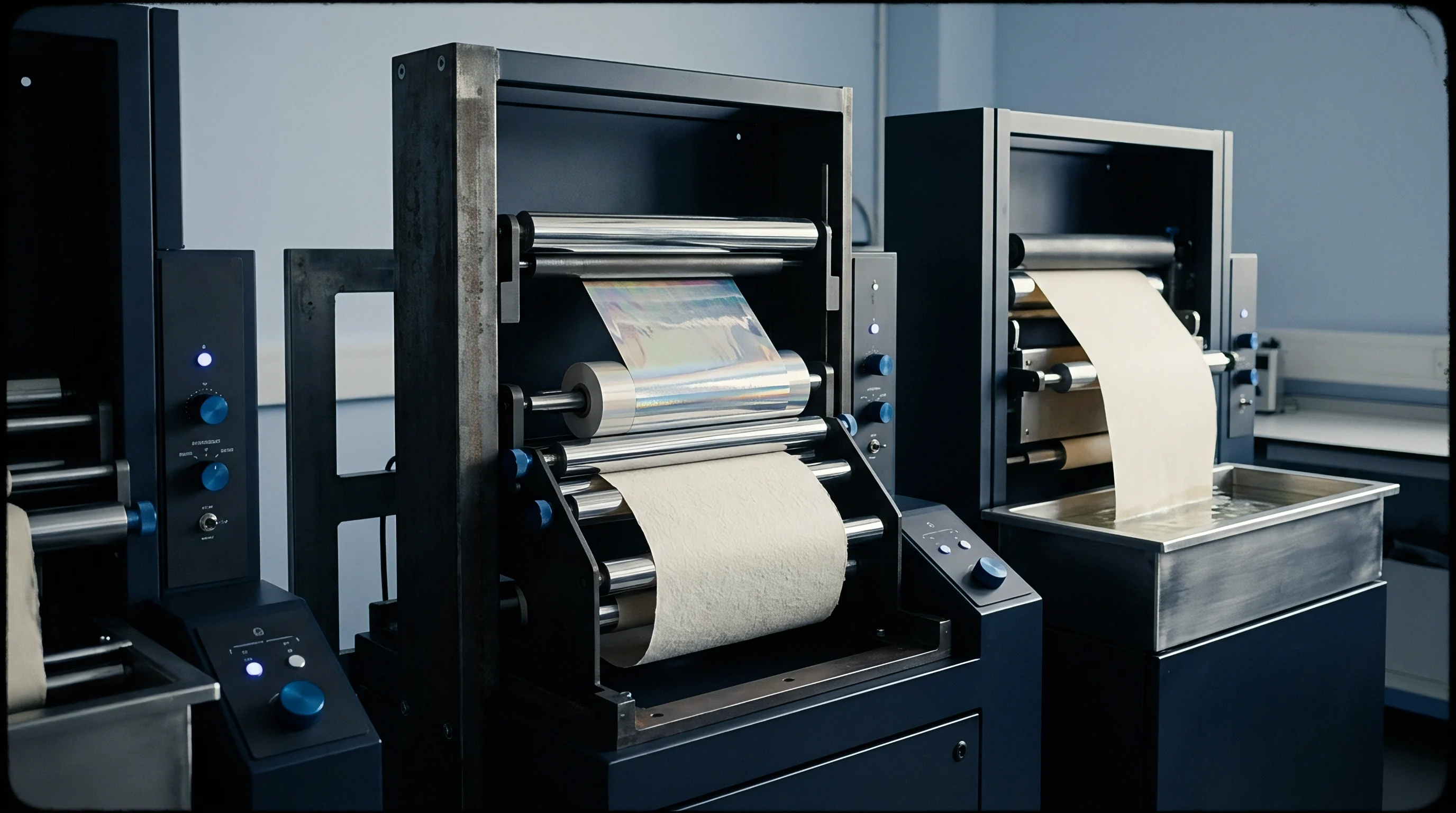
The physical waste generated during sheetfed converting goes well beyond routine make-ready sheets. In thermal lamination, an ethylene-vinyl acetate or polyolefin backing melts between 105°C and 125°C to bond a 12 to 20 micrometer oriented polypropylene film to the board. As the composite cools under tension, the polymer contracts much faster than the underlying paperboard fibers, locking residual mechanical strain into the pile.
The moment mill sheets are die-cut and stripped into individual carton blanks, that trapped tension releases. Without the structural restraint of the full sheet, blank edges curl upward, causing feed jams on folder-gluers and pulling side-seams out of alignment at the sealing stations.
Glue-line failure along the side seam is another chronic source of scrap. Standard water-based emulsion adhesives rely on rapid water penetration into raw paperboard to generate a fiber-tearing bond. With single-sided laminated blanks, folding brings the glue flap of one panel directly against the laminated face of the next.
Standard dispersion glues cannot wet out low-surface-energy polypropylene or polyethylene terephthalate films. Unless the film receives inline corona treatment right before folding to pull its surface tension above 38 millinewtons per meter, the cured adhesive bead stays brittle and snaps under moderate handling or transit stress.
The inclusion of a non-separable polymer layer exceeding five percent of total packaging weight reclassifies the entire carton batch into the lowest recyclability tier under standard European producer responsibility schedules.
Creasing and scoring introduce further mechanical complications on single-sided film stocks. When the scoring rule pushes the board into the female matrix channel, both the outer paper fibers and the bonded film undergo severe tensile strain. Oriented polypropylene stretches well at break, but stiffer chemistries like high-gloss polyethylene terephthalate tend to fracture along the crease line under deep score penetration.
That micro-cracking ruins the visual finish along the package edges and lets moisture reach the raw core fibers. Backing off the rule pressure protects the film, but leaves the crease soft, driving up fold resistance and causing cartons to jam during mechanical erection.

Physical Mechanisms Driving Lamination Waste
Substrate distortion and runnability issues on converting equipment come down to basic mechanical and chemical incompatibilities between film and paperboard. Press crews often adjust settings to chase batch variations, but scrap rates stay elevated whenever physical material limits are breached. The primary failure modes seen during single-sided lamination processing center on specific mechanical and surface interactions:
- Differential Hygroexpansion occurs when atmospheric moisture alters unlaminated fiber dimensions while the plastic barrier holds the opposite face rigid, inducing mechanical curl across the sheet width.
- Thermal Tension Mismatch arises as the cooling polymer film contracts faster than the paperboard core, trapping mechanical stress that relaxes only when individual carton blanks are cut free.
- Dyne Decay at the Glue Line describes the natural loss of surface energy on corona-treated plastic film over time, causing cold-glue bond failure along side-seam carton joints.
- Score Line Film Rupture happens when low-elongation polymer films split under matrix creasing pressure, exposing internal fiber networks and causing visual cracking along carton folds.
Unconditioned GZ board runs can reach a 9.4% running waste rate when moisture swings hit the floor. High-speed die-cutter feeders struggle to vacuum-lift any sheet with a corner-to-corner curl above twelve millimeters. Operators have to pull misfed and damaged sheets off the line by hand, creating sharp scrap spikes during setup and unplanned stops that quickly load the baler with unusable tonnage.
Plant scrap-handling systems are designed around clean, monomaterial paper waste. Unlaminated folding boxboard trim sells at solid recovery prices to recycling mills, offsetting raw substrate costs. Film-bearing scrap disrupts that loop.
Trim extractors shred sheet margins into a matrix of long cellulose fibers mixed with tough plastic ribbons. Mills will reject baled board scrap if plastic content exceeds two percent, meaning converters end up paying waste haulers for disposal rather than selling clean material back into the supply chain.
Storing unlaminated board stacks in humidity-controlled staging areas for forty-eight hours before lamination fails to resolve dimensional instability, as film strain and curl resume immediately once sheets hit uncontrolled ambient air on the die-cutting floor.

Tariff
Extended Producer Responsibility rules across the European Union have moved away from flat weight fees to aggressive eco-modulated rate scales. Under older directives, brand owners simply paid per gross metric ton of paper or board put on the market. Current national frameworks judge packages on actual recyclability, penalizing multi-material structures that interfere with industrial repulping.
Single-sided plastic laminated board sits directly in the crosshairs of these penalties because the bonded film complicates fiber separation in standard water-based pulping operations.
National compliance schemes determine fee structures against standardized recyclability testing protocols. Under organizations like CITEO in France, Duales System Deutschland in Germany, and CONAI in Italy, packaging falls into discrete fee tiers from highly circular to non-recyclable. Monomaterial cartons that yield clean fiber in standard mills earn discounted rates.
Cartons that fail fiber-separation benchmarks carry heavy surcharges, multiplying the net compliance cost per ton of packaging sold into the market.
| PRO Jurisdiction | Substrate & Film Spec | Plastic Mass Share (%) | Base Tariff (€/Tonne) | Modulated Penalty (€/Tonne) | Recyclability Category |
|---|---|---|---|---|---|
| CITEO (France) | 230 g/m² GC2 + 15 µm thermal BOPP | 6.1% | 178.00 | + 356.00 | Non-standard / Disqualified |
| CITEO (France) | 350 g/m² GC1 + 12 µm wet BOPP | 3.6% | 178.00 | 0.00 | Standard Recyclable |
| DSD (Germany) | 250 g/m² SBS + 12 µm thermal PET | 6.7% | 210.00 | + 420.00 | High Penalty Category |
| DSD (Germany) | 300 g/m² GC2 + Dispersion Coating | 0.0% | 210.00 | – 42.00 | Eco-Discount Category |
| CONAI (Italy) | 280 g/m² Kraft + 15 µm thermal BOPP | 5.1% | 160.00 | + 240.00 | Band B2 / Complex Packaging |
Whether a single-sided laminated carton incurs steep fee penalties often comes down to plastic mass share calculations. Across many European schemes, a five percent non-fiber ceiling divides standard paper packaging from composite materials. A 230 gram per square meter folding boxboard laminated with 15 micrometer thermal BOPP carries roughly 13.8 grams of film and 2.5 grams of thermal adhesive per square meter.
That pushes the total plastic content to 6.6 percent, crossing the five percent line and triggering top-tier financial penalties.
Switching to heavier board changes that mass balance substantially without altering the film layer. A 350 gram per square meter board with a thin 12 micrometer wet-laminated polypropylene film brings total plastic down to roughly 3.4 percent of package weight. In certain jurisdictions, staying under five percent keeps the carton in standard paper recycling classes and avoids composite surcharges.
Upcoming European harmonization measures, however, are moving toward strict film separation standards that disregard total plastic percentage thresholds.
Laboratory pulping evaluations operating at 40°C with five percent consistency confirm that thermal adhesive layers soften and pass through 0.15 millimeter screen slots, forming sticky contaminants that ruin recycled paper machine wires.
The European Packaging and Packaging Waste Regulation introduces recyclability rules that override national guidelines. Under these provisions, packaging formats must hit Design for Recycling criteria graded from Grade C up to Grade A. Structures achieving less than sixty percent pulp recovery efficiency during standard testing face outright market bans across member states. Single-sided laminated cartons will have to prove clean mechanical film separation during pulping to avoid being regulated out of the market entirely.
Compliance fees under eco-modulation scale directly with volume. For a brand purchasing ten million cartons a year, choosing lightweight board with a thick thermal film can add hundreds of thousands of Euros in pure compliance overhead. Sourcing teams now look past basic per-thousand unit quotes to calculate the fully loaded landed cost across every target distribution territory.
Overlooking national EPR fee tiers can quickly erase margins on high-volume consumer goods lines.
Commercial contracts between brand owners and converting suppliers require the packaging producer to disclose total polymer coat weights, adhesive chemistry types, and exact film density metrics on every technical specification sheet to enable accurate annual national producer responsibility tax filings.
Fiber
Industrial paperboard repulping uses water, mechanical agitation, and shear forces to hydrate cellulose and break hydrogen bonds, producing an aqueous pulp slurry. With single-sided film-laminated board, the plastic layer blocks water from entering one entire face of the sheet. Pulping forces must work in from the raw edges to peel the board away from the film.
When the adhesive creates a continuous water-resistant barrier, that penetration slows drastically, demanding longer pulping cycles and burning excess energy per ton of recovered fiber.
The adhesive layer largely determines how the film behaves during repulping. Wet lamination systems with water-soluble or alkali-swellable acrylic dispersion adhesives allow the liquor to work into the glueline edge, swelling the matrix and lifting the film off in whole sheets. Thermal systems, using insoluble ethylene-vinyl acetate or ethylene-acrylic acid hot melts, behave differently.
These adhesives do not dissolve or swell in water. Mechanical shear and frictional heat cause the layer to soften, tearing the film into small, flexible shreds instead of separating cleanly.
Those fine film fragments escape coarse primary screens and reach fine-slotted filtration equipment. In board recycling mills, fine screen baskets use slot widths between 0.15 and 0.20 millimeters. Flexible film flakes aligned with the slurry flow can fold and slip straight through.
Once past the screens, they end up in the accept stock, causing visual spots on finished paper or melting against drying cylinders to trigger sheet breaks on paper machines.
Standard laboratory pulping procedures evaluate fiber recovery yields and reject contamination using standardized testing protocols. The following sequence outlines the standard Cepi laboratory testing procedure used to establish whether a single-sided laminated substrate meets European paper recycling criteria:
- Cut the laminated packaging sample into small test squares measuring twenty by twenty millimeters using a clean laboratory shear cutter.
- Condition the prepared test sample in a standard atmospheric environment at 23°C and 50% relative humidity for a minimum of twenty-four hours to achieve moisture equilibrium.
- Weigh exactly fifty grams of oven-dried equivalent conditioned sample and place it into the disintegrator chamber containing two liters of deionized water pre-heated to 40°C.
- Operate the laboratory disintegrator rotor at thirty thousand revolutions, generating mechanical shear to separate paperboard fibers from the non-pulpable plastic lamination film.
- Pour the repulped slurry directly into a Somerville screen fractionation unit equipped with a stainless steel screen plate containing 0.15 millimeter wide slots.
- Run continuous wash water through the Somerville screening chamber at a rate of 8.6 liters per minute for exactly ten minutes to separate clean suspended fibers from coarse rejects.
- Collect the screen reject material remaining on top of the slot plate, including un-pulped fiber flakes, plastic film fragments, and adhesive agglomerates.
- Dry the collected rejects in a ventilated laboratory oven at 105°C until a constant dry mass is achieved, recording the final reject weight to the nearest hundredth of a gram.
- Filter the accepted fiber suspension through a fine quantitative filter paper, dry the resulting fiber pad at 105°C, and calculate the net usable cellulosic fiber yield percentage relative to total initial paperboard mass.
Heat accumulation during thermal nip passes expands board dimensions unevenly across the web, driving register drift on subsequent operations. During repulping trials, thermal laminates consistently produce higher coarse reject masses because un-disintegrated fiber fragments remain tightly bonded to polymer shreds. When large quantities of fiber remain attached to discarded film waste, the net pulping yield falls below acceptable economic thresholds.
Industrial paper mills reject incoming bales of post-consumer packaging if laboratory screening shows pulp yield losses exceeding twenty percent.
| Board Grammage (g/m²) | Film Type & Thickness (µm) | Adhesive Coat Weight (g/m²) | Plastic Mass Share (%) | Usable Fiber Yield (%) | Pulper Screen Reject (%) |
|---|---|---|---|---|---|
| 210 g/m² GC2 | 15 µm thermal BOPP | 3.0 | 7.2% | 74.2% | 25.8% |
| 250 g/m² GC2 | 15 µm thermal BOPP | 3.0 | 6.1% | 79.1% | 20.9% |
| 300 g/m² GC1 | 12 µm wet BOPP | 1.5 | 3.9% | 88.6% | 11.4% |
| 350 g/m² SBS | 12 µm wet BOPP | 1.5 | 3.3% | 91.2% | 8.8% |
| 280 g/m² Kraft | 20 µm thermal PET | 4.0 | 8.8% | 68.5% | 31.5% |
Tacky polymer deposits, known as stickies, are the most damaging side effect of pulping laminated board. Thermal adhesives made with low-molecular-weight tackifiers dissolve partially in warm pulping water. Once the stock cools in chest storage, those dissolved polymers precipitate into sticky microscopic droplets that grab onto cellulose fibers or build up on machine fabrics, causing spots, pinholes, and web breaks.
Mills with advanced de-inking and stock preparation lines rely on flotation cells and heavy-media cleaners to extract lightweight plastics. Running that extra separation machinery drives up power consumption and produces heavy volumes of sludge that must go to landfill or incineration. As a result, mills discount bales containing film-laminated board heavily, undermining the scrap value of post-consumer single-sided laminated cartons.
Substrate fibers situated directly adjacent to the glueline absorb low-viscosity adhesive polymers during thermal lamination, forming an insoluble composite interface layer that fails to rehydrate even after extended mechanical agitation in industrial pulpers.
Sheer
Mechanical demands in carton converting often lead packaging buyers to choose film lamination over plain board or water-based varnishes. Single-sided film provides burst strength, rub resistance, and grease holdout that aqueous coatings struggle to match. On high-speed retail packaging lines for dry food, cosmetics, and pharma, cartons take constant rubbing during transport and cartoning.
Raw board scuffs quickly when packs rub together inside corrugated cases, leaving smudged inks and scuffed brand graphics on retail shelves.
Stiffness and crease retention depend heavily on lamination choices. Lamination with a high-tensile polymer film increases the overall bending stiffness of the folding boxboard. During carton erection, the creased scores act as hinges where the outer film provides tensile strength that keeps the score from splitting or collapsing under top-to-bottom load.
Stripping out the film without increasing board grammage often results in carton bulging and corner failure under pallet stacking loads.
Substrate selection based purely on upfront mill cost routinely fails when converting scrap rates and producer responsibility surcharges are factored into the net unit calculation.
Moisture barrier needs explain why film lamination remains common in chilled and frozen food packaging. Raw paperboard absorbs liquid water and ambient humidity quickly, losing structural integrity as internal fiber bonds soften. A 15 micrometer polypropylene film keeps the water vapor transmission rate below five grams per square meter per day under tropical conditions, keeping cartons rigid in cold display cases.
The core challenge for packaging engineers is finding an alternative barrier that matches that moisture performance without creating repulping problems.
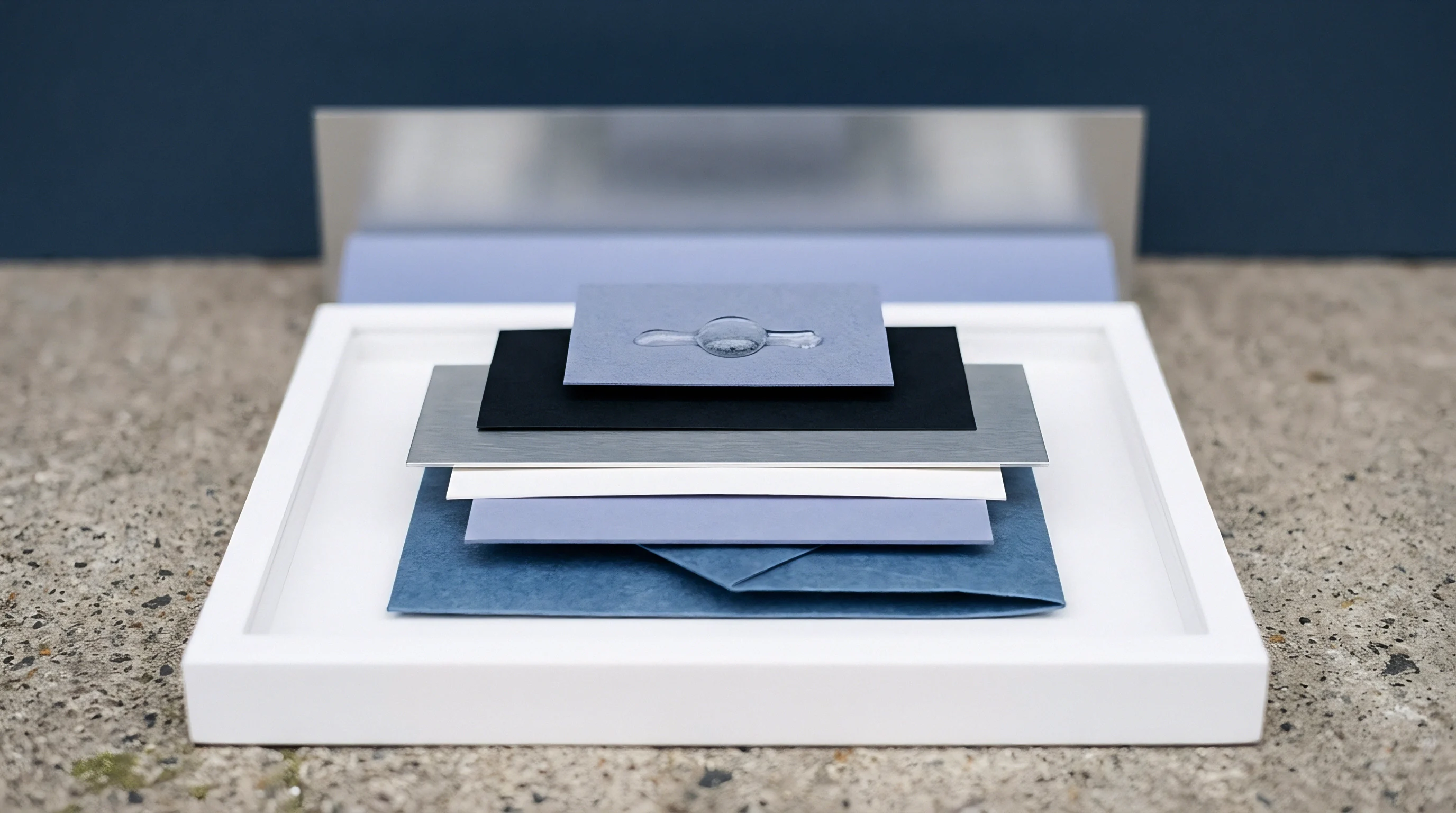
Specification Parameters for Barrier Alternatives
Replacing plastic film lamination requires a thorough physical evaluation of alternative coating chemistries against defined line requirements. Converting engineers must audit alternative substrate specifications to verify that physical performance matches established lamination standards:
- Abox Crease Stiffness Index measures the flexural resistance of creased score lines to ensure automated packaging equipment can erect cartons without corner binding or panel bowing.
- Water Vapor Transmission Rate Threshold quantifies the daily mass of moisture passing through the barrier coating under accelerated temperature and humidity test conditions.
- Recycle Stream Pulper Screen Slot Tolerance defines the maximum allowable dimensions of undisintegrated coating particles capable of passing through 0.15 millimeter laboratory test screens.
- Cobb Water Absorption Rating evaluates the mass of liquid water absorbed by the unprinted barrier surface over a specified contact time frame.
Plant operators inspect every reel for surface tension prior to high-speed folder-gluer runs to avoid post-converting seam separation. Aqueous dispersion coatings have become a major replacement option. Formulated from acrylic, styrene-butadiene, or bio-based resins, dispersions apply as liquids through standard flexo or coating units on press.
Once dried, the particles coalesce into a thin water-resistant barrier. Because coat weights are low, typically three to six grams per square meter, total synthetic content stays comfortably below standard penalty thresholds.
Dispersion barriers repulp far more easily than heavy laminated films. In the hydrapulper, the thin layer breaks down into non-tacky micro-particles that wash away from cellulose fibers without blinding screen baskets. Recovered fiber yield matches that of uncoated board, avoiding EPR multi-material penalties and preserving plant baling revenue.
That said, dispersions generally offer less gloss and can crack along deep crease scores.
Mineral-filled polyolefin extrusion coatings offer another functional path, delivering strong barriers at lower polymer weights. Blending calcium carbonate or talc directly into the polyethylene matrix cuts virgin polymer use and introduces micro-fracture points that help the coating break down in the pulper. Extrusion-coated board runs well on folder-gluers and liquid packaging equipment, but sourcing it requires access to dedicated extrusion lines, giving up the production flexibility of standard sheetfed thermal or wet lamination.
A batch of heat-seal coating that fails to bond with the underlying offset ink layer forces the complete write-off of a production run, causing immediate full-surface film delamination during post-print embossing.


Penalty
Meeting European Extended Producer Responsibility requirements demands solid testing documentation. Auditing bodies and regulatory agencies no longer accept generic self-declarations from suppliers. To secure lower fee tiers or avoid multi-material surcharges, brands must provide certified laboratory dossiers showing their exact packaging structures meet repulpability and fiber yield thresholds.
Audit failures lead to back-dated tax assessments, financial penalties, and public reclassification into non-compliant fee classes.
Dossiers must detail the complete material composition of the carton, itemizing base board weight, dry coat weights for all primers and adhesives, and total film mass. If inks, overprint varnishes, or functional coats use synthetic polymers, their dry weight counts toward the non-fiber total. If synthetic content exceeds five percent of gross weight, the filing requires accredited lab test data verifying fiber yield under standard Cepi conditions.
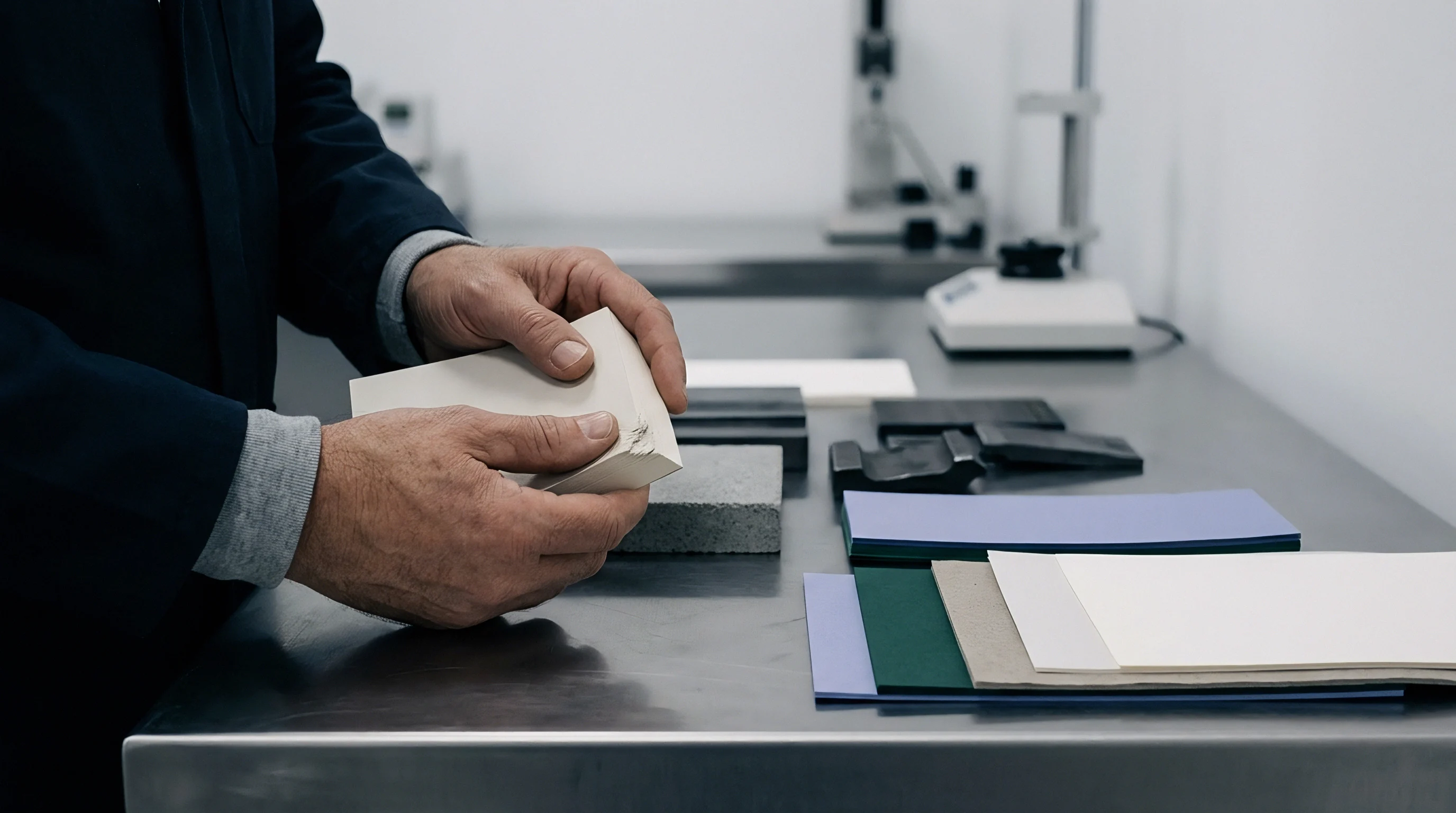
Required Elements in an EPR Compliance Dossier
Brand owners must maintain comprehensive technical documentation for every stock-keeping unit placed on European markets. Packaging compliance dossiers must contain specific testing certificates and analytical verification documents:
- Fourier Transform Infrared Spectroscopy Scan provides definitive chemical identification of polymer film types, adhesive formulations, and surface varnish coatings to verify material purity.
- Grammage Mass Balance Breakdown itemizes the exact dry mass per square meter of base paperboard, primers, adhesives, films, and inks contained within the finished carton structure.
- Laboratory Pulping Certificate presents official test metrics from an accredited third-party testing facility confirming fiber yield percentages and screen reject masses according to EN 13430 guidelines.
- Glueline Separation Protocol Audit documents side-seam adhesive performance, surface energy measurements, and fiber-tear integrity under standard environmental conditioning.
Testing labs use precise analytical methods to confirm material composition. FTIR scans identify base polymer families, distinguishing between polyolefins, polyesters, and bio-based plastics. Mass balance figures are validated using thermogravimetric analysis, pyrolyzing samples in nitrogen to burn off cellulose and measure remaining inorganic fillers and synthetic residues.
Any mismatch between declared figures and pyrolytic results triggers immediate dossier rejection.
Are Polyethylene Terephthalate Laminates Disqualified Under Cepi Guidelines?
Polyethylene terephthalate films run into serious regulatory hurdles under European recycling rules due to high density. Polypropylene has a specific gravity below 1.0 g/cm³ and floats during pulp washing, but PET comes in around 1.38 g/cm³. In centrifugal cleaning and flotation stages at recycling mills, PET flakes sink with the heavy debris rather than floating off for skimming.
These heavy film particles end up in the machine stock chest and create hard defects in the finished paper sheet.
Because of this, European compliance schemes put PET-laminated board into top penalty brackets regardless of film gauge or overall plastic mass share. PET offers excellent gloss, hardness, and thermal resistance for luxury cartons, but it interferes with paperboard recycling streams. Carton specifications aimed at European markets generally need to swap PET film for oriented polypropylene or repulpable dispersion coatings to stay compliant.
The regulatory evolution toward strict design-for-recycling compliance leaves open the operational question of whether regional recycling infrastructure will eventually standardize on advanced dry-separation sorting technologies, or if chemical lamination penalties will permanently eliminate plastic film finishes from the folding carton sector.
Dues
Calculating the true landed cost of single-sided lamination means factoring in raw material costs, plant waste rates, converting throughput, and end-of-life EPR fees together. Looking only at raw substrate and film quotes is deceptive. Thermal single-sided polypropylene often looks cheap on paper, but runs up costs on the converting floor and triggers heavy tax surcharges at distribution.
To see how these costs add up in practice, take a standard job of one hundred thousand folding cartons. The package measures 150 by 100 by 50 millimeters on 250 gram per square meter GC2 folding boxboard. Three finishing setups illustrate the difference: thermal single-sided BOPP, wet single-sided BOPP, and an inline water-based dispersion barrier applied on press.
| Cost Component | Single-Sided Thermal BOPP | Single-Sided Wet BOPP | Water-Based Dispersion Barrier |
|---|---|---|---|
| Raw Paperboard Substrate | € 4,200 | € 4,200 | € 4,200 |
| Lamination / Coating Application Pass | € 1,150 | € 850 | € 380 |
| Material Waste & Scrappage (Press + Die) | € 580 (10.5%) | € 390 (7.2%) | € 180 (3.5%) |
| Folder-Gluer Downtime & Slowdown Penalty | € 320 | € 180 | € 0 |
| Eco-Modulated EPR Tariff (CITEO Basis) | € 980 (Penalty Tier) | € 310 (Standard Tier) | € 0 (Eco-Discount) |
| Trim Waste Baling Recovery Offset | – € 40 (Disposal Cost) | – € 20 (Disposal Cost) | + € 120 (Clean Revenue) |
| Total Net Landed Job Cost | € 7,190 | € 5,910 | € 4,640 |
The comparison makes the cost impact of thermal film clear. Thermal BOPP generates heavy scrap on the die-cutter and folder-gluer because of curl and trapped mechanical tension, adding €580 in lost board and €320 in lost folder-gluer output. With a 15 micrometer film and hot-melt layer bringing total plastic to 6.1 percent, the run incurs a €980 EPR penalty under French CITEO rules, while plant trim turns into an expense at commercial disposal rates.
Wet lamination brings total landed cost down noticeably. A thinner 12 micrometer film paired with an acrylic dispersion adhesive holds total plastic to 3.9 percent. That stays under the five percent penalty threshold, reducing the EPR fee from €980 to €310.
Wet lamination also creates less thermal strain in the substrate, bringing scrap down to 7.2 percent and halving downtime costs on converting machinery.
The inline water-based dispersion barrier turns in the lowest landed cost across the board. Running the coating inline during printing eliminates a separate converting pass, keeping application costs at €380. Press waste sits at a baseline 3.5 percent because the sheets stay flat, maximizing running speeds through die-cutters and gluers.
On the regulatory ledger, the carton qualifies for full eco-discounts, while plant trim scrap is baled and sold back to mills as clean paperboard waste.
Long-term carton procurement has to connect pressroom performance with regulatory tax liability. Specifying single-sided film lamination out of habit leaves brands open to growing financial risks as European countries tighten eco-modulation rules. Shifting to repulpable dispersion coatings removes compliance penalties, brings back scrap baling revenue, and improves running speeds across the entire converting line.