Interfacial Shear Strain and Delamination Dynamics in Thermal Plastic Board Lamination
Interfacial shear strain from thermal mismatch drives delamination; controlling cooling gradients and dyne levels prevents bond failure at crease lines.
Interface
When heated plastic film cools on paperboard, differing thermal expansion coefficients build severe residual stress across the contact zone. Thermal board lamination joins two materials with radically different physical properties using a molten or thermally activated adhesive layer. Solid bleached board has a low axial linear thermal expansion coefficient ~ typically 6 to 12 times 10 to the power of negative six per Kelvin in the machine direction.
Polymer films contract far more aggressively: extruded polypropylene contracts at roughly 100 to 150 times 10 to the power of negative six per Kelvin, and polyethylene terephthalate at 65 to 80 times 10 to the power of negative six per Kelvin. As the laminate exits the heated compression rolls into ambient air, the rigid cellulose matrix restrains the film’s rapid contraction, driving shear strain directly into the bond line.
While cellulose fibers resist thermal expansion, they react sharply to moisture. The lamination heat drives water vapor out of the board, temporarily shrinking the fibers; as the board later reabsorbs ambient moisture, it expands in caliper and cross-machine direction. This hydro-expansion pulls against the initial thermal contraction of the film, setting up localized stress gradients across the interface.
As the heat-activated adhesive cools, its polymer chains undergo viscoelastic stress relaxation. If cooling outpaces that relaxation, elastic strain remains locked at the phase boundary, lowering the external force required to break the bond.
Conditioning at 23°C and 50% relative humidity yields a 180-degree peel strength threshold above 4.5 N/25mm for thermal polypropylene films bonded to bleached board.
The glass transition temperatures of the film and adhesive determine how much shear strain converts into permanent stress during cooling. Once the adhesive drops below its glass transition region under line pressure, polymer mobility collapses and the storage modulus surges from a rubbery plateau near 1 megapascal to a glassy state over 1 gigapascal. That sudden stiffening locks in the differential shrinkage.
Later creasing, bending, or thermal cycling can then easily drive those concentrated stresses past the critical energy release rate of the interface.
Thermal Mismatch and Fiber Network Kinetics
As the composite cools from lamination temperature to room air, the polymer film contracts rapidly against a relatively stable cellulose matrix. Paperboard anisotropy complicates this balance: machine-direction fibers offer high tensile stiffness with little moisture response, whereas cross-machine fibers have a lower modulus and swell significantly. In the cross-machine direction, thermal and hygroscopic expansion happen at the same time, pushing shear strain along the bond line to its peak near the sheet edges where the material is free to move.
Across the web, interfacial shear stress follows a classic shear-lag distribution, concentrating heavily in two edge boundary zones that extend inward based on composite thickness and elastic modulus ratios. The inner board surface goes into compression while the outer film carries a heavy tensile pre-load. On single-sided laminates, this thermal contraction pulls the sheet into a curl toward the film side; double-sided lamination cancels out overall curl, but doubles the internal shear stress inside the board cross-section.
| Film Polymer Type | Expansion Coeff (10⁻⁶/K) | Elastic Modulus (GPa) | Glass Transition (°C) | Surface Energy (mN/m) |
|---|---|---|---|---|
| Biaxial Polypropylene (BOPP) | 120 – 145 | 2.1 – 2.6 | -15 to -10 | 30 – 32 (Untreated) |
| Polyethylene Terephthalate (PET) | 65 – 75 | 3.5 – 4.5 | 68 to 78 | 42 – 44 (Untreated) |
| Oriented Polyamide (Nylon) | 80 – 95 | 2.8 – 3.2 | 45 to 55 | 46 – 48 (Untreated) |
| Polylactic Acid (PLA) | 90 – 110 | 3.0 – 3.8 | 55 to 65 | 38 – 40 (Untreated) |
Viscoelastic Stress Relaxation during Web Cooling
Cooling rates on converting lines determine whether internal thermal shear dissipates or freezes into potential failure points. High-speed laminators run at 60 to 120 meters per minute, leaving less than 50 milliseconds of dwell time beneath the primary nip rolls. Across the composite, the temperature gradient drops from 110°C on the film face to 30°C inside the board in under two seconds.
In that split second, time-temperature superposition governs molecular realignment in the molten adhesive; fast cooling locks the polymer into a brittle, linear-elastic state. Tensile thermal stress scales directly with line speed, expansion mismatch, and cooling rate.
Uncontrolled thermal contraction during lamination can turn an entire high-speed run into scrap if post-process stress relaxation eventually delaminates the film.
Peel
Adhesion failure starts at stress concentrations along sheet edges and score lines. Delamination dynamics describe how discrete interfacial cracks spread under combined mechanical loads and residual thermal strain. The energy release rate, G, governs crack growth along the adhesive-paperboard boundary; once G exceeds the critical fracture toughness, G_c, delamination spreads rapidly.
Residual shear strain lowers the external force needed to start a crack by pre-stressing polymer bonds along the joint.
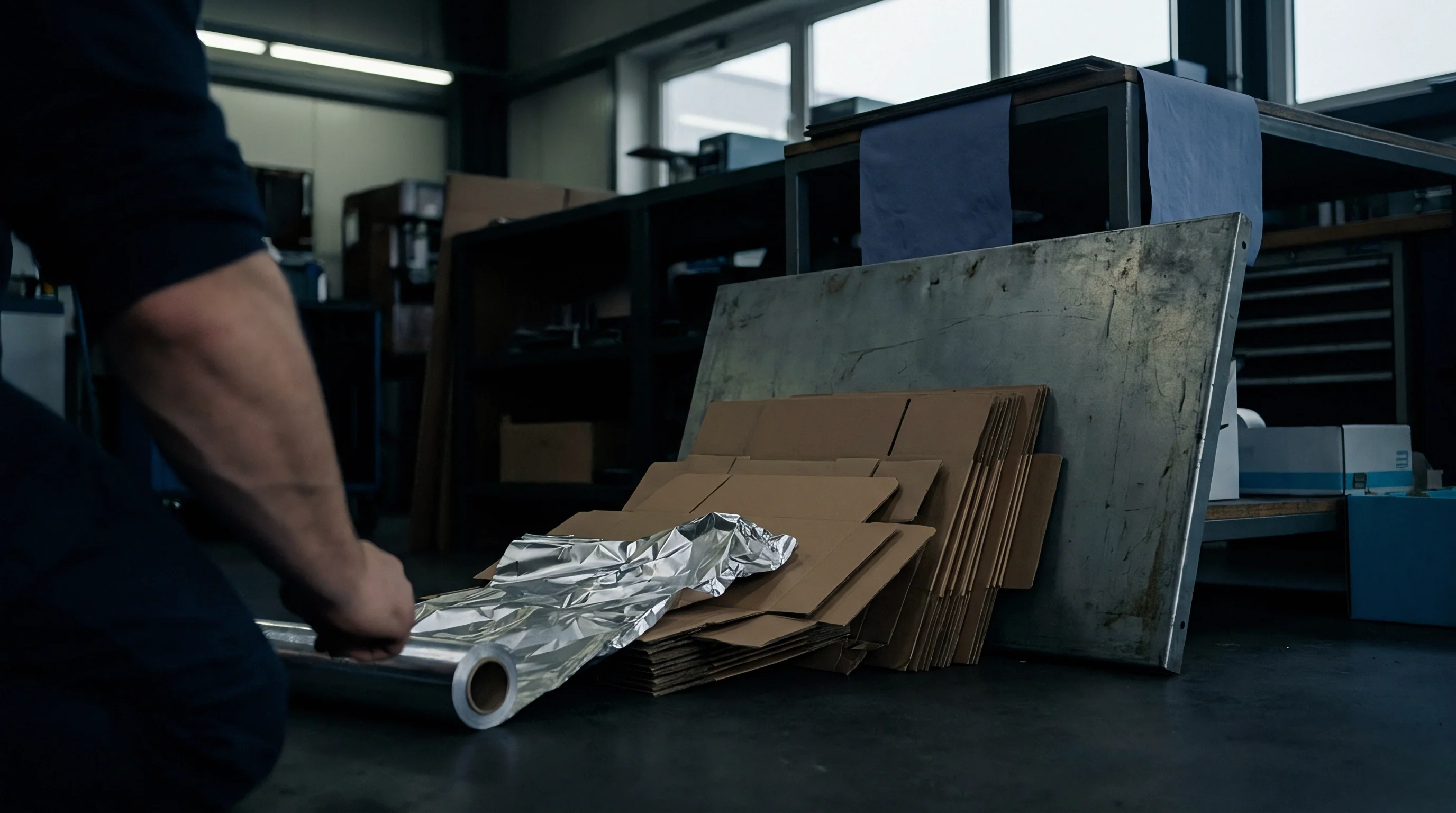
Folding, die-cutting, and creasing submit the laminate to combined Mode I tension and Mode II in-plane shear. Heavy interfacial strain shifts the fracture path away from the bulk adhesive and onto the weaker boundary between the clay coating and the top fiber layer. Depending on stress levels, failure may occur inside the adhesive layer, between adhesive and coating, between coating and board, or deep in the paperboard matrix itself ~ high initial shear strain pushing the outcome away from clean fiber tear toward coating separation.
Fracture Mechanics and Interfacial Crack Tip Propagation
Interfacial cracks grow through micro-void coalescence and localized crazing in the adhesive layer, with shear stress distorting the plastic zone at the crack tip. Thicker films store considerable strain energy per unit area; once a crack opens, that stored elastic energy converts directly to surface energy and drives the split across the sheet. Moisture shifts worsen this fatigue because hydrophilic cellulose swells as it absorbs water, generating outward normal forces against the unyielding film.
Creasing rules crush the internal fiber matrix to form clean fold lines, forcing the plastic film to stretch over the outer bend radius. Tensile stress in the film combines with internal shear strain to pull film off the scores. Film stiffness plays a major role here: polyethylene terephthalate offers high bending resistance, concentrating peel forces at the crease apex, whereas biaxial polypropylene has a lower modulus ~ generating lower bending resistance, but higher vulnerability to localized shear initiation at lower temperatures.
- Tunneling defects appear as narrow, continuous lines of unbonded film running parallel to the machine direction, caused by high transverse thermal contraction.
- Edge lifting occurs along sheet margins where unrelaxed shear strain overcomes weak perimeter adhesion during pallet storage.
- Blister separation manifests as localized circular blisters beneath the film after sudden temperature or humidity changes.
- Crease line shear fracture presents as linear delamination along outer fold lines following converting operations.
Score Line Deformation and Shear Stress Concentration
Creasing pushes paperboard through controlled compression, shearing, and internal ply delamination. The surface film must deform elastically and plastically without separating from the clay coating. Rule width, crease depth, and channel dimensions determine the local geometry; an improper scoring matrix forces the outer film into sharp shear angles, where local strain along the fold shoulder can easily exceed two hundred percent during a ninety-degree carton build.
Internal ply delamination is required for clean board folding without surface cracking. When strong adhesion locks the film to the upper board layer, folding stiffness rises and film tension prevents the board interior from delaminating cleanly. Deformation energy is forced into the top interface instead.
Under high tensile strain, the clay coating cracks; these cracks act as sharp notches that concentrate interfacial shear and peel film along fold edges.
Thicker plastic film gauge shifts the thermal neutral axis outward and accelerates edge separation during folding.
Localized adhesive fracture can stem from line thermal mismatch, improper board moisture content, or atmospheric changes during storage.


Line
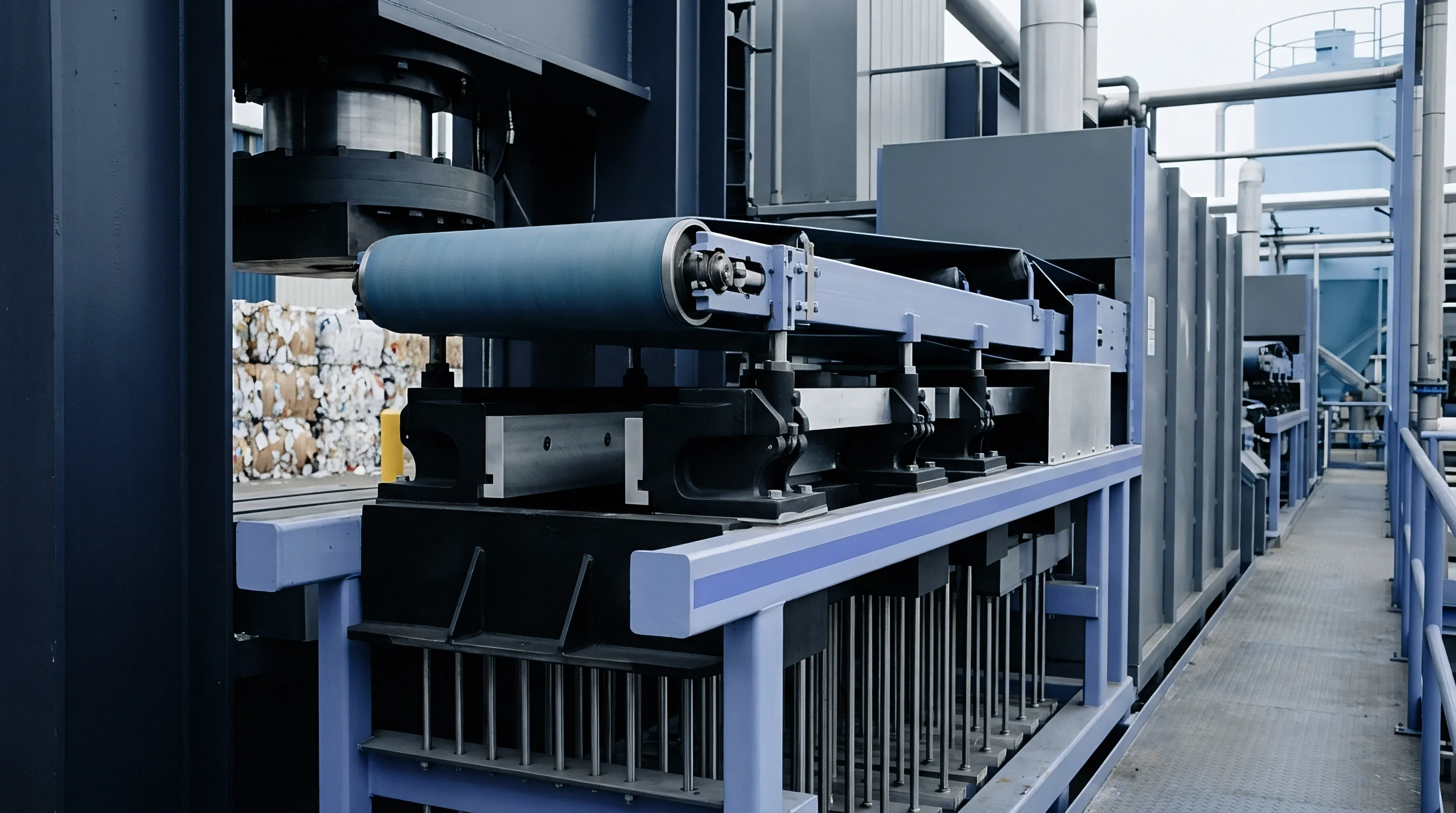
Converting machinery controls bond development through nip force, web tension, and roll temperature. Heated chrome cylinders, rubber nip rolls, chill rolls, and tension control systems together determine how much residual strain remains in the laminate. Main cylinder temperatures must melt the adhesive past its flow point without overheating the board; excessive heat drives out bound moisture, triggering immediate shrinkage and dimensional instability.
Nip pressure drives molten adhesive into the microscopic surface topography of the clay-coated board. Surface roughness ~ measured by Parker Print-Surf or Sheffield methods ~ determines available anchoring sites. Rougher surfaces demand higher adhesive flow and compression to eliminate micro-voids, where trapped air can form stress concentrations during thermal cycling.
Dwell time under heated rolls allows proper wetting, and adjusting line speed changes both dwell time and thermal penetration through the sheet.
Nip Pressure Dynamics and Wetting Dwell Time
Compression inside the heated nip brings the materials into molecular contact. Impression roll hardness ~ ideally 70 to 80 Shore A ~ defines the footprint width and pressure distribution across varying board calipers. Low nip pressure causes incomplete adhesive wetting and weak initial peel strength, while excessive pressure squeezes molten adhesive toward the sheet edges, causing uneven adhesive thickness across the web.
The viscous flow of molten adhesive into paperboard pores follows Washburn capillary penetration principles. Higher roll temperatures lower melt viscosity and speed capillary flow into board voids, but if the web cools too quickly against cold board stock, flow stops before mechanical anchoring is complete. Balancing cylinder heat with board pre-heating optimizes anchoring before chill rolls freeze the adhesive structure.
- Surface energy verification requires testing raw board and film substrates with certified dyne solutions to verify surface tension thresholds before processing.
- Thermal cylinder calibration demands multi-point surface pyrometer checks across the heating roll face to confirm temperature uniformity within two degrees Celsius.
- Nip load stabilization involves setting pneumatic pressure cylinders to produce uniform footprint impressions on pressure-sensitive paper across the full web width.
- Chill roll gradient control sets cooling water supply temperatures to manage web cooling rates and limit interfacial thermal strain.
What Drives Delamination during High Speed Creasing?
High-speed lines cut and crease board at over three hundred sheets per minute, where creasing rule impact lasts under ten milliseconds. At these strain rates, rate-dependent viscoelastic elevation makes plastic films behave stiffly, preventing the adhesive layer from relaxing stress during deformation. These rapid rates concentrate interfacial stress until it exceeds the fracture limit of the clay coating.
Unwind web tension directly controls residual strain in the film. Excessive unwind tension stretches the plastic film elastically before it enters the heated nip; once tension releases past the nip, elastic recovery pulls the paperboard into axial contraction. This elastic recovery combines with thermal contraction to multiply total shear stress in rolls or stacked sheets.
Keeping unwind tension as low as stable web handling allows reduces locked-in elastic shear.
Moisture absorption in the paperboard fiber network creates localized hydro-expansion stresses that force interfacial bond fatigue.
Lower cooling rates help preserve bond strength when high-rigidity polymer films are laminated to heavyweight solid board.
Proof
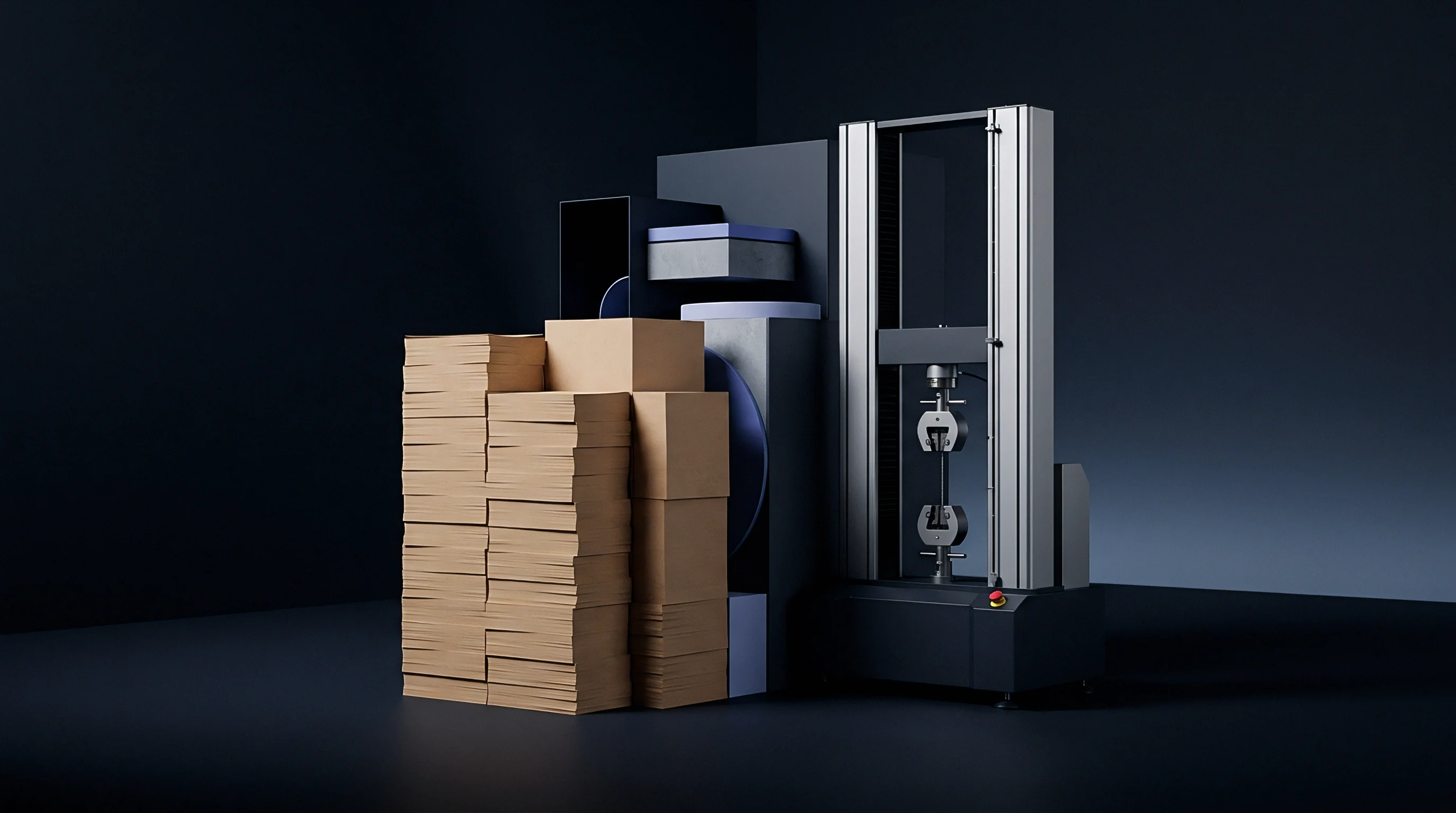
Mechanical testing measures bond stability under controlled environmental conditions, isolating Mode I peel resistance, Mode II shear fatigue, and thermal shock vulnerability. Peel strength relies on fixed-angle test setups: the 180-degree peel test, run per ASTM D903 or FINAT FTM 1, measures the average force needed to strip film from a rigid board backing. Crosshead speeds are set at 300 millimeters per minute in a conditioned environment at 23°C and 50% relative humidity, matching ISO 187 standard conditions.
Measured peel forces combine true interfacial adhesive energy with the plastic deformation energy spent bending the film. High-modulus films take more force to bend through 180 degrees, which inflates peel readings. While ISO 11339 T-peel configurations suit flexible-to-flexible bonds, solid board composites require rigid backing fixtures.
Identifying exact failure planes requires surface analysis using optical microscopy, dyne fluids, or attenuated total reflectance Fourier-transform infrared spectroscopy.
Standardized Peel Testing Protocols and Failure Diagnostics
Standard lab protocols require twenty-four hours of conditioning after lamination before running destructive tests. Bond strength grows over time as polymer chains undergo secondary crystallization and post-wetting anchoring; testing sheets fresh off the laminator yields artificially low peel values that do not reflect final performance. Diagnostic checks distinguish between structural fiber tear, cohesive adhesive failure, clay coating detachment, and clean interfacial separation.
Structural fiber tear shows that bond strength exceeds the board’s internal z-directional tensile strength ~ the ideal outcome for heavy-duty or tamper-evident packaging. Clean separation between adhesive and film points to inadequate surface corona treatment or insufficient heat activation during processing. Clay coating detachment indicates weak coating formulation or deep adhesive penetration that pulls the coating off the fiber web during stress.
| Conditioning Standard | Exposure Duration | Temperature / Humidity | BOPP/SBB Peel (N/25mm) | PET/SBB Peel (N/25mm) |
|---|---|---|---|---|
| ISO 187 Standard Ambient | 24 Hours | 23°C / 50% RH | 4.8 – 5.5 (Fiber Tear) | 3.8 – 4.5 (Fiber Tear) |
| ASTM D2247 Damp Heat | 96 Hours | 40°C / 95% RH | 2.1 – 2.8 (Coating Delam) | 1.5 – 2.2 (Interfacial) |
| ISO 16750-4 Thermal Shock | 10 Cycles | -40°C to +85°C Ambient | 1.8 – 2.4 (Interfacial) | 1.1 – 1.7 (Interfacial) |
| Dry Heat Storage | 7 Days | 60°C / Ambient RH | 3.5 – 4.2 (Fiber Tear) | 2.9 – 3.4 (Coating Delam) |
| Methods Note: Tests conducted on 350 g/m² solid bleached board using 180-degree peel geometry at 300 mm/min crosshead speed. Average values calculated across ten strip specimens per batch condition. | ||||
Environmental Cycling and Thermal Stress Accelerated Aging
Thermal shock testing accelerates interfacial shear fatigue by cycling samples between negative 40°C and positive 85°C in environmental chambers. High temperatures soften the adhesive and increase moisture movement, while sub-zero temperatures drive the plastic film past its glass transition into a brittle elastic state. Repeated expansion and contraction cycles concentrate fatigue along the margins, leading to edge curling, tunneling, or total separation under mild flexure.
Damp heat testing evaluates moisture resistance at 95 percent relative humidity and elevated temperatures, where water migrates through exposed edges or paperboard cross-sections. Moisture breaks down hydrogen bonding between cellulose fibers and clay coating binders, weakening the substrate. Hydrolytically unstable adhesives undergo chain scission in damp heat, permanently destroying the bond and accelerating delamination.
Worked Mechanics of Interfacial Shear Strain Calculation
Calculating residual thermal shear strain requires known material parameters. Consider a 20-micrometer biaxial polypropylene film bonded at 110°C to a 350 g/m² solid bleached board with a 450-micrometer total caliper. The BOPP film has a thermal expansion coefficient of 130 times 10 to the power of negative six per Kelvin, while the paperboard’s machine-direction coefficient is 8 times 10 to the power of negative six per Kelvin.
At a room baseline of 20°C, the cooling delta is 90 Kelvin.
Unrestrained linear thermal strain in the film equals the temperature delta multiplied by its expansion coefficient, yielding a contraction strain of 0.0117 (1.17 percent). Unrestrained strain in the board equals the temperature delta multiplied by its coefficient, yielding 0.00072 (0.072 percent). The interfacial strain mismatch is film strain minus board strain, or 0.01098 (roughly 1.10 percent net strain).
Multiplying this net strain by the BOPP film’s tensile modulus of 2.4 gigapascals produces a theoretical peak tensile stress of 26.3 megapascals in the film upon cooling.
Verification testing demands strict execution control to prevent specimen preparation damage from masking environmental failure modes.
- Condition laminated test sheets at 23°C and 50% relative humidity for 24 hours.
- Cut 25mm wide strip specimens parallel and perpendicular to the board machine direction.
- Manually peel back 25mm of film to establish an initial grip tail.
- Mount paperboard backing to a rigid bed plate using double-sided high-tack tape.
- Clamp the film tail into a universal testing machine crosshead moving at 300mm per minute.
- Record average steady-state peeling force across 100mm of effective strip separation.
Compliance with ISO 11339 evaluation criteria invalidates deliveries where bonded film separates under mechanical tension below specified baseline thresholds.
Under standard supply contracts incorporating ISO 2836 chemical endurance requirements, buyers may reject an entire shipment of laminated board if solvent contact causes interfacial film detachment within thirty seconds.
Ecology
Extended producer responsibility regulations impose heavy penalties on multi-material paper packaging containing non-separable synthetic films. Lamination complicates standard repulping: recyclability testing under Cepi guidelines and PTS methods scores packaging on fiber yield, screen clogging, and plastic separation efficiency. High-performance thermal film forms a tough, continuous layer that resists fragmentation in hydrapulpers.
Intact film fragments can wrap around rotor shafts or pass through screens, contaminating recycled pulp streams. When film fails to peel cleanly during pulping, usable fiber remains stuck to the plastic and ends up in the reject stream. Yield losses over 20 percent trigger severe eco-surcharges or result in non-recyclable classification under European packaging waste rules.
Adhesive formulation governs this separation efficiency: adhesives engineered to soften or dissolve in alkaline pulping water release the film intact, enabling clean screening and high fiber recovery.
Repulping Yield Mechanics and Film Separation Rules
Standard pulping runs at 40°C to 50°C, relying on mechanical shear to break paperboard down into suspended fibers. Plastic film must detach completely from the board within 20 minutes of hydrapulper dwell time; adhesives that maintain high bond strength during pulping carry valuable fiber into waste streams, whereas those formulated with alkali-soluble functional groups or thermal wash-off properties lose adhesion and release clean pulp.
Regulatory limits on plastic content govern recyclability classification. Under strict European schemes, non-paper components exceeding 5 percent of package weight disqualify a product from being classed as recyclable paper packaging. A standard 20-micrometer BOPP film on 250 g/m² boxboard adds roughly 7 grams per square meter ~ less than 3 percent of package mass ~ but applying that same film to 180 g/m² board pushes plastic content close to the 5 percent limit.
Modulated EPR fees penalize these higher plastic ratios, adding up to 300 Euros per metric ton in landed packaging costs.
Extended Producer Responsibility and Waste Tariff Structures
Modulated eco-contributions tie lamination engineering decisions directly to end-of-life packaging costs. Grading bodies use letter scales from A to F: Grade A packaging, featuring clean repulpability and low fiber loss, qualifies for baseline EPR fees, while board earning Grade D or lower due to non-separable film incurs maximum penalties. Converting operations switching from permanent film to dispersible barrier coatings avoid these tariffs while maintaining adequate grease and moisture resistance.
Unit pricing must factor in initial material costs, converting runs, make-ready scrap, and EPR fee liabilities. While plastic lamination delivers high gloss, puncture resistance, and rub durability, waste fees can erode margins on mass-market retail packaging. Water-based dispersion coatings lower end-of-life fees, but demand more energy to dry.
Calculating landed cost requires balancing line efficiency against regulatory fee structures across target markets.
Developing chemically modified adhesives that survive thermal lamination while disintegrating during repulping remains an ongoing challenge across the packaging industry.