Capillary Pressure Dynamics and Coating Micro Porosity Structure in Paper
Micro-porous paper coating capillary dimensions govern dynamic ink vehicle filtration rates, ink setting speeds, press energy consumption, and total converted sheet yield.
Void
Paper coatings are packed assemblies of mineral particles, organic polymer binders, and empty space. Together, these components form a network of interconnected capillaries that dictates how liquid moves through the layer. Particle shape, size distribution, and binder placement determine both total void volume and internal channel geometry.
Ground calcium carbonate forms blocky, rhombohedral crystals with irregular spaces between them, whereas precipitated calcium carbonate can be synthesized into needle-like scalenohedral structures that leave an open, highly porous matrix. Kaolin clay consists of flat hexagonal plates that align parallel to the base sheet under blade metering, forming narrow, winding pathways. Balancing these minerals in the wet slurry establishes the dry coating’s geometry long before ink or fountain solution ever reaches the page.
In theory, packing uniform spherical particles yields a minimum void fraction of twenty-six percent in a face-centered cubic arrangement, or forty-seven percent when loosely packed in a simple cubic lattice. Real, polydisperse mineral pigments behave differently because fine particles nest inside the voids between larger ones. This packs the structure tighter and reduces the average diameter of the remaining pathways.
For instance, a formulation based on broad-particle-size ground calcium carbonate with a median diameter of 0.7 micrometres gives a void volume fraction of eighteen to twenty-two percent. Replacing it with a narrow-particle-size precipitated calcium carbonate averaging 0.4 micrometres in diameter increases dry void volume to thirty-two percent, shifting peak capillary frequency from 0.15 micrometres down to 0.04 micrometres.
Pigment Packing Geometry and Pore Size Distribution
How mineral pigments settle determines the range of effective capillary radii throughout the dry film. Kaolin clay particles carry high aspect ratios, typically between ten-to-one and forty-to-one. Under the shear of a coating blade, these platelike particles align parallel to the paper web, creating horizontal pathways that hinder fluid movement into the depth of the sheet.
Rhombohedral calcium carbonate, by contrast, has no preferred orientation; it forms an isotropic structure with fairly uniform pore throat diameters in every direction. Blending clay with calcium carbonate allows the clay plates to span the gaps between rhombohedra, pinching off larger capillary channels and shifting the pore network toward smaller, sub-micrometre sizes.
Pore sizes in paper coatings generally group into three distinct ranges. Micro-pores under 0.05 micrometres exist within pigment aggregates and at contact points between particle faces. Mesopores between 0.05 and 0.5 micrometres form the primary inter-particle voids across the mineral matrix.
Pathways larger than 0.5 micrometres usually represent structural defects, micro-cracks, or voids where the coating meets the raw base fibers. Dense formulations dominated by fine ground calcium carbonate concentrate internal void volume almost exclusively within the mesopore range, shifting liquid absorption from simple bulk flow to high-pressure capillary filtration.
Binder Concentration Gradients during Dewatering
Organic binders like styrene-butadiene latex and soluble starches seldom remain uniformly distributed throughout application and drying. As wet slurry hits the porous paper base, water drains into the raw sheet, carrying small, soluble binder molecules down toward the fiber matrix. When intense infrared and hot-air drying vaporizes water from the top surface, capillary action draws unattached latex particles back toward the upper interface.
This two-way binder migration forms a dense, polymer-rich skin at the surface while leaving a binder-depleted zone near the paper interface.
Coating layer consolidation speed determines whether latex binder remains evenly dispersed or migrates to form an impermeable surface film.
This latex accumulation at the surface fundamentally alters local pore geometry. Styrene-butadiene particles, typically 0.10 to 0.18 micrometres across, deform under drying heat and pressure to seal interstitial voids between mineral grains. A formulation mixed at twelve parts latex per hundred parts pigment by weight can reach local surface concentration levels above twenty parts per hundred if initial evaporation exceeds three kilograms of water per square metre per hour.
When this happens, surface void volume drops dramatically, converting an open capillary network into a dense barrier as latex fills pore throats and blocks access to the underlying mesopores.
Tortuosity Factors across Composite Coating Structures
Fluid transport through a coating depends as much on pathway length as on total void volume. Tortuosity expresses the ratio between the actual distance a liquid travels through the network and the straight-line thickness of the coating layer. A theoretical straight, perpendicular pore has a tortuosity factor of one.
Coatings rich in fine, platelike kaolin clay exhibit tortuosity values from three to five perpendicular to the page. Formulations based strictly on rhombohedral ground calcium carbonate produce lower tortuosity values ~ typically 1.5 to 2.2 ~ due to their open, isotropic structure.
High tortuosity hinders fluid penetration even when total internal void volume stays constant. As liquid navigates a convoluted path, it faces continuous directional changes, drag along channel walls, and repeated transitions through tight pore throats into broader cavities. Adjusting pigment proportions causes sharp, non-linear changes in tortuosity.
For example, introducing fifteen percent fine clay into a pure ground calcium carbonate formulation increases tortuosity by forty percent while reducing total internal space by three percent. Minor additions of platelike minerals can severely restrict flow channels without altering overall coat weight or layer thickness.
The table below details physical structural parameters across distinct pigment formulations measured on twenty-micrometre coating films conditioned under ISO 187 standards at twenty-three degrees Celsius and fifty percent relative humidity.
| Pigment Formulation Ratio | Mean Pore Radius (µm) | Void Volume Fraction (%) | Equivalent Tortuosity Factor | Specific Surface Area (m²/g) |
|---|---|---|---|---|
| 100% Fine Ground Calcium Carbonate | 0.12 | 24.5 | 1.75 | 11.2 |
| 70% GCC / 30% Fine Kaolin Clay | 0.07 | 21.8 | 3.10 | 14.8 |
| 50% GCC / 50% Fine Kaolin Clay | 0.04 | 19.2 | 4.25 | 18.5 |
| 100% Scalenohedral PCC | 0.28 | 34.1 | 1.42 | 8.6 |
| 60% PCC / 40% Coarse GCC | 0.18 | 28.6 | 1.95 | 9.8 |
Defects in the coating matrix also alter how liquids move through the film. When thermal drying is too aggressive, steam generated inside the damp base sheet forces its way out through the drying coating, creating pinholes and micro-cracks. These micro-flaws act as high-permeability bypass channels that skip the fine capillary network altogether.
Fluid entering a micro-crack drains directly toward the substrate driven by pressure differentials, resulting in uneven ink absorption and visible print mottle.
Fiber expansion within the paper base places additional stress on the consolidated coating. When liquid penetrates the coating and wets the underlying cellulose, wood fibers expand by up to twenty percent across their width. This swelling generates shear stress along the coat-base interface.
Formulations with low binder levels can crack under the strain, enlarging surface voids and disrupting capillary uniformity across the sheet.
- Binder Depletion Interface Failure creates a weak structural zone near the base paper, leading to coating pick during multi-colour offset printing.
- Surface Latex Skinning seals outer capillary openings, slowing ink vehicle absorption and extending ink setting times on high-speed presses.
- Micro-Cracking Under Evaporation creates localized high-permeability bypass paths that drive uneven ink drainage and severe back-trap print mottle.
- Pigment Segregation During Metering leaves coarse particles near the surface while fines migrate downward, altering local capillary pressure profiles.
Controlling coating porosity depends on balancing pigment shape, binder proportion, and drying rates. Platelike pigments constrict flow paths and increase tortuosity, while isotropic minerals maintain open channels and reduce resistance. Binder migration remains a critical variable, altering surface void space during drying.
Formulations engineered with narrow particle size distributions help stabilize binder distribution, preserving capillary geometry across the sheet. Ultimately, pigment packing geometry establishes the physical structure that governs fluid intake.
Suction
In the absence of external hydraulic forces, capillary pressure drives liquid movement through micro-porous paper coatings. When fluid meets a hydrophilic porous surface, capillary forces pull it inward. The Young-Laplace equation describes this pressure difference across the meniscus: capillary pressure equals twice the liquid surface tension multiplied by the cosine of the contact angle, divided by the effective capillary radius.
As pore dimensions decrease toward the nanometer scale, capillary pressure rises sharply. For instance, a pore radius of 0.05 micrometres in a fully wetted mineral coating can generate suction pressures above one megapascal, drawing liquid into the matrix without any applied pressure.
Smaller pores exert stronger capillary suction than larger channels, creating steep pressure gradients across the coating. As liquid penetrates a structure with varied pore sizes, high suction in micro-pores pulls fluid away from adjacent mesopores. Liquid drains preferentially into the tightest spaces, leaving larger channels to serve as supply reservoirs or transport paths.
This competitive absorption governs how offset ink oils, flexographic solvents, and inkjet carriers separate from suspended pigments during high-speed printing.
Young Laplace Pressure Spikes in Microscopic Channels
Capillary pressure scales inversely with channel radius. An ink vehicle with a surface tension of thirty millinewtons per metre and a thirty-degree contact angle against a mineral surface creates vastly different suction profiles as pore sizes shrink. At a radius of one micrometre ~ typical for base paper pores ~ capillary pressure is fifty-two kilopascals.
Once the fluid enters the coating layer, where average channel radii drop to 0.05 micrometres, capillary pressure rises to 1.04 megapascals. If pore throats contract further to 0.01 micrometres due to dense latex packing, theoretical capillary suction reaches 5.2 megapascals.
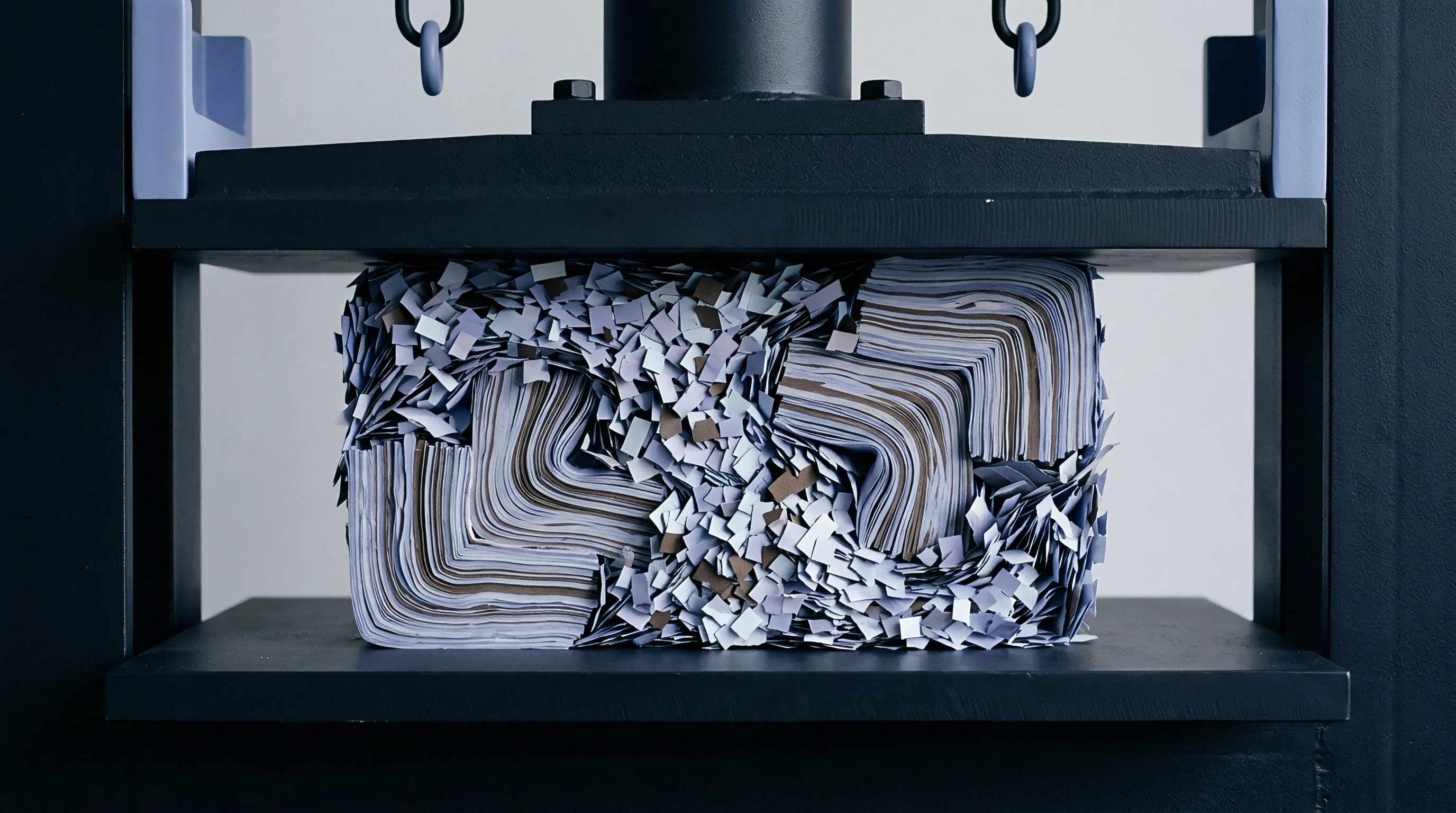
Under mechanical compression, delicate pore structures deform and collapse, altering local flow channels.
High capillary pressure causes liquid mixtures to separate upon contact with the coating. Offset inks consist of pigment particles suspended in mineral oils, vegetable oils, and resin vehicles. When the ink transfers to a micro-porous surface, capillary forces pull the low-viscosity vehicle into sub-micron pores.
Ink pigments ~ typically 0.1 to 0.5 micrometres in size ~ are too large to enter these narrow channels. The coating surface functions as a high-pressure filter, stripping vehicle from the liquid ink while retaining pigment particles on top to form a consolidated filter cake that sets the print.
Lucas Washburn Kinetics during Fast Ink Absorption
The Lucas-Washburn equation models liquid penetration distance over time under capillary action alone. Distance equals the square root of the product of capillary radius, surface tension, contact angle cosine, and time, divided by twice the dynamic viscosity. Because penetration scales with the square root of time, absorption begins rapidly upon contact and decays as viscous resistance accumulates along channel walls.
Dynamic viscosity increases rapidly as solvent drains into the sheet. As capillary forces extract mineral oils from the ink layer, the resin concentration in the surface film spikes, increasing ink viscosity by orders of magnitude within milliseconds.
Dynamic fluid absorption slows drastically as solvent extraction elevates remaining ink vehicle viscosity on the coating surface.
The Lucas-Washburn model assumes rigid, cylindrical channels of uniform radius ~ an idealization that real paper coatings do not match. Actual pore networks consist of tortuous pathways with wide cavities connected by narrow throats. Forcing fluid through a narrow throat requires high entry pressure, but once the fluid front enters a broader cavity, capillary driving force drops while viscous drag remains constant.
This mismatch leads to unsteady, stick-slip movement through the pore network rather than smooth penetration.
Hydrodynamic Pulses at Blade Metering Nips
On high-speed coater lines, external hydraulic forces temporarily dominate capillary pressure during application. Wet slurry applied to the moving web passes under a steel metering blade at speeds from 1,000 to 1,800 metres per minute. The geometry at the blade tip generates a hydrodynamic pressure pulse, spiking up to 2.5 megapascals in less than two milliseconds.
This brief pressure wave forces water deep into the unsaturated paper base before capillary action resumes control.
Blade coating trials at 1,200 metres per minute illustrate this mechanism clearly. High hydrodynamic pressure forces liquid across the coat-base interface, forming a dense filter cake of pigment particles directly against the base fibers. This initial filter cake acts as a flow barrier, altering capillary dewatering rates in the subsequent drying section.
The balance between hydrodynamic injection at the nip and subsequent capillary suction ultimately determines binder distribution through the thickness of the coating.
The table below summarizes dynamic fluid uptake parameters across varying mean channel radii, calculated for a standard offset ink vehicle with a surface tension of 30 mN/m and dynamic viscosity of 85 mPa·s under TAPPI T 519 testing conditions.
| Mean Pore Radius (µm) | Calculated Capillary Pressure (kPa) | Liquid Front Penetration at 10 ms (µm) | Liquid Front Penetration at 100 ms (µm) | Vehicle Filtration Rate (L/m²·s) |
|---|---|---|---|---|
| 0.02 | 2598.0 | 1.24 | 3.91 | 0.012 |
| 0.05 | 1039.2 | 1.96 | 6.19 | 0.038 |
| 0.10 | 519.6 | 2.77 | 8.75 | 0.075 |
| 0.25 | 207.8 | 4.38 | 13.84 | 0.142 |
| 0.50 | 103.9 | 6.19 | 19.57 | 0.210 |
Evaluating dynamic capillary absorption on delivered paper reels requires systematic testing procedures to isolate structural capillary suction from total liquid capacity. The procedure detailed below outlines key evaluation steps on goods-in stock.
- Cut representative paper specimens measuring 100 mm by 100 mm from across the full web width, avoiding outer reel damage zones.
- Condition specimens under ISO 187 standard atmosphere at twenty-three degrees Celsius and fifty percent relative humidity for twenty-four hours prior to liquid contact.
- Mount the conditioned specimen onto the automated liquid absorption test wheel, setting physical contact duration to ten milliseconds.
- Apply a standardized test fluid containing non-polar mineral oil and dyed tracer compounds to the application head at controlled volume.
- Measure transferred fluid volume via high-precision optical reflectance loss across the contact track immediately following physical separation.
- Calculate dynamic absorption rates in millilitres per square metre per square root second to establish baseline capillary intake profiles.
Contact angle hysteresis adds further complexity to modeling fluid uptake. The advancing contact angle of a liquid spreading across dry mineral pigment is significantly higher than the receding angle on a pre-wetted surface. In addition, air trapped within micro-pores reduces effective liquid-solid contact.
As fluid enters dry capillaries at high speed, air pockets become trapped in dead-end voids, compressing under capillary pressure and generating back-pressure that slows uptake below Lucas-Washburn predictions.
Chemical additives in paper coatings modify surface energy and alter dynamic contact angles during fluid uptake. Surfactants used to disperse pigments can lower water surface tension from seventy-two millinewtons per metre down to thirty-five millinewtons per metre. While lower surface tension improves initial wetting, it reduces the capillary pressure driving fluid into the pore structure.
Consequently, minor shifts in surfactant concentration can noticeably alter vehicle absorption rates during high-speed printing.
Ink setting delays on press are frequently attributed to incorrect ink oil viscosity in the formulation supplied by the ink manufacturer.
Bench
Accurately characterizing micro-porosity requires specialized instruments operating under controlled atmospheric conditions. Standard air permeability methods, such as Bendtsen (ISO 5636-3) or Gurley (ISO 5636-5), measure gas flow through the full sheet thickness. They cannot isolate thin coating layers because total flow resistance is dominated by the thicker, porous base substrate.
Evaluating coating pore geometry instead relies on high-pressure liquid intrusion, dynamic contact angle measurement, and high-resolution electron microscopy.
Mercury Intrusion Porosimetry (MIP) per ISO 15901-1 is the standard quantitative method for mapping pore size distributions in mineral coatings. Because mercury forms a non-wetting contact angle of roughly 140 degrees against mineral surfaces, forcing it into fine capillaries requires external hydraulic pressure. The Washburn equation directly relates applied pressure to equivalent capillary diameter.
By stepping pressure from sub-atmospheric conditions up to 414 megapascals, porosimeters can measure pore diameters spanning from 300 micrometres down to 0.003 micrometres.
Mercury Intrusion Porosimetry and Structural Artifacts
Mercury porosimetry data requires careful interpretation due to known physical artifacts. The underlying Washburn model assumes isolated, cylindrical channels. Real coating layers, however, consist of interconnected void networks where larger pore cavities are accessible only via narrow entrance throats.
Mercury cannot fill a large cavity until applied pressure overcomes the threshold needed to force it through the narrowest restriction. Consequently, MIP overstates the volume of small pore throats while underreporting larger internal voids ~ a phenomenon known as the ink-bottle effect.
High hydraulic pressure during intrusion can also compress soft paper substrates. Pressures exceeding 200 megapascals compress cellulose base fibers and deform latex binder networks within the coating layer, artificially skewing measured intrusion volumes at small pore radii.
Mercury intrusion pressures exceeding 200 megapascals compress underlying paper fibres, distorting small pore volume calculations.
Correcting for substrate compression involves running a second intrusion cycle using a non-porous reference standard of equal volume, or performing a blank baseline run to subtract cell expansion and mercury compressibility. Advanced network algorithms analyze depressurization hysteresis curves to differentiate pore throats from larger pore bodies. Because mercury remains trapped in wide cavities when pressure is released, the volume of these ink-bottle structures can be quantified.
Does High Pressure Intrude Micro Void Geometry Accurately?
Assuming a static 140-degree contact angle between mercury and coating materials introduces error into Washburn calculations. Surface energy varies across kaolin, calcium carbonate, and synthetic latex binders, causing actual contact angles to differ. Mercury meets latex binders at angles closer to 130 degrees, whereas pure calcium carbonate yields contact angles near 145 degrees.
Applying a uniform 140-degree assumption across composite formulations can skew calculated pore radii by up to fifteen percent in the mesopore range.
Narrow capillary channels retain solvent tightly under elevated suction pressures.
Dynamic contact angle analysis per ISO 27435 provides complementary insight into wetting and absorption rates. High-speed video cameras capture droplet profile changes from the instant of surface contact. Image analysis software measures droplet volume loss, spreading diameter, and contact angle decay over millisecond intervals.
Comparing water absorption against a non-polar reference fluid like hexadecane allows researchers to separate chemical wetting effects from purely physical capillary suction.
Dynamic Absorption Rates via Short Exposure Methods
Standard Cobb absorptiveness tests per ISO 535 use a sixty-second exposure duration to measure liquid pickup over a one-hundred-square-centimetre area. Sixty seconds is far too long to simulate high-speed printing, where ink sets in under a second. Short-exposure instruments adapt this principle by sweeping paper samples past a liquid metering head at controlled speeds, exposing the coating to fluid for intervals between five and five hundred milliseconds.
The Bristow wheel measures fluid transfer from a liquid-filled head onto a paper strip mounted on a rotating wheel. Plotting transferred volume against the square root of exposure time produces a linear relationship. The slope of this line defines the absorption rate, while the y-intercept represents the roughness index ~ the fluid volume needed to fill surface irregularities before capillary intake into internal voids begins.
The table below summarizes standard analytical testing procedures used to characterize micro-porosity metrics in coated paper substrates, along with their applicable standard conditions and operational measurement ranges.
| Test Method Name | Governing Standard | Primary Operational Metric | Measurement Range | Sample Conditioning Requirements |
|---|---|---|---|---|
| Mercury Intrusion Porosimetry | ISO 15901-1 | Pore size distribution & void volume | 0.003 µm to 300 µm | Vacuum dried at 105 °C for 24 hours |
| Short-Time Liquid Absorption | ISO 535 (Modified) | Dynamic liquid intake rate | 5 ms to 1000 ms exposure | ISO 187 (23 °C, 50% RH) for 24 hours |
| Dynamic Contact Angle Analysis | ISO 27435 | Wetting speed & contact angle decay | 0 to 180 degrees angle | ISO 187 (23 °C, 50% RH) for 24 hours |
| Air Permeance (Sheffield/Gurley) | ISO 5636-5 | Bulk sheet gas permeability | 0.01 µm/Pa·s to 100 µm/Pa·s | ISO 187 (23 °C, 50% RH) for 24 hours |
| X-Ray Micro-Tomography | ASTM E1441 | 3D pore network spatial structure | 0.5 µm spatial resolution | Stable temperature room atmosphere |
Scanning Electron Microscopy (SEM) combined with digital image analysis offers direct visual confirmation of surface pore geometry. Preparing cross-sections using focused ion beam milling avoids mechanical smearing common with razor sectioning. High-resolution backscattered electron images provide distinct atomic contrast among mineral pigments, polymer binders, and empty voids.
Binarization algorithms convert these micrographs into digital void maps, measuring surface porosity and pore throat orientation directly without reliance on pressure calculations.
X-ray micro-computed tomography (micro-CT) utilizing synchrotron radiation permits non-destructive 3D visualization of internal pore networks. Advanced sub-micrometre micro-CT instruments achieve spatial resolutions down to 0.4 micrometres per voxel. Reconstruction software then builds three-dimensional structural models of the dry coating, allowing direct measurement of network connectivity, dead-end pore volume, and spatial tortuosity vectors through the sheet.
Commercial purchase contracts between packaging converters and paper mills specify that coating pore volume values determined by Mercury Intrusion Porosimetry per ISO 15901-1 shall be calculated exclusively across the equivalent pore diameter range from 0.01 to 1.0 micrometres, excluding substrate compression corrections below 0.01 micrometres from official compliance claims.
Yield
Substrate micro-porosity directly drives commercial printing costs, ink consumption, press speeds, and converting margins. Coatings engineered with narrow pore size distributions maximize ink holdout, keeping pigments on the surface while rapidly absorbing the liquid vehicle. Superior ink holdout allows press operators to reach target optical densities with lower ink film weights.
Thinner ink layers dry faster, reduce oven energy demands, and prevent set-off in the delivery pile.
Uncontrolled capillary pressure leads to significant running issues on press. Excessively large pores (r > 0.5,μm) allow entire ink droplets ~ including suspended pigments ~ to drain deep into the coating layer. This absorption dulls print gloss and color density, forcing operators to run heavier ink films.
Conversely, dense surface coatings with negligible void volume (r < 0.02,μm) inhibit vehicle absorption, leaving ink wet on the surface, increasing set-off risk, and forcing press speed reductions of up to thirty percent.
Ink Demand Balances and Optical Density Thresholds
The relationship between ink film weight and optical density determines overall ink mileage. Coatings engineered with tailored mesoporous networks achieve a cyan optical density of 1.40 at an ink weight of 1.0 gram per square metre. Broad, non-uniform pore structures can require up to 1.4 grams per square metre to hit the same density because vehicle and resin sink into large sub-surface voids.
Over a five-million-carton run, that difference adds up to thousands of kilograms of wasted ink.
Calculating net ink savings on a five-million-sheet press run illustrates the scale of this effect. Reducing ink application from 1.35 grams per square metre to 1.05 grams per square metre through coating pore optimization saves 1,500 kilograms of ink per million square metres printed. This reduction lowers raw material costs while cutting VOC emissions from drying systems.

Formulation Costs versus Vehicle Absorption Speeds
Formulating coating slurries involves balancing raw material costs against capillary performance. Fine ground calcium carbonate is economical but yields broad pore size distributions that absorb vehicle slowly. Synthetic scalenohedral precipitated calcium carbonate carries a higher cost per dry tonne, but it builds open, structured matrices with highly uniform capillary diameters.
Blend optimization focuses on adding sufficient structured pigment to ensure fast absorption without pushing formulation costs past commercial limits.
Capillary forces rapidly draw the liquid vehicle into internal pore channels.
Optimizing coating mineral blends balances expensive structured pigments against standard ground calcium carbonate to minimize total sheet cost per thousand prints.
Heatset Web Offset (HSWO) printing imposes strict demands on coating structure because of rapid thermal drying. Web temperatures inside HSWO dryers reach 120 to 150 degrees Celsius in under two seconds, rapidly vaporizing moisture in the base sheet. If the coating layer lacks sufficient interconnected venting paths, trapped steam builds pressure until it ruptures the surface, causing blister defects.
Formulations tailored for HSWO rely on structured PCC pigments to maintain open escape paths that vent steam safely.
Commercial Post Mortem on Printing Press Spoilage
Inconsistent capillary performance leads directly to press downtime, high scrap rates, and rejected orders. For instance, a commercial print plant running folding boxboard encountered recurring back-trap print mottle across multi-color offset runs. Analysis revealed variations in capillary suction across the width of the board, driven by uneven binder migration during infrared drying at the mill.
Surface areas with low void volume delayed vehicle absorption, causing wet ink from earlier printing units to split back onto downstream blanket cylinders.
The financial post-mortem table below outlines comparative operational performance and commercial cost impacts between a standard low-porosity GCC coated folding boxboard substrate and an optimized multi-pigment structured micro-porous substrate across a production run of 100,000 standard sheets (700 mm × 1000 mm, 300 gsm basis weight).
| Operational / Commercial Metric | Standard GCC Coated Stock | Engineered Micro-Porous Stock | Absolute Variance |
|---|---|---|---|
| Black Ink Mileage (g/m²) for 1.80 Density | 1.45 | 1.12 | -0.33 g/m² (-22.7%) |
| Maximum Press Speed (sheets/hour) | 11,500 | 15,000 | +3,500 sh/h (+30.4%) |
| Press Set-Off Spoilage Rate (%) | 2.4 | 0.3 | -2.1% scrap reduction |
| Drying Energy Consumption (kWh/1000 sh) | 18.5 | 14.2 | -4.3 kWh (-23.2%) |
| Pick Defect Downtime (minutes/run) | 45 | 5 | -40 minutes press time |
| Net Landed Substrate Cost (€/tonne) | 1,120 | 1,180 | +€60/tonne (+5.3%) |
| Total Converted Job Cost (€/100,000 sh) | 38,450 | 36,120 | -€2,330 (-6.1% net save) |
Even though the engineered micro-porous substrate carried a 5.3 percent price premium per tonne, gains in ink mileage, higher press speeds, and lower spoilage produced a 6.1 percent net savings per job lot. Investing in coating capillary structure ultimately reduced total converting expenses in the pressroom.
Sourcing engineers specifying coated substrates must incorporate technical parameters into supply contracts to prevent performance drift. Procurement specifications should establish clear boundary limits for micro-porosity metrics alongside standard requirements for grammage, thickness, and optical brightness.
- Capillary Void Volume Fraction Bounds specify minimum total internal void volume measured via mercury intrusion porosimetry to ensure adequate vehicle absorption capacity.
- Modal Pore Size Distribution Limits restrict peak capillary radii to defined micrometre ranges, eliminating broad distribution tails that cause ink drainage or slow absorption.
- Short-Time Water Absorption Thresholds establish dynamic liquid intake rates at short exposure times to prevent set-off and smearing on press.
- Surface Latex Concentration Tolerances cap allowable binder migration gradients through the sheet to preserve pick resistance and maintain open surface pores.
Specifying narrow pore size distributions in RFQ documentation helps eliminate mottle across high-speed packaging lines. Substrate selection dictates absorption kinetics, press running speeds, energy requirements, and scrap rates. Mastering capillary pressure dynamics within micro-porous coating networks turns basic paper specifications into consistent print quality and measurable cost savings.