Capillary Sorption Anomalies under Dynamic Surface Tension Gradients in Recycled Paperboard Substrates
Dynamic surface tension gradients in recycled paperboard cause capillary stalling, uneven ink penetration, and severe converting spoilage.
Wetting
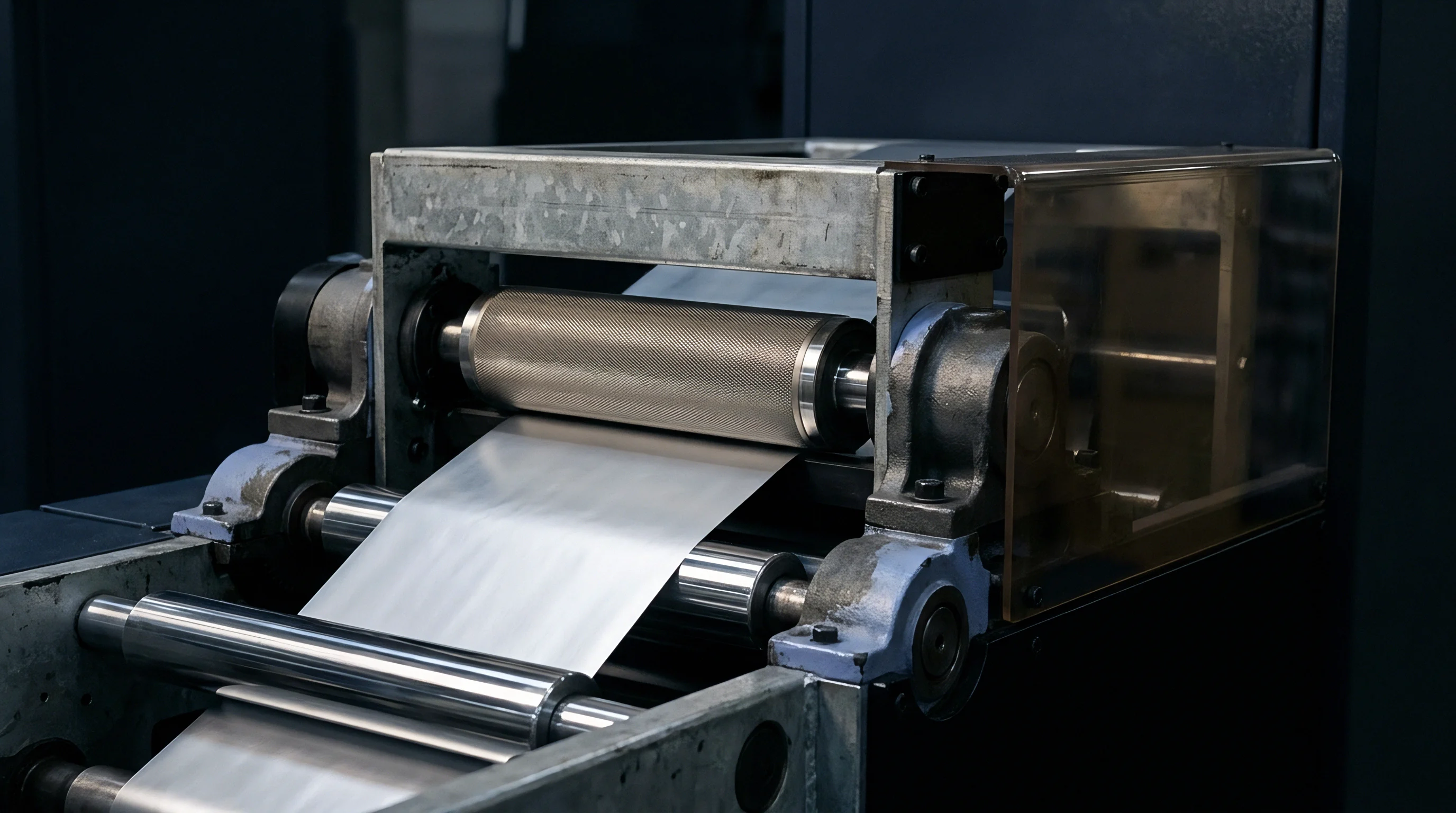
Equilibrium contact angles measured on static goniometers fail to predict fluid transport during high-speed converting. Fluid meets coated recycled paperboard within five to eighty milliseconds on modern presses and coaters. During this window, fluid surface tension remains unstable because surfactant molecules require tens to hundreds of milliseconds to diffuse to the newly formed liquid-air interface.
A liquid with a static surface tension of 32 millinewtons per metre routinely presents a dynamic surface tension exceeding 58 millinewtons per metre during the initial split. Liquid penetration proceeds through the classical Lucas-Washburn relation only when surface tension is constant. When the interface undergoes rapid expansion and shear, the effective capillary driving force drops sharply, driving sorption anomalies across recycled fibrous structures.
The fibrous matrix of recycled paperboard contains localized pockets of hydrophobic sizing, residual deinking surfactants, and variable ash content. Liquid front advancement decelerates or stalls whenever dynamic surface tension spikes above substrate surface energy. As fluid enters unevenly, the resulting imbalance creates differential capillary pressure across adjacent pores, pulling liquid laterally along surface channels rather than allowing uniform z-directional penetration.
Gravure, flexographic, and offset lithographic processes suffer from this imbalance through dot gain variation, pinholing, and trailing-edge ink starvation.
Under ISO 187 conditioning at 23 degrees Celsius and 50 percent relative humidity, dynamic contact angles on coated recycled board increase by 18 degrees when contact time drops from 500 milliseconds to 10 milliseconds.
Papermaking furnish made with recycled fibres introduces severe variations in pore geometry and chemical wettability. Softwood kraft fibres retain relatively smooth tubular profiles, whereas mechanical and recycled fibres present collapsed lumens, high fines contents, and fractured external fibrils. Dynamic surface tension gradients worsen these structural irregularities: fluid with high dynamic tension bypasses smaller capillaries to flood larger voids where capillary resistance is lowest, destabilizing absorption profiles across the sheet plane.
| Substrate Grade | Recycled Content Percentage | Dynamic Tension Absorption (TAPPI T558, 20 ms) | Equilibrium Absorption (ISO 535 Cobb 60) | Surface Energy Differential |
|---|---|---|---|---|
| Coated Recycled Board (CRB) | 100% Recycled | 1.8 g/m² | 28.4 g/m² | 14.2 mN/m |
| White Lined Chipboard (WLC) | 85% Recycled | 2.1 g/m² | 31.2 g/m² | 12.6 mN/m |
| Folding Boxboard (FBB) | 15% Recycled | 3.4 g/m² | 24.1 g/m² | 6.8 mN/m |
| Solid Bleached Board (SBS) | 0% Recycled | 4.2 g/m² | 21.5 g/m² | 3.1 mN/m |
Misjudging early-stage sorption kinetics leaves packaging converters vulnerable to pervasive print mottle and adhesive failure across automated gluing lines.
Surfactants
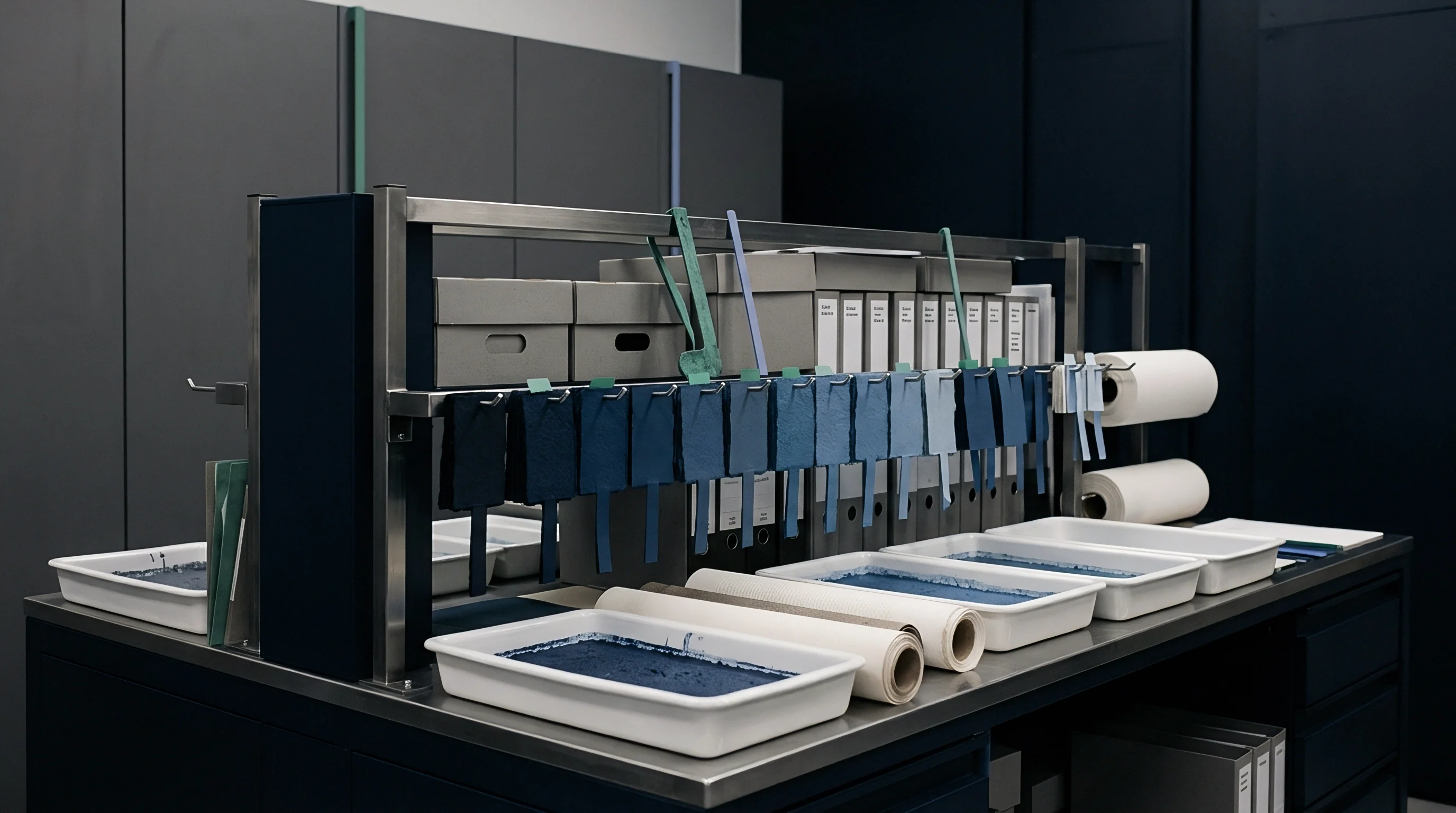
Residual chemicals from secondary fibre recovery remain embedded inside recycled paperboard plies. Deinking chemistries rely heavily on nonionic ethoxylates, alkylphenol derivatives, and fatty acid soaps designed to dislodge ink particles from recovered cellulose. Washing and flotation stages remove most of these compounds, but measurable fractions adsorb onto cellulose microfibrils and mineral fillers.
When water- or solvent-borne coatings wet the sheet, these bound chemistries dissolve back into the penetrating liquid front, establishing steep Marangoni stress gradients along the meniscus that drive fluid toward zones of higher surface tension.
Internal sizing agents compound this chemical heterogeneity. Alkyl ketene dimer and alkenyl succinic anhydride hydrolyze partially during machine processing when white water loops retain high alkalinity and temperature. As sizing agents degrade unevenly and mill water introduces soap residues, hydrolyzed sizing components deposit on fibre surfaces as free fatty acids and dicarboxylic acids that lack covalent bonds to cellulose hydroxyl groups.
These untethered amphiphilic molecules migrate into penetrating aqueous ink vehicles, causing instantaneous, localized drops in surface tension down to 26 millinewtons per metre.
A wetting front encountering mobile surface agents accelerates unpredictably regardless of base furnish density.
Chemical variations across the sheet cross-section generate multiple failure modes during converting operations:
- Anionic Surfactant Leaching mobilizes during the application of aqueous flexographic inks, neutralizing cationic retention aids and inducing pigment flocculation inside the metering nip.
- Hydrolyzed Sizing Migration creates microscopic wettability rings where liquid penetrates three times faster than surrounding unsized fibre patches, generating mottled ink coverage on solid blocks.
- Fatty Acid Soap Precipitation reacts with calcium carbonate fillers under acidic fountain solutions, forming insoluble calcium soaps that blind offset blankets within ten thousand impressions.
- Extractive Re-Deposition occurs during sheet calender heating, driving pitch and wood resin residues to the board surface and suppressing dynamic adhesion of water-based barrier coatings.
These chemical variations are frequently categorized as normal raw material fluctuations inherent to circular packaging systems.
Surge
Cellulose fibrils expand dynamically upon initial moisture contact, altering internal void volume while fluid ingress is underway. The time constant for fibre wall swelling spans five to one hundred milliseconds, directly overlapping the liquid sorption window of high-speed printing nips. Recycled fibres swell slower than virgin fibres because hornification from previous drying cycles collapses internal pore architecture.
As fluid penetrates surface pores, hornified fibres resist expansion, forcing the liquid front into tortuous inter-fibre voids where viscosity spikes stall uptake and pores collapse under shear.
The structural transformation of the sheet under rapid fluid contact follows a clear physical sequence:
- Initial contact establishes non-equilibrium Laplace pressure across macropores within ten milliseconds of application.
- Capillary pressure forces liquid into interfibre voids while Dynamic mechanical compression from press rolls flattens surface asperities.
- Water penetrates faster than resin. Fibril swelling restricts throat diameters of micropores, throttling subsequent liquid transport.
- Escaping air creates counter-pressure pockets within sub-surface plies, diverting fluid laterally into adjacent dry regions.
- Equilibrium absorption halts as capillary suction balances atmospheric resistance and viscous drag within the densified fibrous matrix.
Pore radius distribution determines fluid velocity under dynamic conditions. In virgin kraft sheets, pore radii follow a narrow log-normal distribution that allows steady progression of the wetting line. Recycled paperboard exhibits a polymodal pore size distribution consisting of dense fibre fragments, loose unrefined bundles, and mineral filler aggregates; as recycled fibers resist initial wetting, liquid advances rapidly through wide channels while bypassing narrow constrictions, leaving dry islands beneath the wetted surface.
Trapped air pockets behind advancing wetting fronts generate mechanical resistance that exceeds dynamic capillary suction.
Dynamic sorption tests show that air displacement resistance accounts for up to 40 percent of total penetration retardation in dense recycled multi-ply board. When porosity drops below 150 millilitres per minute Bendtsen, air cannot escape through lateral channels, causing localized micro-explosions of fluid at nip exit points. High line speeds intensify this phenomenon, generating pinholes and incomplete ink transfer across the packaging web.
Thick recycled substrates with high mineral ash content exhibit the greatest susceptibility to capillary stalling.
Press
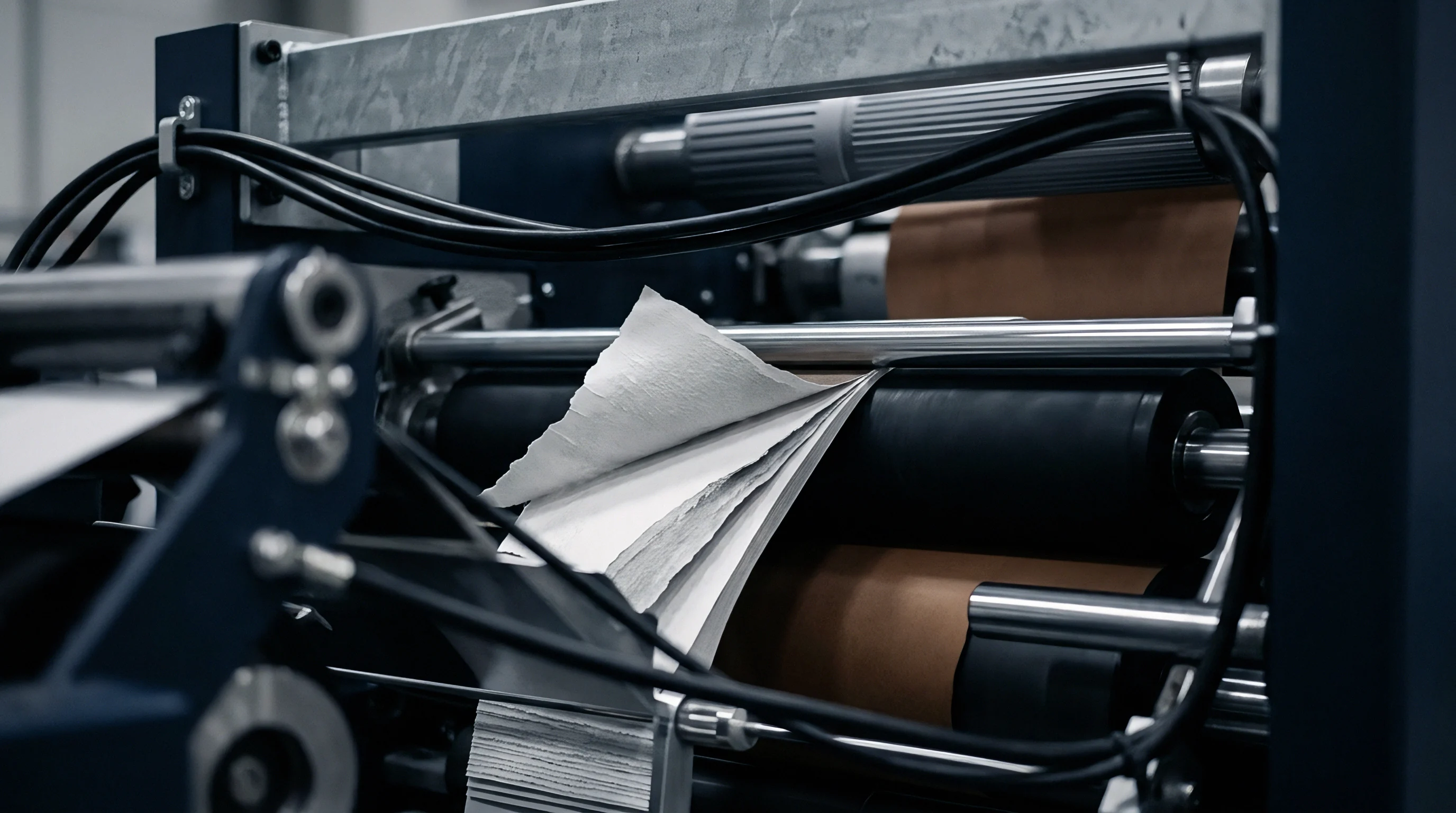
Modern printing presses expose paperboard to severe dynamic fluid gradients where ink, dampening solution, and coatings transfer within tiny fractions of a second. Offset lithography presents the most demanding conditions because fountain solutions containing alcohol substitutes and surfactants wet the board milliseconds before emulsified ink deposition. Dynamic surface tension differences between dampening solution and ink film create competing capillary forces.
The lower-tension fountain solution rapidly wets hydrophilic cellulose sites, creating a physical barrier that prevents ink resin penetration, collapsing dry pick values, destabilizing ink films, and causing mottle across solids.
| Board Substrate Ply Structure | Surface Tension Gradient (Delta mN/m) | Bristow Sorption Velocity (ml/m²/s^0.5) | Pick Resistance (IGT ISO 3783, m/s) | Print Mottle Severity Index |
|---|---|---|---|---|
| Clay-Coated Recycled Liner (Top Ply Bleached Deinked) | 22.4 | 14.2 | 1.15 | 8.4 |
| Uncoated White Lined Chipboard (Grey Back) | 18.1 | 22.8 | 0.85 | 12.1 |
| Double Coated Folding Boxboard (Virgin Pulp Top Ply) | 6.2 | 8.6 | 1.85 | 2.3 |
| Triplex Board (Recycled Core with Kraft Liners) | 14.8 | 16.5 | 1.30 | 6.7 |
Blade and air-knife coating operations on board machines face identical challenges during dynamic fluid application. Water-based barrier coatings containing polymer dispersions depend on uniform capillary draw to anchor binders to the raw baseboard. Rapid surfactant depletion at the wetting line raises dynamic tension, slowing binder penetration into sub-surface pores so that polymer dispersion remains atop surface fibrils without forming root anchors, which reduces dry and wet ply-bond strength.
Standard procurement contracts stipulate minimum IGT surface strength values of 1.2 metres per second measured with medium viscosity oil under ISO 3783 to avoid press blanket picking.
Quality assurance on converting floors requires explicit protocols to detect dynamic wetting variance before mounting board reels to production presses:
- Dynamic Contact Angle Goniometry measures droplet wetting rates at intervals between ten and one thousand milliseconds to identify surfactant contamination.
- Bristow Wheel Absorption Profiling quantifies fluid uptake roughness and sorption coefficients in accordance with ASTM D5455 using production inks and fountain mixes.
- Liquid Surface Energy Component Analysis separates dispersive and polar surface tension components via the Owens-Wendt-Rabel-Kaelble method across multiple web positions.
- Mercury Intrusion Porosimetry characterizes the multimodal pore throat distribution of top-liner recycled plies under ISO 15901-1 standards.
Purchase specifications that include dynamic liquid absorption limits under ASTM D5455 prevent converters from accepting lots prone to high-speed ink rejection.

Spoilage
Uncontrolled capillary sorption anomalies translate directly into press downtime, elevated make-ready scrap, and post-converting rejects. Setting up an eight-colour offset press on recycled board with irregular dynamic wetting consumes between eight hundred and fifteen hundred additional sheets before achieving stable ink-water balance. Because line speeds govern wetting time and sheet caliper varies across webs, waste piles grow rapidly during startup.
At typical recycled board costs of 850 to 1100 dollars per metric ton, excessive start-up waste quickly erodes converting margins.
Consider a standard folding carton production job using 40 tons of 350 grams per square metre coated recycled board across 100,000 sheets. Standard make-ready allows two percent sheet waste under stable substrate conditions. When dynamic surface tension gradients cause blanket blinding and ink lift, make-ready waste expands to six percent, consuming four thousand additional sheets.
Press washing cycles multiply, adding 45 minutes of non-productive press time per shift at hourly operating costs exceeding 350 dollars. Delivered unit costs rise by 8.5 percent before factoring in downstream gluing failures on folder-gluers running at four hundred metres per minute.
Water-based cold set adhesives applied on folder-gluers exhibit delayed setting times on recycled surfaces contaminated with surfactant residues. Surfactants lower the dynamic surface tension of the adhesive, accelerating penetration of the water phase while leaving polymer solids unanchored on the board surface. The resulting bond fails fiber-tear testing during warehouse storage under high relative humidity, causing entire production batches of finished packaging cartons to face rejection when adhesive bonds release along the manufacturer glue seam.
Whether inline chemical passivation methods during board manufacturing can permanently neutralize dynamic surfactant gradients without degrading base sheet recyclability remains an unresolved challenge for paper science.