Quantification of Mechano-Sorptive Structural Degradation under Multiaxis Transient Vapor Flux in Recycled Fiber Laminates
Recycled fiber laminates experience accelerated creep under transient vapor flux, requiring increased structural safety factors in humid supply chains.
Hysteresis
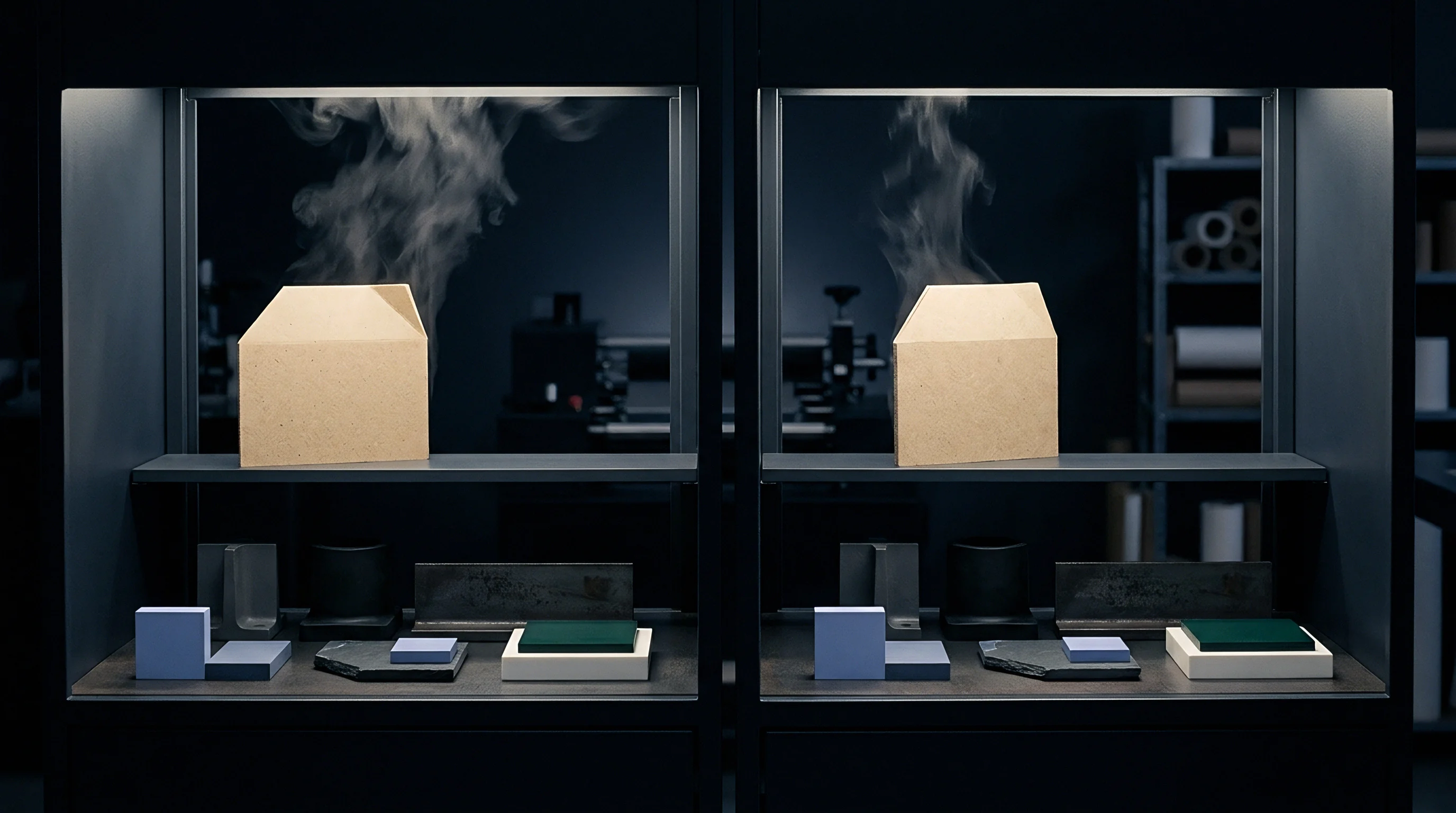
Repeated wetting and drying cycles cause secondary papermaking fibers to undergo hornification, collapsing the internal pore structure and altering the equilibrium moisture content compared to virgin cellulose. When multi-ply recycled paperboard encounters shifting ambient humidity, moisture ingress is uneven across the cross-section. Sorption rate mismatches between linerboards and the fluted core generate transient vapor flux gradients, forming localized pockets where moisture levels substantially exceed the bulk average.

Sorption Isotherms in Secondary Fiber Networks
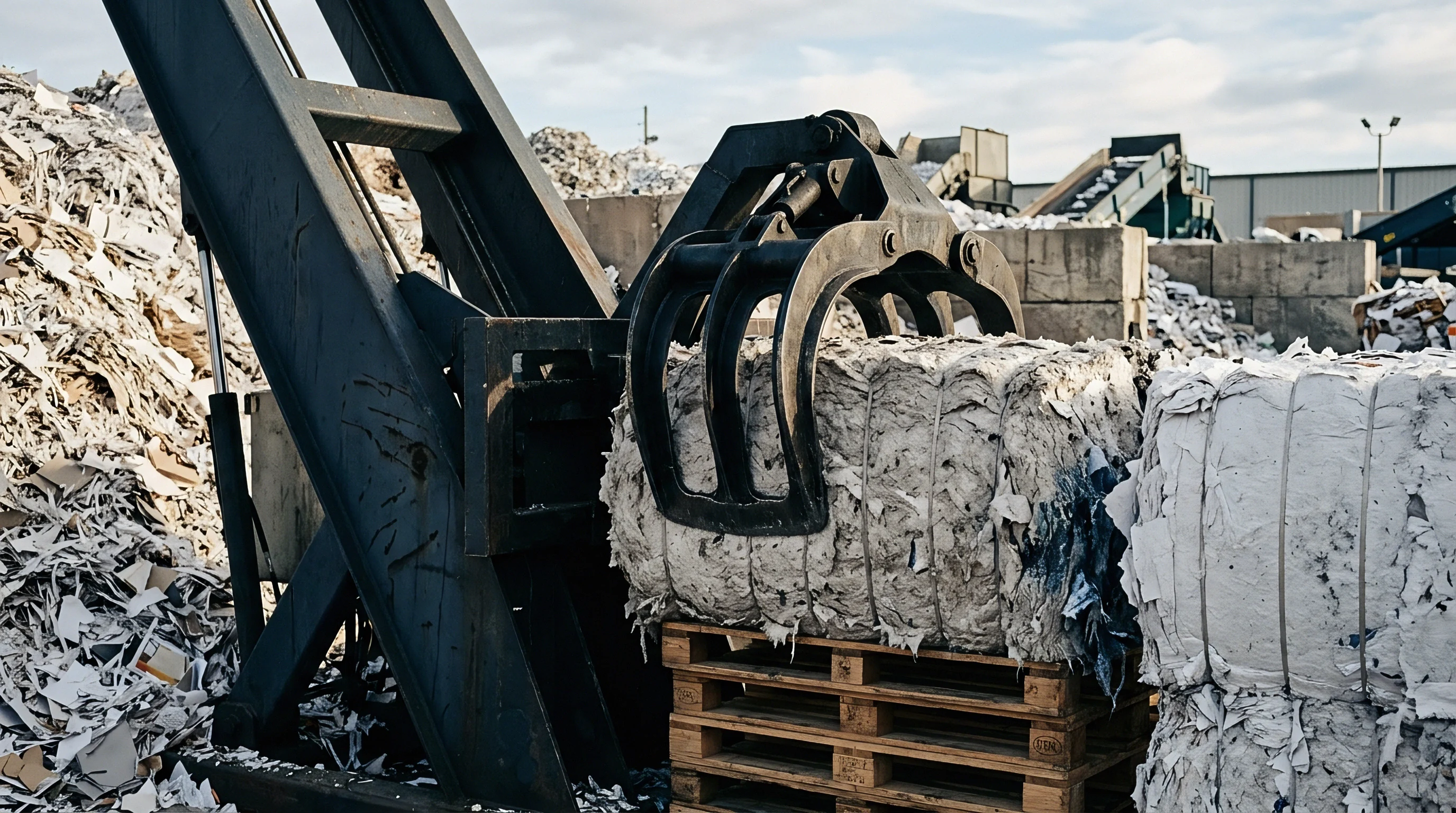
Mechanical recycling shortens cellulose filaments, strips primary cell walls, and flattens lumens into ribbon-like shapes, fundamentally shifting the sorption isotherm of the finished sheet. Secondary fiber networks display pronounced desorption hysteresis: they take up less bound water than virgin pulp at a given relative humidity during absorption, but release that water reluctantly during desorption.
At low relative humidity, cellulose surfaces bind water directly through hydrogen bonds; once humidity climbs past sixty percent, capillary condensation begins filling inter-fiber voids. Variable refining across individual plies forces migrating vapor through tortuous paths. Outer plies respond almost immediately to atmospheric shifts, while core plies lag behind, creating sharp moisture differentials across the sheet.
Conditioned at eighty percent relative humidity and twenty degrees Celsius, recycled linerboard reaches an equilibrium moisture content of eleven point two percent compared to thirteen point five percent in unbleached softwood Kraft.
Diffusivity Discrepancies across Board Plies
Under steady-state conditions, moisture transport through recycled paper matrices follows classic Fickian diffusion. Dynamic atmospheric shifts, however, trigger non-Fickian transport driven by stress relaxation in the swelling fiber network. Transport rates vary with local fiber alignment, refining intensity, and the distribution of starch adhesive applied during corrugating.
Moisture migrates through the cross direction at less than half the speed observed along the machine direction. Because recycled fibers have limited longitudinal hygro-expansion potential, hygroscopic strain concentrates primarily through the thickness (Z-direction) of the board.
| Substrate Grade | Fibre Origin | Grammage (g/m²) | Diffusion Coeff (10⁻¹¹ m²/s) | Equilibrium MC at 50% RH | Equilibrium MC at 85% RH |
|---|---|---|---|---|---|
| Kraftliner | Virgin Softwood | 175 | 4.2 | 7.8% | 13.8% |
| Testliner 1 | 100% Recycled Deinked | 160 | 2.8 | 6.9% | 11.4% |
| Testliner 3 | Mixed Recycled Waste | 140 | 2.1 | 6.4% | 10.8% |
| Fluting Medium | Semi-Chemical Virgin | 120 | 5.1 | 8.1% | 14.2% |
| Recycled Medium | 100% Waste Packaging | 120 | 2.5 | 6.6% | 11.1% |
Density variations across recycled plies worsen localized moisture trapping. Denser outer liners form temporary diffusion barriers, holding moisture in the less dense core when ambient temperatures drop. These internal moisture gradients degrade the shear modulus at the glue line well before standard bulk moisture meters detect a change, even when total dry-basis weight remains within nominal delivery tolerances.
Flute
In corrugated structures, vertical stacking generates static axial compression in the linerboards and shear along the flute tips. Under cycling humidity, mechanical load interacts with rapid moisture sorption to produce mechano-sorptive creep, accelerating structural deformation.
Multiaxis Strain Distribution in Corrugated Panels
Combined board compression strength relies on out-of-plane shear stiffness and edge crush resistance. Top-to-bottom loading creates directional stresses across the machine, cross, and thickness directions. When moisture enters the board, it introduces isotropic swelling strains that clash with these existing anisotropic stress fields.
When moisture diffuses through loaded corrugated board, the liner exposed to higher humidity expands quickly in the cross direction while the drier inner liner resists. This imbalance produces out-of-plane bending moments, triggering localized micro-buckling along the fluting profile long before nominal failure thresholds are reached.
Transient moisture movement under static load accelerates total structural strain far beyond the combined sum of separate elastic creep and pure moisture expansion.

Failure Modes under Dynamic Sorption Flux
Dynamic humidity exposure breaks down fluted structures through several distinct failure mechanisms at the core and liner interfaces.
- Flute Tip Delamination occurs when localized shear stress at the starch adhesive line exceeds wet bond strength during rapid absorption cycles.
- Face Liner Buckling develops under compression when local moisture accumulation drops the elastic modulus below critical stability thresholds.
- Creep Rupture takes place along cross-directional stress lines as continuous moisture cycling degrades hydrogen bonding within secondary fiber networks.
- Out-Of-Plane Shear Failure initiates in recycled fluting mediums where low fiber length limits shear force transfer between crests.
Recycled containerboard is particularly vulnerable to these combined loads. Shorter average fiber length and weakened inter-fiber bonding accelerate structural yield under moisture flux. Whether initial micro-cracking within starch adhesive bonds serves as the primary catalyst for shear failure during rapid sorption remains an open empirical question.

Rheology
Predicting creep under fluctuating environmental conditions requires constitutive models that account for mechano-sorptive effects. Standard viscoelastic formulations overlook the accelerated softening that occurs during active moisture absorption or desorption, where strain rates combine elastic, plastic, thermal, hygro-expansive, and mechano-sorptive responses.
How Do Dynamic Relative Humidity Cycles Accelerate Compression Creep?
Shifts in relative humidity mobilize polymer chains within amorphous cellulose and hemicellulose fractions. Absorbed water acts as a plasticizer, depressing the glass transition temperature and allowing hydrogen bonds to rupture and re-form under load, which lets adjacent fibers slip past each other permanently.
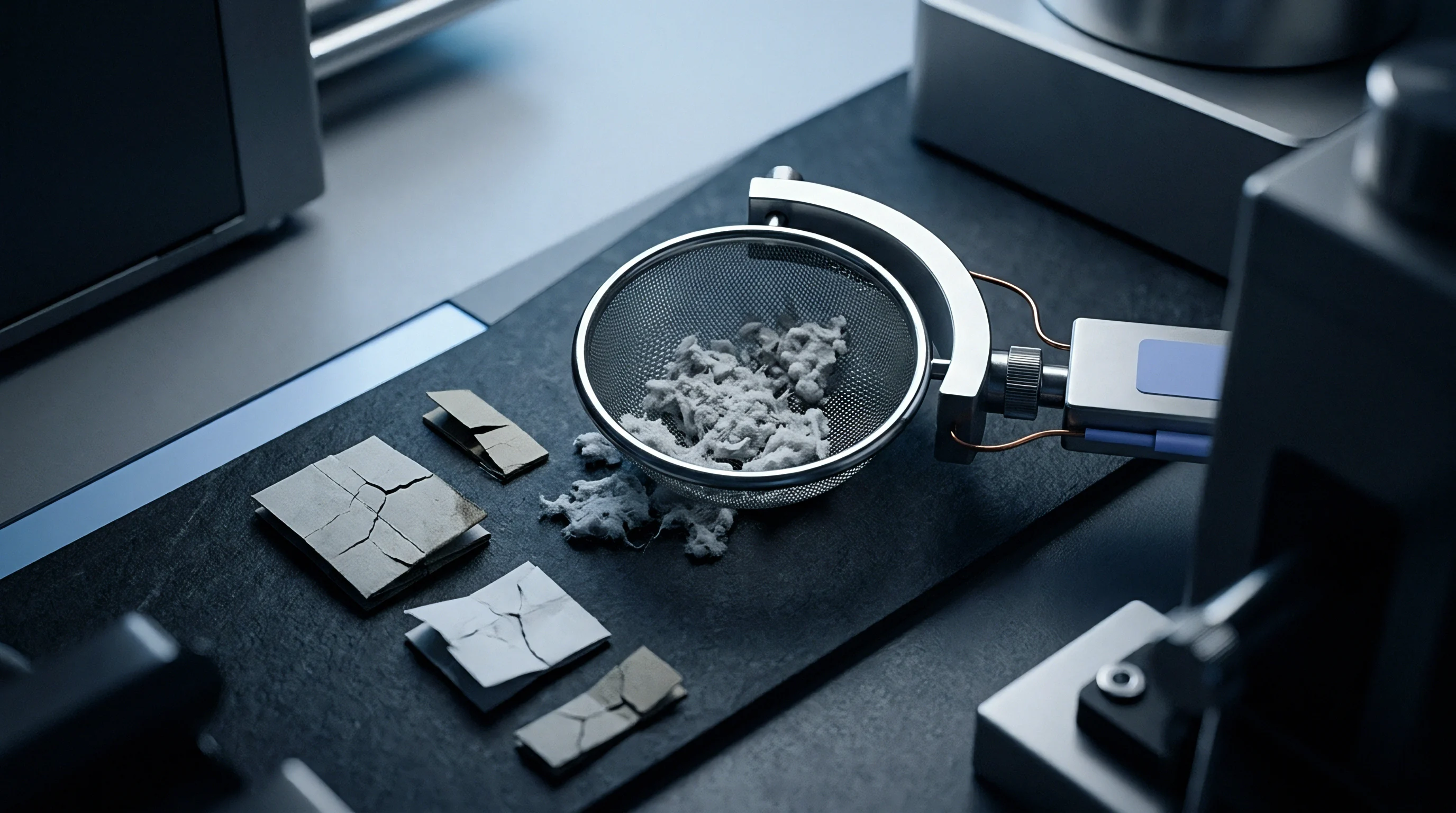
Desorption does not reverse this slip; drying locks the deformed fiber network in place. Subsequent humidity cycles repeat the sequence, accumulating permanent deformation in steps. Standard static evaluations conducted at constant fifty percent relative humidity fail to capture this cumulative mechanism.
Constitutive formulations model the total mechano-sorptive strain rate as:
dotεtotal = fracdotσE + dotεvisco + α dotm + mms σ |dotm|
where dotσ represents stress rate, E is elastic modulus, α is hygro-expansion coefficient, dotm is the rate of moisture content change, σ is applied mechanical stress, and mms is the material mechano-sorptive coefficient. The absolute value term |dotm| confirms that both adsorption and desorption add positive creep strain under continuous compressive stress.
Laboratory Measurement Protocols
Determining mechano-sorptive constants requires climate-controlled test chambers capable of rapid relative humidity cycling while maintaining steady compressive loads on test specimens.
- Precondition standard test specimens at twenty-three degrees Celsius and fifty percent relative humidity for twenty-four hours in accordance with ISO 187 requirements.
- Mount specimens into a short-span compression test apparatus equipped with environmental isolation enclosures and continuous load cells.
- Apply a constant static load equivalent to forty percent of the predetermined ultimate short-span compressive strength measured under TAPPI T 839 standards.
- Initiate humidity cycling between thirty percent and eighty-five percent relative humidity at twenty-minute intervals while recording displacement continuously at a sampling frequency of ten Hertz.
- Calculate the slope of time-dependent strain curves during peak flux transitions to isolate the mechano-sorptive material constant mms.
| Test Conditioning Regime | Paper Grade Composition | Static Load (% BCT) | Creep Rate (10⁻⁶ s⁻¹) | BCT Retention at 72h |
|---|---|---|---|---|
| Static 50% RH | Virgin Kraftliner | 35% | 0.08 | 94% |
| Static 50% RH | 100% Recycled Testliner | 35% | 0.19 | 88% |
| Cyclic 50% to 85% RH | Virgin Kraftliner | 35% | 0.72 | 68% |
| Cyclic 50% to 85% RH | 100% Recycled Testliner | 35% | 2.45 | 41% |
| Cyclic 50% to 85% RH | Recycled Fluting + Testliner | 50% | 5.80 | 22% |
Under cyclic humidity, recycled containerboard loses over half its compressive strength within seventy-two hours. Consequently, safety factors for recycled packaging destined for unconditioned ocean transit must roughly double those applied to climate-controlled warehouse storage.

Allowance
European packaging rules require verified post-consumer recycled content in paperboard grades. The European Packaging and Packaging Waste Regulation sets higher recycled content targets while simultaneously capping total packaging weight and volume, forcing packaging engineers to balance recycled fiber penalties against strict mass limits.
Safety Factor Corrections for Recycled Board Specifications
Recycled pulp provides lower structural strength per gram of basis weight than virgin fiber. Compensating by increasing caliper or grammage risks breaching package minimization rules under EU guidelines.
Accurate structural sizing requires adjusting the classic McKee box compression formula for mechano-sorptive degradation. The standard equation uses short-span compression strength, flexural stiffness, and box perimeter; in dynamic humidity environments, the short-span compression value must incorporate empirical reduction factors to account for accelerated creep.
Documentation Requirements for Compliance Dossiers
Meeting regulatory and structural requirements requires complete documentary traceability through certified chain-of-custody records.
- FSC Recycled Credit Statements validating the verified percentage of post-consumer reclaimed fiber entering the specific paper machine run.
- Laboratory Test Evidence verifying compliance with ISO 12048 packaging compression performance under dynamic climate conditioning schedules.
- Heavy Metal Analysis Certificates demonstrating compliance with EN 13428 criteria for heavy metal concentration limits in recycled packaging materials.
- Recyclability Assessment Reports executed under EN 13430 protocols confirming that wet-strength additives do not hinder repulpability at end-of-life.
Chain of custody certificates verify fiber sourcing origin without guaranteeing that physical performance ratings hold true across high-humidity storage cycles.
| Supply Chain Environment | Target Recycled Fiber % | Standard McKee Factor | Mechano-Sorptive Correction Factor | Required Design Safety Factor |
|---|---|---|---|---|
| Controlled Ambient (Domestic) | 0% (Virgin Kraft) | 1.00 | 1.00 | 1.60 |
| Controlled Ambient (Domestic) | 100% Recycled | 1.00 | 0.82 | 1.95 |
| Unconditioned Transit (Intermodal) | 0% (Virgin Kraft) | 1.00 | 0.70 | 2.30 |
| Unconditioned Transit (Intermodal) | 50% Recycled | 1.00 | 0.55 | 2.90 |
| High Humidity Refrigerated (Cold Chain) | 100% Recycled | 1.00 | 0.38 | 4.20 |
Chain-of-custody documentation should separate recycled fiber credits from structural load ratings. Incorporating ISO 12048 dynamic humidity compliance into supply contracts ensures financial responsibility falls on the paper mill if stacking failures occur within specified operational humidity limits.
Redress
Unless transit risks are explicitly defined in supply agreements, the financial loss from collapsed pallets falls on the buyer. Substituting unbleached Kraftliner with hundred-percent recycled testliner without buyer consent represents a material specification breach. While the loss in static strength may look modest in dry laboratory tests, the reduction in creep resistance during ocean transit frequently leads to catastrophic collapse.
Commercial Financial Impact Calculation
Consider a fifty-tonne order of heavy-duty corrugated transit packaging for ocean freight along high-humidity corridors. At a baseline cost of eight hundred Euros per tonne for virgin-blended linerboard, switching to recycled testliner lowers raw material expenditure by twelve percent, saving six thousand Euros on the initial order.
During shipment, container humidity swings between forty percent and ninety percent. The mechano-sorptive creep rate of the substituted board climbs to three point five times the baseline rate, reducing box compression strength below the static pallet load and causing bottom-tier collapse across twenty-two pallets.
Repalletization at the destination terminal costs four thousand five hundred Euros, consignee cargo damage claims total twenty-eight thousand Euros, and port detention fees add seven thousand two hundred Euros. The total exposure from the unapproved fiber swap reaches thirty-nine thousand seven hundred Euros, far exceeding the original material savings.
Recovering losses under standard terms is difficult when purchase contracts reference only dry, static test metrics. Purchase specifications must pair standard grammage, burst, and edge crush values with dynamic humidity creep limits. Without verified dynamic performance requirements in the contract, buyers bear the full cost of rejected cargo, emergency handling, and lost inventory.