Compression Resistance
Corrugated fibreboard containers maintain structural integrity under vertical loads through a defined methodology for testing box performance. The protocol known as iso 12048 establishes requirements for applying pressure to a shipping unit until total collapse occurs. Laboratories use this procedure to calculate the maximum force a specific box design supports before the walls fail during stacking or transport.
This standard remains limited to filled or empty transport packaging subjected to compressive stress in a laboratory setting.
Loading Mechanism
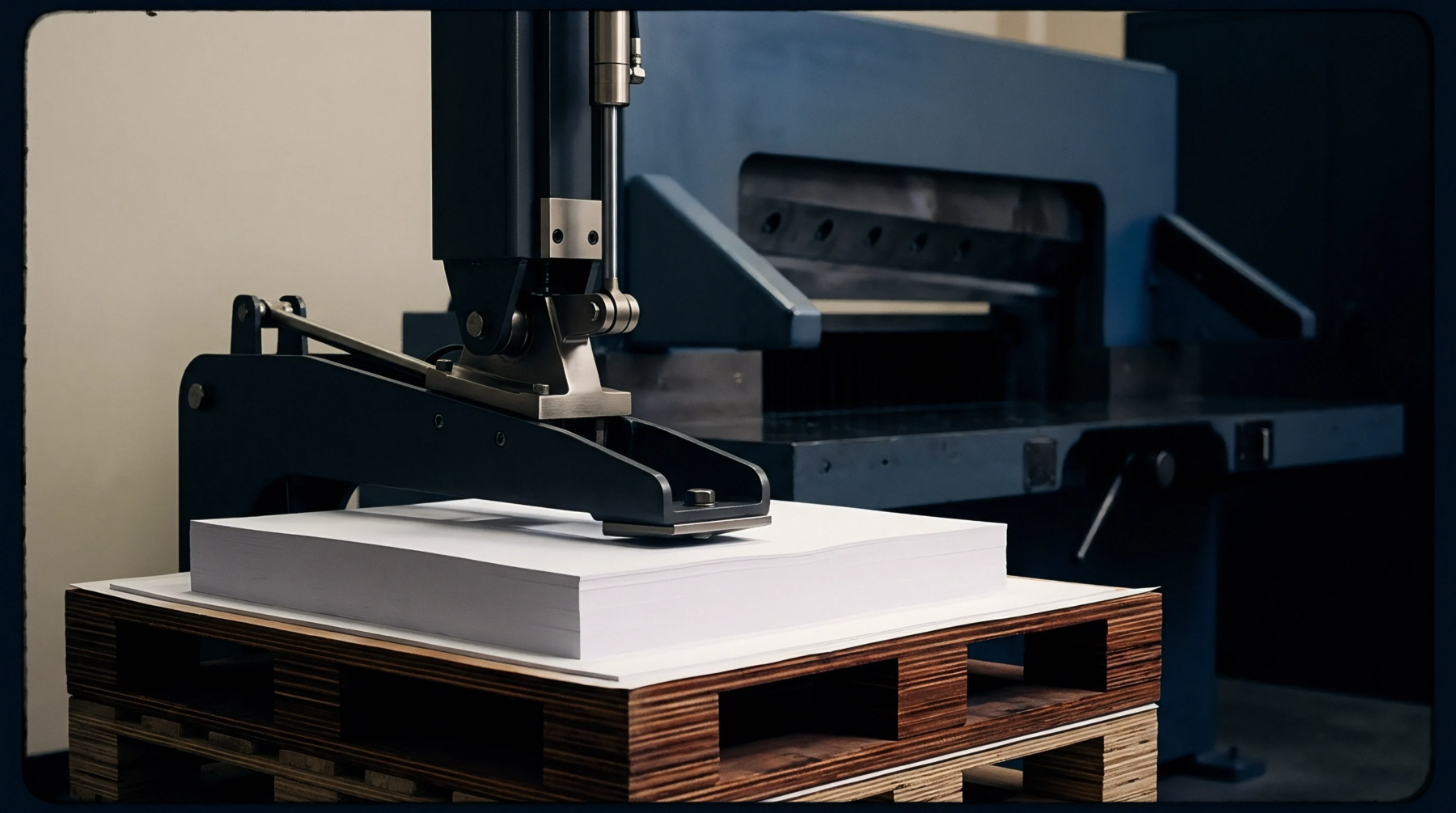
Hydraulic or pneumatic platens press against the top and bottom faces of the test specimen at a constant velocity. Constant displacement ensures uniform deformation across the vertical edges while the internal instrumentation records the peak force value before structural failure. Operators place the box centrally on the lower platen to maintain alignment during the descent of the upper platen.
If the box features specific opening styles or internal reinforcements, the documentation captures these variables to explain differences in ultimate load capacity. A consistent rate of approach prevents kinetic energy spikes from skewing the final measurement. Accurate recording depends on the calibration of the force transducers which convert physical resistance into digital data for reporting.
Failure Analysis
Structural stability defines the success of a corrugated design under real world warehouse conditions where high stacks exert persistent downward pressure. Designers compare the maximum load results against the projected static weight of the intended product to determine if the fibreboard grade provides sufficient safety margins. High variability in the test results indicates potential inconsistencies in the manufacturing of the fluting or the bonding of the liners within the board construction.
Environmental factors such as ambient humidity influence the stiffness of the cellulose fibres and therefore alter the recorded resistance values during testing cycles. A box that performs well under dry conditions often loses significant capacity when the material absorbs moisture from the surroundings. The total resistance value provides an objective metric for predicting how a container stack behaves during prolonged storage cycles.