Standardized ISO Test Methods for Machine Direction Fiber Alignment in Bleached Board
ISO 20021 ultrasonic velocity testing determines machine direction fiber alignment in bleached board, where angles over two degrees trigger warp and score failure.


Axis
Bleached paperboard leaving the wet end carries a physical memory of the hydrodynamic shear generated between the slice lip and the forming fabric. Papermaking furnish delivered from the pressurized approach piping contains bleached kraft softwood and hardwood fibres suspended at roughly one half percent solids consistency. Differential velocity between the emergent stock suspension and the moving wire establishes the geometric distribution of these cellulosic filaments across the planar sheet.
The resulting alignment dictates dimensional response to moisture, bending resistance, and structural integrity during high-speed carton converting.
Fibres track the slurry flow. When slurry velocity matches wire speed, filament distribution approaches planar isotropy. Commercial fourdrinier and multi-ply gap formers operate under deliberate speed differentials to achieve target tensile stiffness ratios between the machine direction and the cross direction.
This intentional stretching or dragging aligns elongated tracheids along the web travel axis, producing an anisotropic composite structure where physical properties vary predictably by angle.
Conditioned at 23 degrees Celsius and 50 percent relative humidity under ISO 187, bleached board tensile stiffness orientation angles exceeding two degrees generate measurable carton twist.
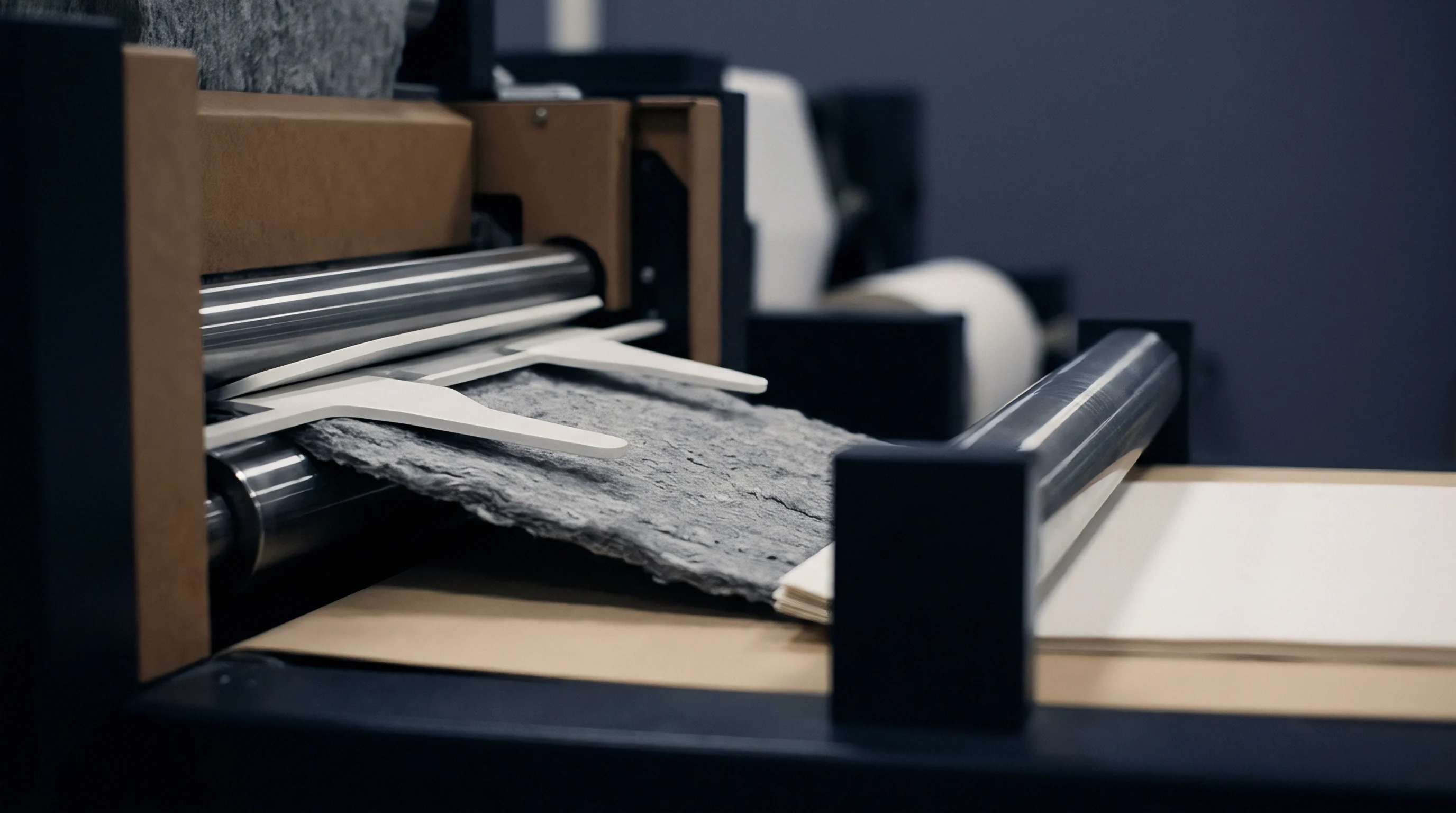
Fluid Mechanics and Alignment Profiles
The slice jet discharges bleached furnish onto the forming wire with a parabolic velocity profile across the nozzle aperture. Cross-flows within the delivery manifold introduce localized transverse velocity components, altering the local trajectory of suspended wood fibres before drainage fixes their positions. Solid bleached board grades produced on modern multi-ply machines distribute this alignment across discrete plies, combining refined hardwood eucalyptus top plies for print smoothness with softwood kraft filler plies for structural bulk.
Misalignment between the stock jet vector and the wire motion vector introduces an angular deviation known as the fibre orientation angle. While the nominal production direction remains parallel to the machine centerline, the true principal axis of filament alignment frequently drifts several degrees toward the tender or drive side of the machine. The reel leaves the machine.
- Stock delivery imbalance occurs when cross-machine manifold recirculation valves drift from their hydraulic setpoints, forcing lateral flow across the wire that rotates the principal alignment axis up to seven degrees off web centerline.
- Forming fabric distortion develops through non-uniform guide roll tension, pulling the drainage mesh out of square and deflecting draining filaments during initial sheet consolidation.
- Differential ply coupling appears in multiply solid bleached sulphate boards when individual headboxes operate at conflicting jet-to-wire velocity ratios, creating internal shear strains between outer print layers and inner bulk plies.

Mechanical Anisotropy across Multi-Ply Formations
Tensile stiffness in paperboard directly reflects the mean orientation of crystalline cellulose microfibrils relative to the applied stress field. In bleached chemical pulps, individual softwood fibres exhibit intrinsic axial moduli exceeding twenty gigapascals, whereas transverse modulus remains below three gigapascals. Macroscopic sheet stiffness concentrates along the direction containing the greatest population of aligned fibre axes.
Multi-ply virgin board structures compound this mechanical complexity by layering separate stock suspensions with divergent refining levels and alignment angles. A typical three-ply solid bleached sulphate board pairs outer layers of short-fibre hardwood refined to thirty-five Schopper-Riegler with an inner layer of long-fibre softwood kraft refined to twenty-two Schopper-Riegler. Any angular offset between these plies creates balanced or unbalanced internal bending moments upon drying.
Equal alignment angles across all plies preserve carton flat-pack geometry during storage.


Beam
Ultrasonic propagation speed provides a non-destructive method to map filament directionality throughout the consolidated board matrix. Mechanical sound waves traverse bonded cellulose structures at velocities determined by the specific elastic modulus of the fibre network along the acoustic transmission path. ISO 20021 formalizes this acoustic evaluation, standardizing automated methods for determining directional ultrasonic velocity across commercial paper and board substrates.
Sound travels faster along fibres. Testing instruments transmit high-frequency ultrasonic pulses through the thickness or across the plane of the board specimen at predetermined angular increments. The measured transit times yield planar velocity ellipses that define the precise magnitude and orientation of the principal elastic axes.

Ultrasonic Velocity Principles in Planar Sheets
Acoustic pulses traveling through bleached board encounter alternating domains of crystalline cellulose, amorphous hemicellulose, and inter-fibre contact zones. Wave propagation velocity scales with the square root of the specific elastic modulus divided by sheet bulk density. Transducers arranged in circular arrays or rotating sensor heads send acoustic pulses between thirty and one hundred kilohertz through the conditioned sheet at intervals of five to fifteen degrees around the full circle.
Plotting propagation velocity against measurement angle yields the tensile stiffness orientation polar diagram. In a perfectly aligned sheet, the major axis of this ellipse aligns with the physical machine direction, and the minor axis aligns with the cross direction. The ratio of maximum to minimum acoustic velocity squared defines the Tensile Stiffness Index ratio, serving as an exact physical proxy for fibre distribution anisotropy.
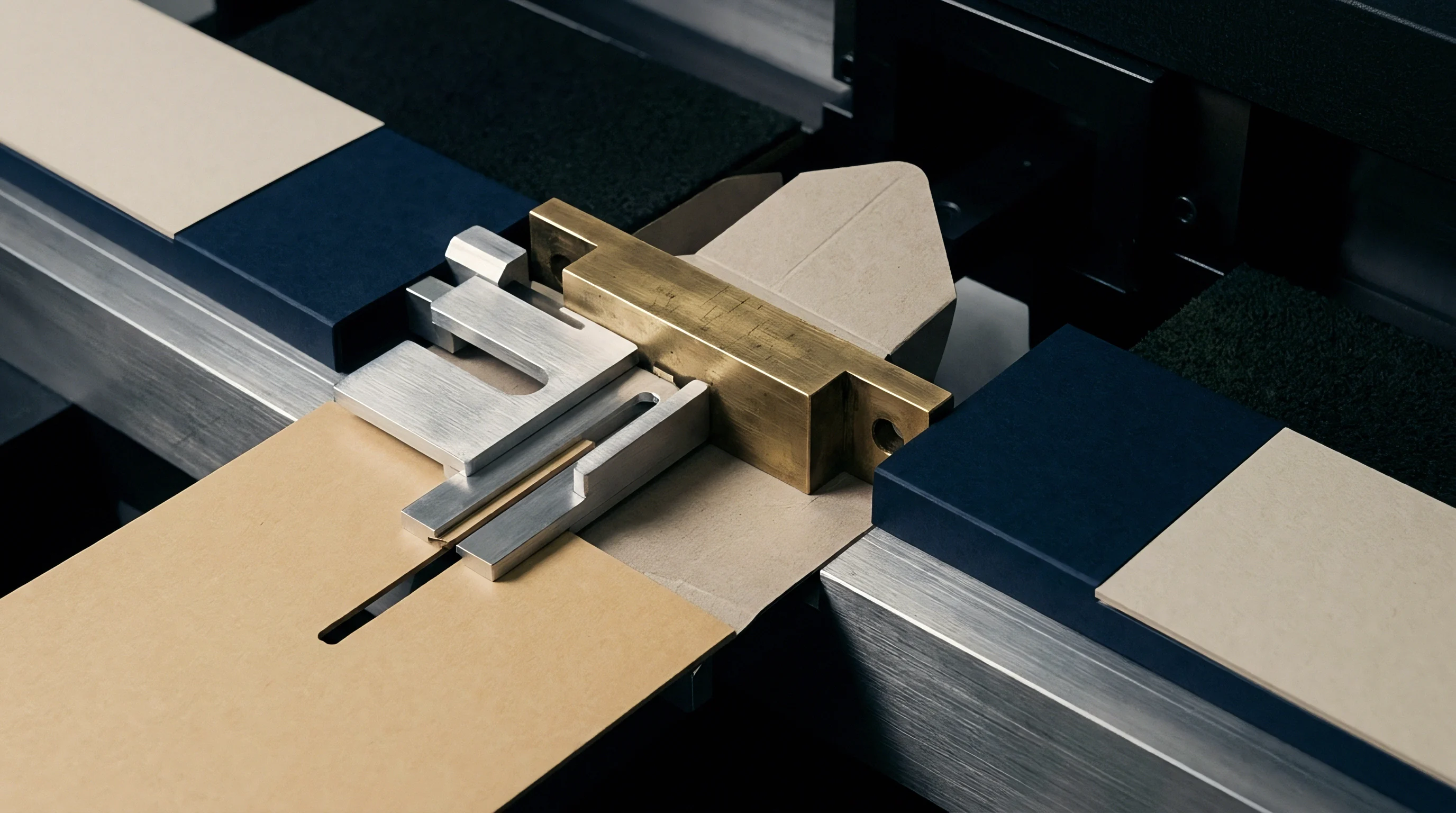
Can Ultrasonic Velocity Isolate Fibre Orientation Angle?
Acoustic propagation integrates mechanical stiffness across the entire thickness of the board specimen, conflating morphological fibre alignment with dried-in drying strains. During the final stages of cylinder drying, wet web draws exert substantial longitudinal tension while permitting unrestrained cross-direction shrinkage. This asymmetric restraint stretches fibre-to-fibre bonds along the machine direction, elevating axial sonic velocity through stress-induced crystallite realignment without altering physical filament geometry.
Disentangling mechanical strain hardening from true geometric fibre distribution demands careful mathematical correction or complementary optical analysis. The polar plot rotates clockwise. Ultrasonic devices record the orientation of maximum stiffness, which combines hydrodynamic alignment with drying strain anisotropy into a single orientation angle figure.
Acoustic velocity maps the composite elastic symmetry of the consolidated sheet rather than isolated filament geography.
Optical scanning systems complement acoustic evaluation by measuring surface fibre orientation distribution directly through high-resolution image analysis or laser light scattering. These optical configurations project polarized or diffuse laser beams onto the unprinted board surface, capturing the elliptical distribution of reflected light. The aspect ratio and angular offset of the resulting reflection pattern quantify filament alignment exclusively in the top ten to twenty microns of the surface layer.
| Standard Designation | Physical Principle | Resolution Depth | Reported Metric | Operational Cycle Time |
|---|---|---|---|---|
| ISO 20021 | Directional ultrasonic pulse transmission | Full caliper composite | TSO angle and TSR stiffness ratio | Under ten seconds per test point |
| ISO 1924-3 | Polar multi-angle destructive tensile testing | Full caliper composite | Tensile index ratio and polar symmetry | Fifteen minutes per polar profile |
| ISO 15361 | Zero-span tensile evaluation at varied angles | Fibre network structural skeleton | Inherent axial fibre strength orientation | Twenty minutes per specimen set |
| Automated Image Analysis | Top-surface optical pattern recognition | Top 15 micrometers | Surface fibre orientation distribution index | Three seconds per optical field |
Instruments testing moving reels on paper machines continuously measure cross-machine profiles of the tensile stiffness orientation angle. When headbox slice adjustments correct basis weight variations, they frequently induce localized cross-flows that distort this acoustic angle across narrow web ribbons. Papermakers monitor these profiles to maintain orientation angles within a narrow band of plus or minus one and a half degrees across the entire trimmed web width.
The unresolved question remains whether high-speed online ultrasonic sensors can reliably isolate ply-specific orientation angles within heavyweight multi-ply bleached folding boxboards without relying on destructive offline micro-delamination.


Warp
Carton converting plants converting solid bleached board require dimensional stability to maintain folding accuracy, die-cutting precision, and gluer line speeds. Fibre orientation angular drift alters the fundamental hygroscopic expansion behavior of paperboard blanks, causing planar sheets to curl diagonally when exposed to ambient humidity shifts. Moisture absorption induces significant swelling across individual fibre diameters while expanding individual fibre lengths minimally.
Box blanks warp instantly. In a sheet where fibres align parallel to the sheet edges, cross-direction expansion occurs strictly perpendicular to the machine edge, maintaining rectangular flatness. An orientation angle offset of even three degrees directs this transverse expansion along a diagonal vector across the rectangular blank, generating severe torsional twisting moments.
Unbalanced alignment angles between top and bottom plies generate torsional sheet curl during moisture transitions.

Where Does Angle Drift Degrade Carton Creasing?
Creasing dies impress female channels into bleached board to create defined bending hinges for high-speed folding cartons. Rule penetration compresses the substrate, inducing controlled delamination shear within inner plies while stretching outer plies along the crease axis. High speeds amplify web flutter.
When the principal fibre axis deviates from the crease path, folding resistance increases unpredictably and score cracking frequency rises on dry packaging lines. Crease lines lose their depth. The board splits diagonally along the true fibre orientation rather than cleanly along the mechanical indentation rule.
- Twist curl formation forces carton blanks to lift opposite corners off the transport belts, causing feed jams inside multi-point folder-gluers operating above forty thousand units per hour.
- Scoreline surface rupture splits bleached mineral coatings along the fold line whenever long softwood fibres bridge the creasing rule at skewed angles exceeding four degrees.
- Carton skewing generates non-parallel glue flaps on finished retail packaging, preventing proper automated end-load carton sealing on high-speed consumer goods packing lines.

Die-Cutting Register and Dimensional Twist
Rotary and flatbed die-cutting platens rely on predictable substrate dimensions under ambient pressroom atmospheres. Bleached sulphate board processed through multi-color offset presses absorbs fountain solution across successive print units, triggering immediate localized sheet expansion. If fibre orientation angles vary across the width of a wide-format press sheet, dimensional expansion occurs unevenly across the sheet area, degrading print-to-cut registration tolerances.
Scores split along the fold. Flatbed cutting accuracy requires registration tolerances within one tenth of a millimeter across parent sheets measuring over one meter in width. Substrates exhibiting unstable orientation angles warp dynamically inside press delivery stacks, complicating automatic pallet turning and robotic blank separation operations.
| Converting Operation | Target TSO Angle Limit | Critical TSR Stiffness Ratio | Dominant Substrate Failure Mode |
|---|---|---|---|
| High-Speed Flatbed Die-Cutting | Within 1.5 degrees of machine axis | 1.8 to 2.4 nominal | Registration drift and skewed stripping pins |
| Multi-Point Folder-Gluer Lines | Within 2.0 degrees of machine axis | 1.6 to 2.2 nominal | Twist curl causing feeder feed jams |
| Automated Carton Form-Fill-Seal | Within 1.0 degrees of machine axis | 1.9 to 2.5 nominal | Flap misalignment and hot-melt bonding failure |
| Aseptic Liquid Packaging Creasing | Within 1.2 degrees of machine axis | 2.1 to 2.8 nominal | Internal ply shear and barrier film fracture |
Converters processing board lots with unstable alignment angles lose press headroom, suffer elevated waste rates from erratic scoreline splits, and face complete production line halts when warped blanks jam automatic packaging machinery.


Platen
Destructive mechanical bench testing provides direct empirical verification of sheet anisotropy where acoustic instruments indicate ambiguous composite results. ISO 1924-3 governs the determination of tensile properties of paper and board using a constant rate of elongation of one hundred millimeters per minute. Precision cutting devices excise test strips fifteen millimeters wide at systematic angular increments around the sheet perimeter to construct physical polar tensile diagrams.
Clamps grip the specimen edges. Calipers measure forty microns wider. Testing technicians position individual strips between pneumatic grips set at a precise span of one hundred millimeters inside temperature-controlled testing rooms.
Measuring tensile energy absorption, breaking force, and elastic modulus across these angle sets uncovers the mechanical orientation of the fibre network through direct strain response.
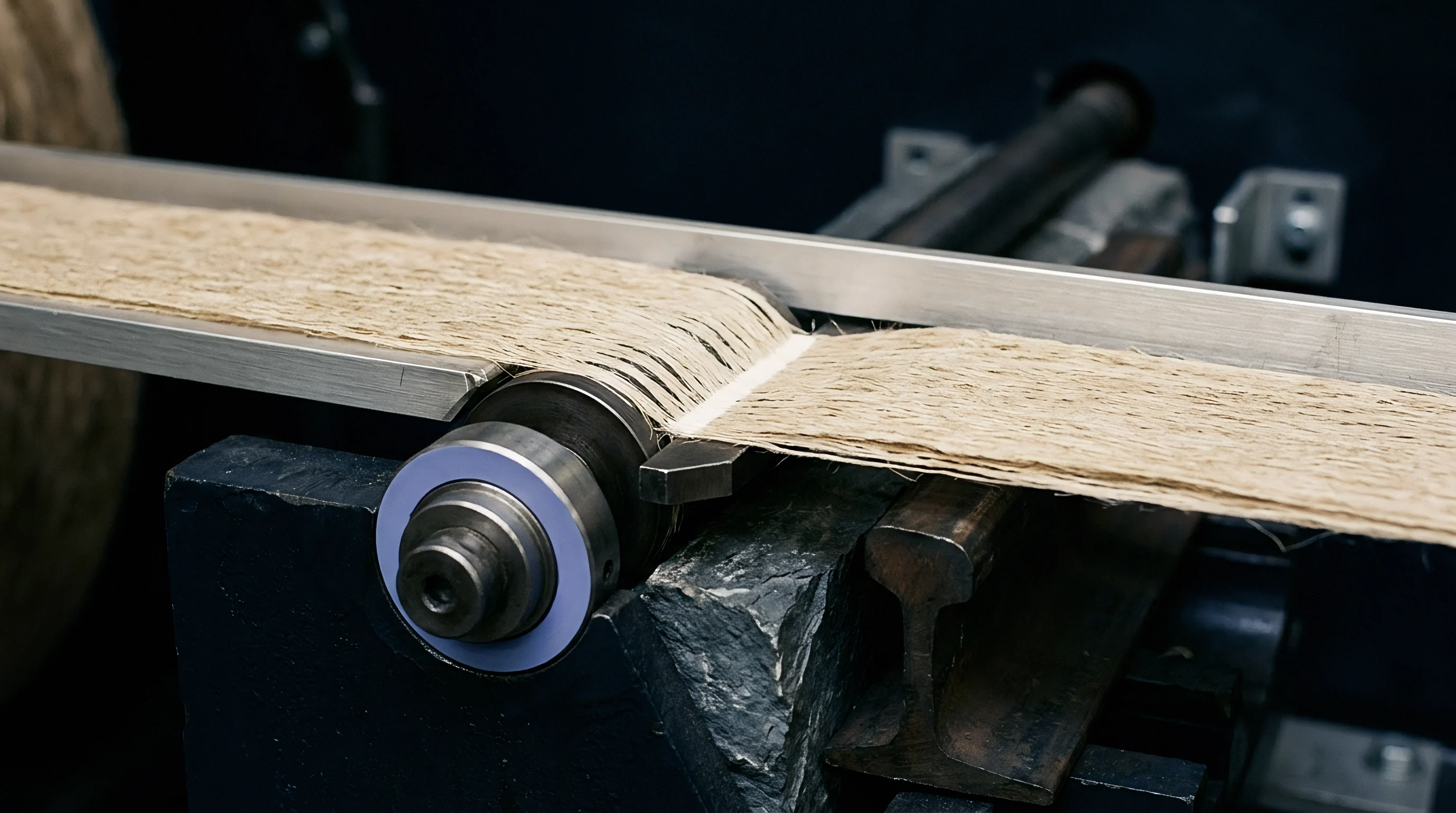
Destructive Tensile Polar Testing under ISO 1924
A complete polar tensile evaluation evaluates test strips cut at intervals of fifteen degrees relative to the nominal machine direction. Testing specimens at zero, fifteen, thirty, forty-five, sixty, seventy-five, and ninety degrees generates the data points required to fit an anisotropic stiffness ellipse. In virgin bleached kraft board, peak breaking force occurs along the true fibre orientation axis, while maximum elongation before failure occurs along the transverse axis.
Discrepancies between the nominal zero-degree machine direction tensile value and the peak tensile value reveal the exact degree of angular drift. When the peak tensile value shifts to the fifteen-degree strip, the paper machine wet end is operating with severe transverse stock flow imbalances. The resulting data verifies whether stiffness orientation matches the geometric web axis or slants across the sheet.
Zero-Span Axial Ratios under ISO 15361
Zero-span tensile testing isolates individual fibre strength and alignment from the confounding influence of inter-fibre hydrogen bonding. ISO 15361 establishes methods for clamping paper and board specimens between specialized zero-clearance anvil jaws, eliminating free span distance between grip faces. Clamping pressure exceeding five hundred kilopascals prevents fibre slippage during mechanical loading.
- Precondition all board samples for twenty-four hours in an ISO 187 standard atmosphere maintaining twenty-three degrees Celsius and fifty percent relative humidity.
- Excise uniform test strips measuring twenty millimeters wide using a dual-blade precision sample cutter parallel and perpendicular to the roll winding axis.
- Mount the preconditioned test strip into the zero-span clamping assembly, ensuring absolute perpendicularity to the jaw gripping edge.
- Apply continuous tensile force until specimen rupture occurs, recording peak breaking load across a minimum of ten valid test repetitions per test axis.
- Calculate the ratio of machine direction to cross direction zero-span tensile indexes to establish the fundamental structural fibre distribution ratio.
The mill representative claimed the creasing splits resulted entirely from aggressive scoring knife penetration rather than uneven fibre orientation across the reel.
Settlement
Commercial bleached board procurement agreements establish strict physical property thresholds to protect converters from unrunnable stock lots. Buyers specify acceptable ranges for grammage, caliper, Bendtsen roughness, and Taber stiffness, yet frequently omit explicit tolerances for tensile stiffness orientation angle. When delivered board exhibits severe twist curl during processing, the absence of contractual alignment specifications complicates financial claims and defect attribution.
Converters halt the folder-gluer. Mill certificates conceal cross-web drift. Quality control managers inspecting arriving pallets must extract full-width web profiles to detect localized alignment skew before releasing raw stock to printing presses.
Commercial Tolerances on Mill Test Certificates
Mill test certificates routinely report average machine direction and cross direction tensile stiffness values obtained from composite reel samples. Averaging test results across wide machine webs conceals localized edge lane defects where jet-to-wire shear produces peak orientation angle drift. Quality specifications require explicit reporting of maximum allowable TSO angle deviation across all slit reels cut from the parent log.
Procurement contracts establishing clear TSO limits enforce reel rejection criteria when orientation angles deviate beyond two degrees from nominal machine direction. Mill-floor inspection confirms that edge rolls slit from the front and back of the paper machine exhibit two to three times greater angular skew than rolls slit from the web center. Selective roll sheeting lines must track parent log slit positions to prevent mixing skewed edge rolls with stable center stock inside single pallet deliveries.
| Production Parameter | Baseline Stable Stock (≤ 1.0° TSO Angle) | Defective Skewed Stock (> 3.0° TSO Angle) | Variance / Financial Impact |
|---|---|---|---|
| Folder-Gluer Operating Speed | 45,000 cartons per hour | 24,000 cartons per hour | 46.7% line speed reduction |
| Die-Cutting Make-Ready Spoilage | 350 sheets (0.7% run waste) | 1,850 sheets (3.7% run waste) | 300% spoilage increase |
| Creasing Surface Cracking Rate | 0.08% finished cartons | 4.25% finished cartons | 4.17% direct product rejection |
| Total Converted Cartons Delivered | 485,000 usable units | 442,000 usable units | 43,000 unit yield deficit |
| Landed Cost per 1,000 Usable Units | $118.50 per thousand | $136.20 per thousand | 14.9% unit cost penalty |

Yield Penalties and Reject Valuation
Converting operations run on tight margin structures where unbudgeted waste directly eliminates profitability on high-volume folding carton orders. Processing skewed board forces operators to reduce line speeds to avoid feeder jams, doubling hourly conversion costs per thousand units. Flawed lots incur freight charges.
Defective sheet lots displaying diagonal twist curl generate excess make-ready waste during die-cutting setup as press operators struggle to align stripping pins and embossing dies. The economic penalty compounds across downstream packaging stages where skewed carton blanks jam automatic cartoning machinery at customer packaging facilities, triggering product liability claims and returned goods logistics expenses.
Standard master supply agreements stipulate that bleached board lots demonstrating tensile stiffness orientation angles exceeding two degrees under ISO 20021 testing trigger full material replacement along with converter reimbursement for incurred pressroom downtime.