Reconciling Multi Site Paper Mill Scope Declarations against Analytical Fiber Testing Methods under Regulatory Enforcement
Regulatory customs enforcement inspects physical fiber biology, rendering multi-site mass-balance certificate claims legally invalid for cross-border declarations.


Ledger
A multi-site chain-of-custody certificate covers administrative eligibility across ten distinct facilities, while an individual container arriving at a port carries fiber from exactly one batch. Customs authorities enforce border controls against physical goods, ignoring group-level administrative averages. When a multi-site certificate lists five automated virgin pulp lines alongside three recycled testliner mills under a single corporate umbrella, the central office issues delivery documentation containing a uniform certified claim.
That paper declaration masks the micro-level furnish reality of the specific manufacturing line.
Analytical enforcement at customs relies on direct physical interrogation of the delivered paperboard. Laboratory chemists dissolve fiber bonds, stain cell walls, and count vessels under polarized light microscopy according to ISO 9184 or TAPPI T 401. A mismatch occurs the moment an analytical profile reveals 40 percent unbleached softwood kraft and 60 percent mechanical pulp in a shipment declared as 100 percent FSC Recycled or zero-deforestation compliant under the European Union Deforestation Regulation.
The importer of record answers for physical product characteristics rather than the seller’s corporate mass-balance ledger.
Mass-balance systems pool inputs and outputs across administrative accounting periods, often spanning three full months. Under normative chain-of-custody frameworks like FSC-STD-40-004 V3-1 and PEFC ST 2002:2020, multi-site organizations transfer volume credits between distinct operating units within identical country borders or defined balance boundaries. These systems legalise documentary volume transfers across disparate physical manufacturing assets.
The physical pulp furnish running through headbox three on Tuesday morning never matches the multi-site group claim issued on the bill of lading.
Testing laboratories operate without access to corporate balancing software. Enforcement laboratories evaluate the physical specimen presented in the customs examination shed. When analytical botany identifies hardwood acacia fibers alongside virgin eucalyptus in paper declared as regional domestic recycled material, regulatory bodies flag the entry as fraudulent under trade control acts.
The company faces immediate cargo detention, administrative fines, and seizure proceedings regardless of whether the group administrative account holds sufficient balancing credits.
Under ISO 9184-1 fiber analysis, species determination rests on anatomical cross-field pitting, ray parenchyma structure, and vessel element dimensions rather than invoice declarations.
Reconciling these systems requires buyers to isolate physical site identifiers from corporate group codes. Multi-site certificates identify participating sites in an appendix, yet purchase documentation routinely cites only the primary certificate identifier. Importers who accept a blanket headquarters address without linking production run identifiers to machine-level furnish reports create clear exposure under strict liability enforcement statutes.
The customs declaration demands physical provenance traceable down to land parcels and harvest dates. The paper trail demands physical verification before bills of lading clear customs.
A supplier often claims that certificate numbers cover all produced tonnage equally across every corporate machine line.

Stain
Analytical fiber identification starts with the selective chemical coloration of fiber walls to distinguish mechanical, semi-chemical, and chemical pulping techniques. TAPPI T 401 and ISO 9184 establish the bench protocols for Graff C, Herzberg, and Selleger stains. Technicians disperse a representative paperboard sample in boiling demineralised water, macerate the fibers mechanically without shearing cell structures, and place an aliquot on a microscope slide.
The interaction of iodine, zinc chloride, and metallic salts yields direct diagnostic spectral colors.
Graff C stain reacts with variable lignin concentrations across the secondary wall layers of cellulose fibers. Groundwood and thermomechanical pulps present bright yellow coloration due to high residual lignin content. Fully bleached chemical softwood kraft fibers stain dark purple-blue, while unbleached chemical pulps manifest brown, drab gray, or yellowish-green hues.
Technicians evaluate 200 to 300 discrete fibers per slide along calibrated transect grids to determine furnish composition by weight percentage. The optical technique instantly separates pure virgin furnish from mixed waste stocks.
| Fiber Source | Pulping Process | Herzberg Color Reaction | Graff C Color Reaction | Diagnostic Botanical Feature |
|---|---|---|---|---|
| Picea abies (Norway Spruce) | Bleached Kraft | Dark blue to violet | Blue to wine red | Fenestriform cross-field pits |
| Pinus taeda (Loblolly Pine) | Unbleached Kraft | Yellow-brown to olive | Drab green to brownish yellow | Window-like large pinoid pits |
| Eucalyptus globulus | Bleached Kraft | Violet to purple | Reddish blue | Small vestured pits, thin vessel elements |
| Betula pendula (Silver Birch) | Semi-Chemical (NSSC) | Greenish gray | Brownish yellow | Scalariform perforation plates |
| Post-Consumer Recovered Paper | Mixed Chemical and Mechanical | Heterogeneous yellow, violet, gray | Multicolor flecks with broken fiber fragments | High hornification, fibrillation debris |
Enforcement bodies apply weight factors to convert visual counts into true mass distributions. Different wood species and pulping workflows yield fibers of divergent cell-wall thicknesses and coarseness figures. A thick-walled Caribbean pine tracheid weighs substantially more than a delicate eucalyptus libriform fiber of identical length.
Multiplying raw fiber numbers by standardised weight factors yields gravimetric furnishes accurate to within five percent. The procedure strips away accounting assumptions, leaving pure physical botany.
Botanical wood anatomy establishes species origin down to the genus level, and occasionally to distinct geographic taxa. Radiata pine displays large pinoid cross-field pits, while Norway spruce features small piceoid pits alongside biseriate ray tracheids. Tropical hardwoods display distinctive vessel element anatomy, including scalariform perforation plates, helical thickenings, and vestured pits.
If an enforcement laboratory identifies Dipterocarpaceae fibers in high-yield packaging board declared as Scandinavian spruce, authorities register a clear non-conformity. The wood anatomy provides undeniable physical evidence that breaks mass-balance declarations.
The method exhibits analytical limits when resolving highly beaten chemical fibers. Refining splits cell walls into fibrillar debris, obscuring cross-field pitting structures and altering stain penetration kinetics. Highly refined bleached kraft fibers frequently mimic recycled fibers due to mechanical micro-compressions and hornification induced by multi-stage thermal drying cylinders.
Laboratory analysts operate cautiously when distinguishing unrefined virgin kraft from high-grade sorted white ledger stock, creating an analytical gray zone where regulatory authorities lean on chemical and physical forensic testing.
Can automated image recognition replace human optical counts across high-throughput border control laboratories?
Algorithmic optical systems fail when fiber clusters cross paths on the microscope slide. Machine vision neural nets misidentify vessel elements in heavily shredded, low-freeness pulps where mechanical shear destroys primary cell anatomy. Laboratories rely on certified microscopists to manually adjudicate borderline pits and count diagnostic perforation plates.
The resulting evidence stands up in administrative court proceedings against generic certification declarations.
Laboratory findings depend on sample preparation integrity. When the fiber dispersion technique over-cooks or shears delicate structures, the resulting breakage inflates fines counts and distorts gravimetric ratios. Analysts verify blank controls and reference pulps before confirming regulatory infractions.

Grain
Cellulose microstructure preserves the physical memory of paper production. Virgin fibers maintain cylindrical integrity, intact fiber lumens, and high water retention values measured according to ISO 23714. During recycling, irreversible fiber shrinkage occurs during drum drying at temperatures above 100 degrees Celsius.
The interior lumens collapse, cell walls lose flexibility, and hydrogen bonds form within the amorphous cellulose structure. This hornification process fundamentally alters fiber physical properties and limits swellability upon subsequent water immersion.
Polymer testing measures this phenomenon through physical and chemical parameters:
- Degree of polymerisation drops predictably under repeated acid pulping, alkaline cooking, and hypochlorite bleaching cycles, with virgin kraft starting above 1,500 and heavily recycled fiber falling below 800.
- Water retention value reveals permanent physical collapse, declining from 1.6 grams of water per gram of dry virgin cellulose down to 0.8 grams in repeatedly dried paperboard furnishes.
- Pore size distribution shifts dramatically during nitrogen adsorption porosimetry, demonstrating the loss of sub-micron pores within the lamellar structure of the secondary fiber wall.
- Thermogravimetric decomposition kinetics indicate degraded thermal stability in recycled pulp stocks due to shortened polymer chains, mineral fillers, and accumulated sizing agents.
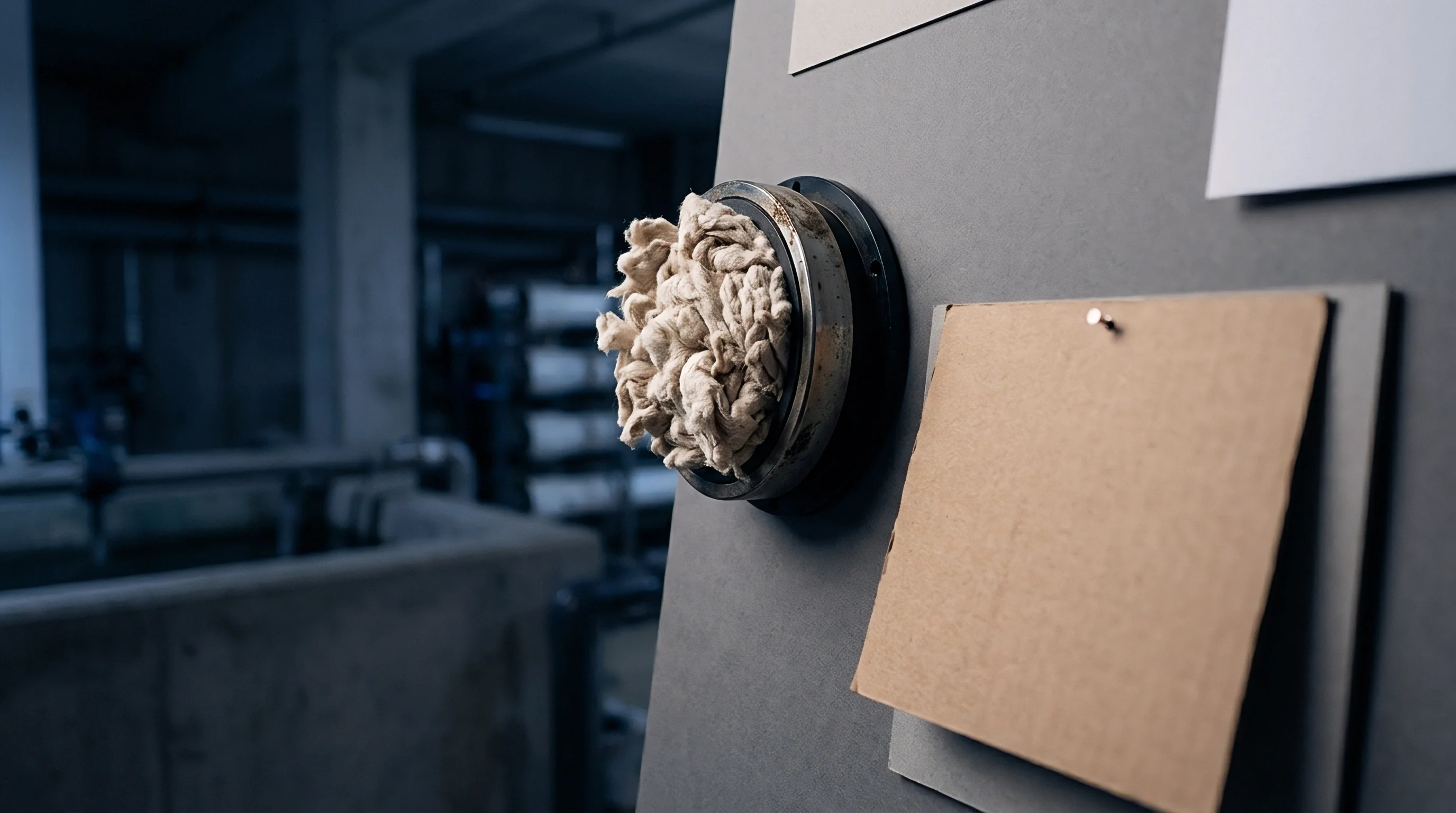
Recycled pulp containers carry distinctive chemical contaminants from previous life cycles. Paper manufactured from recovered waste streams retains residual de-inking surfactants, polycyclic aromatic hydrocarbons, phthalate plasticizers from printing inks, and bisphenols from thermal coatings. Gas chromatography-mass spectrometry screens readily detect diisopropylnaphthalenes, which serve as signature chemical markers for carbonless copy paper and recycled office scrap.
Virgin unbleached kraft liners processed directly from forest pulp displays zero parts per million of these synthetic compounds.
Under EN 645 water extraction at 20 degrees Celsius, virgin board shows total extractable organic carbon profiles below 15 milligrams per kilogram.
Trace heavy metal screening via inductively coupled plasma mass spectrometry provides another verification mechanism. Post-consumer packaging carries lead, cadmium, copper, and chromium derived from legacy inks, varnishes, and industrial processing aids. Even after intensive flotation deinking, recycled stocks exhibit elevated zinc and copper baselines compared to unbleached virgin pulp.
When a customs officer inspects paperboard declared as 100 percent virgin chemical pulp and the laboratory identifies 45 parts per million of copper alongside high levels of diisopropylnaphthalene, the virgin declaration collapses under chemical scrutiny.
Mineral oil hydrocarbons deliver definitive proof of furnish composition. Recycled paperboard contains measurable fractions of both mineral oil saturated hydrocarbons and mineral oil aromatic hydrocarbons originating from historical newsprint inks. Virgin multi-site mills do not generate mineral oil residues during Kraft digestion or subsequent chlorine-free bleaching sequences.
Customs laboratories running online high-performance liquid chromatography-gas chromatography-flame ionization detection identify recycled fiber contamination down to limits of 0.5 milligrams per kilogram, rendering falsified virgin declarations untenable.
Under European Union packaging rules and international supply contracts, an unverified virgin claim containing detected mineral hydrocarbons generates severe product liability. Importers who verify certificates only at the corporate level discover that their specific batch contains contaminated recovered fiber. The shipment faces immediate distribution bans and mandatory destruction orders.
Trace
Regulatory enforcement increasingly pairs botanical fiber analysis with isotopic and genetic fingerprinting to confirm true geographical origin. The European Union Deforestation Regulation and the United States Lacey Act establish strict requirements for proving the precise physical geolocation of timber harvests. Administrative claims generated through mass-balance credits cannot satisfy the evidential thresholds demanded by customs authorities inspecting cross-border wood fiber flows.
Enforcement bodies trace the product to the exact forest plot.
Stable isotope ratio mass spectrometry measures natural variations in hydrogen, carbon, nitrogen, oxygen, and strontium incorporated into cellulose tissue during plant growth. Stable isotopes of oxygen-18 and deuterium vary systematically with precipitation patterns, distance from oceanic bodies, elevation, and regional climate. Strontium isotope ratios (87Sr/86Sr) map directly to local underlying bedrock geology.
A board mill declaring fiber origin from sustainable pine plantations in south-eastern Georgia, USA, produces an unmistakable isotopic profile:
- Delta 18-O enrichment values mirror regional coastal plain precipitation signatures, typically measuring between plus 20 and plus 24 per mil Vienna Standard Mean Ocean Water.
- Strontium isotope ratios reflect ancient coastal plain sedimentary rocks, diverging sharply from the radiogenic granite signatures characteristic of interior boreal shields.
- Carbon-13 discrimination factors capture regional photosynthetic transpiration stresses governed by prevailing subtropical humidity indices.
- Nitrogen-15 baseline measurements identify agricultural runoff inputs typical of commercial southern pine plantation forestry regimes.
When mass spectrometry uncovers an isotopic profile with light oxygen signatures and boreal strontium characteristics in timber declared as southern US pine, trade regulators halt the cargo. The multi-site paper mill group may operate valid chain-of-custody certificates in both North America and Northern Europe, but applying volume credits from Swedish production to cover an import batch sourced from illicit or unverified Russian pine constitutes a direct violation of customs and anti-deforestation laws.
A customs officer will detain any physical consignment whose isotopic profile conflicts with the geo-coordinates listed in its regulatory import declaration.
Environmental DNA and genomic single-nucleotide polymorphism mapping extend physical forensic resolution beyond elemental ratios. Laboratories extract trace DNA fragments from processed cellulose, amplifying target chloroplast and nuclear genetic regions via polymerase chain reaction. While intense chemical pulping degrades most genomic structures, mechanical pulps, unbleached kraft boards, and semi-chemical corrugated mediums retain enough fragmented DNA for taxonomic identification.
Botanists cross-reference identified alleles against global reference databases to isolate the harvesting region down to narrow geographical boundaries.
Micro-X-ray fluorescence mapping of trace mineral distribution further confirms raw material processing conditions. Inorganic ash residues contain signature ratios of calcium, silicon, manganese, and iron derived from local mill process water and raw wood ash. Every pulp mill operates an idiosyncratic water chemistry profile governed by regional aquifer geology, river hydrology, and chemical recovery loops.
Forensic profiling links the delivered physical board to an individual mill facility, dismantling deceptive transfers across multi-site certificate networks.
Physical trace methods operate independently from administrative trade declarations. An importer who relies solely on an unverified PDF document takes on all legal risks associated with non-compliant timber entering consumer markets.

Breach
Administrative reconciliation fails when documentary chain-of-custody rules contradict trade compliance standards. The fundamental structural conflict sits between multi-site credit systems and border-level liability. Under FSC-STD-40-004 V3-1 Clause 10.3, certified multi-site organizations may share credit accounts between participating sites if all sites share the same country or if specific regional criteria are satisfied.
A company converts virgin kraft pulp into certified volume credits, applies those credits to cheap mixed-waste paperboard manufactured at another facility, and issues an invoice with a clean documentary claim.
| Declaration Document | Documented Claim Type | Governing Scheme Standard | Forensic Test Technique | Physical Finding at Port | Enforcement Outcome |
|---|---|---|---|---|---|
| Multi-Site Group Certificate | FSC 100% Virgin | FSC-STD-40-004 Cl. 10.3 Credit Account | GC-MS via EN 14719 | 28 mg/kg Diisopropylnaphthalenes detected | False customs declaration, cargo detained |
| PEFC Due Diligence System | PEFC Certified 70% | PEFC ST 2002:2020 Cl. 6.3 Volume Credit | Graff C Microscopy (ISO 9184) | 95% Unbleached mechanical softwood | Misdeclaration of fiber species, duties adjusted |
| EUDR Due Diligence Statement | Deforestation-Free | Regulation (EU) 2023/1115 Art. 4 | Strontium 87Sr/86Sr Mass Spectrometry | Isotopic profile matches high-risk boreal zone | Cargo seizure, penalty of 4% annual turnover |
| PPWR Recycled Content Filing | Post-Consumer 30% | EU Packaging Proposal / ISO 14021 | Microscopy and Water Retention Value | Zero hornification, unrefined virgin pine | Greenwashing sanction, retail distribution ban |
Border authorities enforce strict non-substitution requirements that invalidate administrative credit transfers. Customs declarations demand exact Harmonized Tariff Schedule classification based entirely on physical content. Subheading 4802.55 covers paper containing no mechanical fibers or under 10 percent mechanical fibers by weight, while Subheading 4802.61 covers paper containing greater than 10 percent mechanical fibers.
If an importer presents an FSC Mix Credit document claiming a high-grade chemical woodfree sheet, but physical laboratory microscopy reveals 25 percent groundwood fibers, customs authorities assess tariff fraud penalties and reclassify the shipment at higher duty rates.
The regulatory fallout under the European Union Deforestation Regulation removes all safe harbors for corporate multi-site accounting. Article 4 and Article 9 of Regulation (EU) 2023/1115 require operators to provide the exact geographic coordinates of all plots of land where the timber was harvested, alongside conclusive proof that no deforestation occurred after December 31, 2020. A multi-site credit transfer that sweeps different physical supplies into one compliance declaration breaches these requirements.
Physical wood from an unmapped or non-compliant parcel remains non-compliant, regardless of the balancing credits applied.
Corporate purchase contracts typically lack explicit protections linking documentary claims to physical product chemistry. Standard purchase orders state that the supplier must provide certified material conforming to commercial grade specifications. This language leaves buyers legally exposed.
If an administrative certificate proves valid but customs testing detects unauthorized species or post-consumer markers, the buyer carries full legal liability as the importer of record. The mill retains the purchase payment while the buyer shoulders port storage fees and civil penalties.
Exclusionary terms in multi-site group declarations present substantial financial risks to buyers. Certificate annexes routinely list specific participating manufacturing locations while excluding secondary converting units, subsidiary sheeting operations, or external toll coaters. A brand specifying food-grade folding boxboard may source from a certified mill group, but if the roll is slit and rewound at an uncertified contract warehouse, the physical chain of custody breaks entirely.
The documentation displays a genuine group certificate number, but the commercial chain fails strict legal muster.
A supplier who ships mixed lots under a multi-site certificate often asserts that credit accounts accurately balance out across all calendar quarters.
Shield
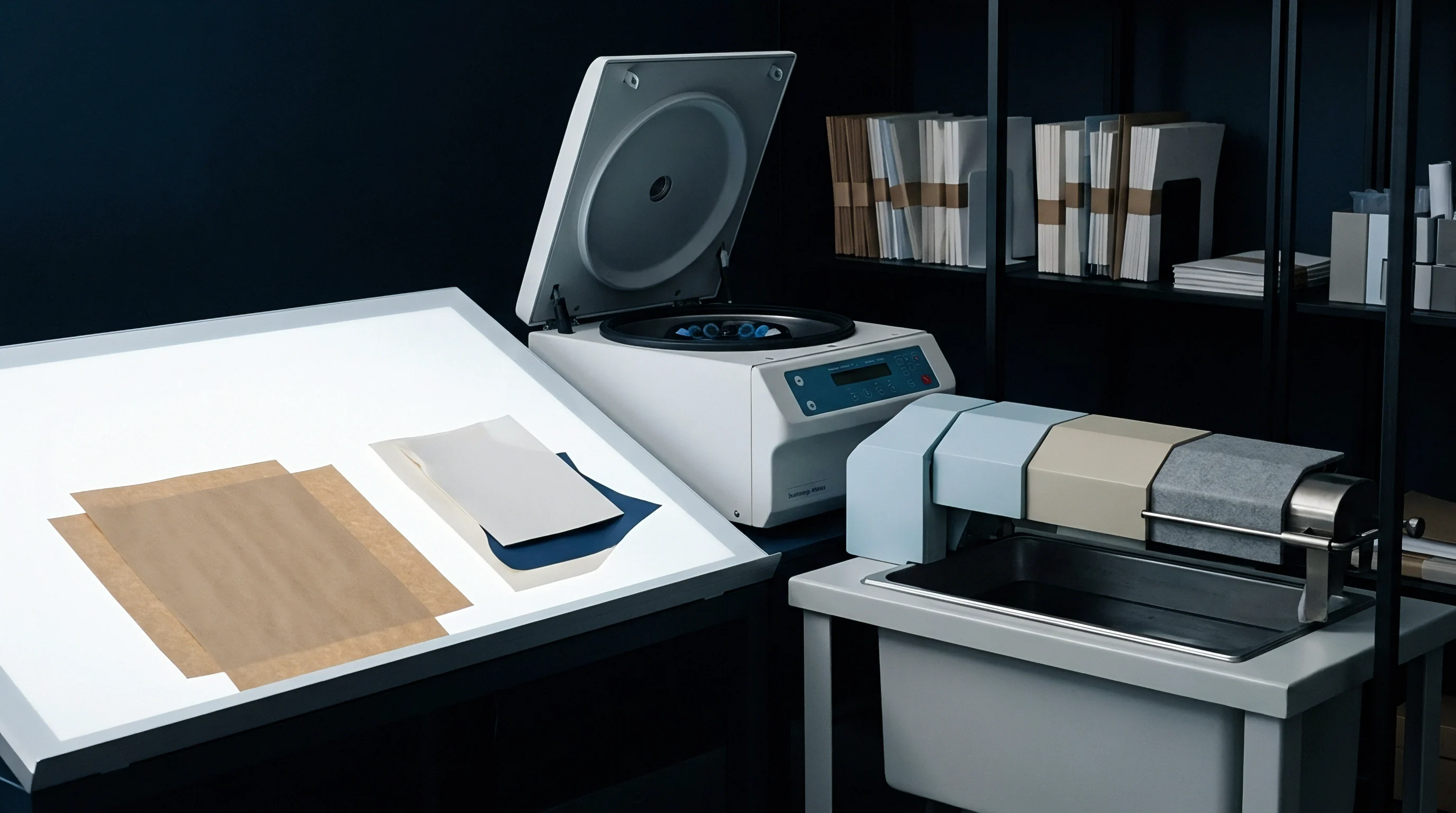
Protecting capital against customs seizures requires strict, enforceable contract language. Commercial purchase agreements must reject mass-balance assumptions for regulatory filings, requiring suppliers to guarantee that all delivered paperboard matches its stated physical furnish. The physical specimen on the pallet must align with both the accompanying analytical test report and the regulatory declaration.
A worked financial scenario demonstrates the real balance-sheet risk across cross-border paperboard supply lines. Take a 200-tonne delivery of high-bulk virgin folding boxboard specified at 1,150 euros per tonne, representing a 230,000 euro commercial transaction. Assume the importer relies on a multi-site FSC Mix Credit certificate, but customs authorities seize the shipment after identifying 18 percent post-consumer recovered fiber and elevated mineral hydrocarbons via ISO 9184-3 and DIN EN 16995 testing.
The costs escalate across distinct commercial layers:
- Port detention and demurrage fees accumulate at 120 euros per container per day across ten 40-foot maritime containers, totalling 36,000 euros across a standard 30-day customs quarantine window.
- Administrative customs penalties under strict liability misdeclaration statutes impose fines equal to 50 percent of the dutiable cargo value, adding 115,000 euros to total exposure.
- Regulatory sampling and accredited laboratory fees for full forensic botanical re-testing and isotopic profiling generate an invoice of 8,500 euros billed directly to the importer of record.
- Commercial contract termination penalties from downstream packaged-goods brands facing manufacturing downtime run at 50,000 euros under clear service level agreements.
- Mandatory freight re-export or certified industrial incineration costs under customs supervision command a further 14,000 euros, resulting in a total net loss of 223,500 euros on a 230,000 euro order.
Sourcing organizations prevent these financial losses by inserting an explicit batch-level testing and warranty clause into every packaging order:
The Seller warrants that each individual production lot delivered under this Agreement strictly conforms to the physical, botanical, and chemical fiber profile declared on the corresponding customs import documentation, invoice, and regulatory filing. Documentary chain-of-custody credit transfers, mass-balance adjustments across separate mill locations, and group-level volume accounting are expressly rejected as valid verification of physical product characteristics. The Seller shall provide, with each commercial shipment, an accredited ISO/IEC 17025 laboratory test certificate confirming fiber furnish identification according to ISO 9184 and the absence of prohibited recovered fiber markers under EN 14719.
Any discrepancy between analytical laboratory test results obtained by the Buyer or customs authorities and the Seller’s documentary furnish declaration constitutes an incurable material breach of contract, entitling the Buyer to immediate reimbursement of the full purchase price, cancellation of outstanding purchase orders, and complete indemnification for all associated customs penalties, storage charges, testing fees, and downstream damages.
Contract protection requires strict physical verification on the warehouse floor. Importers must draw baseline samples from incoming rolls using TAPPI T 400 protocols, split each sample into retention sets, and commission independent fiber furnish tests before submitting formal customs clearance declarations. Securing the technical supply chain requires confirming physical fiber composition long before shipments reach customs examination points.
Testing every inbound lot introduces friction, yet omitting verification leaves border clearance entirely to chance.