Standardized Laboratory Methods for Evaluating Matte Print Coating Burnishing
Standard laboratory burnish evaluation uses controlled sled friction and 60-degree delta gloss measurements to quantify matte coating asperity degradation.

Abrasion
Matte finishes work by scattering incident light. Microscopic surface roughness diffuses light across the print plane, creating a low-gloss appearance. When folding, pallet stacking, or transport flattens or strips away these tiny asperities, the affected contact areas begin reflecting light directionally.
This localized shift is burnishing. Although the underlying ink film usually remains intact, the package fails brand inspection when dark solid areas develop shiny, reflective streaks that look like scuffs or grease marks.
Surface deformation depends on coating rheology, binder crosslink density, and matting pigment distribution. In a waterbased matte overprint varnish, synthetic silica particles project above the continuous acrylic resin matrix to scatter light. Under pressure from adjacent carton flaps or corrugated liners, this contact interface breaks down in three micro-mechanical stages.
First contact elastically deforms the resin matrix and shifts exposed silica particles around. Ongoing vibration or rubbing introduces shear forces that exceed the polymer binder’s yield strength. The acrylic matrix then plastically deforms, smearing over nearby silica particles and filling the microscopic valleys that once scattered light.
Under higher contact pressures, projecting silica agglomerates shear off completely or break down into fine fragments that are pressed into the resin. The surface ends up specularly smooth, causing a sharp spike in measured gloss.
Specular reflection spikes occur before physical pigment dislodgement registers on densitometric tools.
Transit vibration accelerates surface wear. Palletized cartons sit under continuous low-amplitude, high-frequency motion during truck and rail transport. Stacking weight combined with this dynamic vibration speeds up the polishing of matte finishes.
Pressures down to 0.35 kilopascals, paired with 12 Hertz rail harmonics, can flatten acrylic asperities within two hundred kilometers of transport. Dark backgrounds ~ especially rich blacks made with carbon black and reflex blue ~ show burnish streaks with gloss increases as small as 2.5 gloss units at a 60-degree angle.
Standard gravure and flexographic matte formulations without specialized slip additives can lose their matte appearance within forty-eight hours of line haul transit, triggering heavy packaging sorting costs at distribution centers.
Mechanical Drivers of Surface Polishing
Contact pressure dictates how fast surface asperities collapse. In lab tests, raising the normal force speeds up the shift from micro-abrasion to plastic burnishing. When loads concentrate on raised paperboard textures, like the ridges on solid bleached sulfate or coated recycled board, local contact pressures easily exceed five kilopascals.
Under these pressure spikes, interfacial friction heats the binder matrix. This thermal softening lets polymer chains flow beneath the sliding contact point, sealing off open surface porosity.
That friction creates real heat at the interface. Even an eight degrees Celsius temperature rise drops the shear modulus of standard styrene-acrylic emulsions enough to speed up matrix smearing. UV-curable matte coatings stand up better to heat than aqueous emulsions, but fail differently.
The dense crosslinking in acrylated oligomers stops plastic smearing; instead, high shear causes brittle micro-fractures in the polymer network around embedded silica. Those dislodged particles then act as secondary abrasives, grinding down nearby peaks and polishing the print to a semi-gloss sheen.
Relative humidity also changes how aqueous coatings behave mechanically. Above sixty-five percent relative humidity, cellulose fibers in the paperboard swell, altering sheet topography and creating prominent high points. At the same time, hydrophilic components in the coating absorb moisture and plasticize, losing hardness and scratch resistance.
This is why lab testing protocols enforce strict conditioning rules to get repeatable results between converting plants and brand testing labs.
Board porosity dictates coating penetration and final film structure. On open, porous boards, low-molecular-weight resin fractions soak deep into the raw fibers, leaving the surface without enough binder to anchor matting pigments. Loose silica particles quickly rub off under friction, exposing the base ink layer.
On tightly sealed, double-blade-coated premium boards, the varnish stays on top, holding its target weight of 1.2 to 2.4 dry grams per square meter. That even layer resists burnishing much better, so long as the matting particles stay evenly spread rather than clumping together.
Unconditioned matte cosmetic sleeves shipped along humid ocean routes without extra barrier wrap incur heavy repacking costs.

Sled
Standard mechanical testing tools simulate transit and handling abrasion under controlled lab conditions. These instruments push a weighted receptor block across a test sample for a set cycle count. Mechanical action, contact area, pressure distribution, and stroke geometry vary significantly between test devices.
Picking the right protocol determines whether lab data actually predicts real supply chain performance.
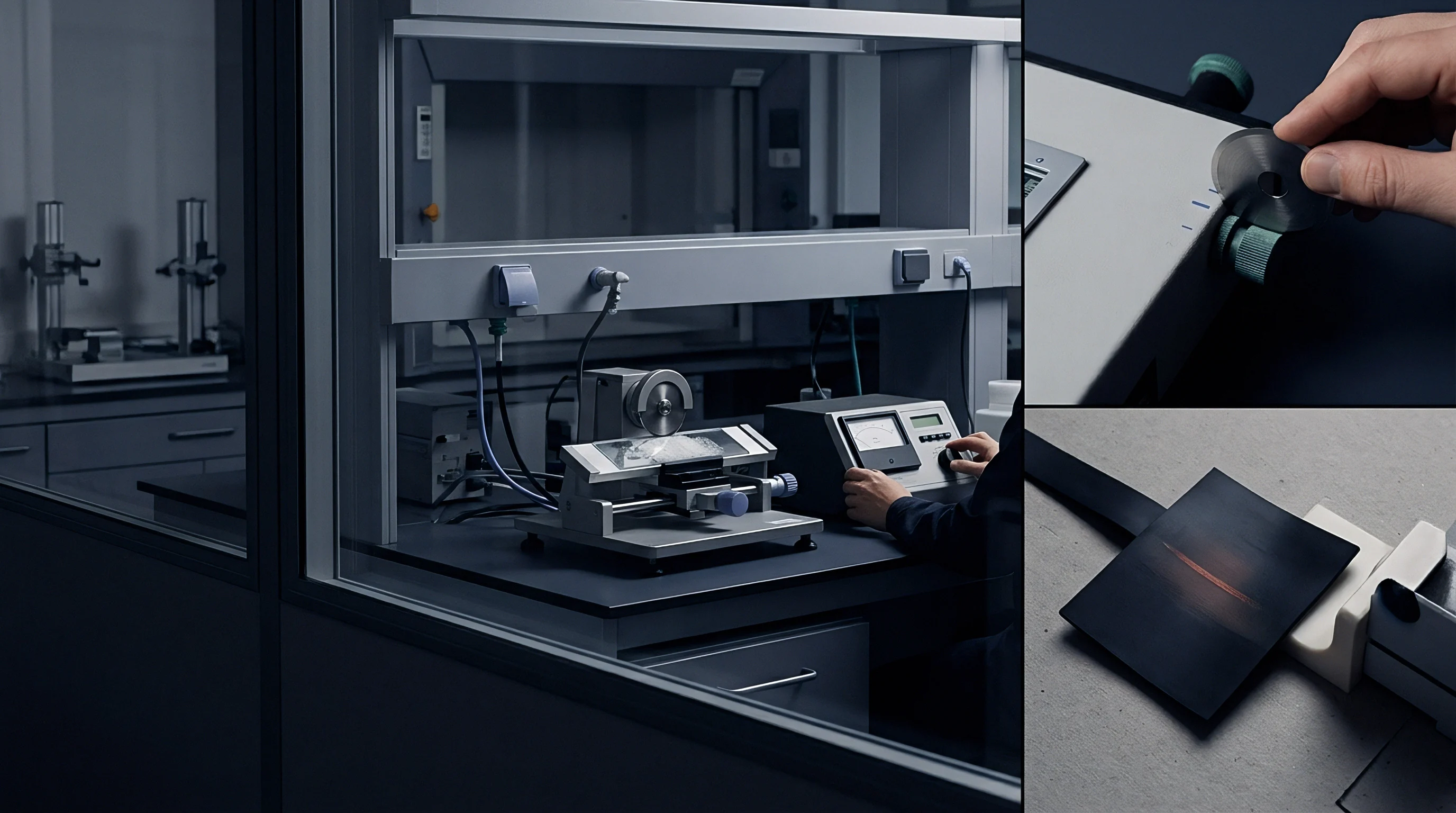
The Sutherland Rub Tester has long been the standard benchmark across North American converting operations. It uses a motor-driven oscillating arc to move a weighted sled over an eighty-millimeter stroke path at 42 or 85 cycles per minute. The contact block features a resilient neoprene rubber pad holding an abrading receptor, such as unprinted board, standard receptor paper, or matching printed matte samples.
Protocols generally call for a 908-gram (two-pound) or 1816-gram (four-pound) sled, creating nominal contact pressures of 3.45 and 6.90 kilopascals over the contact area.
Other instruments rely on rotary, linear, or reciprocating motion. Rotary platform abrasers like the Taber turn the specimen under two weighted abrasive wheels under constant vertical load. The Gakushin friction tester, common in East Asian automotive and consumer electronics packaging workflows, drives a curved weighted arm in a reciprocating linear path across a flat or concave bed.
The Crockmeter, defined by textile and surface coating standards, drags a nineteen-millimeter circular finger linearly across the sample under a nine-newton force.

Mechanical Parameters of Standardized Testing Equipment
- Sutherland Arc Motion moves along a curved path with an uneven velocity profile, hitting peak speed at mid-stroke and dropping to zero at each reversal.
- Linear Reciprocating Sled holds constant speed across eighty percent of its linear stroke, applying frictional shear evenly over the sample contact area.
- Rotary Taber Platform generates multi-directional planar shear, driving abrasive grains across the surface at intersecting angles to expose structural micro-defects.
- Crockmeter Finger Assembly concentrates high normal loads onto a narrow contact diameter, isolating localized puncture and scratch resistance from broad surface burnishing.
Standard conditioning under ISO 187 or TAPPI T 402 is mandatory before running friction cycles. Specimens and receptors must settle at twenty-three degrees Celsius and fifty percent relative humidity for at least twenty-four hours. Humidity swings change the moisture content of the paperboard, altering both the coefficient of friction and the compliance of the neoprene backing pads.
A hardened or degraded neoprene pad on a Sutherland sled skews pressure distribution toward the leading edge of the block, causing premature burnish marks that do not reflect actual packaging durability.
| Standard Designation | Apparatus Geometry | Standard Contact Load | Receptor Material | Primary Failure Metric |
|---|---|---|---|---|
| ASTM D5264 | Oscillating curved arc sled | 908 g or 1816 g | Unprinted board or cotton cloth | Optical gloss increase at 60 degrees |
| TAPPI T 830 | Reciprocating arc or linear sled | 1816 g (6.9 kPa) | Standardized receptor paper | Visual scuff and optical density transfer |
| ASTM D4060 | Rotary dual-wheel platform | 250 g, 500 g, or 1000 g | CS-10F or CS-10 calibrase wheels | Coating mass loss per 1000 cycles |
| DIN 53107 / ISO 187 | Linear reciprocating flatbed | 1000 g to 2000 g | Identical printed substrate face-to-face | Delta gloss and micro-roughness reduction |
| ASTM D1894 | Horizontal pull sled (COF) | 200 g (63.5 mm square) | Printed sample face-to-face | Static and kinetic coefficient of friction |
Where Do Sutherland Rub Cycles Distort Field Performance?
The deceleration phase at the end of every Sutherland stroke introduces localized dwell time under load. As the arm reverses direction, speed hits zero, letting the weighted receptor press statically into the coating for a split second. This continuous stopping and starting spikes localized shear stress at the ends of the stroke.
Technicians often see dense burnish bands at the edges of the rubbed patch while the center remains largely unaffected.
Running drawdowns on reciprocating sled fixtures driven by linear servos avoids this reversal artifact. Linear drives maintain uniform speed across the entire stroke, giving clean, even surface wear. When converting operations rely solely on standard arc testers, operators tend to over-formulate coatings with extra wax to survive the stroke-end burnish mark, inadvertently damaging gluability, hot foil stamping receptivity, and downstream overprintability.
Receptor choice heavily dictates test severity. Face-to-face testing, where the matte coating rubs against an identical matte sheet, mimics carton-on-carton contact inside a shipping case. Hard silica particles on both faces interlock, causing rapid particle stripping and aggressive micro-scratching.
Rubbing against smooth bleached kraft backings or cotton swatches shifts the failure mechanism to matrix smearing and fiber transfer. Specifying the exact receptor substrate in quality assurance contracts prevents costly commercial disputes between converters and brand owners.
The standard supply agreement clause mandates that the finished matte coating withstand two hundred strokes of a four-pound sled against 24-point SBS board without exceeding a five-unit gloss rise at 60 degrees.

Reflectance
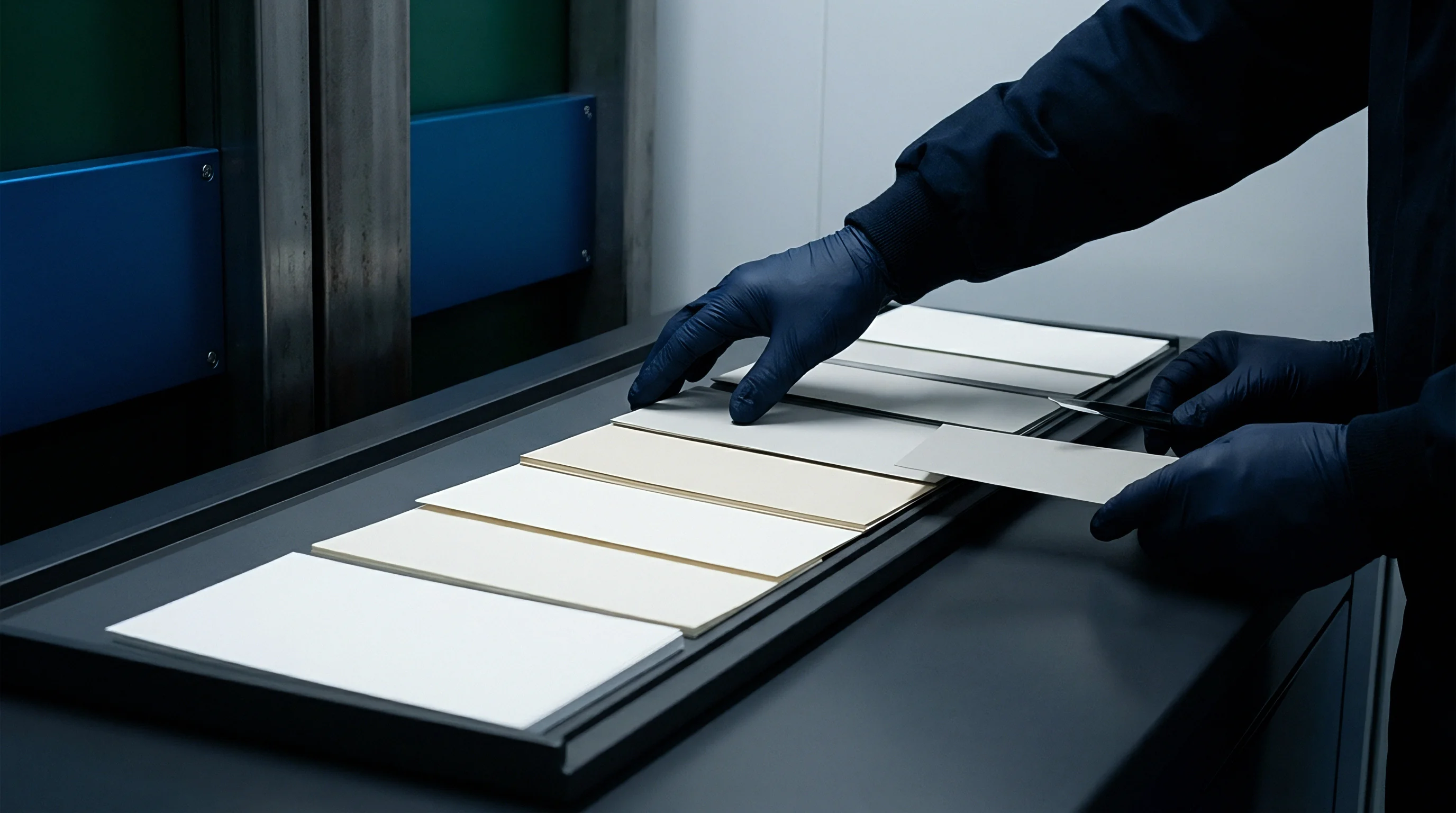
Optical measurement replaces subjective visual scuff ratings with repeatable numerical data. Visual inspection in light booths is prone to operator bias, as variations in viewing angle, ambient light, and eye fatigue lead to conflicting verdicts. Instrument evaluation uses specular glossmetry, spectrocolorimetry, and surface profiling to track physical and optical breakdown in the rubbed film.
Specular gloss measurement follows ISO 2813 and ASTM D523 standards. A light source aims an incident beam at the sample at a specified angle from perpendicular, and a receptor measures the reflected light. Standard coated surfaces use three primary geometries: 20 degrees for high gloss, 60 degrees for medium gloss, and 85 degrees for deep matte finishes.
For matte overprint coatings with initial 60-degree gloss under fifteen gloss units (GU), both 60-degree and 85-degree angles provide critical diagnostic data.
Standard packaging specifications penalise any matte overprint varnish exhibiting a 60-degree gloss elevation greater than four units following four hundred dry rubs under a four-pound load.
The 85-degree grazing angle catches fine changes in surface micro-roughness, making it effective for spotting early asperity flattening. Brand owners, however, notice burnishing mostly at normal and semi-oblique viewing angles. That is why pass-fail thresholds rely on 60-degree delta gloss calculations ~ the absolute difference between post-rub gloss and the unrubbed baseline measured in the exact same spot.

Optical and Colorimetric Evaluation Criteria
- Specular Gloss Differential measures the direct rise in 60-degree reflectivity as flattened matrix areas shift from diffuse to directional reflection.
- Colorimetric Shift Delta E tracks visual density loss and color changes caused by coating thinning, pigment exposure, or binder whitening.
- Micro-Haze Inversion records wide-angle scattering variations that point to sub-micron fracturing in highly crosslinked UV oligomer networks.
Spectrocolorimetric evaluation using CIELAB and Delta E2000 checks whether mechanical wear has damaged the underlying ink. On deep navy, burgundy, or rich black prints, burnishing shows up as a loss in optical density, often called bronzing or milky haze. As the acrylic matrix smears or cracks, the refractive index boundary between damaged coating and air shifts, scattering white light and washing out color saturation.
Spectrophotometers with diffuse/8-degree sphere geometry (d/8°) running in specular component included (SPIN) and specular component excluded (SPEX) modes isolate physical surface gloss changes from actual ink removal.
| Oscillatory Stroke Count | Initial 60° Gloss (GU) | Post-Rub 60° Gloss (GU) | Delta Gloss (60°) | Color Shift (Delta E2000) | Visual Inspection Status |
|---|---|---|---|---|---|
| 50 Cycles | 4.2 | 5.1 | +0.9 | 0.32 | Undetectable under standard D65 light |
| 100 Cycles | 4.1 | 6.8 | +2.7 | 0.74 | Threshold burnish visible at grazing angle |
| 200 Cycles | 4.3 | 9.6 | +5.3 | 1.45 | Distinct shiny band across solid print |
| 400 Cycles | 4.0 | 14.2 | +10.2 | 2.88 | Severe visual failure; rejected lot |
| 800 Cycles | 4.2 | 21.5 | +17.3 | 4.10 | Complete coating breakdown with ink scuff |
Surface profilometry and white-light interferometry confirm the physical mechanisms behind these optical shifts. Non-contact optical profilometers measure average roughness (Ra) and mean roughness depth (Rz) of the coating before and after testing. Fresh matte coatings typically show Ra values between 0.8 and 1.8 micrometers.
After severe rubbing, Ra in the burnished track drops to 0.2 to 0.4 micrometers. This flattening of surface peaks correlates directly with the logarithmic jump in specular reflectance.
Specifying dual-angle spectrophotometry across production runs prevents customer rejections based on visual ambiguity. By pairing 60-degree gloss metrics with 85-degree grazing data, quality control inspectors catch coating drift before pallets enter automated folding lines.
Gloss shifts during high-speed converting are sometimes attributed to static attraction of ambient dust rather than physical coating breakdown.

Formulation
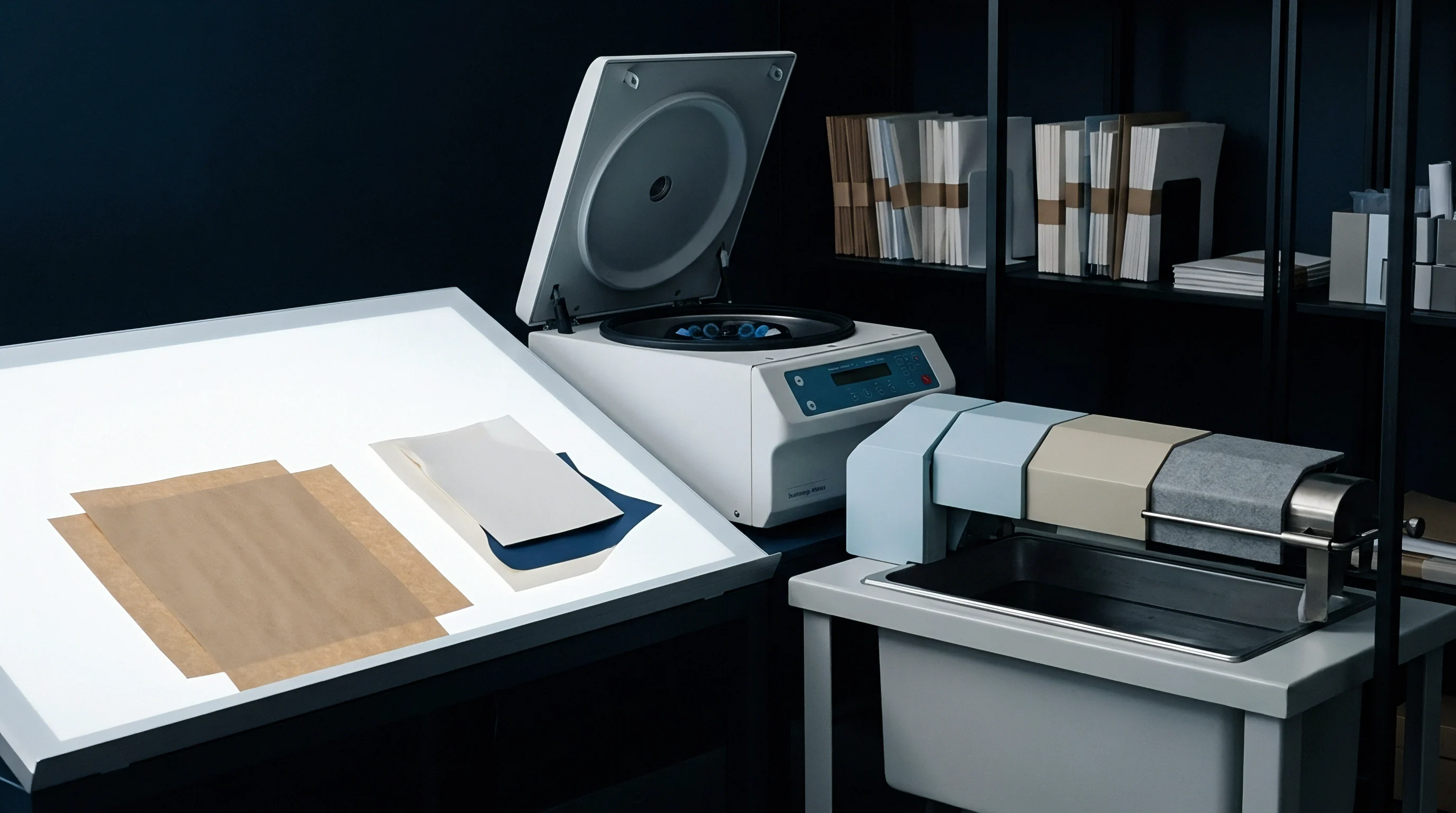
Coating formulation is a balancing act between optical extinction and mechanical durability. Deep matte finishes require matting agents that disrupt surface smoothness, but those same particles act as microscopic stress points that weaken the polymer film. Formulators use synthetic precipitated silicas, fumed silicas, micronized organic waxes, and crosslinked polymer beads suspended in aqueous acrylics, energy-curable acrylates, or solvent systems.
Synthetic amorphous precipitated silicas dominate matte varnish formulation. These porous particles range in average diameter (d50) from two to ten micrometers. As the liquid coating dries and water evaporates, the film shrinks, forcing silica particles to project above the resin.
The porosity and oil absorption of the chosen silica determine how much binder it absorbs. Highly porous silicas matte effectively at low loadings, but they raise varnish viscosity rapidly, limiting press speeds on flexo and gravure coaters.
Wax additives provide slip and scratch resistance. Micronized polyethylene (PE), polytetrafluoroethylene (PTFE), Fischer-Tropsch (FT) waxes, and carnauba wax emulsions float to the surface during drying. This forms a low-surface-energy lubricating layer that lowers the dynamic coefficient of friction (COF).
When an abrasive object hits the surface, the lower COF helps it slide across the asperities instead of shearing them off.
A five-percent addition of micronized polyethylene wax reduces 60-degree gloss bloom to 1.8 units after five hundred Sutherland cycles under standard laboratory climate conditioning at twenty-three degrees Celsius and fifty percent relative humidity.

Why Do Precipitated Silicas Suffer Shearing under Transit Vibration?
Porous silica particles have low internal shear strength. Under continuous mechanical friction, exposed silica structures crush under compressive load, breaking coarse light-scattering peaks into fine debris. The shattered particles no longer project above the resin, leaving a smoothed matrix that reflects light directionally.
Spherical silica beads and crosslinked polymethyl methacrylate (PMMA) beads resist crushing much better than irregular precipitated silica. Their uniform shape spreads contact stress evenly across the matrix, preventing brittle fracture under heavy loads. Spherical beads are less efficient matting agents, however, requiring higher loadings to reach the same gloss level.
Higher loading increases raw material costs and can impair wet ink trap and transfer on multi-station presses.
Matting Agent Structural Failure Modes
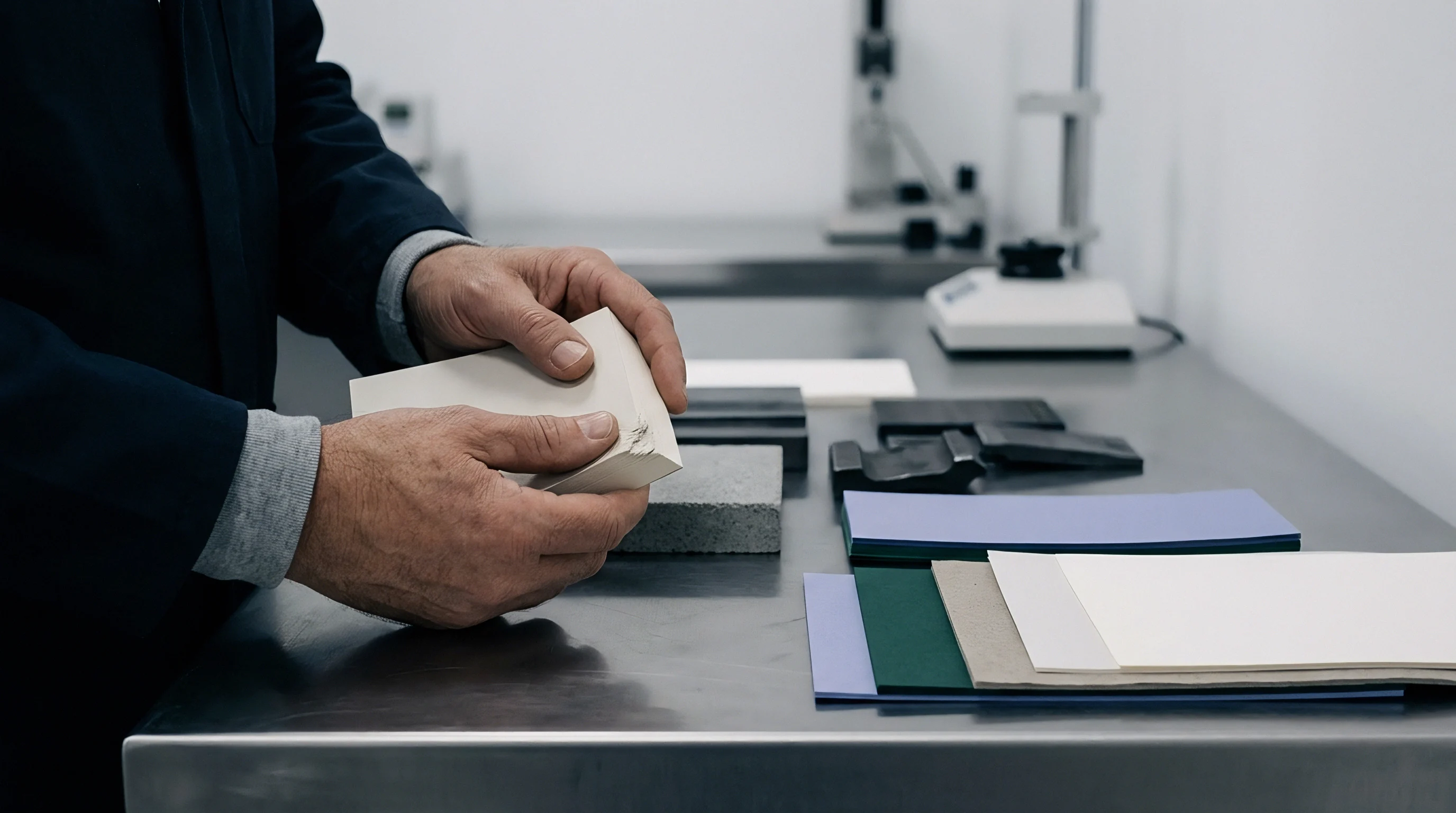
- Silica Flattening occurs when external pressure crushes porous pigment agglomerates into the polymer bed, permanently destroying surface micro-roughness.
- Wax Stratification results from improper drying temperatures that trap slip additives beneath the surface, leaving exposed acrylic peaks unprotected against frictional shear.
- Binder Starvation arises when excessive silica loading robs the matrix of sufficient resin to anchor pigments, causing rapid chalking and dusting under abrasion.
| Additive Chemistry | Mean Particle Size (d50) | Dynamic COF (Face-to-Face) | Burnish Resistance Index | Recyclability & Repulping Status |
|---|---|---|---|---|
| Precipitated Amorphous Silica | 4.5 µm | 0.48 – 0.58 | Moderate (Crush susceptible) | Fully repulpable; zero mill penalty |
| Micronized Polyethylene Wax | 6.0 µm | 0.22 – 0.30 | High (Excellent slip protection) | Compliant; minor micro-stickies risk |
| Micronized PTFE Dispersion | 3.5 µm | 0.14 – 0.20 | Maximum (Extreme shear resistance) | Restricted under emerging PFAS bans |
| Crosslinked PMMA Beads | 5.0 µm | 0.38 – 0.44 | Very High (Elastic recovery) | Compliant; standard screening removal |
| Carnauba Wax Emulsion | 1.5 µm | 0.28 – 0.35 | Moderate-High (Bio-based slip) | Fully biodegradable and repulpable |
Curing chemistry determines matrix toughness. In electron-beam (EB) and ultraviolet (UV) matte varnishes, photoinitiator concentration and UV lamp irradiance set the crosslink density of the cured acrylate network. Under-cured UV coatings retain unreacted monomer that plasticizes the film, severely lowering burnish resistance.
Over-curing creates excessive crosslinking, making the matrix brittle and prone to micro-cracking or flaking when cartons pass through high-speed rotary scoring and folding.
Coarse matting pigments that deliver deep visual extinction invariably create elevated surface drag against adjacent carton flaps during transit.

Ledger
Every coating upgrade brings real manufacturing costs, press setup considerations, and downstream financial risks. Specifying a durable matte overprint varnish means weighing raw material surcharges against the expense of rejected shipments, sorting claims, and damaged brand reputation. In packaging converting, a finish specification is a direct financial decision affecting line speed, waste rates, and regulatory compliance fees.
Standard commodity waterbased matte varnishes add little raw material cost, running 0.012 to 0.018 dollars per square meter of wet film. But basic formulations offer minimal protection on dark, heavy-ink graphics. Upgrading to a premium anti-burnish aqueous formula with spherical PMMA beads and high-performance micronized waxes raises chemical costs to 0.032 to 0.048 dollars per square meter.
On a run of one hundred thousand folding cartons using five thousand square meters of board, that surcharge comes to about one hundred and fifty dollars. Paying that up front avoids transit scuff claims that easily exceed fifteen thousand dollars in returns, manual warehouse sorting, and emergency reprinting.
Specialized varnishes bring pressroom trade-offs. Formulations high in wax and silica solids run at higher viscosities, requiring coarser anilox rolls to transfer sufficient dry film weight. Standard matte coatings run cleanly with an eight to ten cubic centimeter per square meter (cm³/m²) anilox engraving.
Anti-burnish coatings often need twelve to fourteen cm³/m² rolls. Coarser engravings demand more drying capacity, forcing operators to run dryers hotter or slow press speeds by ten to fifteen percent on high-coverage jobs to prevent blocking in the stack.
Energy curing changes the equation. Switching from waterbased dispersions to UV or LED-curable matte varnishes removes drying speed bottlenecks, allowing sheetfed offset presses to run at full rated speeds of eighteen thousand sheets per hour. But UV matte chemistry carries a clear cost premium, running 0.085 to 0.140 dollars per square meter.
UV lamp power also adds roughly four to six kilowatt-hours per thousand sheets, pushing up direct operating energy costs.
Recycling regulations can add fees for unvetted additives. Under extended producer responsibility programs across Europe and emerging state frameworks in North America, packaging components face tiered fees based on recyclability guidelines. While amorphous silicas and vegetable waxes pass repulping tests without penalty, synthetic fluoropolymer additives like PTFE face strict regulatory scrutiny and outright bans under per- and polyfluoroalkyl substances (PFAS) laws.
Replacing PTFE slip aids with bio-based carnauba or engineered hydrocarbon waxes preserves recycling certification while maintaining dynamic COF targets below 0.28.
Auditing press sheets across ink duct splits identifies where localized varnish starvation exposes dark ink solids to scuffing during automated case packing. When the varnish layer falls below 1.0 dry gram per square meter, burnish resistance drops precipitously, rendering expensive additive packages ineffective.
The financial ledger extends to secondary finishing. High-slip anti-burnish coatings loaded with silicone or migrating waxes can contaminate the board surface, dropping surface tension below thirty-four dynes per centimeter. That low surface energy ruins cold glue adhesion during high-speed folding, causing joint failures on glue flaps.
Gluing failures stop automated packaging lines, triggering contractual downtime penalties from contract packers. Converting engineers must balance burnish resistance against glue line performance, often using patterned coating plates to keep glue flaps completely varnish-free.
How far can converting chemistry suppress transit burnishing before the loss of glue joint integrity and repulpability compliance exceeds the landed cost of protective interleaving sheets?