Dynamic Fracture Mechanics of Multi Layer Paperboard Creasing under Rapid Shear Loading
Rapid shear creasing requires tailored interply delamination toughness to prevent liner fracturing while reducing folding torque on high-speed lines.

Groove
When a male scoring rule penetrates multi-ply paperboard, intense transverse shear stress concentrates inside the internal fiber plies, creating localized shear bands. As the steel rule hits the coated top liner, it drives the sheet down into the open female channel. This displacement sets up a complex stress state: out-of-plane compression, in-plane tension along the outer liners, and strong shear between adjacent pulp plies.
At press speeds where impact velocities reach one to ten metres per second, these stress fields build in milliseconds. Controlled shear delamination lowers internal ply stiffness without breaking the outer liners, creating a stable hinge line for folding.
Higher speeds increase peak resistance, shifting cellulose deformation from ductile yielding toward a brittle strain response. At low strain rates, moisture in the fiber network allows fibers to slide and yield plastically. Under rapid impact, however, the binder matrix cannot relax fast enough to absorb high local strain.
This shift in shear rate alters the fracture mode, concentrating stress in narrow bands parallel to the scoring rule and forcing middle plies into shear yield before tensile strain can spread into surrounding areas.
Deformation Modes under Rapid Rule Penetration
High-speed dies compress and displace the substrate at the same time. As the male rule drives into the sheet, the top chemical pulp liner stretches in bending tension while the bottom liner bears against the edges of the female channel. Middle plies made of mechanical pulp or recycled fiber carry most of the shear load, which drives internal delamination.
If the shear strength of these middle plies exceeds the top liner’s tensile fracture strain, the outer liner splits before the inner plies can delaminate.
A high-speed score press operating at three thousand strokes per minute reduces ply shear yield strain by up to twenty percent compared to quasi-static bench measurements.
Substrate thickness and tool geometry dictate whether plies separate cleanly or liners crack. Narrowing the female channel clearance accelerates shear strain in the middle plies. This rapid shearing generates local heat inside the fiber matrix, slightly softening amorphous lignin and hemicellulose, but the effect happens too late in the millisecond impact cycle to stop cracking if peak shear stress passes the dynamic yield limit of the bond.

Shear Localization and Stress Field Distribution
Concentrated force along the scoring edge produces steep stress gradients through the board thickness. Finite element strain maps show peak shear concentrating at the interface between the top liner and the adjacent middle ply, as well as between individual core plies. Fast punch engagement narrows these shear zones, locking plastic deformation into thin bands along the creasing axis.
How shear stress distributes through the sheet depends on the relative shear moduli of individual layers, with board caliper dictating rule thickness and mechanical pulp content limiting ply slip. Bleached kraft liners offer high tensile stiffness with moderate shear flexibility, while thermo-mechanical pulp cores have a higher shear modulus but lower yield strain. Imbalance in the liner-to-core weight ratio creates stress points that rupture the surface liner during fast die engagement.
- Top Liner Tensile Splitting occurs when the outer bleached kraft layer exceeds its ultimate tensile strain under high bending elongation.
- Bottom Liner Compression Buckling develops when internal plies fail to slip, forcing the lower liner into sharp compressive folding.
- Uncontrolled Shear Delamination propagates beyond the score channel boundaries, softening the adjacent panel and bulging the package sides.
- Core Fibre Rupture arises when short mechanical pulp fibres in the middle layer snap under shear instead of sliding past each other.
Tooling specified without matching the dynamic shear response of the middle plies causes catastrophic outer liner cracking across twenty percent of converted blanks.

Delamination
Reducing bending stiffness enough for a clean box fold depends on internal ply separation. Multi-layer boards rely on controlled interply delamination under Mode II shear fracture to form an artificial hinge line. As the scoring rule pushes the sheet into the female channel, internal shear overcomes the strength between plies, forming micro-fractures parallel to the sheet plane that drop the moment of inertia along the score without ruining the outer liners.
Mode II shear fracture toughness measures how well a board grade resists crack propagation under pure shear. Unlike Mode I tensile opening, Mode II involves sliding between adjacent fiber layers. Higher loading rates increase the energy release rate required to start this sliding.
In thermo-mechanical pulp cores, stiff unbleached fibers resist sliding, raising peak shear resistance and concentrating strain at the chemical pulp interfaces.
Mode II Fracture Mechanics in Multi-Ply Structures
Pure shear along ply interfaces drives cracks forward without opening them up. The dynamic critical strain energy release rate in shear dictates how far delamination spreads during rule impact. If that threshold is too high, the board behaves like a solid beam, converting scoring energy into bending tension that tears the outer printable liner.
Higher mechanical pulp content in the middle ply reduces shear fracture toughness and accelerates internal ply sliding during rapid scoring.
Short-span shear tests and z-directional tensile measurements give baseline indicators of interply bonding, but static test methods cannot capture velocity-dependent crack propagation. At impact speeds above three metres per second, the stress field at the crack tip sharpens, shrinking the volume of fiber matrix that can deform plastically. This dynamic embrittlement narrows the delamination zone, yielding stiff, narrow score lines that resist folding on fast gluer lines.
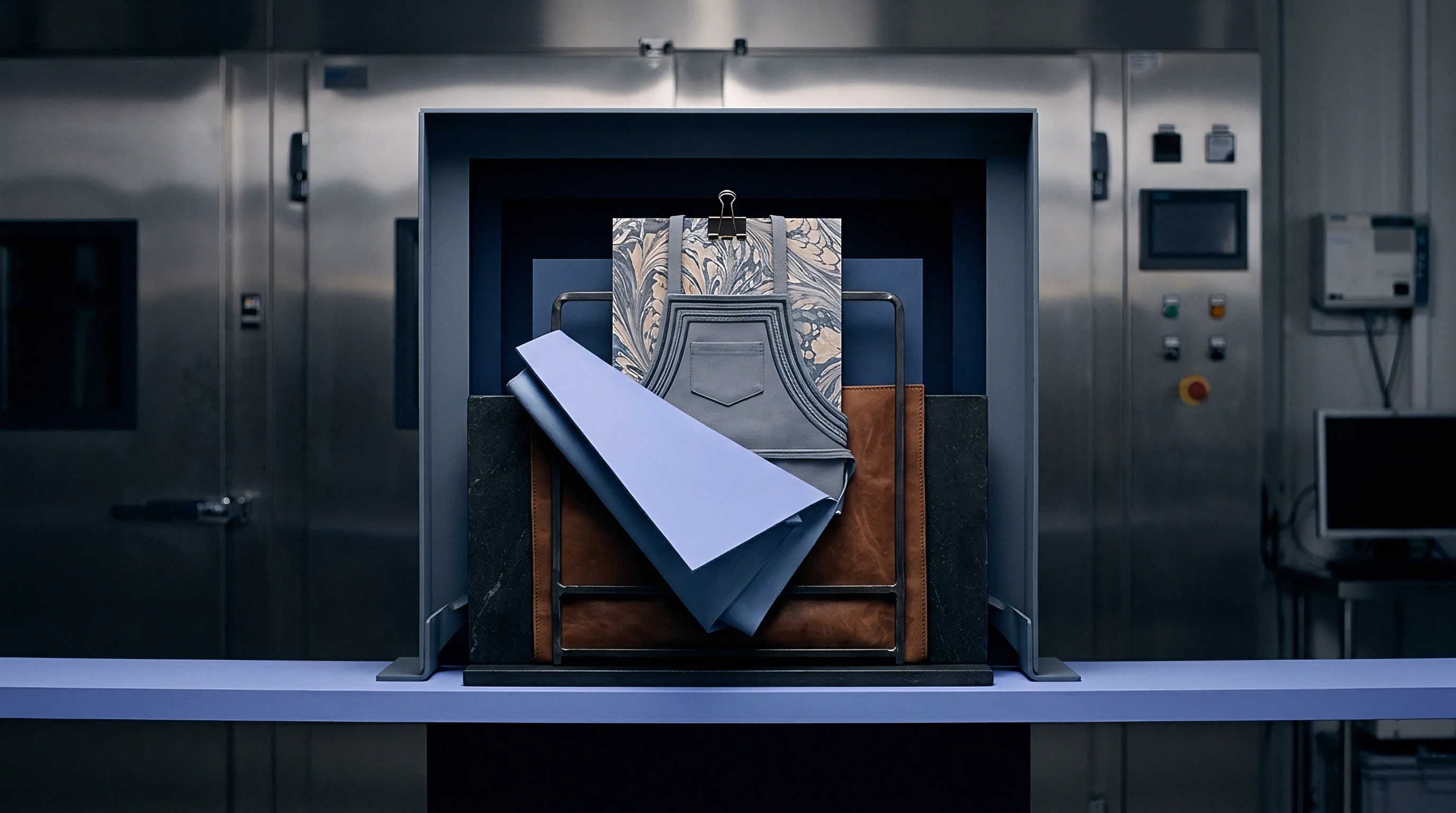
Furnish Composition and Interply Bond Response
Fiber morphology across layers determines how the sheet resists sliding under fast deformation. Softwood kraft fibers in outer plies provide long, flexible bonds that yield plastically without tearing. Hardwood mechanical pulps in core plies supply bulk and stiffness, but their short fibers offer low fracture toughness when sheared quickly.
| Board Grade | Bleached Kraft Outer (g/m2) | Mechanical Core (%) | Mode II Energy GIIC (J/m2) | Dynamic Shear Yield Stress (MPa) |
|---|---|---|---|---|
| Solid Bleached Board (SBB) | 300 | 0 | 380 | 4.2 |
| Folding Boxboard (FBB) | 70 | 65 | 240 | 6.8 |
| Coated Recycled Board (CRB) | 45 | 0 | 190 | 5.1 |
| Solid Unbleached Board (SUB) | 280 | 0 | 420 | 4.6 |
Starch additives and internal sizing also affect interply shear behavior. Adding too much starch at the wet end boosts z-directional tensile strength, but it raises Mode II shear stiffness past useful limits and prevents clean interply sliding as the die penetrates. Balancing adhesive additions against mechanical pulp ratios controls the dynamic shear threshold needed to form clean score lines.
Whether nano-fibrillated cellulose surface treatments on middle plies can selectively elevate shear fracture toughness without increasing board bending resistance remains unproven across commercial high-speed converting runs.
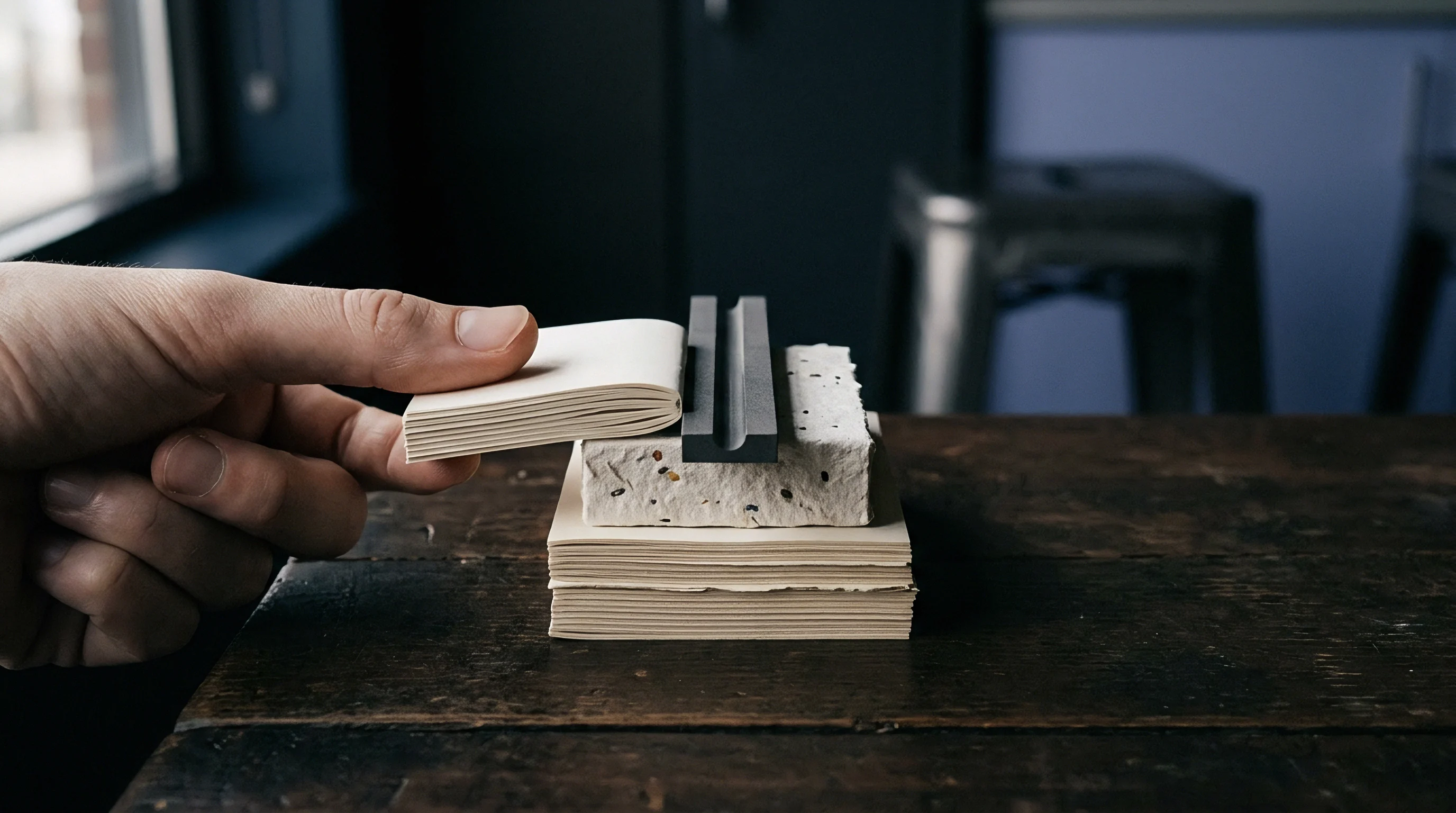

Kinematics
Punch speed directly alters the strain field across the score channel. In rotary and flatbed die-cutting, male scoring rules hit the paperboard at velocities between one and eight metres per second. High impact speeds drop the contact time between tool and sheet to fractions of a millisecond, restricting moisture movement and viscous stress relaxation while raising peak resistance against the blade.
Tool geometry determines how kinetic energy spreads through the sheet. Male rule width, top radius profile, female channel width, and die depth act as an interdependent system. Opening up female channel clearance reduces average shear strain across core plies, but it widens the delamination zone to create broad scores with low folding resistance.
Narrowing the channel concentrates shear deformation, elevating strain rates and risking outer liner failure.

Can High Punch Speeds Induce Brittle Fiber Rupture?
High loading rates suppress viscous relaxation in cellulose networks and drive up peak stress. When punch velocity exceeds five metres per second, strain rates in middle plies reach several hundred reciprocal seconds. Under these conditions, hydrogen bonds between cellulose fibrils cannot break and reform progressively; elastic energy builds until fibers snap abruptly instead of sliding smoothly.
A score line specification requiring a maximum bending moment ratio of zero point thirty five under ISO 2493 conditions forces converter re-tooling if line speed increases by two meters per second.
Board moisture content strongly modifies strain rate sensitivity during high-speed scoring, as moisture loss makes outer plies brittle. Sheets with under six percent total moisture are noticeably brittle under fast shear. At seven point five percent moisture, water acts as a natural plasticizer in amorphous cellulose, maintaining ductile shear yielding even at rule velocities above six metres per second.
- Set the crease rule height to match board caliper plus female die depth minus compressed core allowance.
- Adjust anvil stroke depth on the platen until internal ply slip initiates without outer liner fracture.
- Measure score bending moment on converted samples within five minutes of die exit using a two-point bending instrument.
- Verify male to female die clearance ratio against board thickness to prevent asymmetrical shear loading.
- Align die tooling within five micrometres to eliminate localized strain peaks during rapid stroke engagement.
Channel width governs shear strain while rule depth dictates fold torque; matching die stroke depth to target folder-gluer velocity keeps score quality stable across long production runs.
Score cracking on high-speed lines stems from improper die channel humidity rather than variations in ply shear strength.
Calibration
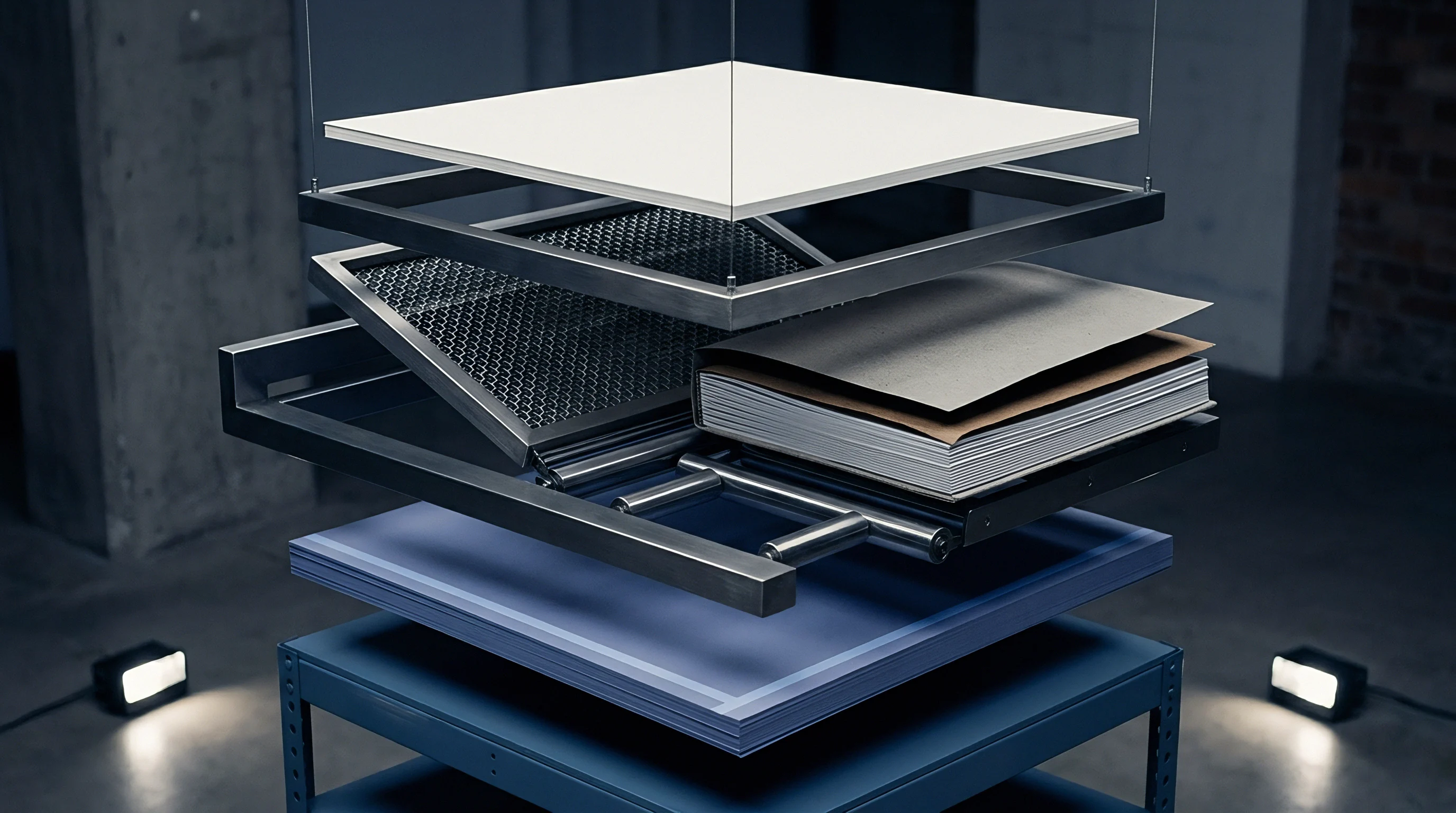
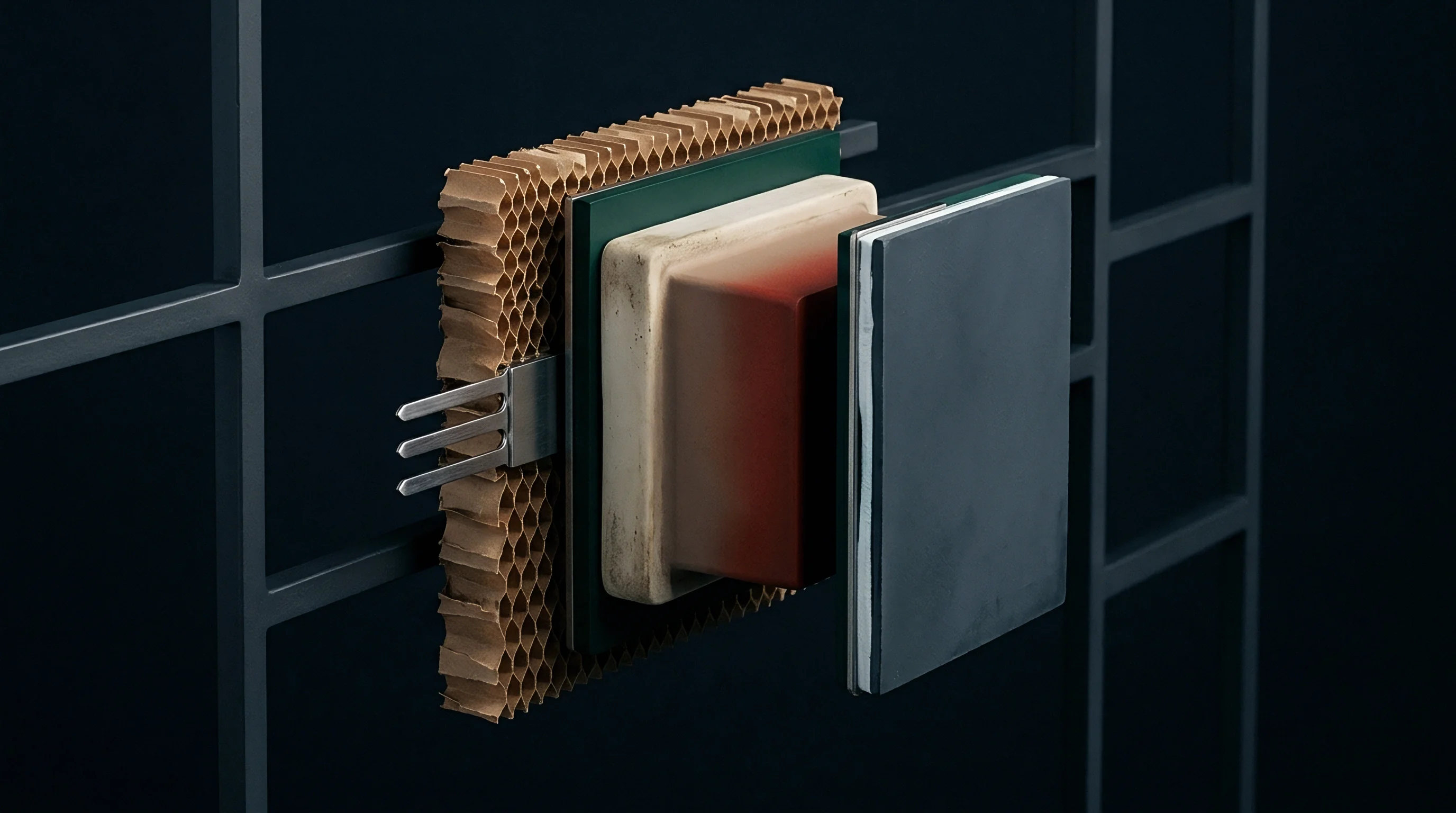
Standard bench instruments measure bending stiffness under quasi-static conditions that miss rate-dependent fracture mechanics. Traditional units like the L&W Crease Proof Tester or Taber V-5 apply loads at angular velocities below ten degrees per second, whereas packaging lines fold cartons at rates above fifteen hundred degrees per second. As a result, static bench tests underestimate dynamic score resistance by thirty to fifty percent.
Accurate calibration of dynamic scoring parameters requires high-speed equipment. Modern setups use piezo-electric load cells mounted directly behind scoring rules alongside optical strain mapping to capture force-displacement and moment-rotation curves across full production speed ranges. This real-time data highlights force spikes during initial liner penetration that static laboratory tests miss entirely.
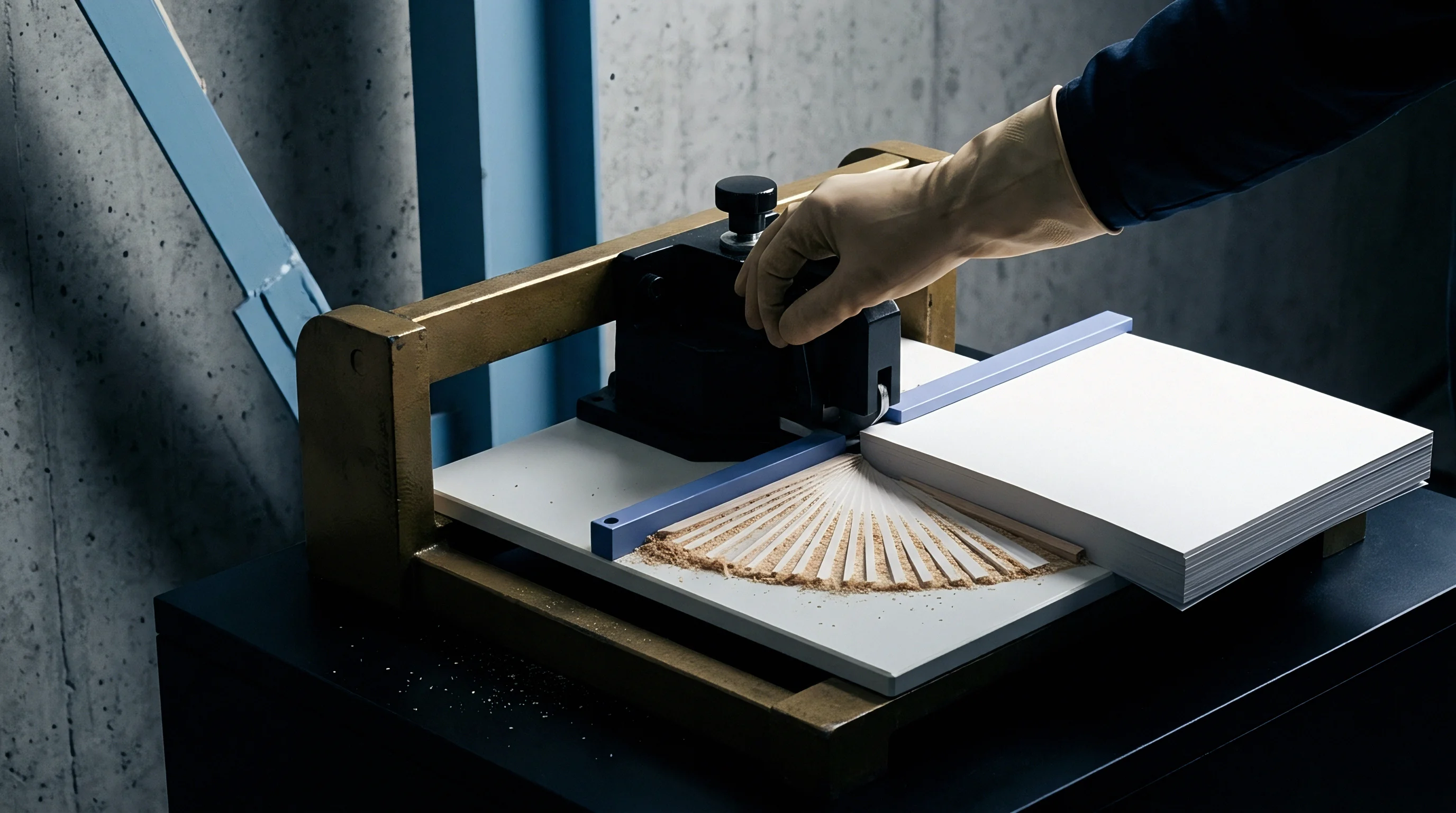
Standardized Test Limits versus High-Speed Reality
Low-strain laboratory tests overestimate score line flexibility on high-speed packaging lines. Standard protocols like ISO 2493 and TAPPI T 829 measure bending resistance under static deflection, skipping Mode II shear fracture energy and rate-dependent delamination, even though substrate stiffness controls the final springback angle.
| Male Rule Thickness (mm) | Channel Width (mm) | Clearance Ratio | Bending Moment Ratio b/b0 | Crack Rate (%) |
|---|---|---|---|---|
| 0.71 | 1.20 | 1.15 | 0.48 | 12.4 |
| 0.71 | 1.40 | 1.35 | 0.38 | 1.2 |
| 0.71 | 1.60 | 1.54 | 0.31 | 0.0 |
| 1.05 | 1.80 | 1.38 | 0.36 | 0.5 |
| 1.05 | 2.10 | 1.61 | 0.29 | 0.0 |
| Data obtained using a high-speed instrumented die simulator under ISO 187 conditioning environment (23 C, 50% RH). Bending moment ratio represents b/b0 measured at 90 degrees fold angle. | ||||
Connecting static bench values to high-speed line performance requires empirical offset factors from impact testing. The score stiffness ratio ~ the bending moment of the crease divided by that of the uncreased board ~ serves as the main control parameter. Keeping this ratio below zero point thirty five without liner rupture ensures reliable blank folding on fast packaging lines.
- Strain Rate Correlation Factor establishes the ratio between quasi-static bending moment and dynamic folding resistance measured at production speeds.
- Delamination Energy Threshold specifies the minimum Mode II shear strain energy release rate required to start internal ply slip without surface tearing.
- Anisotropy Ratio Allowance defines permissible variances in shear modulus between machine direction and cross direction for incoming mill reels.
High converting speeds make score rupture more likely. Setting tooling specifications against rate-sensitive material targets avoids costly line stoppages and lowers customer reject rates.
- Z-Direction Tensile Margin ensures internal bond strength remains within ISO 1924 tolerance limits across moisture variations.
- Ply Grammage Symmetry balances outer chemical pulp layers to prevent score curvature during rapid humidity changes.
- Moisture Retention Level mandates substrate moisture content between six point five and seven point five percent at die exit.
Stiffer outer chemical pulp layers combined with softer mechanical cores yield the broadest operating envelope for high-speed scoring without face cracking.

Economics
Line downtime from ruptured scores directly increases the landed unit cost of folding cartons. Unplanned stops on modern die-cutters or folder-gluers carry steep financial penalties, wasting board stock, machine capacity, and labor hours whenever jams occur.
Choosing between Solid Bleached Board, Folding Boxboard, and Recycled Board requires balancing raw purchase price per tonne against yield. Solid Bleached Board uses virgin chemical pulp to deliver high Mode II fracture toughness and strong resistance to score cracking under severe shear strain, but it costs twenty-five to thirty-five percent more per tonne than Folding Boxboard or Coated Recycled Board. Folding Boxboard uses a mechanical pulp core between chemical pulp liners to deliver high bulk at lower cost, though its core is sensitive to strain rate and needs precise die clearance to avoid splitting.
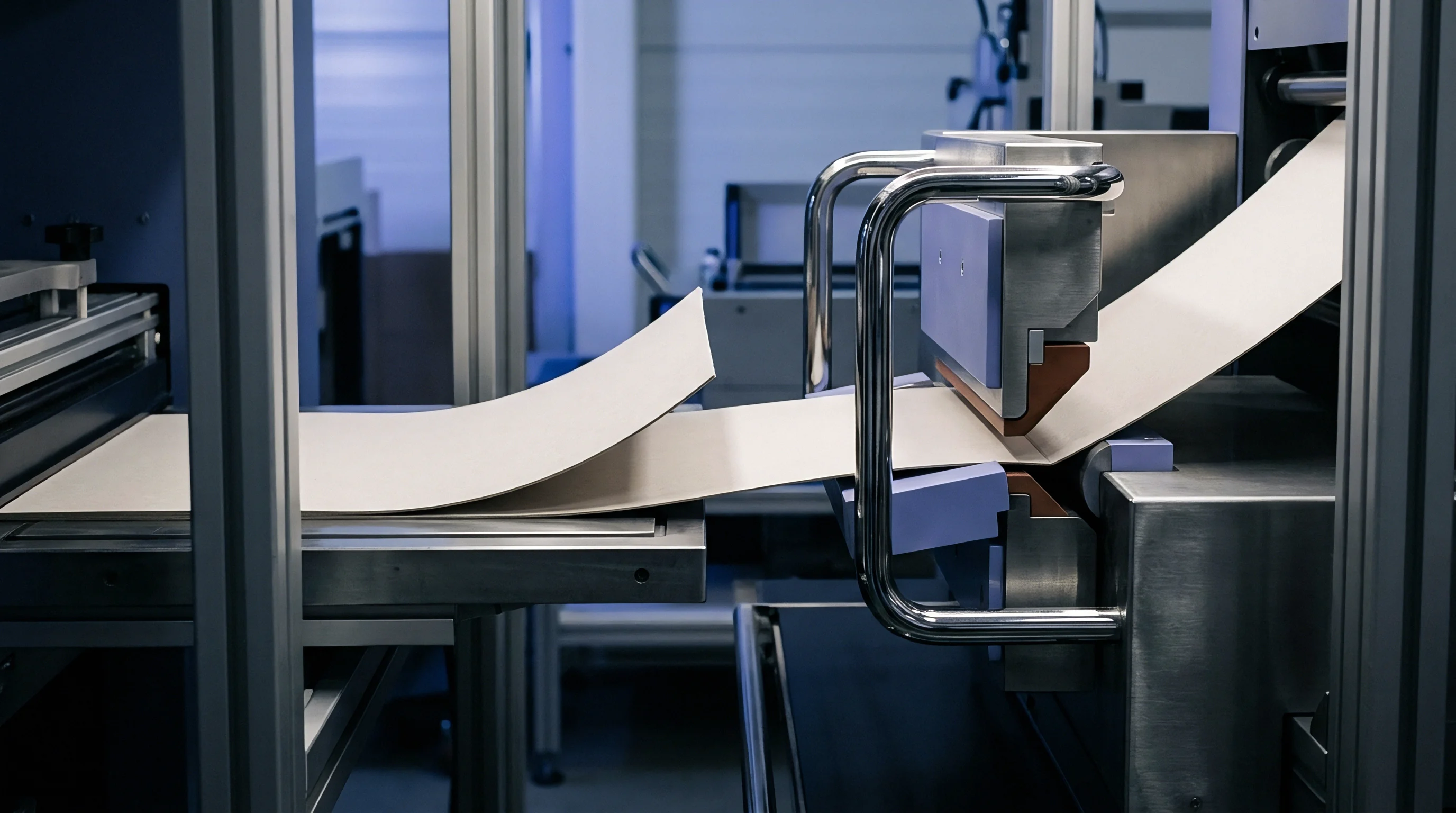
Board Grade Yields and Failure Costs
Selecting substrate for high-speed converting balances raw material density against yield, as unit costs rise rapidly with scrap. A lower-cost substrate with a two percent score failure rate on fast lines soon costs more per thousand finished cartons than a higher-grade virgin board that runs without defect.
A three percent increase in score line cracking on a sixty thousand sheet per hour folder-gluer generates four hundred dollars per hour in scrap material and lost press throughput.
Evaluating the financial trade-offs between board choice and converting performance requires complete cost-of-quality tracking. Purchasing specifications that focus solely on price per tonne without accounting for rate-dependent shear fracture mechanics simply pass hidden costs down to the converting floor.
Worked Financial Comparison across Packaging Substrates
A fifty-tonne production run illustrates the financial impact of score cracking. Consider a standard three hundred micrometre caliper packaging job running at five metres per second punch velocity.
Option A uses a 250 g/m2 Folding Boxboard costing 1,200 dollars per tonne, yielding 400,000 blank sheets. Under rapid shear scoring, variable shear yield in the mechanical pulp core leads to a 2.5 percent reject rate from liner micro-cracking and high-torque jams. Scrap material costs 1,500 dollars, and eighteen downtime stops add 2,700 dollars in lost capacity.
Total landed cost reaches 64,200 dollars, or 160.50 dollars per thousand finished blanks.
Option B uses a 270 g/m2 Solid Bleached Board priced at 1,550 dollars per tonne. Lower sheet yield per tonne yields 370,000 blank sheets from fifty tonnes, bringing material cost to 77,500 dollars. Pure chemical pulp layers absorb high-speed shear deformation cleanly, resulting in zero score splitting and a 0.1 percent reject rate.
Downtime drops to 150 dollars, giving a total landed cost of 77,650 dollars, or 209.86 dollars per thousand finished blanks.
Option C uses an optimized 260 g/m2 Folding Boxboard with an engineered CTMP core treated for elevated Mode II shear fracture toughness, priced at 1,320 dollars per tonne. Fifty tonnes yields 384,000 sheets at a material cost of 66,000 dollars. Controlled shear delamination keeps the reject rate at 0.3 percent, with downtime expense totaling 400 dollars.
Landed cost equals 66,400 dollars, or 172.91 dollars per thousand finished blanks.
A supply contract specifying a maximum score rupture allowance of zero point one percent under dynamic shear conditions shifts non-conformance liability and die replacement expense entirely to the board mill.