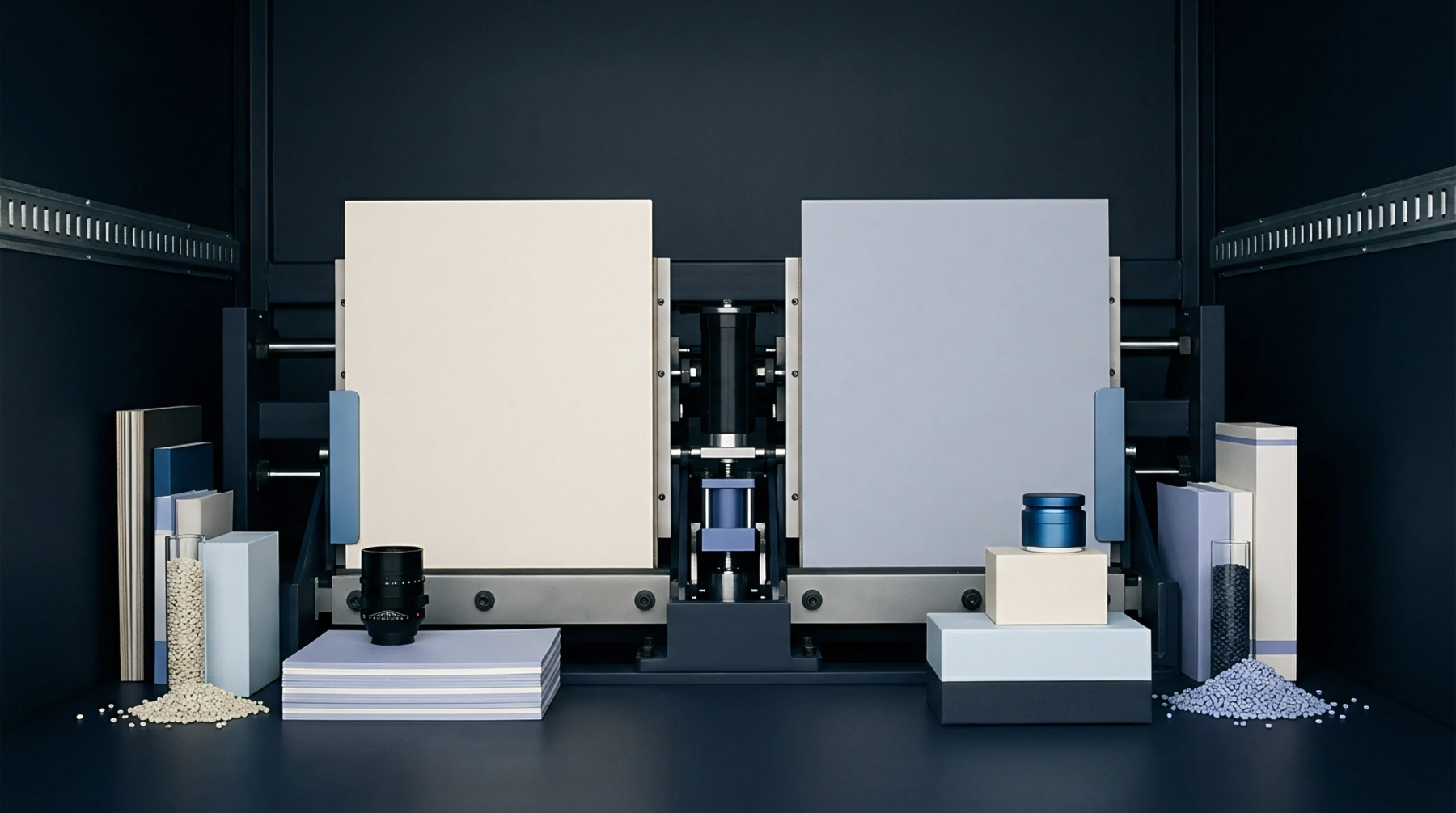
Fracture Mechanism
Material failure dynamics govern the growth rate of structural micro-fissures through paper and polymer coating layers under mechanical stress. Fracture mechanics models describe crack propagation as the sequential breaking of atomic bonds at a stress concentration point along a crease or fold. The process accelerates when local tensile stress exceeds the cohesive strength of the binder matrix.
Testing stops applying force once macro-scale splitting severs the substrate web.
Coating Rupture
Converting operations like scoring and folding generate severe localized stresses in mineral-coated board surfaces. Initial micro-fractures develop at pigment boundaries and experience rapid crack propagation when the folded scoreline reaches ninety degrees. Flexible latex binders absorb strain energy to retard fissure growth, whereas rigid starch matrices allow cracks to travel freely across the coating layer.
Fiber orientation influences the failure path, as cracks move faster along the machine direction than across cross-direction fibers. Dynamic mechanical analysis records energy release rates as cracks penetrate deeper into the underlying fiber matrix. Moisture content alters fiber flexibility, with dry paperboard showing accelerated structural breakdown.
High-speed video recording captures the exact moment fissure initiation transitions into full substrate cleavage.
Stress Mitigation
Barrier properties collapse when continuous fissures penetrate through barrier coatings into raw fiber layers. Controlling crack propagation requires balancing binder ratio and moisture levels during board manufacturing. Creasing geometry adjustments reduce local strain concentrations to preserve barrier integrity along packaging edges.
Package integrity relies on minimizing surface cracking during carton forming and distribution.