Dynamic Z Direction Tensile Stress Propagation in Recycled Fibers during High Speed Creasing
High speed creasing generates Z-direction tensile stress waves that fracture short recycled fibers unless matrix clearance absorbs elastic strain energy.

Rule
Mechanics of Rapid Tool Indentation
Line speeds exceeding ten thousand sheets per hour compress converting deformation windows below two milliseconds. This high-velocity impact drives the creasing steel into paperboard backed by a female matrix channel. Under such severe mechanical constraint, localized stresses develop through the sheet caliper: direct compression beneath the rule tip flattens the top liners, while the channel edges generate heavy transverse bending shear.
As it enters the matrix, the board is forced into double-curvature bending. Outer plies undergo high elongation while core layers experience Z-direction compaction combined with shear displacement. Because recycled fibers are less compliant than virgin pulp, elastic strain distributes unevenly.
Autoplaten press speeds amplify these dynamic forces, often shifting the board’s structural response from viscoelastic flow into abrupt linear elastic rupture.

Impulse Loading and Stress Waves
Mechanical energy travels through board calipers between four hundred and seven hundred micrometers in microseconds. Kinetic energy drives structural compression directly under the contact point while setting up tensile forces along the matrix shoulders. The resulting transient response creates steep tensile strain gradients across adjacent plies before macro-scale deflection can stabilize.
| Substrate Grade | Recycled Content (%) | Rule Thickness (pt) | Channel Width (mm) | Penetration Time (ms) | Peak Z Strain Rate (s⁻¹) |
|---|---|---|---|---|---|
| Virgin Kraft Bleached | 0 | 2.0 | 1.40 | 1.80 | 1,250 |
| Coated Recycled Duplex GD2 | 85 | 2.0 | 1.55 | 1.45 | 1,680 |
| Uncoated Recycled Chipboard GT2 | 100 | 2.0 | 1.70 | 1.20 | 2,100 |
Tooling adjustments mitigate localized destruction across recycled fiber layers during high-velocity die-cutting runs:
- Matrix channel widening increases clearance along female edges to distribute lateral tensile strain over a broader radius.
- Shoulder radius rounding softens cutting action at the steel edge, preventing premature surface score initiation.
- Creasing height reduction lowers maximum vertical penetration to avoid crushing middle ply structures beyond elastic recovery limits.
- Counter-crease tape modification replaces rigid steel counters with elastomeric channels that absorb excess impact energy.
A mismatch between steel width and groove depth will split the linerboard and destroy structural stiffness along the fold axis, preventing cartons from erecting properly on automated packaging lines.

Bonding
Why Do Recycled Fibers Fail under Strain?
Repeated papermaking cycles degrade cellulose morphology through hornification and fiber shortening. Successive wetting and drying collapses internal lumen structures, shrinking the specific surface area available for dynamic hydrogen bonding between fibers. Shorter average fiber lengths and higher fines content in secondary pulp also restrict stress dissipation paths throughout the fibrous web.
Testing under ISO 1924-3 at standard strain rates fails to capture dynamic delamination thresholds that occur during millisecond platen impacts.
Under high-rate impact loading, weaker hydrogen bonds across recycled ply interfaces cannot transfer load effectively. When local energy release rates exceed the fracture toughness of secondary fiber networks, inter-ply sliding stalls, causing micro-cracks to merge into continuous internal splits.
Micro-Shear Zones and Delamination Mechanics
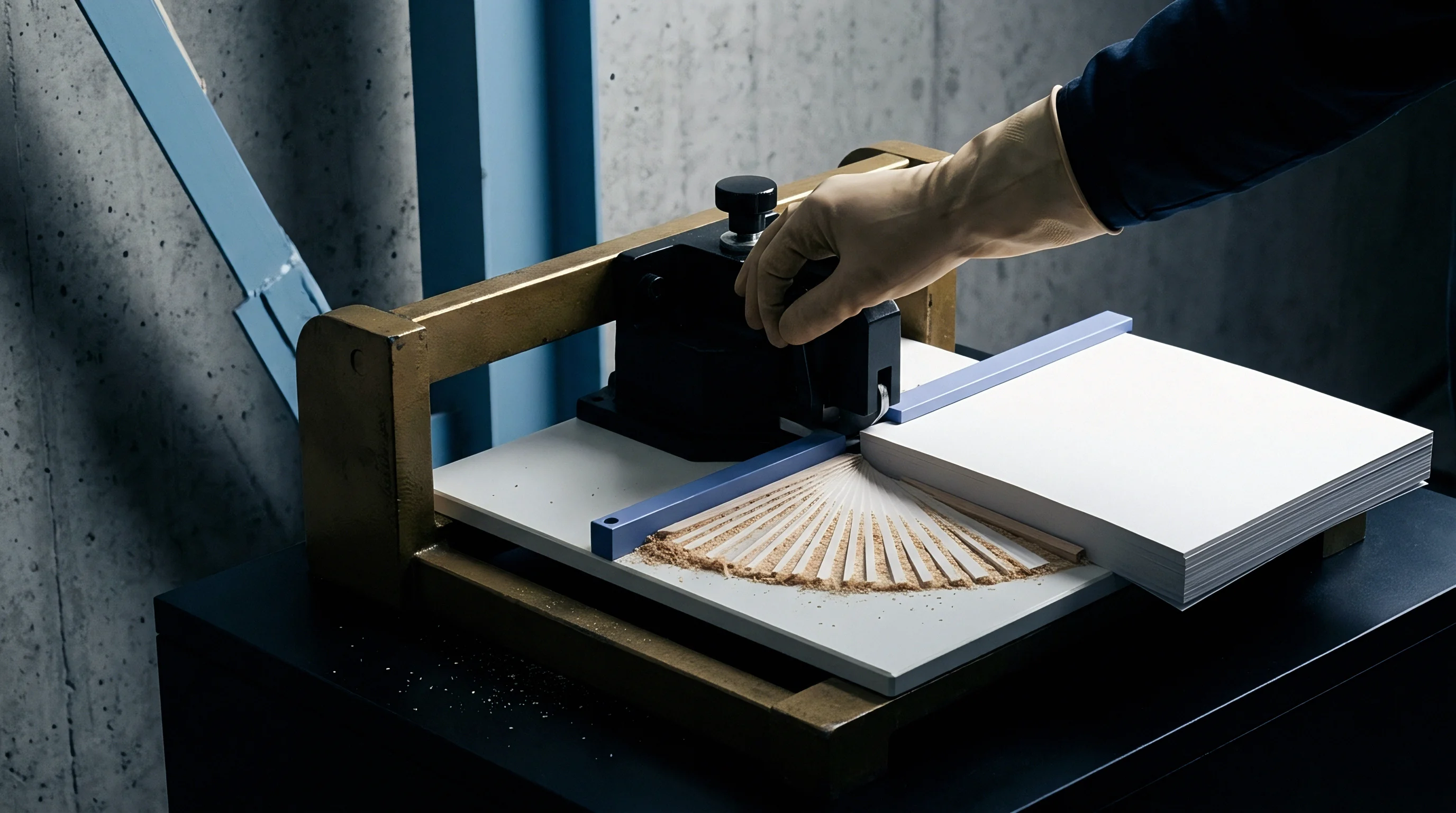
Controlled folding depends on internal ply separation within the middle board layers. Because secondary fiber networks have uneven density gradients and localized stiffness variations, strain tends to concentrate into narrow failure bands along fiber boundaries rather than distributing work across multiple hydrogen bond sites.
Creasing failure modes manifest in distinct physical patterns on converted paperboard:
- Liner cracking occurs when tension on the outer printed ply exceeds maximum ultimate elongation, forming visible line fractures along score lines.
- Delamination rupture tears internal core plies uncontrollably, destroying carton corner squareness and compression strength.
- Score roll happens when soft core plies collapse laterally, shifting the fold axis away from intended creasing coordinates.
- Flaking release separates top coating layers from base fiber webs due to interface shear stress exceeding binder adhesion strength.
Worked Model of Stress Propagation Velocity
Quantitative analysis demonstrates how elastic energy travels through multi-ply recycled webs during high-speed converting. Consider a 450-micrometer recycled board with a density of 800 kilograms per cubic meter and an elastic modulus in the Z-direction of 120 megapascals.
Calculation of acoustic stress wave velocity relies on the relation:
c = sqrt(E / rho)
Inserting the parameters yields a wave velocity of approximately 387 meters per second. When creasing rule penetration occurs over a duration of 1.2 milliseconds at a penetration depth of 0.35 millimeters, the dynamic strain rate reaches 833 reciprocal seconds. Under these dynamic conditions, the required Z-direction tensile stress exceeds the static Scott Bond strength of 110 Joules per square meter measured under TAPPI T 541.
The local internal tension reaches 0.42 megapascals, surpassing the 0.28 megapascal dynamic tensile limit of secondary fiber networks. Fiber-to-fiber hydrogen ties rupture catastrophically, generating internal macro-cracks before bending even commences.
Whether enzyme pre-treatments or cationic starch applications at the size press can restore dynamic energy dissipation in heavily recycled furnish without inflating mill raw material expenses remains an open technical challenge for paper manufacturers.
Hydration
Equilibrium Moisture Content and Glass Transition
Water acts as a plasticizer within amorphous cellulose and hemicellulose regions. Molecules bond with hydroxyl groups on fiber surfaces, improving mobility and reducing brittleness during mechanical deformation. In recycled board furnish, variations in ash content and calcium carbonate filler alter moisture sorption isotherms, shifting the glass transition temperature.
A moisture drop of two percent increases Z-direction elastic modulus by thirty-five percent while reducing failure strain under impact.
When moisture falls below five percent, fiber networks stiffen significantly. Dynamic creasing forces then generate sharp tensile spikes across the score bead rather than smooth plastic deformation. Excess moisture, by contrast, drops inter-ply shear modulus too far, producing score roll and soft creases on the folder-gluer.

Conditioning Protocols and Dynamic Compliance
Atmospheric control in storage areas dictates how sheets behave on high-speed die-cutters. Plant conditions maintained at twenty-three degrees Celsius and fifty percent relative humidity produce equilibrium moisture levels between six and eight percent in recycled packaging grades. Abrupt drops in ambient humidity quickly dry sheet surfaces, leaving core plies moist while the outer liners turn brittle.
Stepwise line adjustments ensure appropriate moisture retention during board conversion:
- Measure incoming pallet moisture across surface and core plies using microwave resonance probes before unwrapping shrink film.
- Maintain converting plant relative humidity between fifty and fifty-five percent to stop ambient moisture loss during stage transport.
- Apply localized water mist or steam humidification prior to the creasing station when board moisture falls below six percent.
- Reduce press running speeds by fifteen percent on dry stock lots to extend the deformation time window during tool engagement.
Board stored in cold unheated warehouses cracks along score lines unless pallets acclimate to converting floor temperatures before wrapper removal.
Laminate

Surface Restraint and Stress Concentration
Applying continuous polymeric film to printed recycled board creates a stiff outer skin. Polypropylene and polyethylene layers resist tension during female matrix indentation, driving energy down into unreinforced core plies. Polyethylene terephthalate lamination similarly increases the total tensile modulus of the top layers, shifting the neutral axis outward during creasing.
Flexible lamination films require wider female channel clearance to prevent internal ply shear rupture during creasing.
The high tensile strength of outer plastic film holds top fibers intact while internal recycled layers undergo severe Z-direction separation. Upon ninety-degree panel folding, concentrated shear stresses along the film-fiber interface induce subsurface delamination, creating hollow score crowns that reduce box stack strength.

Varnish Integrity and Polyethylene Barriers
Cross-linked UV lacquers and dispersion barrier coatings display significantly lower ultimate elongation compared to extrusion coatings. During acute angle creasing, brittle top coatings fracture along the outer score crown, creating aesthetically unacceptable white lines across dark solids.
| Surface Finish Pass | Film/Coating Caliper (µm) | Elongation at Break (%) | Crack Initiation Threshold | Recyclability Impact |
|---|---|---|---|---|
| Gloss BOPP Film Lamination | 12.0 | 140 | High Clearance Matrix | Penalized Grade C |
| Matte PET Film Lamination | 15.0 | 80 | Medium Clearance Matrix | Penalized Grade C |
| Water-Based Acrylic Barrier | 6.0 | 4.5 | Low Strain Tooling | Standard Grade A |
| UV Curable Gloss Lacquer | 4.0 | 2.0 | Modified Radius Steel | Standard Grade A |
Technical purchase specifications for converted recycled packaging include defined boundary parameters:
- Polymer film elongation specifies minimum tension limit thresholds to match expected score line strain.
- Coating surface energy defines dyne levels necessary to preserve ink interface adhesion during creasing deformation.
- Core ply Scott Bond sets minimum Z-direction tensile values required to prevent shear delamination.
- Recyclability certification documents scheme compliance under European packaging waste directives.
Outer ply surface checking during creasing involves trade-offs between pressroom matrix selection and variations in secondary fiber quality or size press starch distribution.


Valuation
Spoilage Costs across Machine Speeds
Line efficiency directly impacts financial return when converting recycled paperboard packaging. Press operators running autoplaten equipment at maximum rated output face steep increases in material waste if crease delamination triggers score cracking. Running at twelve thousand sheets per hour on dry, low-grade recycled stock elevates scrap rates through liner splitting, jam-ups, and blank ejection failures.
Tooling modifications cost significantly less than scrap generated during a single shifted converting run.
Stopping production to clean matrix grooves packed with fiber dust adds costly non-productive downtime. Proper tooling geometry selection balances line speed against scrap generation, protecting net profitability per job run.
Extended Producer Responsibility and Recyclability Grades
Regulatory frameworks across European markets penalize composite packaging structures that blend non-separable plastic layers with pulp fiber streams. Choosing heavy film laminations to mask poor recycled board creasing performance incurs higher eco-modulated disposal fees under national packaging waste schemes.
| Production Strategy | Press Velocity (sheets/hr) | Waste Rate (%) | EPR Fee (€/tonne) | Landed Unit Cost (€/1k) |
|---|---|---|---|---|
| Unlaminated Board at High Velocity | 10,500 | 4.8 | 180 | 42.50 |
| Unlaminated Board at Optimized Velocity | 7,800 | 1.1 | 180 | 38.20 |
| BOPP Laminated Board at High Velocity | 10,500 | 1.4 | 440 | 51.80 |
| Barrier Varnish at Optimized Velocity | 8,200 | 0.9 | 210 | 40.10 |
| Calculated on a 50,000 sheet production run of 400 gsm folding boxboard. | ||||
Optimizing scoring geometry and plant humidity levels allows packaging producers to run low-cost recycled grades at elevated machine throughputs without incurring waste penalties or failing recyclability assessments.