Dynamic Surface Tension and Extensional Viscosity Interdependence in High Speed Creased Paperboard Converting
Balancing dynamic surface tension sub-10ms wetting with high extensional viscosity prevents droplet rebound and glue stringing on creased paperboard.

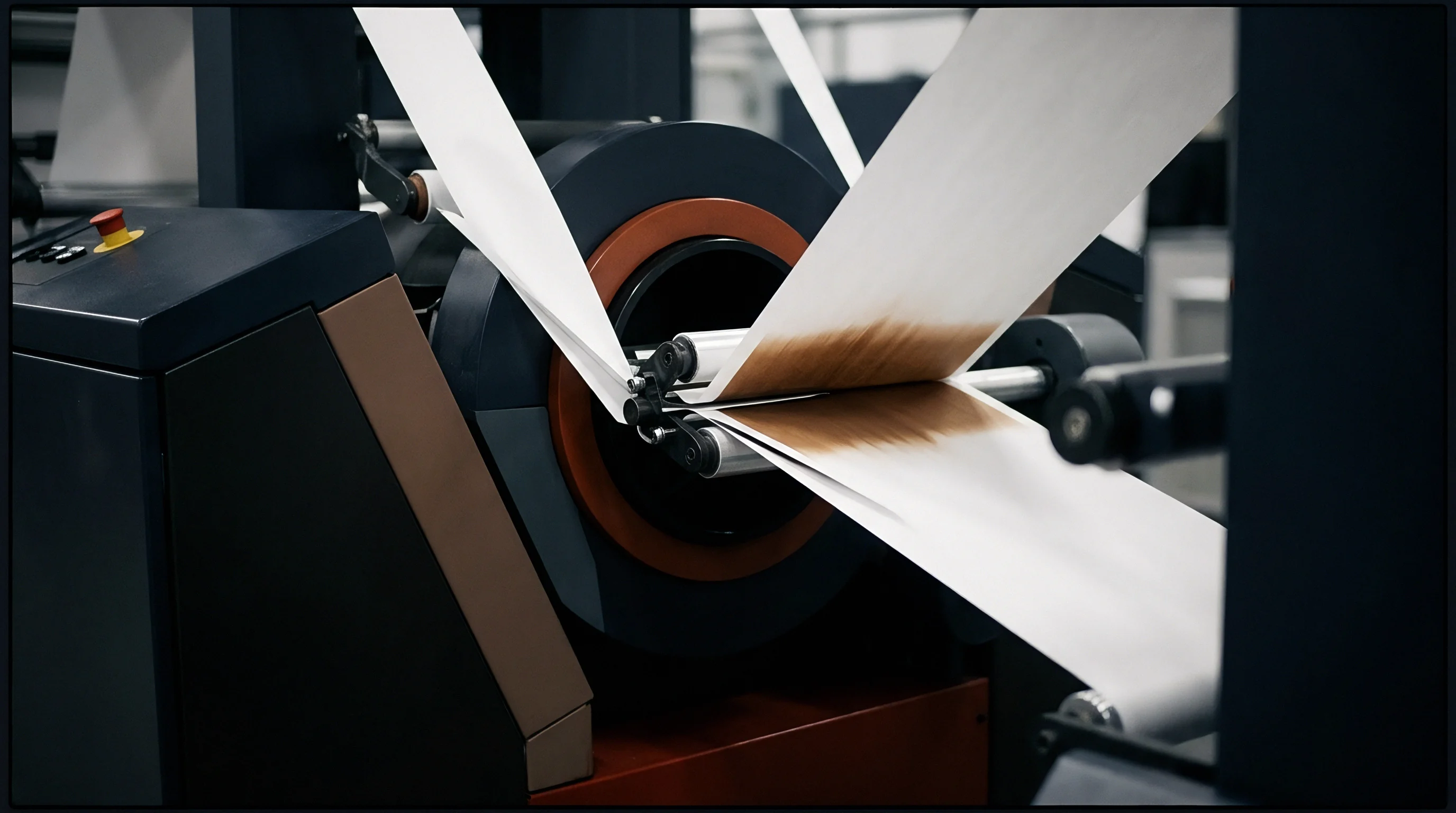
Fibre
Structural integrity in boxboard relies on multi-ply sheet layering to withstand severe mechanical deformation during high-speed carton converting. Folding boxboard (FBB) pairs mechanical pulp inner plies with bleached chemical pulp outer liners to maximize flexural stiffness at a low basis weight, whereas solid bleached board (SBB) uses an all-chemical furnish for higher tensile strain energy absorption during scoring operations. Top-liner printability comes from clay coatings formulated with ground calcium carbonate, kaolin clay, and styrene-butadiene latex binders.
During mechanical scoring, tools compress this layered sheet to induce controlled delamination in the bulky middle plies without rupturing the outer coated skin.
When scoring tools crush the internal pulp network, micro-fractures form throughout the middle plies, leaving a localized crease channel with reduced caliper and altered pore architecture. High tensile strain over the score line creates micro-fissures in the coating layer, exposing raw cellulose underneath the synthetic binder matrix. This selective damage changes how fluid moves across the board: uncoated internal cellulose draws in liquid phases rapidly through capillary action, while the adjacent intact clay-latex surface resists fluid ingress.
Stiffer middle plies accept deeper scoring matrix impression without tearing the bleached top surface liner.
At web speeds above four hundred meters per minute, folder-gluers jet adhesive directly onto or alongside these creased zones, giving liquid and substrate only milliseconds to interact. Alignment of fibers in the machine direction creates directional variation in fluid transport. Cross-direction creases expose raw fiber ends, opening anisotropic absorption pathways that draw liquid away from the main glue line.
The physical state of the creased paperboard at the moment of application ultimately decides whether the joint forms a fiber-tearing bond or fails prematurely.
- Substrate selection sets the energy absorption capacity of the packaging board under rapid mechanical creasing tools.
- Coating formulation determines whether the top liner cracks under strain or maintains a barrier against liquid penetration.
- Matrix alignment governs internal ply shear strain, controlling localized density reduction along the score line.
- Crease depth calibration controls the ratio of exposed cellulose fibers to intact surface coating in the joint area.
- Web tension management preserves dimensional stability across the creasing zone before adhesive application.
Surface sizing agents like alkyl ketene dimer (AKD) and alkenyl succinic anhydride (ASA) modify the intrinsic surface energy of chemical pulp fibers. Higher sizing levels slow capillary absorption, maintaining broad contact angles for water-based liquids. Mechanical scoring breaks this hydrophobic barrier, establishing sharp surface-energy gradients between the untouched top liner and the damaged score trough.
Adhesives jetted across this boundary encounter abrupt shifts in contact angle, making fluid spreading and elongation kinetics critical.
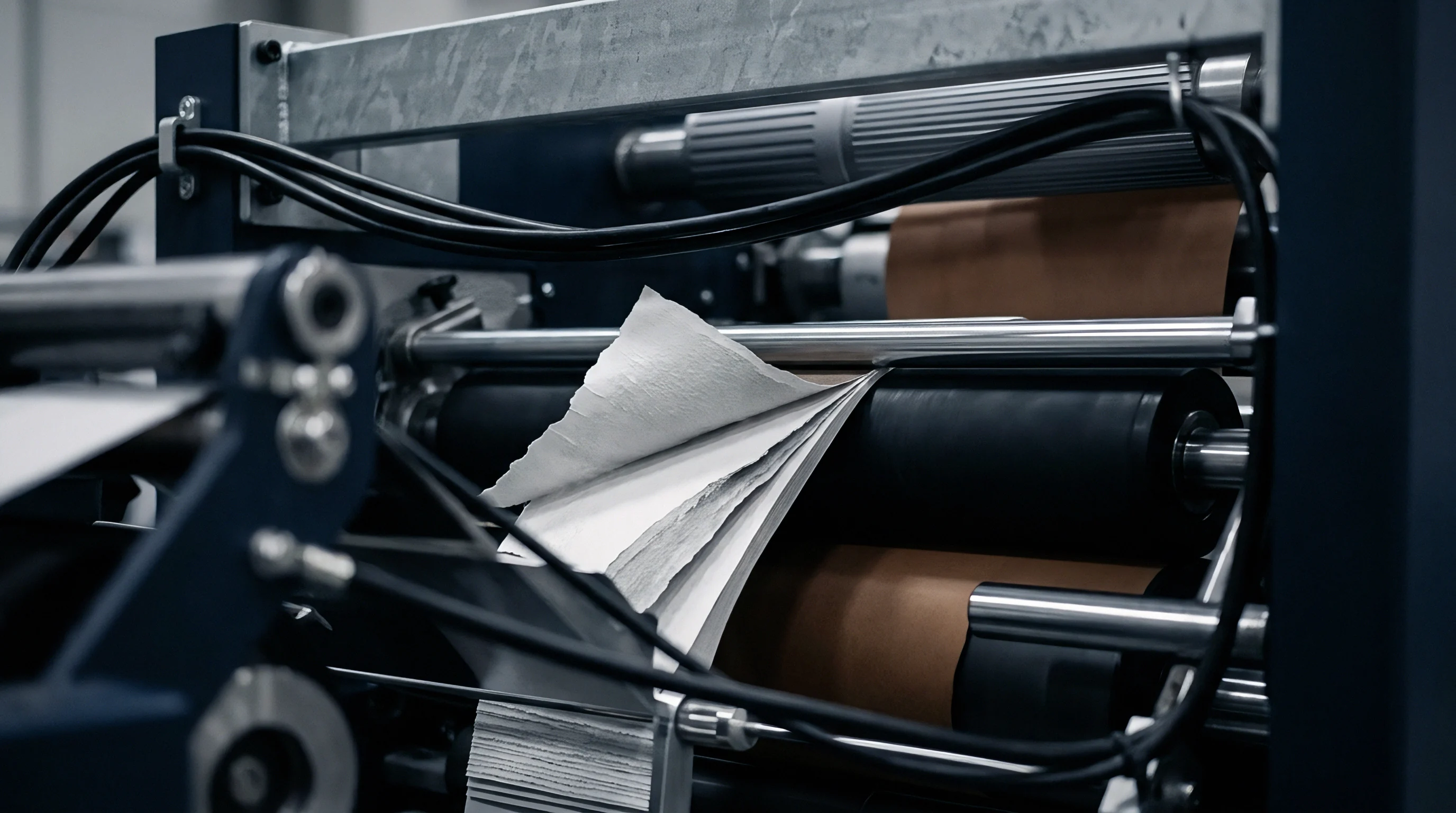
Wetting
On polymer-coated paperboard, liquid adhesives must spread across contact intervals under twenty milliseconds. Water-based vinyl acetate-ethylene (VAE) and polyvinyl acetate (PVA) emulsions use surfactants to lower interfacial tension. Under equilibrium, standard tensiometers show surface tension between twenty-eight and thirty-five millinewtons per meter.
High-speed nozzles, however, create new liquid-air interfaces in milliseconds, and surfactant molecules in the bulk fluid take time to reach those new boundaries. At surface ages under ten milliseconds, transient surface tension can approach that of pure water, climbing past sixty millinewtons per meter.
High short-time surface tension keeps liquid droplets from rapidly wetting low-energy coated paperboard. When an adhesive jet deposits droplets onto board moving at five hundred meters per minute, elevated interfacial tension leads to droplet rebound or dewetting. Contact angles stay high throughout the brief open time before compression.
If short-time surface tension remains high, the adhesive cannot penetrate the micro-cracks inside the creased channel, yielding a weak mechanical anchor.
Dynamic contact angle measurements recorded at 10 ms surface age under TAPPI T 558 at 23 °C and 50 percent relative humidity reveal up to a 25 mN/m increase over equilibrium surface tension.
Maximum bubble pressure tensiometry evaluates short-time interfacial tension across surface ages from one millisecond to one second. Formulations built for high-speed converting require fast-diffusing, non-foaming surfactants like ethoxylated acetylenic diols. These molecules move quickly to newly generated droplet interfaces, pulling short-time surface tension down to target levels within five milliseconds and allowing immediate spreading across both intact clay-coated board and exposed cellulose in the score line.
| Surfactant Type | Surface Age 5 ms (mN/m) | Surface Age 20 ms (mN/m) | Surface Age 100 ms (mN/m) | Contact Angle at 10 ms (deg) |
|---|---|---|---|---|
| 64.2 | 52.1 | 34.0 | 78.5 | |
| 41.5 | 33.8 | 29.2 | 42.1 | |
| 38.1 | 31.5 | 27.8 | 35.4 | |
| 58.9 | 46.3 | 24.5 | 68.0 |
- Droplet rebound occurs when high transient surface tension stops liquid from deforming on impact with the moving board.
- Interfacial dewetting leaves bare spots along creased flaps as high surface energy pulls back the wet adhesive bead.
- Pinholing failure develops when liquid cannot reach deep micro-fissures in the creased substrate core.
- Open-time failure occurs when slow wetting delays initial tack before the compression nip.
Higher line speeds compress contact windows, making adhesive transfer efficiency depend heavily on the balance between short-time wetting kinetics and substrate absorption. Increasing machine speeds from three hundred to six hundred meters per minute often causes standard formulations to fail against short-time surface tension barriers. Poor adhesive transfer is frequently blamed on inconsistent board corona treatment when the real driver is slow surfactant migration within the formulation.
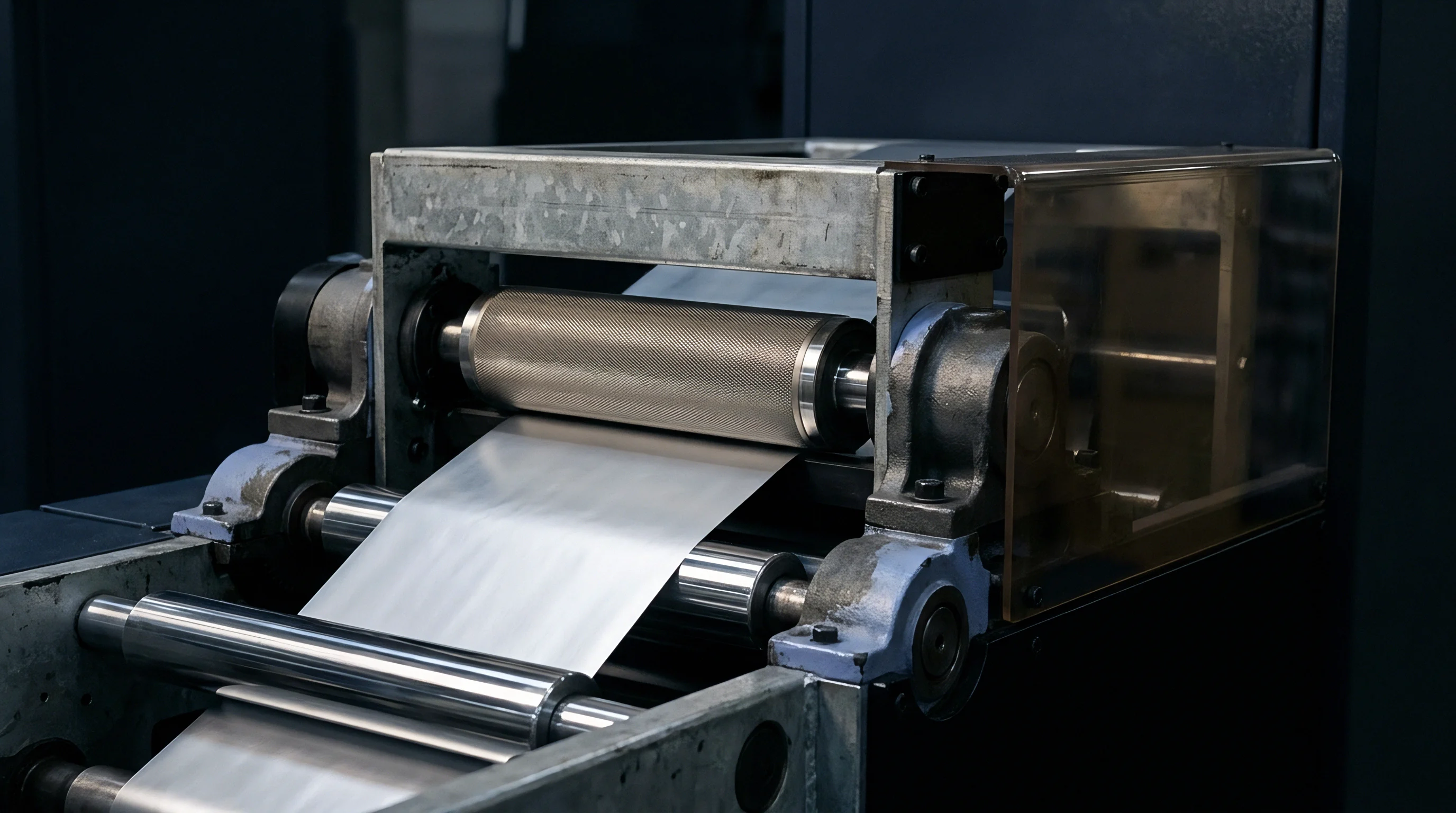
Filament
High-speed jetting nozzles subject water-based adhesives to extreme tensile elongation during droplet detachment. When the pneumatic or electromagnetic valve shuts, the fluid column between nozzle tip and paperboard stretches into a thin liquid filament. Shear rates inside the nozzle orifice exceed one hundred thousand reciprocal seconds, and extensional deformation along the stretching bridge reaches tens of thousands.
Shear viscosity alone cannot predict how this liquid column breaks down under rapid extension.
How Does Extensional Viscosity Suppress Adhesive Misting at High Web Speeds?
Polymeric additives resist rapid axial stretching by building elastic tensile stresses along the liquid bridge. Extensional viscosity measures this resistance to uniaxial extension. In simple Newtonian fluids, the Trouton ratio of extensional to shear viscosity is three.
In polymer-modified adhesives, high-molecular-weight polymers uncoil under extension, pushing the Trouton ratio to between one hundred and one thousand. This elevated extensional viscosity stabilizes the stretching filament and prevents violent pinch-off that creates airborne satellite droplets.
Failure to satisfy the anti-misting performance standard under ISO 12625-9 results in automatic rejection of adhesive shipments intended for high-speed converting operations.
Capillary Breakup Extensional Rheometry (CaBER) measures the relaxation time and filament breakup kinetics of converting adhesives. A fluid sample placed between two plates is rapidly drawn apart to form a liquid bridge. Capillary forces drive filament thinning against the fluid’s extensional viscosity.
Extensional thickeners like hydrophobic alkali-swellable emulsions (HASE) or high-molecular-weight polyacrylamides lengthen breakup times, shaping the necking profile during high-speed nozzle snap-off.
| Formulation Variant | Shear Viscosity at 1000/s (mPa·s) | CaBER Relaxation Time (ms) | Trouton Ratio at 5000/s Strain | Glue Stringing Severity Index |
|---|---|---|---|---|
| 450 | 2.1 | 12 | High Misting / Low Stringing | |
| 620 | 18.4 | 145 | Clean Break / Zero Misting | |
| 880 | 85.2 | 890 | Excessive Tail Stringing | |
| 510 | 8.7 | 65 | Optimal High-Speed Window |
While shear rates spike inside nozzle tips, extensional forces govern how the fluid neck stretches and splits. If extensional viscosity is too low, capillary forces snap the filament abruptly, shattering the liquid tip into fine satellite droplets that mist over passing paperboard blanks. If extensional viscosity is too high, the stretching bridge resists breaking and drags long glue tails across folds and unprinted flaps.
Either imbalance leads to defects, prompting automated vision rejections and line shutdowns.
Pinch
Mechanical score dies compress the multi-ply substrate into female grooves to form defined folding lines. The geometry of the male rule and female matrix dictates how mechanical strain distributes through the sheet thickness. Effective creasing requires internal ply delamination while leaving the surface liner intact.
When folder-gluer belts fold the flap ninety or one hundred eighty degrees, severe compression in the creased channel alters both local void volume and capillary pore structure.
Creasing alters local surface energy profiles across the board. As the creased flap enters the compression belt, high dynamic pressure squeezes liquid adhesive between the folding panels. Dynamic surface tension determines how quickly the fluid film spreads across compressed crease topography, while extensional viscosity prevents lateral squeeze-out and edge necking.
A fluid with balanced interfacial properties flows neatly into score micro-fissures without extruding past the lap joint.
Compression of creased paperboard under folder-gluer belt pressure redistributes fluid within five milliseconds.
During compression, short-time surface tension and extensional viscosity act together. Rapid surfactant adsorption lowers dynamic surface tension, reducing the capillary work needed for adhesive to penetrate exposed fiber cavities in the score line. At the same time, moderate extensional viscosity keeps the squeezed adhesive film intact as air escapes the compression zone.
Because some surfactants alter polymer chain conformation and lower extensional viscosity, formulators must balance wetting speed against film stability.
- Rule width selection must match board caliper to develop uniform shear planes without crushing top-liner fibers.
- Matrix depth setting dictates the clearance volume available for fluid penetration inside the folded crease seam.
- Folder-gluer belt pressure must be adjusted for wet-film thickness to prevent lateral squeeze-out.
- Open-time synchronization aligns fluid wetting speed with line velocity to ensure initial tack before nip compression.
Defect rates escalate as line speeds rise, but proper scoring matrix selection reduces the glue volume needed for solid fiber-tearing bonds. Adopting ISO 12625-9 crease stiffness limits holds substrate vendors to tight mechanical resistance bands, preventing carton spring-back on automated filling lines.
Metrics
Standard benchtop instruments operating under equilibrium miss physical phenomena occurring below fifty milliseconds. Conventional Wilhelmy plate and pendant drop tensiometers measure static surface tension over minutes, overlooking the elevated surface tension present during high-speed jetting. Similarly, rotational viscometers measuring shear thinning at modest shear rates cannot predict elongational necking, misting, or stringing when fluid filaments detach.
Accurate verification requires specialized high-speed diagnostic tooling. Maximum bubble pressure tensiometry measures surface tension down to one millisecond surface age. Capillary Breakup Extensional Rheometers (CaBER) evaluate relaxation times, extensional viscosity development, and filament failure mechanics.
Dynamic contact angle analyzers with high-speed optics capture droplet impact, wetting dynamics, and boundary spreading on creased board samples at millisecond intervals.
- Calibrate maximum bubble pressure tensiometer capillary tubes with ultra-pure water to establish baseline surface age curves from 1 ms to 1000 ms.
- Measure high-shear viscosity across a rate spectrum from 10,000 to 100,000 reciprocal seconds using a capillary rheometer to match nozzle conditions.
- Perform CaBER extensional testing to determine fluid relaxation times and Trouton ratios under step-strain deformation.
- Execute dynamic contact angle measurements on creased board samples using TAPPI T 558 drop-shape analysis at 5 ms intervals post-impact.
Laboratory testing of incoming substrate rolls and adhesive batches helps verify compatibility before production runs. Minor variations in board surface sizing or surfactant concentration disrupt the millisecond wetting balance, forcing line speed reductions. Whether ambient capillary breakup tests reliably predict extensional thinning inside heated nozzles running at six hundred meters per minute remains an open question in fluid engineering.
Yield
Commercial conversion efficiency requires maximizing throughput while keeping defect rates inside tight tolerances. Operating at five hundred meters per minute, a high-speed folding carton line converts over one hundred thousand blanks per hour. Unscheduled stops for misting cleanup, nozzle clogs, or unbonded pop-opens quickly erode margins.
Plants that optimize short-time surface tension kinetics alongside extensional viscosity achieve higher speeds with lower scrap rates.
Standard off-the-shelf adhesives optimized for low-speed applicators force plants to run machinery well below capacity to avoid stringing or bond failure. Tailored formulations combine fast-acting acetylenic diol surfactants with associative extensional thickeners. This lowers short-time surface tension below forty millinewtons per meter within ten milliseconds while maintaining a Trouton ratio high enough to suppress satellite droplet misting.
| Operating Parameter | Baseline Adhesive (Standard PVA) | Optimized Surfactant/Extensional Formulation | Variance / Savings |
|---|---|---|---|
| 350 | 550 | +57.1% Throughput | |
| 14.2 | 11.8 | -16.9% Material Usage | |
| 45 | 5 | -88.8% Maintenance Downtime | |
| 1.8% | 0.2% | -88.8% Defect Reduction | |
| 42.50 | 37.10 | -$5.40 / 1,000 Cartons |
A worked financial model illustrates the economic return on a fifty-tonne folding boxboard converting contract. Assuming a board cost of one thousand two hundred dollars per tonne and a target volume of two million cartons, cutting pop-open rates from 1.8 percent to 0.2 percent saves thirty-two thousand cartons. Eliminating misting reduces wash-down stops from forty-five minutes to five minutes per shift, gaining seventy-five operational production hours across the campaign.
The higher unit cost of optimized adhesives is recovered four times over through material savings and uptime gains.
Matching adhesive rheology and surface tension to converter line dynamics eliminates downstream defects and optimizes overall substrate utility across high-tonnage production runs.