Predicting Dynamic Z Direction Fiber Compression Rates under Heated High Speed Embossing Platens
Predicting dynamic Z-direction fiber compression requires balancing dwell time, thermal diffusivity, and lignin glass transition to maximize permanent set.
Heat
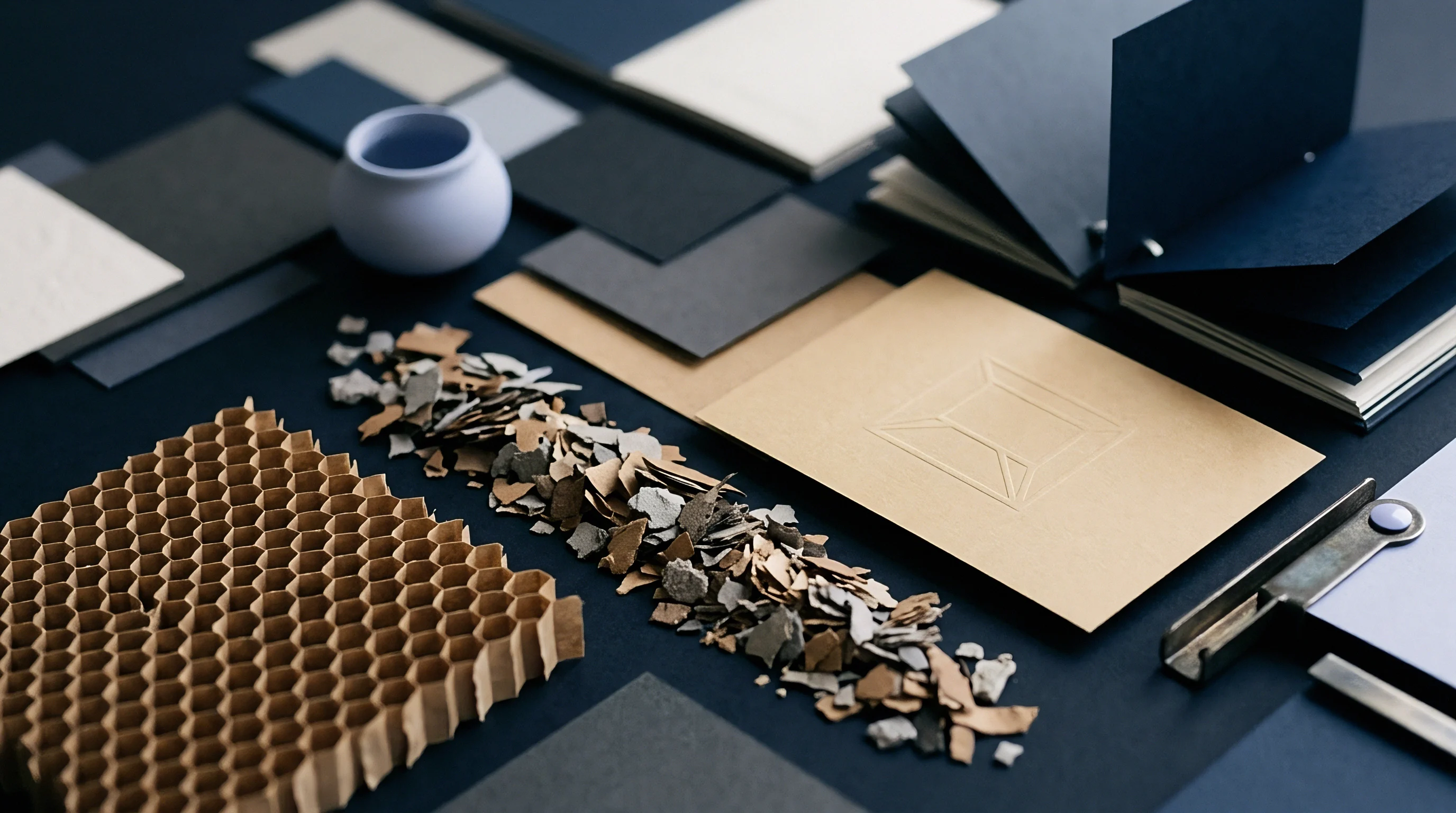
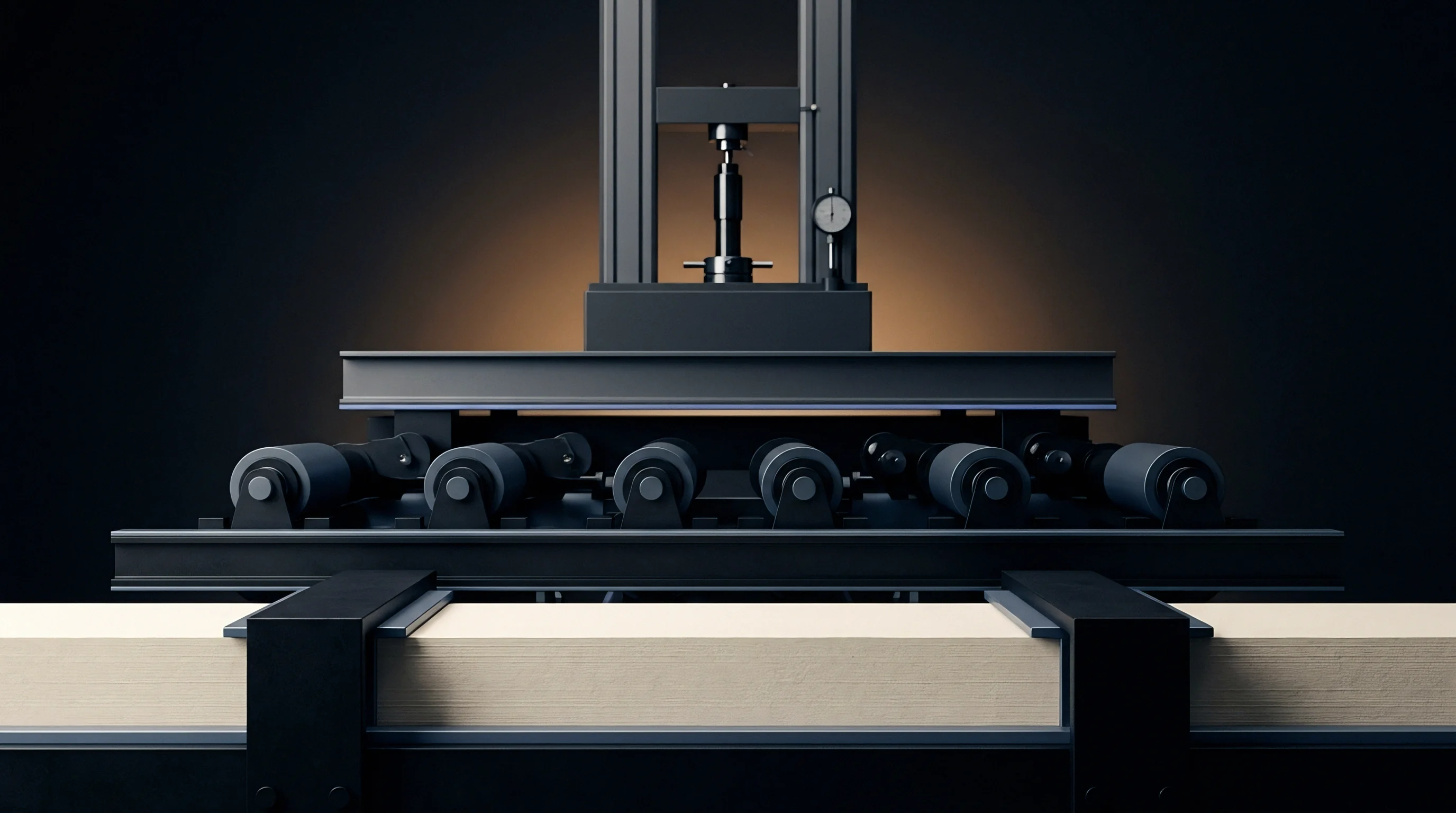
Heat transfer through a cellulose substrate during high-speed platen contact dictates how amorphous polymers soften within the fiber wall. When line speeds reach three hundred to six hundred impressions per minute, dwell time inside a heated embossing nip falls to just two to twelve milliseconds. Heat must travel in that brief window from the metallic die face through the surface coating and into the underlying fiber matrix.
Paperboard’s Z-direction thermal diffusivity controls the rate of temperature rise across the inner plies, typically running between 0.08 and 0.14 square millimeters per second for solid bleached sulfate and folding boxboard at standard moisture levels. This low diffusivity creates a steep thermal gradient between the surface and the core of the sheet.
Cellulose fibers consist of crystalline fibrils embedded in an amorphous matrix of hemicellulose and lignin, whose compliance shifts non-linearly across its glass transition temperature. While dry lignin exhibits a glass transition near 140 degrees Celsius, moisture plasticizes the polymer and lowers that threshold considerably. At seven percent internal moisture, the glass transition of native lignin drops to between 65 and 85 degrees Celsius.
With platen surface temperatures set between 120 and 180 degrees Celsius, the outer fiber layers reach this boundary almost immediately, shifting from a stiff, glassy state into a compliant, rubbery condition within the first two milliseconds of contact.
| Substrate Grade | Grammage (g/m²) | Moisture Content (%) | Z-Diffusivity (mm²/s) | Lignin Tg Range (°C) | Surface Heat Flux (kW/m²) |
|---|---|---|---|---|---|
| Solid Bleached Sulfate (SBS) | 300 | 6.5 | 0.112 | 72 to 78 | 420 |
| Folding Boxboard (FBB) | 280 | 7.2 | 0.095 | 68 to 74 | 380 |
| Coated Recycled Board (CRB) | 350 | 5.8 | 0.130 | 82 to 88 | 460 |
| Uncoated Kraft Back (UKB) | 320 | 7.0 | 0.105 | 70 to 76 | 400 |
Nip closure causes localized pressure spikes in the moisture held within the pore volume. The microporous board structure traps air and vapor inside an interconnected void network. Under rapid compressive loading, this void volume collapses, forcing air outward while steam begins generating at the heated interface.
The enthalpy of vaporization consumes part of the incoming thermal energy, pinning subsurface layers at a 100 degrees Celsius plateau until local pressure changes alter phase equilibrium. This hydrothermal process accelerates the softening of hemicellulose, which stays sensitive to moisture fluctuations between four and eight percent while surrounding lignin yields to heat.
Modeling this transient thermal conduction relies on a modified non-steady-state Fourier differential equation with a moisture-dependent conduction tensor. The heat equation takes the form:
rho C_p (partial T / partial t) = partial / partial z ( k_z(M) partial T / partial z ) + Q_phase
Where rho represents bulk density, C_p is specific heat capacity, k_z(M) is the moisture-dependent thermal conductivity through the thickness, and Q_phase is the internal heat source or sink from phase changes. Because dwell time is shorter than the thermal relaxation time of the full board caliper, heat remains confined to a thin region near the die face. Core plies stay near ambient temperature during impact, preserving structural bulk while allowing sharp surface deformation.
Conduction efficiency depends heavily on the interface contact resistance between the polished die face and the rough pigment coating. At low contact pressures, trapped air pockets act as thermal insulators and limit heat flux into the sheet. Once platen pressure exceeds five megapascals, microscopic surface asperities flatten, forcing direct contact between the brass die and the mineral coating.
This drops interface thermal resistance from roughly 0.0015 square meter Kelvin per watt down to less than 0.0002 square meter Kelvin per watt. That sharp drop triggers a thermal pulse that penetrates ten to fifteen micrometers into the coating layer within the first millisecond of impact.
Platen contact times below four milliseconds require tool face temperatures above 150 degrees Celsius to achieve internal fiber softening across a 300 gram per square meter substrate.
Limitations in die temperature control systems often prompt press operators to adjust surface thermometry rather than look at internal heat transfer kinetics. Raising the heating manifold by twenty degrees is commonly attempted for poor pattern definition on heavy cartonboard grades, but thermal conductivity through the coating layer remains the ultimate rate-limiting factor in high-speed converting.
Modulus
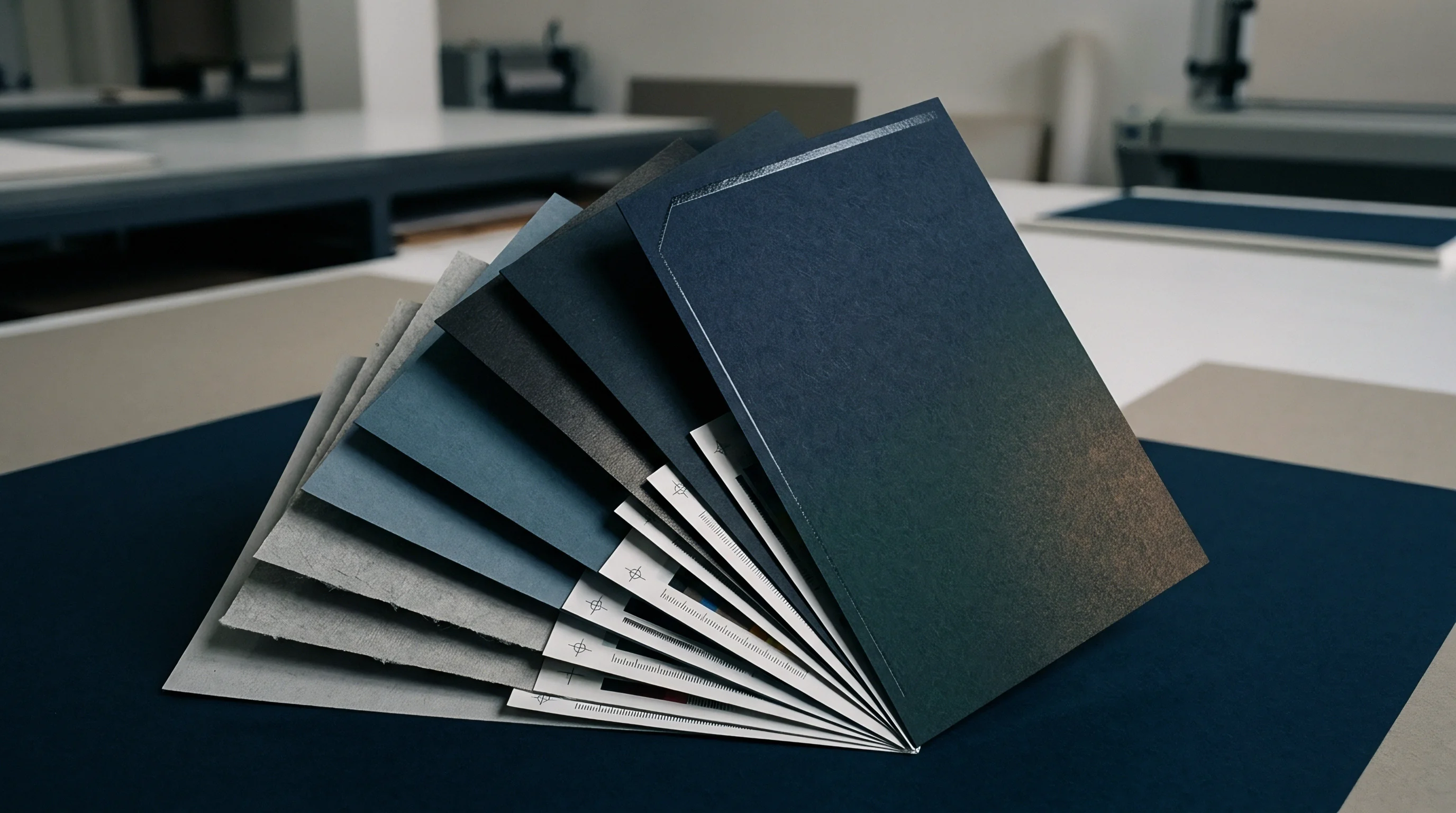
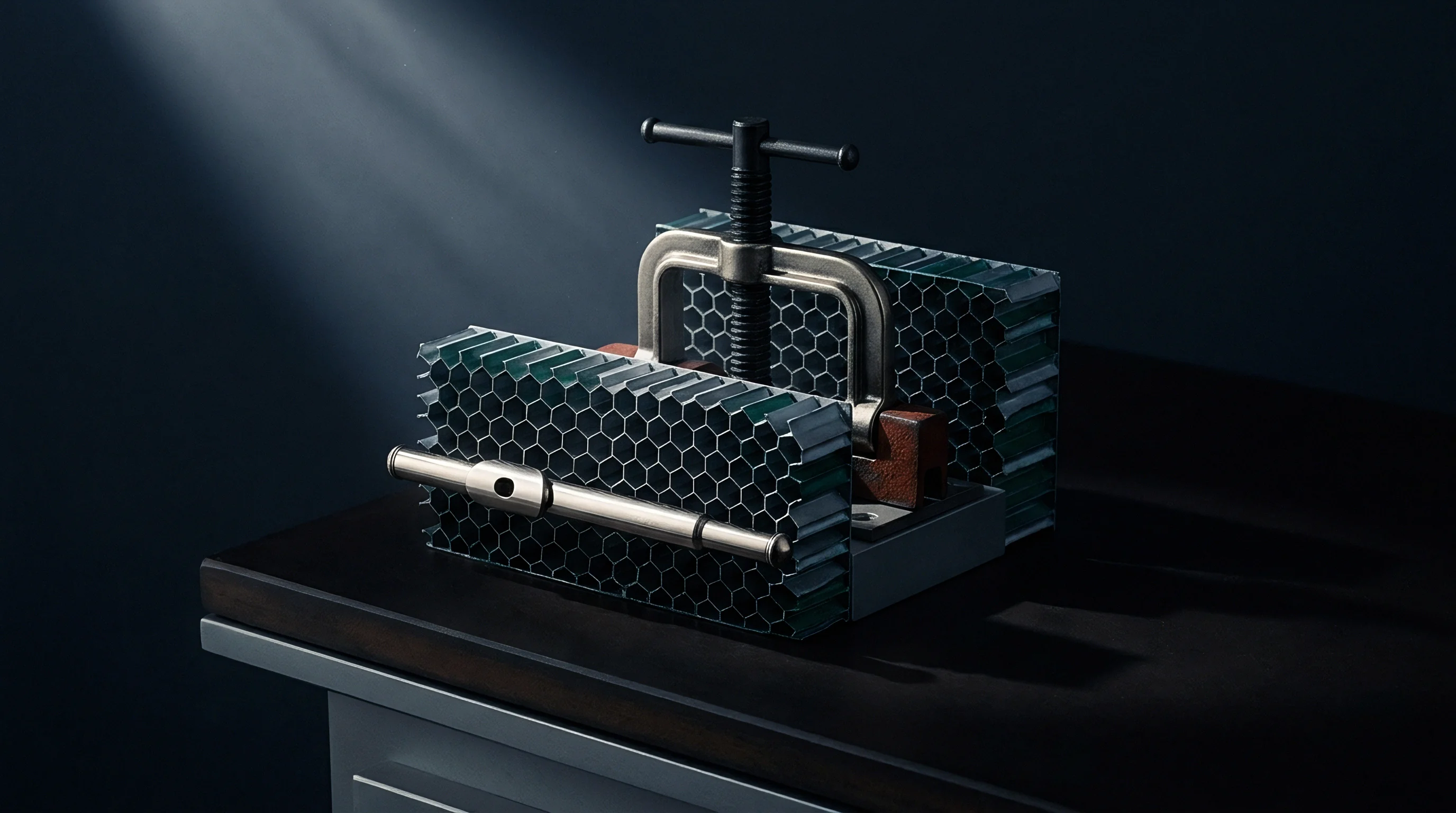
Compressive mechanical behavior along the Z-axis differs sharply from in-plane tensile properties because of fiber orientation. Papermaking fibers sit primarily in the machine and cross directions, forming a layered non-woven structure held together by hydrogen bonds and friction. Under transverse compressive loads, the board passes through three distinct phases: elastic compression of macro-voids, elastoplastic bending and collapse of fiber lumens, and solid-phase strain hardening at high density.
Sheet stiffness then rises exponentially as pore volume approaches zero.
Transverse compressive strain rate sets the slope of the stress-strain curve during high-speed platen impact. At static rates near 0.01 per second, lumens collapse under modest stress. Under dynamic embossing conditions, where strain rates reach 100 to 1000 per second, apparent compressive modulus increases by a factor of three to five as the fiber network yields.
Trapped micro-void air cannot escape instantaneously, generating internal pore pressure that resists mechanical collapse. Substrate stress response reflects the combined load-bearing capacity of the solid fiber skeleton and this compressed pore air.
Which Machine Variables Govern Thermal Penetration Time?
Platen closing velocity, thermal boundary layer thickness, and moisture migration speed together dictate how deeply heat penetrates before peak mechanical deformation occurs. At high linear velocities, peak pressure arrives before thermal energy reaches the central plies. This creates a non-uniform Z-axis deformation profile, concentrating strain in the softened surface plies while leaving cold internal plies largely uncompressed.
Adjusting press speed shifts this timing between mechanical force arrival and heat distribution.
Density gradients across multi-ply sheets complicate stress distribution even further. Solid bleached sulfate maintains a relatively uniform density through its thickness, whereas folding boxboard places high-density outer plies over a low-density, highly bulked mechanical core. Under Z-direction pressure, that low-density core undergoes localized plastic strain long before the stiff outer plies reach yield.
Modeling total strain requires treating the board as a series of connected spring-dashpot elements with thickness-dependent stiffness values.
Mechanical response testing relies on dynamic high-speed strain instrumentation to record stress-time curves during platen closure. This failure mode appears on heavy solid bleached sulfate runs when compressive loads exceed the shear strength of inter-fiber hydrogen bonds. The non-linear transverse compressive modulus E_z as a function of instantaneous strain epsilon_z follows an exponential formulation:
E_z(epsilon_z) = E_0 + A exp( B epsilon_z )
Where E_0 is the initial tangent modulus at zero strain, while A and B are empirical material parameters derived from high-rate compression tests. As strain increases, the exp(B epsilon_z) term takes over, reflecting structural resistance once fiber lumens flatten completely and cell walls come into direct physical contact.
- Fiber wall splitting occurs when local lateral strain exceeds the transverse tensile strength of individual cell walls.
- Inter-ply delamination develops when internal shear stress along the ply interface exceeds wet-end starch bonding capacity during rapid compression.
- Coating pick-off occurs when pigment-binder adhesion fails from thermal softening and sudden vacuum release as the die opens.
- Lumen fracture happens when dry, unplasticized fibers undergo brittle failure rather than ductile collapse under impact loading.
The transition from ductile collapse to destructive fiber fracture depends directly on localized moisture and internal temperature. Unheated high-speed compression forces cell walls to absorb energy through micro-cracking, which degrades sheet integrity and lowers post-emboss stiffness. Heated compression lets polymer chains inside the cell wall slide past one another, dissipating energy through viscous flow and plastic deformation without severing primary cellulose microfibrils.
Finding the threshold where permanent plastic set replaces elastic recovery requires analyzing the yield surface of the fiber matrix. Elastic deformation recovers as soon as the die lifts, causing springback that reduces relief depth. Permanent set happens when local stress exceeds the temperature-dependent yield stress of the softened network.
Raising die temperature drops this dynamic yield stress, allowing permanent compression at lower tonnage while reducing internal stresses that distort the sheet post-emboss.
What internal stress threshold marks the transition between permanent micro-structural fiber collapse and catastrophic inter-ply bond failure across recycled fiber blends?

Viscoelasticity
Paperboard’s response during rapid thermal deformation is governed by time-dependent mechanical behavior. Cellulose, hemicellulose, and lignin form a viscoelastic network exhibiting properties of both elastic solids and viscous fluids. Under high-speed embossing, load duration approaches the intrinsic relaxation times of these polymers.
Applying the time-temperature superposition principle allows master curves to predict high-strain-rate compression behavior from low-strain-rate test data shifted by thermal acceleration factors.
The Maxwell-Wiechert viscoelastic model describes stress relaxation during the dwell phase using multiple spring-dashpot elements in parallel with an independent elastic spring. When compressive strain is applied, internal stress peaks and then decays exponentially as viscous dissipation occurs in the softened matrix. The dynamic stress equation is written as:
sigma_z(t) = epsilon_z
Where E_infinity represents long-term equilibrium modulus, E_i is the stiffness of individual relaxation modes, and tau_i is the characteristic relaxation time of each polymer fraction. At lower temperatures, tau_i values remain far longer than platen dwell time, preventing relaxation and causing high elastic springback when pressure releases. Raising the temperature reduces tau_i by orders of magnitude, bringing stress relaxation down into the millisecond range.
| Dwell Time (ms) | Platen Temp (°C) | Peak Strain (mm/mm) | Residual Stress (MPa) | Springback Ratio (%) | Permanent Set (%) |
|---|---|---|---|---|---|
| 2.0 | 100 | 0.35 | 18.4 | 62 | 38 |
| 2.0 | 160 | 0.42 | 8.2 | 28 | 72 |
| 6.0 | 100 | 0.38 | 12.1 | 48 | 52 |
| 6.0 | 160 | 0.48 | 3.5 | 14 | 86 |
| 10.0 | 120 | 0.44 | 6.8 | 22 | 78 |
| 10.0 | 180 | 0.52 | 1.2 | 6 | 94 |
Viscous flow of cell wall components during dwell locks deformation into the sheet architecture. When the platen separates, stored elastic energy causes an immediate partial recovery in caliper. The fraction of strain retained after mechanical relaxation represents permanent set.
Higher platen temperatures increase this permanent set percentage by promoting viscous flow rather than elastic energy storage, even as shorter dwell times at high press speeds reduce total heat transfer.
Strain rate sensitivity governs how much dynamic mechanical energy the board absorbs. Increasing press speed from two hundred to five hundred sheets per minute raises the strain rate proportionally. This elevates apparent yield stress, requiring more tonnage to reach an equivalent compression depth.
Increasing tonnage on cold or underheated board simply risks crushing internal plies without achieving permanent thermal set.
Viscoelastic relaxation time must drop below die dwell time to prevent elastic springback from destroying embossed detail upon pressure release.
Platen dwell below 3 milliseconds produces a 14 percent permanent loss of caliper on a 350 micrometers solid bleached sulfate sheet running at 140 degrees Celsius. This reduction stems directly from incomplete stress relaxation in the hemicellulose matrix prior to die separation. Because springback occurs immediately, running at high line speeds requires elevated platen face temperatures to compress the material relaxation spectrum into the available contact window.
Viscous energy dissipation converts mechanical work into internal heat, raising substrate temperature slightly above what conduction alone provides. This strain energy dissipation concentrates around high-shear regions near die highlights and bevel edges, accelerating localized softening. Calculating plastic work density requires integrating the stress-strain hysteresis loop over the complete compression cycle.
Pattern depth stability scales directly with the ratio of viscous dissipation to total mechanical energy input during the dwell window.
Tooling
Die geometry and tool engineering establish the local stress fields applied to the paperboard. Male-female tooling sets rely on precise clearance gaps calculated relative to nominal uncompressed stock thickness. Standard clearance targets 60 to 80 percent of total sheet caliper, depending on board density and desired relief sharpness.
If clearance falls below the solid fraction volume threshold of the fiber matrix, the tool crushes the sheet, severing microfibrils and causing edge shear failure.
Bevel angles on die highlights concentrate compressive force along narrow contact zones, creating steep local pressure gradients. Angles below 30 degrees generate high shear that easily ruptures mineral coatings and face plies. Conversely, radiused edges on male elements distribute force over a broader area, forming a smooth transition zone that protects the surface.
Micro-topography on the die face, such as micro-etched texturing, alters local friction and changes how fibers slide past one another under compression.
- Platen parallelism verification uses pressure-sensitive film mounted across the full chasing plate to detect mechanical height variations across the bed.
- Thermal expansion calibration accounts for differential growth between the heated brass chasing plate and the cold steel counter-plate before locking register.
- Counter-die alignment requires setting male counter-elements into the female die under temperature to lock the registration matrix before running sheets.
- Zero-clearance profiling establishes the physical baseline mechanical zero point, preventing die contact during high-speed cycle drops.
- Run-temperature stabilizing holds the heating manifold at operational setpoints for sixty minutes to eliminate thermal drift across structural bolsters.
Thermal conductivity dictates how quickly heat moves from internal electrical cartridges to the engraved die face. Brass dies provide high thermal conductivity around 110 watts per meter Kelvin, replenishing surface heat quickly during high-speed runs. Hardened steel dies show lower thermal conductivity near 50 watts per meter Kelvin, but offer better wear resistance and rigidity under heavy loads.
Running high-density coated recycled board typically requires setting tool clearance to ninety percent of stock thickness to prevent surface shearing along deep perimeter lines.
Platen deflection under load creates spatial variation in Z-direction compression across large format sheets. Under three hundred tons of total force, the bed undergoes microscopic bending that reduces mechanical compression near the center relative to the edges. Dynamic impression adjustments compensate for this deflection using targeted counter-plate shimming or active hydraulic bed contouring.
Left uncorrected, the resulting caliper loss becomes permanent.
Die clearance set below 70 percent of nominal board caliper voids substrate structural integrity guarantees and increases ply-separation risks along score lines.
Incorrect tool alignment creates localized shear that cuts face fibers instead of compressing them smoothly along the Z-axis. When a job runs with misaligned counter-dies, shear stress exceeds internal bond strength, leaving visible fracture lines along embossing highlights. Thirty thousand folding cartons were ruined when an uncalibrated thermal expansion gap caused male-female die interference midway through an overnight shift.
Die surface wear gradually alters clearance over long runs, particularly with abrasive coated recycled board containing mineral fillers. Lower relief height on the tool face decreases peak pressure on the board, reducing total strain and altering the final appearance. Catching this tooling degradation before finished cartons drift out of tolerance requires periodic depth measurements during production.

Recovery
Post-emboss structural relaxation unfolds over extended timeframes as compressed fibers interact with atmospheric humidity. Fiber networks retain a strong memory effect driven by locked-in internal stress. Hydrogen bonds formed under compression can break and reform when exposed to ambient moisture, driving viscoelastic springback long after the sheet leaves the converting line.
Fluctuations in relative humidity accelerate this recovery, dulling pattern definition over time.
Moisture absorbed into compressed fiber cell walls increases polymer chain mobility, allowing stored elastic strains to release. A sheet stored at 50 percent relative humidity retains its embossed profile significantly longer than one kept at 75 percent relative humidity. Ambient vapor enters the pore structure, hydrating hemicellulose and lowering its glass transition temperature back to room level.
This re-hydration permits slow structural creep, gradually restoring board thickness toward its uncompressed state.
Evaluating long-term dimensional stability requires structured environmental testing across variable relative humidity cycles.
- Condition finished embossed samples at 23 degrees Celsius and 50 percent relative humidity for 24 hours to establish baseline relief depth profiles.
- Transfer samples into a controlled climate chamber maintained at 40 degrees Celsius and 85 percent relative humidity for a continuous 48-hour exposure window.
- Perform non-contact optical profilometry scans at pre-set intervals to map depth degradation across primary embossed highlights.
- Return samples to standard conditions for 24 hours to separate reversible moisture swell from irreversible viscoelastic springback.
Thickness recovery kinetics follow an exponential decay function: springback is highest immediately after die separation and slows over subsequent days. Total post-emboss caliper recovery percentage delta_h(t) relative to initial compressed depth h_comp is modeled as:
delta_h(t) = ( h(t) – h_comp ) / ( h_orig – h_comp ) 100
Where h_orig is original board thickness, h_comp is thickness under peak impression, and h(t) is measured thickness at time t after converting. Evaluating moisture content before heating the embossing station confirms that internal water remains within the critical 6.0 to 7.5 percent operating window.
Relative humidity elevation from 50 to 80 percent increases post-emboss relief loss by up to 35 percent over a 72-hour storage window.
Coating integrity plays a key role in slowing moisture ingress into the compressed core. Continuous pigment-binder films act as barrier layers, delaying humidity absorption and preserving embossed detail during shipping and warehousing. If the embossing pass micro-fractures the coating, moisture enters freely through those cracks, accelerating local strain recovery and collapsing high-relief edges prematurely.
Contract specifications should mandate post-converting conditioning protocols and set maximum allowable depth decay percentages at 72 hours after production to bind converter delivery metrics legally.
Accounting
Production line speed must be balanced against thermal energy costs and spoilage rates to determine the economic viability of high-speed embossing runs. Running at maximum speed reduces unit labor and machine-hour costs, but shortens dwell time ~ requiring higher die temperatures to reach target compression rates. Those higher temperatures increase power consumption and accelerate tool wear, creating a multi-variable optimization problem.
Line speed decisions directly determine total converting margin.
Energy costs for heating heavy platen manifolds scale non-linearly with operating temperature. Running a chase plate at 160 degrees Celsius requires roughly double the power of operating at 110 degrees Celsius because of convective and radiant heat loss to the surrounding press frame. However, that added thermal energy allows a 40 percent increase in running speed without sacrificing pattern depth, producing a net reduction in machine-hour cost per thousand finished sheets.
| Line Speed (sheets/hr) | Platen Temp (°C) | Power Usage (kW) | Scrap Rate (%) | Tool Life (impressions) | Unit Cost Delta ($/k) |
|---|---|---|---|---|---|
| 4,000 | 110 | 14.2 | 1.2 | 1,200,000 | Baseline |
| 6,000 | 140 | 22.5 | 1.8 | 950,000 | -$1.45 |
| 8,000 | 170 | 34.8 | 3.5 | 700,000 | -$0.82 |
| 10,000 | 190 | 46.1 | 7.2 | 450,000 | +$2.15 |
Spoilage rates rise sharply when line speeds outpace the substrate’s thermal relaxation limits. Incomplete fiber softening at high speeds results in shallow embossing profiles that fail quality inspection and force full job re-runs. Conversely, running too slowly at high temperatures causes thermal yellowing of white coatings and substrate scorching, driving up material waste.
Minimum landed cost sits right at the intersection of thermal saturation speed and scrap generation limits.
Tooling amortization must also factor into the financial equation. Higher operating temperatures and extreme tonnage accelerate die wear, shortening impression lifetime before re-engraving is needed. Steel dies cost more upfront than brass, but retain micro-embossed detail across multi-million impression packaging runs, offsetting that initial expense when amortized over large volumes.
Optimal financial performance occurs where increased press speed offsets higher thermal energy consumption without crossing the exponential scrap rate inflection point.
Total cost calculations per thousand sheets must include substrate waste, power consumption, die wear allocations, and press hour rates. Pushing line speeds past eight thousand sheets per hour on heavy folding boxboard increases scrap from coating micro-fracturing, eroding productivity gains. A balanced operating window maintains high press yield while protecting the physical integrity of the finished material.
Mapping the relationship between thermal input, fiber compression rate, and total unit cost across variable press speeds shows that operating at moderate speed elevation combined with optimized die temperatures maximizes net throughput while maintaining strict quality metrics. Machine setup decisions made on the shop floor directly govern profitability across every converted pallet leaving the facility.