Substrate Anisotropic Hygrothermal Strain Variance under High Speed Thermal Lamination Pass
High speed thermal lamination induces transient Z-axis thermal and moisture gradients that interact with substrate fiber anisotropy, creating post-pass curl and delamination requiring active pre-heating and chill roll management.
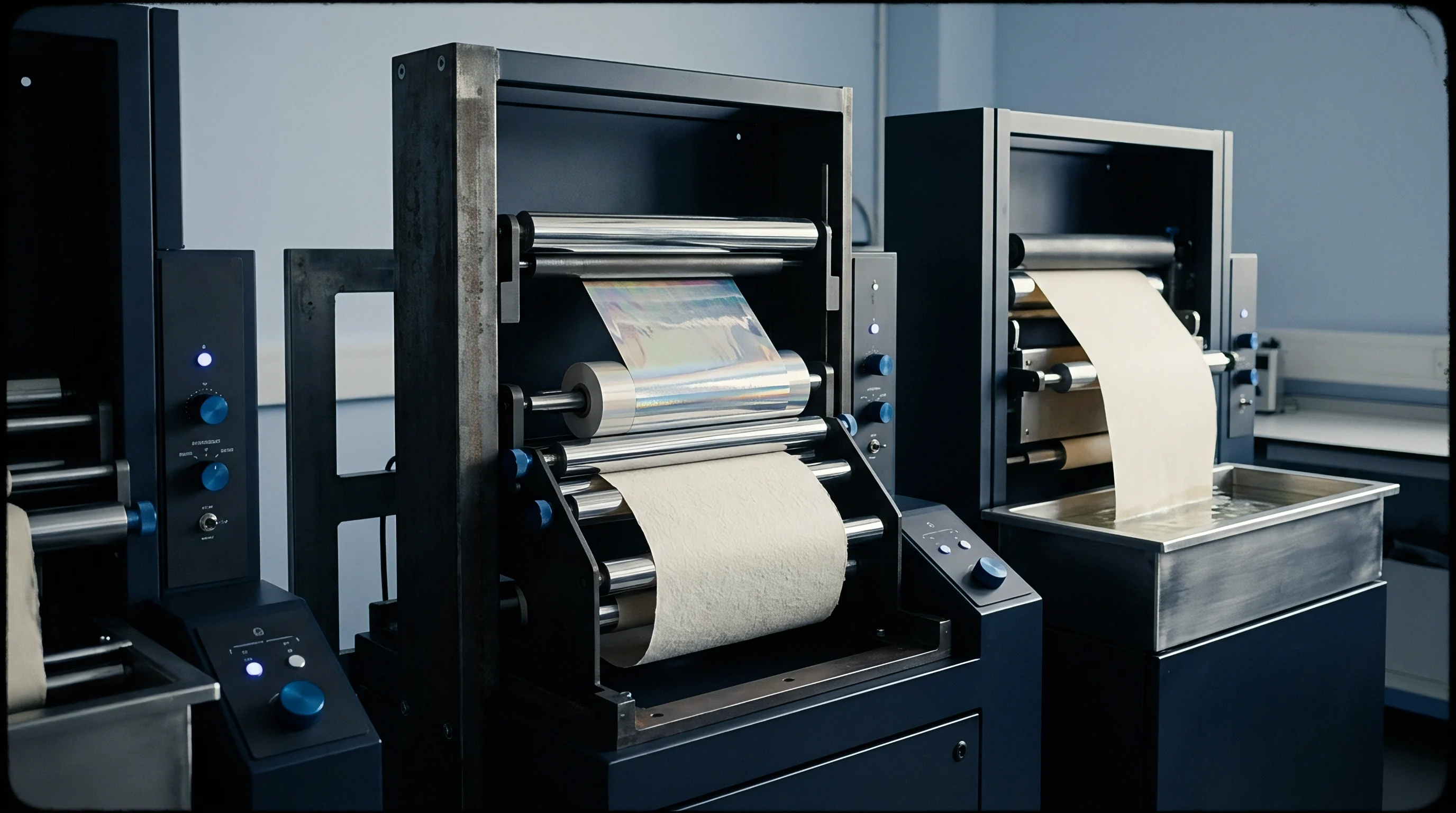
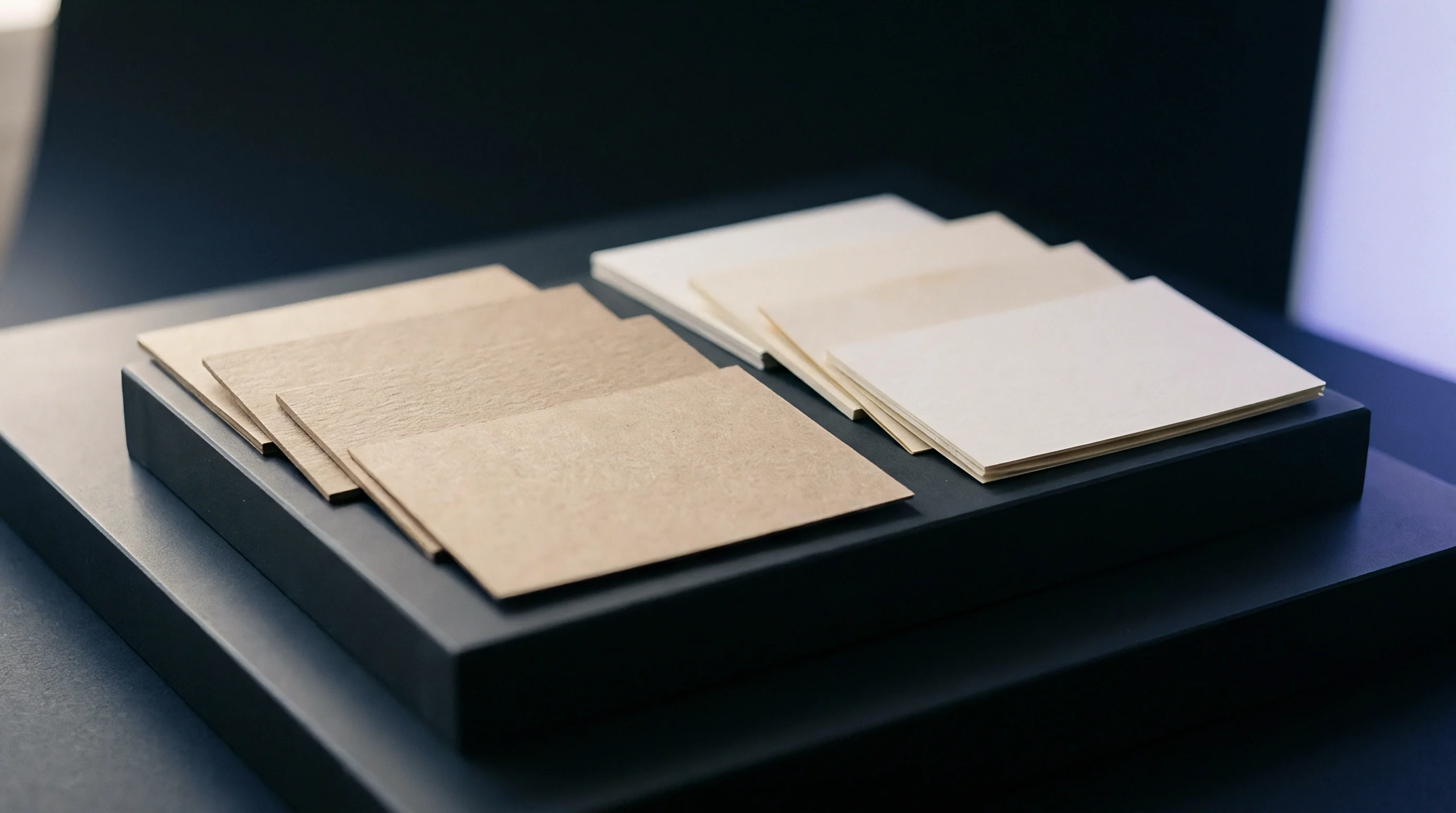
Grain
Fiber alignment along the machine direction establishes the baseline structural asymmetry that dictates how paperboard responds to heat and humidity. On Fourdrinier and multi-ply cylinder formers, the wet end lays down cellulose fibers primarily parallel to wire travel, leaving machine-direction elastic modulus 1.8 to 2.6 times higher than cross-direction modulus. When converting processes introduce heat and moisture, hydrogen bonds between microfibrils break and reform as local water content shifts.
Cross-direction movement is substantially greater because moisture enters the amorphous regions between crystalline cellulose chains, pushing adjacent fibers apart sideways while leaving their length largely unchanged.
Hygrothermal expansion coefficients capture this directional disparity. Across board grades ranging from 180 to 450 grams per square meter, cross-direction expansion runs from 0.025 to 0.045 percent dimensional change per one percent change in relative humidity, whereas machine-direction expansion stays between 0.006 and 0.012 percent under identical conditions. Although thermal expansion occurs concurrently in heated passes, moisture-driven dimensional change dominates the overall response.
Inside a laminating nip, heat warms the board and strips moisture from exposed surfaces at once, triggering thermal expansion alongside moisture-induced shrinkage.
Fiber Orientation Dynamics in Multi Ply Substrates
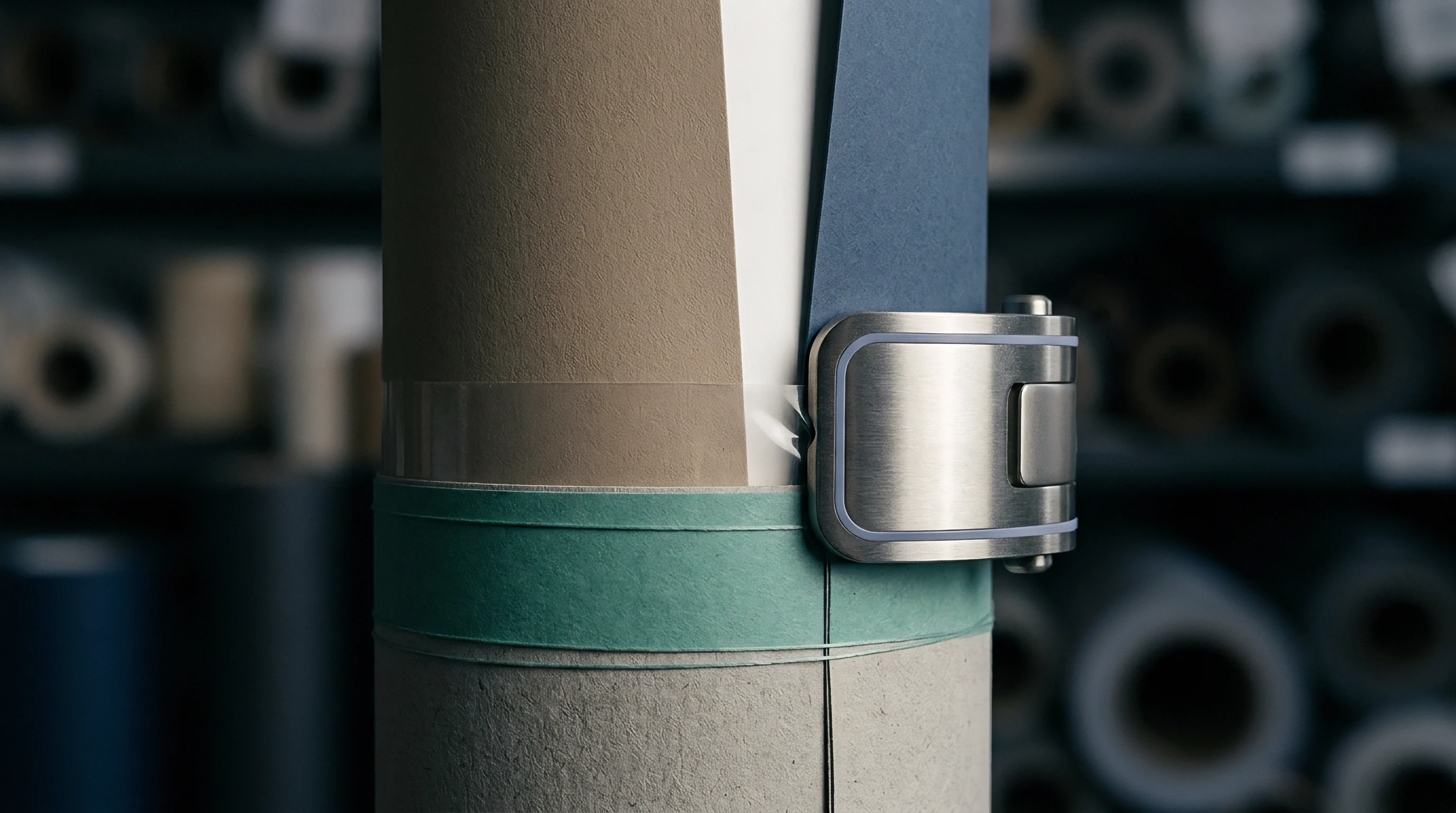
Multi-ply folding boxboards introduce further mechanical complexity through layered pulp compositions. A top liner of bleached chemical pulp provides a dense network with high tensile stiffness, while the core relies on mechanical or recycled pulp to build bulk with shorter fibers. When outer and inner plies differ in their fiber orientation angles, the resulting sandwich structure becomes unbalanced.
If top-liner fiber orientation deviates from that of the backer ply, shifts in ambient relative humidity generate immediate torsional shear through the thickness of the board.
Dynamic mechanical analysis shows marked divergence in moisture diffusion rates between chemical and mechanical furnishes. Chemical pulps absorb water rapidly via accessible hydroxyl sites, producing fast initial strain. Mechanical pulps retain hydrophobic lignin, which slows incoming moisture but hinders drying once the fibers are wet.
At web speeds of 180 meters per minute, these mismatched absorption rates create transient internal stress gradients across the plies before the sheet can reach moisture equilibrium.
Thermal lamination of paperboard above one hundred degrees Celsius reduces internal web moisture by up to two absolute percentage points within a seventy millisecond nip contact window.
Machine-direction web tension also reconfigures the hygrothermal strain profile. Longitudinal mechanical pull limits thermal expansion in the running direction while worsening cross-direction Poisson contraction. As the web wraps heated cylinders under tension, fibers align more tightly with the machine axis, locking in longitudinal stress.
The unconstrained cross direction shrinks freely as surface moisture flashes away, steepening anisotropic strain ratios at elevated temperatures.
Viscoelastic Properties of Cellulose Matrix under Heat
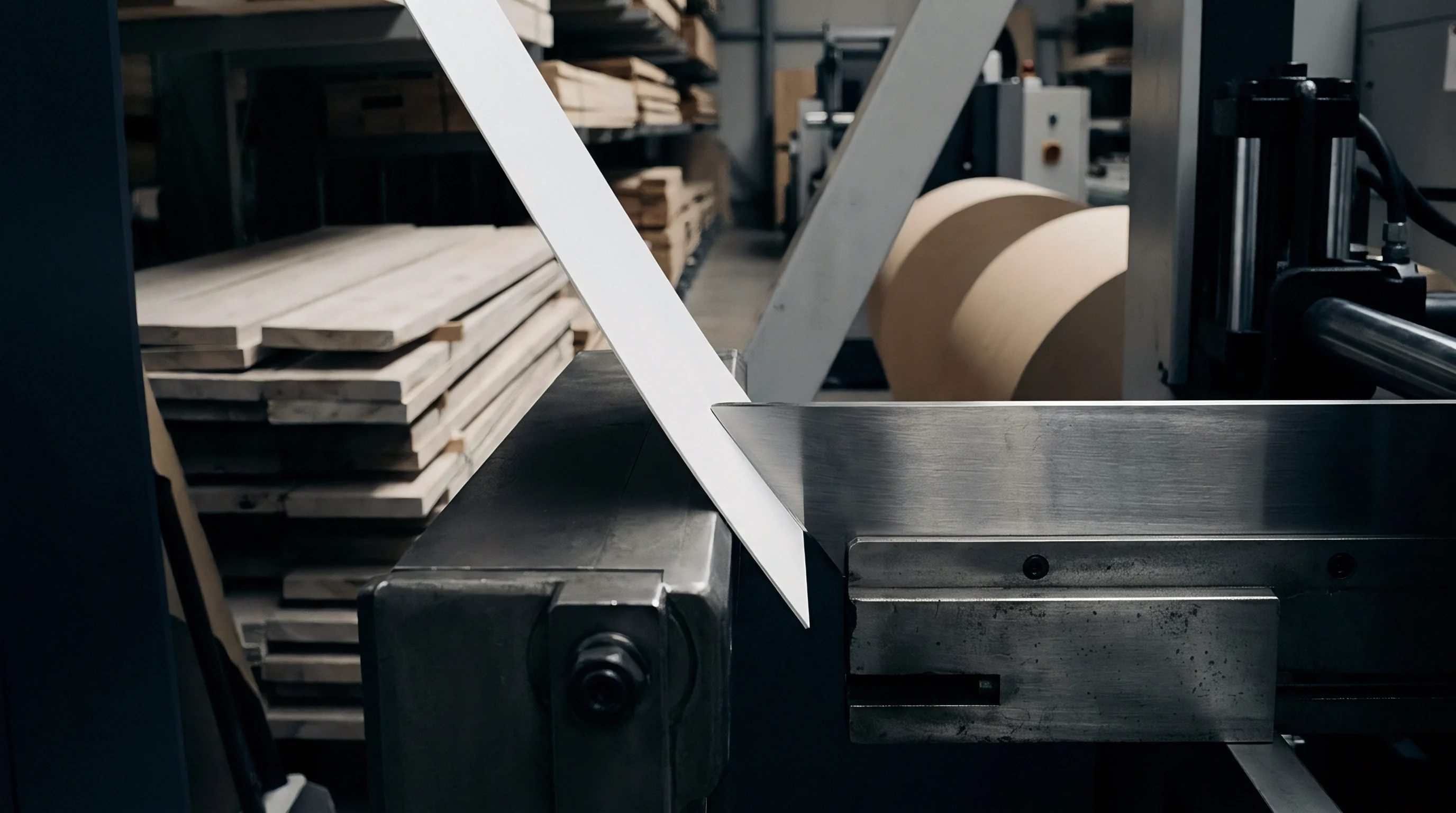
The glass transition thresholds of hemicellulose and lignin depend heavily on moisture content. At five percent moisture, dry lignin shows a glass transition temperature near 140 degrees Celsius, but at nine percent moisture that transition drops below 80 degrees Celsius. When board carrying typical moisture passes through a laminating nip at 120 degrees Celsius, these amorphous polymers soften, allowing the fiber network to yield under nip pressures above 3.5 megapascals.
Exiting the nip into ambient air cools the web rapidly. As the board drops below the local glass transition point, the deformed cellulose network solidifies, freezing transient strains in place. When the board later absorbs ambient moisture, those locked-in strains release unevenly between the machine and cross directions.
In the cross direction, this relaxation manifests as longitudinal curl or edge wave that interferes with downstream die-cutting and folding.
Sorption isotherms exhibit clear hysteresis across rapid heating and cooling cycles. The desorption path through a heated nip does not retrace during warehouse storage, indicating irreversible restructuring of inter-fiber hydrogen bonds. This altered bonding network shifts the baseline dimensions of the board, leaving converted sheets permanently altered compared to their incoming state.
Fiber orientation angles determine how localized moisture loss translates into macroscopic distortion across the converted sheet.

Gradient
Through-thickness temperature distribution during high-speed lamination is steep and transient. Heat enters solely from the side in contact with the heated steel roll, while the reverse rides against a lower-conductivity rubber-covered nip roll. Dense bleached board has an average thermal diffusivity of 0.12 square millimeters per second, which severely restricts heat penetration through a 350-micrometer sheet in the available contact window.
At 220 meters per minute with a 25 millimeters nip contact length, the web spends under seven milliseconds in the heating zone.
Transient simulations confirm that across this brief contact period, the laminated face reaches within five degrees of the roll surface, while the reverse face warms by less than fifteen degrees Celsius. This sharp differential sets up a pronounced Z-axis thermal gradient. The hot side expands almost instantaneously while the cool side retains room-temperature dimensions, momentarily bowing the sheet concave toward the rubber roll inside the nip.
Moisture Migration Mechanics across Sheet Thickness
Heating the top surface vaporizes bound water in the surface fibers, driving an acute vapor pressure gradient through the board thickness. High internal vapor pressure pushes steam away from the hot surface toward the cooler reverse side, where it condenses in the lower plies. This lifts local moisture near the unlaminated face by up to 1.8 percentage points above the incoming web average.
The result is an internal hygrothermal mismatch: the top plies dry and contract while the bottom plies gain moisture and expand.
Applying polymer films during lamination seals the heated surface. Continuous films of polyethylene terephthalate or oriented polypropylene form impermeable barriers that trap vapor at the adhesive interface. Trapped vapor builds pressure, driving steam down through the porous network toward the reverse side.
If steam pressure exceeds the internal ply bond strength, micro-delamination develops in weaker recycled core plies, permanently compromising Z-directional tensile strength.
| Substrate Classification | Caliper (µm) | MD Hygro Expansion (%/% RH) | CD Hygro Expansion (%/% RH) | Thermal Conductivity (W/m·K) | Z-Axis Diffusivity (mm²/s) |
|---|---|---|---|---|---|
| Solid Bleached Board (SBB) | 300 | 0.007 | 0.028 | 0.14 | 0.11 |
| Folding Boxboard (FBB) | 380 | 0.009 | 0.034 | 0.11 | 0.09 |
| Coated Recycled Board (CRB) | 420 | 0.012 | 0.042 | 0.09 | 0.07 |
| Unbleached Kraft Board (SUB) | 350 | 0.008 | 0.031 | 0.13 | 0.10 |
| Data measured under laboratory conditions at 23°C following relative humidity shifts between 30% and 80% per ISO 187. | |||||
Mismatched thermal expansion between the film and the board base introduces shear at the interface. Polymer films exhibit thermal expansion coefficients roughly five to ten times higher than cellulose fibers along the machine direction. The thermal adhesive and film expand significantly in the hot nip.
On exiting, the film cools quickly and attempts to contract while the board core remains warm. The resulting shear acts on the adhesive bond line, pulling the laminate into severe curl unless counteracted.
Nip Pressure Distribution and Transient Moisture Flash
Pressure profiles across the nip zone reveal steep mechanical gradients that interact directly with moisture movement. Peak pressures reach 4.2 megapascals when using hard rubber backing rolls of 85 Shore A durometer hardness. Under this load, the porous fiber network compresses by eight to twelve percent, forcing air and vapor out of the compressed volume and driving convective moisture transfer into adjacent zones ahead of and behind the nip line.
At the nip exit, pressure drops instantly to atmospheric levels, triggering flash evaporation. Superheated moisture within the fibers flashes to steam, pulling latent heat and rapidly cooling the surface plies. This evaporative flash drops surface temperatures by 20 to 30 degrees Celsius within fifty milliseconds of exit, freezing stresses into the outer fibers while the core stays warm and damp ~ setting a permanent stress gradient across the caliper.
Web speed sets the dwell time available for conduction and moisture equalization. Running at 260 meters per minute limits heat penetration to the top twenty micrometers of board. Slowing to 80 meters per minute allows heat to soak completely through a 400-micrometer folding boxboard, raising core temperatures beyond the lignin glass transition point and producing uniform, flat cooling behavior across the run.
Operating thermal lamination equipment at excessive web speeds without thermal gradient control causes immediate planar curl, sheet jams in downstream converting equipment, and catastrophic adhesive bond line failure across finished product inventories.

Warp
Anisotropic hygrothermal strain variance appears post-pass as dimensional distortion across the sheet. Simple planar curvature (roll curl) occurs when machine- and cross-direction strain differences develop uniformly across parallel axes. Complex distortions, such as diagonal twist and dish warp, arise when fiber alignment deviates from the machine centerline.
High-speed thermal lamination magnifies these distortions by superimposing rapid thermal contraction onto slower moisture recovery strains.
On a 320-micrometer folding boxboard running through a thermal laminator at 210 meters per minute, internal moisture drops from 6.8 percent to 4.9 percent on the laminated face while steam migration raises the reverse face moisture by 1.1 percent. This gradient creates immediate post-nip cross-direction curl with a 180 millimeters radius. Over forty-eight hours of ambient conditioning, moisture equalization across the caliper reverses the distortion into a permanent machine-direction roll curl with a 310 millimeters radius.
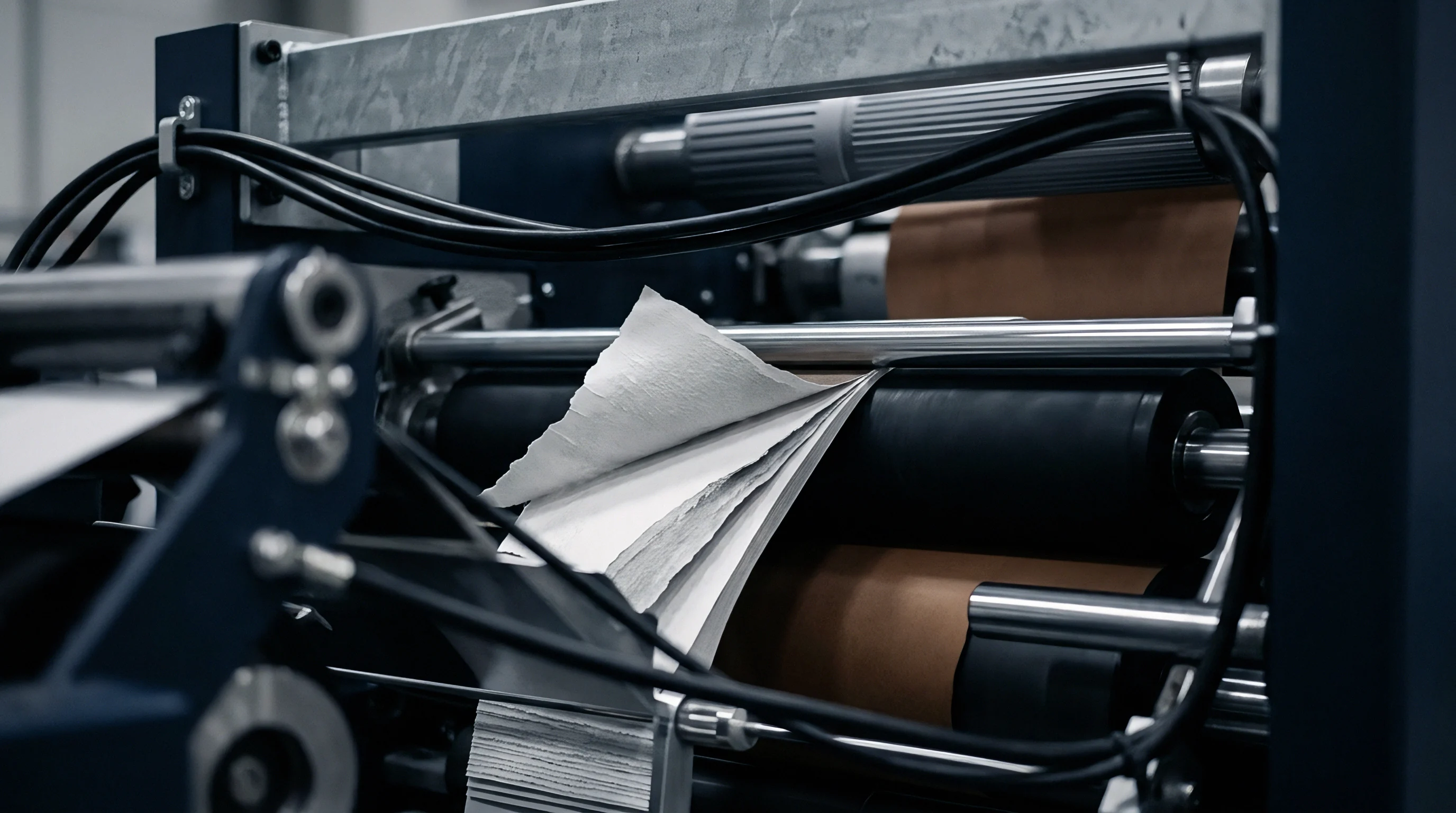
Can Cross Direction Strain Differential Exceed Three Percent before Rupture?
Cross direction strain differentials reach critical thresholds during high-speed passes when incoming moisture exceeds eight percent. Cellulose networks accommodate elastic strains up to 1.5 percent before yielding plastically. When localized hygrothermal expansion pushes cross-direction strain differentials beyond 3.2 percent, micro-fracturing occurs within the inter-fiber matrix along ply interfaces.
This rupture permanently degrades Z-directional stiffness, causing soft board feel, score line cracking, and ply separation during folding.
Diagonal twist warp occurs whenever the principal fiber axis is offset from the web running direction. Even a two-degree misalignment introduces shear coupling under thermal load, causing the sheet to expand along diagonal vectors. Upon cooling, opposing corners lift into a twisted shape that mechanical breaker bars cannot flatten.
Unbalanced hygrothermal strain across laminated board surfaces generates twisting moments that scale quadratically with sheet width during post-pass moisture equilibration.
Edge wave distortion stems from uneven moisture pickup across the master roll during storage. Rolls stored in humid areas take on moisture through their exposed outer edges while the center remains dry. In the heated nip, these wet margins expand dramatically against the restraining dry center, buckling into continuous longitudinal waves across the outer fifteen percent of the sheet width.
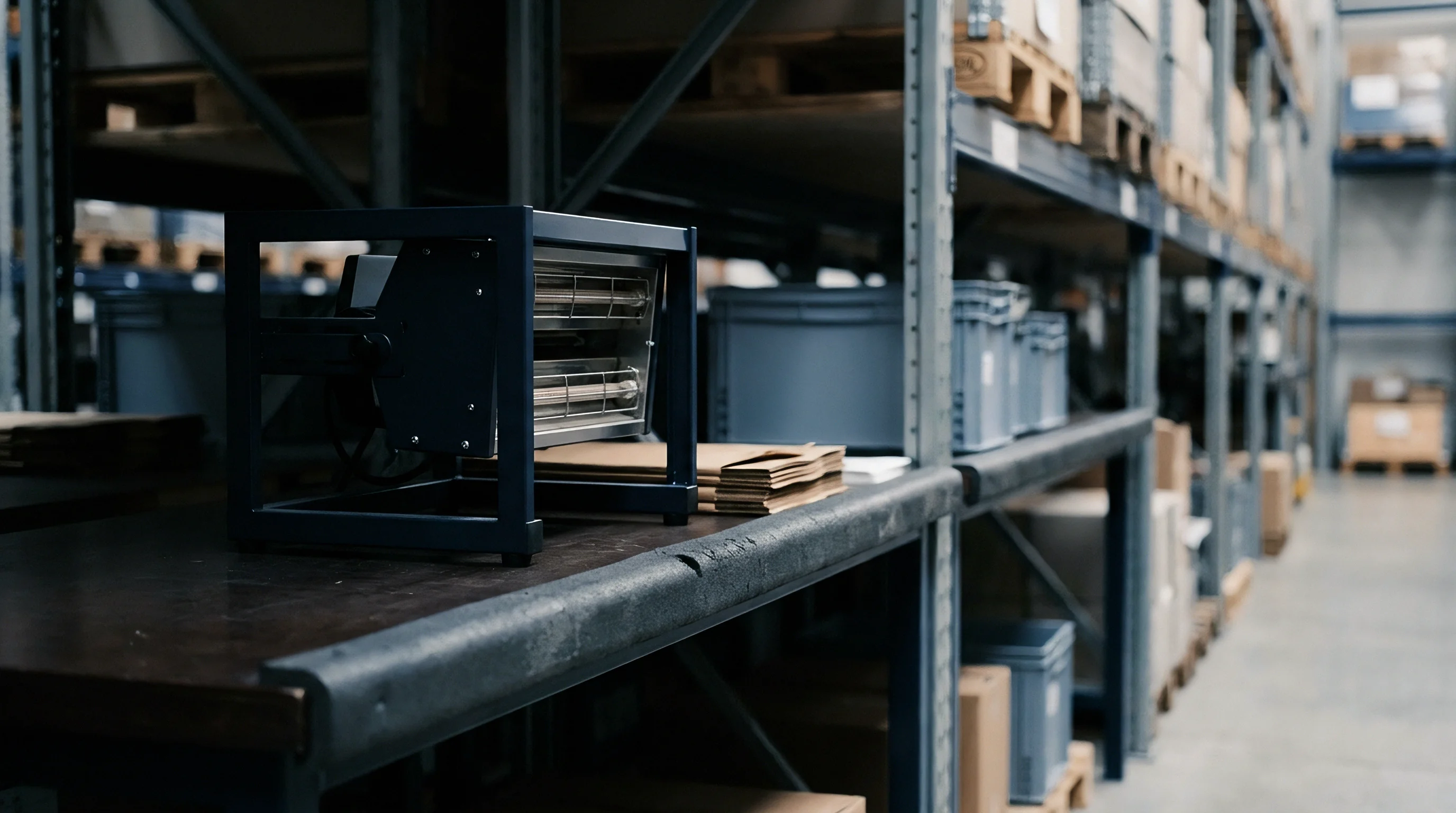
Structural Defect Modes in High Speed Thermal Lamination
Anisotropic strain failures degrade both appearance and converting performance. Converting lines must manage operating parameters to prevent these defects from reaching finished production runs.
- Interfacial Delamination occurs when post-pass cooling strains generate shear stresses that exceed the bond strength of the thermal adhesive layer, causing film separation along the sheet edges.
- Diagonal Twist Warp develops from off-axis fiber orientation under thermal load, producing non-planar sheet geometry that causes registration failures in high-speed die cutters.
- Blister Rupture appears when trapped moisture flashes into high-pressure steam beneath impermeable film barriers, creating localized circular separations between film and board.
- Cross Direction Fluting emerges when localized moisture lines create periodic longitudinal ridges along high-tension web zones during heated roll contact.
- Score Line Cracking results from excessive dry-face embrittlement, where heat drives surface moisture below three percent, causing the outer board liner to snap during fold formation.
Stack conditioning strongly influences the final shape of sheeted stock. Stacking warm, freshly laminated sheets directly on pallets traps heat and moisture in the center of the pile. The edges cool and dry quickly, but core sheets retain heat for up to thirty-six hours.
This differential cooling creates non-uniform internal strains, leaving top sheets dished upward and internal sheets wavy around the perimeter.
Post-lamination curl originates in both raw material variations across mill lots and thermal nip profiles on the laminating press.

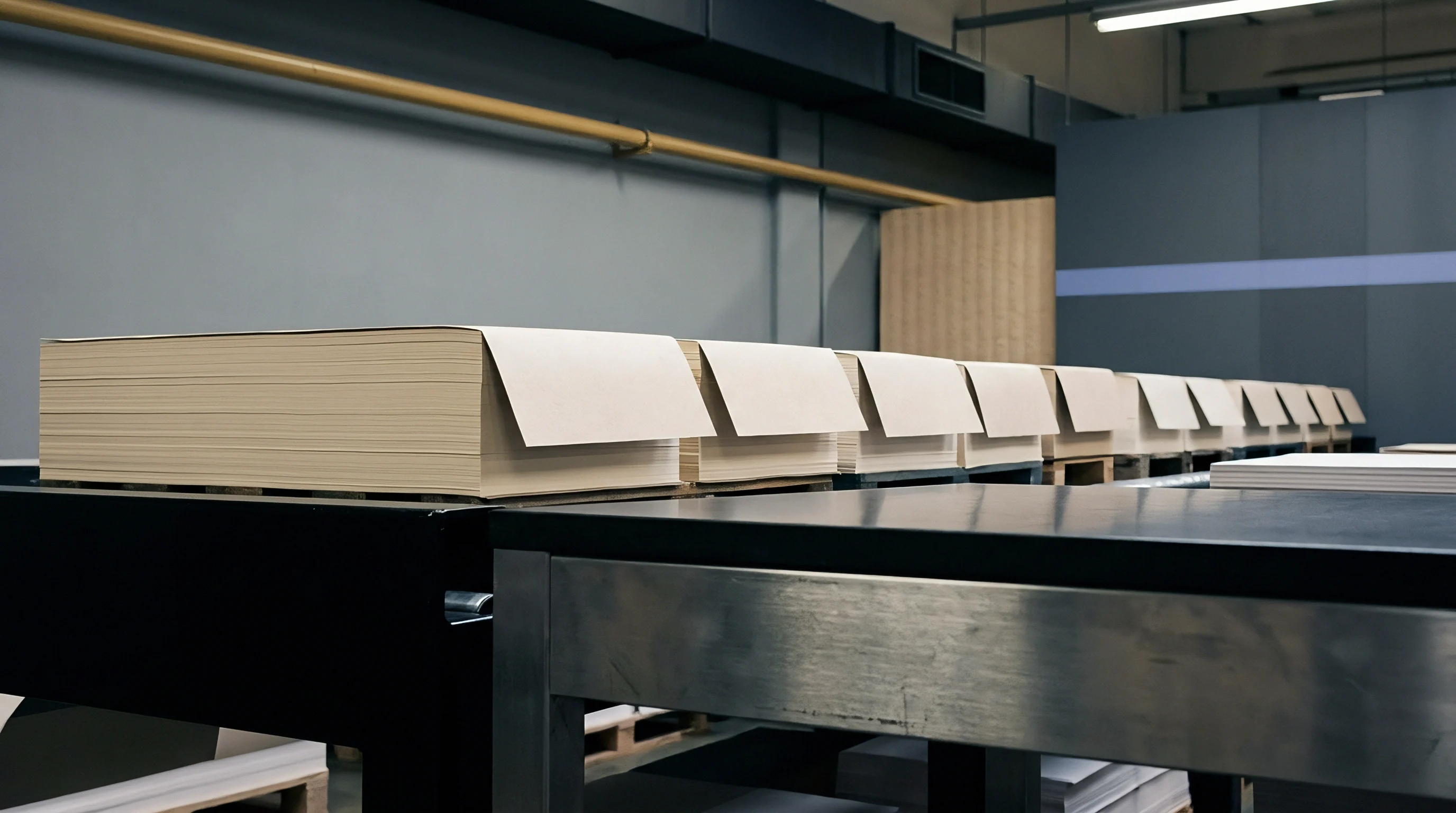
Metrics
Quantifying hygrothermal strain variance requires controlled laboratory testing alongside inline process monitoring. Standard protocol requires pre-conditioning test specimens under ISO 187 at 23 degrees Celsius and 50 percent relative humidity for twenty-four hours before taking baseline measurements. Dimensional changes are tracked using optical laser profilometry and electronic strain gauges capable of 0.5 micrometers resolution across a 250-millimeter gauge length.
Dynamic mechanical thermal analysis measures complex modulus and loss factors under temperature ramps designed to simulate nip contact. By applying sinusoidal stress during heating at rates up to 50 degrees Celsius per minute, DMTA pinpoints the softening temperatures of cellulose, hemicellulose, and lignin. These viscoelastic profiles reveal where reversible elastic deformation transitions into permanent plastic set.
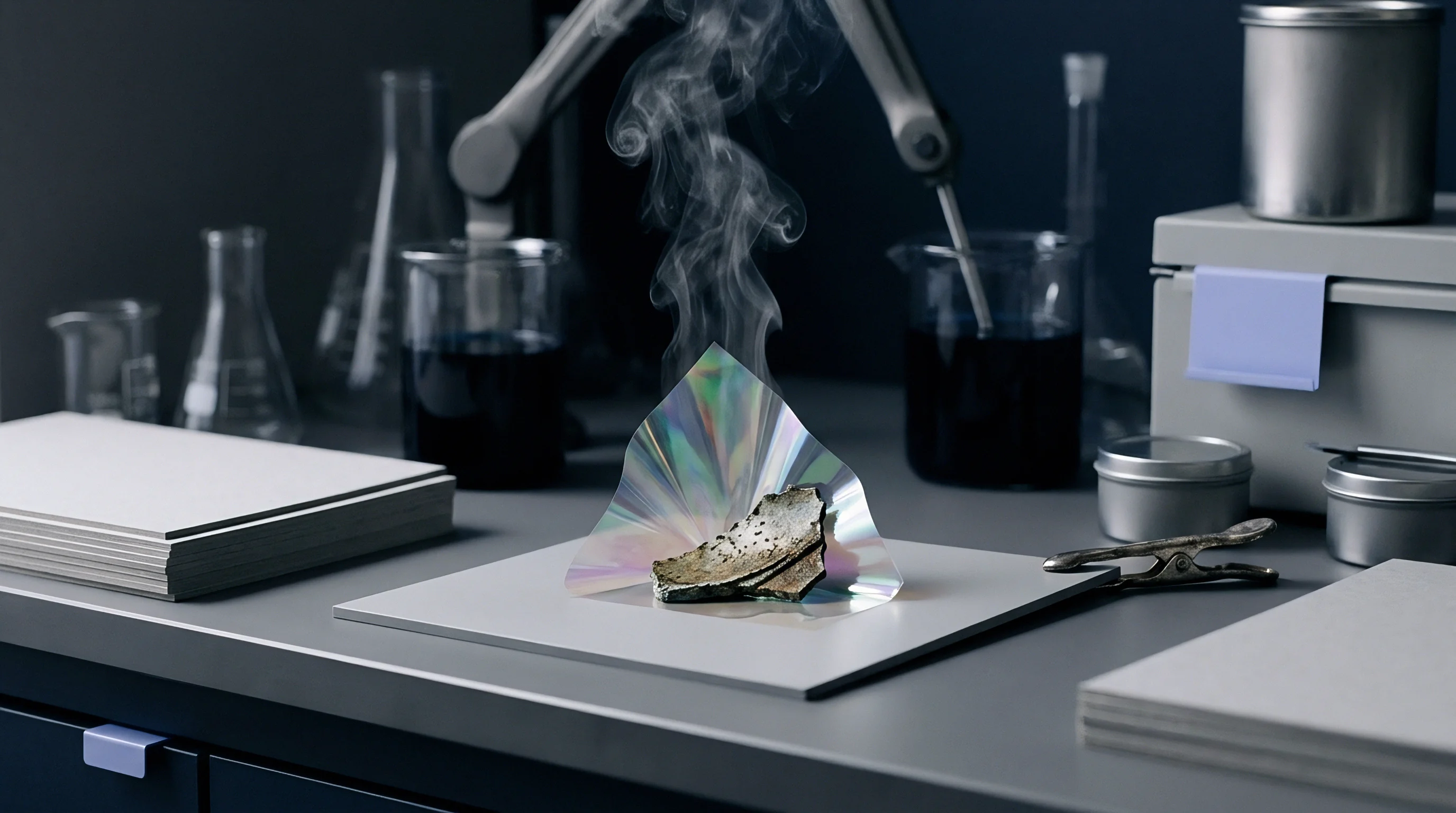
Inline Optical and Strain Gauge Measurement Systems
Modern lines use non-contact optical triangulation sensors positioned right after the chill rolls. Dual laser displacement heads scan both web surfaces at rates up to ten kilohertz to map curvature continuously. Measuring surface height variations across the width yields an instantaneous curl radius, allowing automatic adjustments to anti-curl rolls before geometry exceeds tolerance.
Infrared thermography arrays monitor temperature uniformity across the web at the nip exit. Thermal maps highlight cross-web variances caused by uneven nip pressure, worn rubber coverings, or clogged oil passages inside the heated roll. A temperature spread of just 4 degrees Celsius across the roll width generates measurable differences in thermal strain, producing tight bands that turn into edge wave in sheeted stock.
| Standard Designation | Test Parameter | Measurement Principle | Target Precision | Operational Relevance |
|---|---|---|---|---|
| ISO 187 | Atmospheric Conditioning | Controlled Temp/Humidity Chamber | ±0.5°C / ±2% RH | Baseline specimen stabilization |
| ISO 11475 | CIE Whiteness & Optics | Spectrophotometric Reflectance | ±0.1 CIE Unit | Surface heat degradation tracking |
| TAPPI T 527 | Surface Roughness | Parker Print-Surf Air Leakage | ±0.05 µm | Adhesive contact area validation |
| DIN 53121 | Bending Resistance | Two-Point Flexural Strain | ±1.0 mN | Post-pass structural stiffness audit |
| EN 13430 | Material Recyclability | Pulping & Screening Yield | ±0.5 Mass % | End-of-life scheme compliance |
Web moisture is measured using multi-wavelength near-infrared gauges located at the unwind, post-nip, and before sheeter delivery. These units measure hydroxyl absorption bands to calculate absolute moisture percentages regardless of basis weight or furnish mix. Tracking moisture loss through the nip provides real-time feedforward data for downstream re-moisturization units.
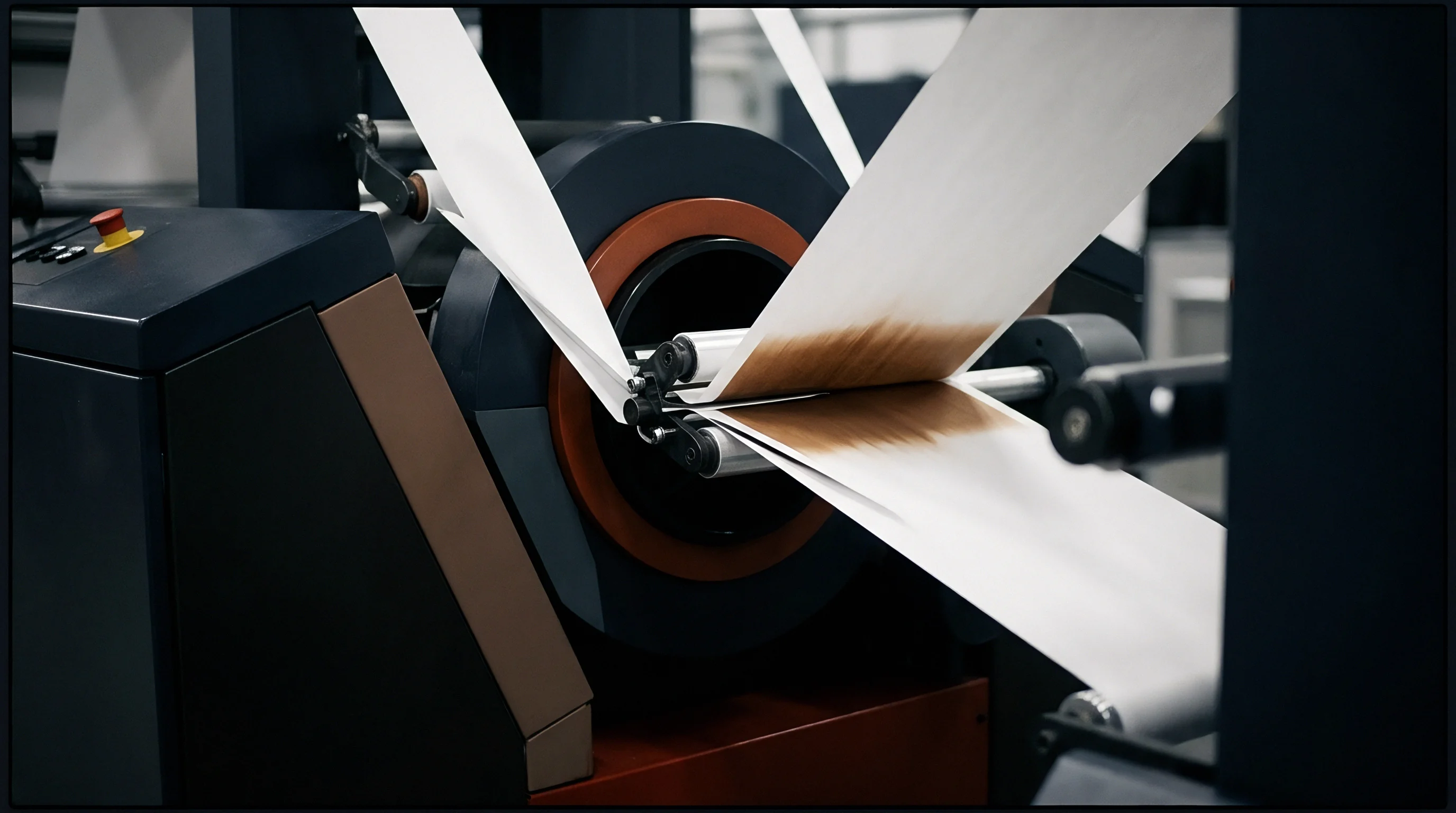
Contractual Specification Parameters for Converter Dossiers
Purchasing specs for high-speed lamination boards require clear limits on hygrothermal stability to maintain runnability. Technical procurement agreements require mill certification of key dimensional properties on every reel lot.
- Maximum CD Hygrothermal Expansion must not exceed 0.032 percent per one percent relative humidity change when measured between 30 and 80 percent relative humidity under ISO 187.
- Cross Direction Moisture Profile Tolerance across the reel width must remain within plus or minus 0.4 absolute moisture percentage points from the target mean.
- Fiber Orientation Angle Deviation relative to the mechanical roll center line must not exceed 1.5 degrees at any point across the web width.
- Z-Directional Tensile Strength (Internal Bond) measured per ISO 15754 must maintain a minimum threshold of 250 kilopascals to prevent nip steam delamination.
Process capability analysis verifies converting stability across extended runs. Target capability indexes for sheet flatness are set at a minimum of 1.33 for standard packaging and 1.67 for high-speed cartoning lines. If capability falls below these values, operators must adjust line speeds or reject raw material lots to avoid stoppages on packaging lines.
Under standard supply contract conditions, a delivered paperboard lot exhibiting cross direction moisture variations exceeding 0.8 percent across the web width entitles the converter to reject the shipment without financial penalty.

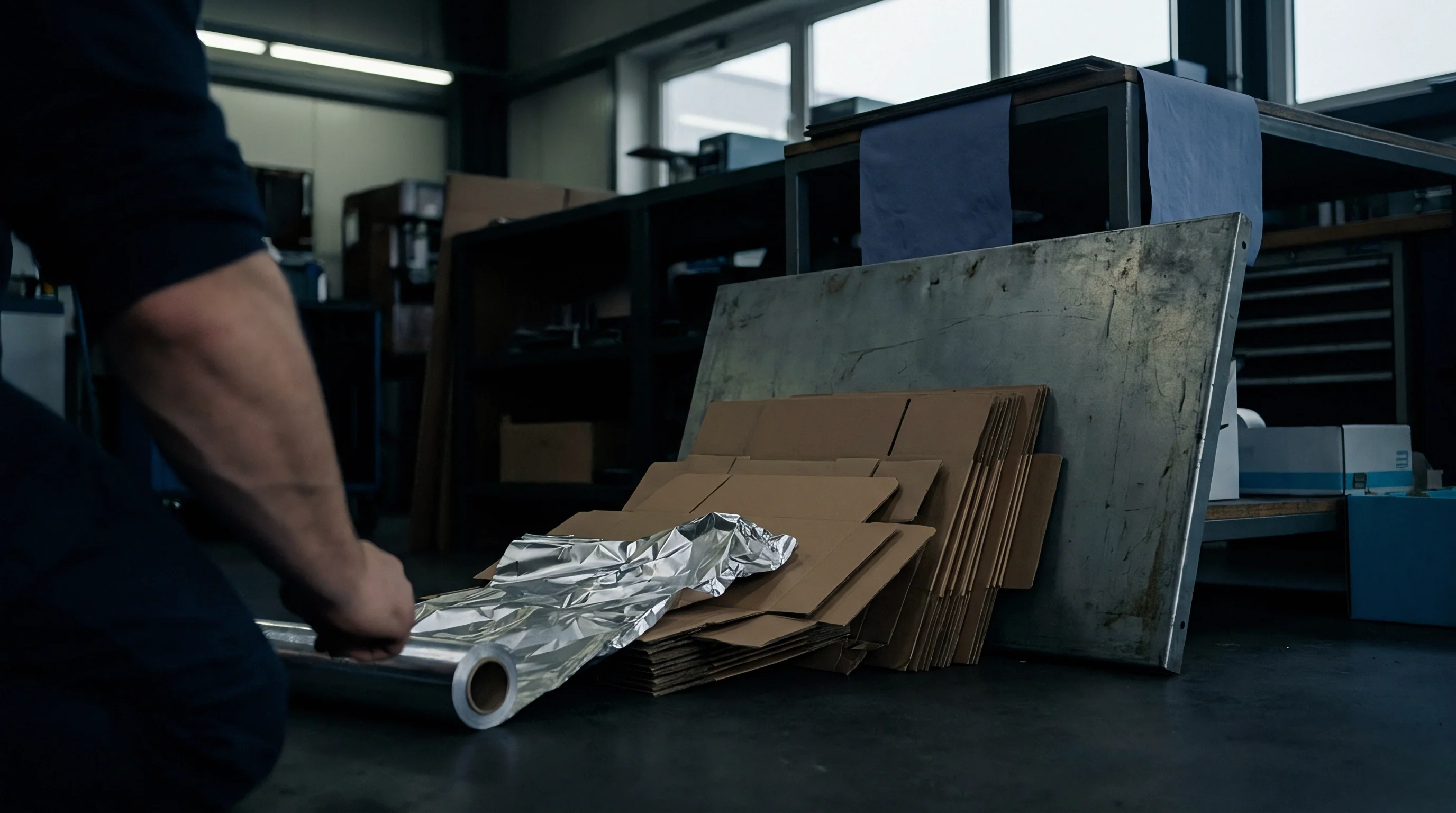
Mitigation
Managing hygrothermal strain requires coordinated substrate pre-conditioning, active nip temperature control, balanced web tension, and controlled re-moisturization. Mechanical control starts at the unwind. Infrared pre-heaters installed ahead of the laminating nip warm the incoming board gradually, reducing the thermal shock of entering the hot nip.
Pre-heating also drives off excess surface moisture under control, reducing the steam volume available to flash during lamination.
Tension control relies on low-friction dancer rolls and load cells to regulate longitudinal stress across temperature zones. Machine-direction tension counters thermal expansion inside the nip and prevents web slack wrinkles, but excess pull amplifies cross-direction neck-in via Poisson contraction. Setting machine-direction tension to the lowest value that maintains tracking provides the best two-dimensional strain balance across the pass.
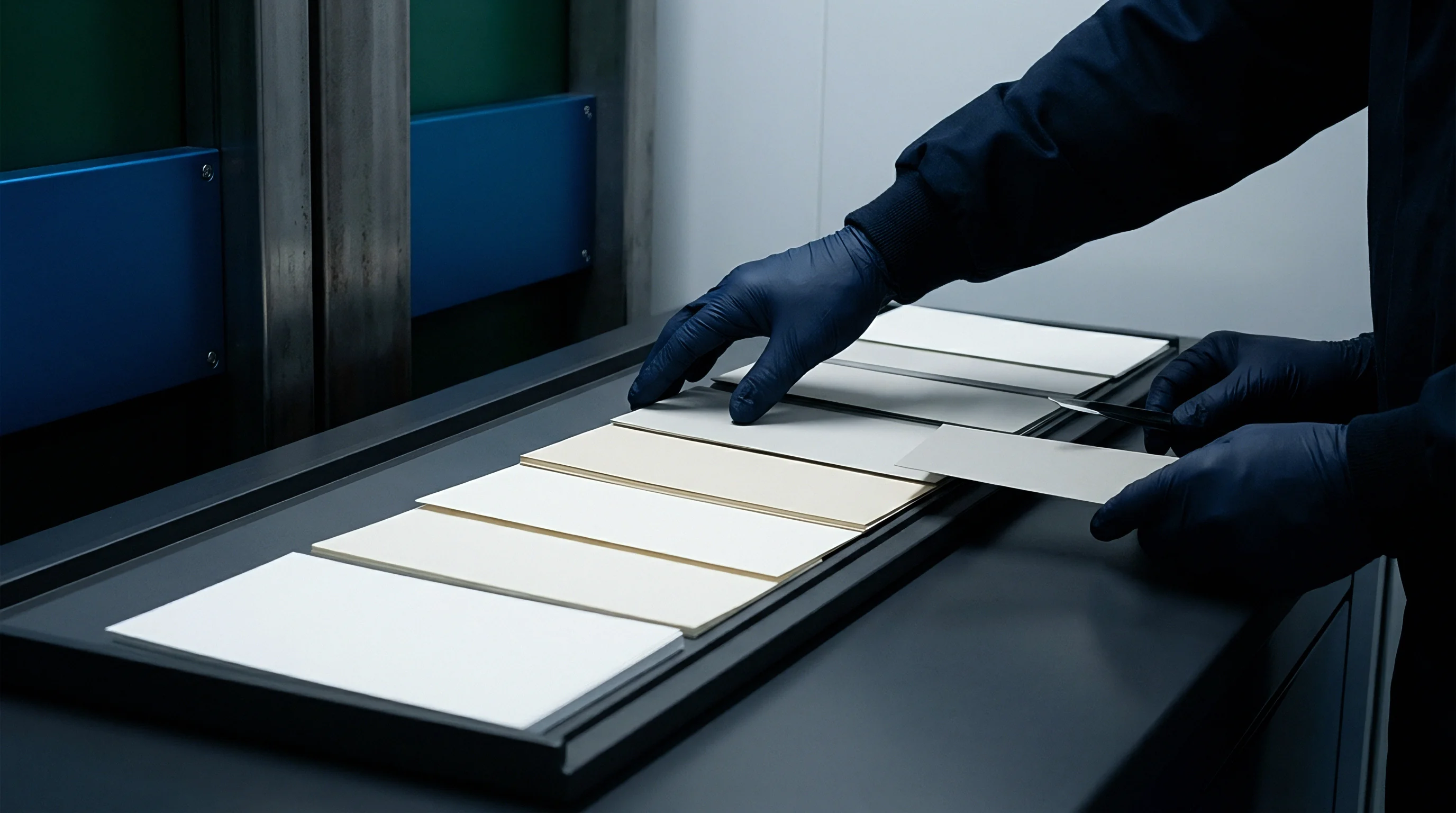
Active Nip Thermal Management and Chill Roll Dynamics
Precise roll surface temperature control prevents localized expansion spikes across the web width. Modern laminating rolls use internally baffled channels with high-flow thermal oil to keep surface variations within plus or minus 0.5 degrees Celsius across a 1.6-meter face. Peripheral induction heaters provide zone-based trim, adjusting temperature dynamically in response to infrared camera data.
Chill rolls immediately following the nip set the adhesive and lock in dimensions before moisture re-absorption starts. Steel chill rolls held at 12 to 16 degrees Celsius pull heat from the laminated face, bringing the sheet below the polymer glass transition point within 120 milliseconds of nip exit. Rapid cooling prevents steam from migrating into the reverse plies, preserving original through-thickness moisture distribution.
Adjustable breaker bars apply reverse bending while the adhesive remains warm. Drawing the web over a small-diameter bar puts the polymer film under tension while compressing the board backer. This introduces a corrective counter-strain that offsets film contraction, producing flat sheets at the delivery stack.
Sequential Bring up Sequence for Thermal Lamination Lines
Bringing a high-speed laminator to steady state requires following a structured start-up procedure. Bypassing steps during bring-up introduces strain imbalances that waste hundreds of meters of board during make-ready.
- Verify raw material web moisture and core temperature using calibrated infrared hand probes prior to loading the unwind stand.
- Engage web threading mode and establish baseline web tension across all tension zones at low speed.
- Engage pre-heating infrared banks to bring the incoming paperboard surface to 45 degrees Celsius before nip entry.
- Circulate thermal oil through the laminating roll until surface temperature stabilizes within one degree of target specification across the full roll face width.
- Set nip pressure actuators to initial baseline value and verify left-to-right nip impression width using pressure-sensitive indicator film.
- Accelerate line speed gradually to production target while continuously monitoring inline optical web profile sensors.
- Adjust anti-curl breaker bar penetration depth until real-time laser profiling confirms flat sheet geometry at the exit shear.
Steam re-moisturization units before the sheeter reintroduce moisture to the unlaminated reverse side. Ultrasonic atomizers apply fine water vapor across the back of the sheet, restoring local equilibrium within milliseconds. Bringing the top and bottom plies back to balanced moisture levels resolves the expansion differential that causes long-term curl.
Closed-loop machine vision arrays dynamically regulate zone-based infrared re-moisturization bars to control diagonal twist warp across line speed transitions.
Economics
Hygrothermal strain variance carries direct financial costs through make-ready scrap, speed penalties, machine downtime, and packaging fee surcharges. Make-ready scrap during lamination bring-up runs between three to five percent of total substrate volume on uncalibrated board. For a carton run of 25,000 sheets using 350-micrometer solid bleached board at $1,800 per metric ton, warp-related setup waste consumes $1,250 in raw material before salable product starts running.
Warp-related jams on downstream equipment add further cost. High-speed die cutters running at 9,000 sheets per hour demand flat stock; curled or twisted sheets lead to feeder stops, press trips, and stripping jams. A single jam on a large-format press causes roughly forty-five minutes of downtime, costing $350 in labor and machine overhead per occurrence.
Spoilage Arithmetic and Minimum Run Economics
Slowing line speeds to manage strain cuts directly into converting margins. Dropping a laminator from its rated 220 meters per minute to 110 meters per minute to prevent steam delamination doubles machine time. On a 100,000-meter job, this speed reduction adds 7.5 hours of press time.
At an hourly rate of $240, running half-speed adds $1,800 in direct operating cost, eroding the margin on the finishing operation.
| Process Condition | Make-Ready Waste (%) | Max Line Speed (m/min) | Post-Pass Scrap Rate (%) | Added Unit Cost per 1k Packs ($) |
|---|---|---|---|---|
| Optimized Strain Control | 1.2 | 240 | 0.3 | 2.10 |
| Uncompensated Thermal Gradient | 4.5 | 160 | 2.1 | 6.80 |
| Off-Axis Fiber Orientation (>2°) | 6.8 | 120 | 4.8 | 14.50 |
| High Moisture Unwind (>8.5%) | 8.2 | 90 | 7.4 | 22.30 |
Fixed setup costs establish clear minimum run lengths below which thermal lamination becomes uneconomic. Tooling adjustments, including anti-curl setup, infrared pre-heater tuning, and nip calibration, represent roughly $850 in setup cost per job. On a short run of 2,000 cartons, setup adds $0.425 per unit; at 50,000 units, that amortized cost drops to under $0.017 per unit, making tight strain control economically practical.
Modulated Packaging Waste Fees and Recyclability Grading
Extended Producer Responsibility rules penalize composite packaging designs that complicate recycling. Under modulated fee structures aligned with EU Packaging and Packaging Waste Regulation rules, board with non-separable plastic film faces heavy surcharges. Standard mono-material paperboard carries an average base waste fee of $80 per metric ton.
Adding double-sided plastic film that exceeds five percent of total pack mass reclassifies the package as a composite, driving fees up to $340 per metric ton.
Recyclability protocols such as CEPI evaluate packaging on pulping yield and fiber recovery under standard test conditions. Film applied with thermal adhesives must separate cleanly during hydropulping without shedding microplastics or creating tacky stickies in screening systems. If lamination heat forces adhesive deep into the board pores, fiber stays attached to the film, dropping pulping yields below the 85 percent required for Class A certification and triggering top-tier EPR fees.
Food contact requirements add further constraints. Polyurethane thermal adhesives with low molecular weight components must cure fully to prevent migration into dry or fatty foods. Testing under EU Regulation 10/2011 limits specific migration of primary aromatic amines to under 0.01 milligrams per kilogram of food simulant.
A migration failure invalidates compliance declarations, requiring the converter to scrap the entire lot.
Selecting a lighter 12-micrometer bio-based cellulose film over a standard 24-micrometer polypropylene film increases substrate cost by nineteen percent but reduces modulated waste fees by sixty-two percent through better repulpability. The net balance yields savings of $4.20 per thousand finished cartons while maintaining barrier performance and stack flatness through ambient storage.