Dynamic Internal Air Compression and Z Direction Shear Mechanics during High Speed Paperboard Creasing Impact
Dynamic creasing impact compresses internal pore air into transient pressure spikes, reducing effective shear strength and causing high-speed ply blowout.

Velocity
Flatbed and rotary die-cutters drive steel creasing rules into paperboard at strike speeds between 1.5 and 9.5 meters per second, with contact lasting only 0.8 to 3.5 milliseconds. That initial impact between the rounded tool edge and the top liner launches a sharp transverse stress wave through the sheet thickness at the acoustic velocity of the furnish. Depending on moisture content and machine-direction fiber alignment, out-of-plane sound propagation through porous fiber networks ranges between 400 and 900 meters per second.
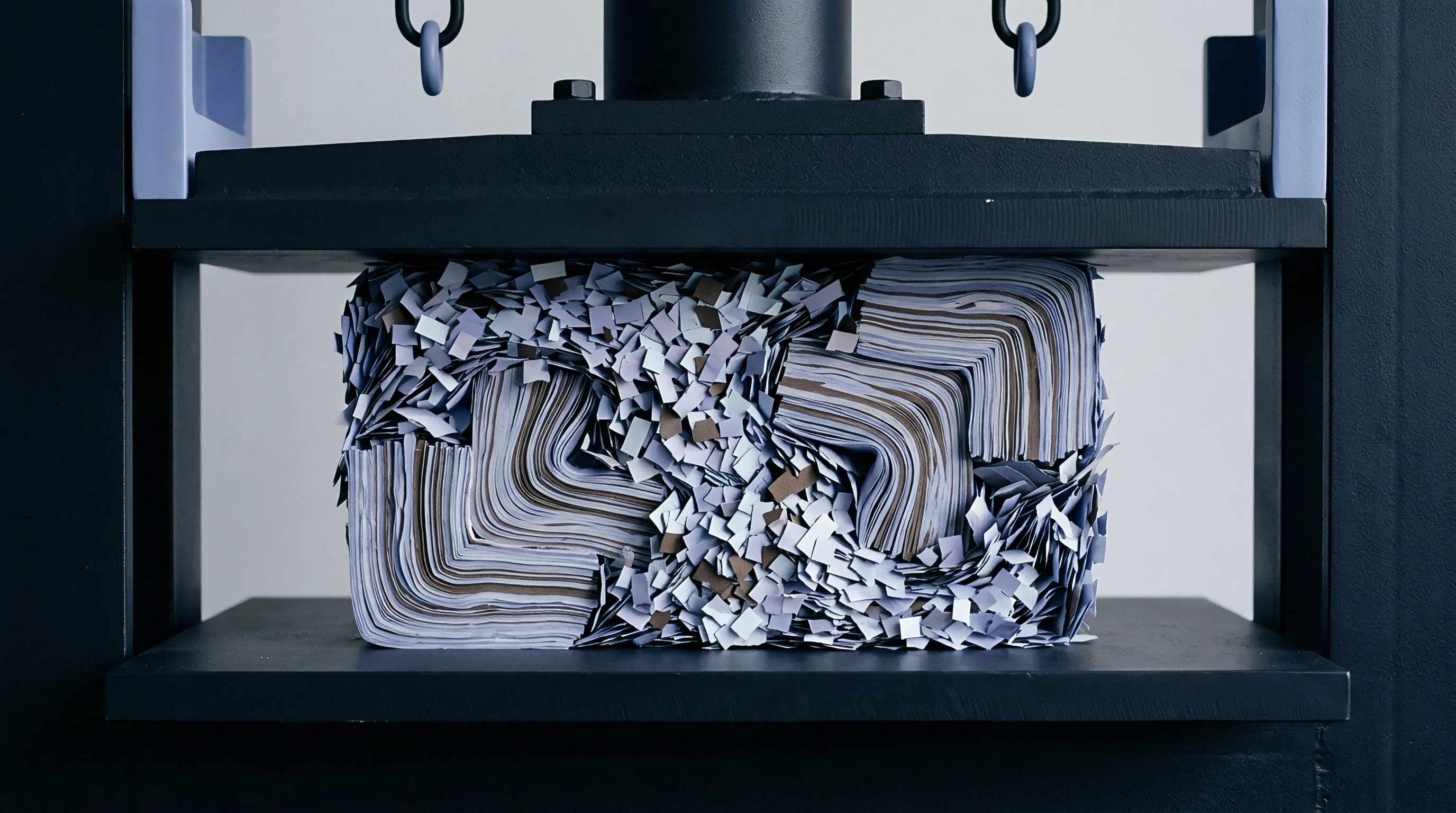
Rapid tool entry compresses the local network before bulk flexural bending begins. Directly beneath the rule tip, the sheet undergoes severe local densification, losing 35 to 60 percent of its caliper in the contact zone inside the first 400 microseconds. Fiber walls collapse mechanically under high transverse normal stresses as interstitial voids close, establishing the initial boundary conditions for internal gas displacement.
Creasing tools operating above four meters per second generate inertial resistance that alters the delamination path.
Kinematic Rates during High Speed Platen Engagement
On continuous rotary converting cylinders, creasing rule tip acceleration routinely exceeds 2,500 meters per second squared. The tool face drives into the board surface, forcing the middle and bottom plies downward into the counter-die matrix groove through a distinct progression:
- Top Liner Indentation initiates local out-of-plane compression while stretching surface fibers across the tool radius under heavy tension.
- Internal Shear Nucleation develops along the lateral margins of the rule tip where transverse shearing gradients exceed ply cohesion.
- Matrix Channel Entry forces the lower liner toward the channel base, inducing double-curvature bending along the steel matrix shoulders.
- Delamination Core Growth expands horizontally through weaker internal interfaces, setting up a permanent internal hinge structure.
High web speeds alter the strain distribution across the sheet, meaning static press testing understates dynamic peak forces by 25 to 45 percent. Higher rule speeds elevate the apparent transverse stiffness of cellulosic matrices because fiber rearrangement cannot occur instantaneously. Water within the fiber cell walls exerts viscous drag under rapid displacement rates, increasing network resistance during high-speed folding.
Microsecond Timescales and Transverse Displacement Gradients
Tool penetration rates establish steep deformation gradients across the sheet cross-section, driving out-of-plane shear strains past 0.35 near the matrix counter shoulders. Platen presses operating at 8,000 sheets per hour compress each crease in less than 2 milliseconds, while rotary die cylinders running at 350 meters per minute reduce dwell times below 1 millisecond. Fiber networks undergo rapid plastic deformation under these loading rates.
Transient shear stress peaks along the neutral axis of the board as the z-axis displacement profile turns non-linear. Inertial resistance delays deformation in the outer plies relative to the directly driven core plies, and this dynamic lag concentrates transverse shear stresses into narrower internal bands. Consequently, thicker plies absorb a disproportionate share of shear strain energy before the board draws down into the matrix pocket.
Tool speeds above design tolerances yield erratic scores across changing web tensions.
Pore
In industrial paperboard, internal air volume accounts for 40 to 65 percent of total sheet bulk. Multi-ply folding boxboard and solid bleached sulfate grades rely on this open interstitial network to maintain caliper and bending stiffness at low basis weights. When a creasing rule strikes the board surface at 6 meters per second, local void volume decreases by 0.12 to 0.28 cubic centimeters per gram within a 1.5-millimeter-wide crease channel.
Trapped air inside these pores must either escape through neighboring lateral pores or compress instantaneously.
Air filtration through cellulosic sheets obeys Darcy law, where lateral gas velocity depends directly on the pressure gradient and the specific in-plane permeability of the fibrous plies. The in-plane gas permeability of virgin bleached kraft plies conditioned at 23 degrees Celsius and 50 percent relative humidity ranges between 1.2 × 10⁻¹³ and 8.5 × 10⁻¹³ square meters. Heavily refined chemical pulp plies and high-density surface coating layers exhibit permeabilities two orders of magnitude lower, down to 4.0 × 10⁻¹⁵ square meters.
Under impact compression durations of 1.2 milliseconds, air cannot travel the required lateral distance of 0.8 to 2.0 millimeters through such constricted channels.
Peak internal pore air pressure during six meter per second rule impact reaches 420 kilopascals on triple-coated solid bleached sulfate boards.
Transient Interstitial Air Pressurization Mechanisms
Gas trapped inside the rapidly collapsing pore space undergoes near-adiabatic compression, driving local pressure spikes in fractions of a millisecond. Micro-scale air pockets generate localized isotropic outward pressures against the surrounding fiber boundaries. This dynamic pore pressure counteracts the external mechanical compressive stresses applied by the creasing rule.
Effective normal stress governs internal friction and interlaminar shear strength in porous cellulosic structures. An increase in internal pore fluid pressure directly reduces the effective compressive stress clamping the fiber layers together. When pore pressure rises toward the magnitude of the applied mechanical clamping stress, friction between adjacent fiber lamellae approaches zero.
The plies slide prematurely, generating uncontrolled micro-fissuring along low-permeability boundaries.
| Substrate Grade Classification | ISO 534 Caliper (µm) | ISO 5636-5 Gurley Air Resistance (s/100ml) | Specific Permeability K_xy (m²) | Transient Peak Air Pressure (kPa) | Interlaminar Shear Yield Mode |
|---|---|---|---|---|---|
| Triple Coated SBS (Virgin Kraft Chemical) | 450 | 185 | 3.8 × 10⁻¹⁵ | 420 | Hydraulic Ply Blistering |
| Double Coated FBB (Mechanical Core) | 520 | 42 | 2.1 × 10⁻¹⁴ | 210 | Controlled Delamination |
| Uncoated Kraft Back Board (Unbleached) | 480 | 18 | 6.4 × 10⁻¹⁴ | 95 | Cohesive Transverse Shear |
| White Lined Chipboard (Recycled Furnish) | 500 | 65 | 1.4 × 10⁻¹⁴ | 290 | Irregular Core Blowout |
| Barrier Coated Cupstock (Polyolefin Layer) | 410 | 1200 | 1.1 × 10⁻¹⁶ | 580 | Explosive Interface Rupture |
Which Permeability Ranges Prevent Pneumatic Blistering?
Substrates exhibiting Gurley air resistance values below 35 seconds per 100 milliliters dissipate internal gas pressures rapidly enough to prevent dynamic blister formation, bleeding air into adjacent uncompressed sheet regions without rupturing internal fiber bonds. When Gurley resistance exceeds 120 seconds per 100 milliliters, pressurized air remains trapped directly beneath the advancing steel rule and expands along paths of lowest mechanical resistance.
Pore pressure relief depends strongly on coating formulation and base sheet porosity. Double-blade mineral coatings formulated with fine ground calcium carbonate and styrene-butadiene latex create a dense, low-permeability skin over the top ply. When the rule strikes this barrier, internal air cannot vent upward through the surface and instead forces its way horizontally along internal ply boundaries.
This produces localized pneumatic delamination blisters ahead of the mechanical shear front, weakening the hinge stiffness of the finished crease.
The exact threshold where dynamic pore pressure overcomes transverse tensile bond strength in moist recycled fibers remains an open scientific question.
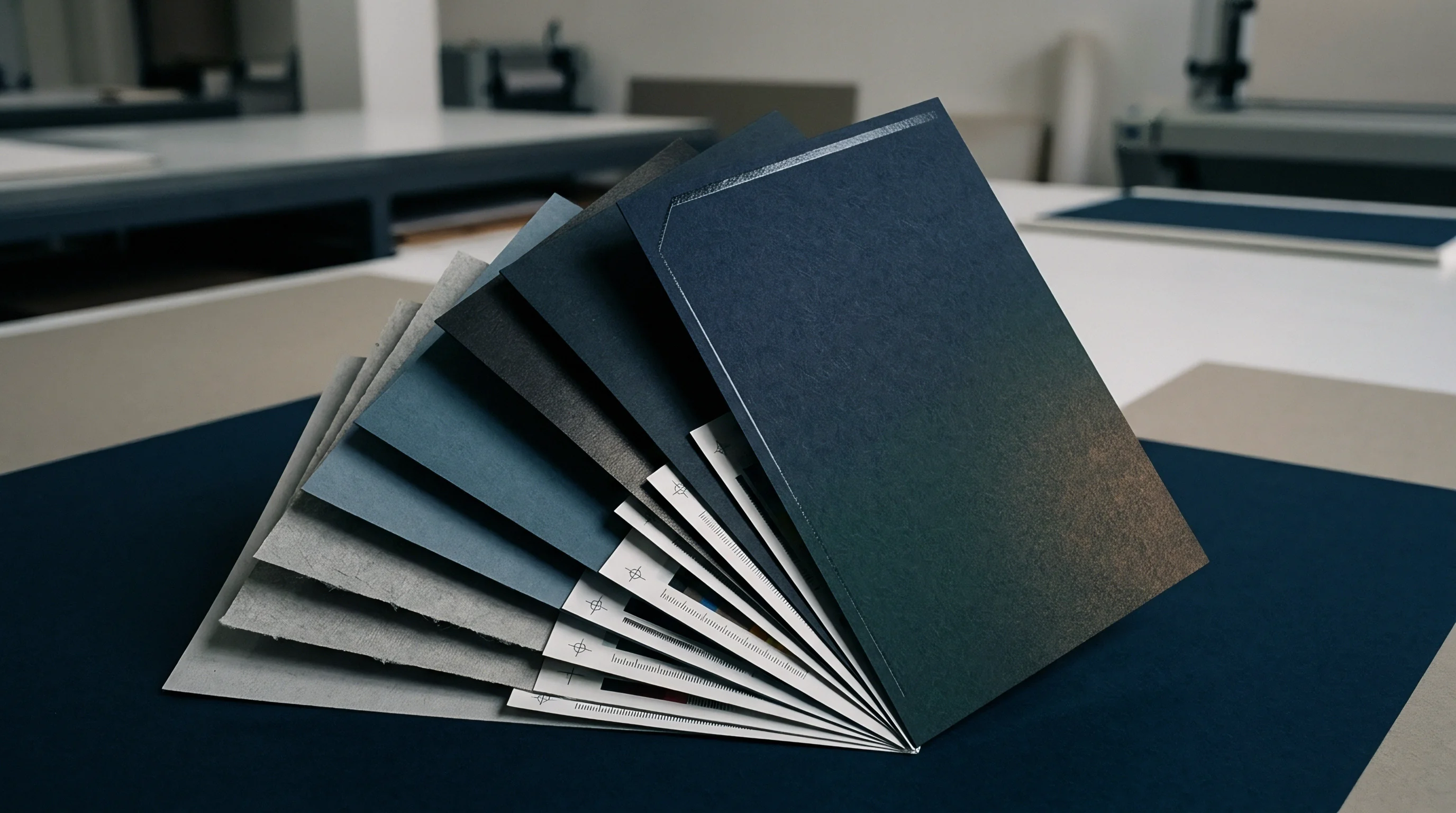
Shear
Out-of-plane shear stress governs the formation of a functional folding crease. As the creasing rule forces the board into the matrix channel, the material encounters severe transverse shear stresses, designated as tau-xz in the machine direction and tau-yz in the cross direction. Clean carton folding demands controlled delamination across the middle plies while maintaining the tensile integrity of the outer liners, but high-speed impact shifts both the magnitude and distribution of these shear fields.
The out-of-plane shear modulus, G_xz, of paperboard conditioned under standard ISO 187 atmospheres ranges from 80 to 220 megapascals. Under high strain rates exceeding 500 reciprocal seconds, the apparent transverse shear modulus increases by 30 to 70 percent. Fibers cannot slip past each other smoothly within millisecond timescales, and the resulting shear stiffness drives peak stresses outward toward the edges of the counter-die matrix groove.
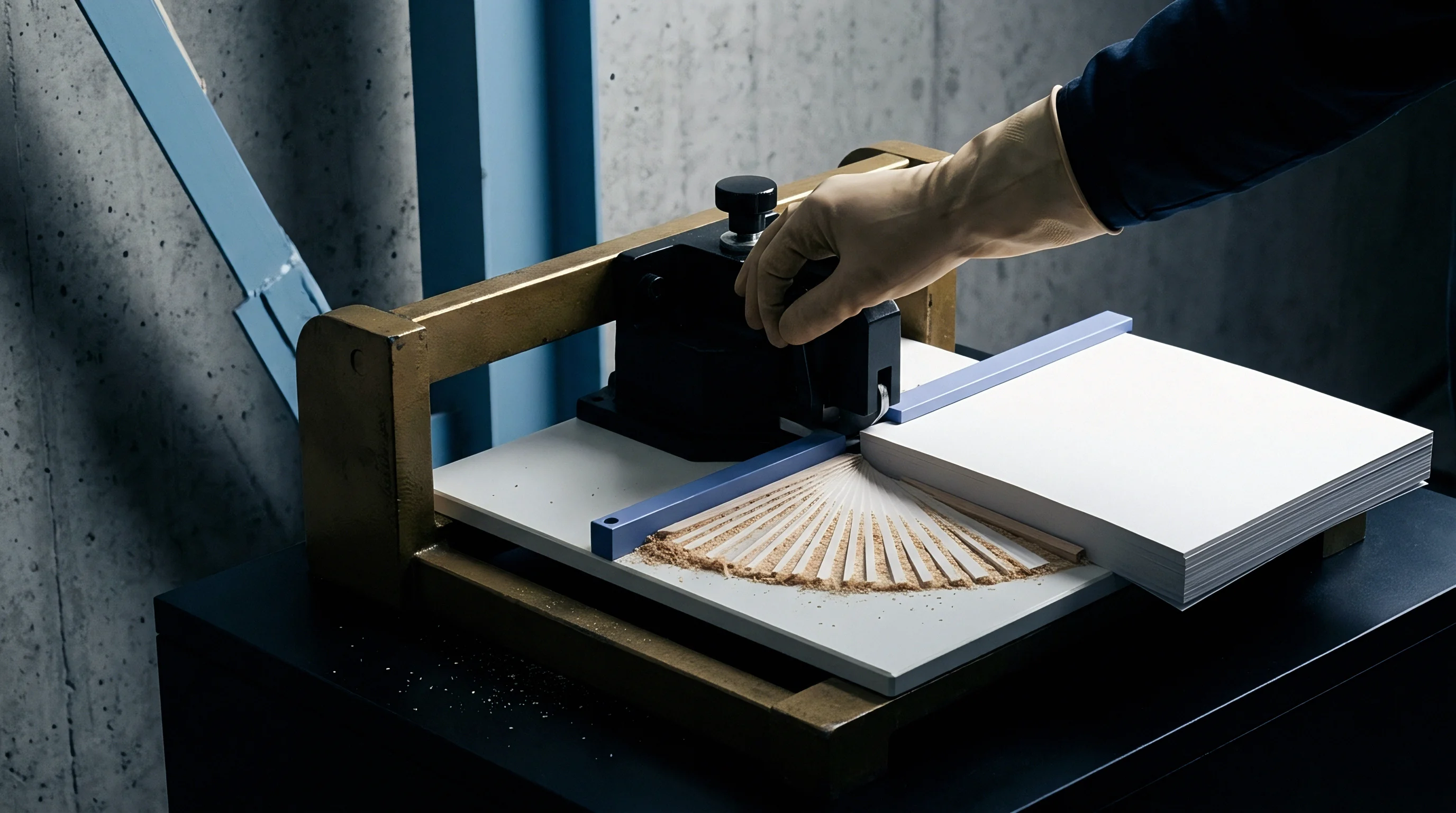
Transverse Modulus and out of Plane Displacement
Deformation patterns during creasing depend directly on the ratio of in-plane tensile modulus to out-of-plane shear modulus. Paperboard exhibits strong orthotropic anisotropy, with in-plane elastic modulus values in the machine direction frequently exceeding transverse shear modulus by a factor of 40 to 60. This elastic mismatch forces deformation into narrow out-of-plane shear bands along the matrix shoulders.
High-speed video analysis and finite element models demonstrate that peak transverse shear occurs at an indentation depth equal to 25 to 40 percent of total board caliper. Once the rule penetrates past this depth, transverse shear stresses exceed the interlaminar shear strength of the sheet. The middle plies separate into discrete, sliding lamellae, establishing the internal hinge that lowers the folding torque of the finished carton.
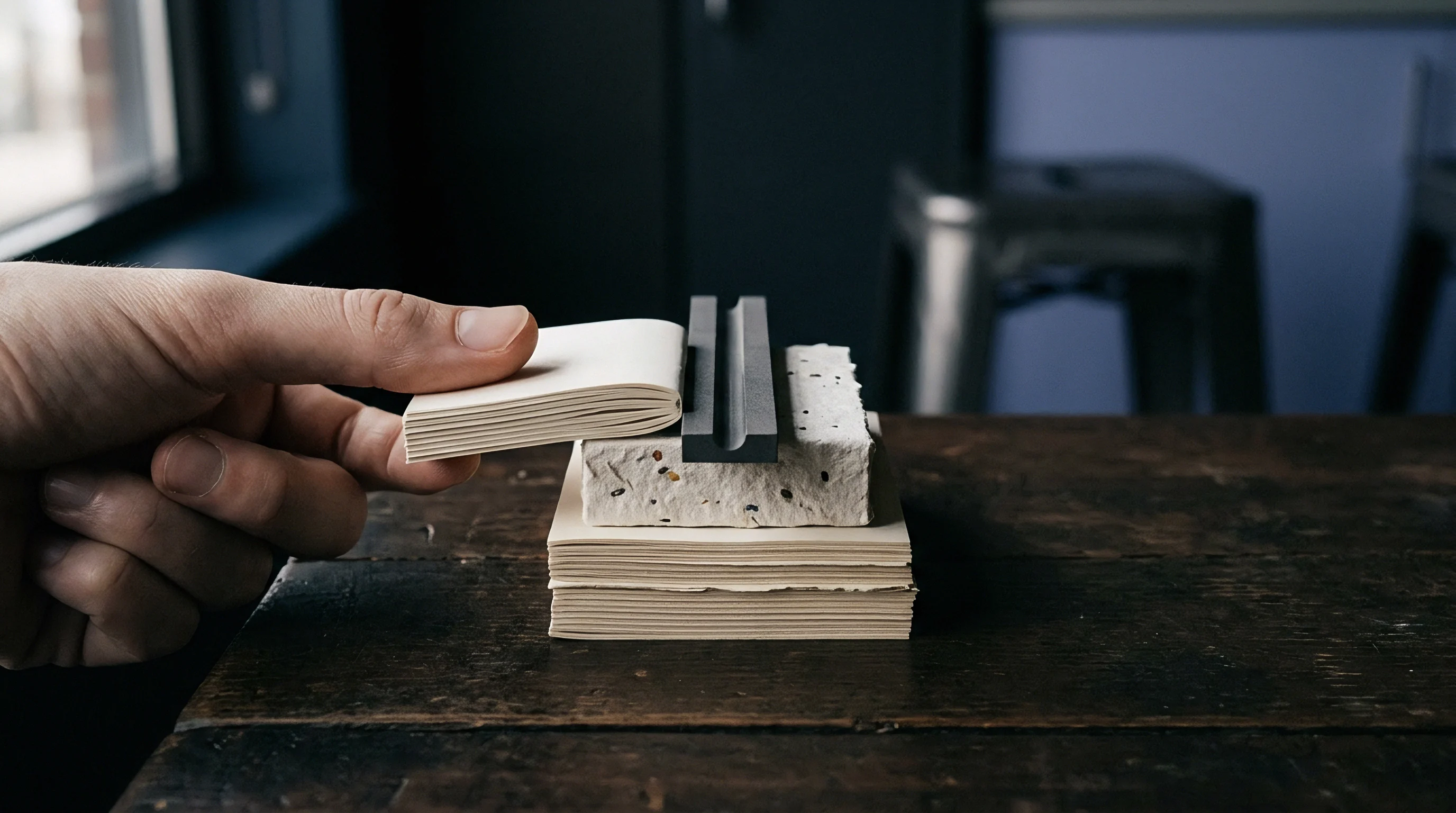
Interlaminar Crack Initiation across Layer Interfaces
Interlaminar shear failure under dynamic impact manifests through specific mechanical mechanisms governed by sheet structure and loading rates:
- Inter-Ply Cohesive Shear develops inside mechanical pulp cores where individual fibers detach along middle lamella lignin boundaries under high-rate shear loading.
- Adhesive Interface Peeling separates starch-sprayed layer boundaries when out-of-plane peel stresses combine with transverse shear at the creasing rule edges.
- Intra-Fiber Wall Cleavage occurs in thick-walled softwood fibers under dynamic loading, splitting the S2 cell wall layer along longitudinal microfibril angles.
- Secondary Tensile Tearing ruptures outer surface plies when high friction against the steel matrix prevents smooth drawing into the counter channel.
Dynamic delamination cracks propagate outward from the channel shoulders. While crack growth in static creasing halts once the tool stops moving, high-speed dynamic loading leaves kinetic energy stored in the deflected plies that drives crack propagation beyond the nominal shear zone. Excessive crack growth compromises carton panel flatness and degrades packaging line efficiency during automated cartoner erection.
Standard delivery contracts governing folding boxboard deliveries invoke ISO 15754 for transverse tensile strength verification, establishing a minimum rejection threshold of 180 kilopascals for high-speed folding carton conversion.

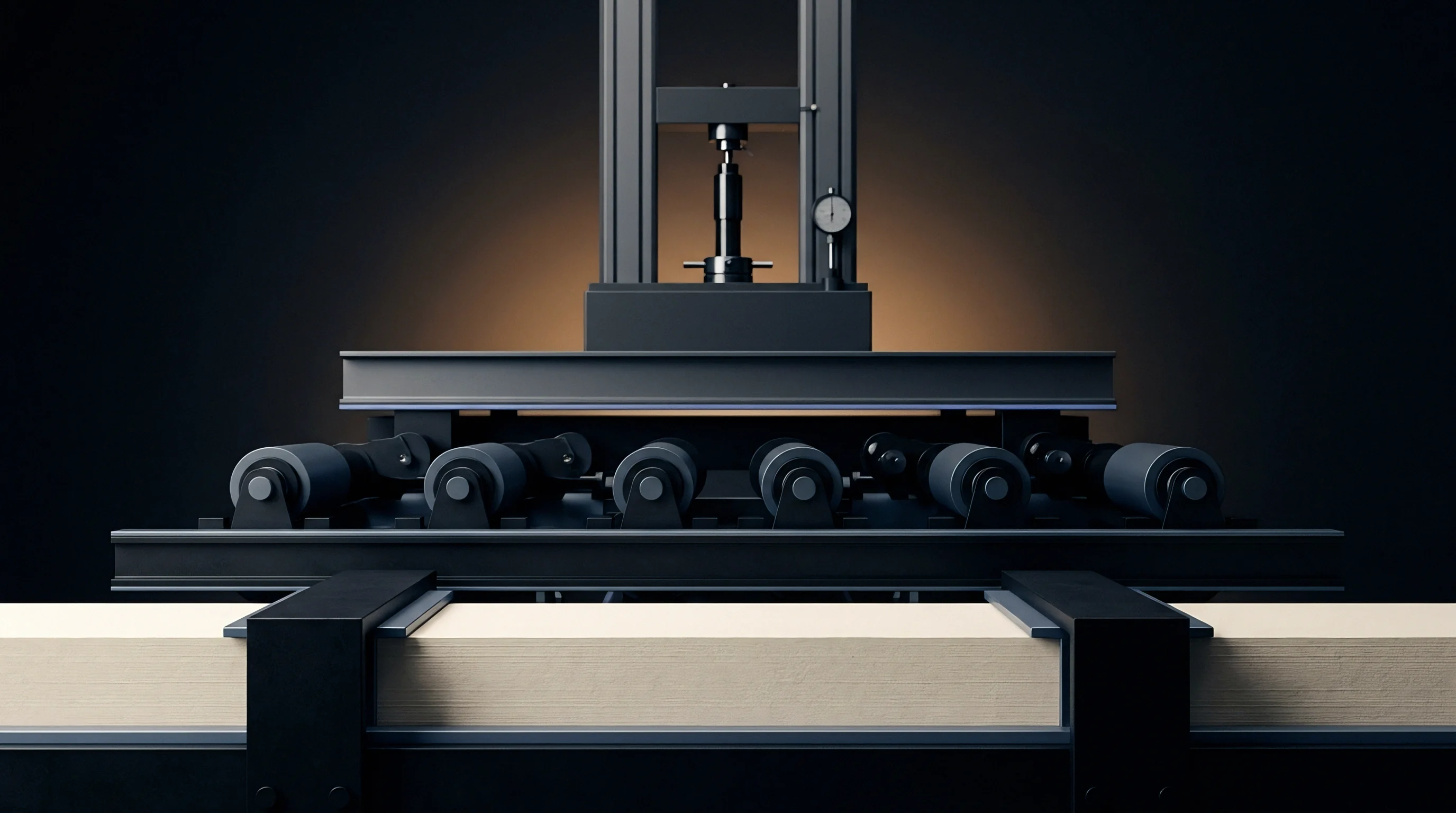
Rupture
Fiber alignment across the board web fixes the mechanical balance between machine direction and cross direction scores. In the machine direction, fibers lie predominantly parallel to the sheet length, yielding high in-plane tensile strength and high bending stiffness. Cross-direction creasing strikes across these aligned fibers, requiring higher shear energy to initiate delamination.
The cross direction exhibits lower in-plane tensile resistance but higher z-direction compliance, allowing easier out-of-plane ply separation without liner cracking.
Moisture content plays a decisive role in dynamic rupture mechanics. Paperboard converted at relative humidity levels below 45 percent exhibits brittle fiber behavior and elevated shear resistance. Water acts as a plasticizer within the amorphous hemicellulose and lignin matrix of the fiber wall.
When board moisture drops below 6.0 percent by weight, dynamic creasing impact shatters fiber networks instead of shearing them into compliant sliding layers, cracking the top liner along the rule shoulder line.
Will Cross Direction Fiber Alignment Worsen Ply Separation?
Fiber orientation alters the shape of the delamination zone. When creasing parallel to the machine direction, the rule tip shears across weak transverse inter-fiber bonds, allowing delamination cracks to propagate rapidly along the fiber alignment axis to form wide, shallow delamination zones. When creasing across the machine direction, fibers bridge the shear zone, forcing cracks to tear through individual fiber bodies rather than peeling them apart cleanly.
Cross-direction creases require deeper rule penetration to achieve equivalent folding torque reductions, as the creasing rule must deflect stiff longitudinal fibers further into the counter channel to force interlaminar failure. This increased penetration depth elevates tension on the outer liner, increasing the risk of surface rupture on coated boards unless matrix channel widths are adjusted to compensate for directional stiffness disparity.
Mechanical Delamination versus Pressurized Pneumatic Blowout
Substrate failure modes divide into controlled mechanical delamination and uncontrolled pneumatic rupture. Operating teams distinguish these mechanisms when setting tooling parameters:
- Channel Width Settings require expansion by 0.05 to 0.10 millimeters on high-speed lines to permit lateral air venting around the rule flanks.
- Matrix Chamfer Relief provides escape passages for compressed boundary layer air before the lower liner contacts the channel floor.
- Pneumatic Vent Grooves cut into custom phenolic counter-plates discharge localized air spikes away from the shear zone during impact.
- Platen Dwell Calibration limits bottom-dead-center over-pressing, preventing internal pneumatic pressure spikes from exceeding ply bond limits.
Pneumatic blowout leaves ragged, irregularly shaped internal cavities with torn fiber fragments scattered across the delaminated surfaces, whereas mechanical shear produces clean, parallel delamination planes where fibers remain intact and aligned. High-speed video shows pneumatic blowouts occurring prior to maximum tool penetration, triggered directly by internal air compression spikes.
Moisture loss during transit is frequently cited for liner cracking that high-speed pneumatic blowout actually causes by severing internal ply bonds.

Anvil
Counter-die matrix tooling establishes the mechanical boundary conditions that dictate high-speed creasing performance. Matrix channel width, channel depth, and shoulder radius interact directly with the dynamic shear field and internal air venting rates. The counter matrix supports the lower liner of the board while allowing middle and top plies to deform into the channel cavity.
In high-speed rotary die-cutting, polyurethane anvil jackets and steel counter sleeves replace traditional phenolic matrix channels, introducing dynamic visco-elastic recovery challenges.
Steel counter plates provide rigid channel shoulders that maximize local transverse shear stress gradients. Synthetic pressboard and phenolic counters deform elastically under dynamic loads, absorbing up to 15 percent of the impact energy. This matrix deformation widens the effective channel opening during the stroke, reducing nominal shear stress applied to the board.
Converting lines running above 7,000 sheets per hour require narrower channel setups on phenolic matrices to maintain equivalent delamination quality.
Creasing matrix channel widths must expand in direct proportion to dynamic impact velocity to prevent hydraulic liner blowout.
Counter Die Matrix Geometry and Channel Relief
Standard empirical formulas for static creasing channel dimensions dictate that channel width equals board caliper multiplied by 1.5 plus the creasing rule thickness. This formula fails at production speeds exceeding 4.5 meters per second, where rapid internal air pressurization and strain-rate stiffening require modified tooling geometries. The dynamic channel width factor rises from 1.5 to 1.8 or 2.0 times the board caliper to prevent destructive compressive over-densification.
Channel depth selection governs the total drawing tension applied to the outer liner. Insufficient depth prevents the formation of an adequate internal hinge, resulting in excessive folding resistance on packaging lines. Excessive depth forces the lower liner against the channel base under severe hydraulic and mechanical pressure, causing bottom liner rupture and surface marking.
Precision milled steel counter plates maintain channel depth tolerances within plus or minus 5 micrometers across the entire cylinder surface.
| Converting Line Speed (m/s) | Rule Thickness (pt / mm) | Channel Width Factor (x Caliper) | Dynamic Shear Stress Tau_xz (MPa) | Internal Pore Pressure (kPa) | Unit Crease Waste Risk Factor |
|---|---|---|---|---|---|
| 1.5 | 2 pt / 0.71 mm | 1.50 | 8.4 | 65 | Base Baseline Yield |
| 3.5 | 2 pt / 0.71 mm | 1.60 | 11.2 | 145 | 1.02x Spoilage Index |
| 5.5 | 2 pt / 0.71 mm | 1.75 | 14.8 | 280 | 1.08x Spoilage Index |
| 7.5 | 2 pt / 0.71 mm | 1.85 | 18.1 | 395 | 1.19x Spoilage Index |
| 9.5 | 3 pt / 1.05 mm | 2.05 | 21.6 | 510 | 1.34x Spoilage Index |

Line Productivity Balances and Delivered Cost Modeling
Operating a die-cutting line at maximum mechanical speed introduces commercial trade-offs between press output and carton yield. Increasing platen velocity from 5,000 to 8,500 impressions per hour increases gross carton output by 70 percent. This speed increase elevates internal dynamic air pressures, expanding the spoilage rate from 0.8 percent to 3.2 percent due to micro-cracked score lines and erratic folding torque performance.
Consider a continuous folding carton production run converting 50 tonnes of 450-micrometer solid bleached sulfate board valued at 1,450 dollars per tonne. Each tonne yields approximately 12,500 standard pharmaceutical folding cartons, establishing a net production volume of 625,000 units. Running the line at 8.5 meters per second generates an additional 2.4 percent in finished carton rejections during automated packaging filling operations.
The material cost of this defective production equals 1,740 dollars in direct board loss. Downtime on high-speed cartoning lines running at 400 cartons per minute adds substantial commercial penalties, generating machine stoppage costs of 450 dollars per hour.
Tooling engineers mitigate these losses by specifying custom-ground creasing rules with vented profiles or by switching to high-bulk folding boxboard grades with superior in-plane gas permeability. Virgin mechanical pulp cores in folding boxboard provide higher void volume and lower air resistance than recycled or solid chemical plies, dampening internal pressure spikes during impact. Proper matching of furnish permeability, rule geometry, and matrix clearance protects profit margins at full line speeds.
Incorrect matrix channel dimensions on high-speed lines cause carton hinge cracking, leading to severe automated packaging line jams and complete pallet batch rejections.