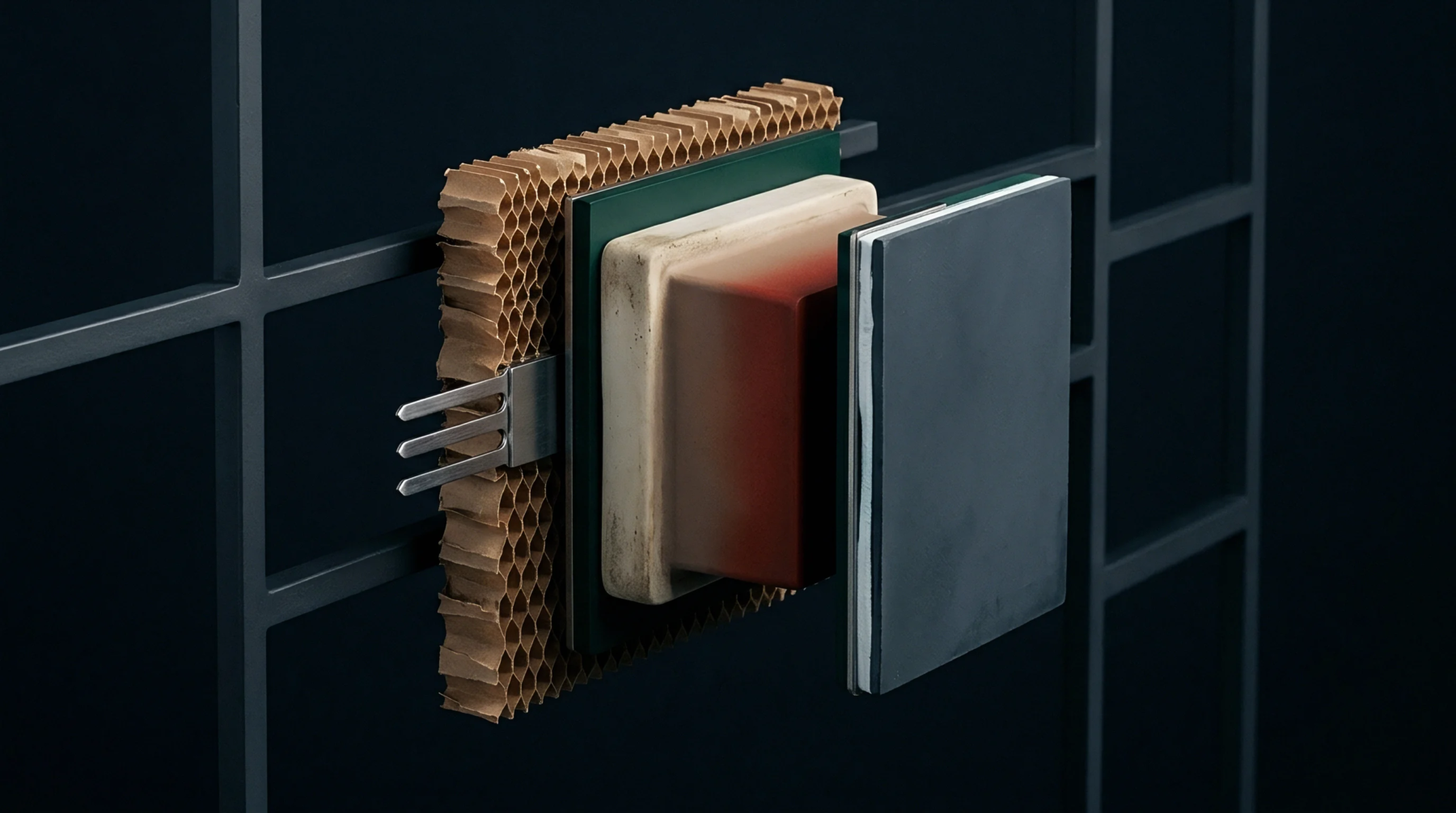
Shear Resistance
Resistance of multi-ply paperboard to forces acting perpendicular to its plane and parallel to the cross-section represents a fundamental mechanical property for packaging performance. Transverse shear occurs during folding and creasing when individual plies are forced to slide past one another. It governs how the board behaves when bent around a creasing rule.
This property is determined during the forming and wet-pressing stages of board manufacture.
Mechanical Behavior
Delamination of the plies in a controlled manner is essential to prevent the outer surfaces of the sheet from cracking during high-speed folding. When the board experiences transverse shear, the internal starch and fibre bonds must yield before the tension on the outer surface exceeds the tensile strength of the clay coating. If the internal bond is too strong, the board behaves as a rigid monolithic structure, leading to unsightly cracks along the fold lines.
If the bond is too weak, the board will split and lose its structural rigidity.
Formability Factor
Testing for this property involves measuring the force required to slide the board layers apart under standard conditions. Mills adjust the refining and chemical additives to keep the shear limits within acceptable ranges. This control secures the print quality and structural integrity of the carton.