Determining Surface Skin Shear Failure Thresholds in High Speed Polyolefin Matte Converting Lines
Matte polyolefin converting speed limits depend on dynamic surface shear thresholds that prevent particle detachment and skin delamination under roll pressure.


Skin
Low-gloss polyolefin packaging films rely on thin skin layers designed to scatter incident light. Rather than using topical coatings, these outer layers build diffuse reflectance directly into the surface morphology. On converting lines running at web speeds between three hundred and eight hundred meters per minute, those skins face heavy mechanical shear across rollers, tension isolation nips, slitter banks, and pouch-forming shoes.
Preventing substrate damage during converting comes down to knowing where these light-scattering microstructures fail under tangential stress.

Matte Layer Formulations and Resin Blends
Low reflectance in flexible packaging comes from two main routes. Mineral-filled systems suspend inorganic anti-blocking and light-scattering particles ~ such as synthetic amorphous silica, calcium carbonate, or cross-linked polymethyl methacrylate beads ~ in a polypropylene or polyethylene matrix. Loadings run from five to twenty percent by weight, with particle sizes usually centered between two and six micrometers ~ deliberately thicker than the surrounding polymer matrix shell.
Incompatible resin blends work through phase-separated polymer physics instead. Blending polypropylene with incompatible polyethylene fractions creates immiscible domains during extrusion, and differential cooling across the chill roll produces micro-rough surface contours without adding minerals. Cohesive strength here relies on chain entanglements between the phase-separated polyolefin domains.
Coextruded skin thickness runs from 0.8 to 2.5 micrometers; below 1.0 micrometer, the skin provides little structural support for embedded filler particles under shear.
Coextruded surface layers containing incompatible resin blends demonstrate higher resistance to transverse interfacial failure than mineral-filled homogeneous matrices.
Mineral particles in thin skins act as stress concentrators. Under dynamic tension, stress focuses along the polymer-filler interface, and without functionalized coupling agents to reinforce that bond, tension creates micro-voids. Continuous friction then expands these voids, degrading the surrounding matrix.

Cohesive Tearing and Interfacial Failure Modes
When localized forces exceed polymer tensile limits during web transport, matte polyolefin substrates fail through four main mechanisms under high-speed converting conditions.
- Cohesive matrix tearing occurs within the matte skin when tangential shear forces exceed the yield strength of the polymer blend.
- Particulate debonding displacement happens when inorganic filler particles detach from the polyolefin matrix under friction, leaving open surface voids.
- Interfacial skin delamination is the complete separation of the matte skin layer from the underlying core substrate under combined peel and shear.
- Thermal friction smearing develops when frictional heat at contact points pushes skin temperatures past the polymer softening point, flattening surface micro-structures.
Silica loadings above fifteen percent fail at lower shear thresholds because matrix continuity breaks down. In blended skins, phase-separated domain sizes larger than three micrometers cause matrix cohesion to drop rapidly under shear. The interface between the matte skin and the core is inherently vulnerable; coextrusion settings like melt temperature differentials and die lip shear profiles dictate boundary adhesion.
If polymer chains do not entangle sufficiently across that interface, the resulting weak plane separates easily under web tension.
Shear failure begins at 0.38 megapascals. Loading incompatible fillers without adequate binder cohesion leads to particle shedding that fouls converting equipment and ruins cleanroom compliance.

Drag
Web travel over stationary guides and idler rolls subjects thin skin layers to constant mechanical drag. On high-speed slitting and lamination lines, frictional forces escalate non-linearly. The contact between moving polyolefin film and machine surfaces creates combined compressive and shear stress profiles that act directly on surface micro-roughness, threatening the integrity of the outer skin.

Dynamic Friction Dynamics across Machine Nips
Nips between rubber lay-on rolls and steel cores concentrate tangential shear forces on the moving web. Tangential shear stress inside the nip depends on applied nip pressure, tension differential across the roll, and the dynamic friction coefficient between film and roll cover. Roll hardness dictates footprint width; hard rubber produces a narrow contact patch that concentrates shear into a tight band on the film skin.
Frictional drag over static guide bars imposes severe sliding shear stress. Unlike rotating idlers, static turn bars create continuous sliding friction across their entire contact arc ~ wrap angles as small as fifteen degrees generate enough localized shear to fracture brittle mineral-filled skins. Standard laboratory static friction measurements fail to reflect behavior at high velocities.
Above four hundred meters per minute, boundary-layer air entrained under the moving web disrupts contact mechanics, causing erratic friction shifts that trigger micro-scale tearing.
Dynamic shear stresses exceeding 0.42 megapascals at web speeds above 450 meters per minute initiate microscopic skin tearing along particulate filler boundaries.
Dynamic friction shifts above three hundred meters per minute, establishing clear critical thresholds and shear failure limits for polyolefin matte film structures under standard operating conditions.
| Film Substrate Construction | Skin Thickness (µm) | Filler Loading (wt%) | Dynamic Friction (µd) | Shear Failure Onset (MPa) |
|---|---|---|---|---|
| Homogeneous Silica-Filled BOPP | 1.2 | 12 % Silica | 0.45 | 0.38 |
| Phase-Separated PP/PE Blend BOPP | 1.8 | 0 % Filler | 0.32 | 0.54 |
| Hybrid Silica/PP-PE Blend BOPP | 1.5 | 6 % Silica | 0.38 | 0.46 |
| PMMA Bead Modified LLDPE Film | 2.2 | 8 % PMMA | 0.28 | 0.61 |

Frictional Heat Generation and Softening Point Shift
Mechanical work converted to thermal energy at contact points heats the film surface rapidly. Because polyolefins have low thermal conductivity, friction-generated heat traps within the micro-peaks of the matte profile. Localized skin temperatures frequently exceed ninety degrees Celsius during fast runs, even while the bulk web stays near room temperature.
Film velocity determines how fast heat dissipates. As skin temperature rises, yield stress and elastic modulus drop in polypropylene and polyethylene resins. Vicat softening temperatures for low-density polyethylene skin components fall between eighty and ninety-five degrees Celsius.
Reaching this range softens the skin resin, drastically cutting its shear resistance. Roll pressure easily dislodges silica particles inside the softened matrix, while tension flattens surface micro-peaks ~ permanently destroying diffuse light scattering and leaving glossy scuff marks across the roll.
Surface scuffing during high-speed slitting often stems from web tension adjustments on the converting line rather than deficient skin layer formulation.

Quantification
Defining operational limits for polyolefin films requires testing methods that mirror high-speed production. Standard QC bench tests miss field failures because they run at low sliding velocities. Setting reliable shear failure thresholds demands tribological protocols that combine high speeds, controlled normal forces, and precise sample temperature control.

Dynamic Shear Tribometry and High Speed Sled Testing
Standard bench friction testing misses speed-dependent shear transitions. ASTM D1894 testing runs at one hundred and fifty millimeters per minute ~ orders of magnitude below production speeds. Simulating real converting forces requires high-speed linear sled tribometers or rotating disk contact testers capable of sliding speeds up to ten meters per second.
Establishing dynamic skin failure thresholds on flexible packaging substrates requires a systematic testing procedure.
- Mount the polyolefin matte specimen flat on the test bed using double-sided high-tack acrylic adhesive.
- Condition the climate chamber at twenty-three degrees Celsius and fifty percent relative humidity for twenty-four hours before testing.
- Set sliding sled mass to two hundred grams and calibrate the load cell across speeds from fifty to six hundred meters per minute.
- Record peak tangential force continuously to identify when surface displacement begins.
- Inspect the friction track under high-resolution optical microscopy to verify particle detachment or skin rupture.
Compliance with ISO 8295 dynamic friction standards fails to detect localized shear failure induced by high-velocity nip roller deformation.
Because peel angles above forty degrees cause tearing during bond testing, measuring skin cohesion relies on modified low-angle mechanical peel tests and zero-degree shear delamination fixtures. Applying pure shear parallel to the film plane isolates the exact force needed to shear the matte skin off the coextruded core. Adding acoustic emission sensors to the rig detects early microscopic matrix fracturing before macro-scale surface peeling becomes visible.

Does High Velocity Dynamic Friction Correlate with Surface Cohesive Shear Thresholds?
Velocity gradient testing reveals a clear split between surface slip behavior and internal layer rupture limits. Migrating slip additives like erucamide or oleamide lower static and dynamic friction coefficients at the surface, but they do nothing for matrix cohesive strength. A film can post a low dynamic friction coefficient of 0.25 yet shed skin heavily under load if the underlying resin lacks shear resistance.
Post-test surface profiling with non-contact optical profilometry offers a clear check for shear failure. By measuring arithmetic mean roughness and peak-to-valley heights before and after high-speed shear exposure, profilometers confirm whether surface micro-structures were flattened or sheared off during transport.
Adding ASTM D1894 surface failure criteria to purchasing specifications sets enforceable limits, giving buyers ground to reject film lots that show microscopic skin rupture under high-velocity test sweeps.
Control
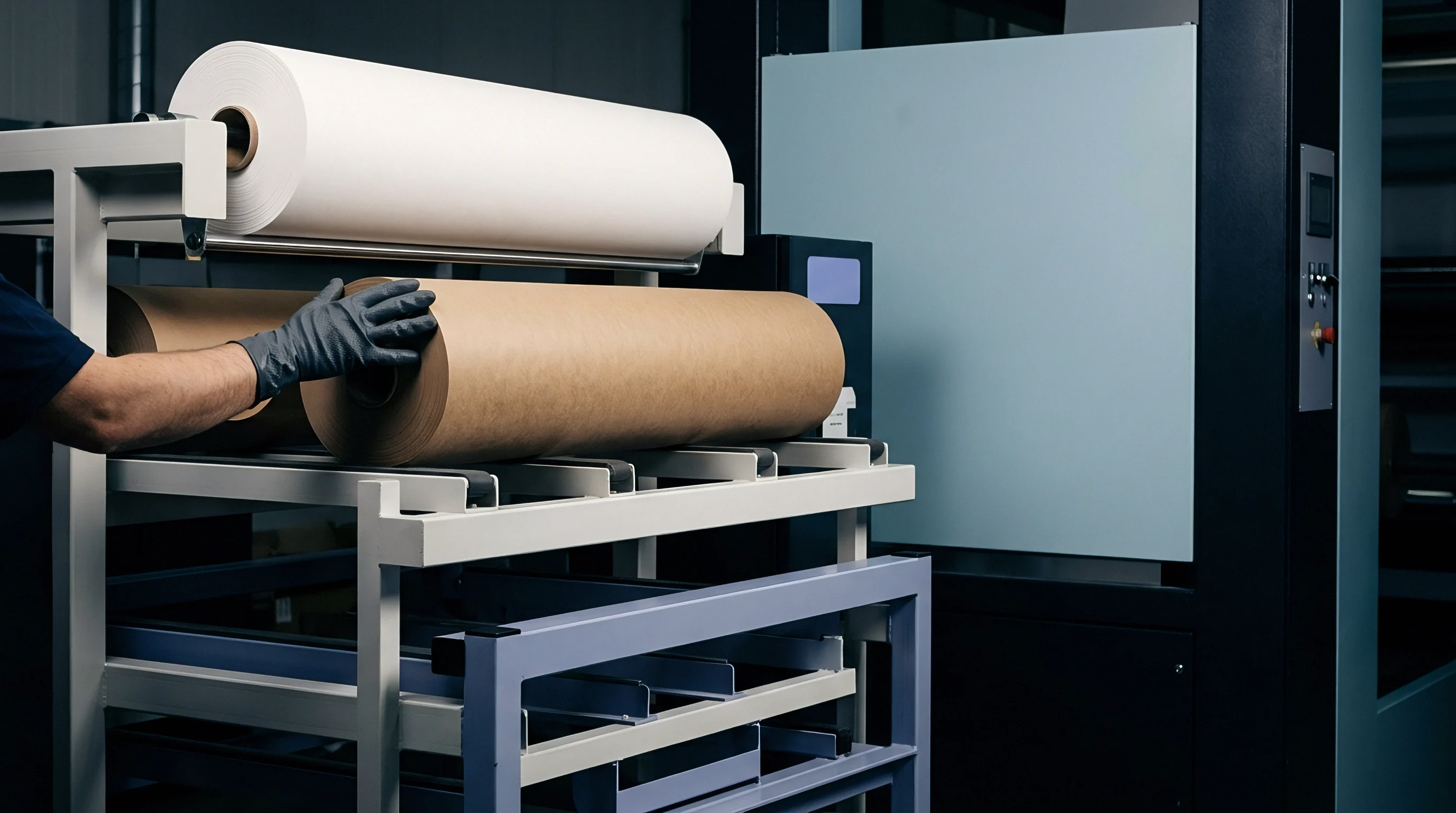
Controlling web handling variables on converting lines prevents premature surface damage during fast production runs. Optimizing contact geometries, web tension profiles, and roller surface specs lets converters run sensitive matte films near maximum line speeds without exceeding shear limits.

Nip Geometry and Roll Durometer Optimization
Nip deformation dictates peak pressure distribution across the moving web. Hard metal or high-durometer synthetic rubber rollers concentrate compressive loads into a narrow footprint, generating steep pressure gradients and high tangential shear stress as film passes through the nip.
Installing softer elastomer roll covers rated between sixty and seventy-five Shore A widens the nip footprint. That broader contact zone distributes compressive force over more area, keeping peak tangential shear below the skin’s failure threshold. Roll alignment remains critical: parallel misalignments as small as 0.05 millimeters across a one-meter web face create tension spikes that shear matte skins.
Preserving matte skin integrity on high-speed lines requires tightening key converting process parameters.
- Web tension gradient profile maintaining total web strain below 0.3 percent prevents micro-stretching of the skin layer during transport.
- Nip roller durometer selection specifying elastomer covers between sixty and seventy Shore A minimizes peak compressive shear stresses.
- Idler roll sleeve surface roughness utilizing plasma-sprayed ceramic or nickel-impregnated fluoropolymer sleeves reduces dragging friction.
- Web speed acceleration dampening programming smooth speed ramps eliminates rapid torque changes during line speed adjustments.
Web Tension Profiling and Velocity Ramping
Transient torque spikes during acceleration generate localized shear that exceeds steady-state values and triggers micro-cracks. Automated tension control using low-friction dancer arms or load cell feedback must adjust motor torque in real time through speed changes, keeping dynamic web strain below 0.3 percent to stay within the yield point of thin polyolefin skins.
Idler roll design is equally important for reducing drag-induced shear. Lightweight carbon fiber rolls with low-friction bearings minimize rotational inertia, allowing rollers to track web acceleration smoothly without slipping against the film. Air-assisted turn bars and grooved roller surfaces create thin air cushions that separate delicate matte micro-structures from direct mechanical contact.
Soft elastomer nip covers distribute contact pressure far more evenly than hard rubber compounds, cutting localized tangential shear stress across micro-textured surfaces.


Outlay
Unplanned downtime and scrap from surface damage quickly mount across converting shifts. When a skin fails, costs extend far beyond discarded rolls ~ machine downtime, damaged downstream tooling, customer claims, and disposal surcharges directly erode operating margins.

Financial Impact of Particulate Contamination and Scrap
Dislodged mineral fillers settle on heat-sealing jaws and printing plates, forcing unexpected maintenance shutdowns. Abrasive inorganic particles like synthetic silica grind between sealing dies and film, eventually disrupting heat transfer and causing weak pouch seals or leaks. Stopping lines to clean fouled sealing dies burns valuable machine throughput.
With line stops costing eight hundred dollars hourly, converting packaging films for medical or electronics markets means particulate shedding triggers immediate batch rejections. A single shedding failure can invalidate an entire run, leading to complete scrap write-offs and strict supplier penalties.
Uncontrolled particulate shedding during high-speed pouch converting clogs thermal sealing dies and halts automated packaging lines.
Operational cost breakdowns illustrate the performance gap between standard mineral-filled film and high-cohesion phase-separated film across a fifty thousand meter converting run.
| Cost and Yield Operational Metrics | Standard Mineral-Filled Film | High-Cohesion Phase-Separated Film |
|---|---|---|
| Substrate Material Cost per 1,000 m² | $145.00 | $172.00 |
| Unscheduled Maintenance Downtime (Hours) | 3.5 Hours | 0.5 Hours |
| Line Downtime Financial Loss ($800/hr) | $2,800.00 | $400.00 |
| Scrap Material Generated during Run (Meters) | 3,200 Meters | 600 Meters |
| Scrap Material Financial Value | $1,392.00 | $309.60 |
| Total Converted Run Financial Expenditure | $11,442.00 | $9,309.60 |

Yield Calculations across Resin Formulations
Comparative financial modeling shows that higher substrate material costs are offset by lower converting waste. While premium phase-separated blend films raise raw material costs by roughly fifteen to twenty percent over silica-filled substrates, eliminating shear-induced shedding drops scrap rates from six percent to under one percent on high-speed runs.
On pouch lines running at three hundred packages per minute, avoiding roll-change cleanups saves hours of downtime per shift. That scrap reduction yields a significant boost in net output, so over annual production cycles, specifying high-shear-resistant matte films delivers net savings that far outweigh higher material costs.
Whether online optical shear monitors can detect skin delamination in real time before debris fouls sealing dies remains an open question in ongoing sensor trials.