Platen Bed Deflection Correction and Real-Time Impression Adjustments for High-Speed Packaging Lines
Real-time platen bed deflection correction eliminates crease depth variance across wide formats, preventing high-speed packaging jams and cutting tooling wear.

Tonnage
A 350-gram folding boxboard sheet entering a flatbed autoplaten cutter encounters up to four hundred metric units of compressive force within forty milliseconds. When the reciprocating lower beam drives the cutting chase against the fixed upper platen, structural iron yields. Centerline bed displacement between thirty and seventy micrometers occurs across the working width of a standard 1060-millimeter press format.
Cutting knives situated near platen tie bars slice cleanly through fiber matrices, whereas interior creasing rules situated along the platen center fail to seat fully into phenolic counter-plates. Packaging lines running pharmaceutical cartons or luxury cosmetics folding boxes face immediate structural failure at the cartoner feed hopper when fold line bead depth fluctuates across a single printed layout.
Converters running large-format flatbed die-cutters frequently misdiagnose platen center yield as knife dulling. Increasing overall press compression compresses the outer knife bevels into steel counter plates without solving shallow creasing beads at the sheet core. Steel flexes under load.
The mechanical deflection of massive cast-iron platen structures follows classic beam-bending calculations under four-point support. Tooling wear escalates rapidly across the periphery, producing micro-burrs along carton edges while score lines in the center layout positions remain poorly defined.
Platen bed deflection produces immediate variance in score line bead depth across wide carton formats.
Uncorrected deflection distorts carton folding resistance. Carton folding resistance, measured according to ISO 5628 using a two-point loading method at a ninety-degree deflection angle, varies up to forty-five percent between edge-positioned blanks and centerline blanks on an uncompensated bed. Gluer-packer units operating at eighty thousand cartons per hour jam when folding resistance exceeds specified limits.
The financial consequence of uncontrolled bed bending is immediate pallet rejection at incoming customer sorting docks.
Mechanical Load Distribution across Large Platen Formats
Cast ductile iron platens exhibit elastic deformation under repeated industrial impact. The crosshead and toggle linkages deliver upward thrust through eccentric driving shafts, concentrating force into specific thrust bearings while the unsupported spans between toggle pivot points experience tensile strain. Finite element modeling of a 1450-millimeter platen bed reveals upward convex bowing of the lower bed paired with matching concave displacement of the upper platen assembly.
Centerline separation between cutting surfaces reaches eighty-five micrometers under three hundred fifty tons of total cutting force.
Caliper variations in carton stock exacerbate mechanical deflection profiles. Solid bleached sulfate board exhibits non-linear compression characteristics under rapid platen strike velocities. Solid bleached board resists compressive shearing until internal fiber bonds rupture, creating localized shock loads that travel through the die-chase into platen castings.
Tool steel fatigues under continuous vibration. When a layout combines heavy embossing dies in the sheet center with perimeter perimeter-cutting steel rules, local deflection peaks sharply around the central embossing zones, stealing force from adjacent perimeter cut lines.
Edge Concentrated Reaction Forces during Die Strike
Perimeter tie bars restrict corner deflection while platen centers lift freely. The outer edges of the chase experience severe knife over-penetration, accelerating rule wear against the backing plate. Knife bevels hone down from eighty-micrometer tips to rounded four-hundred-micrometer flats within two hundred thousand impressions.
Setup scrap climbs past eight percent. Operators running uncorrected presses compensate by adding overall platen impression, which crushes the matrix channels on carton scores located directly over toggle reaction points.
Excessive edge pressure flattens creasing beads, producing jagged surface splits across folding edges. When carton blanks move through high-speed automated packaging machinery, ruptured liner surfaces cause aesthetic rejection and package failure during side-seam sealing. The operator halts the press.
Running dies beyond calculated elastic limits deforms platen support knuckles, transforming temporary elastic bowing into permanent structural fatigue across the toggle drive linkages.
Camber
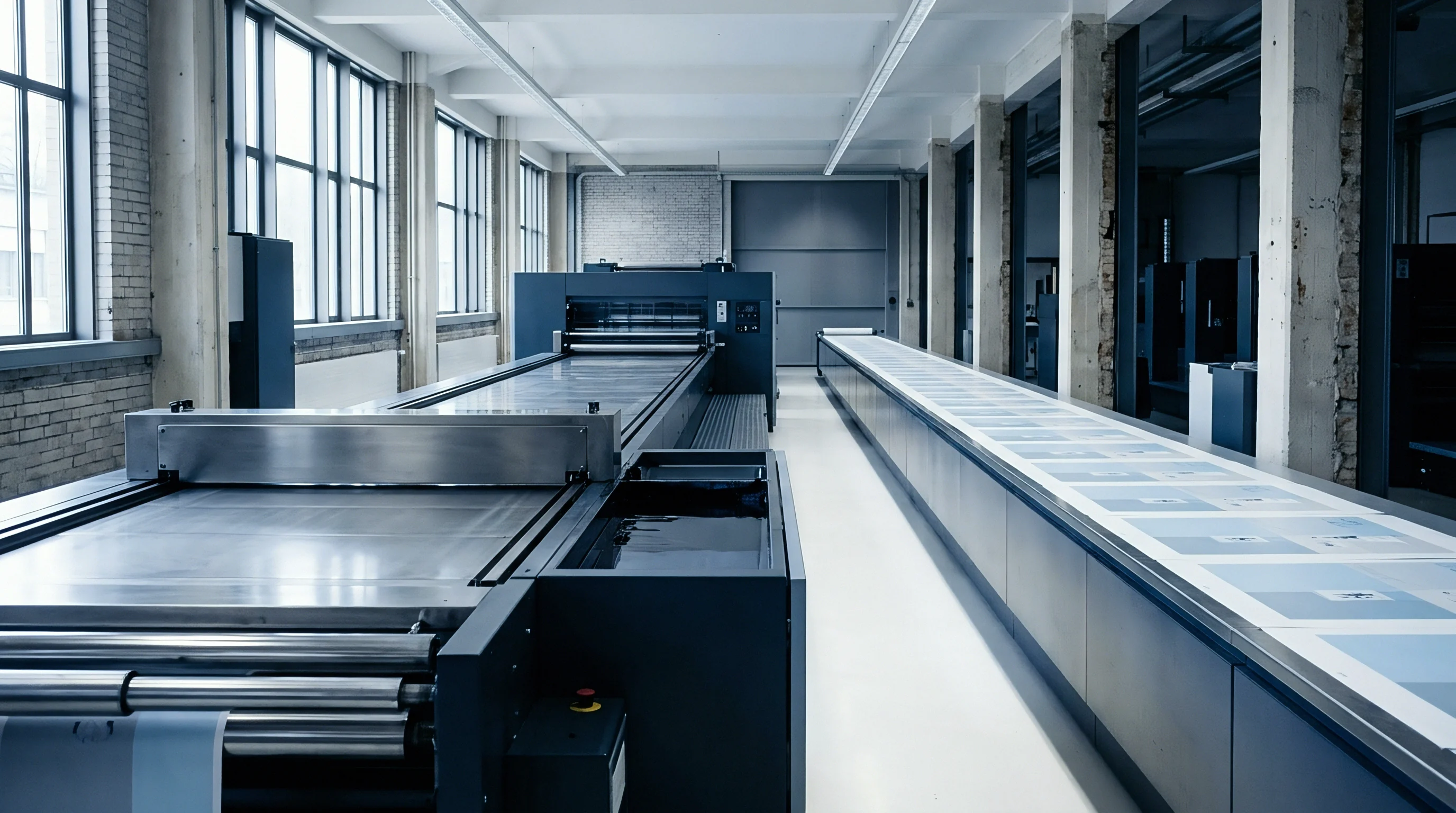
Engineered platen surfaces incorporate convex geometry ground directly into lower bed castings to counteract mechanical bending under load. Ground curvature offsets predicted beam deflection, establishing flat, coplanar relationship between knife edges and anvil plates at full operating force. When a press operates below design tonnage, however, fixed platen curvature over-compresses the sheet center while leaving outer knives partially engaged.
Modern autoplaten manufacturing utilizes ground profiles calculated for seventy percent of rated mechanical load, accepting minor deviations at the extreme ends of the operating window.
Tooling manufacturers design creasing counter-plates around precise platen deflection profiles. Counter matrix channels made from compressed pressboard or milled steel must register impression depths within five micrometers of target specification across the sheet. Uncompensated deflection shears creasing matrix shoulders.
The interaction between die layout geometry and platen curvature determines finished carton structural integrity, dictating clean score folding along cross-grain carton hinges.
| Press Format Width (mm) | Rated Impact Force (Tons) | Centerline Separation (μm) | Outer Edge Yield (μm) | Crease Bead Height Loss (%) |
|---|---|---|---|---|
| 1060 | 260 | 42 | 8 | 18 |
| 1060 | 300 | 58 | 11 | 27 |
| 1450 | 350 | 76 | 14 | 36 |
| 1450 | 400 | 94 | 18 | 44 |
| 1620 | 450 | 118 | 22 | 52 |
| Measurements recorded via inductive displacement sensors mounted between platen surfaces during static dry-cycle testing at 20 degrees Celsius. | ||||
Structural Arching under Peak Mechanical Compression
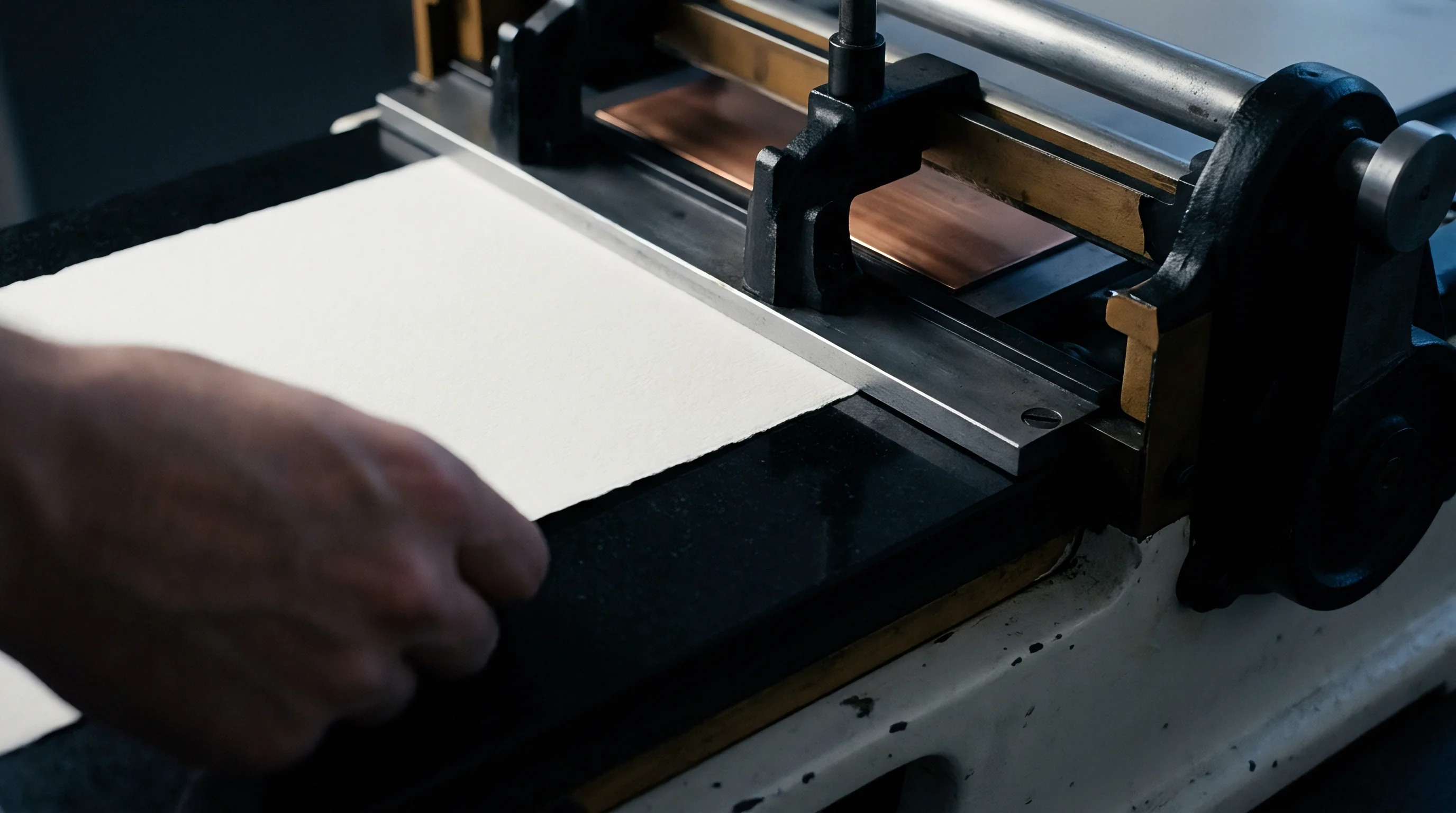
Toggle drive systems generate non-linear velocity profiles as platen surfaces approach bottom dead center. Compression ramps from zero to maximum force within a rotational window of twelve crank degrees, sending violent shock pulses through platen frames. Fixed bed curvature counteracts the resulting dish-shaped deformation, flattening platen surfaces precisely at maximum bottom dead center.
Substrate caliper variations alter the exact rotational angle where resistance begins, shifting peak force away from the intended mechanical correction point.
Operating a crowned platen below rated force creates localized carton crushing. Folding boxboard passing through an over-cambered low-tonnage impression suffers crushed internal flute structures on micro-flute corrugated grades or fractured top liners on virgin fiber cartonboards. The caliper reading drops immediately.
Balanced tooling layouts distribute knife footage evenly across platen zones to prevent localized imbalance across the ground bed curve.

Substrate Fracture Induced by Center Line Pressure Loss
Deflection alters the ratio between cut rule penetration and creasing rule compression. Score lines require controlled fiber displacement without through-thickness shear. ISO 2493 stiffness values drop precipitously when score lines are crushed unevenly across wide sheets.
Folding boxboard grades of 300 to 450 micrometers caliper require creasing rule heights set exactly thirty to fifty micrometers lower than surrounding cutting knives, a tolerance band obliterated by platen beam bowing.
A seventy-micrometer bed deflection across a 1450-millimeter format reduces central crease bead height by forty-four percent under four hundred tons of cutting pressure.
Defective creases produce skewing inside packaging cartoner feed stations. Structural carton failure surfaces in specific converting operations:
- Crease line delamination occurs when inadequate center platen impression prevents the creasing knife from driving cartonboard into the matrix channel, yielding insufficient internal fiber delamination.
- Top liner tension cracking results from perimeter over-compression where excessive cutting depth fractures the outer bleached coating layers during initial folding.
- Asymmetrical carton folding emerges from unequal bead profiles on opposing carton panels, skewing glued cartons by several millimeters during high-speed belt transport.
- Embossing register drift happens when central platen deflection allows micro-slippage of the sheet between male and female brass embossing dies during the dwell phase.
Proper platen leveling demands identical impression depth across every corner of the chase. A seasoned finisher balances knife impression against platen resistance before touching counter plates.

Shim
Manual make-ready remains the standard industrial defense against platen bed deflection. Press operators spend up to ninety minutes per job taping thin strips of calibrated paper beneath the cutting plate to counteract deflection hollows. Make-ready paper, calibrated in precise thicknesses of thirty, fifty, and eighty micrometers, levels localized impression zones across the cutting chase.
Shimming compensates for platen frame bowing, localized chase wear, die-board manufacturing tolerances, and uneven knife rule height profiles across the layout.
Patch sheets taped directly to the lower platen support plate absorb platen irregularities. Under continuous running speeds exceeding eight thousand sheets per hour, however, paper shims undergo severe compressive consolidation. A make-ready patch starting at forty micrometers compresses to twenty-eight micrometers after twenty thousand impressions.
Patch tape compresses after fifty sheets. Impression loss returns gradually across the production shift, forcing press operators to stop production and apply secondary patch layers over central platen zones.
Manual Leveling Protocols Using Calibrated Tissue Sheets
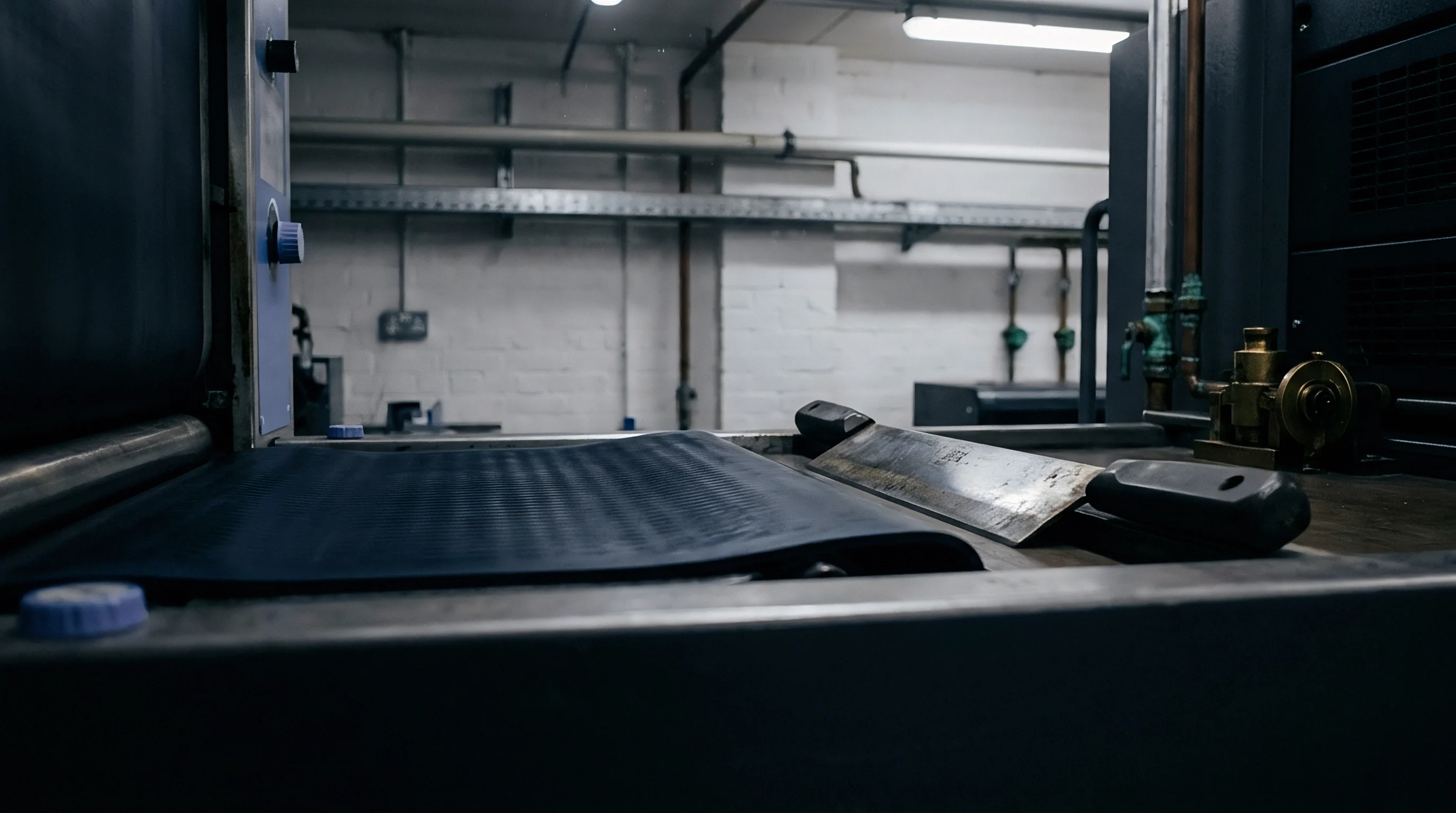
Systematic platen balancing begins with carbon paper impression proofs pulled at minimal operating force. The press operator mounts a complete cutting die without creasing matrices, placing a sheet of carbon paper over a sheet of hard, calendered paperboard. Examining the carbon transfer reveals areas of platen hollow where knife rules fail to cut through fibers cleanly.
Hand-cut paper patches, shaped to match deflection contours, are glued systematically onto the make-ready plate.
- The operator cleans the lower platen bed and backing plate with solvent to eliminate oil residues, dried coating dust, and loose paper fibers before mounting base plates.
- A baseline impression pull on 120-gram calendered bond paper records the initial cutting perimeter contact at twenty tons below standard production pressure.
- Adhesive-backed 0.03-millimeter make-ready tissue is hand-cut and affixed to low-impression zones on the underside of the 1.0-millimeter cutting plate.
- A second impression pull verifies knife closure across the center layout, identifying remaining deflection zones requiring secondary 0.05-millimeter paper patches.
- The operator installs matrix channels and engages full production pressure, monitoring cut-through clean separation on consecutive sheets at operating speed.
Make-ready sheets introduce viscoelastic creep into the tooling interface. Under continuous dynamic impact, cellular structures within paper patches collapse permanently, altering platen clearance. Plastic shim films made from biaxially oriented polyethylene terephthalate resist compression better than vegetable parchment shims, retaining nominal thickness across half a million impressions.
Polyester shims cost four times more than traditional make-ready tissue, creating friction between press operators and production procurement managers.

Make-Ready Time Expenditure and Plate Settling
Labor allocation during make-ready represents a massive cost leak on high-speed packaging lines. Complex carton dies containing sixty separate carton positions across a 1450-millimeter chase format require extensive hand shimming. An experienced make-ready team consumes seventy minutes balancing impression across an intricate pharmaceutical folding layout.
During this dead time, an autoplaten press costing four hundred euros per hour sits completely idle.
Consider a typical packaging converter producing fifty million folding cartons annually across four high-speed platen lines. Operating parameters assume five job changeovers per press weekly, with manual make-ready consuming sixty-five minutes per setup. Annual make-ready downtime totals one thousand one hundred twenty-six press hours, costing over four hundred fifty thousand euros in unallocated press overhead.
The commercial cost of manual platen balancing exceeds the amortized investment cost of automated platen adjustment equipment within twenty-four months of continuous multi-shift operation.
Platen parallel drifts across three shifts. Tool steel settles unevenly across the chase area as die boards absorb ambient humidity and swell across their thickness. Die wood expands across cross-grain dimensions when relative humidity fluctuates by ten percent on converting floors, shifting rule positions relative to milled counter plates.
The press run continues until carton bead measurements fail quality assurance tolerances.

Drift
Thermal accumulation within mechanical press drives alters platen parallel during continuous high-speed converting. Autoplaten presses operating at nine thousand sheets per hour generate severe frictional heat within main eccentric drive bushings, toggle knuckles, and hydraulic fluid circuits. Over an eight-hour production shift, platen frame temperatures rise from twenty degrees Celsius at cold startup to fifty-two degrees Celsius at steady-state operating equilibrium.
Steel side frames expand vertically by up to forty-five micrometers over their effective height, increasing platen clearance and decreasing cutting force.
Unequal thermal gradients between drive-side and operator-side frames create asymmetric impression drift. The drive-side casting, containing main drive gears and primary lubrication reservoirs, operates eight to twelve degrees hotter than the open operator side. The press platen tilts out of parallel across the horizontal axis, causing cutting failure on the operator side while over-compressing cartons on the drive side.
Thermal expansion widens platen clearance. The line supervisor compensates by advancing the main pressure setting, further elevating heat buildup across the toggle linkages.
Uncontrolled thermal growth of forty-five micrometers across autoplaten side frames reduces effective cutting force by up to eighteen percent across an eight-hour shift.
Substrate moisture variations induce additional impression resistance drift. Cartonboard conditioned below forty-five percent relative humidity exhibits elevated tensile strength and increased shear resistance during die cutting, requiring higher cutting tonnage. As incoming pallets of paperboard acclimate to plant conditions, board moisture climbs toward equilibrium at fifty-five percent relative humidity.
Higher moisture softens the cellulose matrix, allowing knives to sink deeper into the board without cleanly severing outer fibers, generating frayed carton edges and fiber dust contamination.
Thermal Expansion of Side Frames and Eccentric Shafts
Linear thermal expansion in solid cast-iron structures follows precise physical laws governed by a thermal expansion coefficient of approximately 0.000011 per degree Celsius. A cast-iron press frame with an effective upright column height of 1800 millimeters expands twenty micrometers for every ten-degree Celsius rise in casting temperature. When operating temperatures increase thirty degrees across a shift, total frame elongation reaches sixty micrometers, completely disrupting tight make-ready balances dialed in during cold morning startups.
Eccentric shaft journals expand radially within bronze sleeve bearings, altering toggle stroke travel. Hydrodynamic oil film thickness shifts with lubrication viscosity as oil temperatures climb from thirty to sixty-five degrees Celsius. Lower oil viscosity permits mechanical surfaces to approach closer under peak impact, slightly offsetting frame expansion while generating erratic high-frequency vibrations throughout the machine base.
Cold hydraulic fluid alters toggle dwell. The converting line experiences cyclical variations in finished carton dimensions as press thermal dynamics fluctuate throughout production runs.
Cyclic Fatigue and Running Bed Yield Variances
Repetitive mechanical cycling weakens iron castings over extended operating spans. Autoplaten presses complete millions of impact cycles annually, inducing progressive metal fatigue within platen crossheads and upper crown supports. Deflection patterns shift gradually as the press ages, creating localized valleys that fail to match standard factory camber profiles.
Tooling designed for new machines encounters severe pressure discrepancies when mounted on older converting platforms.
Factors contributing to impression drift across long runs require rigorous production monitoring:
- Frame thermal gradients cause uneven vertical expansion between drive and operator side castings, twisting platen surfaces out of horizontal alignment.
- Lubricating oil thinning lowers hydraulic cushion resistance across main toggle pin bushings, causing sudden variations in bottom dead center platen positioning.
- Die-board moisture absorption swells high-density birch plywood die blocks, elevating cutting rule heights by fifteen to thirty micrometers across localized board zones.
- Polyurethane ejection rubber fatigue reduces dynamic holding pressure against carton blanks, allowing sheet flutter and register displacement during knife withdrawal.
Press manufacturers routinely tell customers that thermal drift stabilizes within forty-five minutes of startup, leaving press crews to absorb the thirty pallets of defective cartons produced before equilibrium arrives.
Feedback
Modern autoplaten machinery integrates dynamic real-time impression adjustments to counteract deflection and thermal drift during continuous operation. Digital measurement systems monitor mechanical load profiles continuously, using sensor signals to actuate motorized wedge assemblies positioned beneath lower platen support blocks. Rather than stopping production to apply manual paper shims, the press adjusts platen parallel and centerline tonnage on the fly, maintaining uniform score depth and clean cutting across variable operating speeds and thermal conditions.
Piezoelectric force transducers integrated into platen corner tie rods capture dynamic force curves for every individual impression stroke. Sensor arrays record peak impact tonnage, rise time, and force distribution symmetry across operator-side and drive-side axes. When sensor data indicates centerline deflection exceeding predetermined tolerance windows, automated control algorithms trigger servomotor-driven micro-wedges, shifting the platen crown geometry within fractions of a second to preserve balanced pressure.
| Correction Mechanism | Sensor Technology | Adjustment Resolution (μm) | Response Velocity | Correction Axis |
|---|---|---|---|---|
| Motorized Four-Corner Wedges | Tie-rod strain gauges | 5.0 | 0.02 mm/second | Four-corner independent height |
| Segmented Hydraulic Platen Cushions | Piezoelectric load cells | 2.5 | Dynamic stroke-by-stroke | Multi-zone vertical profile |
| Servo-Driven Center Camber Crown | Linear optical encoders | 1.0 | 0.05 mm/second | Transverse centerline arching |
| Closed-Loop Optical Score Scanners | Laser triangulation line sensors | 10.0 | Post-cut sheet sampling | Global platen impression force |
Piezoelectric Sensor Arrays and In-Line Impression Monitoring
Piezoelectric sensors convert mechanical stress into proportional electrical charges with microsecond response times. Mounted directly within the load path between eccentric toggle blocks and lower platen castings, quartz load washers measure dynamic force rises up to six hundred metric tons with linearity errors below 0.1 percent. Instantaneous force curves reveal the exact microsecond when cutting knives penetrate carton stock, followed by the secondary resistance peak produced by creasing rules bottoming out into counter-matrix grooves.
Signal processing units filter out high-frequency press vibrations, isolating the load signature of cutting rules from mechanical background noise. A sudden drop in peak force across one quadrant alerts the press management system to broken knife sections or localized platen displacement. Real-time diagnostic monitors display platen load distribution heatmaps to press operators, displaying live force balances across the sheet width at full production speed.
Motorized Wedge Adjustments during High-Speed Converting
Automated mechanical compensation relies on dual sliding steel wedges machined with precision taper angles of 1:100. High-torque brushless servomotors drive precision ball screws, shifting the upper wedge horizontally relative to the fixed lower wedge base. A horizontal displacement of one millimeter produces exactly ten micrometers of vertical platen movement.
Hardened tool steel surfaces ground to mirror finishes glide over low-friction bronze-graphite wear plates, delivering rock-solid rigidity under multi-hundred-ton compressive impacts.
Segmented lower platen assemblies incorporate multiple independently actuated wedge pairs distributed across the bed area. An intelligent machine controller adjusts individual sectors based on real-time sensor feedback. When central tie-rod sensors register deflection bowing during high-speed runs on heavy solid bleached sulfate boards, central motorized wedges advance automatically, lifting the platen center to preserve specified creasing bead heights across all carton positions.
Optical laser triangulation sensors mounted at the platen exit verify finished carton score bead geometry on running sheets. High-speed line scan cameras capture three-dimensional profile maps of folded cartons at nine thousand sheets per hour, measuring crease width and bead projection directly against packaging machine feeding tolerances. The closed-loop controller compares optical measurements with stored packaging line specifications, automatically adjusting platen wedge settings to eliminate operator intervention.
Engineers debate whether micro-adjusting individual platen zones dynamically creates secondary torsional stresses within massive machine castings that accelerate structural fatigue over long operating lives.

Margin
Platen deflection correction directly dictates unit carton profitability on automated packaging lines. Converting lines that stabilize impression profiles eliminate score line cracking, blister pack sealing failures, and visual carton register defects. When an uncompensated platen crushes creasing channels across carton flaps, carton folding stiffness increases by thirty to fifty percent, exceeding the mechanical torque limits of automated cartoner folding fingers.
The customer rejects the delivered pallet. High-speed packaging operations running at four hundred cartons per minute experience catastrophic jams, triggering contractual chargebacks that consume converting profit margins.
Tooling longevity multiplies the financial returns of dynamic platen correction. Traditional manual make-ready practices accelerate knife wear by subjecting edge cutting rules to excessive impact pressures to force central knives through board fibers. A cutting die balanced through real-time dynamic platen leveling lasts for eight hundred thousand impressions before knife replacement, whereas an uncompensated die requires complete rule re-knifing after two hundred fifty thousand impressions.
Tooling maintenance expenses drop by sixty percent across high-volume folding carton operations.
| Cost Component | Manual Paper Shimming (€) | Automated Dynamic Correction (€) | Net Variance (€) | Variance Driver |
|---|---|---|---|---|
| Make-Ready Labor | 380.00 | 95.00 | -285.00 | 75% setup time reduction |
| Startup Sheet Waste | 210.00 | 35.00 | -175.00 | Immediate impression accuracy |
| Die Tooling Wear | 145.00 | 58.00 | -87.00 | Balanced cutting pressure |
| In-Run Spoilage Scrap | 180.00 | 22.00 | -158.00 | Elimination of thermal drift |
| Maintenance Overhead | 45.00 | 65.00 | +20.00 | Sensor and servo upkeep |
Tooling Amortization and Press Spoilage Accounting
Take an annual packaging contract for fifty million pharmaceutical cartons run on 300 g/m² virgin fiber folding boxboard across a 1060-millimeter autoplaten press. The converting contract specifies an agreed scrap allowance of 1.5 percent. On an uncompensated press subject to thermal drift and bed deflection, setup scrap consumes four hundred sheets per job changeover, while running defects account for an additional 2.2 percent of total sheet volume.
Total paperboard wasted across the annual contract totals 185 metric tons of premium cartonboard, generating over two hundred sixty thousand euros in direct substrate losses.
Automated real-time impression leveling slashes setup waste to fifty sheets per run while capping running spoilage below 0.4 percent. The investment in automated motorized wedge compensation systems, adding approximately one hundred twenty thousand euros to the capital cost of a new flatbed autoplaten die-cutter, delivers complete capital payback within nine months of full production commissioning. Financial controllers tracking net waste per thousand cartons view real-time platen correction as an essential margin protector rather than an optional equipment upgrade.
Specification Thresholds for Critical Folding Boxboard Creases
Downstream high-speed packaging efficiency requires strict compliance with crease stiffness ratios defined under DIN 55437. Crease recovery force must remain between fifteen and thirty percent of unbroken board bending resistance to prevent cartoner feeding failures while ensuring robust carton squareness during product insertion. When platen bed deflection reduces central crease bead height by twenty micrometers, crease recovery force spikes to fifty-five percent of unbroken board resistance, causing cartons to resist side-panel opening at high packing velocities.
Global pharmaceutical brand owners enforce strict finishing tolerances within master packaging purchasing agreements. Standard supply contracts stipulate that carton deliveries exhibiting greater than fifteen percent variation in crease opening force across a single production lot trigger full batch rejection at the converter expense, including reimbursement for downstream packaging line downtime charged at rates exceeding five thousand euros per hour.