Z-Direction Moisture Migration Dynamics during High-Speed Web Steam Application in Multi-Ply Cores
High-speed web steaming drives steep Z-direction thermal gradients, requiring tight exposure control below 20 milliseconds to prevent core ply delamination.
Vapor
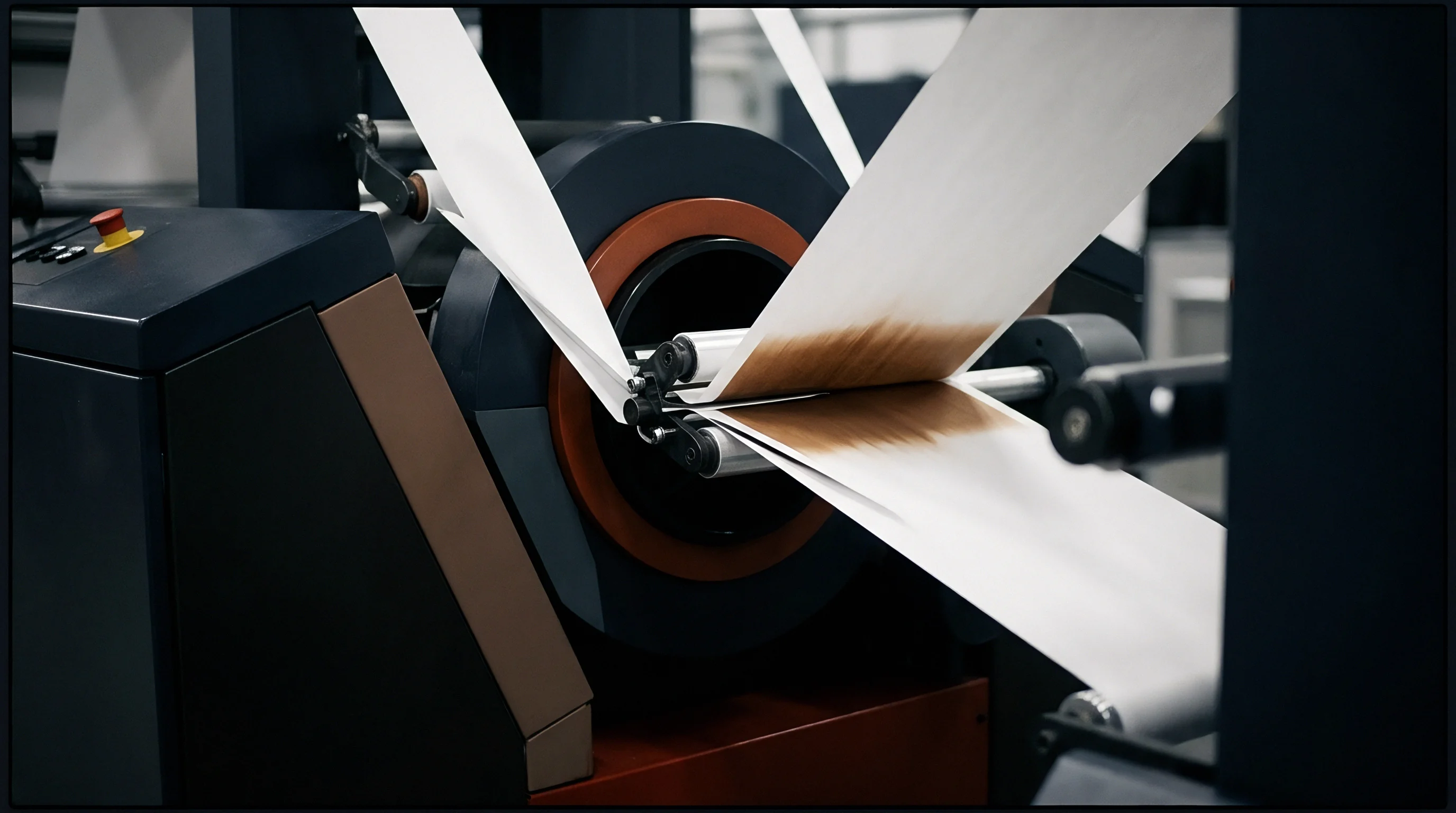
High-speed web conditioning using pressurized saturated steam introduces rapid thermal energy to the paperboard surface within extremely narrow dwell windows. When a paper web moves through a steam shower at operating velocities between 800 and 1200 meters per minute, the surface exposure time inside the steam box ranges from 10 to 40 milliseconds. Heat moves faster than liquid water.
Saturated steam delivered at supply pressures of 150 to 300 kPa contacts the moving web, where instant phase change releases a latent condensation heat of approximately 2260 kJ/kg. This enthalpy flux instantly raises the top fiber layer temperature from an ambient 23 °C to over 85 °C, creating a steep Z-direction thermal gradient while liquid moisture begins to form on the surface fibers.
Boundary Layer Thermal Penetration Kinetics
Air films carried by fast-moving paper webs resist mass transfer at machine operating speeds exceeding 900 meters per minute. The boundary layer swept along by the web creates a stagnant air cushion that steam jets must physically displace before phase change can occur at the sheet surface. Steam application hoods utilize high-velocity air boundary doctors or targeted steam profiling nozzles operating at differential pressures to disrupt this boundary layer.
Heat transfer across the displaced boundary layer is dominated by condensation convection, yielding heat transfer coefficients between 1500 and 3500 W/(m²·K). Cold core surfaces accelerate vapor phase condensation.
The sudden thermal excitation of top-ply fibers causes bound water within cell walls to expand and Mobilize before macro-scale moisture transport occurs. Surface condensation occurs in five milliseconds. Under typical web conditioning conditions, a moisture deposition rate of 0.5 to 2.0 grams of water per square meter occurs within the first 15 milliseconds of exposure.
The rapid influx of heat lowers the viscosity of both the applied condensate and the existing liquid within the sheet pore structure, decreasing water viscosity from 1.00 mPa·s at 20 °C to 0.35 mPa·s at 80 °C. This viscosity reduction doubles the initial penetration velocity into the outer ply network.
Impingement Condensation Rates at Millisecond Dwell
Latent heat transfers directly into the top fiber network as phase change occurs upon contact. The mass flux of steam condensing on the sheet surface depends directly on the temperature difference between the saturated steam shower and the incoming web surface, as well as the partial vapor pressure gradient across the fluid boundary layer. Surface fibers achieve instant saturation, filling micro-pores with condensed water while the interior plies remain dry and cool.
Conditioned at 23 °C and 50 % relative humidity under ISO 187, a 350 g/m² multi-ply coreboard absorbs 1.2 g/m² of surface condensate within a 12 millisecond steam shower dwell at 1000 m/min.
The table below presents thermal and moisture transport parameters measured across multi-ply paperboard substrates during high-speed steam shower processing under controlled laboratory pilot conditions.
| Web Speed (m/min) | Dwell Time (ms) | Steam Supply Pressure (kPa) | Surface Moisture Uptake (g/m²) | Top Ply Temp Rise (°C) | Z-Depth Heat Flux (kW/m²) |
|---|---|---|---|---|---|
| 800 | 37.5 | 150 | 1.85 | 58.2 | 142 |
| 900 | 33.3 | 200 | 1.62 | 54.1 | 158 |
| 1000 | 30.0 | 250 | 1.41 | 49.8 | 175 |
| 1100 | 27.2 | 280 | 1.28 | 46.5 | 189 |
| 1200 | 25.0 | 300 | 1.15 | 42.9 | 201 |
| Data measured on 400 g/m² 4-ply recycled tube-winding coreboard using inline NIR sensors calibrated against ISO 287 gravimetric oven drying. | |||||
Improper control of steam supply pressure or web dwell speed leads to condensation running off the sheet edges, localized basis weight profile distortion, inter-ply bond failure, and catastrophic web splits inside downstream rewinder NIPS.
Diffusion
Moisture transfer across the Z-axis of a multi-ply board substrate follows two distinct thermodynamic regimes during and immediately after steam shower contact. Liquid phase capillary transport dominates the initial wetted surface layer, whereas thermodynamic vapor pressure gradients drive moisture movement through gas-filled pore networks deeper inside the sheet structure. High basis weight board grades exhibit tortuous intra-fiber and inter-fiber void networks that govern the rate of moisture movement from the exposed top ply down into internal furnish layers.
Capillary Pressure against Thermodynamic Driving Gradients
Liquid phase transport dominates the immediate outer ply where pore radii control wetting rates. Capillary absorption follows Lucas-Washburn dynamics, where penetration depth correlates directly with pore radius, surface tension, and contact angle, while inversely relating to liquid viscosity. Higher basis weight slows Z-direction transport.
In un-sized or lightly sized coreboard plies, capillary pressure draws free water rapidly into inter-fiber spaces within 20 to 50 milliseconds post-application.
Vapor diffusion becomes the dominant driver as thermal energy penetrates into inner plies. The elevated temperature at the top surface generates a partial water vapor pressure gradient relative to the cold core plies. Water vapor diffuses through gas-filled voids along this partial pressure slope.
Higher temperatures increase vapor pressure exponentially according to the Clausius-Clapeyron relation. Surface steam heating produces vapor pressures of 50 to 80 kPa in the top ply, driving water vapor rapidly toward interior plies where partial pressure remains below 5 kPa. Pore saturation halts capillary transport.
InterPly Starch Barriers and Pore Tortuosity
Gelatinized starch adhesives applied between furnish layers create physical boundaries that alter moisture movement paths. Native or modified starches applied at inter-ply spray stations form dense, film-like cross-linked networks upon drying. These starch lines act as partial barriers to both liquid water phase capillary flow and gaseous water vapor diffusion.
Water molecules approaching a starch bond line encounter reduced porosity and increased tortuosity, causing moisture accumulation directly above the adhesive interface.
Low bulk tightens the fiber network. Density variations across individual plies influence the local vapor diffusion coefficient. Highly calendared top plies with low bulk restrict initial steam intake, whereas high-bulk recycled inner plies facilitate rapid vapor dispersion once moisture crosses the starch bond line.
Starch layer hydration causes localized swelling, temporarily altering bond line permeability during web transit through post-steam drying zones.
The sequence below details the operational procedure for evaluating Z-direction diffusion profiles on web conditioning lines:
- Mount inline high-speed NIR multi-wavelength reflection gauges directly after the steam shower hood and at 1.5-meter intervals along the draw.
- Calibrate NIR sensor absorbance ratios against liquid-nitrogen frozen microtome ply samples to establish real-time moisture step curves.
- Adjust web tension to eliminate sheet flutter under steam profiling hoods, maintaining a continuous air boundary layer displacement.
- Set steam supply header pressure to maintain a 15 kPa differential above web boundary layer pressure.
- Audit inter-ply starch application rates to verify uniform barrier thickness across the full machine trim width.
The table below summarizes moisture content distribution across a 4-ply recycled coreboard substrate at varying elapsed times following high-speed web steaming.
| Time Post-Steam (ms) | Top Ply Moisture (%) | Ply 2 Moisture (%) | Ply 3 Moisture (%) | Bottom Ply Moisture (%) | Total Sheet Moisture (%) |
|---|---|---|---|---|---|
| 0 | 6.50 | 6.45 | 6.40 | 6.42 | 6.44 |
| 50 | 12.80 | 7.10 | 6.45 | 6.42 | 8.19 |
| 200 | 10.40 | 9.20 | 6.85 | 6.45 | 8.22 |
| 500 | 8.90 | 8.80 | 7.90 | 6.60 | 8.05 |
| 1000 | 8.10 | 8.15 | 8.05 | 7.80 | 8.02 |
Equipment vendors frequently claim that steam shower application achieves instantaneous moisture equilibrium throughout multi-ply sheets, whereas physical measurement shows steep Z-direction moisture gradients persisting for over 500 milliseconds after web treatment.

Plies
Structural integrity in paperboard cores depends heavily on the moisture distribution across each constituent sheet layer. Multi-ply coreboards engineered for high-speed spiral tube winding or solid fiber drums rely on uniform z-directional strength and controlled hygroexpansivity. Steam applied to the web surface introduces transient moisture differentials that soften outer fiber networks while inner structural plies remain rigid, temporarily altering the mechanical equilibrium of the combined board.
Scott Bond Deterioration and Wet Shear Instability
Internal cohesion measured under dynamic impact drops rapidly when water content in the bond line exceeds critical thresholds. Scott Bond strength, evaluated per TAPPI T569 or ISO 16260, quantifies the energy required to delaminate a sheet along its Z-axis. Absorbed water interrupts hydrogen bonding between cellulose fibers and plasticizes inter-ply starch adhesives.
Excessive moisture destroys ply bond integrity.
Dextrin adhesives soften under high heat. When steam shower application elevates local moisture content at inter-ply interfaces above 12 %, Scott Bond strength can decrease by 30 to 55 % within hundreds of milliseconds. This rapid loss of internal cohesion poses severe delamination risks during subsequent high-tension rewinder operations or spiral tube winding.
Internal steam pressure splits weak interfaces. If heat applied during downstream drying vaporizes trapped inter-ply water faster than vapor can escape through outer plies, internal steam pockets expand, creating permanent delamination blisters.
How Does Core Density Influence Steam Vapor Penetration?
Denser sheet structures restrict vapor passage while accelerating thermal conduction across the fiber network. A dense recycled furnish ply with low bulk and high filler content exhibits small effective capillary pore radii. This structural configuration slows liquid phase penetration but transfers heat rapidly via solid-phase conduction through packed cellulose structures.
Bound water increases sheet flexibility.
High starch loads block steam transfer. Unsized high-bulk plies permit fast steam vapor penetration, allowing moisture to distribute evenly across the ply thickness before surface drying occurs. The ratio of virgin softwood kraft fibers to short recycled furnish fibers dictates network compressibility and pore elasticity during moisture uptake.
Softwood fibers maintain open capillary channels under moisture swelling, whereas heavily beaten recycled fibers collapse, restricting further Z-direction vapor migration.
The selection process for specifying multi-ply board substrates exposed to high-speed steam conditioning involves systematic material evaluation:
- Furnish Ratio Optimization select board grades with at least 30 % long-fiber virgin kraft content in outer plies to maintain web wet-tensile strength during steam shower transit
- Cobb Sizing Control specify 60-second Cobb values between 25 and 40 g/m² on steam-contact faces to regulate condensation uptake velocity
- Scott Bond Thresholds require minimum dry inter-ply strength values of 200 J/m² to withstand transient wet-shear degradation during web humidification
- Bulk Uniformity Verification enforce maximum density variations of ±4 % across internal plies to prevent localized steam trapping and blister defects
- Adhesive Starch Gelatinization Temperature specify inter-ply starches with gelatinization points above 68 °C to avoid premature adhesive dissolution under steam application
Substrates with inter-ply Scott Bond values below 160 J/m² undergo ply separation under web tensions exceeding 2.5 kN/m when surface moisture uptake exceeds 1.5 g/m².
Plies with uneven moisture profiles always curl toward the dry side as fiber swelling relaxes on the wetted face.

Verification
Accurate profiling of moisture distribution along the Z-axis requires rapid sampling methods that halt liquid movement instantly. Conventional gravimetric oven drying methods measure whole-sheet moisture content, masking steep internal moisture gradients that form during millisecond steam exposures. Advanced diagnostic protocols isolate individual ply moisture levels to map transient liquid and vapor migration pathways across multi-ply cores.
Cryogenic Sectioning and Gravimetric Oven Calibration
Liquid nitrogen freezing stops liquid movement within milliseconds of web collection. Web samples taken immediately post-steam shower are plunged directly into liquid nitrogen at -196 °C, vitrifying water inside fiber pores and stopping capillary and vapor transport. Frozen samples prevent post-sampling moisture loss.
High-speed cryogenic microtome equipment splits frozen multi-ply board samples along structural ply interfaces or cuts 20-micrometer Z-direction slices. Each isolated slice is transferred to pre-weighed aluminum weighing pans and dried per ISO 287 or TAPPI T412 at 105 °C to constant mass. Gravimetric determination yields exact Z-axis moisture profiles with high spatial resolution.
This offline laboratory procedure serves as the absolute baseline for calibrating inline non-destructive sensor platforms.
Time Domain Nuclear Magnetic Resonance Profiling
Non-destructive measurement of hydrogen proton relaxation times distinguishes liquid in cell walls from water sitting inside fiber pores. Time Domain Nuclear Magnetic Resonance (TD-NMR) relaxometry analyzes transverse relaxation decay curves (T2 spectrum) to quantify moisture distribution without physically destroying the sheet matrix. Short T2 components represent water bound to cellulose hydroxyl groups, whereas longer T2 components correspond to free capillary water inside void spaces.
Inline multi-wavelength Near-Infrared (NIR) absorption gauges operating at specific water absorption bands (1450 nm and 1940 nm) complement TD-NMR by providing real-time surface and sub-surface moisture tracking on running webs. Calibrating NIR sensors against cryogenic gravimetric standards enables continuous tracking of moisture migration dynamics during production runs.
The table below compares diagnostic methodologies used for Z-direction moisture profiling in multi-ply paperboard structures.
| Measurement Technique | Z-Resolution (µm) | Acquisition Time | Sample State | Primary Measurement Parameter |
|---|---|---|---|---|
| Cryogenic Microtome Gravimetric | 15 – 30 | 4 hours (offline) | Frozen / Destructive | Absolute mass loss on oven drying |
| Time Domain NMR (TD-NMR) | 50 – 100 | 2 minutes (offline) | Native / Non-destructive | Hydrogen proton relaxation rates |
| Multi-Wavelength Inline NIR | 100 – 250 | 1 millisecond (online) | Moving web / Non-destructive | Infrared light absorption intensity |
| X-Ray Micro-Computed Tomography | 5 – 10 | 30 minutes (offline) | Conditioned / Destructive | X-ray attenuation density map |
Process failures resulting from improper web steam conditioning manifest through specific structural defect modes across converting operations:
- Inter-Ply Blistering expanding trapped steam pockets create circular delamination zones inside coreboard structures during hot-air drying
- Edge Curl Instability cross-direction moisture gradients induce asymmetrical fiber swelling along roll edges, causing web tracking errors
- Crush Strength Collapse excessive core moisture reduces Ring Crush Test and Concora Medium Test values by up to 35 %
- Surface Flaking and Dusting fiber surface lifting occurs when surface condensate dissolves surface sizing and starch bonds
- Tension Slitter Checking localized wet zones cause micro-tears along reel slit edges during high-speed rewinding
Supply contracts specifying coreboard quality parameters must include an addendum requiring Scott Bond retention testing under high-humidity conditioning per TAPPI T569 annex A1 to guarantee web integrity under steam treatment.
Tonnage
Commercial converting efficiency balances steam energy expenditure against line speed gains and scrap reduction. Paperboard mills and core converters operate on tight financial margins where tonnage yield, energy consumption, and web runnability dictate profitability. Operating a web steam shower consumes 15 to 45 kg of saturated steam per tonne of processed paperboard.
At current thermal energy pricing, optimizing steam delivery profiles directly impacts converted reel manufacturing costs.
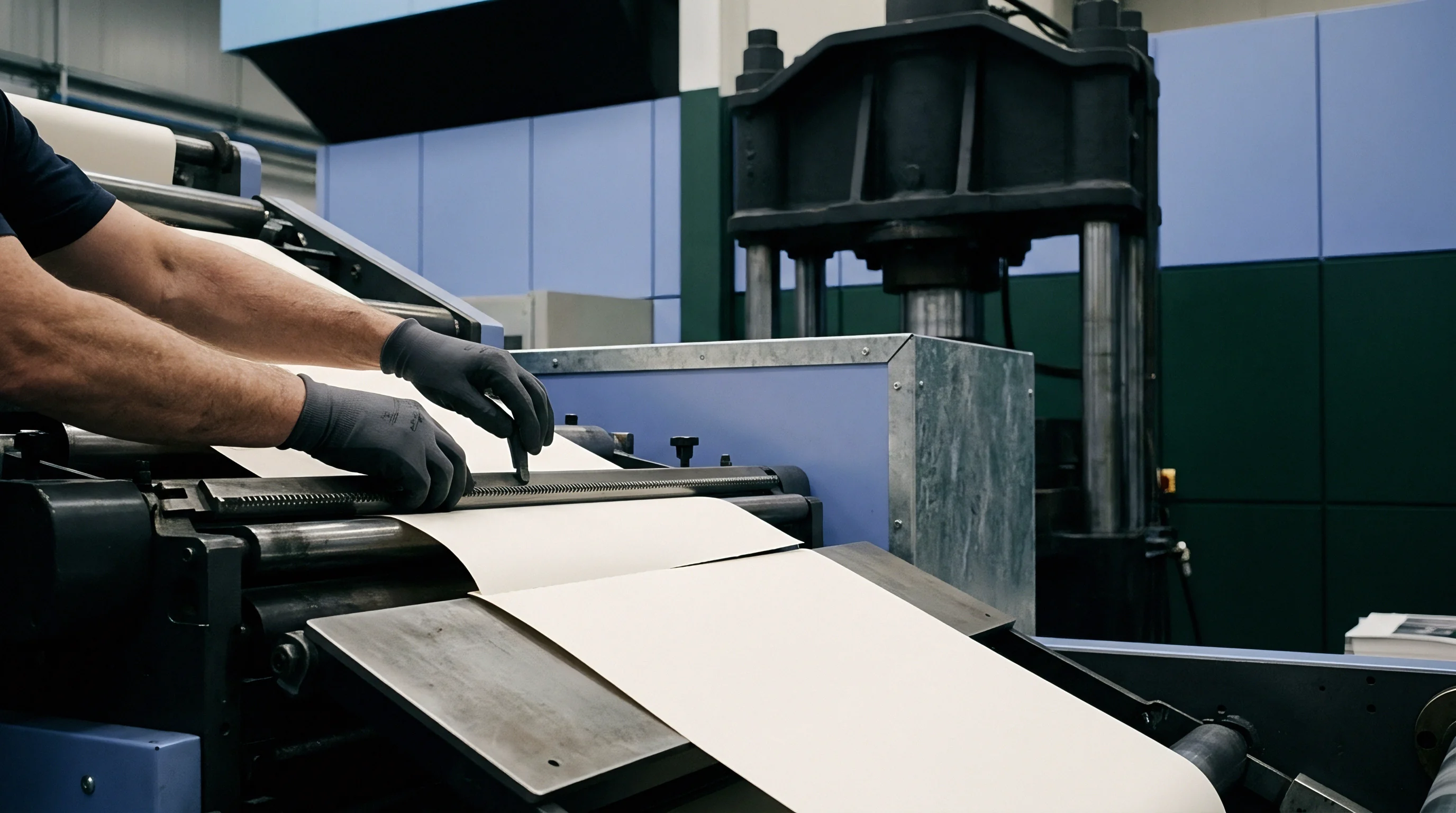
Web Break Frequency and Energy Balance Arithmetic
Excessive moisture application causes web instability at the rewinder, increasing unplanned machine downtime. Web breaks on high-speed rewinders operating at 1200 meters per minute generate substantial spoilage, costing between 150 and 400 kg of damaged stock per break event plus 15 to 30 minutes of lost production capacity. Controlled steam application reduces brittle web fractures by restoring sheet elasticity, reducing web break frequency by up to 60 % when run within optimal moisture bands.
Energy balances must account for both boiler fuel expenditure and downstream drying costs. Applying 1.5 g/m² of steam condensate to a 300 g/m² web increases sheet moisture content by 0.5 percentage points. Removing this added moisture in downstream hot-air dryers requires approximately 1.2 kWh of thermal energy per kilogram of evaporated water.
If steam application enhances web elasticity enough to enable a 15 % increase in machine line speed, the yield gain outweighs the supplementary thermal energy costs.
Landed Cost per Thousand Core Tubes
Calculations based on target moisture uptake determine the net yield gain across total reel production. Consider a converting plant producing spiral core tubes from 400 g/m² recycled board at a rate of 50 tonnes per day. Incorporating an optimized web steam shower reduces scrap rates from edge cracking and ply delamination from 4.2 % to 1.1 %, generating 1.55 tonnes of additional usable coreboard daily.
At a baseline board cost of 650 USD per tonne, this scrap reduction yields daily raw material savings of 1007.50 USD. Subtracting boiler steam operational costs of 180 USD per day results in net material savings of 827.50 USD per day. On an annualized basis across 330 operating days, net financial savings exceed 273,000 USD, amortizing capital expenditure for high-speed steam profiling equipment within eight months of continuous operation.
Optimizing Z-direction moisture transport dynamics allows mills to run lower basic weights without compromising total core tube crush performance.