Dynamic Contact Angle Relaxation Kinetics in High Speed Blade Coating Systems
Dynamic contact angle relaxation rates dictate air entrainment and streak defect thresholds in high speed blade coating systems operating above 1200 m/min.

Drop
Liquid adhesion across high-speed paper webs depends on interfacial wetting phenomena. As web speeds escalate from 800 to over 1800 meters per minute in commercial blade coating operations, the contact line between the liquid coating color, the base paper substrate, and the ambient air experiences extreme displacement velocities. Under these conditions, the dynamic contact angle deviates sharply from its equilibrium value, directly impacting liquid pickup, film uniformity, and void formation.

Capillary Forces and High Speed Wetting Dynamics
At web speeds exceeding 1200 meters per minute, fluid displacement kinetics dictate whether an aqueous coating color spreads uniformly across raw paperboard. The Capillary number quantifies this balance between viscous hydrodynamic drag forces and surface tension forces at the three-phase boundary line.
When the Capillary number exceeds unity, viscous drag dominates interfacial tension. The advancing dynamic contact angle increases continuously with web speed according to empirical dynamic wetting models such as Hoffman-Voinov-Tanner relationships. On raw cellulosic substrates conditioned at 23 degrees Celsius and 50 percent relative humidity under ISO 187 standards, static contact angles with deionized water typically measure between 45 and 65 degrees.
When that same raw sheet passes through a high-speed blade nip at 25 meters per second, the dynamic contact angle expands beyond 110 degrees within a sub-millisecond timeframe.
| Web Velocity (m/min) | Capillary Number (Ca) | Dynamic Contact Angle (deg) | Dynamic Wetting State | Air Entrainment Risk |
|---|---|---|---|---|
| 400 | 0.28 | 68 | Stable Spreading | Negligible |
| 800 | 0.56 | 92 | Forced Wetting | Low |
| 1200 | 0.84 | 124 | High-Stress Wetting | Moderate |
| 1600 | 1.12 | 158 | Near-Failure Boundary | High |
| 2000 | 1.40 | 176 | Dynamic Wetting Failure | Critical |
Air Entrainment Limits at Elevated Web Velocities
Gaseous boundaries near the three-phase contact line destabilize as the advancing contact angle approaches 180 degrees. This limit represents the onset of air entrainment, where the ambient air film can no longer be displaced by the advancing liquid phase. Microscopic air pockets become trapped between the base paper sheet and the wet coating layer, forming severe pinhole defects and un-coated skip areas.
Modifying the surface tension of the coating color via surfactant additions lowers the Capillary number at a given coater velocity, extending the critical velocity threshold for air entrainment. Surfactant molecules require finite timescales to diffuse to the newly generated liquid-air interface created at the coating application point. If the interface creation rate outpaces the surfactant adsorption kinetics, the dynamic surface tension remains artificially elevated, accelerating the transition toward air entrainment failure.
Dynamic contact angles measured at sub-millisecond surface ages exceeding 140 degrees correlate directly with pinhole void counts on un-sized folding boxboard webs running above 1400 meters per minute.
The fundamental limit of dynamic wetting stability in high-speed blade application systems continues to prompt debate between fluid mechanics researchers who model sheets as smooth rigid solids and mill engineers who process porous, rough cellulosic fiber networks.

Blade
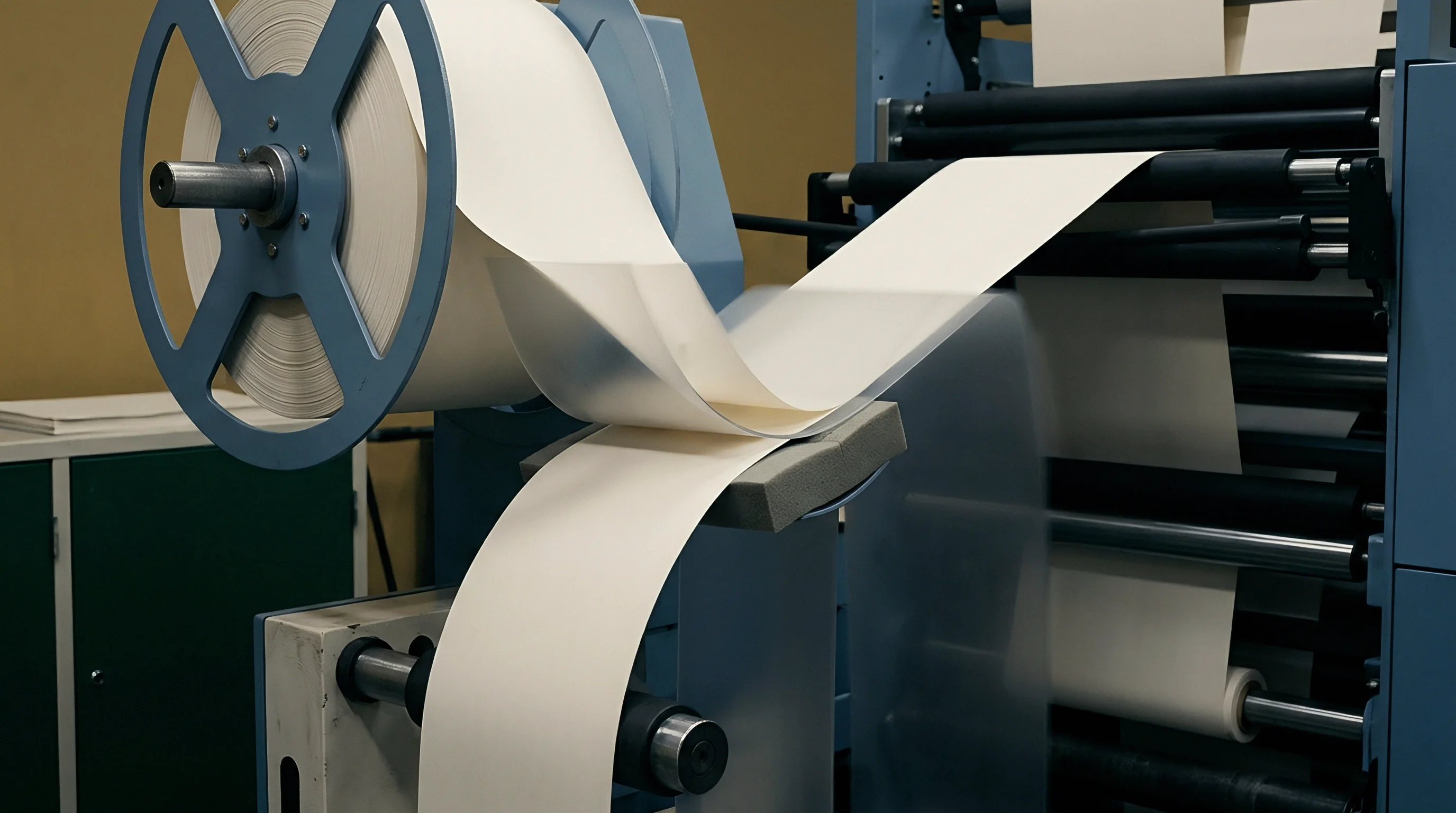
Metering mechanisms operate within sub-millisecond dwell times beneath the flexible steel strip. The coater blade applies mechanical pressure while simultaneously relying on hydrodynamic lubrication pressure generated by the incoming liquid wedge to control final coat weight deposition.
Hydrodynamic Pressure Profiles in the Metering Gap
Fluid flow through narrow gaps generates normal stress profiles that counteract mechanical loading forces. Beneath a coater blade tip operating at 1500 meters per minute, peak hydrodynamic pressures within the liquid film reach values between 0.3 and 0.8 MPa. The magnitude of this peak depends on coating color solids content, temperature, high-shear viscosity, and nip bevel angle.
In a bent-blade arrangement running at low blade angles between 12 and 15 degrees, the hydrodynamic pressure profile extends over a wider spatial zone compared to a stiff-blade arrangement operating at angles between 35 and 45 degrees. The resulting pressure wedge forces fluid into the surface pores of the base sheet before mechanical land metering occurs. This hydraulic impulse forces liquid carrier fluid into the fiber network, altering the local solids concentration of the remaining coating layer under the blade tip.
A high-shear viscosity increase from 40 mPa·s to 65 mPa·s at a shear rate of 1,000,000 s^-1 elevates peak hydrodynamic pressure under a 45-degree bevel blade tip by 0.22 MPa at 1500 m/min web speed.
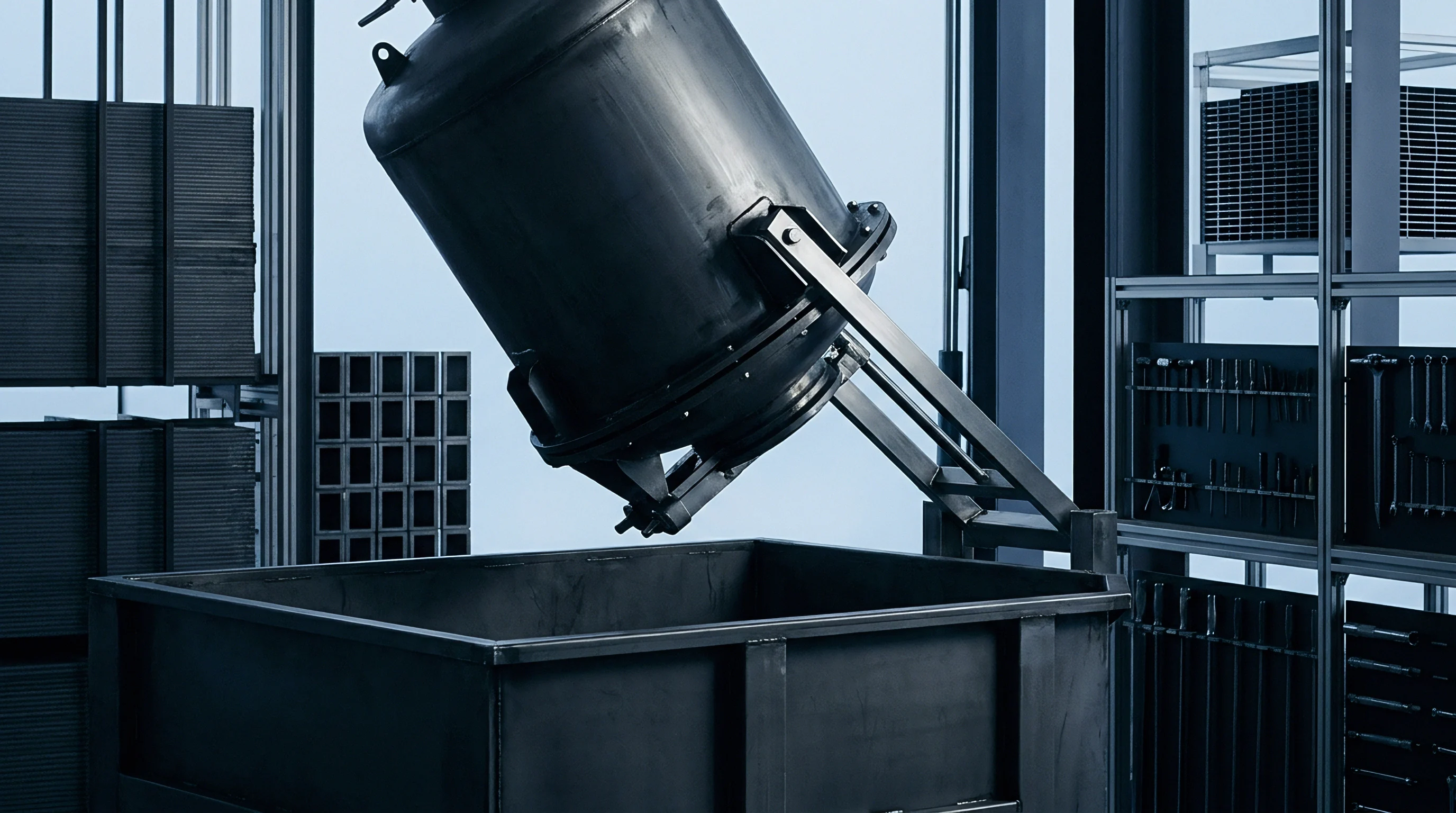
Bevel Angle Geometry and Shear Rate Distribution
Tip truncation angles between 35 and 45 degrees concentrate deformation rates within microscopic liquid films. The shear rate generated inside the metering gap under the blade tip is determined by web velocity divided by the wet film thickness, routinely exceeding 1,000,000 reciprocal seconds in modern commercial coating operations.
High solids coating colors formulated with ground calcium carbonate (GCC), engineered kaolin clay, and carboxymethyl cellulose (CMC) exhibit pronounced shear-thinning non-Newtonian behavior under these extreme deformation conditions. If the formulation exhibits high-shear dilatancy due to excessive pigment solids packing or particle jamming, hydrodynamic pressure surges uncontrollably, causing blade stall, web lift, and heavy coat weight bands.
| Blade Configuration | Blade Angle (deg) | Dwell Time (ms) | Peak Shear Rate (s^-1) | Hydrodynamic Pressure (MPa) | Typical Coat Weight (g/m^2) |
|---|---|---|---|---|---|
| Bent Blade | 14 | 0.85 | 6.5 x 10^5 | 0.32 | 10.5 – 14.0 |
| Stiff Blade (Unbevelled) | 38 | 0.22 | 1.2 x 10^6 | 0.58 | 7.0 – 10.0 |
| Stiff Blade (Bevelled 45 deg) | 45 | 0.15 | 1.8 x 10^6 | 0.74 | 5.5 – 8.5 |
| Methods Note: Shear rates calculated using nominal wet film thickness measured under blade land; fluid viscosity measured via Hercules high-shear capillary viscometry at 25 degrees Celsius. | |||||
The operational modes beneath the blade tip produce distinct failure behaviors when fluid properties or web speeds drift beyond target limits.
- Hydrodynamic Lift Failure occurs when extreme fluid pressure overcomes mechanical tube pressure, causing the blade to float and producing heavy coat weight surges across the web.
- Dewetting Skip Lines develop when dynamic contact angles approach 180 degrees at the leading edge of the wet coverage zone, leaving narrow uncoated streaks along the machine direction.
- Particle Jamming Crushing happens when local solids concentrations exceed the maximum packing fraction under high shear, causing mechanical scratching, blade bleeding, and edge build-up.
- Capillary Dewatering Instability emerges when base paper pore absorption drains carrier fluid prematurely, raising wet film solids content above the plastic limit under the blade land.
Increasing mechanical tube pressure stabilizes coat weight uniformity only when the liquid dynamic contact angle remains low enough to maintain full wet perimeter contact across the base paper surface.


Relaxation
Equilibrium surface energy values measured under static laboratory conditions fail to capture transient interfacial phenomena. Following exit from the blade nip, the compressed coating film experiences immediate pressure relief and begins relaxing from an elevated dynamic contact angle state toward an equilibrium spreading angle.
Millisecond Surfactant Adsorption and Surface Energy Shifts
Surfactant molecules dispersed in the aqueous phase require finite time intervals to migrate toward freshly created liquid-air interfaces. At high coating speeds, the surface age of the liquid film immediately downstream of the coater blade ranges from 0.1 to 10 milliseconds.
Static surface tension measurements conducted via Wilhelmy plate or pendant drop methods report equilibrium surface tension values between 30 and 40 mN/m. However, dynamic surface tension measurements captured via maximum bubble pressure technique at surface ages of 1 millisecond reveal effective surface tension values ranging from 55 to 68 mN/m. This discrepancy arises because synthetic surfactants, such as ethoxylated acetylenic diols or sodium dioctyl sulfosuccinate, exhibit diffusion-controlled adsorption kinetics that cannot keep pace with high-speed surface creation rates.
Consider a commercial blade coating line running at 1400 meters per minute (23.33 meters per second). The distance between the blade tip exit and the entrance of the infrared dryer section measures exactly 1.8 meters. The total elapsed relaxation time available for liquid film leveling, surfactant adsorption, and contact angle decay before drying fixes the structure is calculated as follows:
Time = 1.8 m / 23.33 m/s = 0.0771 seconds = 77.1 milliseconds.
If the surfactant system requires 150 milliseconds to decay the dynamic contact angle from 130 degrees to below 50 degrees, the liquid film remains in a high surface tension, poorly wetting state for the entire transit duration before drying lock-in. The liquid layer pulls back from low-energy hydrophobic fiber bundles on the base sheet surface, generating micro-dewetting patterns and rough coating topographies.
Coating Color Rheology and Viscoelastic Memory
Polymer networks composed of carboxymethyl cellulose or synthetic thickeners exhibit rapid structural recovery upon exiting high-deformation zones. Under the blade, high shear rates dismantle the internal associative network of synthetic alkali-swellable emulsion (ASE) thickeners or starch molecules. Upon leaving the blade nip, the deformation rate drops to zero, initiating viscoelastic structural recovery.
If elastic energy storage dominates viscous dissipation, the coating liquid behaves like an elastic solid immediately after metering. The liquid film retains micro-distortions created by blade edge roughness rather than leveling smoothly under capillary pressure forces. The relaxation spectrum of the rheology modifier must allow rapid viscous flow during the first 10 to 30 milliseconds post-blade to ensure smooth surface topography while recovering sufficient yield stress before drying to prevent wet film sagging.
Coating color formulations maintaining dynamic surface tension decay rates faster than 0.5 mN/m per millisecond within the 1-to-10 millisecond window eliminate micro-dewetting voids on un-sized recycled boxboard.
When dynamic contact angle relaxation kinetics lag behind post-blade machine transit times, the coating film undergoes spatial film splitting and dewetting, forcing the converting mill to incur severe financial scrap penalties on rejected print-grade reels.

Streak
Surface non-uniformities arise when liquid relaxation kinetics lag behind web speed propagation. Blade streaks present as continuous, narrow longitudinal lines of low coat weight or bare substrate exposure running down the machine direction of the coated paper roll.
Can Dynamic Contact Angle Spikes Cause Dewetting Defect Streaks?
Interfacial energy fluctuations across localized paper areas create instant repulsion forces within wet liquid films. Base paper sheets contain localized chemical non-uniformities, such as hydrophobic pitch spots, size press wax deposits, or unevenly distributed synthetic sizing agents like alkyl ketene dimer (AKD) or alkenyl succinic anhydride (ASA). When the high-speed contact line strikes an AKD-rich hydrophobic bundle on the raw web, the local dynamic contact angle spikes instantaneously from 110 degrees to over 150 degrees.
This localized contact angle spike disrupts the liquid meniscus under the blade land. Instead of maintaining continuous film coverage, the liquid dewets locally, forming a stationary dry boundary behind the obstacle. The surrounding coating color drains away from the high-angle site, creating a permanent longitudinal blade streak that remains visible after hot air drying.

Pore Structure Filtration and Binder Migration Rates
Base sheet capillary absorption withdraws aqueous carrier fluid prior to full pigment film consolidation. The rate of liquid absorption into base paper pores is traditionally estimated by Lucas-Washburn capillary flow models. However, under high-speed blade applicators, external hydraulic pressure applied by the blade wedge forces liquid phase vehicle into base sheet pores at rates ten times faster than pure capillary-driven absorption.
As carrier water filters into the raw sheet, soluble binders like starch, polyvinyl alcohol (PVA), and styrene-butadiene latex migrate along with the fluid phase. This dewatering process increases the solids concentration of the remaining filter cake under the blade tip. If the solids level reaches the immobilized solids limit (typically 68 to 72 percent solids for fine calcium carbonate colors), the coating loses fluidity, causing particle agglomeration, blade scratches, and heavy streak formation.
Remediating streak defects requires systematically auditing both substrate surface energy uniformity and wet coating application parameters using a structured diagnostic sequence.
- Verify base paper dynamic contact angle uniformity using high-speed automated droplet goniometry at 10-millisecond contact intervals across twenty cross-machine locations.
- Measure base sheet Cobb60 water absorptiveness under TAPPI T 441 standards to identify localized sizing variations exceeding ten percent across the web width.
- Adjust surfactant additions in the coating formulation to reduce 1-millisecond dynamic surface tension below 50 mN/m without inducing micro-foam entrainment.
- Optimize pigment aspect ratios by replacing coarse high-aspect clay with ultrafine ground calcium carbonate to reduce high-shear particle alignment resistance.
- Increase blade mechanical tube pressure by 15 kPa while reducing coating solids content by 1.5 percent to clear filter cake build-up beneath the blade tip.
Streak defects also develop from physical blade edge damage or coarse particulate contamination caught behind the blade tip, operating as purely mechanical streak mechanisms alongside dynamic wetting failures.
Audit
Quality verification requires measuring dynamic liquid-substrate interaction timescales alongside mill viscometry. Ensuring robust runnability on high-speed blade coaters requires establishing comprehensive quality control procedures covering raw base stock properties, liquid dynamic interfacial surface tension, and rheological parameters under high shear stress.
Laboratory Testing Protocol Boundaries for High Speed Wetting
Standardized droplet goniometry operating at static equilibrium misleads formulation engineers regarding high-speed runnability. A static contact angle measurement obtained after 60 seconds of droplet equilibration reflects thermodynamic energy minima, whereas high-speed coating operations are governed entirely by sub-second kinetic relaxation phenomena.
To accurately evaluate dynamic contact angle relaxation kinetics, mills must utilize automated dynamic contact angle testers operating under TAPPI T 558 protocols. These instruments capture droplet volume, base diameter, and contact angle evolution using high-speed video optics at camera frame rates exceeding 1000 frames per second, resolving contact angle decay curves starting at surface ages as low as 2 milliseconds post-impact.
| Parameter | Standard Test Method | Testing Atmosphere / Condition | Target Specification Range | Operational Failure Boundary |
|---|---|---|---|---|
| Base Sheet Grammage | ISO 536 / TAPPI T 410 | 23 deg C / 50% RH | 70.0 – 80.0 g/m^2 | > 3.0% Basis Weight Variation |
| Dynamic Contact Angle (10 ms) | TAPPI T 558 | 23 deg C / 50% RH | 40 – 65 degrees | > 95 degrees (Air Entrainment) |
| Cobb Water Absorptiveness (Cobb10) | ISO 535 / TAPPI T 441 | 10 second exposure | 8.0 – 12.0 g/m^2 | < 5.0 g/m^2 (Poor Adhesion) |
| Parker Print-Surf Roughness (PPS 10) | ISO 8791-4 / TAPPI T 555 | 1.0 MPa clamping pressure | 2.5 – 3.8 micrometers | > 4.8 micrometers (Coat Non-Uniformity) |
| High-Shear Viscosity (10^6 s^-1) | Capillary Viscometry | 25 deg C shear sweep | 35 – 55 mPa·s | > 70 mPa·s (Hydrodynamic Lift) |
| Dynamic Surface Tension (1 ms) | Maximum Bubble Pressure | 25 deg C fluid state | 42 – 52 mN/m | > 62 mN/m (Dewetting Streaks) |

Contractual Tolerance Limits for Coating Color Rheology
Procurement specifications define explicit high-shear viscosity windows and dynamic surface tension decay rates. When purchasing base paper stock or finished coated boards, supply agreements must specify both mechanical parameters and chemical surface energy tolerances. Substrates failing to meet minimum dynamic wetting standards trigger widespread converting defects during subsequent offset litho or flexographic printing operations, leading to severe ink-trapping failures and coating delamination.
Quality audit frameworks require recording substrate dynamic contact angles across every delivered jumbo reel. A structured qualification checklist ensures that incoming base sheet lots meet required performance thresholds prior to web threading.
- Dynamic Wetting Qualification verifies that 10-millisecond contact angles remain below 70 degrees across all reel position samples.
- Substrate Pore Structure Audit checks Parker Print-Surf roughness values to ensure uniform capillary suction pressures under hydraulic blade loading.
- Surfactant Kinetic Screening measures high-frequency dynamic surface tension to confirm rapid interfacial tension decay post-blade application.
- High-Shear Rheology Gatekeeping enforces maximum capillary viscosity limits to prevent uncontrolled hydrodynamic pressure surges beneath the blade land.
Substrates displaying 10-millisecond dynamic contact angle variations exceeding 15 degrees across the cross-machine direction generate coat weight non-uniformity errors greater than 1.8 g/m^2 under stiff blade metering.
Standard delivery contracts incorporate ISO 9001 compliance standards mandating that supplier mill inspection certificates include TAPPI T 558 dynamic contact angle decay rates measured on every master roll prior to shipment authorization.