Mechanosorptive Creep Kinetics and Anisotropic Thickness Swell Modeling in Recycled Containerboard Structures
Moisture swings accelerate compression creep in recycled board through transient matrix softening and anisotropic thickness swelling that degrades stacking yield.
Bond
An initial contact between a thickness gauge and a sheet of recycled testliner reveals structural density changes induced by repulping history. Chemical recovery operations strip out residual lignin while mechanically breaking down primary cell walls. During original press-drying, secondary fibers hornify, collapsing internal pore networks permanently.
When moisture enters the sheet matrix, recycled microfibrils swell differently than virgin kraft fibers. Without internal lumen space to take up the water, moisture acts directly on inter-fiber contact areas, weakening the hemicellulose bonds that support compressive loads.
Recycled Fiber Hornification and Moisture Sorption Dynamics
Cellulose fibrils in recovered furnish suffer structural stiffening that alters equilibrium moisture sorption isotherms. Under standard ISO 187 conditioning at 23 degrees Celsius and 50 percent relative humidity, re-wetted recycled fibers reach lower equilibrium moisture content than primary fibers at identical vapor pressures. Fiber shortening during pulping combines with reduced internal storage capacity to concentrate water molecules in the amorphous zones of outer cell walls.
This localized moisture concentration disrupts the hydrogen network between adjacent fibers, directly lowering short-span compressive strength measured under ISO 9895.
| Furnish Grade | Fiber Length Mean (mm) | Hornification Index (%) | Out-of-Plane Swell Coefficient (β_ZD) | Short Span Compression ISO 9895 (kN/m) |
|---|---|---|---|---|
| Unbleached Kraftliner (100% Virgin) | 2.45 | 12.1 | 0.28 | 3.85 |
| Testliner 2 (50% Recycled Blend) | 1.82 | 24.5 | 0.42 | 3.10 |
| Testliner 3 (100% Recycled Furnish) | 1.35 | 38.2 | 0.58 | 2.45 |
| Fluting (100% Waste Based) | 1.10 | 44.0 | 0.64 | 2.10 |
Fines generation increases sheet density while reducing average fiber length. The elevated surface area of fine particles increases initial water uptake rates without contributing to load-bearing structural frameworks. High fine content creates dense clusters of short cellulosic fragments that soften rapidly under changing atmospheric conditions.
Recycled containerboard loses structural rigidity under fluctuating humidity faster than virgin kraft substrates due to disrupted hemicellulose matrix alignment.
Hydrogen Inter-Fiber Slip under Cyclic Vapour Pressure
Transient moisture transport through the containerboard thickness induces spatial moisture gradients across individual fiber walls. As water molecules diffuse through the amorphous regions, hydrogen bridges break and reform at adjacent hydroxyl sites under external stress. This molecular slip process accelerates permanent deformation before macroscopic sheet expansion becomes visible.
The mechanical response depends heavily on the rate of relative humidity change, as rapid moisture swings create localized stress peaks within the hydrogen network. Lower initial sheet density accelerates water vapor transport, increasing the frequency of molecular bond dissociation events per unit time.
Internal sizing agents applied during papermaking retard fluid penetration but fail to alter thermodynamic vapor absorption kinetics. Alkyl ketene dimer and rosin sizing chemistries modify surface energy without altering the sorption thermodynamics of amorphous cellulose inside fiber walls. Consequently, sized containerboard delays liquid uptake during ISO 535 Cobb tests while remaining fully exposed to airborne humidity swings, allowing hydrogen bridge disengagement to progress unchecked during humid storage.
Creep
Deformation rates in loaded paper structures accelerate during environmental humidity shifts through a coupled mechanical and sorptive phenomenon. Static loading in a constant environment results in predictable viscoelastic deflection governed by logarithmic time functions. Introducing cyclic relative humidity accelerates strain accumulation far beyond the sum of individual static moisture responses.
This mechanosorptive phenomenon reduces the load-carrying endurance of corrugated packaging stacks stored in unconditioned ambient warehouses.
Transient Sorption Kinetic Formulations
Constitutive modeling of mechanosorptive behavior links mechanical strain rates to absolute changes in sheet moisture content. The total strain rate consists of elastic, viscoelastic, hygro-expansive, and mechanosorptive strain components. The mechanosorptive strain rate correlates directly with applied stress and the absolute value of the moisture change rate, expressed through the relationship:
dε_ms / dt = m · σ · |dM / dt|
where ε_ms represents mechanosorptive strain, m is the material mechanosorptive coefficient, σ is the applied stress, and dM/dt is the rate of moisture content variation over time. For 100 percent recycled testliner with a grammage of 140 grams per square meter, dynamic cycling between 30 percent and 80 percent relative humidity yields an empirical mechanosorptive coefficient m between 0.15 and 0.22 per percent moisture change per megapascal.
A relative humidity step change from fifty percent to eighty-five percent at twenty-three degrees Celsius triples the deformation rate of recycled linerboard within forty minutes.

Stress Relaxation and Acceleration Thresholds
Stress relaxation kinetics within the fiber matrix show pronounced sensitivity to sorption direction. Desorption phases, where moisture leaves the sheet, generate internal tensile stresses within fiber walls that temporarily increase structural rigidity. Absorption phases induce transient matrix softening, accelerating shear slip along fiber-to-fiber boundaries, where stresses concentrate around recycled fiber defects.
When relative humidity cycles rapidly, these absorption-driven slip steps accumulate continuously, preventing the network from reaching mechanical equilibrium.
Consider a transport packaging stack constructed from 140 g/m² Testliner 3 subjected to a continuous dead load equal to 35 percent of its short-span compressive strength. Under static 50 percent relative humidity, the package exhibits a steady creep strain rate of 0.02 percent per day, reaching structural failure limits after 180 days. Subjecting that same package to daily relative humidity cycling between 45 percent and 85 percent at 20 degrees Celsius increases the effective mechanosorptive strain accumulation rate to 0.45 percent per cycle.
Total allowable compression deflection of 8 millimeters occurs within 14 days, resulting in warehouse stack collapse. Skimping on paperboard grammage to offset tonnage costs guarantees premature pallet failure when distribution routes pass through uncontrolled atmospheric conditions.
Expansion
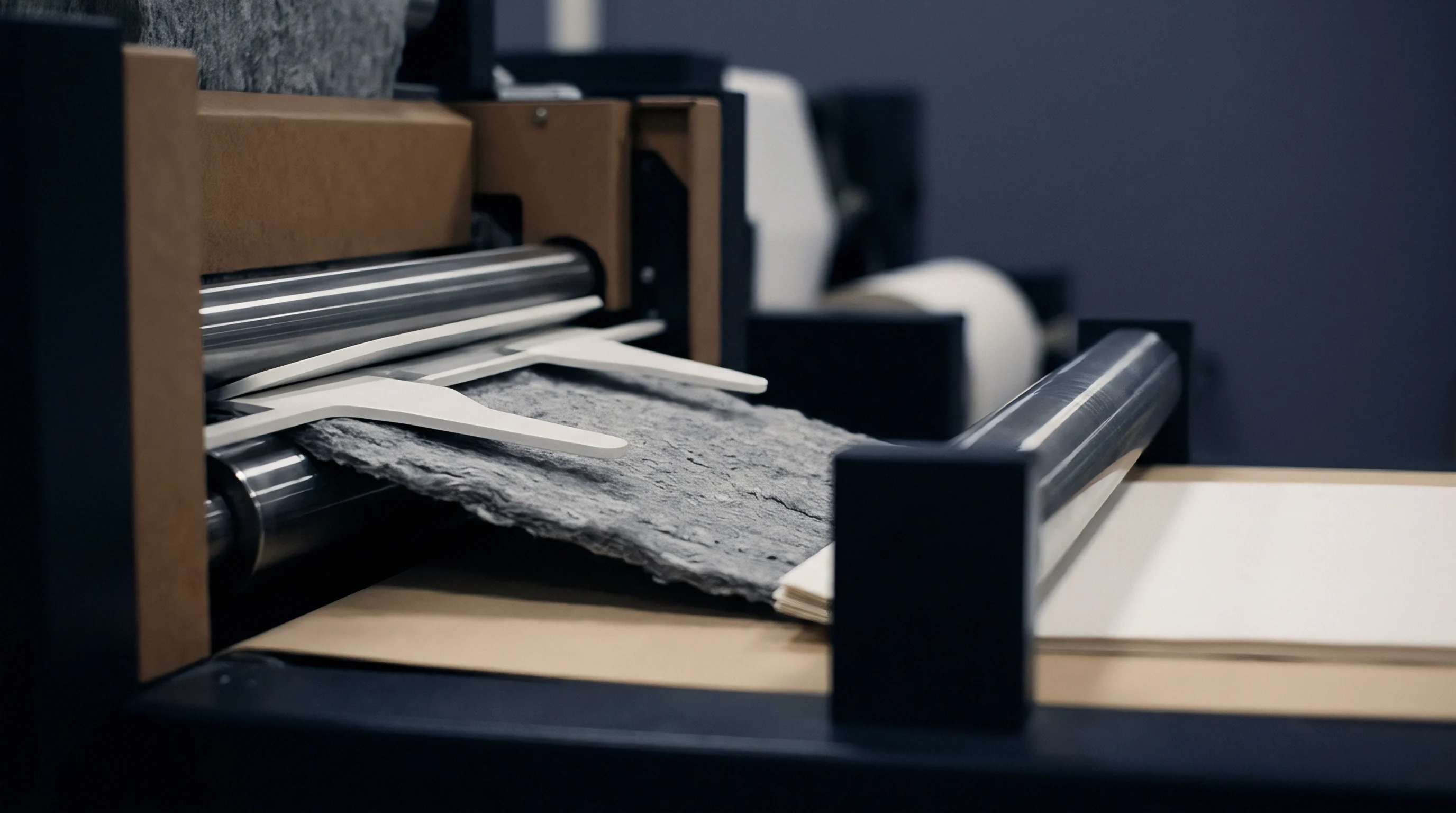
Dimensional instability in containerboard structures manifests unevenly across structural directions due to preferred fiber orientation during web formation. Machine direction alignment minimizes expansion along the web, whereas cross-direction dimensional variations run two to three times higher. The out-of-plane Z-direction exhibits severe swelling behavior, expanding up to ten times the magnitude of in-plane directions.
This anisotropic response stems from the transverse swelling of individual fibers, which expand radially upon water absorption while maintaining axial length stability.
Constitutive Anisotropic Swell Tensor
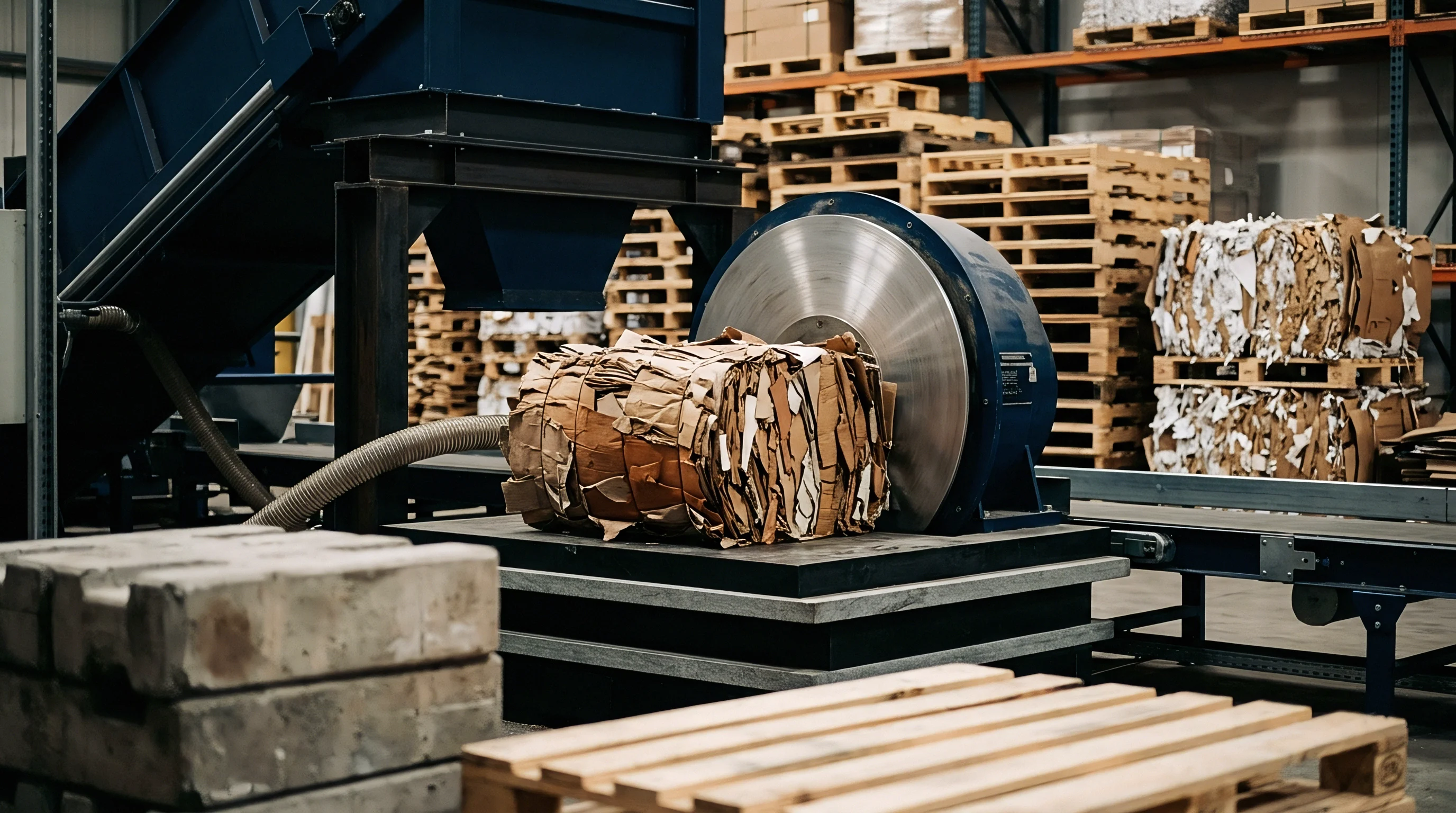
Mathematical representation of dimensional variations relies on an anisotropic hygro-expansion tensor relating strain components to moisture changes. The strain tensor elements are defined by directional hygro-expansion coefficients β_MD, β_CD, and β_ZD. Recycled fibers exhibit elevated β_ZD coefficients due to lower internal orientation and higher void volume between damaged fiber walls.
| Paperboard Grade | In-Plane β_MD (% / % ΔM) | In-Plane β_CD (% / % ΔM) | Out-of-Plane β_ZD (% / % ΔM) | Thickness Swell at 85% RH (%) |
|---|---|---|---|---|
| Virgin Kraftliner (175 g/m²) | 0.04 | 0.12 | 0.35 | 4.2 |
| Testliner 2 (140 g/m²) | 0.06 | 0.18 | 0.55 | 6.8 |
| Testliner 3 (140 g/m²) | 0.08 | 0.22 | 0.72 | 9.1 |
| Recycled Medium (120 g/m²) | 0.09 | 0.25 | 0.81 | 10.5 |
Elevated thickness swell in recycled containerboard alters structural geometry under high humidity. Caliper increases measured per ISO 534 do not produce structural strength gains. Thickness swelling expands the sheet by opening void spaces between recycled fiber layers, reducing density and weakening out-of-plane shear modulus.
This softening of the internal layer structure diminishes flexural rigidity in corrugated combined board, degrading overall box compression resistance.
Out of plane thickness swelling consumes internal bond strength before directional dimensional changes destabilize the box corners.
Out-of-Plane ZD Delamination Mechanics
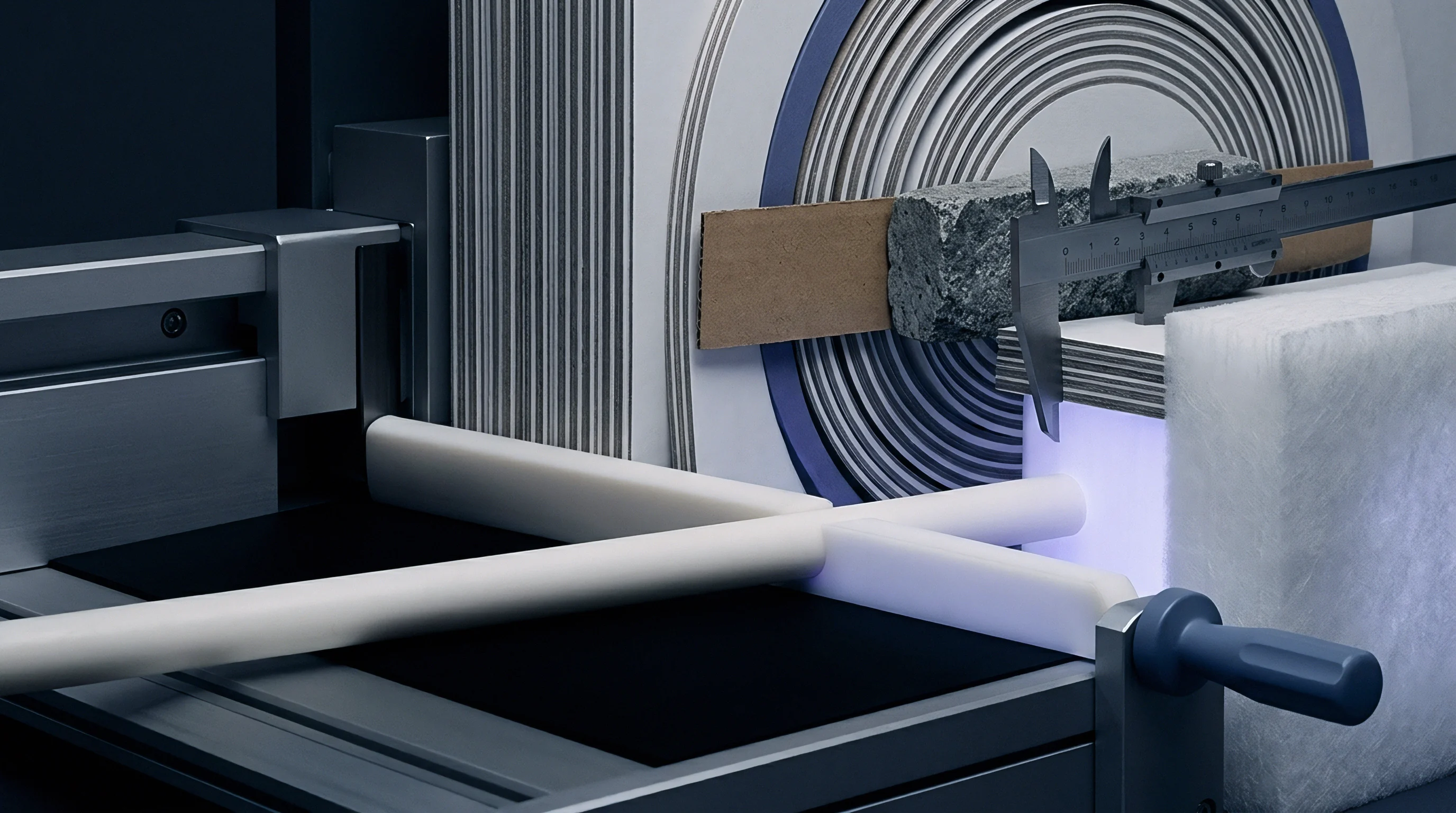
Out-of-plane swelling forces create internal tensile stress fields along ply boundaries in multi-ply containerboard grades. Recycled linerboards manufactured on multi-fourdrinier machines rely on inter-ply bonding achieved during wet pressing. Water sorption expands individual plies at different rates depending on local orientation and fine distribution.
The differential expansion induces shear stresses between plies that exceed the internal bond strength measured by ISO 16260.
Post-conversion wall buckling is frequently attributed to adhesive application rather than substrate physics, with formulation adjustments proposed to resolve converting line swelling. Modifying adhesive starch solids fails to prevent Z-direction sheet expansion driven by atmospheric humidity swings. The fundamental cause remains the hygro-expansion behavior of the recycled fiber matrix itself.

Flute
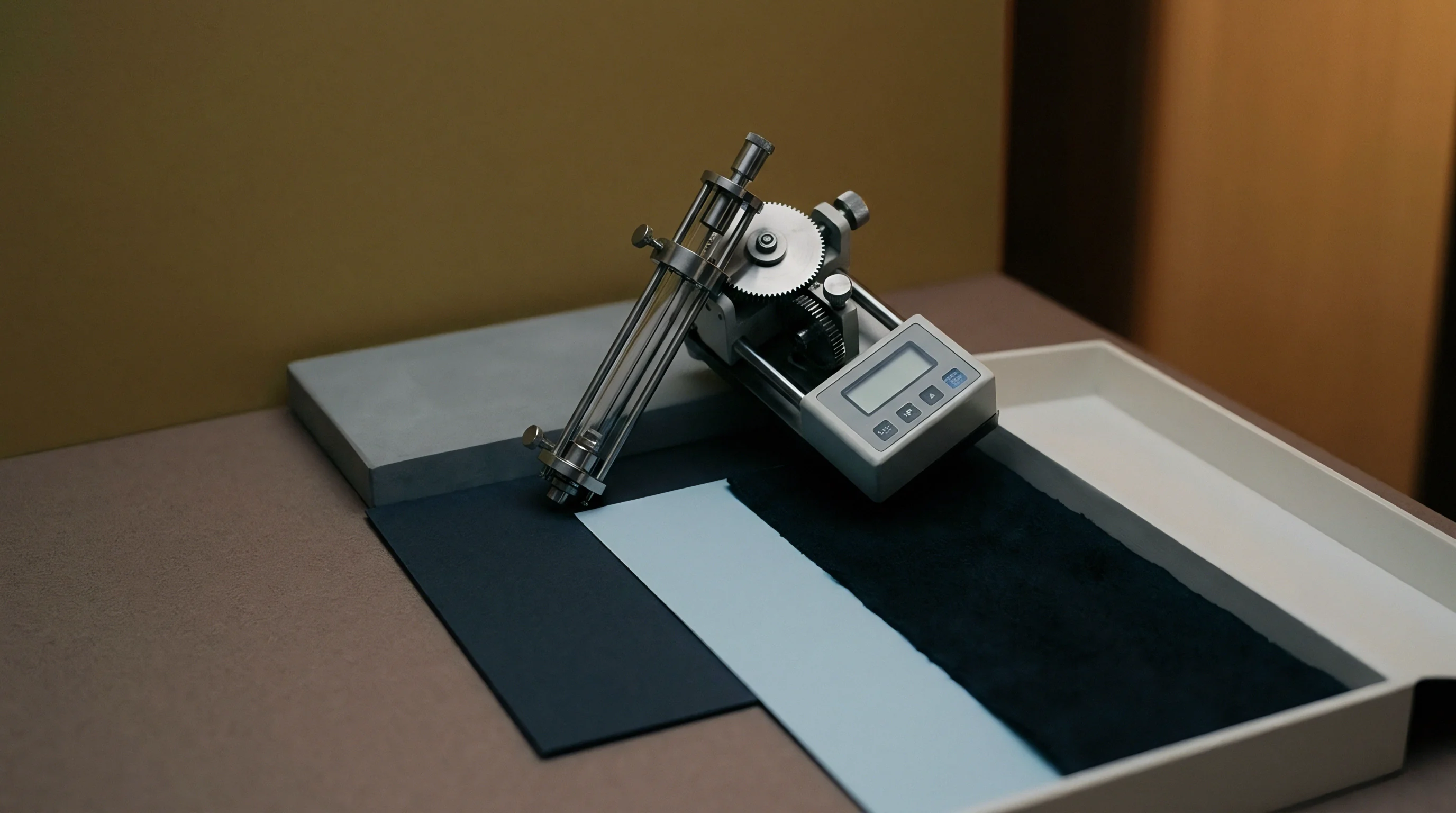
Structural integrity in corrugated board relies on the geometric stability of the sine-wave medium glued between flat linerboards. Under mechanical loading, flutes operate as continuous structural arches distributing vertical top-to-bottom compression forces across the panel area. When relative humidity cycles, the combined board experiences differential expansion between the inner liner, outer liner, and corrugated medium.
This mechanical mismatch generates bending moments within flute walls, destabilizing the geometry under static load.

Why Does Cyclic Humidity Accelerate Box Compression Loss?
Accelerated strength decay in corrugated boxes stems from the localized interaction of mechanosorptive creep and thickness swelling within the flute tips. Moisture gradients assemble rapidly at the glue line due to starch adhesive hygroscopicity. As ambient relative humidity swings upward, the corrugated medium absorbs moisture through both unprinted paper faces and starch lines.
The out-of-plane swelling of recycled medium fibers weakens the flute tips, causing micro-buckling along the apex line under vertical compressive loads.
Continuous vertical compressive forces convert flute micro-buckling into lateral panel deflection. Box compression strength equations, such as McKee’s formula, rely on short-span compressive strength and bending stiffness. Both parameters degrade under cyclic humidity conditions.
Short-span compression drops as hydrogen inter-fiber slip occurs, while flexural stiffness falls due to out-of-plane thickness swelling in linerboard plies.

Scoreline Creasing and Flute Wall Buckling
Creasing along container flap scorelines damages recycled fiber networks prior to box assembly. Mechanical creasing fractures brittle, hornified fibers on the outer ply, creating localized stress concentrations. When exposed to fluctuating humidity, these scorelines absorb moisture preferentially, inducing severe localized creep strain.
Flute walls adjacent to scorelines buckle prematurely, shifting vertical loads onto box panel centers unable to sustain long-term compressive stresses.
Structural defects emerge in distinct modes across converted corrugated board panels during storage:
- Flute profile micro-buckling initiates at glued crests due to adhesive lines constraining local in-plane hygro-expansion while Z-direction swelling weakens core fiber bonds.
- Scoreline delamination cracking develops along panel creases where mechanical folding stresses combine with swelling strains to rupture internal fiber networks.
- Adhesive line shear slip occurs when differential expansion between recycled linerboard and fluting medium exceeds the shear strength of cooked starch matrices.
- Corner post stability collapse results from localized mechanosorptive creep accumulation that shifts top-to-bottom loads away from rigid vertical corners toward panel centers.
Box performance relies on maintaining panel flatness under atmospheric changes.
Bench
Laboratory assessment of mechanosorptive phenomenon demands specialized environmental control systems capable of rapid humidity modulation under constant force application. Standard ISO 187 pre-conditioning methods at static 50 percent relative humidity fail to reveal performance differences between virgin and recycled containerboard grades under dynamic logistics conditions. Accelerated bench verification requires dynamic climatic chambers integrated with high-precision optical strain measurement instruments to quantify transient creep rates.

ISO 187 Conditioning Variations and Dynamic Cycling Protocols
Standard testing procedures evaluate paper properties under static equilibrium conditions that mask real-world degradation modes. Implementing dynamic testing regimes involves cycling relative humidity between 30 percent and 80 percent at constant 23 degrees Celsius with cycle durations set to 60 minutes. High air velocity inside test chambers ensures rapid moisture transfer across sheet surfaces, driving the transient sorption states that trigger mechanosorptive kinetics.
- Pre-condition specimen sheets at twenty percent relative humidity and twenty-three degrees Celsius for twenty-four hours to erase thermal and moisture history.
- Mount test strips in short-span compression grips with precise torque limits to prevent initial jaw pinch damage.
- Apply continuous static compressive stress equivalent to forty percent of the baseline short-span compression value determined under ISO 9895.
- Initiate continuous environmental humidity cycling between thirty percent and eighty-five percent relative humidity while recording creep strain via non-contact video extensometry.
Standard ISO 187 pre-conditioning mandates an absolute temperature tolerance of plus or minus one degree Celsius to prevent false strain readings during sorption cycles.
Short Span Compression Verification under Sorption Trajectories
Short-span compression testing conducted per ISO 9895 provides an initial baseline for containerboard strength, yet fails to capture creep acceleration during active moisture uptake. Modified short-span testing protocols incorporate local conditioning jets that supply humidified air directly to the clamp zone during specimen loading. This modified technique measures the transient strength drop occurring during the exact window of water vapor absorption.
| Test Parameter | Standard Designation | Controlled Condition | Target Measured Property |
|---|---|---|---|
| Short Span Compression | ISO 9895 / TAPPI T 826 | 23°C, 50% RH Static | In-Plane Compressive Yield (kN/m) |
| Thickness and Caliper Swell | ISO 534 | 23°C, 30% to 85% RH Step | Out-of-Plane Caliper Expansion (%) |
| Cyclic Creep Strain Rate | FEFCO Method 55 | 23°C, 30%-80% RH Cycle | Mechanosorptive Creep Rate (%/hr) |
| Internal Bond Strength | ISO 16260 | 23°C, 50% RH Static | Z-Direction Tensile Energy (J/m²) |
Contractual specifications referencing ISO 9895 must state that short-span compression values apply strictly at 50 percent relative humidity, with any compliance disputes resolved using conditioned chamber samples tested within two minutes of removal from standard atmospheres.


Dossier
Paperboard purchasing specifications that rely solely on basis weight and static burst strength invite structural failure when replacing virgin kraftliner with recycled containerboard. Downgauging strategies using lower grammage recycled grades appear financially advantageous on procurement ledgers, yet increase total packaging costs through elevated transport damage rates. Sourcing decisions must weigh the landed cost per thousand sound packages against substrate performance limits under dynamic environmental stress.
Economic Trade-Offs in Virgin Substitution
Substituting a 175 g/m² virgin kraftliner with a 200 g/m² Testliner 3 increases total material mass shipped while failing to achieve equivalent stacking performance under cyclic humidity conditions. The higher grammage recycled sheet matches static short-span compression strength at 50 percent relative humidity, but under 80 percent relative humidity cycling, its mechanosorptive creep rate exceeds that of the virgin sheet by a factor of 2.5, precipitating box collapse.
Cost calculations for containerboard procurement should include potential transport damage liabilities alongside unit purchase price:
- Minimum short span compression thresholds guaranteed across all atmospheric equilibrium states prevent initial structural underspecification.
- Maximum allowable thickness swell percentage limits per ISO 534 protect against internal bond loss and flexural stiffness decay.
- Creep strain compliance certificates verified through dynamic humidity chamber testing ensure load-bearing stability during tropical distribution.
- Furnish blend verification reports detailing virgin softwood content confirm that secondary fiber degradation parameters remain within acceptable tolerances.
Sourcing strategies that balance raw material expenditures against functional risk ensure long-term package performance.
RFQ Specification Safeguards and Moisture Tolerances
Request for quotation documents must define structural performance criteria under dynamic moisture states rather than static room conditions. Including explicit mechanosorptive strain limits within supply agreements holds mills accountable for furnish quality and sizing efficiency. Substrate qualification procedures must require mill test certificates to validate both short-span compression strength and out-of-plane hygro-expansion metrics across production lots.
Establishing a reliable procurement framework requires correlating dynamic chamber data with standard mill test reports to project long-term mechanosorptive creep under field humidity conditions.