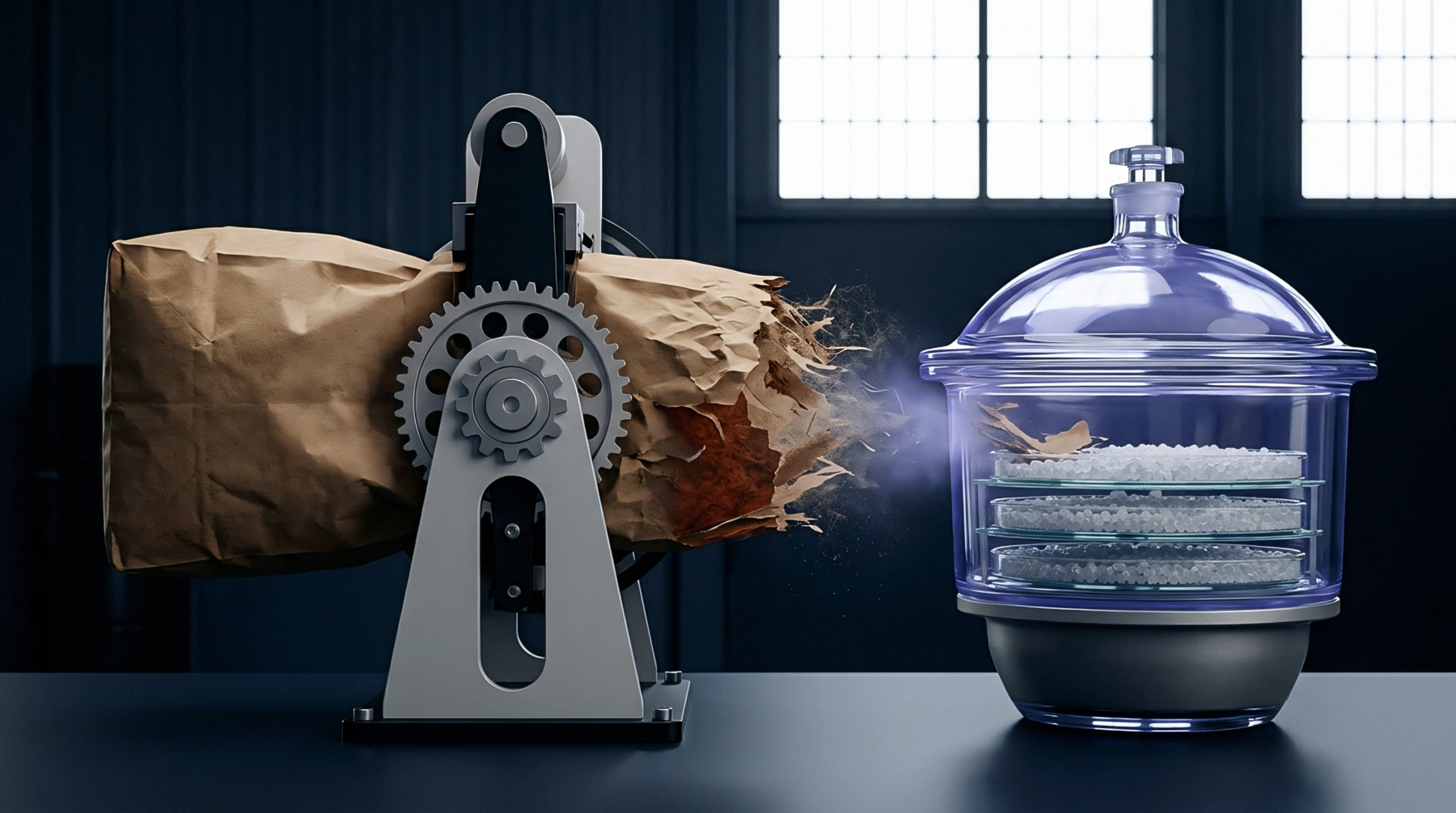
Paperboard Moisture Equilibrium Testing under Standard Atmospheric Conditions
Paperboard moisture equilibrium testing under ISO 187 isolates hygroscopic hysteresis to standardize physical strength properties and verify true fiber yield.
Paperboard moisture equilibrium testing under ISO 187 isolates hygroscopic hysteresis to standardize physical strength properties and verify true fiber yield.
Softwood pulp ratio in structural packaging is verified by staining and optical counting under ISO 9184 to secure compression strength and customs compliance.
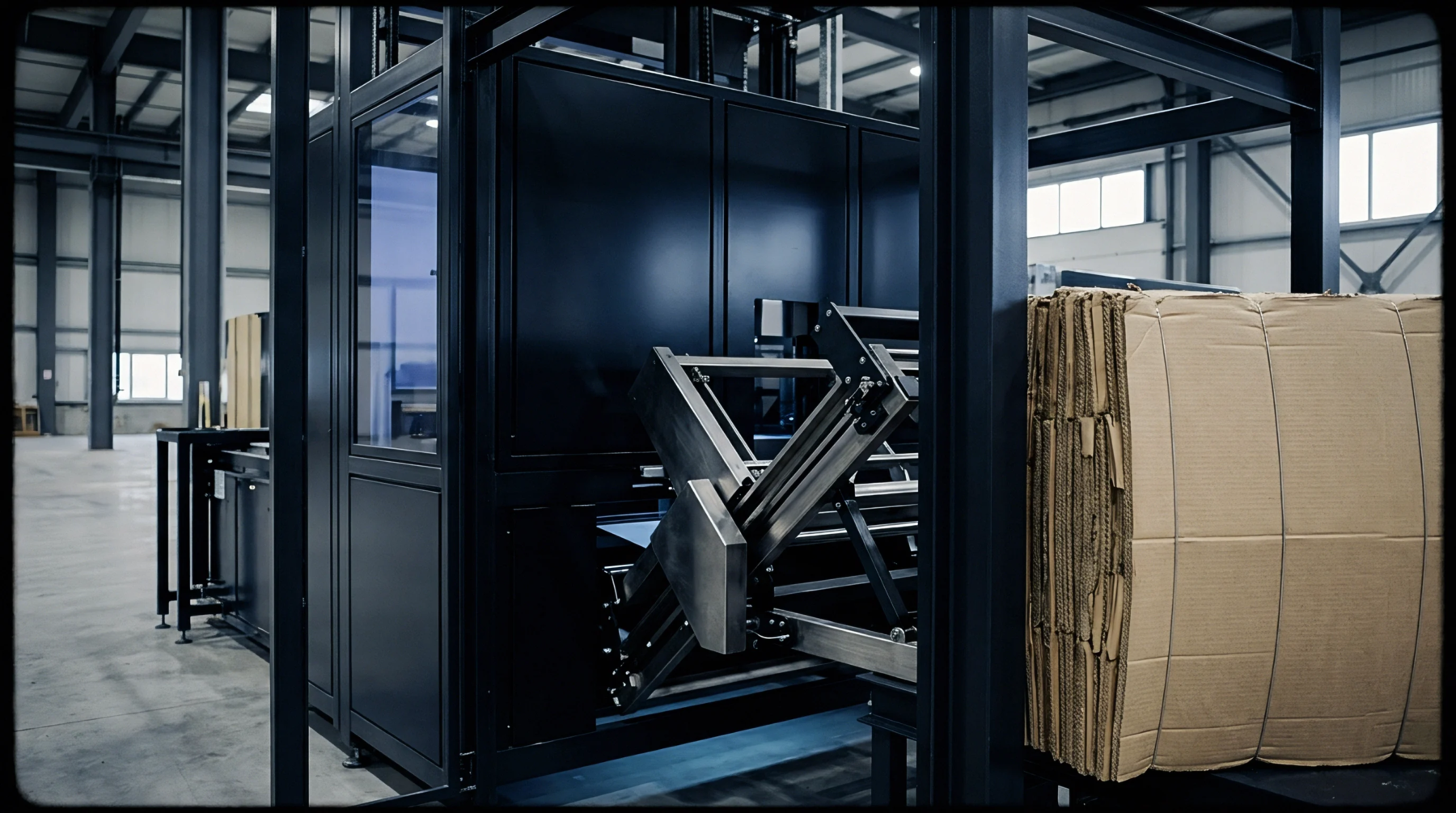
Multi-tier corrugated export survival demands virgin kraftliners, ketone-crosslinked wet starch, and safety factors adjusted for twenty-percent moisture uptake.

Independent referee clauses prevent unilateral cargo rejection by mandating sealed retain sampling and binding third-party laboratory conditioning under ISO 187.

Aqueous ink vehicles dissolve interfibre hydrogen bonds within milliseconds, dropping cross-direction stiffness over 40% and driving web misregistration.
Nonlinear shell formulations integrating hygro-expansion and mechano-sorptive creep predict humidity-driven flute buckling to prevent packaging transit collapse.
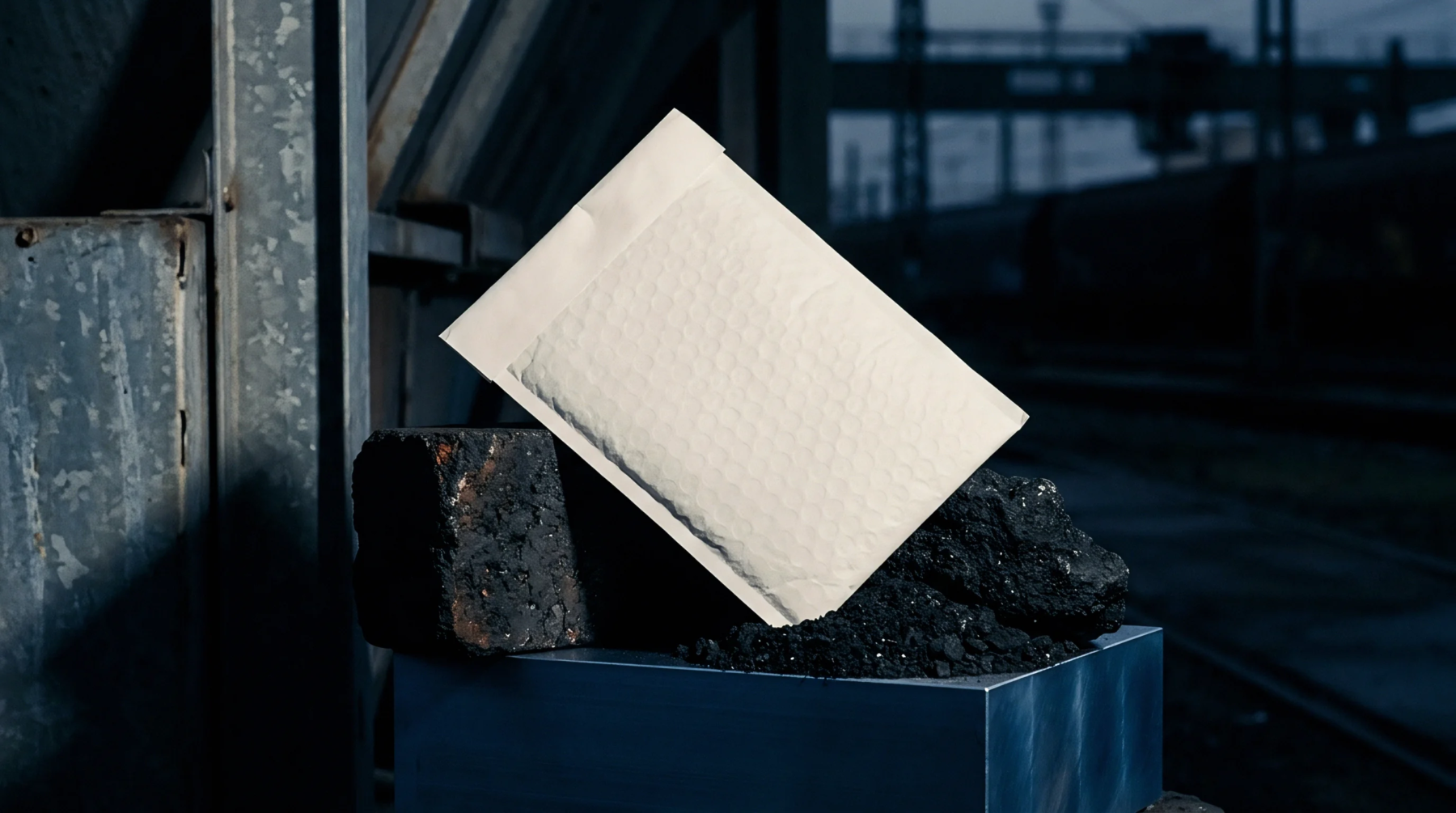
Marine container humidity drops paperboard compression by half, requiring virgin kraft furnishes and 4.0 safety factors to prevent column collapse at sea.

Dynamic cyclic humidity accelerates compressive creep in corrugated boxes, requiring derated safety factors and virgin fibre to prevent stack collapse.
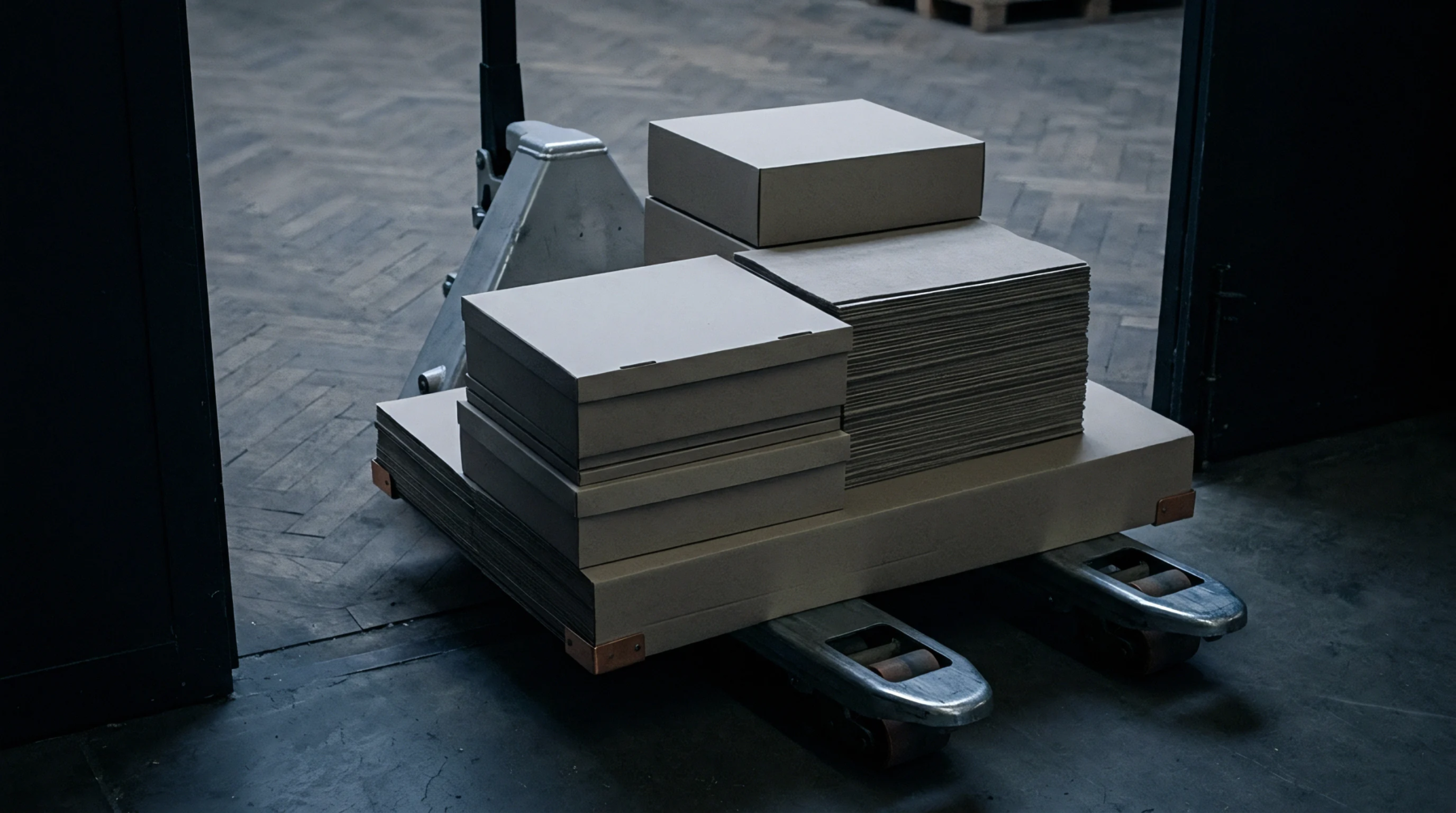
Sorption hysteresis and internal buoyant convection degrade lower-tier corrugated strength in sealed cold-chain pallets, demanding moisture-resilient virgin fluting.
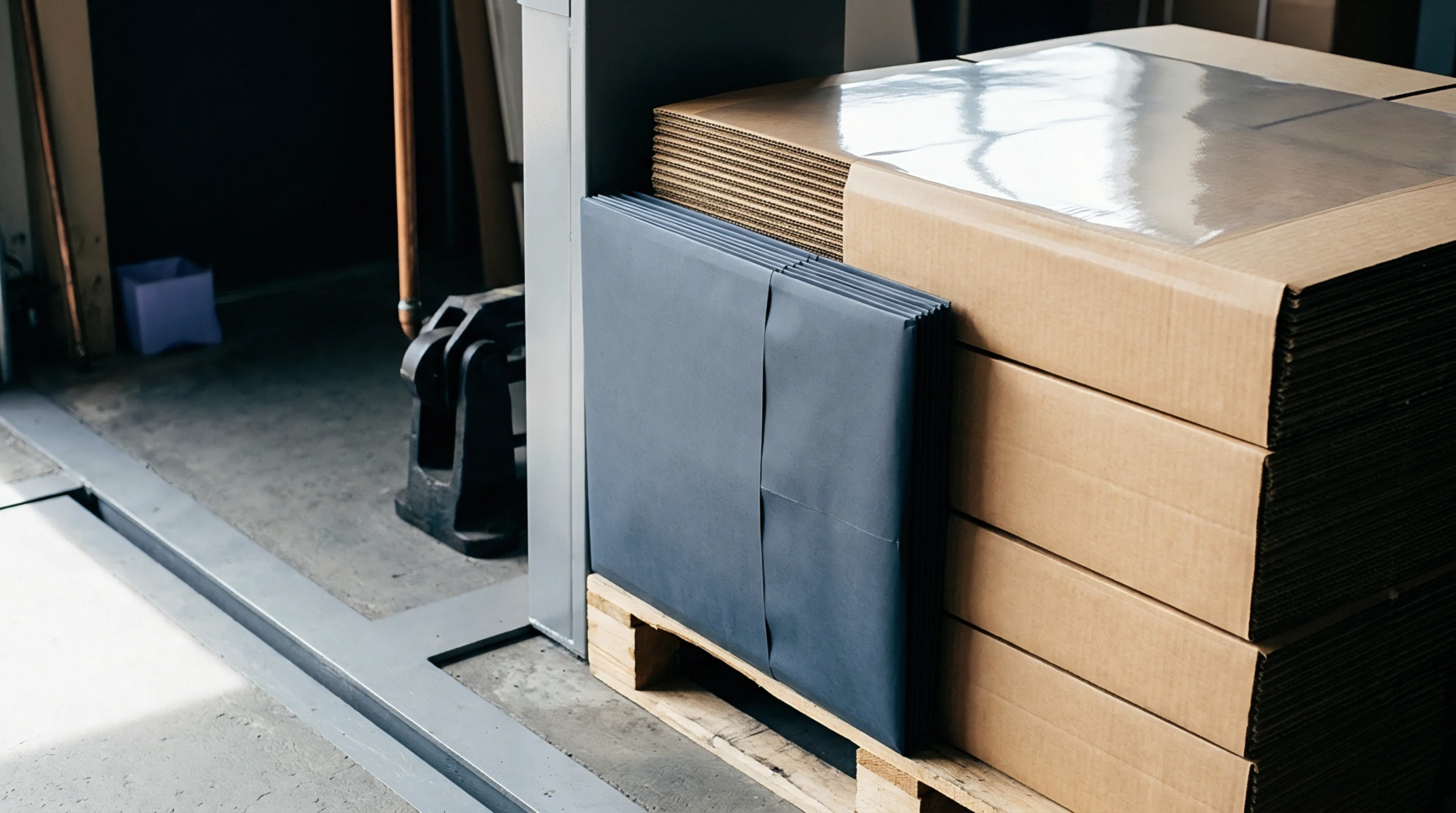
Double wall static compression thresholds drop 40 to 60 percent above 80 percent humidity, requiring safety factor adjustments to prevent warehouse collapse.

Dynamic tropical moisture cycling accelerates fiber matrix creep deformation through mechano-sorptive coupling across multilayer paperboard plies.

Dynamic relative humidity accelerates corrugated compression creep via mechano-sorptive softening, requiring environmental safety factor multipliers up to 2.5.
Dynamic relative humidity cycling drives exponential creep decay in corrugated board through mechano-sorptive bond cleavage, requiring dynamic safety factors.
Dynamic ambient relative humidity accelerates creep collapse in corrugated boxes far beyond static moisture limits, requiring dynamic SCT safety factors in structural engineering.

Polyethylene film wraps trap moisture desorbed by paperboard during thermal swings, elevating internal relative humidity and triggering mechanosorptive failure.
Expertise is a utility, not a secret. sentiention™ publishes its working knowledge as open reference: intelligence layer covering the materials it sources, the markets it enters, and the reference that serves both.