Substrate Compression Retention in High Humidity Marine Container Transport
Marine container humidity drops paperboard compression by half, requiring virgin kraft furnishes and 4.0 safety factors to prevent column collapse at sea.
Hygroscopy
Cellulose fibres adsorb atmospheric moisture through direct hydrogen bonding at free hydroxyl sites within amorphous regions of the cell wall. In a standard laboratory atmosphere of 23 degrees Celsius and 50 percent relative humidity, virgin unbleached kraft linerboard balances at an equilibrium moisture content between 7.0 and 8.5 percent of dry weight under ISO 187 conditioning. Inside an unventilated steel marine container traversing equatorial shipping routes, ambient relative humidity reaches 90 to 98 percent during nocturnal cooling cycles.
Board moisture climbs past 14 percent within forty-eight hours. The water molecules interrupt the inter-fibre hydrogen bonds that give the paper matrix its mechanical coherence.
Water uptake follows a non-linear sorption isotherm. At low relative humidity, moisture forms a tightly bound monomolecular layer directly onto the cellulose microfibrils. As ambient humidity surpasses 65 percent, multilayer physical adsorption begins, followed by capillary condensation within the sub-microscopic pores of the fibre wall.
The internal fibre saturation swells the transverse cross-section of individual fibres up to 30 percent, while longitudinal expansion remains below 2 percent due to the helical alignment of crystalline microfibrils. This anisotropic volumetric swelling shears the dried contact zones where individual fibres were bonded during wet pressing and drying on the paper machine.
Virgin unbleached kraft linerboard conditioned under ISO 187 at 23 degrees Celsius and 50 percent relative humidity loses up to 52 percent of its compressive strength when moisture equilibrium shifts to 90 percent relative humidity.
The loss of internal bonding degrades structural sheet performance before visible dampness appears. Machine-direction compression values drop faster in percentage terms than cross-direction values, yet the cross-direction remains the critical structural vector because corrugated container flutes stand parallel to the machine run. The short-span compression test, executed under ISO 9895 with a clamping span of 0.70 millimetres, records the pure compressive failure of the sheet before buckling modes intervene.
Virgin kraftliner measuring 3.4 kilonewtons per metre at standard laboratory conditioning regularly tests below 1.7 kilonewtons per metre when sampled from containers stripped at port side.
Furnish composition dictates the severity of this hygroscopic decay. Recycled testliner incorporates previously dried, hornified fibres whose amorphous regions have partially collapsed during prior re-pulping cycles. While hornification lowers total water uptake capacity slightly compared to virgin pulp, the mechanical bonds between recycled fibres are inherently weaker.
Virgin pulp relies on flexible, long softwood fibres with high natural hemicellulose content that create broad consolidation areas during initial sheet formation. Recycled furnishes contain high proportions of short hardwood fibres, mechanical fines, and residual mineral fillers like calcium carbonate, which disrupt bonding continuity. Under severe moisture exposure, the recycled network unravels rapidly under static vertical loads.
Cellulose Fibre Moisture Uptake Pathways
Moisture enters paper through two primary mechanisms: vapour phase diffusion through interstitial void spaces and liquid capillary migration along the surface of individual fibres. In corrugated board combinations, the external linerboard faces the container atmosphere directly, while the fluting medium and internal linerboard experience delayed moisture gradients. The corrugating adhesive layer, historically formulated from native corn starch, introduces another hygroscopic vulnerability into the composite structure.
Starch paste film absorbs water rapidly when relative humidity exceeds 80 percent, softening from a rigid, glassy state into a compliant gel. As the adhesive softens, the transfer of shear stress between the outer liner and the arched tips of the fluting medium fails. The adhesive bond line weakens, promoting flute delamination under lower vertical top loads than predicted by classical structural equations.
Water-resistant starch formulations incorporate cross-linking resins, such as ketone-formaldehyde or glyoxal complexes, to preserve adhesive bond shear strength under moist transit conditions. Standard domestic starch preparations lack these synthetic cross-links, leaving the corrugation tips exposed to mechanical decoupling in oceanic transit.
The rate of moisture equilibration inside a stacked sea container depends heavily on carton arrangement and headspace volume. Cartons placed against the exterior steel container walls undergo intense thermal cycling. Solar radiation heating the roof during daytime creates high absolute humidity in the overhead void space.
When the ship enters cold waters or encounters night-fall radiative cooling, the container skin drops below the dew point. Liquid condensation forms on the internal steel purlins and drips directly onto top-tier cartons, transforming a vapour absorption problem into a direct liquid saturation failure.
| Substrate Grade | Furnish Type | Basis Weight (g/m²) | Moisture at 50% RH (%) | Moisture at 90% RH (%) | ISO 9895 SCT Retention (%) |
|---|---|---|---|---|---|
| Kraftliner Grade A | 100% Unbleached Virgin Softwood | 175 | 7.4 | 14.1 | 51 |
| Kraftliner Grade B | 80% Virgin Softwood / 20% Recycled | 175 | 7.6 | 14.8 | 46 |
| Testliner 2 | 100% Recycled Deinked Fibre | 170 | 8.1 | 15.6 | 38 |
| Semi-Chemical Fluting | 100% Virgin Hardwood NSSC | 127 | 6.8 | 13.2 | 58 |
| Recycled Fluting (Wellenstoff) | 100% Mixed Waste Paper | 130 | 8.5 | 16.4 | 31 |
Container sweat compounds vapour absorption by introducing local hydraulic pressure into the porous paper network. A linerboard absorbing liquid water loses all inter-fibre friction in the wetted zone, transferring structural weight instantaneously to adjacent dry carton walls. This sudden redistribution of overhead payload triggers progressive structural collapse down an entire pallet column.
The standard industry testing protocol, ISO 187, mandates preconditioning at low humidity followed by complete stabilization at 50 percent relative humidity, masking the true physical behavior of shipping containers in tropical routes where stock never sees 50 percent humidity after factory departure.
Creep
Static compressive failure of stacked corrugated packaging over time is driven by mechanical creep. Under constant dead-weight loading, paper exhibits continuous, time-dependent strain until internal rupture occurs. In dry conditions, secondary creep maintains a slow, steady progression that can sustain static loads for months.
Under fluctuating relative humidity, a distinct physical process known as accelerated mechano-sorptive creep takes place, multiplying the deflection rate by up to an order of magnitude.
Mechano-sorptive creep occurs when a paper substrate is subjected to simultaneous mechanical stress and transient moisture exchange with the surrounding air. The cycling of moisture content through adsorption and desorption breaks and reforms hydrogen bonds while the cellulosic chain remains under constant tensile or compressive load. Each time an adsorption wave passes through the fibre wall, temporary mobility is induced within the amorphous polymers.
The load forces the released fibrils to shift along the stress axis before new hydrogen bonds can set into fixed positions.
Under cyclic relative humidity swings between 50 and 90 percent, paperboard exhibits creep deflection rates up to ten times higher than under static elevated moisture alone.
The cumulative deformation from mechano-sorptive action permanently alters the structural geometry of the carton. As the container flutes buckle gradually under the payload, the vertical panels of the corrugated box bow outwards. Classical column physics dictates that once an axial column deviates from its vertical plane, bending moments supersede pure compressive capacity.
The box walls transition from carrying pure edge-wise compression to sustaining lateral flexural loads that split the linerboard along its vertical scores.
The duration of a marine voyage directly intensifies this degradation. A typical container transit from East Asian ports to European or North American receiving hubs spans twenty to forty-five days at sea. During this voyage, diurnal temperature swings inside the steel enclosure trigger daily relative humidity oscillations between 60 percent at midday and near 100 percent before dawn.
Every single day of cyclic moisture transition drives an incremental ratchet of mechano-sorptive deformation through the bottom-tier packaging.
Viscoelastic Relaxation and Dynamic Cargo Strain
Paperboard behaves as a viscoelastic composite material, possessing both elastic solid characteristics and time-dependent fluid-like properties. When static warehouse stacking is simulated, the initial elastic strain accounts for only a minor fraction of the total deformation recorded prior to structural collapse. The viscoelastic component drives long-term deformation through three discrete phases: primary creep, secondary creep, and tertiary creep.
Primary creep exhibits a declining strain rate as internal micro-stresses within the disordered cellulose structure redistribute immediately after loading. Secondary creep establishes a steady, linear strain progression where molecular displacement matches the rate of internal frictional resistance. Tertiary creep marks the catastrophic final stage, characterized by accelerating strain, widespread micro-cracking across inter-fibre bonds, and immediate vertical buckling.
In high-humidity transit environments, the duration of the secondary creep plateau contracts drastically, pushing boxes into tertiary collapse under loads as low as 30 percent of their initial dry strength.
Marine transport adds shipboard vibration to the continuous static load. Wave motion, engine harmonic frequencies, and dynamic vessel roll introduce cyclic inertial loads ranging from 0.2g to 0.8g atop the static dead weight of upper pallets. This dynamic cycling acts synergistically with mechano-sorptive creep, breaking hydrogen bonds that might otherwise reform during dry periods.
Vibration loosens pallet banding, shifts individual carton footprints off their vertical column axes, and concentrates corner loads onto weakened panel centres.
| Environmental Regime | Relative Humidity (%) | Primary Phase (Hours) | Secondary Strain Rate (mm/day) | Time to Tertiary Failure |
|---|---|---|---|---|
| Controlled Dry Ambient | 50% Constant | 24 | 0.08 | Over 180 Days |
| Static High Moisture | 90% Constant | 6 | 0.45 | 22 Days |
| Cyclic Oceanic Cycle A | 50% to 85% Daily | 3 | 1.20 | 7 Days |
| Cyclic Oceanic Cycle B | 60% to 95% Daily | 1.5 | 2.85 | 58 Hours |
Secondary creep rates accelerate exponentially as humidity cycles approach saturation levels. Packaging engineers who rely purely on single-state static safety factors consistently miscalculate the survival envelope of heavy pallet tiers during extended ocean voyages.
The structural vulnerability created by mechano-sorptive deformation cannot be recovered by returning the cargo to dry warehouse conditions upon arrival. The micro-scale dislocations, sheared bond areas, and fluting fracture points generated during humid oceanic voyages remain permanent material defects. The carton loses its vertical column integrity, leaving internal products to bear the stack load during subsequent ground distribution.
Cargo handlers consistently mistake secondary creep failure for forklift damage or improper top-loading during initial container staging.

Furnish
The choice of pulp furnish determines how resilient a container substrate remains when water molecules infiltrate the paper sheet. Virgin unbleached kraft pulp, produced via the sulfate chemical cooking process, preserves long cellulose fibres derived predominantly from northern or southern softwoods like pine, spruce, or Douglas fir. These softwood fibres average 2.5 to 4.0 millimetres in length.
The chemical cook leaves behind a controlled fraction of hydrophobic lignin within the cell wall while removing most low-molecular-weight sugars that attract water.
Recycled containerboard furnishes, classified broadly as testliner and wellenstoff, rely entirely on recovered paper streams, primarily old corrugated containers. Mechanical pulping, re-slushing, and cyclic refining shear these fibres down to average lengths between 0.8 and 1.5 millimetres. The recycling loop strips the natural cell wall of internal plasticizers, causing irreversible hornification that hardens the external fibre wall and reduces overall flexible conformability.
Because hornified recycled fibres cannot flatten efficiently during paper machine wet pressing, the sheet relies on chemical additives to achieve its baseline dry strength.
A supplier substitution of virgin kraftliner with high-performance testliner cuts raw material spend by twelve percent while reducing humid compression retention by more than a third.
The physical composition of the corrugating medium carries equal weight in stacking retention. Neutral Sulfite Semi-Chemical fluting uses virgin hardwood pulp, typically birch, beech, or oak, processed through a mild chemical treatment followed by mechanical refining. Hardwood fibres are short, roughly 1.0 millimetre, but contain natural cross-linked lignin structures that provide exceptional native stiffness.
The residual lignin acts as a physical barrier against water intrusion, maintaining flute rigidity under moisture challenges. Recycled fluting mediums made from mixed waste paper contain negligible native lignin and rely instead on synthetic starch additions to meet initial Concora Medium Test targets under TAPPI T 809.
Mineral filler loading represents another hidden liability inside modern packaging grades. Papermakers frequently add ground calcium carbonate or clay to recycled furnishes to increase total sheet weight and improve dry print uniformity at lower pulp costs. Fillers do not possess hydrogen-bonding capability; they sit passively within the inter-fibre spaces.
In a dry state, the matrix holds the mineral particles in place through physical entanglement and local starch bonds. Under high humidity, moisture dissolves the water-soluble binder chemistry, turning unbonded filler pockets into micro-structural stress concentrations that accelerate compressive shear collapse.
Fibre Morphology and Chemical Additive Dynamics
Long softwood fibres generate an interlocking matrix that distributes localized vertical stresses across a broad surface area. When moisture breaks individual hydrogen bonds in a virgin sheet, the physical entanglement of long fibres continues to resist displacement through mechanical friction. Short recycled fibres lack sufficient length for physical entanglement; their strength derives almost entirely from contact-point chemical bonding.
The loss of hydrogen bonds in a recycled sheet results in immediate fibre slippage, driving premature panel deflection.
Internal sizing agents applied at the wet end of the paper machine attempt to mitigate water liquid absorption. Alkyl ketene dimer and alkenyl succinic anhydride represent the standard chemical sizing agents in modern containerboard mills. These hydrophobic sizing molecules react with cellulose hydroxyl groups, orienting fatty acid tails outward to form a chemical shield that raises the contact angle of water droplets.
While internal sizing controls liquid water absorption measured by the 60-second Cobb test under ISO 535, it exerts zero thermodynamic influence over water vapour adsorption at the molecular scale.
| Paperboard Metric | Virgin Kraftliner (NSSC) | High-Performance Testliner | Standard Mixed Waste Liner |
|---|---|---|---|
| Average Fibre Length (mm) | 2.8 to 3.5 | 1.2 to 1.6 | 0.8 to 1.1 |
| Lignin Content (% dry wt) | 6.5 to 8.5 | 4.0 to 5.5 | 2.0 to 3.5 |
| Ash / Filler Content (ISO 1762) | Below 1.5% | 6.0% to 9.5% | 12.0% to 18.0% |
| Cobb 60 Water Absorption (g/m²) | 25 to 30 | 35 to 45 | 55 to 80 |
| Ring Crush Test (ISO 12192) at 90% RH (N) | 185 | 120 | 68 |
High Cobb values indicate inadequate chemical sizing, allowing rapid absorption of dew droplets, but even boards with Cobb values below 25 grams per square metre reach moisture equilibrium with 95 percent relative humidity within days. Sizing slows the rate of liquid penetration; it does not change the final equilibrium moisture content dictated by the thermodynamic sorption isotherm.
Wet-strength additives, such as polyamide-epichlorohydrin resins, form permanent covalent cross-links across cellulose fibres that do not hydrolyze in the presence of water. Mills rarely introduce these wet-strength resins into standard packaging containerboard because they interfere with subsequent repulping operations at recycling facilities. Un-cross-linked board depends entirely on reversible hydrogen bonds, leaving it fully exposed to the plasticizing impact of marine moisture.
Procurement teams regularly approve grade specifications based on room-temperature dry burst strength, known commercially as the Mullen test under ISO 2759. Burst strength measures hydraulic tensile rupture under instantaneous pressure, a metric with minimal relevance to the sustained, vertical edge-wise compression demanded inside an ocean container. Mills maximize Mullen burst through extensive surface starch application, creating a crisp sheet that delivers high laboratory test numbers but collapses within four days under marine humidity.
A buyer verifying containerboard quality tests the stock using the short-span compression test across conditioned humidity levels rather than relying on burst strength certificates supplied by the selling mill.
Bench
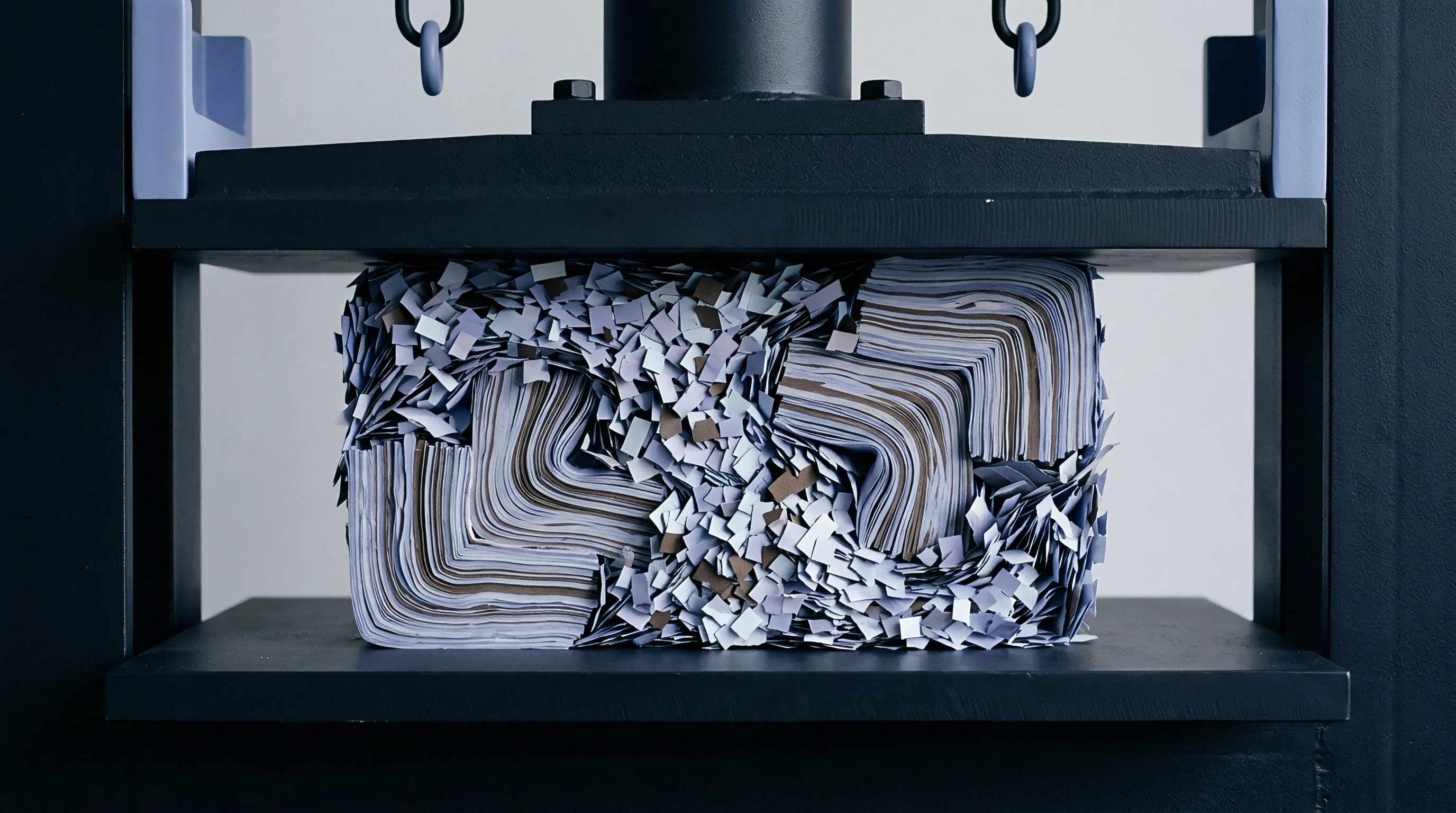
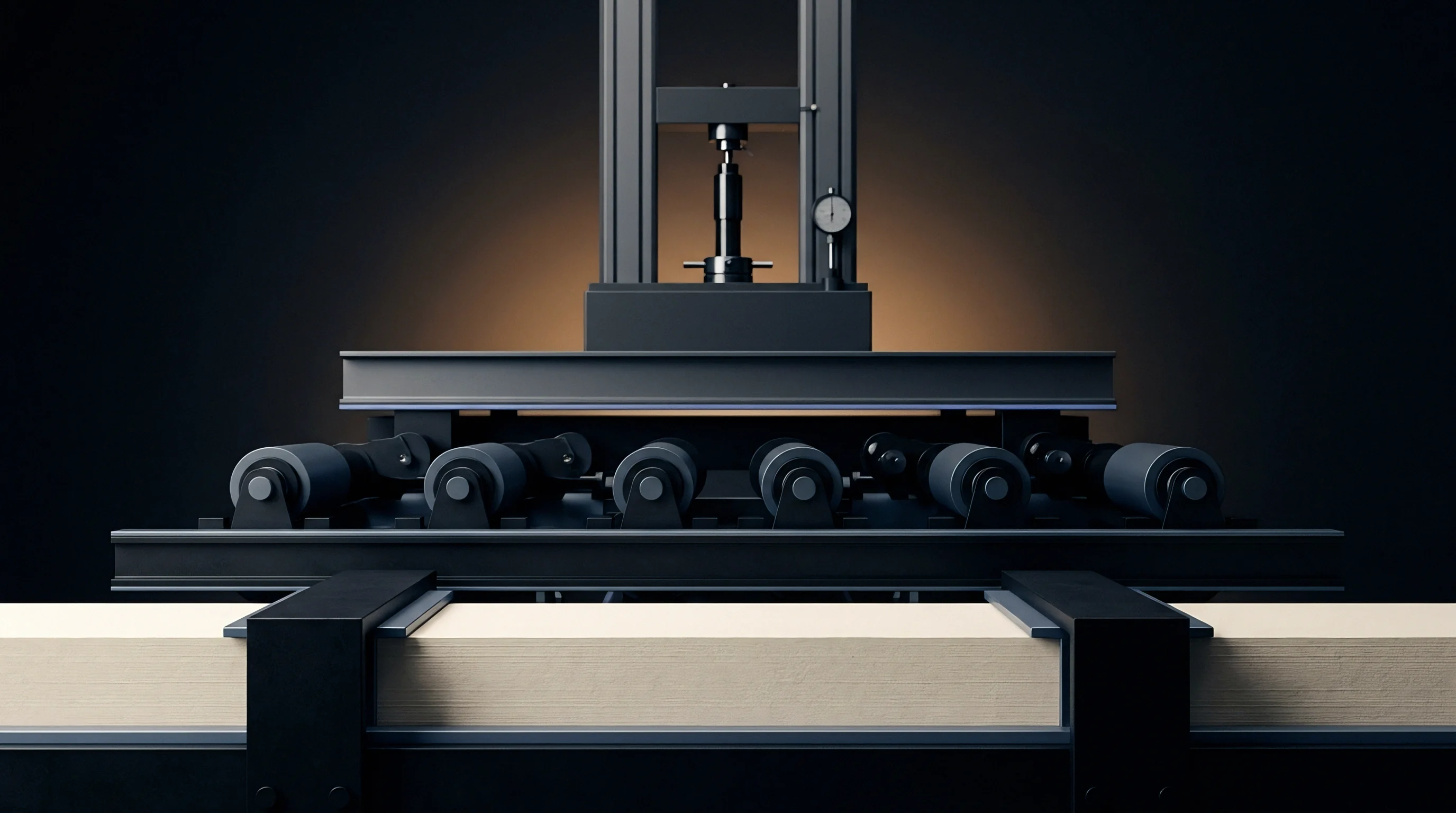
Accurate verification of containerboard strength demands strict mechanical testing under controlled atmospheric conditioning. The short-span compression test, standardized under ISO 9895 and TAPPI T 826, serves as the standard industrial benchmark for individual paperboard plies. The instrument clamps a test strip 15 millimetres wide between two pneumatic jaws separated by a free span of exactly 0.70 millimetres.
By maintaining this extremely short free span, the test forces the cellulose specimen to fail in pure compressive crushing, preventing premature failure through elastic column buckling.
For decades, mills relied on the Ring Crush Test, defined by ISO 12192 and TAPPI T 818, to evaluate edge-wise compression. The Ring Crush Test forms a strip of paper into a circular cylinder within a grooved metal plate and compresses it axially between two parallel platens. This geometry introduces severe experimental error.
As basis weights decrease or sheets absorb moisture, thin test specimens buckle elastically long before the material reaches its intrinsic compressive yield point. Test results reflect specimen stiffness and tool groove clearance rather than intrinsic paper strength. Modern procurement specifications discard the Ring Crush Test in favor of the short-span compression method.
A shipping contract incorporating an edge crush requirement verified solely under TAPPI T 811 at fifty percent relative humidity fails to protect the buyer against structural collapse in tropical marine shipping lanes.
The performance of the combined corrugated board is evaluated through the Edge Crush Test under ISO 3037 or TAPPI T 811. In this procedure, a rectangular block of corrugated board is loaded perpendicular to the score lines between flat steel plates until the flutes collapse. When board is conditioned at standard laboratory parameters, 23 degrees Celsius and 50 percent relative humidity, the edge crush value tracks closely with theoretical predictions derived from individual ply short-span values.
Once the board is exposed to 90 percent relative humidity, the measured edge crush value drops substantially faster than the isolated linerboard plies would predict.
Predicting final box compressive strength, measured in Newtons via the Box Compression Test under ISO 12048, relies heavily on the empirical McKee formula. In its simplified engineering form, the equation calculates box strength directly from board properties and container geometry:
BCT equals 5.87 multiplied by the Edge Crush Test value, multiplied by the square root of the combined board caliper, multiplied by the square root of the carton perimeter.
The classical McKee formula assumes standard laboratory conditioning and static testing rates. It contains no native terms accounting for sustained static loads, dynamic shipboard motion, or elevated moisture content. To apply the formula to ocean shipping, packaging engineers incorporate severe reduction factors, often dividing predicted dry strength by three or four to establish a safe working stack limit.
Mechanical Test Standards and Operational Limits
Standardized test protocols reveal distinct structural failure modes when executed across varying relative humidity gradients. The following list identifies the critical laboratory procedures necessary to establish true marine container survival limits:
- ISO 9895 Short-Span Compression Test delivers pure material compressive resistance in kilonewtons per metre, isolating the intrinsic load-bearing capacity of liner and fluting plies without the confounding interference of specimen buckling.
- ISO 3037 Edge Crush Resistance establishes the vertical load capability of the combined corrugated board sandwich, reflecting the real-world execution of starch bonding, flute symmetry, and linerboard support under axial top loads.
- ISO 535 Cobb Water Absorption measures the mass of liquid water adsorbed by a one-hundred-square-centimetre paper surface over a set duration, identifying whether chemical surface sizing meets basic water-repellent specifications.
- ISO 12048 Box Compression Strength records the ultimate quasi-static crushing force in Newtons sustained by a complete, closed corrugated shipping container, providing the real structural baseline before environmental safety factors are applied.
Standard laboratory testing fails when atmospheric conditioning is mismanaged prior to mechanical rupture. Paperboard exhibits pronounced sorption hysteresis. A test sheet brought to 50 percent relative humidity by desorption from a saturated state carries up to 1.5 percent higher equilibrium moisture content than an identical sheet brought to 50 percent relative humidity by adsorption from an oven-dried condition.
This moisture hysteresis delta shifts mechanical test results by 8 to 12 percent. Valid testing mandates preconditioning specimens in an arid environment below 35 percent relative humidity before final stabilization inside the standard chamber, as required by ISO 187.
The Corrugated Packaging Alliance, alongside international test committees, emphasizes that dynamic transport failure cannot be modeled through quasi-static testing alone. While a laboratory platen descends at a steady rate of 12.5 millimetres per minute during a standard Box Compression Test, an ocean container stack experiences static dead-weights applied across twenty-five to forty days, augmented by random dynamic accelerations from wave strikes. Static laboratory crush values must be paired with cyclic humidity creep tests inside an environmental chamber to yield reliable data for marine logistics.
If an importer accepts a supplier certificate that lists only burst strength and dry edge crush, the warranty coverage for collapsed ocean cargo is compromised.
Loss
Structural failure inside a marine container follows a distinct physical progression. The sequence begins at the bottom tier of pallets, where cartons bear the cumulative static weight of upper layers, often totaling 600 to 900 kilograms per stack footprint. As moisture content rises past 13 percent, the short-span compression strength of the corrugated liners falls below the threshold needed to resist the downward dead weight.
The flutes deform microscopically, losing their vertical alignment and initiating asymmetric panel deflection.
Carton corners carry roughly two-thirds of the total vertical compressive load in a standard box. As bottom cartons undergo mechano-sorptive creep, their vertical scorelines bulge outward, shifting the structural load from the rigid vertical corners inward toward the weak, unsupported panel faces. The face panels buckle under horizontal shear, creasing along the horizontal printed contours.
Once a single carton in the bottom layer buckles, the pallet column tilts off its vertical axis, creating an eccentric loading vector that overloads adjacent cartons within seconds.
Stacking patterns amplify or moderate this structural loss. Interlocked stacking patterns, where cartons are cross-lapped across layers to create pallet stability, slash total vertical compression capacity by 45 to 55 percent compared to pure column-stacked arrangements. Interlocking forces the strong, load-bearing corners of an upper box to sit directly over the soft, flexible panel centers of the carton below it.
Under marine humidity, the unsupported top panels sag beneath the concentrated corner loads, pulling the box walls inward and driving an early collapse of the bottom tiers.
Pallet overhang represents another structural design failure. If a corrugated carton extends past the wooden pallet deck by as little as 15 millimetres, the edge-wise compressive capacity of the carton walls drops by 20 to 30 percent. The bottom score line of the overhanging box hangs in free space, eliminating the solid bottom support required to resist axial down-forces.
When high humidity softens the bottom liner, the unsupported score rolls around the edge of the wooden deckboard, shearing the outer plies and dropping the upper stack into the container gangway.
Transit Failure Progression Metrics
Physical cargo loss across maritime shipping lanes displays identifiable mechanical indicators that differentiate environmental failure from impact or handling damage:
- Panel Crease Propagation begins as horizontal micro-wrinkling across the lower third of bottom-tier box faces, showing that material compressive yield limits have been exceeded by sustained static loads.
- Corner Scoreline Rolling occurs when localized moisture softens the paper matrix, causing vertical corner scores to twist outward and shedding structural load toward vulnerable panel centers.
- Flute Delamination and Crushing manifests as complete mechanical separation between the corrugating medium and linerboards, caused by moisture-induced hydrolysis of standard starch adhesives.
- Column Buckling and Lean takes place as asymmetric creep tilts the cargo stack, driving concentrated eccentric loads into adjacent pallet columns until the load collapses against the container doors.
Marine surveyors identify the underlying cause of container cargo collapse by measuring the residual moisture content of failed boxes immediately upon opening the container doors. Electronic pin-type moisture meters deliver instant readings across linerboards and internal flutes. If box moisture levels test above 14 percent while steel container walls display internal water streaking, the failure tracks directly to ambient condensation and humidity degradation rather than rough vessel handling.
Vibration during ocean transit accelerates column leaning. A box column that tilts as little as two degrees from the vertical loses approximately 15 percent of its remaining compressive strength under pure dead weight. As the vessel rolls in heavy seas, dynamic lateral forces transform that two-degree tilt into an unstable overturning moment.
The cargo leans against the interior container walls, crushing external cartons, breaking pallet stretch wrap, and blocking port-side unloading equipment.
The standard multi-wall corrugated box provides negligible protection once moisture plasticizes the internal cellulose network, transferring the mechanical load directly to the packaged primary contents.
Cargo
Engineering corrugated packaging for marine transport requires precise calculation of realistic safety factors. In dry domestic warehouse environments, a safety factor between 1.5 and 2.0 applied to the Box Compression Test value provides adequate protection. For international ocean transport traversing humid latitudes, experienced packaging engineers specify minimum safety factors between 3.5 and 5.0.
This multiplier directly counteracts the compounding impacts of moisture uptake, mechano-sorptive creep, prolonged static storage, and dynamic shipboard vibration.
To establish the required Box Compression Test strength for an ocean shipment, the engineer calculates the total dead-load weight acting on the bottom carton and multiplies it by an environmental degradation factor. Consider an export shipment where each carton weighs 25 kilograms, stacked five layers high on a pallet, with pallets double-stacked inside a high-cube marine container. The bottom carton in the lower pallet supports nine cartons above it, carrying a total static dead weight of 225 kilograms, or approximately 2,207 Newtons of vertical force.
Under a domestic safety factor of 2.0, an engineer would specify a box with a dry Box Compression Test rating of 4,414 Newtons. In an unconditioned marine container subject to 90 percent relative humidity, that same box loses 50 percent of its compressive strength to moisture plasticization, lowering its capacity to 2,207 Newtons. Mechano-sorptive creep over thirty days further reduces load capacity by another 30 percent, dropping real strength to 1,545 Newtons.
The carton fails catastrophically under dead weight alone, before factoring in dynamic ship motion. Designing for this route demands a marine safety factor of 4.5, requiring an initial dry laboratory compression rating of at least 9,930 Newtons.
| Derating Mechanism | Operational Condition | Retention Multiplier | Cumulative Retention |
|---|---|---|---|
| Baseline Laboratory Rating | 23°C / 50% RH (ISO 187) | 1.00 | 100% |
| High Humidity Degradation | 90% RH Equatorial Transit | 0.48 | 48% |
| Long-Term Creep Loading | 30 Days Static Stack | 0.70 | 33.6% |
| Interlocking Pallet Pattern | Cross-Lapped Box Layout | 0.55 | 18.5% |
| Pallet Deck Overhang | 15 mm Deckboard Edge Overhang | 0.75 | 13.9% |
The cumulative retention calculation shows how structural strength deteriorates under poor operational practices. A box retaining only 13.9 percent of its original laboratory compression strength will inevitably collapse under standard marine cargo configurations.
Packaging specifications that protect international shipments dictate exact furnish parameters rather than leaving material selection to the converting mill. Specifying virgin unbleached kraftliner for both inner and outer liners alongside semi-chemical fluting establishes baseline moisture resistance. Flute profile selection directly modifies vertical strength; an A-flute or C-flute profile provides significantly higher vertical top-load compression capacity than a thin B-flute profile, because the larger flute geometry yields greater combined board thickness, directly raising the caliper value in the McKee formula.
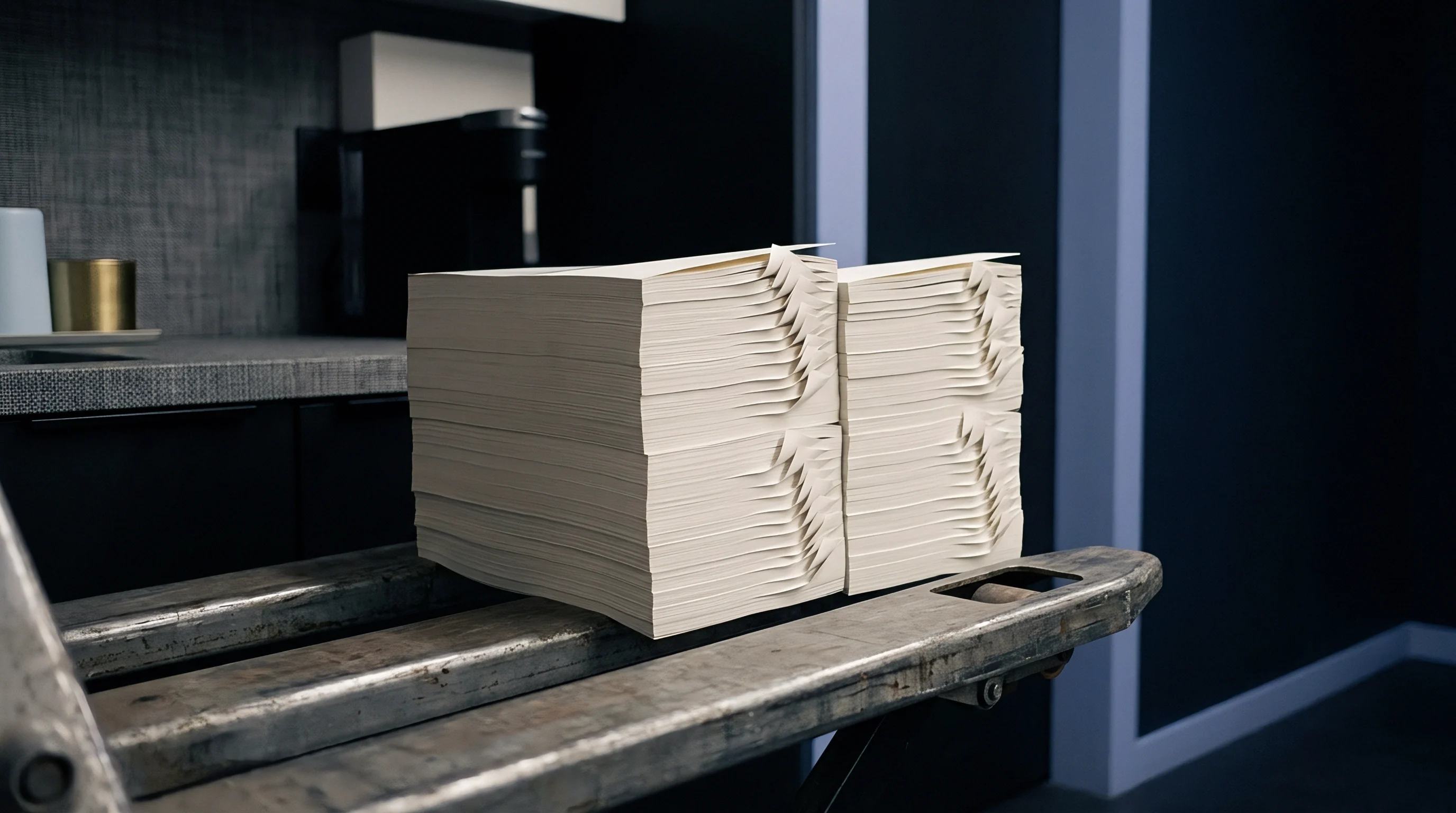
Barrier Coatings and Physical Pallet Reinforcement
Applying barrier coatings to the exterior linerboard provides an effective physical defense against liquid water absorption and slows humidity migration into the fluting medium. Water-based aqueous barrier coatings formulated from acrylic polymers or styrene-butadiene latices create a hydrophobic surface film that stops liquid condensation from soaking into the outer plies. These dispersion coatings maintain repulpability in standard recycling streams while preventing container sweat from penetrating load-bearing carton walls.
Wax coatings, traditionally applied via curtain coating or wax cascading, offer high moisture barriers but render the corrugated material unrecyclable, incurring steep waste disposal surcharges under modern extended producer responsibility legislation in target markets. Modern high-barrier packaging relies instead on functional bio-polymer coatings or ultra-thin water-dispersible mineral treatments that achieve low Cobb water absorption rates without contaminating waste paper recovery systems.
Pallet assembly controls represent the final mechanical line of defense. Eliminating pallet overhang, adopting pure column-stacking configurations, and securing loads with rigid vertical corner posts substantially increases overall compressive endurance. Solid bleached sulphate or dense chipboard corner protectors distribute upper-tier dead weight directly to the wooden pallet deck, bypassing vulnerable box walls.
Heavy-gauge stretch film, applied with calibrated pre-stretch tension, binds individual carton columns into a rigid, unified block, preventing dynamic sway and keeping carton corners in vertical alignment throughout heavy sea conditions.
A buyer who cuts packaging material grammage without accounting for humidity derating absorbs the savings many times over in damaged cargo claims, delayed customer shipments, and disposal costs.