Evaluating Fiber Swell and Compression Decay in Humid Paperboard Packaging
Paperboard loses up to sixty percent of top-load compression strength in high humidity due to transverse fiber swell and mechano-sorptive creep decay.
Moisture
Cellulose fibers take up atmospheric water vapor through hydrogen bonding inside amorphous cell wall regions, shifting the mechanical balance of paperboard packaging. Within the fiber wall, crystalline cellulose microfibrils are embedded in an amorphous matrix of hemicellulose and lignin. Water molecules penetrate these amorphous zones, breaking existing inter-chain hydrogen bonds to build water-cellulose bridges instead.
That molecular sorption forces adjacent cellulose chains apart, swelling the sheet and cutting its structural stiffness well before any liquid water touches it.
Water vapor uptake follows Fickian diffusion dynamics below 50 percent relative humidity, then shifts toward capillary condensation in micro-voids as humidity approaches 90 percent. Equilibrium moisture content curves show clear sorption hysteresis ~ paperboard desorbing from saturation holds more water at any set humidity than board absorbing moisture from a bone-dry state. For instance, a solid bleached sulfate sheet conditioned from dry to 85 percent relative humidity reaches an equilibrium moisture content near 11.5 percent, while that same board desorbing from 95 percent retains over 13.0 percent moisture at the exact same 85 percent mark.
At 85 percent relative humidity and 23 degrees Celsius, solid bleached sulfate board reaches an equilibrium moisture content of 11.8 percent, driving a 14 percent reduction in Z-direction elastic modulus.
Water absorption alters individual wood fiber dimensions unequally. Microfibrils align mostly along the longitudinal axis of the fiber wall, so inserted water causes wide cross-sectional swelling with minimal length change. A fully hydrated softwood kraft fiber swells up to 15 percent in diameter, but lengthens by less than 1.5 percent.
As millions of fibers align during sheet formation on a Fourdrinier or multi-ply former, this single-cell asymmetry scales up to drive physical expansion across the whole paperboard matrix.

Cellulose Hydrogen Bonding and Adsorption Kinetics
Water molecules entering the sheet interact first with unlinked hydroxyl groups on hemicellulose and amorphous cellulose chains. Enthalpy of adsorption peaks during initial monolayer formation ~ reaching about 1.2 kilojoules per gram of absorbed water ~ then drops toward the heat of condensation for liquid water as additional layers form. This thermodynamic change marks the shift from tightly bound internal water to free capillary water inside the porous fiber wall.
As bound water accumulates, the glass transition temperature of hemicellulose falls below typical warehouse room temperatures. When dry, hemicellulose serves as a rigid polymer binder around the crystalline cellulose framework. Once relative humidity exceeds 65 percent, plasticization pulls that glass transition threshold down from roughly 80 degrees Celsius to 15 degrees Celsius.
Softening in this polymer matrix allows individual microfibrils to slip under load, permanently changing how the sheet carries weight.
Capillary condensation starts in pores under 50 nanometers wide once ambient humidity crosses 75 percent. Water condensing inside these intra-fiber cavities generates meniscus forces that pull pore walls together at first, though continuous hydration eventually forces them apart. The resulting hydraulic pressure in the cell wall snaps secondary interfiber bonds, permanently weakening the internal cohesion of the board furnish.
Anisotropic Fiber Expansion across Three Principal Axes
Machine orientation gives the sheet three distinct directional responses to moisture. Fiber alignment in the machine direction restricts length movement, whereas cross-direction fibers swell side-to-side. Z-direction thickness increases the most: pressing and drying stack the fiber walls flat, aligning their maximum swelling axis perpendicular to the plane of the sheet.
When relative humidity shifts from 50 percent to 85 percent, machine-direction expansion generally stays between 0.1 percent and 0.3 percent. Cross-direction expansion across that same range hits 0.8 percent to 1.5 percent, creating severe dimensional imbalance. Z-direction swelling routinely exceeds 4.0 percent to 8.0 percent as hydrated fiber walls un-collapse, adding caliper while cutting both density and internal bond strength.
Differential strain across multi-ply boards causes severe planar distortion. Folding boxboard grades with mechanical pulp cores sandwiched between chemical pulp liners develop localized stress concentrations ~ mechanical fibers take up water faster and swell more aggressively than bleached chemical fibers. If top and bottom plies pick up moisture at different rates during humidity shifts, the resulting stress imbalance causes sheet curl, edge wave, and twist distortion across bundles of converted blanks.
Board softening during tropical transit often stems from unvented ocean containers rather than inadequate internal sizing specifications.
Hygroexpansion
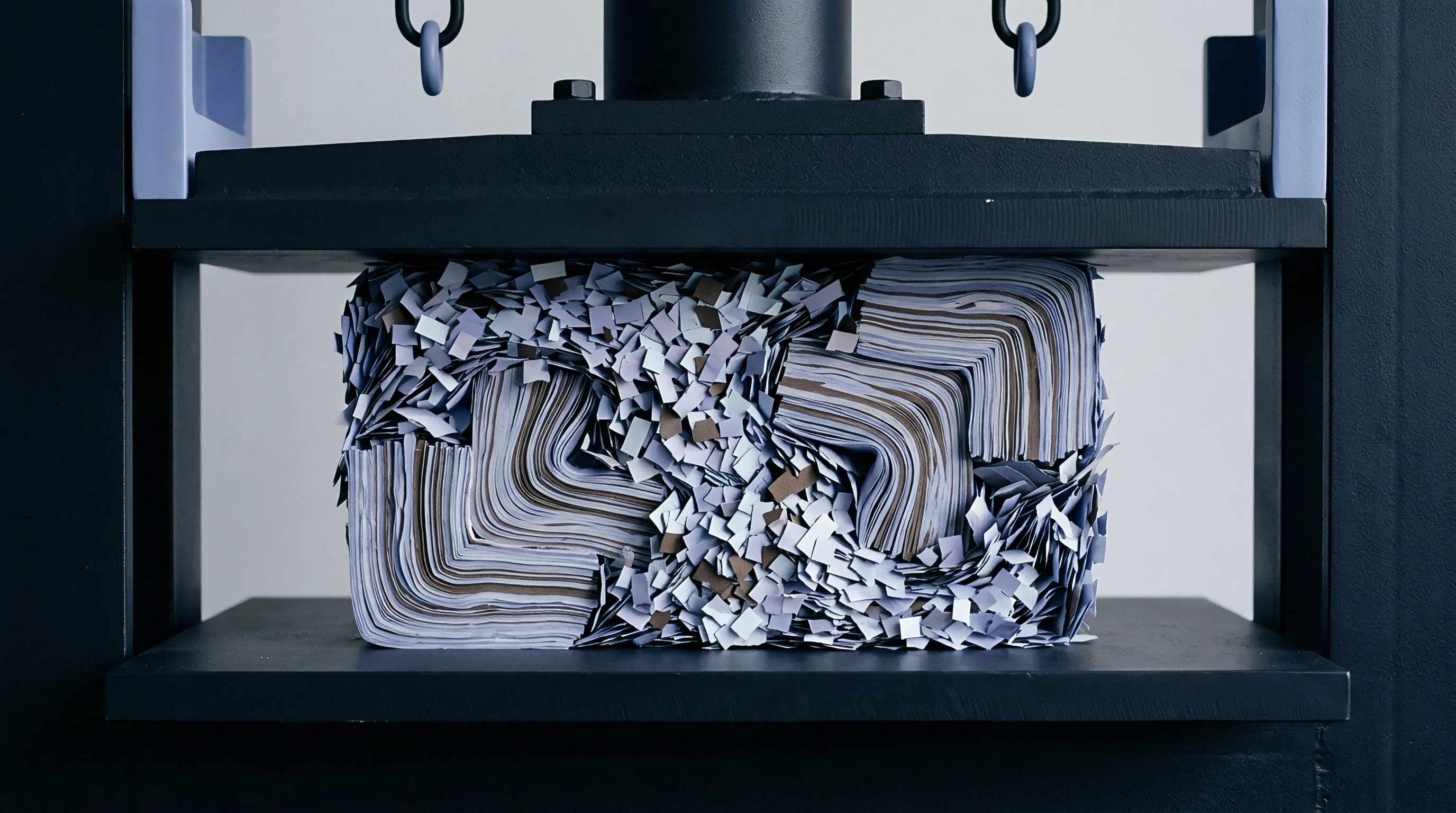
Moisture-driven dimensional changes degrade structural performance through every stage of converting and shipping. As water enters the fiber network, thickness increases as internal cohesion drops, starting micro-delamination between plies. This altered sheet profile changes the moment of inertia, counteracting any stiffness gained from extra caliper and leading to an overall loss in bending resistance.
Paperboard mechanical properties decay in step with the volume of absorbed water. Machine-direction elastic modulus drops 25 percent to 40 percent when relative humidity moves from standard room conditions up to 85 percent. In the cross direction, where load bearing relies on fiber-to-fiber bonding rather than axial fiber stiffness, modulus loss frequently passes 50 percent.
That loss of elastic response compromises how well folded carton panels hold up under stack loads.
Compliance with ISO 535 Cobb sixty testing mandates a water absorption limit below 30 grams per square meter to prevent moisture-induced delamination during high-humidity transit.
Furnish composition dictates how far hygroexpansion and strength loss go. Long, flexible fibers in virgin chemical pulps build dense, uniform bond networks that resist dimensional strain. Mechanical pulps hold plenty of hydrophobic lignin, which slows initial water vapor uptake; still, their short, stiff fibers offer fewer hydrogen bonding sites, leaving the sheet prone to sudden bond failure once water penetrates the matrix.
Recycled fibers, dried repeatedly in earlier lives, show irreversible hornification that lowers overall water absorption capacity while weakening re-wetted bond strength.
Caliper Drift and Micro Delamination Mechanics
Caliper measurements on humid paperboard often mislead engineers by showing a net gain in thickness. Bending stiffness theoretically scales with the cube of caliper, but that rule assumes a uniform elastic modulus through the cross section. Hydrodynamic swelling breaks internal hydrogen bonds between plies, leaving microscopic voids and lowering the shear modulus of the core layer.
The extra caliper reflects structural looseness, not added load capacity.
Micro-delamination starts at Z-direction interfaces between different plies. Fine particles and starch binders accumulate at these boundaries during multi-ply formation to bridge gaps. When relative humidity cycles between 50 percent and 90 percent, uneven expansion between refined outer plies and bulkier inner plies generates shear stress along the interface.
Once those stresses surpass the sheet’s lowered internal bond strength (Scott Bond), localized ply separation occurs, permanently damaging creasing performance and corner compression.
Internal bond loss accelerates under simultaneous mechanical loading and high humidity. Short-span compression tests (ISO 9895) show that cross-direction compression resistance drops exponentially as moisture content climbs. At 12 percent moisture content, cross-direction short-span compression strength drops to roughly half the baseline measured at 6 percent moisture content under standard ISO 187 conditions.
Furnish Composition and Hysteresis Behavior
Grade architecture dictates how moisture shifts affect panel geometry and compression retention. Solid bleached sulfate (SBS) boards made purely of refined chemical pulps expand uniformly across all plies, keeping internal shear stress low while undergoing significant overall dimensional movement. Folding boxboard (FBB) uses mechanical pulp cores to preserve caliper efficiently, but low internal bond strength leaves the core vulnerable to shear failure when high moisture levels plasticize its lignin matrix.
Coated recycled board (CRB) and white lined chipboard (WLC) grades combine varying amounts of de-inked pulp, mixed wastepaper, and old corrugated containers. High ash content and short fiber fragments increase porosity in these sheets, speeding up water vapor uptake. Hornified fibers restrict individual swelling, but sparse hydrogen bonding across the recycled matrix still causes rapid modulus decay.
| Board Grade | Furnish Composition | Caliper Swell (%) | MD Elastic Modulus Loss (%) | CD Short-Span Compression Loss (%) | Scott Bond Retention (%) |
|---|---|---|---|---|---|
| Solid Bleached Sulfate (SBS) | 100% Virgin Chemical Kraft | 4.2 | 28 | 42 | 78 |
| Folding Boxboard (FBB) | Bleached Kraft Liners / Mechanical Core | 6.8 | 34 | 48 | 62 |
| Coated Recycled Board (CRB) | 100% Recycled Fiber Mix | 5.1 | 39 | 56 | 51 |
| White Lined Chipboard (WLC) | Recycled Newsprint / Mixed Waste | 5.9 | 43 | 61 | 44 |
| Testing performed following ISO 187 climate adjustment; short-span compression measured per ISO 9895; internal bond strength measured per TAPPI T 569. | |||||
Moisture absorption destabilizes converted paperboard structures, triggering distinct field failure modes during storage and transport:
- Scoreline cracking happens when moisture-softened surface fibers lose tensile strength under folding tension, splitting the outer coated liner along crease lines on high-speed carton erecting lines.
- Flute shadow propagation develops in laminated cartons when linerboard plies swell unevenly over corrugating adhesive lines, raising visible ridges that spoil graphics and obscure barcodes.
- Creasing stiffness collapse occurs as internal ply delamination lowers the bending moment of score lines, causing uneven panel bulging and improper locking during automated top-load carton sealing.
- Cross-direction bulge comes from differential swelling between top-coated layers and raw backboard plies, forcing flat box panels to bow outward under internal product pressure and tipping pallets.
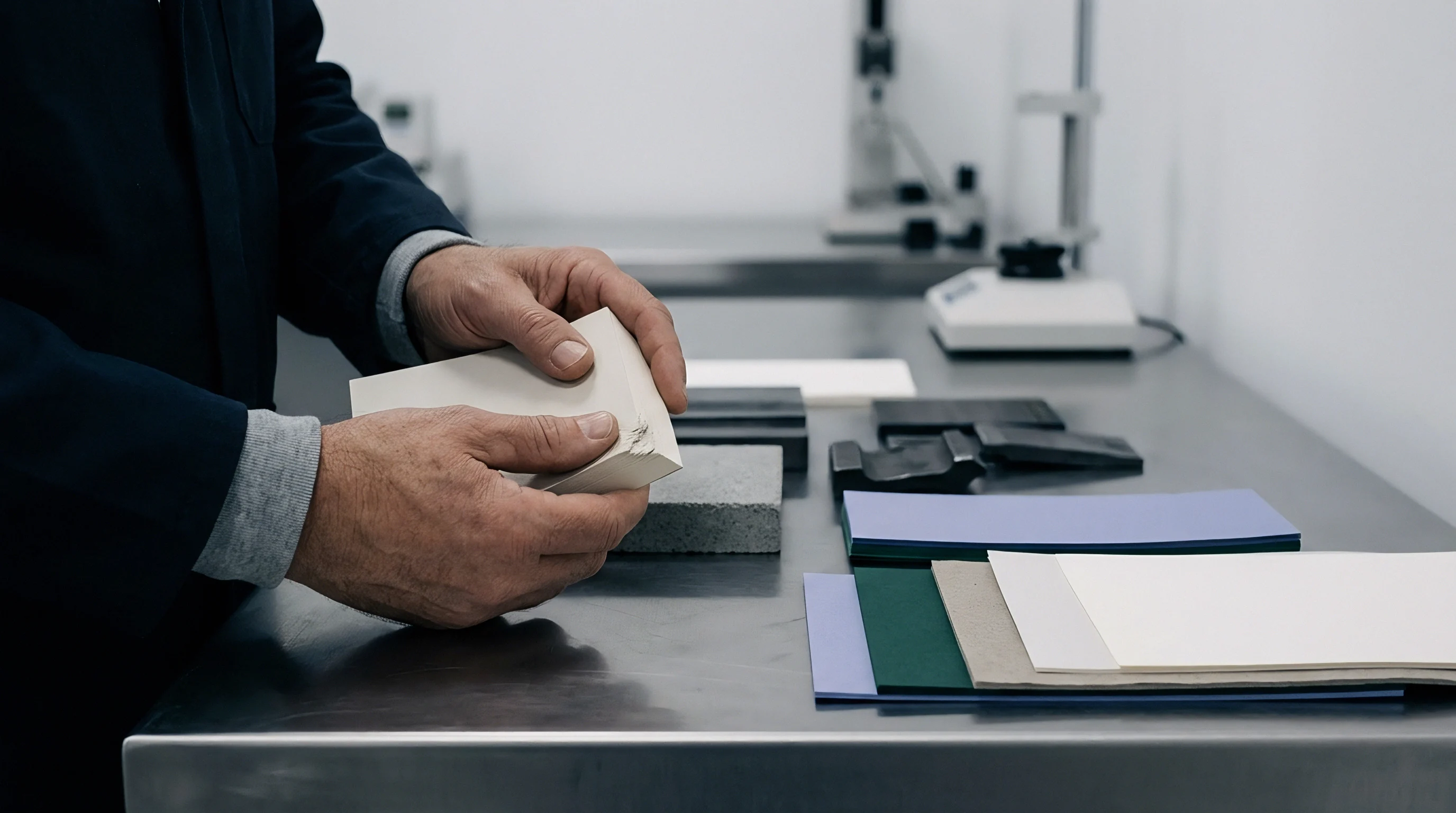
When board density drops from Z-direction swell, structural rigidity falls far faster than caliper increases.
Buckling
Static load capacity drops drastically as humidity rises, causing sudden warehouse stack failures. Packaging design relies heavily on the Box Compression Test (BCT) to project top-load performance. Standard laboratory BCT values, measured under dry conditions, miss the combined impact of continuous load and moisture softening that triggers premature panel buckling in actual distribution networks.
Under static compressive loads, carton walls behave as thin plates under in-plane compression, shifting the failure mode from pure material compression to elastic or inelastic panel buckling. As humidity rises, lost sheet bending stiffness lowers the critical buckling threshold. A carton that carries 300 kilograms top load at 50 percent relative humidity will often buckle under just 120 kilograms once ambient humidity holds at 85 percent.
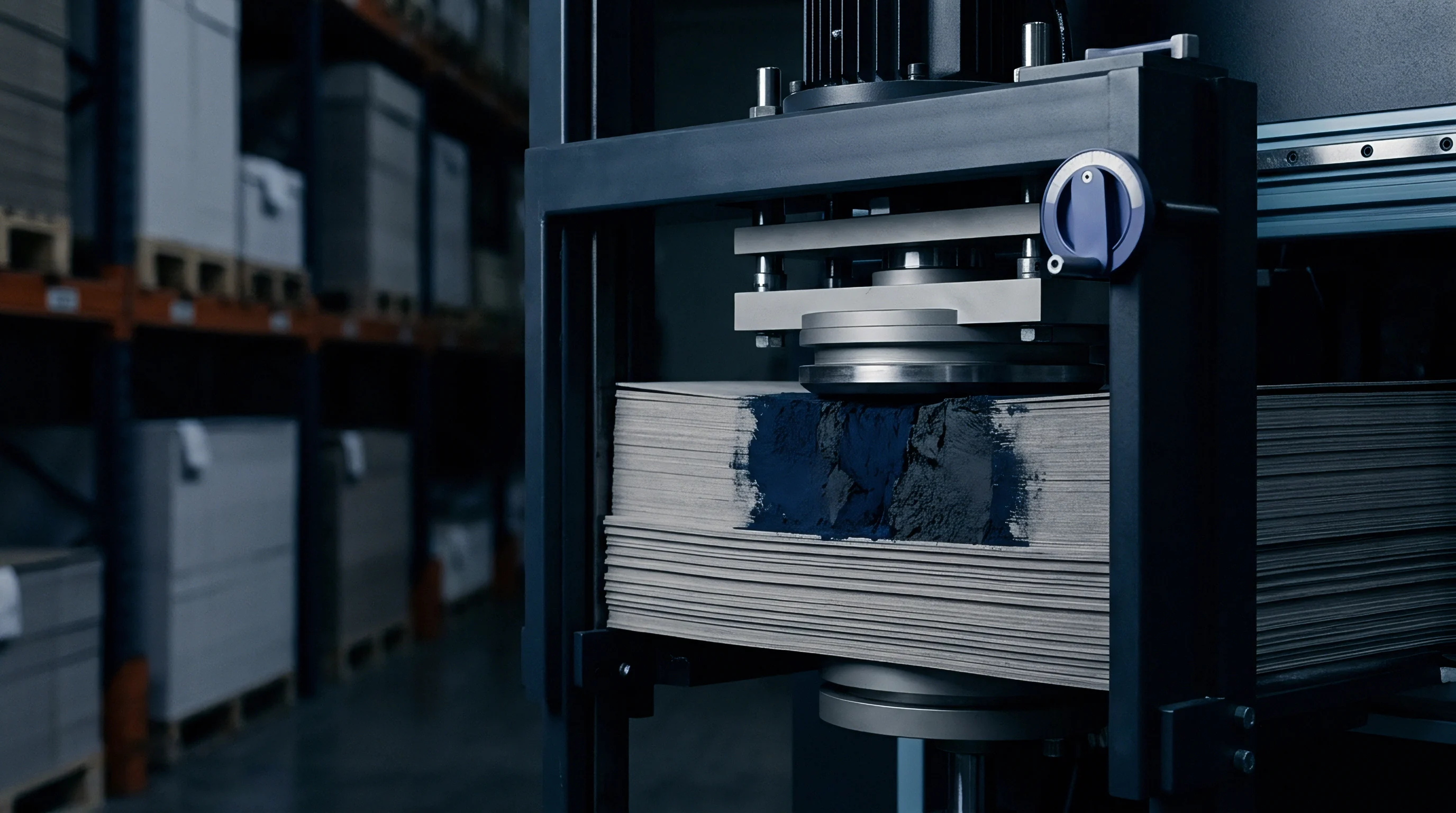
Time-dependent failure under static compression is driven by mechano-sorptive creep. This process accelerates deformation whenever paperboard experiences mechanical loading alongside fluctuating humidity. Humidity cycles force water molecules in and out of cell walls, repeatedly breaking and reforming hydrogen bonds while under load.
This dynamic shifting generates creep rates up to five times higher than seen under steady high humidity, speeding up structural collapse.
Mechano Sorptive Creep under Static Compression
Creep deformation moves through three stages: primary, secondary, and tertiary. Primary creep appears as immediate elastic and viscoelastic strain right after loading. Secondary creep shows a steady strain rate while fibers slip incrementally across the matrix.
Tertiary creep brings an exponential surge in deformation rate, ending in localized fiber wall buckling, crease folding, and total structural failure.
Fluctuating moisture environments eliminate the secondary creep plateau, driving paperboard straight from initial strain into rapid tertiary collapse. Each absorption-desorption cycle acts like a mechanical ratchet: during absorption, fiber swelling and matrix plasticization let compressive loads slip internal polymer chains forward. During desorption, new hydrogen bonds lock in that deformed layout, preventing elastic recovery.
Subsequent cycles compound the permanent strain until panel stiffness drops below the critical buckling threshold.
Mechano-sorptive damage concentrated at box corners causes most stack collapses. Vertical scorelines give corners high structural stiffness, allowing them to carry up to 75 percent of the total top-load compression capacity. When moisture softens crease regions, scorelines bow outward, transferring weight from the strong corners onto flexible side panels.
That sudden shift overstresses flat panels, buckling crease lines and causing immediate stack failure.
McKee Formula Breakdown in High Humidity
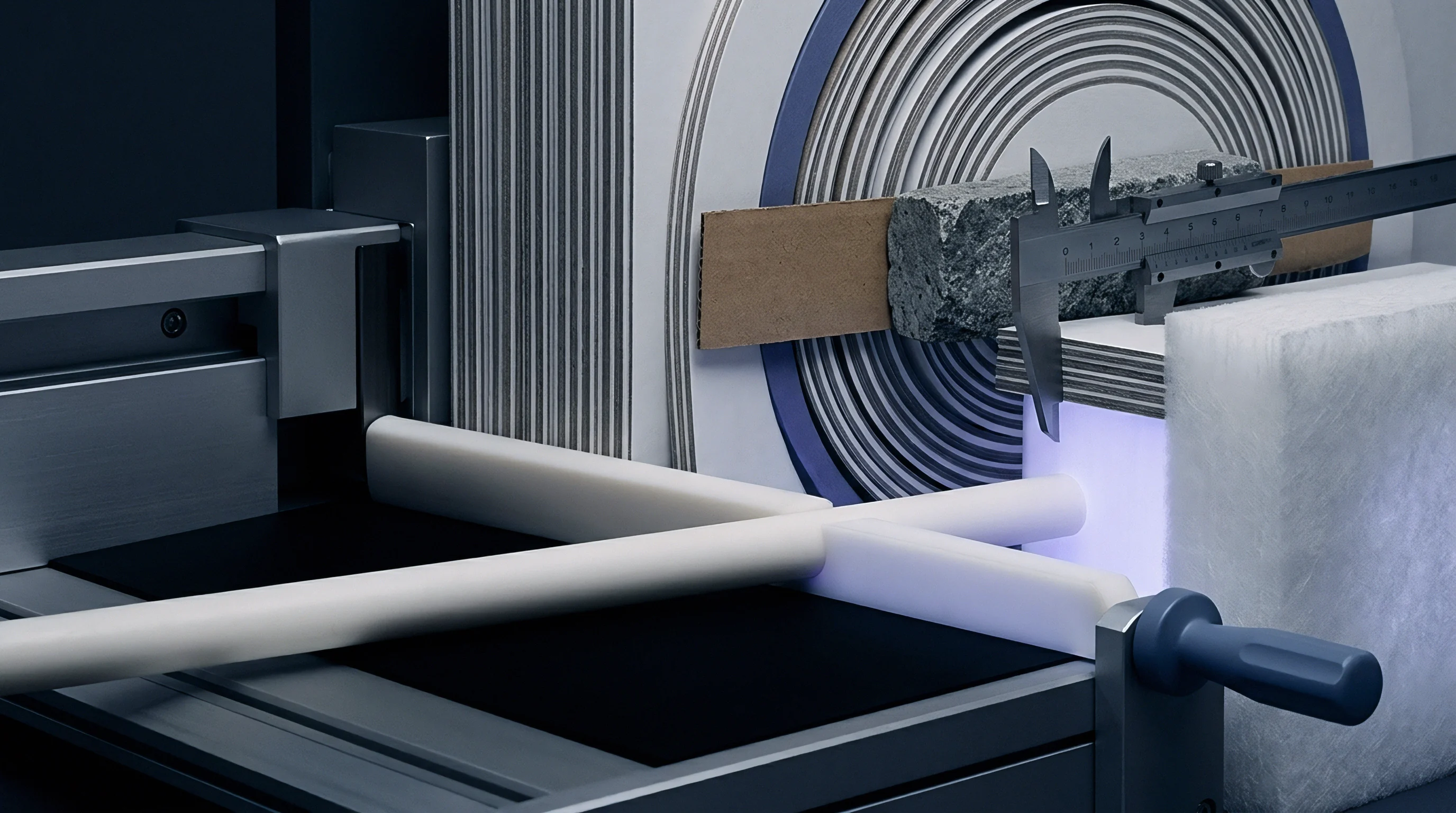
Packaging engineers frequently use the simplified McKee formula to estimate box compression strength from basic sheet properties:
BCT = 5.876 × ECT × (h × Z)^0.5
In this equation, ECT is edge crush strength (ISO 3037 / TAPPI T 811), h is board caliper, and Z is box perimeter. The formula assumes a constant empirical relationship between short-column compressive strength and flexural stiffness. While accurate under standard laboratory conditions (23 degrees Celsius and 50 percent relative humidity), the McKee formula overpredicts box strength in high-humidity environments.
The McKee model breaks down because edge crush strength and flexural bending stiffness degrade at different rates. Edge crush strength depends mainly on short-span compressive yield stress, which drops linearly with moisture content. Flexural stiffness depends on machine-direction and cross-direction elastic moduli, which decay non-linearly as moisture plasticizes the furnish.
Because bending stiffness drops faster than short-span compression strength in humid air, calculated BCT values overestimate real container strength by 30 percent to 50 percent.
To establish reliable compression limits for humid storage, laboratory technicians follow a structured testing sequence to isolate environmental decay factors:
- Inspect incoming mill rolls with a high-frequency dielectric probe before converting to catch initial moisture content exceeding 7.5 percent.
- Condition test specimens at 23 degrees Celsius and 50 percent relative humidity for 24 hours to establish baseline Compression Strength index per ISO 187.
- Transfer specimens to an environmental chamber at 23 degrees Celsius and 85 percent relative humidity for at least 48 hours to reach moisture equilibrium.
- Run short-span compressive strength tests per ISO 9895 in both machine and cross directions to measure directional stiffness loss.
- Calculate derated top-load capacity using high-humidity elastic moduli instead of standard ambient catalog values.
Selecting board grammage from standard laboratory compression figures without accounting for mechano-sorptive decay risks carton collapse in chilled supply chains and total loss of palletized stock.

Stack
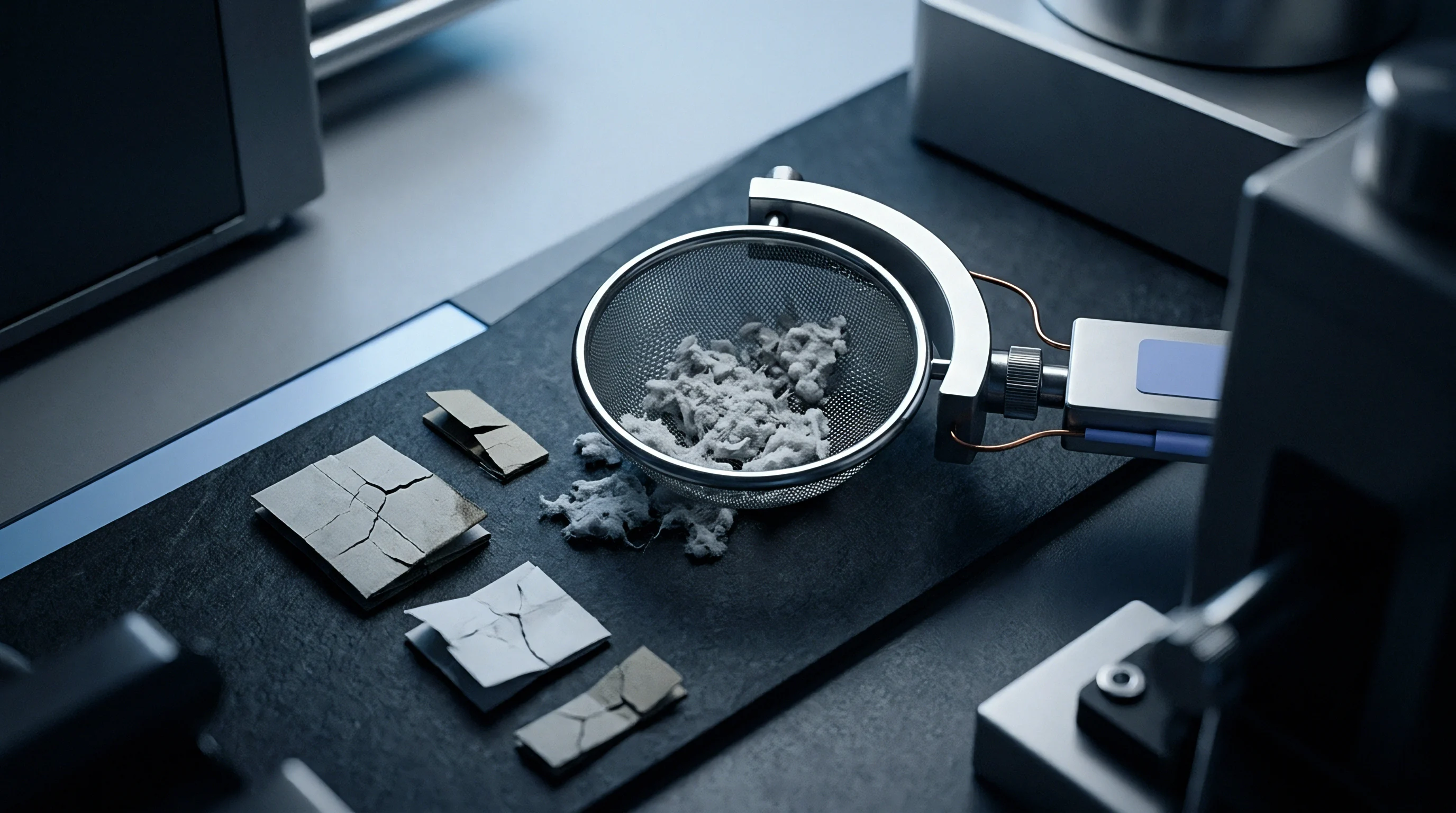
Palletized containers spend weeks or months under constant compressive loads in unconditioned warehouses, ocean vessels, and staging docks. Stacking performance comes down to how multi-ply sheet physics, package design, and dynamic storage conditions interact over time. When moisture degrades panel stiffness, minor pallet misalignment triggers load imbalances that can capsize an entire pallet.
Top-load distribution across stacked cartons relies heavily on column alignment. Stacking boxes straight column-on-column places corners directly over one another, using maximum vertical strength. Interlocked stacking patterns, used to stabilize loads during transport, drop overall top-load compression capacity by 30 percent to 40 percent.
Interlocking forces the rigid corners of upper boxes onto the flexible center panels of lower ones. In humid air, where center-panel flexural stiffness drops fast, interlocking accelerates panel bowing and creep buckling.
Carton stacking strength relies primarily on corner post integrity, where fiber buckling triggers immediate cataclysmic pallet tilting.
Pallet overhang worsens structural decay in humid storage. Overhanging a wooden pallet edge by just 15 millimeters reduces effective BCT strength by 15 percent to 25 percent. Without bottom perimeter support along that edge, vertical stress concentrates along inner unsupported scorelines.
As ambient moisture softens the furnish, localized creep strain accelerates, bulging the overhanging box wall and tilting the stack.
Pallet Creep and Long Term Deformations
Deformation in palletized stacks follows a non-linear timeline driven by temperature and relative humidity cycles. Under steady 80 percent relative humidity, a carton stack carrying 40 percent of its static BCT rating typically lasts 90 days before tertiary creep collapse. If that same pallet faces daily humidity cycles between 60 percent and 90 percent, survival drops to under 14 days due to accelerated mechano-sorptive creep.
Intermodal transit vibration compounds humidity-driven strength loss. Ocean containers subject cargo to sustained low-frequency vibration (2 Hz to 20 Hz) alongside relative humidity swings up to 95 percent. These dynamic forces repeatedly flex hydrated board structures, accelerating micro-friction between fibers and snapping plasticized hydrogen bonds.
This dynamic fatigue consumes static compression strength far faster than still warehouse storage.
| Storage Climate Condition | Applied Load (% of Initial BCT) | 30-Day Creep Strain (%) | 60-Day Creep Strain (%) | BCT Strength Retention (%) | Observed Failure Mode |
|---|---|---|---|---|---|
| Constant 50% RH / 23°C | 40 | 1.2 | 1.8 | 92 | None |
| Constant 85% RH / 23°C | 40 | 4.5 | 8.2 | 61 | Panel Bulge |
| Cyclic 50% – 90% RH / 23°C | 40 | 9.8 | 18.4 | 38 | Corner Crease Buckling |
| Cold Storage 90% RH / 4°C | 40 | 6.1 | 11.3 | 52 | Bottom Tier Collapse |
Does Recycled Fiber Accelerate Mechano-Sorptive Creep?
Furnish selection strongly influences how fast and severely mechano-sorptive creep develops under load. Recycled paperboard contains high proportions of short, twice-dried hardwood fibers alongside residual fines, filler clay, and degraded starch. Hornified recycled fibers swell less individually, but the open, porous web structure lets moisture move quickly through the matrix.
Without the continuous, entangled network of long virgin softwood fibers, recycled furnish depends on chemical surface sizing and hydrogen bonding at sparse contact points to hold stiffness. When humidity cycles, water breaks these exposed contact bonds quickly. Lacking long fibers to distribute shear stress, micro-slips accumulate along stress lines and accelerate secondary creep rates.
Laboratory tests confirm that coated recycled boards show up to 2.5 times higher total creep deformation than virgin solid bleached sulfate boards under identical cyclic humidity and static loads.
Lignin content in unbleached kraft and semi-chemical mechanical pulps adds extra moisture sensitivity. Intact, unhydrolyzed lignin acts as a hydrophobic barrier that slows initial liquid water absorption. Under sustained high humidity, however, amorphous lignin reaches its glass transition phase, absorbing water and losing structural rigidity.
Once plasticized, lignin stops reinforcing cell walls, triggering rapid stiffness loss across mechanical pulp cores in folding boxboard grades.
How mill adjustments to cross-linking binders will alter long-term mechano-sorptive creep rates under sub-zero condensation cycles remains an open question for packaging engineers.
Conditioning
Evaluating hygroexpansion and compression decay accurately requires standardized climate conditioning combined with realistic accelerated aging protocols. Testing under standard ISO 187 conditions (23 degrees Celsius and 50 percent relative humidity) works well for routine mill quality control, but reveals little about how converting stock will perform in tropical, chilled, or intermodal shipping environments.
Standardizing testing across global supply chains requires setting clear environmental equivalence. ISO 187 covers standard atmosphere conditioning, while secondary standards address hot-humid and cold-chain regimes. ISO 2234 governs static load compression testing on full transport packages, using climate chambers to replicate environmental extremes from sub-zero refrigeration (minus 18 degrees Celsius) to tropical conditions (40 degrees Celsius and 90 percent relative humidity).
Standard laboratory conditioning protocols fail to capture the severe structural degradation that occurs when paperboard undergoes rapid humidity cycling during intermodal transport.
Sorption history requires tight control during sample preparation. Because of hysteresis, paperboard brought to 50 percent relative humidity from a wet background holds more moisture than board brought to 50 percent from a dry environment. Standard protocols specify pre-conditioning specimens in low humidity (10 percent to 35 percent relative humidity at 40 degrees Celsius) for at least 24 hours before final stabilization, ensuring all test pieces approach equilibrium along the absorption curve.
Standardized Climate Protocol Limits and Realities
Static climate testing under steady high humidity underestimates field degradation by ignoring mechano-sorptive acceleration. Measuring short-span compression after 48 hours at 85 percent relative humidity captures equilibrium water softening, but misses cumulative damage from dynamic humidity shifts in transit. Dynamic climate cycling in test chambers gives a much truer picture of real-world carton durability.
Water absorption testing via the Cobb method (ISO 535 / TAPPI T 441) measures liquid water mass absorbed by a board surface over a set duration, usually 60 seconds (Cobb 60) or 30 minutes (Cobb 1800). While Cobb values reflect surface hydrophobic sizing against direct liquid contact, they correlate poorly with water vapor uptake. A sheet treated with heavy fluorocarbon or wax sizing can log an excellent Cobb 60 reading below 20 grams per square meter, yet still absorb atmospheric vapor freely and lose significant strength when held at 85 percent relative humidity over 72 hours.
Evaluating internal bond decay requires standardized Scott Bond testing (TAPPI T 569 / ISO 16260) on pre-conditioned specimens. High-humidity Scott Bond testing shows whether plies will separate during scoring and folding. A board holding solid dry bond strength (over 150 Joules per square meter at 50 percent RH) can see wet bond strength drop below 80 Joules per square meter at 85 percent RH, raising the risk of scoreline delamination on automated packing lines.

Dynamic Environmental Chamber Testing Procedures
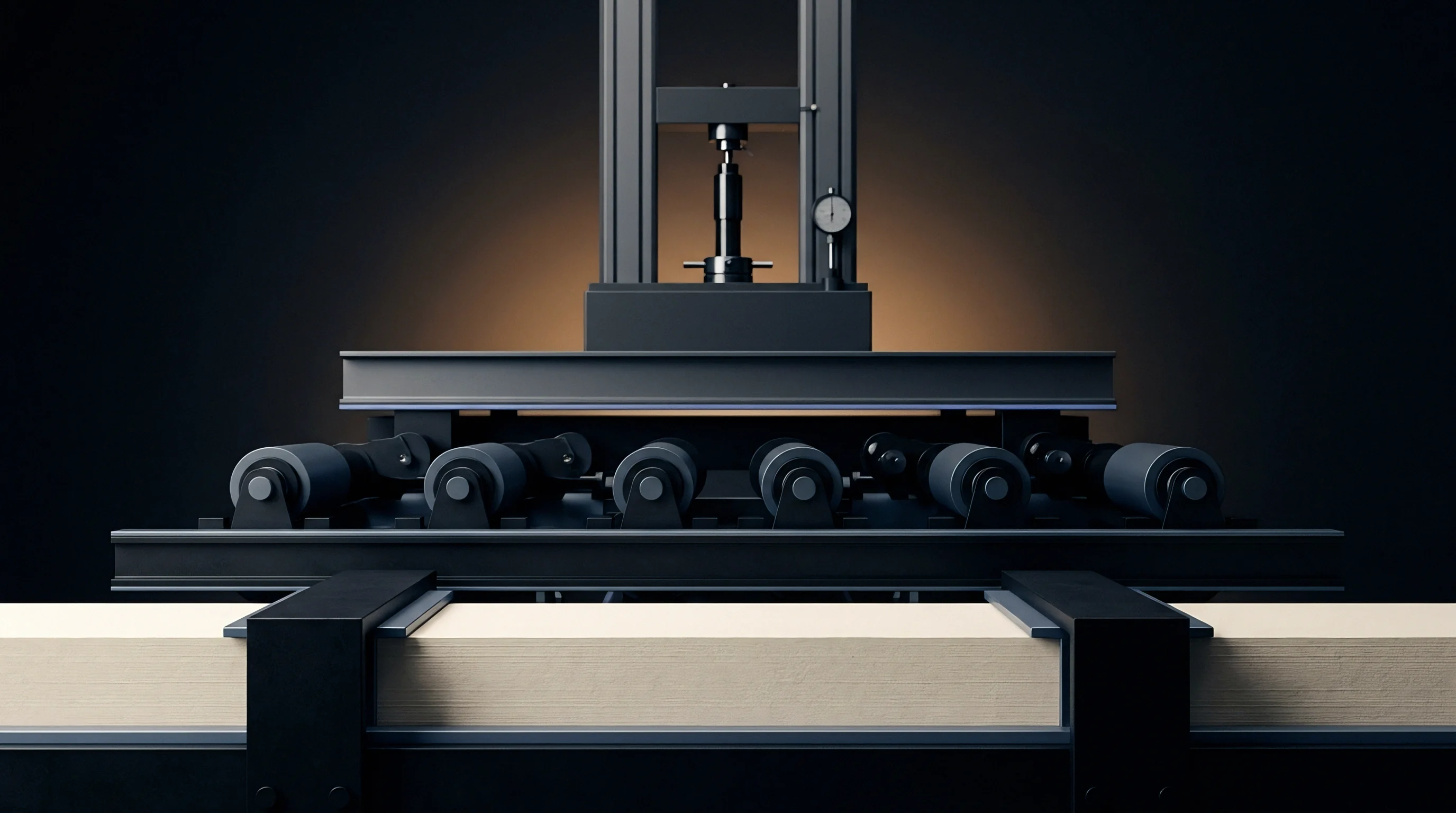
Advanced packaging qualification uses environmental chambers capable of rapid humidity cycling under constant top-load compression. These test setups pair hydraulic or electromechanical frames with environmental controls, tracking real-time panel deformation using linear variable differential transformers (LVDTs) or optical digital image correlation (DIC) systems.
Optical DIC mapping offers clear insight into strain distribution across carton panels during moisture absorption. DIC tracks speckle patterns on box surfaces to calculate local strain fields as humidity increases. High-resolution strain maps reveal that deformation concentrates along vertical creases and near hand-hole cutouts well before panels visibly bulge.
These high-strain zones act as stress risers, initiating final creep collapse.
Short-span compression testing (ISO 9895) under variable climates quickly screens furnish susceptibility to mechano-sorptive decay. By clamping a 15-millimeter wide paperboard strip between jaws spaced 0.7 millimeters apart, the test measures pure compressive strength without triggering panel buckling. Running short-span compression tests across relative humidity levels (50, 65, 80, and 90 percent RH) yields material decay curves needed for finite element modeling of structural packaging performance.
Inserting a contract requirement for ISO 9895 short-span compression testing after 72 hours at 85 percent relative humidity shifts financial liability for transit compression failures back to the board mill.
Specification
Mitigating moisture swell and compression decay requires tight material specifications, proper chemical sizing, and deliberate board architecture. Buyers must balance the landed unit cost of premium virgin substrates against heavy hydrophobic coatings or heavier grammage. Selecting the right stock before finalizing artwork prevents costly field failures without over-specifying material.
Chemical sizing applied during papermaking forms the primary defense against moisture penetration. Internal sizing agents, including Alkyl Ketene Dimer (AKD) and Alkenyl Succinic Anhydride (ASA), react with cellulose hydroxyl groups to form hydrophobic layers along fiber walls. Surface sizing solutions ~ modified starches, polyvinyl alcohol (PVOH), and synthetic cross-linking polymers applied at the size press ~ seal surface pores and boost interfiber bond strength under high humidity.
Furnish selection provides structural defense against hygroexpansion. Using long-fiber softwood kraft pulps in outer plies increases tensile and bending rigidity to resist planar expansion. Placing bulky, low-density pulps in the core ply maximizes sheet caliper and flexural moment of inertia per unit weight.
Coated solid bleached sulfate (SBS) grades offer maximum resistance to dimensional distortion, while multi-ply folding boxboards (FBB) achieve superior stiffness-to-weight ratios at lower landed cost.

Engineered Furnish and Chemical Sizing Countermeasures
Optimizing internal sizing dosage demands tight mill process control. AKD sizing requires heat curing during drying to form covalent ester bonds with cellulose and achieve full hydrophobicity. Insufficient heat in the dryer section or excessive wet-end filler retention impairs AKD distribution, causing premature sizing regression in humid storage.
Adding cross-linking resins, such as polyamide-epichlorohydrin (PAE) or glyoxalated polyacrylamide (GPAM), creates wet-strength bonds that preserve up to 30 percent of dry tensile strength even when the fiber matrix saturates completely.
Barrier coatings create continuous physical shields against water vapor transmission. Extrusion-coated polyethylene (PE) and polypropylene (PP) layers block water vapor effectively, keeping transmission rates low (WVTR below 10 grams per square meter per day). However, extruded plastic barriers ruin repulpability and recyclability.
Modern water-based acrylic and biopolymer dispersion coatings achieve comparable water vapor resistance while remaining fully repulpable in standard recycling plants, avoiding extended producer responsibility fees.
| Specification Architecture | Grammage (gsm) | Caliper (µm) | AKD / Sizing Additive Level | BCT Retention at 85% RH (%) | Landed Cost per 1,000 Packs ($) |
|---|---|---|---|---|---|
| Standard Coated Recycled (CRB) | 400 | 520 | Standard Rosin / Starch | 44 | 142.00 |
| Heavy Sized CRB + Water Dispersion | 400 | 520 | High AKD + Acrylic Surface Coating | 68 | 168.50 |
| Standard Folding Boxboard (FBB) | 330 | 530 | Standard AKD Internal | 58 | 162.00 |
| Premium Solid Bleached Sulfate (SBS) | 310 | 440 | High AKD + PAE Wet Strength Resin | 76 | 189.00 |
Yield Optimization and Landed Unit Cost Balance
Downgauging strategies must account for moisture-induced modulus decay to avoid under-specifying structural capacity. Substituting 310 gsm virgin SBS for 400 gsm recycled CRB cuts freight weight by 22.5 percent while providing equal bending stiffness under standard ambient conditions. In humid supply chains, SBS holds its elastic modulus better, maintaining stack integrity without needing extra board weight to offset moisture loss.
Commercial qualification depends on clear quality control acceptance criteria within purchase specifications. Procurement agreements should set maximum allowable Cobb absorption limits alongside minimum short-span compression thresholds measured after high-humidity conditioning. Enforcing tight moisture performance clauses in mill contracts reduces shipping damage claims by over 60 percent while optimizing substrate spend.
Packaging engineers rely on formal specification checklists when negotiating mill supply contracts and verifying delivered stock:
- Hydrophobic sizing threshold requires Cobb sixty values under twenty-five grams per square meter on both liner and backboard surfaces to restrict initial liquid absorption.
- Bulk index preservation dictates selecting mechanical furnish cores when bending stiffness governs top-load performance under moderate humidity.
- Creep safety factor mandates applying a two-point-five multiplier to static BCT calculations when humidity exceeds eighty percent during distribution.
- Polymer dispersion barriers eliminate liquid moisture penetration while maintaining full repulpability in standard recycling streams.
Writing high-humidity performance testing directly into raw material RFQ specifications bridges the gap between swatch-book catalog values and actual pallet durability. Specifying the right internal sizing chemistries, tailoring furnish selection for dimensional stability, and applying environmental safety factors keeps cartons intact through demanding global distribution networks.