Quantifying Hydro-Pulper Fiber Recovery Yields for Extrusion Coated Paperboard under EN 13430 Standards
Hydro-pulper fiber recovery yield under EN 13430 requires dry accepted fiber mass to exceed 85% of substrate weight using controlled tip speeds and temperature.
Slurry
The aqueous disintegration of extrusion coated paperboard begins as fluid penetrates the exposed edges of the board matrix. Polymer coatings such as low-density polyethylene (LDPE), polypropylene (PP), and polyethylene terephthalate (PET) form impermeable barriers over the sheet faces, forcing liquid entry almost entirely through open cut edges where paper fibers meet process water. As water migrates inward, inter-fiber hydrogen bonds within the cellulosic structure break down, expanding the board and releasing kraft fibers into suspension.
High-consistency pulping at twelve to eighteen percent solids relies on fiber-to-fiber friction to break sheets apart, whereas low-consistency pulping at four to six percent solids uses hydrodynamic shear from a high-speed impeller. With extrusion coated board, high consistency creates enough friction to tear flexible LDPE films into small fragments that pass through coarse screen perforations and contaminate clean stock. Low-consistency processing preserves film integrity, leaving polymer layers in larger sheets that coarse screen rakes clear efficiently.
Moisture swells the cellulosic matrix, while water temperature governs film ductility. Although the polymer sheets resist water penetration, coarse screens readily trap the larger film fragments.
Hydraulic Shear and Edge Penetration Dynamics
Liquid migration into cellulosic board takes place predominantly along die-cut boundaries where virgin kraft fibers lie directly exposed. Swelling pressure destabilizes the entangled fiber bed, but because polymer coatings are insoluble in water, mechanical action must flex the substrate repeatedly to shear the fiber-polymer bond. Single-sided LDPE coatings delaminate quickly since water reaches the unsized reverse side immediately, whereas double-sided boards or poly-aluminum liquid packaging laminates require longer wetting times as water enters solely through edge swelling paths.
| Substrate Classification | Coating Specification | Pulper Consistency (%) | Water Temp (°C) | Dwell Time (min) | Coarse Flake Rejects (%) |
|---|---|---|---|---|---|
| Single-Side Folding Boxboard | 18 g/m² LDPE | 4.5 | 40 | 15 | 5.8 |
| Double-Side Liquid Packaging Board | 15 g/m² LDPE / 12 g/m² LDPE | 5.0 | 50 | 25 | 9.4 |
| Aseptic Barrier Containerboard | 20 g/m² LDPE / 6 µm Foil / 15 g/m² LDPE | 6.0 | 55 | 35 | 14.2 |
| Ovenable PET Coated Kraftboard | 30 g/m² PET Extrusion | 4.0 | 45 | 20 | 8.1 |
The standard EN 13430 protocol evaluates whether a packaging material contains sufficient recyclable fiber to warrant industrial processing. Fiber recovery yield calculations measure the dry mass of clean accepts against the total dry mass of the unpulped package. Unreleased fiber flakes that remain adhered to rejected plastic films count directly as yield loss.
Optimizing hydrapulper operating conditions requires balancing shear force to achieve complete fiber detachment without shredding polymer films into un-screenable micro-fragments.
Poor pulping yields in extrusion coated stock are occasionally attributed to abnormal polymer oxidation during corona treatment, where corona discharge creates chemical cross-linking with surface cellulosic fibers.
Assay
Quantifying repulpability demands precise physical separation of liberated papermaking fibers from insoluble polymer fractions. Standardized testing frameworks like the Cepi Recyclability Test Method Version 2, PTS-RH:021/97, and Aticelca 501/19 set laboratory conditions for evaluating extrusion coated boards. Testing starts by disintegrating a dry sample in a standard laboratory pulper at controlled consistency, temperature, and rotational speed before passing the slurry through slotted fractionators to measure accepts, unpulped flakes, and plastic rejects.
Compliance under EN 13430 requires a dry accepted fiber recovery yield exceeding eighty-five percent of total dry mass following laboratory fractionation.
Standardized Fractionation and Mass Balance Calculations
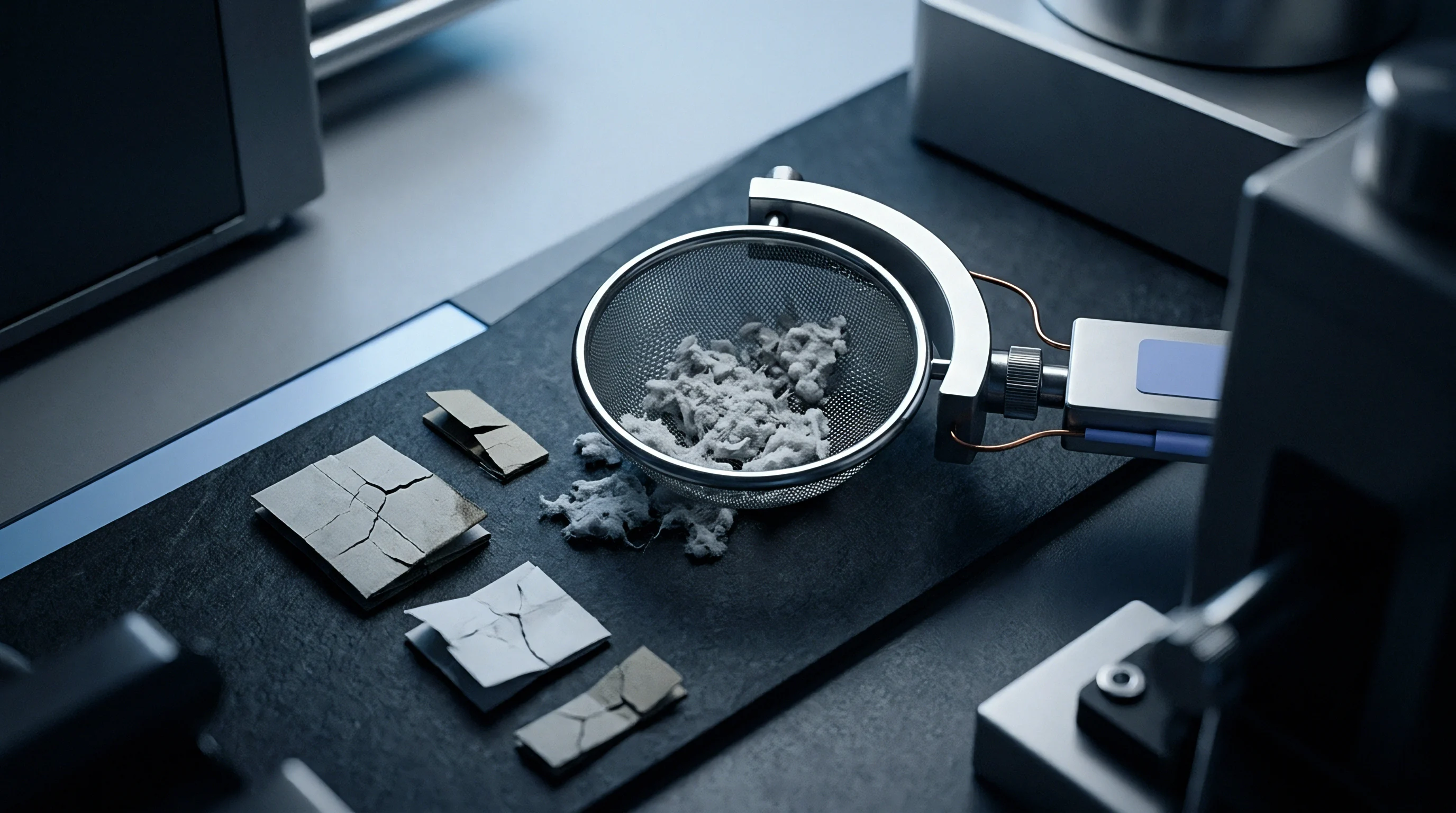
Laboratory testing under European protocol frameworks relies on standardized wet screening to isolate clean accepts from sticky or non-dispersible residues. The Haindl or Somerville fractionator equipped with 0.15 millimeter slotted screen plates serves as the primary separation instrument. Driven across the screen plate by controlled water spray pressure, accepted fibers pass through the 0.15 millimeter slots while plastic sheets, unpulped paper flakes, and synthetic debris remain on top.
Calculating true dry fiber yield requires exact moisture content determinations at every stage of the assay. Initial substrate mass reflects absolute dry weight determined by oven-drying matching samples at one hundred five degrees Celsius. The formula for dry fiber recovery yield is:
Dry Fiber Yield (%) = (Mass of Dry Accepted Fibers / Mass of Total Dry Paperboard Substrate) × 100
Calculating the usable pulp yield requires separating the mass of the synthetic coating from the baseline denominator. An extrusion coated board containing ninety percent paperboard substrate and ten percent poly-layer cannot produce one hundred percent yield. Yield relative to available cellulosic content provides an exact measurement of pulping efficiency:
Cellulosic Recovery Efficiency (%) = (Mass of Dry Accepted Fibers / Mass of Available Cellulosic Substrate) × 100
While screening removes flat polyethylene flakes, initial fiber bonding governs pulping dwell time. Fine fibers pass directly through standard mesh openings, and any yield loss reduces the ultimate value of the recycled stock.
Consider a laboratory assay evaluating a forty-gram dry sample of single-side LDPE extrusion coated paperboard. Dry basis weight analysis establishes that the sample contains thirty-six grams of virgin bleached kraft paperboard and four grams of LDPE extrusion coating. Disintegration for fifteen minutes at four percent consistency followed by Somerville fractionating through a 0.15 millimeter screen yields thirty-one point five grams of dry accepted pulp, two point seven grams of dry unpulped paper flakes adhering to plastic film, and three point eight grams of clean rejected plastic sheet.
Fines passing through the screen account for two.0 grams of lost fiber material.
The total dry fiber recovery yield relative to whole sample mass calculates as thirty-one point five divided by forty, giving seventy-eight point seven five percent. Evaluating cellulosic recovery efficiency relative to available paperboard mass gives thirty-one point five divided by thirty-six, or eighty-seven point five percent. Unpulped flakes represent two point seven divided by thirty-six, accounting for seven point five percent of available fiber loss, while screening fines represent two point zero divided by thirty-six, or five point five five percent.
The sum of accepted pulp, unpulped flakes, lost fines, and clean polymer totals thirty-eight.0 grams, exposing a two-gram mass balance deficit from soluble organic materials and micro-fiber wash-out.
- Flake Retention Unliberated paper flakes adhering to large LDPE films stay trapped on coarse screen plates, removing usable long kraft fibers from the pulp stream.
- Fine Fiber Wash-Out Short fibers and cellulosic fines pass directly through 0.15 millimeter fractionator slots, reducing calculated dry mass yield during filtrate collection.
- Film Shredding High shear agitation fragments brittle or cold polymer coatings into fine particles that contaminate accepts and clog downstream laboratory testing screens.
- Stickie Formation Pressure-sensitive tie layers or low-melting-point co-extrusions form tacky agglomerates that bind clean fibers to polymer rejects during pulping agitation.
Annex A of European Standard EN 13430 specifies that test reports declaring material recycling suitability must document the exact laboratory fractionator slot width, water temperature, pulping consistency, and total mass recovery percentage before certification approval is granted.
Rotor
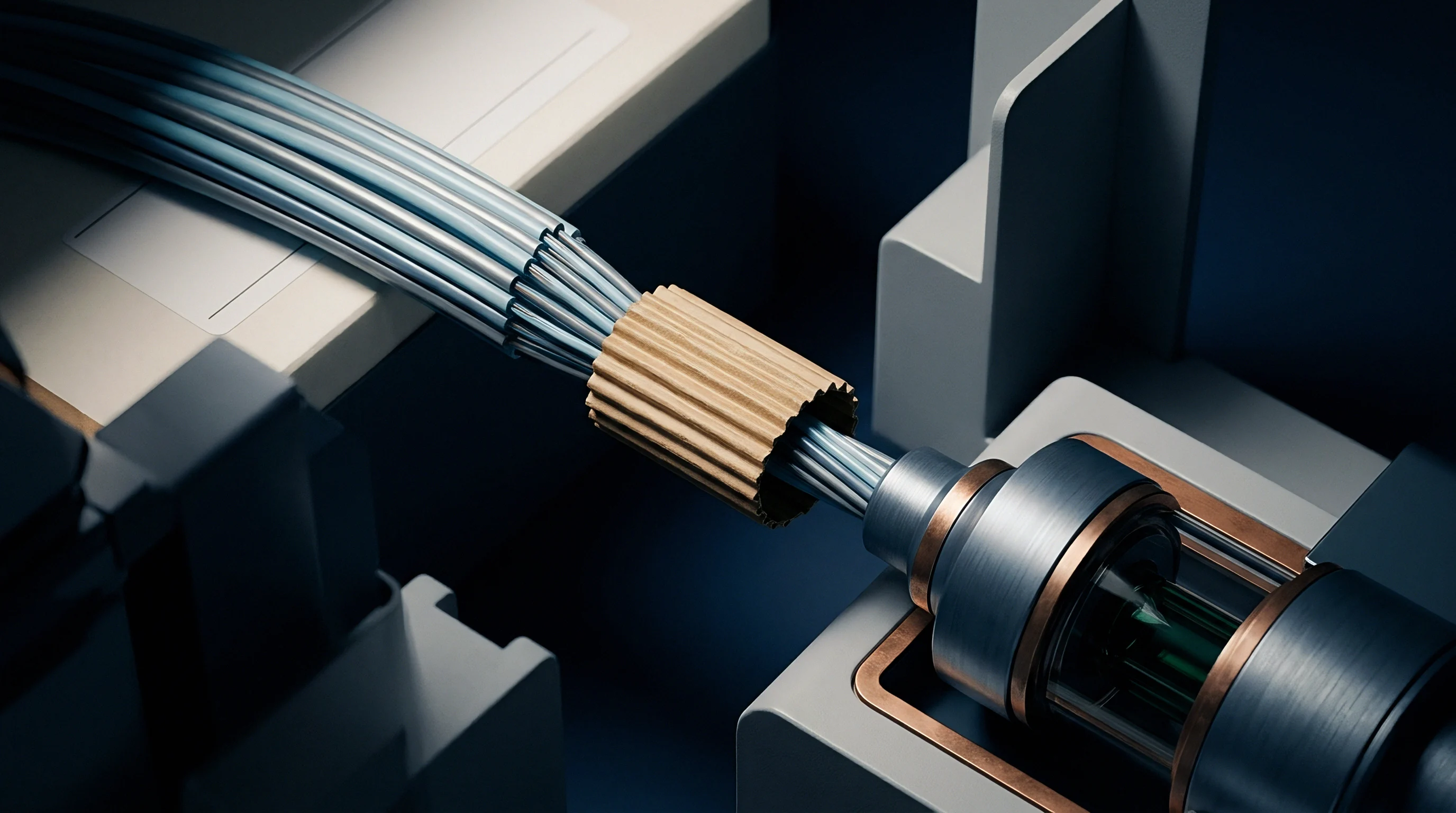
Hydrodynamic force in a wet disintegrator breaks inter-fiber hydrogen bonds through turbulent fluid motion and particle collisions. Rotor blade profile and rotational speed dictate shear stress distribution throughout the pulping tub. Helical rotors generate axial flow patterns that draw heavy board pieces into the high-shear zone near the tub floor, whereas Vokes-type impellers produce radial currents that drive slurry against tub wall baffles, breaking board sheets along hydraulic velocity gradients.
Mechanical Shear Stress and Temperature Dynamics
Energy input during pulping must be carefully calibrated to avoid tearing synthetic films while still achieving full fiber liberation. Excessive rotor tip speeds above sixteen meters per second shred LDPE and PP extrusion films into micro-strips. These shredded polymer fragments match the flow characteristics of long paper fibers, passing through coarse screens into fine slotted stages where they blind screen plates and disrupt mill operations.
Process water temperature significantly alters polymer ductility. Below thirty-five degrees Celsius, low-density polyethylene acts as a semi-rigid solid that fractures under mechanical impact into sharp flakes. Between forty-five and fifty-five degrees Celsius, polyethylene transitions to a ductile state that flexes under impeller impact without tearing, allowing fluid shear to peel the coating cleanly away from the swollen paper surface.
Warmer process water softens synthetic barrier films and promotes unwanted fragment shredding during rotor agitation.
What Pulper Speed Optimizes Polymer Flake Delamination?
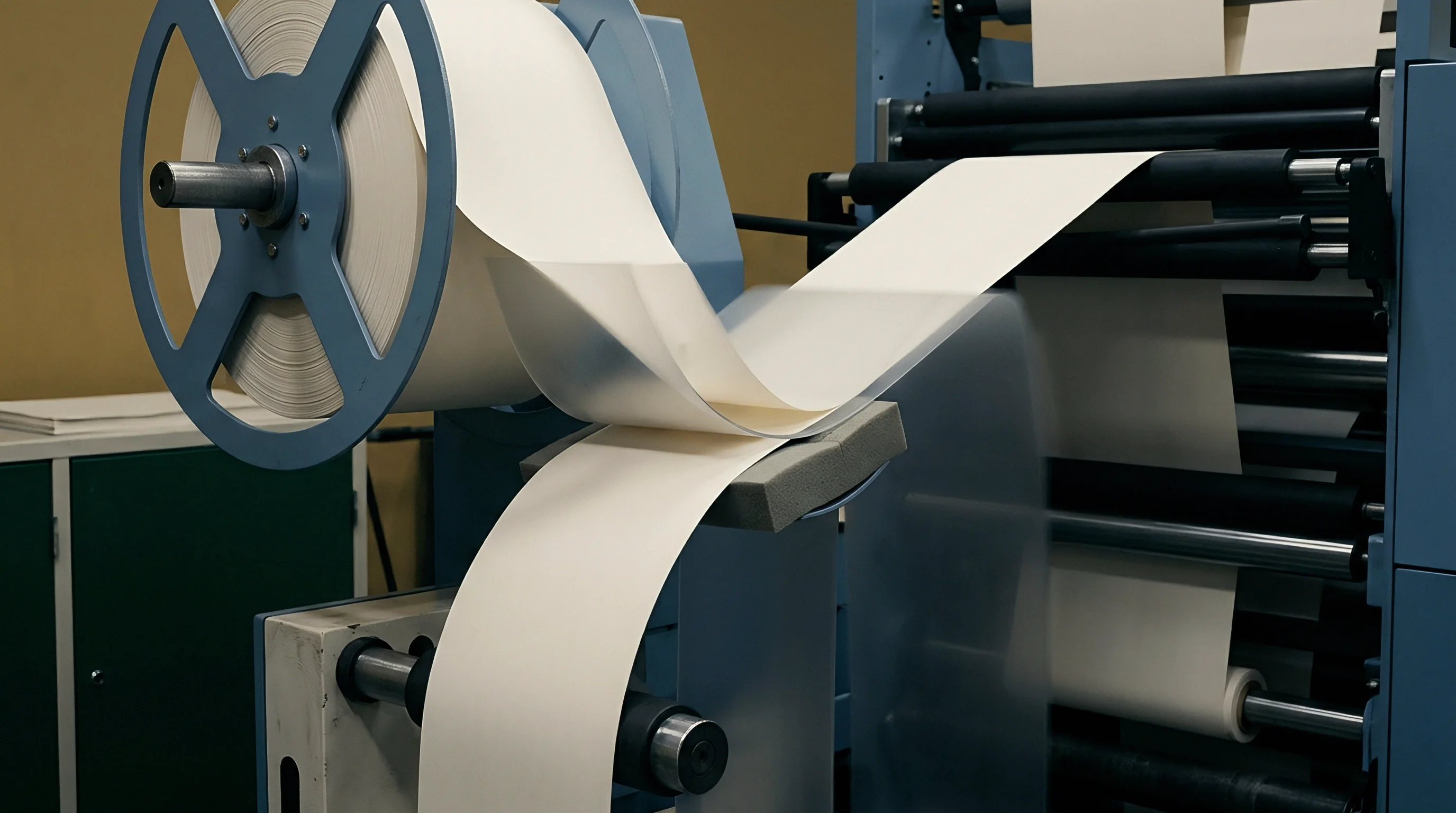
Operating the agitator between eight hundred and twelve hundred revolutions per minute creates fluid velocity gradients that separate coatings cleanly. Rotor speed selection depends on impeller diameter and pulper tub volume, with clean delamination without polymer shredding requiring an impeller tip speed between eleven and fourteen meters per second.
| Rotor Speed (RPM) | Tip Speed (m/s) | Water Temp (°C) | Rejects > 10 mm (%) | Rejects 2-10 mm (%) | Rejects |
|---|---|---|---|---|---|
| 800 | 10.5 | 40 | 88.2 | 10.1 | 1.7 |
| 1000 | 13.1 | 45 | 91.5 | 7.2 | 1.3 |
| 1200 | 15.7 | 50 | 74.3 | 18.6 | 7.1 |
| 1400 | 18.3 | 55 | 52.1 | 31.4 | 16.5 |
While surfactants accelerate the breakdown of inter-fiber bonds, high consistency increases inter-fiber friction. Micro-plastics risk clogging fine slurry screens, and rejected polymer yields no mill fiber credit.
Conducting a standardized laboratory verification run requires strict adherence to sequential operational protocols to ensure repeatable yield calculations across different paperboard batches.
- Cut representative extrusion coated paperboard samples into square pieces measuring twenty-five millimeters by twenty-five millimeters.
- Determine absolute dry mass by drying matching sample sets in a ventilated oven at one hundred five degrees Celsius until mass equilibrium occurs.
- Fill the laboratory disintegrator tub with soft water conditioned to forty-five degrees Celsius and adjusted to pH 7.5.
- Add dry paperboard pieces to achieve exact five percent solids consistency relative to fluid volume.
- Allow paperboard pieces to soak without agitation for five minutes to initiate edge water penetration.
- Engage the disintegrator rotor at a calibrated tip speed of thirteen meters per second for exactly fifteen minutes.
- Dilute the pulped slurry to zero point five percent solids consistency using ambient process water.
- Transfer slurry into a Somerville fractionator equipped with a 0.15 millimeter slotted screen plate operating under standard spray pressure.
- Collect accepted fiber suspension passing through slots for mass balance filtration and drying.
- Rinse rejected polymer sheets and unpulped paper flakes from screen surface into a secondary drying tray.
Low tip speeds combined with moderate fluid temperatures maximize polymer sheet retention while stripping paper fibers completely.
Threshold
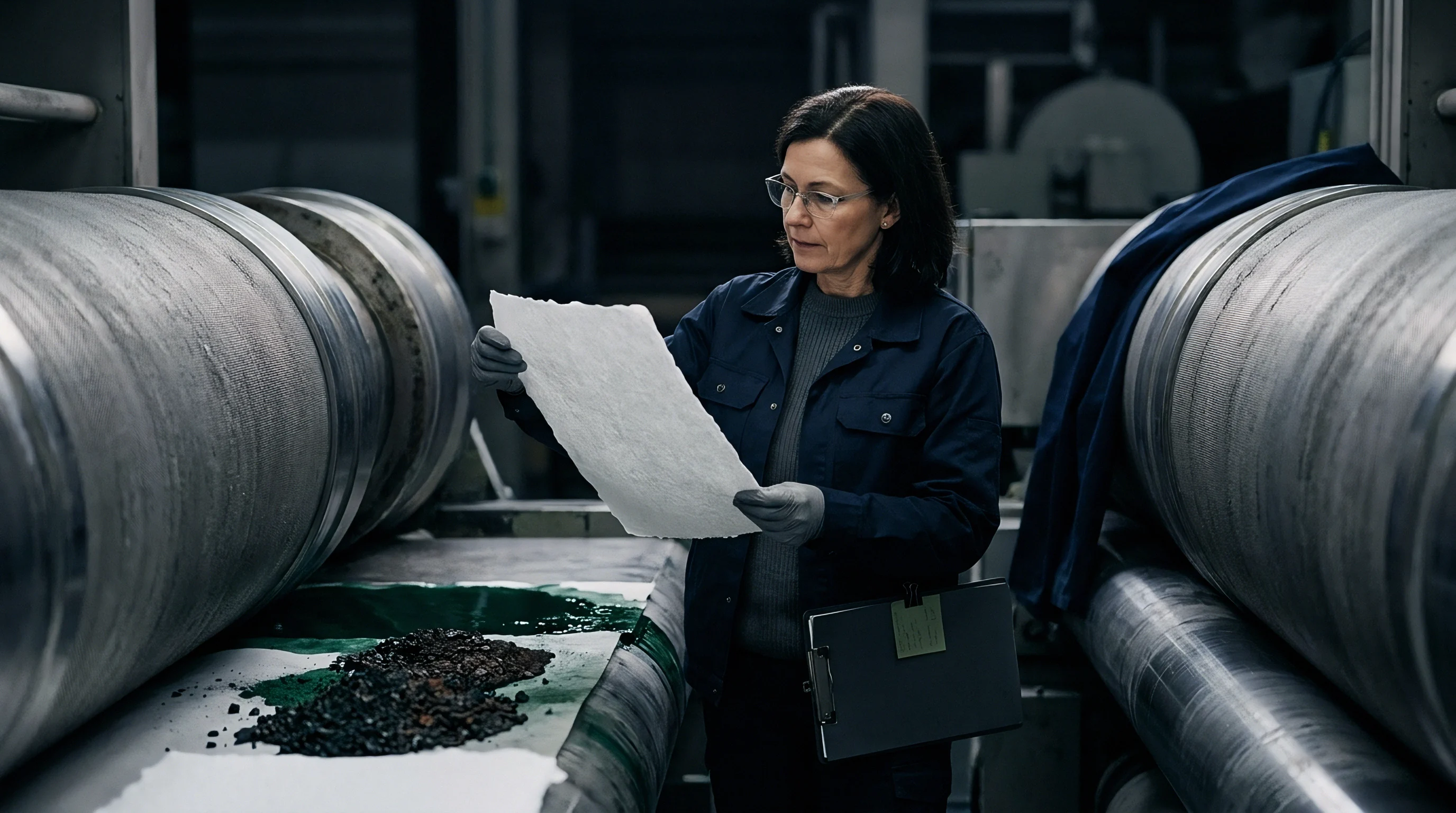
European norm EN 13430 establishes criteria for declaring packaging materials recyclable through organic or mechanical recovery systems. The standard requires that packaging yield a minimum proportion of clean fiber without causing operational failure in industrial recycling circuits. Under standard testing protocols, an extrusion coated board must demonstrate a minimum dry fiber accepts yield of eighty-five percent to achieve basic recyclability qualification.
European Recyclability Criteria and Chemical Pulping Aids
Regional papermaking schemes enforce strict percentage limits on rejected mass to maintain mill stock quality. German 4-E guidelines, Cepi scorecards, and Italian Aticelca 501 systems assign numerical grades based on total yield, sticky count, and screening reject percentages. An extrusion coated board yielding seventy-nine percent clean fiber receives an unsortable or non-recyclable grade, subjecting the converting line to elevated EPR financial penalties.
Chemical additives applied during pulping alter water surface tension and accelerate hydrogen bond dissolution within dense kraft structures. Non-foaming wetting agents reduce the liquid contact angle at cut edges, allowing fluid to penetrate quickly along fiber channels. Adding mild alkali like sodium hydroxide shifts pulping pH to 8.5 or 9.5, swelling cellulose fibers and softening rosin or wet-strength resin binders.
Surfactant dosage must remain low to avoid emulsifying trace wax coatings or causing heavy foam in laboratory fractionators.
Polyethylene film detachment relies entirely on water hydraulic forces weakening hydrogen bonds at the polymer interface.
Unresolved technical disputes remain regarding whether fine micro-plastic particles generated during mechanical pulping pass through laboratory fractionator screens unnoticed, skewing calculated dry pulp yields upward while contaminating mill process water streams.
Ledger
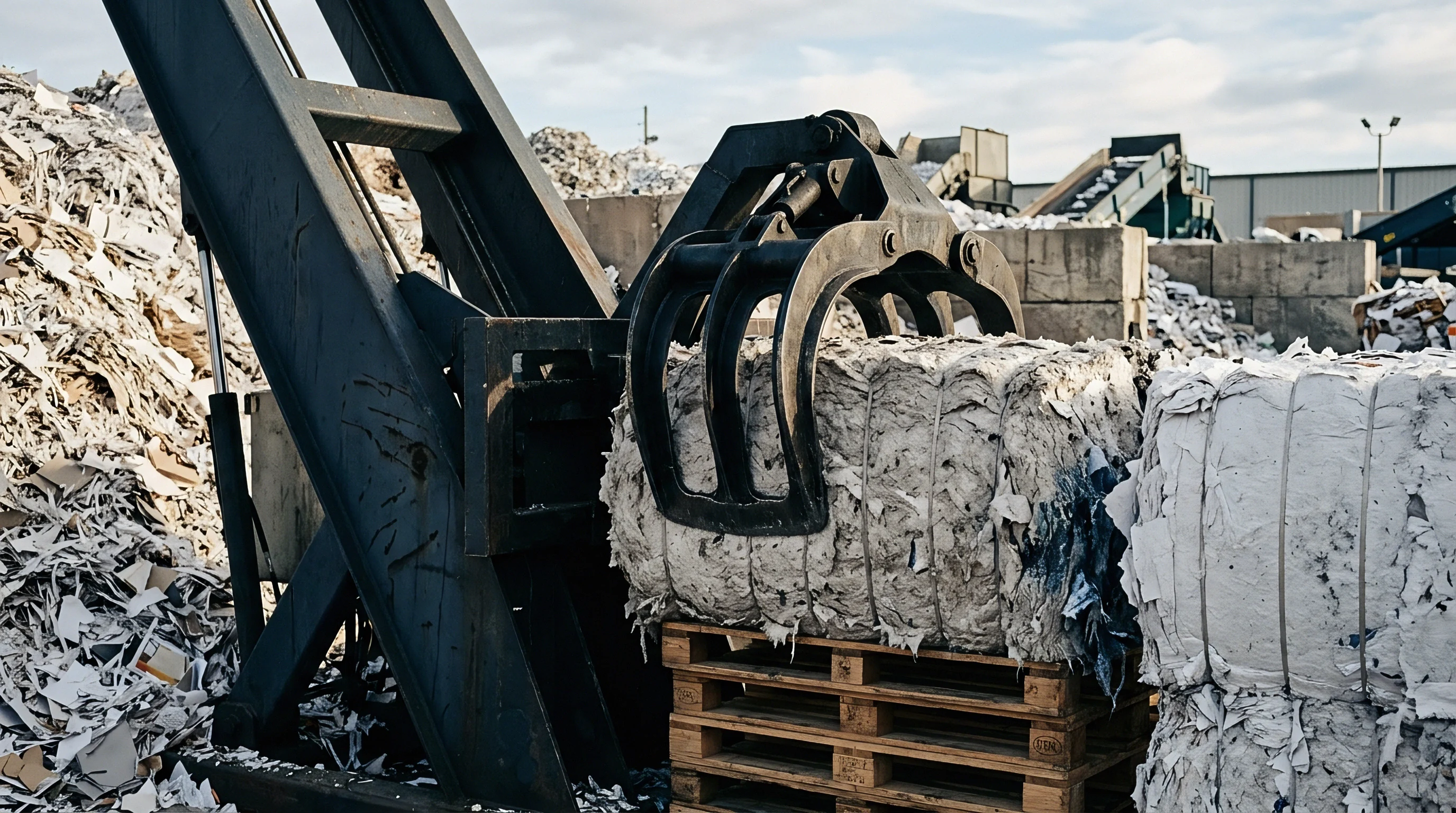
Financial accounting for extrusion coated paperboard recovery depends on net fiber yield alongside waste disposal charges for trapped polymers. Purchasing extrusion coated packaging board requires balancing total landed material cost against recovered fiber value at end-of-life. Converting mills purchasing paperboard with thin twenty-gram LDPE coatings face lower waste processing costs than operations running heavy forty-gram PET or poly-aluminum barriers.
Cost Structures and Extended Producer Responsibility Impact
Commercial valuation models deduct non-recoverable film mass, effluent treatment loads, and landfilled rejects from gross substrate purchasing prices. EPR schemes across European member states impose eco-modulated fees based directly on recyclability certification levels under EN 13430. A carton achieving an A-grade recyclability rating under Cepi guidelines qualifies for reduced EPR tariffs, whereas poorly performing laminates incur penalty levies exceeding two hundred Euros per tonne.
- Raw Material Yield Index Baseline dry cellulosic fiber percentage contained within the purchased substrate prior to extrusion coating application.
- Reject Landfill Liability Landfill gate fees and transport tariffs paid to haul away separated polymer films and unliberated paper flakes from the mill site.
- Effluent Chemical Demand Biological and chemical oxygen demand charges levied by regional treatment plants for handling soluble organic compounds washed out during pulping.
- Extended Producer Tariff Modulated recycling fee schedules tied directly to certified EN 13430 laboratory yield performance tiers.
Failure to verify true hydro-pulper fiber yields against certified laboratory fractionator reports exposes packaging buyers to unexpected EPR fee surcharges and rejected mill deliveries.