Edge Compression
Board strength testing provides a quantitative assessment of the force required to crush a corrugated sample stood on its edge parallel to the flutes. This method relies on iso 3037 to establish uniform parameters for calculating the load capacity of finished containers. Manufacturers apply the procedure to determine if a specific fibre composition meets structural requirements for vertical stacking during transport.
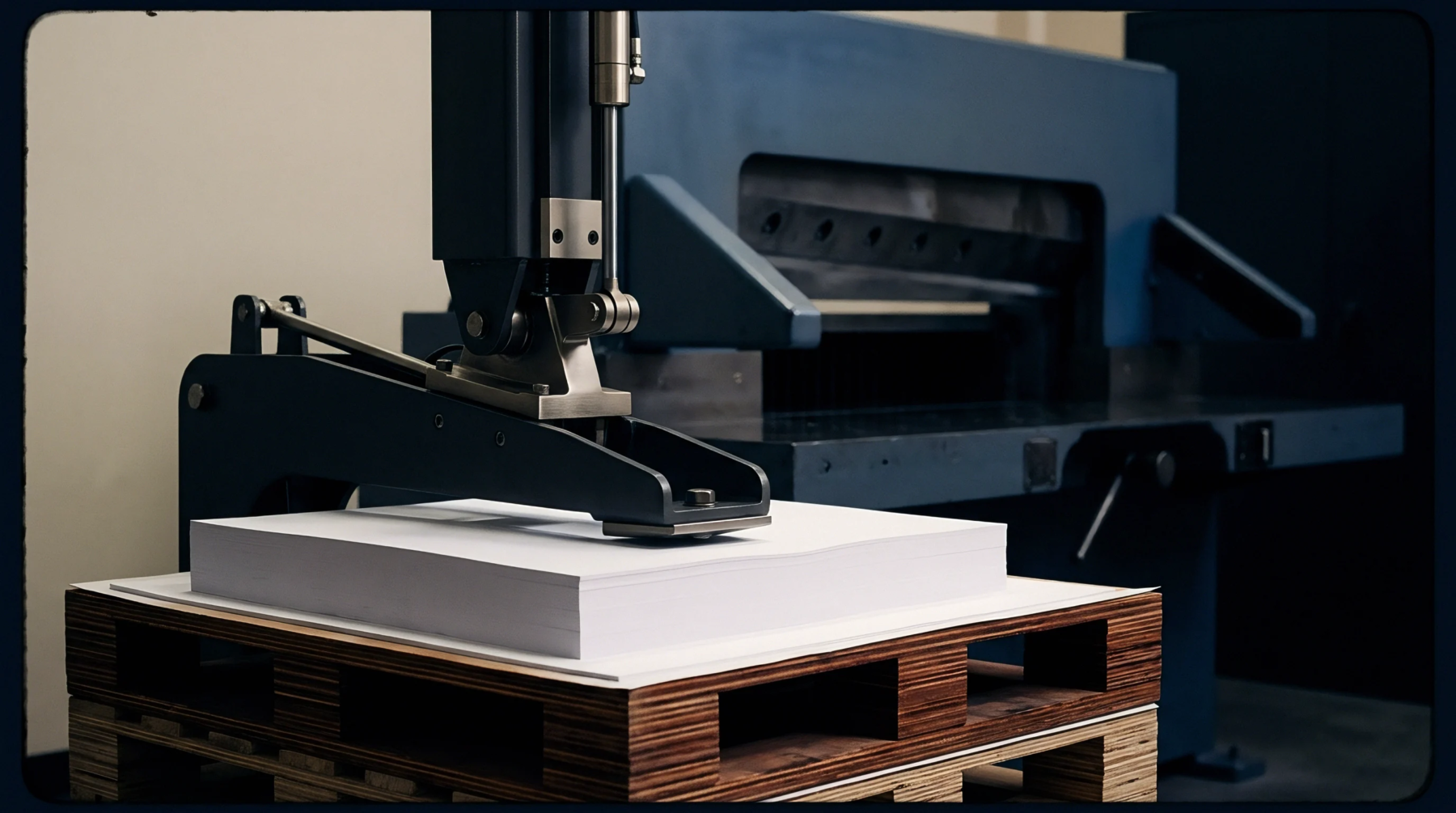
The test environment requires a rigid compression apparatus that maintains parallel platens throughout the entire stroke of the machine. Operators verify that the sample remains perpendicular to the platens to avoid uneven force distribution. Correct alignment prevents premature collapse of the specimen and ensures the recorded peak force represents the true resistance of the flutes.
High moisture levels in the corrugated medium reduce the resistance values gathered by iso 3037, so laboratories condition the material under stable temperature and humidity levels before testing.
Flute Stability
Structural integrity depends on the geometry of the interior corrugation and the bond between the medium and the liners. A failure in the adhesive application leads to lower resistance than the material specification anticipates. If the test specimen bows before reaching the maximum load, the machine captures an inaccurate result that hides the actual crush strength of the board.
Technicians cut samples with precision edges to ensure that the force acts directly through the vertical structure of the flutes. Variations in board density alter the outcome of the compression test significantly. Thick double wall samples demand different handling compared to single wall structures because the increased mass influences the stability of the specimen under the applied load.
Load Resistance
Reliable packaging design depends on predicting how a box behaves under long term storage pressure. Engineers use data from iso 3037 to estimate the maximum weight a shipping case survives before the walls buckle or tear. The test defines the limit of the performance characteristics provided by a corrugated substrate in real world supply chains.
Every measurement confirms the quality of the raw material inputs.