The Gap between a Tested Sample and the Shipped Pallet
Verify mill test certificates against ISO 2859 sampling on arrival; static swatches omit deckle variance, transit moisture creep, and food migration risks.


Specimen
Testing a laboratory swatch measures a theoretical material state rather than a commercial consignment. Swatches made on narrow drawdown frames or small pilot wires undergo physical conditions that paper machines running at twelve hundred meters per minute never replicate. A lab hand sheet dries under uniform thermal restraint, lacking the dynamic tension gradients present on high-speed equipment.
The resulting surface smoothness, fiber orientation ratio, and binder distribution simply reflect an idealized run. When a brand owner approves prototype folding boxboard based on a hand-drawn sample, assuming production tonnage will match it introduces real financial risk.
Paperboard manufacturing relies on fluid dynamics, thermal transfer, and mechanical compaction across a continuous web up to five meters wide. While small lab coaters apply liquid barriers via smooth rod passes over static sheets, commercial air-knife or metering-bar coaters deposit aqueous dispersions onto moving webs with varying moisture levels, surface roughness, and localized thickness shifts. Rapid infrared and hot-air drying on a paper machine drives binder migration, forcing light synthetic polymers to the surface and creating micro-porosity patterns that slow-dried bench samples never develop.
A prototype swatch tested for grease resistance might show a TAPPI T559 kit value of 12, while the production sheet made from identical furnish drops to a kit value of 8 because coat weight varies across the machine deckle.
Hand Sheet Mechanics versus Production Web Speeds
Fiber orientation in a lab sheet mold approaches an isotropic state, with tensile strength ratios between machine direction and cross direction hovering around 1.1 to 1. Commercial twin-wire or multi-ply cylinder formers generate strong hydrodynamic shear forces that align wood fibers along the machine axis, pushing directional ratios up to between 1.8 to 1 and 2.5 to 1. Bending stiffness measured on a bench specimen shows equal resistance in all directions.
By contrast, a commercial carton blank folded from machine-made board will split or bulge along the cross direction if grain orientation is incorrectly specified relative to the box crease.
Laboratory calendering relies on small steel rolls operating under static nip pressures without thermal gradients. Mill calender stacks run multi-roll chilled iron and soft-nip polymer rolls under hydraulic loads above three hundred kilonewtons per meter. That heavy nip pressure flattens surface fibers for printability, but it crushes the internal fiber network, driving down bulk and bending stiffness.
A test sheet calendered on bench equipment keeps its internal pore structure, offering high stiffness at the target grammage. Compress that same board on a commercial line to get the visual smoothness needed for five-color offset lithography, and flexural rigidity drops by up to fourteen percent. The buyer ends up with cartons that bow under top-load compression because bench testing evaluated an uncalendered or dry-calendered prototype.
| Performance Parameter | Standard Test Method | Lab Hand Sheet (250 g/m²) | Mill Production Run (250 g/m²) | Variance Factor |
|---|---|---|---|---|
| Tensile Index Ratio (MD/CD) | ISO 1924-2 | 1.12 : 1 | 2.15 : 1 | Hydrodynamic alignment bias |
| Taber Stiffness 15° (MD) | ISO 2493-1 | 18.5 mN·m | 15.2 mN·m | 17.8% reduction from calendering density |
| Cobb 60 Water Absorption | ISO 535 | 22 g/m² | 31 g/m² | Pinhole formation in rapid drying zone |
| Grease Resistance (Kit Test) | TAPPI T559 | 12 (Pass) | 7 (Fail) | Surfactant concentration at coat surface |
| Air Permeance (Gurley) | ISO 5636-5 | 450 s/100 mL | 110 s/100 mL | Discontinuous film formation on web |

Coat Weight Distribution and Surface Pinholes
Applying barrier coatings onto folding boxboard demands complete film continuity to block chemical penetration. Lab rod applicators lay down an even layer because the substrate is flat and hand-selected to avoid formation defects. Commercial webs, however, carry micro-density variations from wet-end fiber flocculation.
When the aqueous coating hits the nip on a commercial line, lower-density regions absorb liquid faster than dense areas. This local fluid depletion at the blade tip leads to streaking, pinholes, and thin spots in the barrier.
Bench testing routinely misses pinholes simply because the sample size is tiny ~ a standard lab test checks roughly three square decimeters, representing a minuscule fraction of a reel. Naturally, a three-decimeter patch taken from a clean area passes optical microscopy without trouble. Yet a twenty-ton mill run spans thousands of square meters where pinholes can occur dozens of times per square meter.
The moment fatty acids or mineral oils hit those weak spots, liquid bleeds through the substrate and stains the outer packaging. Relying on small swatches gives false confidence about barrier performance across full production lots.
A 250 g/m² paperboard swatch coated under static laboratory conditions yields a Gurley air resistance of 450 seconds, whereas the corresponding commercial mill web drops to 110 seconds under high-speed blade application.
Dry coat weight figures on mill spec sheets are merely averages across the full deckle width. An eight gram per square meter target simply means the coater averaged eight grams across a ten-thousand-meter run. Near the edges, coat weights often drop to six grams per square meter from blade deflection and edge-dam dynamics, while the center might carry nine and a half grams.
Qualification samples provided by the mill are almost always cut from the middle of the web. When shipped pallets are converted from edge rolls, the coating is too thin to hold a barrier, even though the lot average on the test certificate matches the specification.
The gap between bench prototypes and production runs is just as wide in thermal bonding. Lab heat-sealing jaws apply uniform pressure across parallel metal plates with steady temperature control. Industrial converting lines run rotary sealing heads at four hundred cartons per minute, dropping dwell times below eighty milliseconds.
Under those conditions, slight variations in board thickness create pressure drops across the seam, causing fiber-tear failures in transit. The prototype passed seal testing primarily because the bench sealer allowed ten times the thermal absorption time available on a commercial packaging line.
Hand sheets reflect material potential rather than guaranteed commercial delivery values.
Batch
A mill test report captures only a snapshot from a manufacturing run that might span thirty-six hours and five hundred metric tons of pulp. Properties shift constantly with variations in virgin wood species, recycled fiber contamination, white-water chemistry, and wire wear. Taking one sheet sample every two metric tons fulfills routine quality control logging, but it misses short-term variance within single pallets.
A buyer taking delivery of twenty pallets gets a variable population of board, not a uniform mass matching the test report numbers.
Process control on modern board lines relies on online scanning sensors traversing the web to measure basis weight, moisture, and caliper. Because the scanner moves side to side while the web travels rapidly forward, it traces a zigzag path across the sheet, leaving significant acreage unmeasured between passes. A sudden surge in stock flow or a wet streak from a clogged felt shower nozzle can easily slip between scanner tracks.
The mill certificate then logs a smoothed average of those diagonal sweeps, masking local drops in burst strength or moisture spikes that warp board on converting lines.
Statistical Acceptance Sampling in Paperboard Conversion
Assessing batch quality requires ISO 2859-1 sampling plans grounded in Acceptable Quality Limit standards. Under normal inspection level II, a lot of fifty thousand folding cartons calls for a five-hundred-unit sample. Pulling just five cartons off the top of the first pallet carries zero statistical validity; valid acceptance decisions require structured probability distributions to properly balance buyer and producer risk.
Defects in paperboard packaging rarely distribute at random across a lot. A clogged ink duct on a sheet-fed offset press marks every six-hundredth sheet in a stack ~ matching one revolution of the plate cylinder ~ while a damaged impression cylinder stamps a repeating indent across specific die-cut blanks. Inspecting cartons from a single box means quality control will either miss the fault completely or reject a whole shipment over a localized press failure.
Reliable incoming inspection requires systematic random sampling across top, middle, and bottom tiers of several pallets in the shipment.
- Cross-Direction Stiffness Creep occurs when fiber orientation shifts toward the machine axis during stock dilution surges, lowering cross-grain flexural resistance below box-stacking limits.
- Localized Moisture Spikes develop when press felt conditioning nozzles clog, leaving damp streaks that cause dimensional expansion, sheet curvature, and feeding jams on automated lines.
- Cobb Value Drift manifests as sizing chemicals degrade under high drying cylinder temperatures, turning hydrophobic paperboard into an absorbent substrate within forty-eight hours of manufacture.
- Ply Bond Separation emerges when starch spraying between multi-ply web layers drops below critical threshold rates during speed transitions, causing board delamination during high-speed folding.
- Surface Energy Decay happens as corona treatment levels drop on extrusion-coated polymer layers, preventing water-based inks and adhesives from wetting the substrate properly.
Deckle position variations pose a persistent structural challenge for packaging buyers. A five-meter-wide machine yields multiple narrow rolls that are slit, rewound, and spread across dozens of pallets. Board slit from the front or back edge experiences different drying conditions and nip pressures than center stock, with air eddying near the dryer hood boundaries leading to lower transverse stiffness and erratic moisture levels.
A buyer ordering five pallets might receive stock cut entirely from edge rolls, resulting in failed containers despite a mill certificate that logged properties from a center-deckle sample.
Nineteen percent of white-lined chipboard pallets delivered from edge-slit parent rolls fail the minimum ISO 2759 burst strength specification despite a clean mill test report.
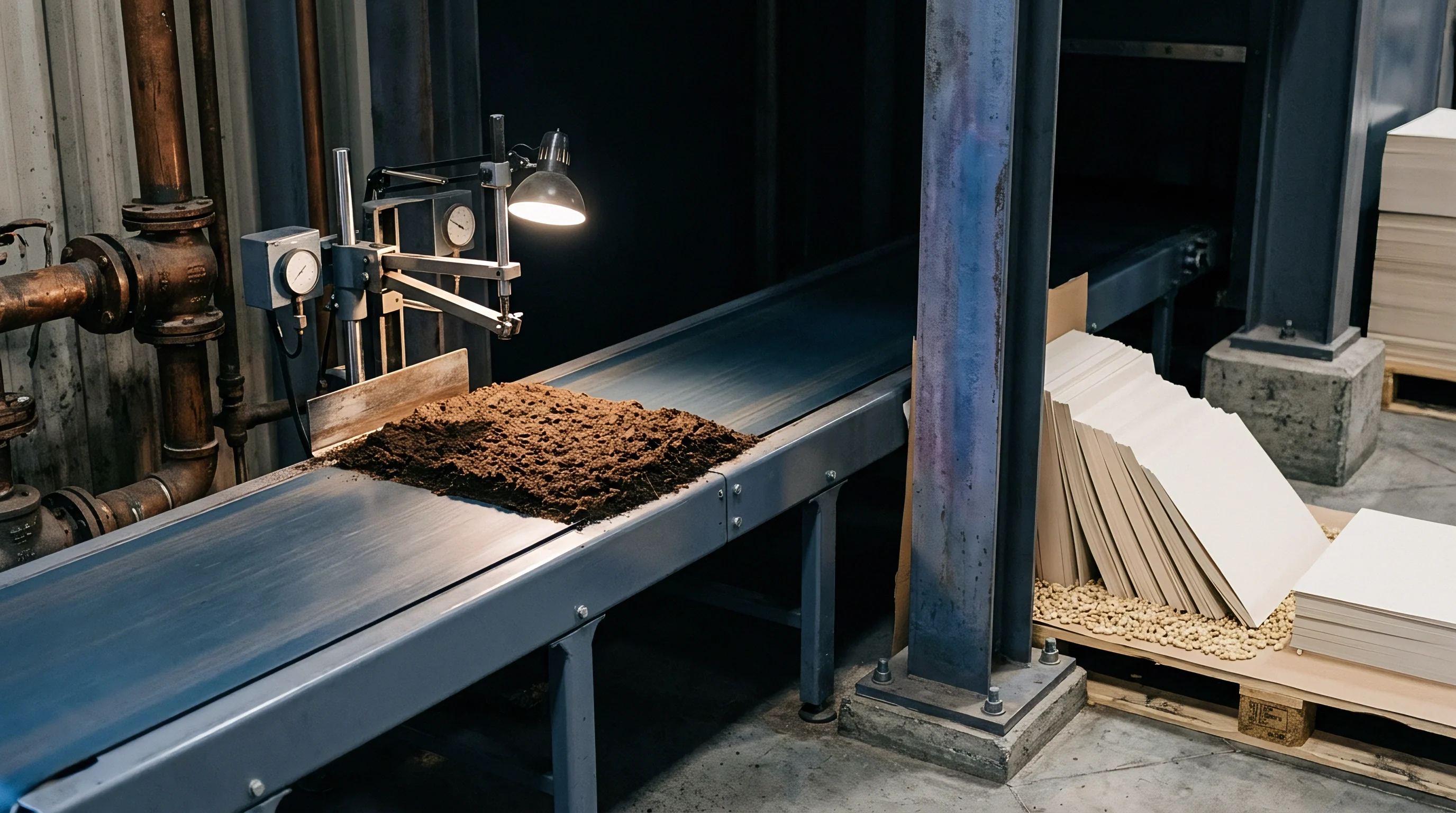
Deckle Position Variance across the Machine
Evaluating physical property distribution requires looking at cross-machine profiles. Tensile, tear, and bending resistance vary systematically from front to back of the machine. Even when wet-end headboxes distribute fiber slurry evenly, hydrodynamic drag along the sidewalls alters fiber alignment near the web margins.
Because edge zones take on higher machine-direction alignment than the center, board slit from the edges exhibits excessive machine-direction stiffness paired with weak cross-direction stiffness.
Moisture removal across the dryer section follows a parabolic profile. The web retains water longer in the center because exhaust currents draw moisture outward toward the hoods. Mills compensate using differential steam heating or targeted infrared drying, but over-correcting creates dry streaks where fibers grow brittle and crack during scoring and creasing.
A mill test certificate reporting an average moisture content of 6.5 percent easily masks edge moisture levels of 4.8 percent and central streaks of 8.2 percent ~ both of which cause severe converting defects.
Contractual specifications referencing ISO 2859-1 Level II normal inspection assign an Acceptable Quality Limit of 1.0 percent, meaning a lot of 50,000 units is accepted only if non-conforming units do not exceed 10 across a random sample of 500 units.
Surface strength measured by wax pick or ISO 3783 ink pick resistance varies across production runs as binder distribution shifts. As starch or latex formulations circulate in coater supply tanks, shear forces and evaporation gradually raise viscosity, altering how deep the liquid penetrates the sheet. Early rolls in a run get deeper binder penetration, securing surface fibers at the expense of opacity.
Late rolls from the same batch pick up a surface-concentrated binder layer that boosts dry pick resistance but leaves the coating vulnerable to cracking on 180-degree box folds.
Fluctuations in ash content directly impact the structural performance of recycled containerboard. Recycled furnish carries variable levels of mineral fillers like calcium carbonate and clay from de-inked office papers. These fillers boost opacity and smoothness, but they contribute no strength to the fiber matrix.
A high-ash batch can hit its target grammage while failing ISO 12192 short-span compressive strength tests, because online scanners measure total mass per unit area without distinguishing structural wood fiber from inert mineral filler.
Substantial financial loss occurs when a buyer accepts a consignment of solid bleached board based on a single composite sample; testing of individual rolls can reveal that forty percent of the shipment falls below the contracted Taber stiffness threshold, leading to costly sorting, re-testing, and press-downtime charges.


Migration
Chemical safety compliance for food-contact paperboard relies on migration testing conducted under standardized lab conditions. Framework Regulation EC 1935/2004 mandates that materials must not transfer constituents to food in amounts that endanger human health or unacceptably alter food composition. Protocols for paper and board reference BfR Recommendation XXXVI or Council of Europe resolutions, which set specific limits for heavy metals, primary aromatic amines, formaldehyde, fluorinated compounds, and mineral oil hydrocarbons.
Testing typically involves exposing small board samples to volatile simulants under controlled temperature profiles.
Standard lab conditions rarely reflect what happens in transport. Regulation EU 10/2011, applied by convention to paper testing, uses poly(2,6-diphenyl-p-phenylene oxide) ~ commercial Tenax ~ as a solid simulant for dry fatty foods. Standard protocols place a ten-square-centimeter board sample in contact with Tenax for ten days at forty degrees Celsius to model long-term ambient storage.
Yet actual packaging lines introduce variables static tests never capture: heat-sealing thermal spikes, trapped solvent vapors inside wrapped pallets, flexographic ink set-off during rewinding, and mechanical abrasion that cracks the barrier layer.
Why Does a Golden Sample Pass Migration While Heavy Shipments Fail?
Golden samples submitted by mills for compliance testing are produced under ideal conditions. Mills run these batches using freshly cleaned pulp circuits, virgin fiber furnishes, low-odor water-based inks, and pristine barrier latices. The resulting lab report confirms overall migration sits comfortably below the sixty milligram per kilogram food limit and heavy metal migration stays within microgram thresholds.
Commercial production, however, runs on shared machinery with recycled process water loaded with accumulated organics and trace surfactants.
De-inking and stock dispersion surfactants linger as trace residues in the finished sheet. These amphiphilic molecules lower surface tension and carry non-volatile lipophilic contaminants through the board. While a lab sample has virtually no residual surfactant, commercial production board contains elevated levels that accelerate the migration of mineral oil saturated hydrocarbons (MOSH) and mineral oil aromatic hydrocarbons (MOAH) from secondary fiber layers into packed food.
The test certificate reflects the clean baseline sample, leaving the buyer vulnerable when commercial shipments fail post-market surveillance checks.
| Substance / Contaminant Group | Regulatory Reference Framework | Specific Migration Limit (SML) | Standard Testing Conditions | Analytical Method |
|---|---|---|---|---|
| Mineral Oil Saturated Hydrocarbons (MOSH C10-C35) | BfR Draft Mineral Oil Ordinance | 0.5 mg/kg food | 10 days at 40°C on Tenax (MPPO) | Online HPLC-GC-FID |
| Mineral Oil Aromatic Hydrocarbons (MOAH C10-C35) | BfR Draft Mineral Oil Ordinance | 0.15 mg/kg food (detection limit) | 10 days at 40°C on Tenax (MPPO) | Online HPLC-GC-FID |
| Bisphenol A (BPA) | Commission Regulation (EU) 2018/213 | 0.05 mg/kg food | 10 days at 60°C in 95% Ethanol | LC-MS/MS |
| Per- and Polyfluoroalkyl Substances (PFAS) | EU POPs Regulation / National Bans | Non-detectable (total organic fluorine <50 mg/kg) | Solvent extraction (Isopropanol) | CIC / HPLC-MS/MS |
| Formaldehyde | BfR Recommendation XXXVI | 15.0 mg/kg food | Cold water extract (EN 645) | Photometric Acetylacetone Method |

Simulant Selection and Temperature Accelerations
Migration protocols use elevated temperatures to model shelf life, exposing board samples to sixty degrees Celsius for ten days to simulate more than six months at room temperature under Arrhenius diffusion kinetics. But thermal acceleration can alter synthetic barrier coatings. Polyolefin extrusions and aqueous dispersions undergo glass transition near fifty-five degrees Celsius; heating samples past that point increases polymer chain mobility, artificially inflating migration rates beyond anything seen in real-world use.
On the flip side, testing at lower temperatures can miss migration mechanisms that occur in transit. A barrier board tested at forty degrees Celsius might hold onto low-molecular-weight photoinitiators from UV-curable inks. When converted cartons pass through shrink-wrap tunnels or sit in shipping containers under direct sun, residual photoinitiators like benzophenone and 4-methylbenzophenone volatilize.
These gas-phase molecules migrate through inner liners directly into dry food matrices. Because static lab reports ignore transport thermal history, they offer false compliance assurance.
Functional barrier integrity requires that specific migration of mineral oil aromatic hydrocarbons remains below 0.15 milligrams per kilogram of food across the entire stated shelf life under maximum operational temperature profiles.
Set-off migration marks another blind spot in lab testing. Laboratory evaluations test single sheets of unprinted board exposed to simulant on one side only. In commercial production, rolls are wound under heavy tension and printed sheets are stacked thousands high on pallets.
Under that static pressure, inks and varnishes on the outer surface press firmly against the unprinted food-contact side, transferring hydrocarbon resins, plasticizers, and solvents directly onto the contact layer during storage.
Testing raw, unprinted board swatches inevitably yields zero migration for ink compounds. Yet when finished, printed cartons reach retail shelves, testing often reveals clear set-off contamination in the packaged food. A buyer who relies solely on a mill migration report for raw board remains fully responsible for set-off contamination introduced during printing and converting.
Standard sales contracts for food-grade paperboard usually include explicit disclaimers: compliance certificates apply only to raw, unprinted stock tested under static lab conditions, shifting all liability for set-off contamination, ink solvent migration, and converting-line chemical changes to the downstream buyer.


Scope
Chain of custody certificates from independent scheme owners provide documentary traceability for fiber from responsibly managed forests. Forest Stewardship Council standards like FSC-STD-40-004 and Program for the Endorsement of Forest Certification rules like PEFC ST 2002 establish audit protocols to trace wood fiber from harvesting through pulping, papermaking, converting, and distribution. Buyers often assume that if a supplier holds a valid company-level certificate, every pallet delivered by that supplier automatically carries a certified claim ~ an assumption that causes frequent compliance issues.
Chain of custody systems run on three main models: transfer, percentage, and credit systems. The transfer system keeps physical fiber streams segregated so material in the box matches the certified forest source. Under percentage and credit systems, certified and uncertified virgin or recycled fibers mix during pulping, and the mill allocates claim quantities on accounting ledgers rather than tracking physical fiber in specific rolls.
As a result, a delivered pallet might contain zero percent physical fiber from a certified forest while legally bearing an FSC Mix Credit claim supported by valid accounting ledgers.

Chain of Custody Certificate Verification
Verifying chain of custody integrity requires auditing specific documents across the transaction chain rather than trusting a certificate image on a supplier website. Certificates apply to specific legal entities, site locations, and defined product groups. The product group schedule dictates precisely which paper grades, grammages, and claim categories a facility can process.
If a mill holds a certificate for FSC Mix folding boxboard, that status does not cover solid bleached linerboard produced on a second machine line at the same site.
Discrepancies often pop up between purchase orders, delivery notes, and final invoices. For a packaging claim to withstand customs scrutiny or Green Claims audits, the exact certificate code and formal claim wording must appear explicitly on the line item of the invoice. If a supplier bills a consignment simply as Bleached Kraft Board without the certificate code and claim phrase, the buyer cannot legally resell the material as certified stock, no matter how valid the supplier’s overall corporate certification may be.
- Verify the supplier certificate code directly against the public FSC or PEFC online database to confirm active validity and check for scope suspensions or expirations.
- Cross-reference the specific paperboard grade and harmonized tariff code listed on the purchase order against the certified product scope schedule attached to the supplier registry entry.
- Inspect incoming delivery dockets and bill of lading documents to ensure the physical shipment carries matching lot numbers tied to the certified mill location.
- Audit the line-item details on the commercial invoice to confirm inclusion of the explicit claim statement alongside the supplier unique chain of custody registration number.
- Reconcile volume accounting ledgers quarterly to verify that physical tonnage purchased matches certified tonnage declared under percentage or credit accounting rules.

Credit Systems versus Transfer System Allocations
Credit systems allow mills to bank certified fiber inputs in a central accounting ledger. The mill earns claim credits based on the volume of certified wood entering pulping, adjusted for yield losses, and can hold those credits for up to twelve months. When demand for certified board spikes, the mill applies banked credits to outgoing shipments.
Once that credit balance hits zero, subsequent runs of identical paperboard become uncertified, even if they use raw materials from the exact same supply chain.
A buyer who qualifies a sample batch of certified board in January might reorder the same volume from the mill in August, only to receive uncertified stock because the mill ran out of credits. Physically and chemically, the August delivery is identical to the January run, but it lacks the legal status required to carry certified trademarks on the box. If the buyer fails to check invoice claim lines and prints environmental logos anyway, the brand faces regulatory enforcement and potential delisting by retailers.
Chain of custody integrity breaks whenever a claim phrase and unique certificate registration number are omitted from the physical commercial invoice line item, rendering the delivered material legally uncertified regardless of the supplier holding a valid corporate audit certificate.
Subcontracted converting introduces more chain-of-custody breaks. Mills often ship master rolls to third-party trade converters for sheeting, slitting, or custom coating. If the converter lacks an independent, audited chain of custody certificate, the claim chain stops at their receiving dock.
Material arrives as certified master rolls but leaves as non-compliant sheet stock, because a mill cannot issue certified claims for board processed by an uncertified vendor. Buyers managing multi-tier supply chains must audit every subcontractor handling board between the mill and the packaging line.
Claim errors also happen with multi-ply grades. A machine might run certified virgin pulp on outer print plies while using uncertified recycled fiber in internal bulk layers. If the mill miscalculates the mass-balance ratio under FSC-STD-40-004 rules, the percentage claim on the invoice overstates certified content.
Regulatory auditors reviewing environmental claims routinely demand mass-balance worksheets to verify percentage claims printed on consumer packaging.
Using uncertified subcontractors between certified mills and certified brand owners breaks the chain of custody, stripping claims from physical stock regardless of original mill paperwork.

Transit
Paperboard is hygroscopic, with mechanical properties tied directly to atmospheric moisture. Standard testing protocols like ISO 187 and TAPPI T402 specify conditioning test specimens at twenty-three degrees Celsius and fifty percent relative humidity for twenty-four hours before measuring burst strength, caliper, tensile energy absorption, or flexural stiffness. Those lab conditions reflect an idealized baseline.
In actual freight networks, paperboard moves through ocean containers, unconditioned port warehouses, and multi-modal transit routes where relative humidity routinely exceeds ninety percent and daily temperatures swing by forty degrees.
Moisture uptake weakens the hydrogen bonds linking cellulose fibers. As relative humidity rises from fifty percent to eighty percent, equilibrium moisture content in folding boxboard climbs from six percent to eleven percent by weight. Absorbed water causes fibers to swell, altering internal stress fields established during drying.
Because cellulosic fibers expand up to twenty times more in diameter than in length, inter-fiber bonds yield. The resulting structural loss triggers sharp drops in Edge Crush Test and Box Compression Test performance: a carton that held seven hundred newtons of top-load resistance in the lab can collapse under three hundred newtons after five days in a humid transit corridor.
Equilibrium Moisture Loss and Box Compression
Predicting container performance in transport requires accounting for moisture sorption hysteresis ~ paperboard takes on water vapor along a different curve than it gives it off. Board exposed to high humidity during ocean transit absorbs moisture quickly, but when placed in a dry warehouse, desorption is slow, locking residual stresses into the fiber matrix. Environments with cycling humidity, where warm damp days alternate with cool humid nights, induce rapid mechanical fatigue in paperboard packaging.
Dynamic environmental loading accelerates container creep failure. Static load formulas such as McKee’s equation estimate box compression strength using caliper, short-span compressive strength, and box perimeter, assuming steady moisture under laboratory conditions. When relative humidity cycles between fifty and ninety percent, actual load-bearing capacity drops up to sixty percent below calculated static values.
Cartons stacked six pallets high in a container develop progressive creasing and sidewall bulging, leading to leaning stacks and sudden pallet collapse.
| Relative Humidity Conditioning | Equilibrium Moisture Content (%) | ECT Value (ISO 3037) | ECT Retention (%) | Calculated BCT (McKee) | Measured BCT (ISO 12048) |
|---|---|---|---|---|---|
| 50% RH (Standard Lab Baseline) | 6.2% | 4.8 kN/m | 100.0% | 1,420 N | 1,410 N |
| 65% RH (Standard Ambient) | 7.8% | 4.1 kN/m | 85.4% | 1,210 N | 1,150 N |
| 80% RH (Elevated Warehouse) | 10.4% | 3.1 kN/m | 64.5% | 915 N | 780 N |
| 90% RH (Marine Transit Peak) | 13.6% | 2.0 kN/m | 41.6% | 590 N | 410 N |
| 90% to 50% RH (Cyclic Hysteresis) | 8.1% (desorbing) | 3.3 kN/m | 68.7% | 975 N | 640 N |

Container Microclimates and Stack Degradation
Microclimates inside shipping containers frequently cause localized condensation, often called container rain. When temperatures drop rapidly at sunset, warm moist air reaches the dew point, condensing on the steel roof and dripping onto top pallets. Standard stretch wrap around pallets then traps that moisture inside the load, preventing drying and maintaining a high-humidity pocket around bottom-tier cartons.
High stretch-wrap tension adds severe mechanical stress, crushing pallet corners and creasing vertical carton edges. Because vertical corners carry up to seventy percent of a folding box’s top-load compression strength, pre-damaging these main load paths severely compromises stack durability. Combined with moisture uptake, corner-crushed cartons fail at a fraction of their lab-tested ratings.
Pallet deckboard spacing introduces further real-world failure points. Gaps wider than fifty millimeters between deckboards create localized pressure points under bottom cartons. Board spanning those gaps sags under static weight, suffering permanent shear deformation.
While ISO 12048 compression tests evaluate boxes on flat, rigid steel platens, real shipping rests cartons on uneven wooden pallets where point loading concentrates stress across weak panel zones.
Logistics teams track retention factors across container voyages to correlate lab conditioning values with real-world port arrival data.
Unresolved questions persist regarding how long-term structural creep under dynamic relative humidity cycles alters barrier coating continuity across score lines in heavy industrial containerboard applications.


Remedy
Closing the gap between tested lab swatches and shipped production pallets takes structured commercial controls, tight incoming inspection, and unambiguous contract language. Relying on mill self-declarations or promotional spec sheets leaves buyers exposed to rejected shipments, customs holds, and retail delisting. Procurement teams need to turn laboratory specifications into binding contract terms that govern lot acceptance and lay out clear financial remedies when delivered material fails.
Incoming quality verification starts by pulling retain samples from every production lot before processing. When pallets arrive at the dock, receiving teams should pull physical samples according to ISO 2859-1 random sampling tables prior to signing delivery dockets. Samples pulled from top, middle, and bottom tiers must be sealed immediately in vapor-proof aluminum bags to preserve baseline moisture content.
If board fails on high-speed filling lines, these retains can be tested to determine whether the defect came from the mill or stemmed from warehouse storage conditions.

Inbound Acceptance and Retain Counter-Sampling
Inbound inspection should pair fast dockside checks with formal lab testing. Quick checks on basis weight, thickness, Cobb 60 water absorption, and barcode printability take less than thirty minutes at the receiving dock. If moisture exceeds seven and a half percent or Cobb values overshoot targets by more than fifteen percent, the warehouse can issue an immediate provisional hold, stopping non-conforming stock from entering active inventory.
Testing retained samples in an accredited third-party lab provides clear, independent evidence during commercial disputes. Supply contracts should name a certified reference laboratory whose analytical findings bind both parties if mill and buyer quality teams disagree. Arbitration clauses must spell out required test methods, ISO 187 conditioning protocols, and confidence intervals.
Setting these terms in advance avoids lengthy disputes when defective board halts production.
- Quality Agreement Alignment establishes mandatory specification thresholds for Taber stiffness, burst strength, Cobb absorption, and heavy metal content, superseding generic mill sales terms.
- Batch Counter-Sampling Mandate obligates receiving teams to pull sealed retain samples across three pallet zones within two hours of shipment arrival.
- Independent Arbitration Designation names an accredited ISO 17025 test laboratory whose analytical findings serve as binding determination for quality disputes.
- Defect Allocation Formulas specify financial credit values for machine downtime, die-cutter tool damage, and sorting labor triggered by non-conforming paperboard.
- Chain of Custody Verification Protocol mandates quarterly cross-checks of invoice claim strings against public scheme registers before clearing supplier payment files.
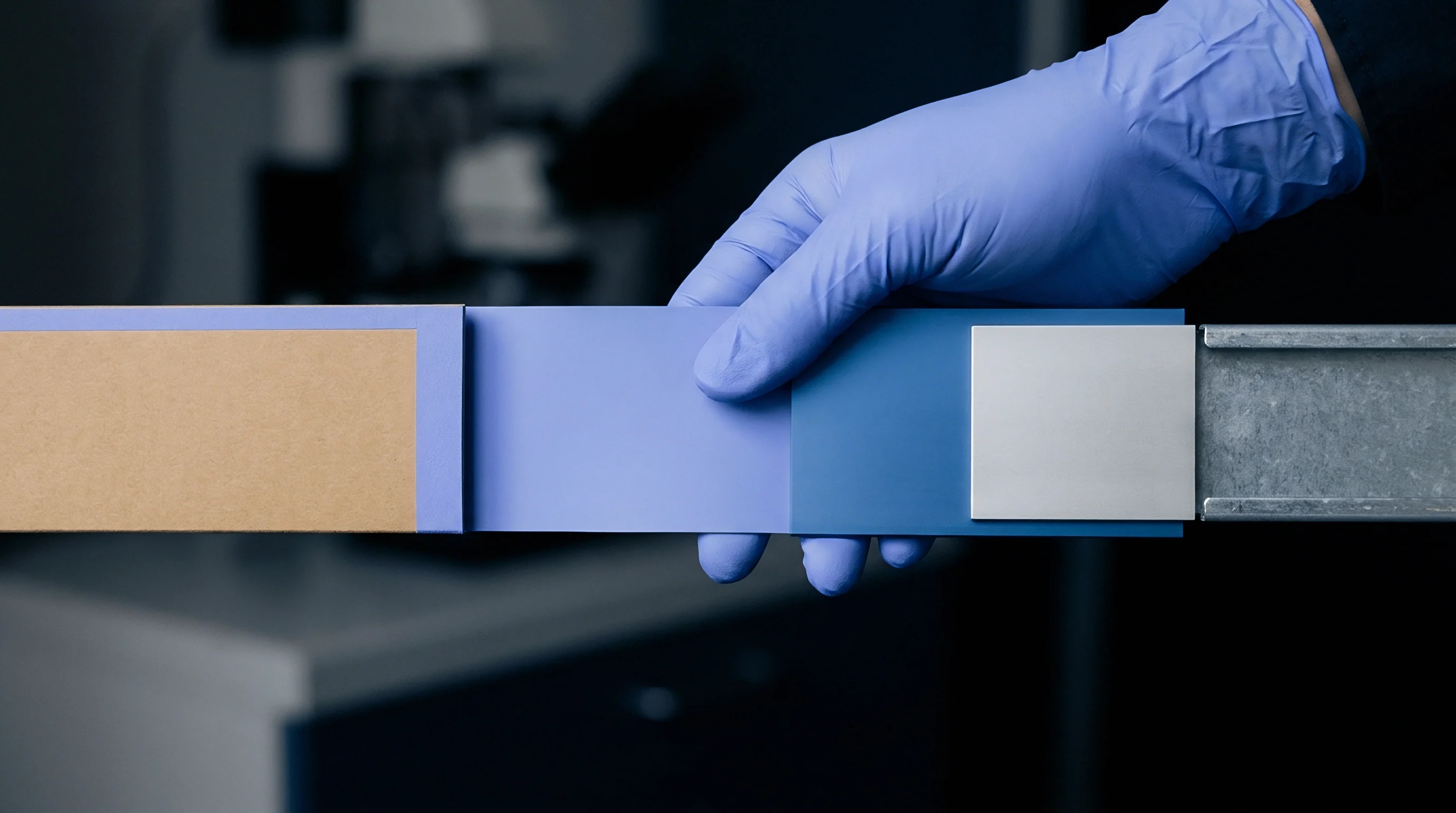
Contractual Allocation of Non-Conformity Risk
Packaging supply contracts should place financial risk back on the mill whenever delivered lots fail to match certified swatches. Standard supplier sales terms routinely limit liability to replacing raw material, excluding consequential costs like press downtime, damaged printing plates, sorting labor, or retailer fines. A strong purchase agreement rejects these exculpatory clauses, replacing them with clear cost-recovery mechanisms linked to specific non-conformity thresholds.
Under European Packaging and Packaging Waste Regulation rules and national Green Claims enforcement, legal liability for recycled content declarations and food safety compliance sits with the company placing finished packaging on the market. If a supplier delivers board with uncertified recycled fiber or high mineral oil hydrocarbon levels that trigger regulatory action, the supply agreement must require full indemnification ~ covering legal fees, fines, recall expenses, and brand damage stemming from faulty certificates of analysis or invalid chain-of-custody claims.
Contracts should define statistical process control limits rather than single target numbers. Stating a target grammage of 250 g/m² without upper and lower tolerance limits allows suppliers to deliver 235 g/m² board that lacks stiffness, or 265 g/m² stock that reduces yield per ton. Specification limits tied to capability indexes like Cpk prevent this; requiring a minimum Cpk of 1.33 for key parameters ensures the mill maintains tight process control and minimizes out-of-spec shipments.
Effective procurement integrates explicit financial remedies into purchase order terms. If a shipment fails dock inspection, the buyer should hold the explicit right to reject the entire lot, demand replacement delivery within five business days at the supplier’s expense, or sort the board in-house while debiting the supplier for all labor and downtime costs incurred.