Paperboard Moisture Conditioning Standards and ISO 186 Batch Acceptance Sampling Protocols
Paperboard moisture verification demands ISO 186 random lot sampling and preconditioning under ISO 187 before ISO 287 gravimetric testing.


Equilibrium
Paperboard is thermodynamically sensitive to surrounding atmospheric conditions because cellulosic polymers are inherently hydrophilic. Hydroxyl groups along the cellulose and hemicellulose chains form hydrogen bonds with ambient water vapor, pulling in moisture until the partial vapor pressure inside the sheet matches that of the room. Standard conditioning protocols fix these environmental baselines so physical measurements reflect substrate properties rather than day-to-day weather.

Hygroexpansivity and Cellulosic Sorption Isotherms
Cellulose fibers take on or release moisture as relative humidity shifts, driving dimensional changes throughout the sheet. Fiber swelling occurs mostly across the width, causing cross-machine expansion up to five times greater than movement in the machine direction. These shifts trace distinct hysteresis loops during climate changes.
A paperboard sample reaching equilibrium from a wet state holds onto more bound water than the same sheet reaching equilibrium from a dry state at identical relative humidity. Desorption curves sit above absorption curves across the entire humidity spectrum, meaning accurate material characterization depends on whether samples start from higher or lower initial moisture levels.
Solid bleached sulphate grades, made from pure virgin chemical pulp, show predictable sorption with tight hysteresis loops. Folding boxboard, which sandwiches a mechanical pulp core between chemical pulp liners, displays wider hysteresis bands because of high lignin content in the inner plies. Lignin carries fewer exposed hydroxyl binding sites than cellulose, changing both sorption kinetics and equilibrium water volume across multi-ply board structures.
Coated recycled grades show more complex absorption profiles, as shortened fiber fragments and residual fillers alter capillary condensation inside inter-fiber pores.
| Grade Designation | Furnish Composition | ISO 187 EMC Target (%) | TAPPI T402 EMC Target (%) | Equilibrium Duration (Hours) |
|---|---|---|---|---|
| Solid Bleached Sulphate (SBS) | 100% Virgin Bleached Chemical | 5.8 to 7.0 | 5.5 to 6.8 | 24 |
| Folding Boxboard (FBB) | Bleached Chemical / Mechanical Core | 6.2 to 7.8 | 6.0 to 7.5 | 24 |
| Coated Recycled Board (CRB) | Recovered Fiber / Mineral Fillers | 5.0 to 6.5 | 4.8 to 6.2 | 48 |
| Unbleached Kraft Board (CUK) | 100% Virgin Unbleached Chemical | 6.5 to 8.2 | 6.2 to 7.8 | 24 |
| Equilibrium moisture content (EMC) targets measured at 23 °C and 50% relative humidity following pre-conditioning below 35% relative humidity. | ||||
Standard Atmosphere Specifications and Pre-Conditioning
International standard ISO 187 sets the baseline atmosphere for conditioning and testing paperboard at 23 °C dry bulb temperature (±1 °C) and 50 percent relative humidity (±2 percent). Technical association TAPPI T402 aligns with these environmental criteria while recognizing historical regional tolerances of plus or minus 1 °C and plus or minus 2 percent relative humidity. Maintaining air velocity between 0.15 and 0.50 meters per second across sheet surfaces stops localized microclimates from forming inside testing cabinets.
Desorption curves consistently land higher moisture levels than absorption curves at identical relative humidity.
Eliminating hysteresis history requires pre-conditioning paperboard samples in a low-humidity atmosphere prior to full equilibration. Pre-conditioning exposes test specimens to air maintained between 10 percent and 35 percent relative humidity at temperatures below 50 °C for at least two hours. This step forces the board onto the absorption curve during subsequent exposure to standard conditions.
Skipping pre-conditioning introduces up to a 1.5 percent variance in measured equilibrium moisture, skewing stiffness, burst strength, and caliper measurements.
Mill technical sales departments frequently attribute post-delivery dimensional changes to converter atmospheric handling rather than mill-floor winding tension or improper pre-conditioning treatments.


Increment
Defining a batch for acceptance sampling under ISO 186 requires precise boundary identification before opening pallet wrappers or unstrapping reel units. A lot consists of paperboard manufactured under uniform conditions, sharing identical nominal grammage, bulk, finish, and coating parameters. Converting plants receiving multi-truck shipments treat individual transport units as discrete sub-lots to isolate environmental exposure during transit.

Lot Definition and Random Unit Selection Mechanics
Sampling unit selection follows strict probability models to yield statistically valid representation across large deliveries. Taking convenient sample sheets from exposed top pallets invalidates acceptance testing by capturing outer atmospheric contamination rather than true batch characteristics. Random selection tables designate specific pallet numbers or reel cores across the entire delivery lot count.
Sampling isolation demands strict discipline. When evaluating a shipment of forty pallets, ISO 186 tables specify selecting five distinct sample units. Technicians inspect outer packaging materials for puncture damage or torn stretch film before extracting internal sheets.
Damaged packaging units receive isolated evaluation as non-conforming items rather than inclusion in main lot acceptance sampling.
- Identify the delivery lot boundaries and verify total pallet or reel counts against shipping documentation.
- Select sample units from the consignment using a random number table.
- Remove stretch wrap and protective outer mill packaging only immediately prior to extracting internal test sheets.
- Discard the top five complete sheets from sheeted pallets or strip outer damaged paperboard wraps from reel perimeters.
- Excise specimen sheets across the full width of the web or sheet structure.
- Enclose excised specimens inside air-tight vapor barrier bags within twenty seconds of cutting to lock in original moisture states.
Physical Sample Extraction Protocols at Goods in Inspection
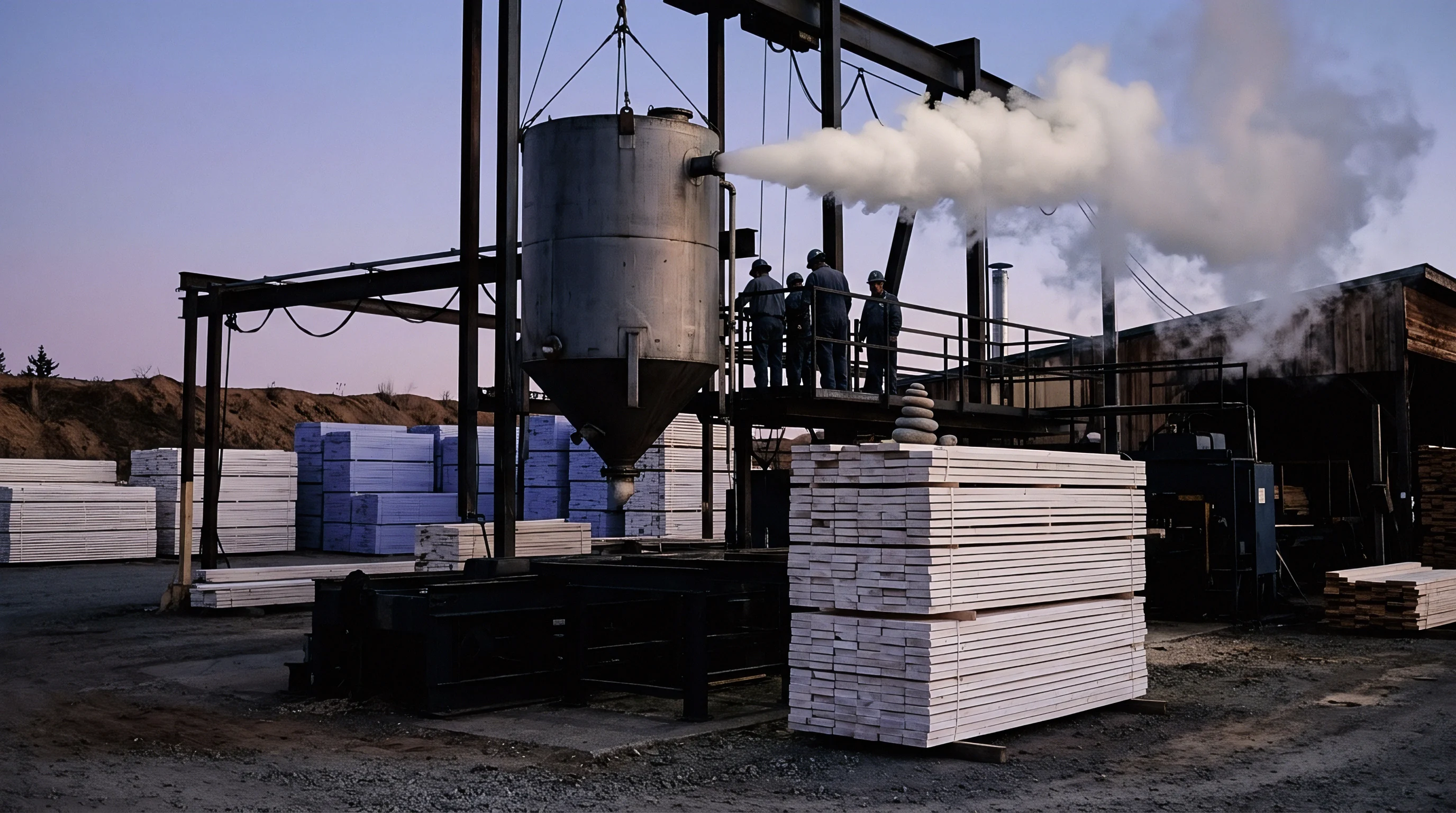
Extracting test specimens from paperboard reels requires stripping outer paperboard wraps to reach unexposed material layers. Ambient moisture penetrates perimeter wraps during transit, creating a moisture gradient from the outer layer inward. Standard procedures demand removing at least three full outer wraps from reels, or discarding a depth of three millimeters, before taking specimen sheets.
Conditioning paperboard at 23 °C and 50 percent relative humidity stabilizes moisture content between 5.5 and 7.2 percent for solid bleached sulphate grades.
Excised sample sheets must cover the complete cross-machine width of the reel to account for profile variations across the paper machine wire. Technicians fold or cut sample strips into manageable dimensions while wearing clean cotton gloves to prevent skin oil and moisture transfer. Immediate enclosure inside moisture-proof container bags prevents environmental exchange during transit to laboratory bench setups.
Outer sheet layers shield inner reams from atmospheric absorption during short exposure windows.


Reel
Cross-web moisture uniformity across parent reels directly dictates converting performance, creasing integrity, and print register accuracy. Paper machines operating with non-uniform moisture profiles export structural stress into wound rolls. High-moisture streaks compress more tightly during reel buildup, generating localized thickness variations and uneven web tension during high-speed unwinding.
Can Unopened Pallet Shrink-Wrap Prevent Moisture Drift during Transit?
Protective pallet wrapping slows environmental interaction but cannot prevent long-term moisture redistribution when internal temperature gradients exist. Warm paperboard packed inside cold warehouses condenses internal air moisture onto inner packaging films. The board margins reabsorb this free water, producing wet edges while internal ream cores remain at mill-bound moisture levels.
Pallets sitting in unconditioned storage yards experience perimeter drying, establishing steep moisture differentials across the sheet plane.
Edge wave formation degrades feeder operations on folding carton converting lines. Tight edges generate mid-sheet bagginess, leading to misregistration across multi-color print decks. Conditioning sealed pallets inside pressroom environments for forty-eight hours equalizes core-to-edge temperatures, eliminating internal vapor transport before film removal.

Statistical Lot Acceptance and Risk Parameters
Acceptance decisions under ISO 186 operate on statistical probability, balancing Producer Risk against Consumer Risk. Producer Risk represents the probability that a conforming lot gets rejected due to unlucky sample selection. Consumer Risk defines the probability that a defective lot passes inspection, landing non-conforming substrate on converting floors.
Acceptable Quality Limit (AQL) parameters establish the maximum percentage of non-conforming material tolerated within an accepted lot. For critical functional parameters like moisture content in barrier-coated paperboard, buyers set AQL baselines at 1.0 percent or 1.5 percent. Physical defects like edge waves or moisture curling operate under 2.5 percent AQL limits.
| Lot Size (Units) | Minimum Sample Units | Increments Per Unit | Total Specimen Count | Acceptance Threshold | Rejection Threshold |
|---|---|---|---|---|---|
| 1 to 5 | 1 | 5 | 5 | 0 defects | 1 defect |
| 6 to 20 | 2 | 3 | 6 | 0 defects | 1 defect |
| 21 to 50 | 3 | 3 | 9 | 0 defects | 1 defect |
| 51 to 100 | 4 | 3 | 12 | 1 defect | 2 defects |
| 101 to 500 | 5 | 4 | 20 | 1 defect | 2 defects |
Moisture non-conformities trigger specific field failure modes during converting operations:
- Edge wave formation occurs when high ambient humidity penetrates pallet margins while core areas remain dry, generating localized differential dimensional expansion across the cross direction.
- Tight edges develop when dry ambient air strips moisture from sheet perimeters, shrinking outer dimensions while internal sheet regions retain higher moisture percentages.
- Blistering during heat sealing stems from excess bound moisture vaporizing rapidly inside barrier coatings when sealing jaws exceed two hundred degrees Celsius.
- Delamination at crease lines takes place when desiccated liner plies lack sufficient flexibility to absorb folding stress without cracking along score channels.
Accepting unverified board lots transfers all downstream press downtime, misregistration waste, and tool wear costs directly onto converter operating margins.


Oven
Gravimetric oven drying serves as the definitive reference standard under ISO 287 and TAPPI T412 for establishing absolute water content in paperboard. Alternate measurement tools, including dielectric probes, infrared sensors, and high-frequency capacitance meters, require continuous calibration against primary gravimetric test results. Direct thermal mass determination eliminates surface coating or density interference that distorts electronic sensor responses.
Gravimetric Reference Testing under ISO 287
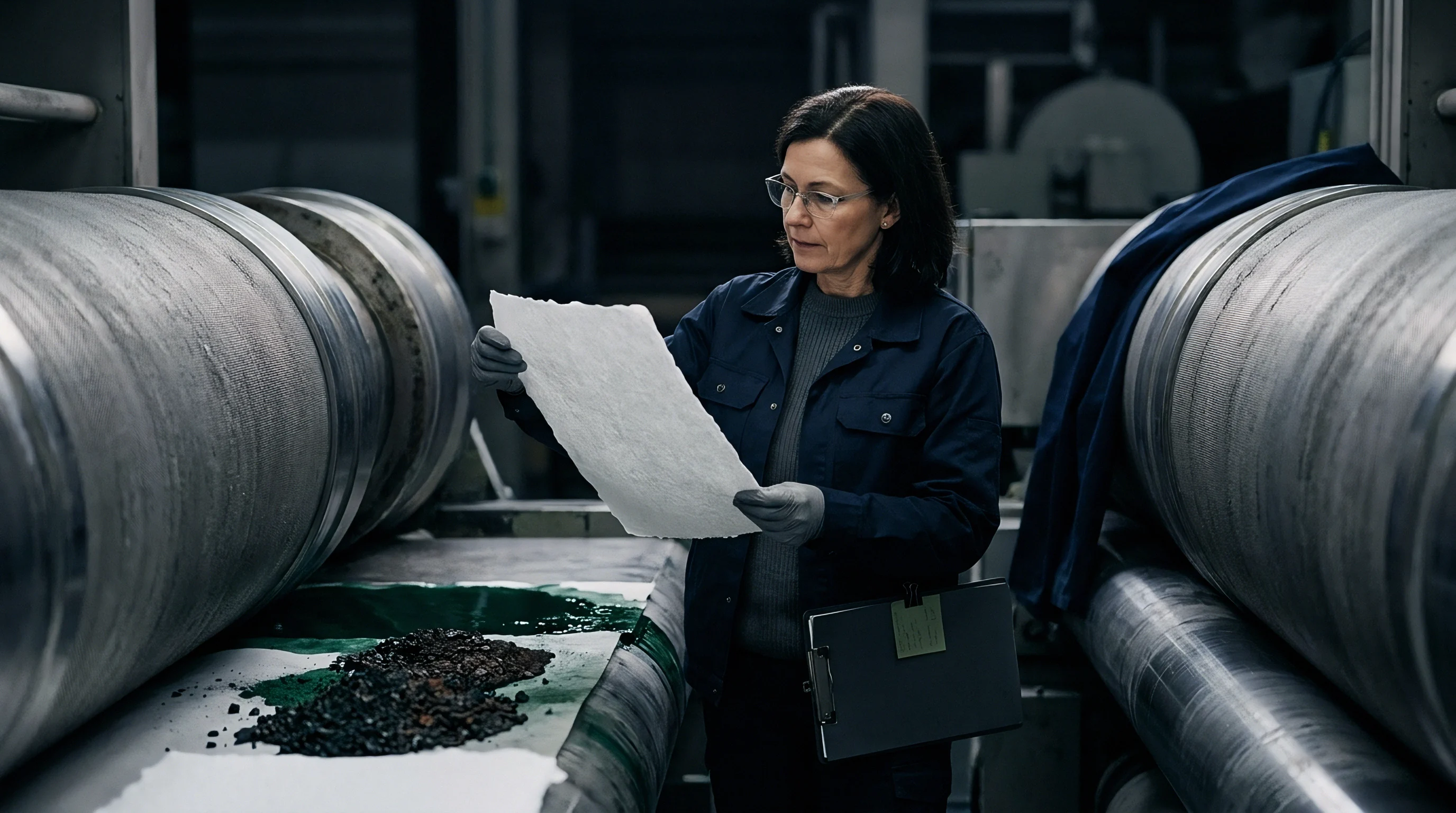
Executing ISO 287 requires extracting test specimens, weighing them immediately in vapor-tight containers, and drying them to constant mass in a ventilated drying oven maintained at 105 °C plus or minus 2 °C. Test specimens weigh a minimum of fifty grams to minimize balance rounding errors. Analytical balances must carry a precision rating of 0.001 grams.
Calculations derive water percentage from mass loss relative to initial moist specimen weight:
Moisture Content (%) = ((Initial Mass – Dry Mass) / Initial Mass) 100
Drying continues until successive weighings at one-hour intervals show less than a 0.1 percent change in calculated dry mass. Specimens transfer directly from ovens into desiccators charged with active silica gel to prevent atmospheric moisture absorption during cooling cycles.
- Verification of tare weight requires heating aluminum weighing bottles to 105 °C, cooling in a desiccator, and recording dry vessel mass prior to specimen introduction.
- Immediate enclosure in vessels prevents ambient moisture transfer between sheet extraction and initial mass measurement on the analytical balance.
- Drying to constant mass occurs when successive weighings at one-hour intervals differ by less than 0.1 percent of the original specimen weight.
- Cross-calibration of hand meters anchors handheld dielectric probe readings to gravimetric oven-drying results established under ISO 287 reference conditions.

Calibration and Application of Rapid In-Line Instruments
Handheld capacitance and pinless dielectric meters permit rapid moisture scans across landed pallets without destroying complete sheets. Electronic meters measure dielectric permittivity changes in the paperboard matrix, which vary linearly with bound water volume. Uncalibrated meters introduce severe error when switching between solid bleached sulphate and unbleached kraft substrates due to chemical furnish variations and ionic conductivity differences.
Standard mill contracts stipulate that moisture disputes require formal reference testing under ISO 287 before financial adjustments apply.
Infrared absorption instruments gauge water content by detecting specific light wavelengths absorbed by hydroxyl bonds. Surface coatings containing calcium carbonate or kaolin clay scatter light rays, requiring grade-specific calibration curves for every coated board specification. Field readings serve as preliminary screening markers, but commercial rejections rely exclusively on ISO 287 gravimetric laboratory data.
Clause 8.2 of ISO 287 dictates that test reports must explicitly state whether initial weighings occurred on intact sheets or cut specimen strips, as specimen cutting accelerates moisture evaporation prior to tare enclosure.
Remedy
Financial disputes surrounding landed paperboard tonnage center on the commercial calculation of dry fiber weight versus billed gross weight. Buyers purchasing substrate by total weight lose money when paying paperboard prices for excess water volume. Standard mill sales contracts establish base moisture targets, typically 6.5 percent, with defined upper and lower tolerance limits.
Financial Adjustment Arithmetic for Excess Water Mass
Quantifying financial remedies for high moisture content requires translating wet weight measurements into commercial dry fibre equivalents. Consider a delivery lot of 40.0 metric tonnes of 350 gsm folding boxboard billed at 1,200 USD per metric tonne, specified at 6.5 percent moisture content. Goods-in inspection under ISO 186 and ISO 287 establishes an actual average moisture content of 9.2 percent.
Calculations begin by determining the specified dry fibre weight inside the contracted tonnage:
Contracted Dry Mass = Billed Weight (1 – Specified Moisture Fraction)
Contracted Dry Mass = 40.0 (1 – 0.065) = 37.40 Metric Tonnes of Dry Fibre
Calculating actual dry fibre delivered exposes the shortfall in usable material:
Delivered Dry Mass = Billed Weight (1 – Actual Moisture Fraction)
Delivered Dry Mass = 40.0 (1 – 0.092) = 36.32 Metric Tonnes of Dry Fibre
Deficit Dry Mass = 37.40 – 36.32 = 1.08 Metric Tonnes of Missing Fibre
The monetary adjustment covers both missing fiber value and excess freight charges paid for phantom water weight:
Substrate Value Adjustment = 1.08 Tonnes 1,200 USD = 1,296.00 USD
Freight Adjustment (at 85 USD per tonne) = 1.08 Tonnes 85 USD = 91.80 USD
Total Commercial Credit Due = 1,387.80 USD
| Specification Range (%) | Delivered Moisture (%) | Billed Weight (Tonnes) | Adjusted Dry Fibre Weight (Tonnes) | Commercial Settlement Action |
|---|---|---|---|---|
| 5.5 to 7.5 | 6.8 | 40.00 | 37.28 | Full Acceptance / Zero Price Adjustment |
| 5.5 to 7.5 | 8.2 | 40.00 | 36.72 | Debit Note Issued for 288 USD Fibre Deficit |
| 5.5 to 7.5 | 9.2 | 40.00 | 36.32 | Debit Note Issued for 1,387.80 USD Fibre and Freight |
| 5.5 to 7.5 | 11.0 | 40.00 | 35.60 | Full Lot Rejection / Replacement Required |
Contractual Claim Windows and Re-Sampling Rights
Commercial contracts impose tight timelines for notifying paper mills of moisture non-conformities. Buyers issue formal written claims within fourteen calendar days of shipment receipt, accompanied by primary ISO 287 gravimetric laboratory reports. Failure to file within specified claim windows waives all rights to financial credit or material replacement.
Excess moisture on landed paperboard reels forces the buyer to pay freight charges for water instead of usable cellulose fiber.
Mill counter-testing clauses allow suppliers to send independent surveyors to perform re-sampling under ISO 186 within seven days of claim notification. Re-sampling occurs only on unopened, undamaged pallets carrying original mill labels and intact moisture wraps. If re-testing confirms the initial laboratory findings, the mill absorbs surveyor costs and issues credit; if re-testing demonstrates conforming moisture levels, the buyer pays all independent survey fees.
How far can converters compress incoming goods inspection timelines before rapid electronic moisture scans introduce unacceptably high commercial risk during contract disputes?