Statistical Sampling Standards for Folding Boxboard Quality Control
Statistical sampling of folding boxboard applies ISO 2859-1 attribute limits and ISO 3951-1 variable k-factors to verify stiffness, caliper, and purity.


Plan
Receiving docks handling solid bleached sulphate or folding boxboard process twenty-tonne truckloads through rigid mathematical intake gates. An intake lot consists of single-mill production runs grouped by caliper, grammage, and reel slitting sequence. The primary operational instrument for attribute sampling remains ISO 2859-1, corresponding directly to ANSI/ASQ Z1.4.
Inbound cartonboard converters set General Inspection Level II as the default operational baseline for commercial delivery qualification, shifting to Level III when processing high-speed pharmaceutical packaging or Level I when evaluating historically reliable virgin fibre mills. Acceptance Quality Limit calibrations categorize board defects into three distinct tiers: critical safety parameters at AQL 0.40, functional conversion defects at AQL 1.0, and minor visual deviations at AQL 4.0. Inspection lots exceeding 35,000 sheets require a sample size of 315 units under Code Letter L, permitting zero critical defects, seven major functional failures, and fourteen minor imperfections before automatic rejection of the delivery docket.
Variables sampling operates concurrently under ISO 3951-1 for continuous numerical distributions such as basis weight, Taber bending stiffness, and Parker Print-Surf roughness. While attribute testing records discrete binary pass or fail outcomes, variables estimation establishes the distance between the lot sample mean and the specification limit divided by the sample standard deviation. This calculated k-factor determines whether a lot passes at a tighter statistical confidence interval with significantly smaller specimen numbers.
Switching rules between normal, tightened, and reduced inspection enforce supplier accountability across consecutive deliveries.
Tightened inspection becomes mandatory when two out of five consecutive lots fail initial verification at normal inspection. Normal inspection resumes only after five consecutive lots achieve acceptance under tightened parameters. Five consecutive acceptable lots under normal inspection allow conversion to reduced inspection, lowering test overhead until a single non-conforming lot forces immediate return to the normal baseline.
The pallet stays quarantined.
Under ISO 2859-1 Clause 9.3, five consecutive lots accepted on normal inspection trigger the transition to reduced inspection.

Acceptance Quality Limit Calibration
Defect classification governs the physical disposition of cartonboard lots entering high-speed offset and gravure printing operations. Visual and dimensional non-conformances generate distinct risk profiles that dictate statistical thresholds across converters.
- Critical defects cause catastrophic packaging line stoppages, toxicological contamination in food cartons, or regulatory non-compliance under EU Regulation 1935/2004, carrying an AQL ceiling of 0.40.
- Major defects impair conversion performance through die-cutting delamination, scoreline cracking exceeding sixty microns, ink flaking, or dimensional out-of-squareness above one millimetre, evaluated at AQL 1.0.
- Minor defects present minor cosmetic blemishes, slight shade variation within delta E values below 1.5, or light pallet banding marks outside structural carton zones, governed under AQL 4.0.
The statistical consequence of misclassifying a major structural defect as a minor visual blemish shifts the operational characteristic curve, raising the consumer risk beta beyond twenty percent. High consumer risk exposes the finishing floor to unrecoverable jam rates on folder-gluers operating at four hundred metres per minute.
| Lot Size in Sheets | Sample Code Letter | Sample Size | AQL 0.40 Ac/Re | AQL 1.0 Ac/Re | AQL 4.0 Ac/Re |
|---|---|---|---|---|---|
| 3,201 to 10,000 | K | 125 | 1 / 2 | 3 / 4 | 10 / 11 |
| 10,001 to 35,000 | L | 200 | 2 / 3 | 5 / 6 | 14 / 15 |
| 35,001 to 150,000 | M | 315 | 3 / 4 | 7 / 8 | 21 / 22 |
| 150,001 to 500,000 | N | 500 | 5 / 6 | 10 / 11 | 21 / 22 |
Inappropriate acceptance thresholds let structurally compromised board reach high-speed converting machinery, generating catastrophic die jams, ruined tooling, unrecoverable press downtime, and commercial warranty rejections.

Sheet
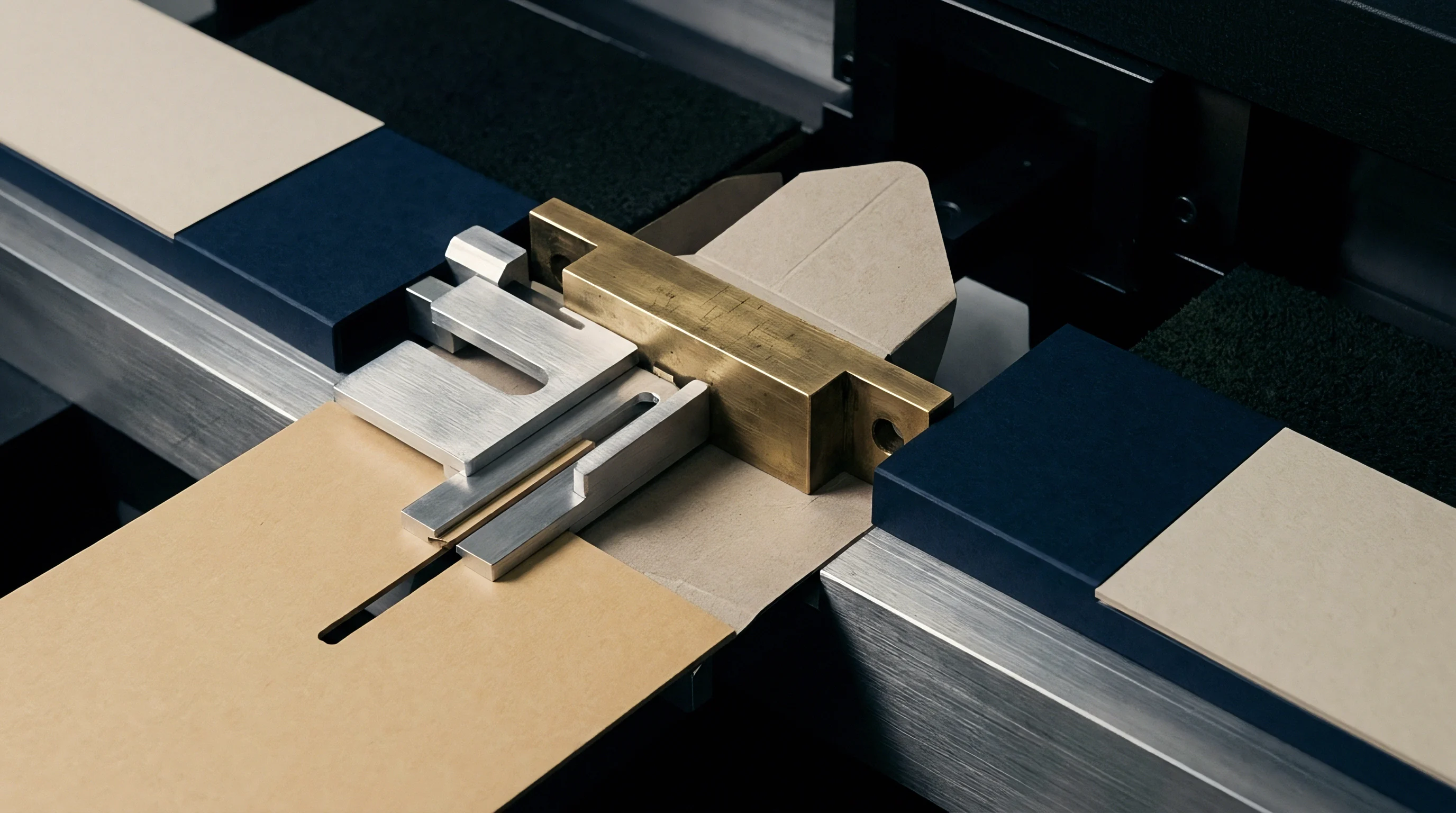
Specimen extraction from delivered skids and mill reels follows the structural mandates of ISO 186 or TAPPI T 400. Board properties vary across the parent reel due to hydrodynamic distribution within the paper machine headbox, wire drainage gradients, and calender stack pressure differentials. A sampling plan that selects sheets from a single pallet corner introduces profound selection error.
Inspectors select gross sample sheets from undamaged packaging units across the top, middle, and bottom tiers of randomly designated skids. Outer wraps, protective headers, and the first three wraps of any parent reel are stripped away to eliminate transit abrasion and moisture equilibrium distortion.
Conditioning governs all physical measurement. ISO 187 dictates that paperboard specimens stabilize at twenty-three degrees Celsius and fifty percent relative humidity until equilibrium moisture content stabilizes. Testing specimens directly from an unconditioned shipping container yields erratic tensile, stiffness, and caliper readings.
Fibres absorb or desorb atmospheric water, altering internal bonding networks and pigment coating flexibility. Moisture softens the web.
Cross-direction dimensional stability depends on virgin chemical pulp swelling characteristics. Mechanical wood pulp within the middle plies of folding boxboard exhibits hygroscopic behavior that alters carton blank geometry under fluctuating factory climates.
- Cut twenty full-width sheets across the parent roll face after discarding the five outermost protective wraps.
- Divide each sheet into machine direction strips spanning three hundred millimetres by thirty millimetres for tensile and bending evaluation.
- Number every specimen sequentially from operator side to drive side to map cross-machine profiles.
- Place test specimens immediately inside airtight polyethylene bags if immediate standard conditioning chambers remain inaccessible on site.
Bending resistance drops by twenty-two percent when relative humidity rises from fifty percent to sixty-five percent at twenty-three degrees Celsius.

Where Does Machine Direction Bias Skew Acceptance?
Fibre alignment during wet-end forming produces an anisotropic sheet where mechanical properties diverge along principal axes. Machine direction fibres orient parallel to web travel, yielding stiffness values between 1.8 and 2.5 times higher than cross-direction measurements in GC1 and GC2 grades. Creasing resistance, tear propagation, and carton opening force depend on this exact orientation.
When sampling protocols pull specimens without verifying grain alignment, testing laboratories report false failures on bending resistance. A carton designed with horizontal grain direction folds flat during automatic filling if cross-direction stiffness drops below specified threshold tolerances. Die-cutting blanks oriented askew relative to machine direction generate erratic scoreline fold angles.
Rigidity preserves carton shape.
Mill technical service representatives routinely claim that abnormal stiffness test values reflect improper laboratory conditioning or operator cutting angle errors rather than structural furnish deficiencies in the mechanical pulp core.

Ply
Multi-layer folding boxboard integrates distinct fibrous strata engineered to balance flexural rigidity, mass, and surface printability. A standard GC1 grade combines a fully bleached chemical pulp top liner, a mechanical groundwood or thermo-mechanical pulp middle section, and a bleached chemical pulp back liner, coated with mineral pigments on the print face. GC2 grades utilize an unbleached or cream mechanical pulp backing.
Evaluating the mechanical integrity of these composite layers involves ISO 5629 for resonance bending stiffness, ISO 2493-1 for Taber bending resistance, and ISO 16260 for internal z-directional bond strength.
Variable acceptance standards apply statistical evaluation to destructive physical testing. The k-factor acceptance constant balances producer and consumer risk by comparing calculated standard deviation against upper and lower specification limits. Take an intake of fifty pallets of 300 grams per square metre GC1 board, representing a thirty-tonne converting run.
The specification establishes minimum Taber fifteen-degree bending resistance at 23.5 millinewton metres in the cross direction, with an allowable lower limit tolerance of 21.0 millinewton metres. A sample of fifteen test specimens yields a mean value of 22.8 millinewton metres with a standard deviation of 0.85 millinewton metres. The lower quality statistic QL equals the mean minus the lower limit, divided by standard deviation, producing a value of 2.12.
Under ISO 3951-1 Table s-2 for an AQL of 1.0, the minimum acceptability constant k is 1.65. Because the calculated QL exceeds k, the lot satisfies technical acceptance despite individual specimen measurements falling below the nominal 23.5 millinewton-metre target.
Delamination under creasing dies indicates defective internal ply bonding. Scott Bond energy ratings below one hundred and twenty joules per square metre lead to blister formation during hot-melt gluing and high-speed packaging erection. Starch binds the plies.
Coating pick resistance, measured under ISO 3783 using an IGT printability tester, verifies that the pigment layer adheres to the chemical top ply under high-tack lithographic inks. The register confirms active status.
| Physical Property | Test Method | Conditioning Standard | GC1 Target Range | GC2 Target Range | ISO 3951 k-Factor Threshold |
|---|---|---|---|---|---|
| Grammage | ISO 536 | 23°C, 50% RH | 215 to 380 g/m² | 215 to 450 g/m² | k = 1.82 (AQL 0.65) |
| Caliper | ISO 534 | 23°C, 50% RH | 350 to 650 µm | 380 to 720 µm | k = 1.65 (AQL 1.0) |
| Bending Resistance (15°) | ISO 2493-1 | 23°C, 50% RH | 12 to 55 mN·m (MD) | 14 to 62 mN·m (MD) | k = 1.65 (AQL 1.0) |
| Internal Bond (Scott) | ISO 16260 | 23°C, 50% RH | 130 to 220 J/m² | 110 to 190 J/m² | k = 1.50 (AQL 1.5) |
| Roughness (PPS 1.0 MPa) | ISO 8791-4 | 23°C, 50% RH | 0.9 to 1.4 µm | 1.0 to 1.6 µm | k = 1.34 (AQL 2.5) |
| Water Absorption (Cobb 60) | ISO 535 | 23°C, 50% RH | 25 to 40 g/m² | 30 to 50 g/m² | k = 1.34 (AQL 2.5) |
Surface roughness governs ink transfer fidelity and dot gain control. Parker Print-Surf measurements under one megapascal clamping pressure reflect true micro-roughness under printing impression cylinders. Ink lift ruins offset passes.
High Cobb sixty-second water absorption values destabilize lithographic fountain solution balance, promoting sheet curl and registration errors.
Stiffness follows caliper cubically while basis weight scales stiffness linearly.
Thicker middle mechanical layers yield superior flexural rigidity per unit weight than solid chemical sheets of equivalent mass.

Extract
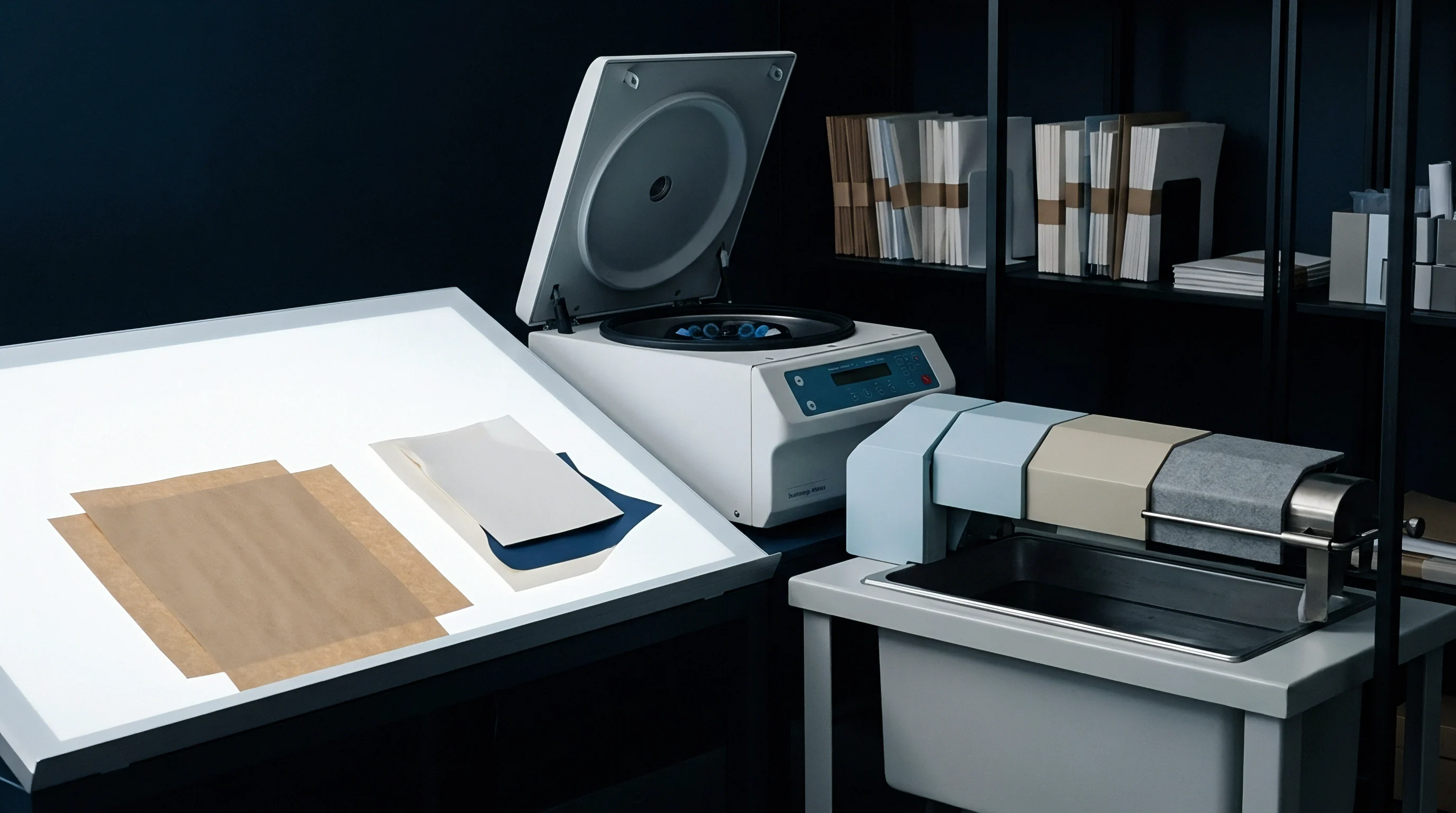
Cartonboard specified for direct or indirect food packaging must clear rigorous analytical thresholds established by German BfR Recommendation XXXVI and European Regulation 1935/2004. Verifying paperboard purity involves destructive solvent, cold water, and hot water extractions to isolate non-intentionally added substances, synthetic sizing residues, optical brightening agents, and heavy metal ions. Testing laboratories evaluate specimens using EN 645 for cold water extracts and EN 647 for hot water procedures.
Migration testing protocols mandate exposure to modified polyphenylene oxide, known commercially as Tenax, to model dry and fatty food contact environments under specified time and temperature conditions.
Evaluating chemical purity demands zero-tolerance acceptance sampling criteria. A single analytical detection exceeding specific migration limits triggers immediate lot rejection regardless of statistical AQL tolerances applied to physical dimensions. Heavy metal concentrations evaluated under EN 12498 for cadmium and lead, and EN 12497 for mercury, must demonstrate values below limits of quantification.
Optical brightening agents must exhibit zero bleeding onto food contact surfaces when examined under ultraviolet illumination following EN 648 protocols.
Surface sizing prevents oil absorption without converting the board into a barrier layer.

How Far Do Water Extraction Thresholds Bind?
Aqueous extractions isolate soluble substances present within virgin furnish additives, functional processing aids, and biocide formulations used in wet-end papermaking systems. Formaldehyde concentrations measured in cold water extracts cannot exceed one milligram per square decimetre under standard photometrical acetylacetone testing regimes.
- Glyoxal residues must remain below detection ceilings of 1.5 milligrams per square decimetre when tested under spectrophotometric analysis.
- Azo dyes and primary aromatic amines must yield zero detectable presence using liquid chromatography coupled with tandem mass spectrometry.
- Anthraquinone levels derived from chemical pulping digester catalysts face an analytical ceiling of thirty parts per billion in aqueous extracts.
- Biocidal isothiazolinones utilized in mill slimicide control cannot exceed trace limits established under BfR XXXVI table four.
Mineral oil hydrocarbons represent another critical exposure boundary. While virgin folding boxboard excludes recycled furnish sources that carry post-consumer newspaper printing inks, mineral oil saturated hydrocarbons and mineral oil aromatic hydrocarbons infiltrate production lines via processing lubricants, anti-foaming agents, and internal sizing emulsions. Accredited laboratories deploy online coupled high-performance liquid chromatography and gas chromatography with flame ionization detection to verify hydrocarbon purity.
| Substance Category | Test Method Standard | Simulant or Extract Matrix | Exposure Conditions | Regulatory Threshold Limit |
|---|---|---|---|---|
| Lead (Pb) | EN 12498 / ICP-MS | Cold water extract (EN 645) | 24 hours at 23°C | 0.003 mg/kg food simulant |
| Cadmium (Cd) | EN 12498 / ICP-MS | Cold water extract (EN 645) | 24 hours at 23°C | 0.002 mg/kg food simulant |
| Mercury (Hg) | EN 12497 / Cold Vapour AAS | Cold water extract (EN 645) | 24 hours at 23°C | 0.002 mg/kg food simulant |
| Formaldehyde | EN 1541 / Photometry | Cold water extract (EN 645) | 24 hours at 23°C | 1.0 mg/dm² |
| Overall Migration | EN 1186-13 | Modified polyphenylene oxide | 10 days at 40°C | 10 mg/dm² or 60 mg/kg |
| MOSH (C16 to C35) | EN 16995 / LC-GC-FID | Ethanol extraction matrix | Total solvent extraction | 2.0 mg/kg paperboard |
| MOAH (C16 to C35) | EN 16995 / LC-GC-FID | Ethanol extraction matrix | Total solvent extraction | 0.5 mg/kg paperboard |
Contractual supply agreements incorporate compliance covenants specifying that any detected batch failing heavy metal or chemical migration limits forfeits commercial acceptance under German Civil Code Section 437, invalidating standard mill warranty limitation clauses.
Dispute
Customs officials, brand auditors, and supply chain compliance examiners demand verifiable chain-of-custody documentation and technical dossiers before releasing board shipments at import frontiers. Chain-of-custody claims under FSC-STD-40-004 or PEFC ST 2002 lose legal validity when commercial invoices, packing lists, and delivery receipts omit required certification codes and specific claim categories. A printed carton carrying an on-pack FSC Mix Credit trademark requires an unbroken documentary paper trail linking the physical batch back through the converter, distributor, and primary paper mill.
If a broker fails to maintain an active certificate on the public FSC certificate register during the exact week of material dispatch, customs border agencies and retail auditors classify the packaging lot as an unsubstantiated environmental claim under national consumer protection statutes.
The Packaging and Packaging Waste Regulation intensifies documentary exposure across all member states. Article 8 and Article 11 enforce mandatory recyclability performance assessments under EN 13430, alongside strict heavy metal concentration ceilings capping total sum levels of lead, cadmium, mercury, and hexavalent chromium at one hundred parts per million by weight. Compliance declarations lacking accredited third-party test reports conducted within twelve months fail border verification inspections.
The truck returns unloaded.
Defective delivery rejection procedures require strict adherence to commercial notification timelines. When variable sampling under ISO 3951-1 or attribute testing under ISO 2859-1 confirms non-conformance, the receiving buyer issues a formal Notice of Defect within seventy-two hours of skid discharge. The notification dossier compiles specific documentary evidence:
- Delivery receipt and bill of lading referencing exact mill reel or pallet tracking serials.
- Accredited laboratory inspection certificates demonstrating standard atmospheric conditioning under ISO 187.
- Raw data points, calculated sample means, standard deviations, and derived k-factor values confirming rejection thresholds.
- Physical witness swatches sealed inside vapor-tight packaging, signed by independent receiving inspectors.
Failure to assemble this quantitative evidence permits the mill to invoke standard sales conditions, categorizing reported production flaws as unauthorized converting floor handling damage. When laboratory test reports disclose borderline non-conformances in cross-directional stiffness or localized ply adhesion, the unresolved operational balance between immediate plant operational continuity and long-term commercial warranty exposure remains an ongoing friction between carton converters and paper mills.