Closed Loop White Water Equilibrium Control and Synthetic Additive Accumulation Mechanics
Closing white water loops concentrates non-retained synthetic additives and chloropropanols, degrading board strength and threatening food contact compliance.

Balance
Modern paper mills operating low-freshwater intake regimes recirculate process water through complex recovery loops to minimize environmental discharge. Reducing fresh water consumption from forty cubic meters per air-dried tonne of paper down to five cubic meters concentrates inorganic salts and organic molecules within the machine chest and headbox circuits. The process water recirculates continuously.
This closed-loop configuration traps chemical species that traditional open systems discharged into effluent treatment plants. System closure concentrates chemical species. The steady-state concentration of any dissolved component depends on the retention efficiency of the fiber web, the volatility of the chemical, and the total system purge rate.
When mills reduce raw water intake, dissolved and colloidal organic compounds build up rapidly in the wet end. Dissolved organics destabilize cationic starches. The accumulation of calcium ions, sulfate anions, and wood extractives creates an environment where synthetic wet-end additives lose functional efficacy.
Cationic retention aids, strength resins, and synthetic sizing emulsions interact prematurely with recirculated anionic trash before reaching the wood pulp fiber surfaces. This non-productive neutralization increases chemical consumption while reducing machine runnability and degrading sheet physical performance.
Process water recirculation accelerates the accumulation of non-retained additives. Synthetic additives added at the headbox never achieve one hundred percent retention on the virgin or recycled fibers. Unbound functional polymers, emulsifiers, biocides, and defoamer carriers remain in the white water filtrate, passing through the wire pit and back into stock preparation.
As loop closure reaches ninety percent or higher, the residence time of recirculated water extends from hours to days. Under these conditions, chemical equilibrium shifts from a dynamic open state to a high-density accumulation regime.
System closure above ninety-five percent elevates process water electrical conductivity beyond five thousand microsiemens per centimeter, compressing the electrical double layer of pulp fibers and suppressing cationic additive retention.
Controlling white water equilibrium demands continuous tracking of dissolved species alongside ionic charge profiles. Mill operators monitor cationic demand and electrical conductivity to maintain functional additive retention. Standard operating windows require balancing charge neutralization against retention efficiency to prevent massive additive overdosing.

Loop Closure Metrics and Ionic Dissolved Solids Buildup
Degree of loop closure directly governs the accumulation rate of non-volatile synthetic additives and inorganic salts. High-density closure systems experience linear increases in dissolved solids until reaching chemical precipitation thresholds. The accumulation ratio calculated across headbox water circuits quantifies the ratio of steady-state species concentration to fresh makeup concentration.
| Freshwater Rate (m3/t) | Closure Level (%) | Conductivity (uS/cm) | Cationic Demand (meq/L) | Colloidal Pitch (ppm) |
|---|---|---|---|---|
| 45.0 | 10.0 | 450 | 0.05 | 12 |
| 20.0 | 60.0 | 1200 | 0.18 | 45 |
| 8.0 | 84.0 | 2800 | 0.42 | 110 |
| 2.5 | 95.0 | 5400 | 0.95 | 280 |
| 1.0 | 98.0 | 8200 | 1.65 | 490 |
High electrical conductivity suppresses the swelling of cellulosic fibers, reducing total surface charge area available for hydrogen bonding and cationic additive attachment. Polymeric retention aids suffer conformational collapse in high-ionic-strength white water, transforming from extended molecular chains into compact spheres unable to bridge pulp particles across the wire. This physical alteration drops first-pass retention, forcing mills to increase polymer dosing and creating a self-reinforcing buildup cycle.
The equilibrium point between fresh chemical additions and purge losses determines whether wet-end chemistry remains predictable or enters chaotic deposition regimes. Systems operating near zero liquid discharge face continuous precipitation of inorganic scale, including calcium carbonate and barium sulfate. These inorganic matrices entrap synthetic organic polymers, forming complex organo-mineral deposits on wire cloths, press felts, and dryer cylinders.
The operational limits of white water closure depend on whether selective chemical removal methods can extract low-molecular-weight anionic trash without stripping active functional additives before sheet formation occurs.

Sump
Synthetic additives introduced at the paper machine wet end undergo chemical transformations when trapped in recirculated water circuits. Sizing agents like alkyl ketene dimer and alkenyl succinic anhydride hydrolyze upon prolonged contact with warm, alkaline white water. Hydrolysis generates non-rectifiable compounds.
The resulting dicarboxylic acids and ketone byproducts lack fiber-binding capability, floating in the process water as hydrophobic droplets that aggregate with fiber fines and synthetic polymers.
Polyamidoamine-epichlorohydrin wet-strength resins continuously accumulate in closed circuits when retention efficiency declines. Unreacted wet-strength polymers react with dissolved organic materials, generating low-molecular-weight cationic complexes that consume system charge without imparting wet strength to the paper web. Hydrolysis of polyamidoamine-epichlorohydrin also releases chloropropanols, specifically 3-monochloropropane-1,2-diol and 1,3-dichloro-2-propanol, into recirculated water.
These hazardous extractable compounds concentrate in process water, migrating into finished paper products and threatening food-contact packaging compliance.
Non-retained sizing hydrolysates act as internal plasticizers that lower surface energy and disrupt inter-fiber hydrogen bonding.
Sizing efficiency drops sharply. Polyacrylamide retention aids subjected to high-shear centrifugal pumps and pressure screens degrade into shorter polymer chains. These fractionated chains fail to induce flocculation but add significantly to dissolved organic carbon levels.
Biocides added to control microbiological slime interact with accumulated organic loads, losing active halogen functionality and forcing higher biocide dosing rates that increase halogenated organic compound concentrations in the final sheet.
Additive Accumulation Mechanisms in Recirculated Water
Chemical species accumulate through distinct physical pathways depending on molecular weight, charge density, and hydrophobic properties.
- Alkenyl succinic anhydride hydrolysates react with divalent calcium ions to form insoluble calcium soaps that deposit on press felts, reducing water extraction efficiency.
- Alkyl ketene dimer oligomers migrate into white water fines, preventing thermal curing during drying and causing post-manufacturing sizing loss.
- Epichlorohydrin cross-linking residues undergo continuous aqueous hydrolysis, accumulating toxic organochlorine compounds within closed process water loops.
- Linear polyacrylamide fragments created by mechanical shear consume cationic starch binding sites without increasing dry tensile strength properties.
- Anionic polyacrylic acid dispersants introduced via mineral filler slurries accumulate in white water, driving cationic demand to unmanageable levels.
Anionic trash buildup destabilizes synthetic additive performance across the entire wet end circuit. Cationic demand spikes rapidly. As anionic polymer levels exceed threshold values, cationic starches added for internal strength bind predominantly to dissolved molecules rather than cellulosic fibers.
The resulting starch-anionic complexes precipitate out of solution, forming sticky deposits that induce web breaks in the press section and create pinholes in finished packaging grades.
Surface-active defoamers containing silicone oils or alkoxylated alcohols accumulate in closed loops, lowering white water surface tension. Lowered surface tension destabilizes wet-web capillary forces, impairing water removal across vacuum boxes and reducing sheet dryness entering the dryer section. Increased thermal drying requirements raise energy consumption while accelerating the heat-induced hydrolysis of residual synthetic additives trapped in the damp sheet.
Paper mills managing closed systems accept chemical additive efficiency losses as the cost of zero-liquid-discharge operational permits.
Assay
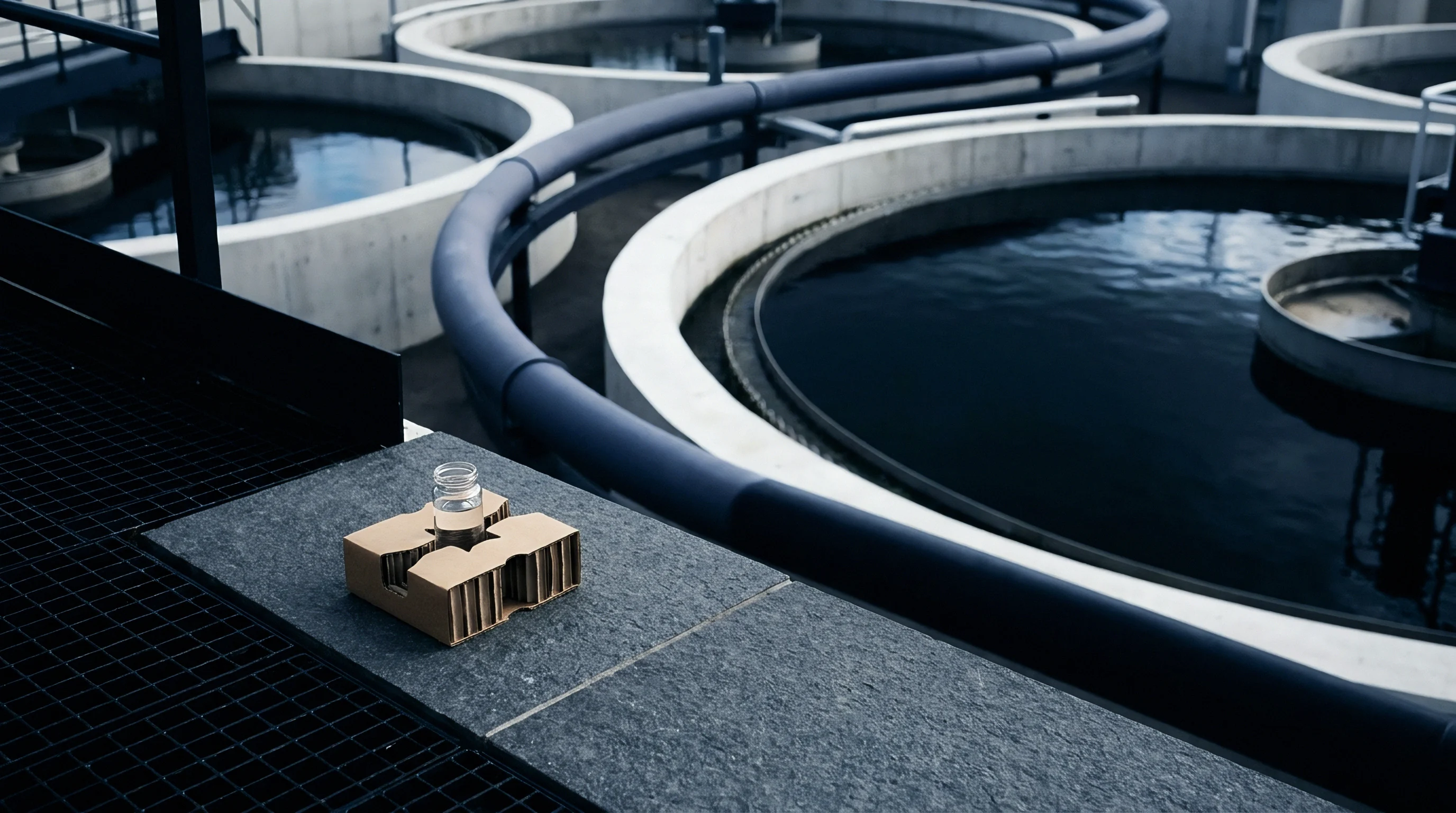
Accurate quantification of accumulated synthetic additives requires targeted laboratory extraction procedures coupled with advanced chromatographic analysis. Analytical protocols must distinguish between fiber-bound chemicals and unbound residues deposited from white water evaporation during drying. Extracting paper samples with water, organic solvents, and simulant liquids reveals the precise migration profile of accumulated chemical species.
Standard testing regimes evaluate water-extractable compounds using cold water extraction according to EN 645 and hot water extraction according to EN 647. These methods measure total dissolved solids, electrical conductivity, pH, and specific ion concentrations released from the paper matrix. High chemical concentrations in hot water extracts indicate significant accumulation of non-bound synthetic additives within the closed mill water circuit.
Organochlorine contaminants stemming from wet-strength resin hydrolysis demand specialized volatile and semi-volatile extraction protocols. Gas chromatography coupled with mass spectrometry quantifies residual epichlorohydrin, 3-monochloropropane-1,2-diol, and 1,3-dichloro-2-propanol down to microgram-per-kilogram detection limits. Epichlorohydrin derivatives present toxicological risk.
Evaluating packaging material against food contact standards requires verifying that recirculated wet-end chemicals do not exceed toxicological threshold limits.
Which Extraction Protocol Isolates Unreacted Wet-Strength Residues?
Isolating unreacted polyamidoamine-epichlorohydrin monomer derivatives from a paper matrix relies on selective solvent extraction followed by derivatization. The detailed procedure outlines sample preparation through mass spectrometry detection.
- Cut representative paperboard samples into five-by-five millimeter pieces avoiding edge contamination.
- Weigh exactly five grams of dry paperboard into a clean glass extraction thimble.
- Add twenty-five milliliters of grade-one ultrapure water containing deuterium-labeled internal standards.
- Perform ultrasonic extraction for sixty minutes at thirty degrees Celsius to isolate water-soluble chloropropanols.
- Filter the aqueous extract through a zero-point-two-two micrometer PTFE membrane filter to remove fiber fines.
- Pass the filtered extract through a solid-phase extraction column packed with diatomaceous earth.
- Elute target analytes using diethyl ether, collect the organic fraction, and dry under a gentle nitrogen stream.
- Derivatize the residue using phenylboronic acid at eighty degrees Celsius for twenty minutes.
- Inject one microliter of derivatized sample into a gas chromatograph equipped with a mass selective detector.
Quantifying total organic carbon in white water filtrates provides rapid operational data regarding additive accumulation rates. Combining total organic carbon measurements with colloidal charge titration using poly-diallyldimethylammonium chloride yields a total anionic charge profile. High total organic carbon paired with high cationic demand signals extreme buildup of synthetic polymers and wood extractives.
Mass balance modeling links analytical laboratory findings directly to mill closed-loop parameters. Calculating additive accumulation factors enables paper buyers to predict whether a specific paperboard batch contains elevated non-functional residue levels based on the mill operational freshwater consumption rate.
Ignoring additive accumulation profiles when specifying paperboard for high-speed automated packaging lines leads to unexpected hot-melt adhesive failures, unglued side seams, and immediate customs rejections for food contact compliance breaches.

Defect
Elevated concentrations of synthetic additive residues impair the physical and mechanical properties of paper and paperboard products. Sizing regression represents a widespread functional failure caused by accumulation mechanics. When hydrolysate concentrations in the headbox exceed threshold levels, hydrophobic sizing agents aggregate into large droplets instead of distributing uniformly across fiber surfaces.
The Cobb water absorption test value increases from a target twenty-five grams per square meter up to sixty grams per square meter within hours of white water charge saturation.
Unbound polymers form pitch deposits. Excess cationic retention aids and wet-strength resins that fail to bind to fibers remain suspended in the white water, coating equipment surfaces and forming sticky agglomerates. These agglomerates detach and become embedded in the forming web, creating translucent spots, reduced local burst strength, and web defects.
Unbound resin particles also deposit on dry-end calendars, causing surface picking and reduced sheet smoothness.
Inter-fiber bonding degrades when non-retained additives and surface-active agents coat cellulosic fiber surfaces. Synthetic defoamers and sizing hydrolysates physically block hydrogen bonding sites between adjacent wood fibers. Dry tensile strength, burst index, and internal bond strength drop significantly.
Board stiffness degrades under load. Compensating for strength losses by increasing cationic starch or dry-strength polyacrylamides exacerbates the closed-loop additive accumulation problem.
Converting operations encounter serious processing failures when processing board manufactured in high-closure mills. Accumulated synthetic additives migrate to the paperboard surface during thermal drying, altering surface energy profiles. Low surface energy prevents proper wetting and setting of water-based flexographic inks and cold-glue adhesives.
Packaging seams fail during high-speed cartoning operations due to poor adhesive penetration into the additive-rich fiber layer.
| Additive Residue Species | Critical Threshold (ppm) | Physical Defect Mode | Converting Operational Impact |
|---|---|---|---|
| ASA Hydrolysate (Dicarboxylic Acid) | 150 | Sizing regression, hydrophobic spots | Water-based coating repelling, spotty print |
| PAAE Resins (Unreacted) | 800 | Reduced dry strength, sheet brittleness | Cracking along carton score lines |
| Surface Active Defoamer Carriers | 50 | Internal bond loss, low Z-direction tensile | Delamination during high-speed folding |
| LMW Polyacrylamide Fragments | 300 | Formation cloudiness, pinholes | Barrier coating pinhole penetration |
| Anionic Trash-Starch Complexes | 1200 | Surface picking, dust generation | Frequent printing plate wash-downs needed |
Converting operators frequently observe score-line cracking on coated folding cartons made from high-accumulation paperboard. Excess residual polymers cross-link during extended storage in warm converting warehouses, making the fiber matrix brittle. When the carton board undergoes ninety-degree folding, outer plies fracture along score lines, exposing internal fibers and destroying the moisture barrier integrity of the package.
Excess cationic polymers trapped in recirculated water increase fiber embrittlement, reducing carton score-line fatigue resistance by forty percent.
Paperboard mills often assert that minor variations in sizing values and surface energy stem entirely from ambient storage humidity fluctuations rather than white water additive buildup.
Clause
International regulatory frameworks impose strict quantitative limits on chemical substances in paper packaging materials. European Union Regulation 1935/2004 requires that packaging materials do not transfer constituents to food in quantities that endanger human health. When paper mills operate highly closed water circuits, synthetic additive accumulation can push finished paperboard beyond specific migration limits defined in national regulations like Recommendation XXXVI of the German Federal Institute for Risk Assessment.
Compliance with toxicological standards mandates rigorous screening of wet-strength additives. Recommendation XXXVI sets an absolute upper limit of twelve milligrams per kilogram for 3-monochloropropane-1,2-diol and a non-detectable limit for 1,3-dichloro-2-propanol with a detection threshold of two micrograms per kilogram in cold-water extracts of finished paper products. High closed-loop water recirculation causes these chloropropanol byproducts to accumulate above regulatory compliance levels unless specific water purification steps exist.
Industrial compostability certification governed by EN 13432 establishes criteria for heavy metals, volatile matter, and ecotoxicity. Accumulated synthetic additives containing fluorine, zinc, or non-biodegradable synthetic polymers threaten compostability compliance. Heavy metal impurities present in bulk wet-end chemicals concentrate in closed white water loops, eventually embedding in the paper matrix at levels exceeding EN 13432 maximum allowable concentration limits.
Packaging and Packaging Waste Regulation obligations demand high recyclability grades and transparent chemical safety tracking. Recycled fiber streams used in packaging must maintain high material purity. Accumulated synthetic polymers reduce the repulpability of post-consumer packaging, as cross-linked wet-strength resins resist mechanical deflaking, generating high flake reject rates during re-pulping operations.
Migration thresholds govern compliance. Documented evidence protects the importer. Brand owners specifying paperboard products must assemble comprehensive compliance dossiers containing analytical test reports that verify additive levels remain within legal boundaries under commercial storage conditions.
Essential Documentation Checklist for High-Closure Paperboard Procurement
Verifying compliance for packaging manufactured in closed-loop paper mills requires specific documentary proof before batch release.
- Declaration of Compliance for Food Contact stating full adherence to Regulation 1935/2004 and BfR Recommendation XXXVI with explicit test conditions listed.
- Gas Chromatography Chloropropanol Report verifying 3-MCPD levels below twelve milligrams per kilogram and 1,3-DCP below detection limits in water extracts.
- Heavy Metal Analysis Certificate confirming combined concentrations of lead, cadmium, mercury, and hexavalent chromium remain under one hundred parts per million pursuant to packaging waste directives.
- EN 13432 Ecotoxicity Test Verification demonstrating plant growth inhibition rates remain under ten percent relative to control soil samples when evaluating disintegrated packaging materials.
- Repulpability Test Report according to CEPI Protocol proving complete fiber deflaking efficiency without excess flake generation caused by accumulated synthetic wet-strength resins.
Supply contracts carrying explicit quality guarantees include mandatory mill process water specifications. Standard purchase contracts incorporate explicit clauses requiring mills to declare freshwater consumption per tonne of board and certify that total dissolved solids in white water do not impact convertibility or safety metrics.
Under Clause 4.2 of European paperboard delivery conditions, a buyer may reject an entire shipment if unnotified mill process modifications alter the surface energy or glueability parameters beyond agreed technical tolerance limits.
Purge
Maintaining chemical equilibrium in closed white water systems requires controlled purge strategies and targeted process water treatment. Simple bleed streams remove dissolved organic carbon and inorganic salts but increase wastewater treatment volume and raw water costs. Modern mills utilize internal kidney technologies to selectively strip non-functional synthetic additives and contaminants while returning clean water and active functional chemistry back into stock preparation.
Microfiltration and ultrafiltration membrane units filter white water fractions, removing colloidal pitch, starch hydrolysates, and fine particulate matter. Membrane filtration isolates low-molecular-weight anionic trash, preventing charge neutralization of expensive wet-end additives. Permeate water passes back to wire spray showers, while concentrated retentate containing degraded synthetic additives undergoes biological oxidation or chemical precipitation.
Enzymatic treatment systems break down accumulated starch fragments and synthetic polymers in recirculated water circuits. Amylase enzymes convert dissolved starch molecules into simple sugars, which anaerobic bioreactors process into biogas. Converting dissolved macromolecular organics into gaseous byproducts removes cationic demand without requiring physical bleed streams or generating chemical sludge disposal liabilities.
| Remediation Technology | Target Accumulant | Removal Efficiency (%) | Operating Cost ($/m3) | Capital Expenditure |
|---|---|---|---|---|
| Microfiltration Membranes | Colloidal pitch, fines | 92.0 | 0.45 | High |
| Biological Kidney (Anaerobic) | Dissolved organic carbon | 85.0 | 0.25 | Very High |
| Charge Neutralization Additives | Anionic trash, polymers | 70.0 | 0.80 | Low |
| Controlled Bleed & EVAP | Inorganic salts, TDS | 99.0 | 2.10 | Extreme |
Chemical charge control relies on dosing high-charge-density, low-molecular-weight cationic fixatives into the white water pit. Synthetic polymers such as poly-diallyldimethylammonium chloride or polyamines bind selectively with anionic trash before primary retention aid addition. Selective bleed streams restore equilibrium.
System purge resets ionic charge. Pre-neutralizing anionic compounds preserves the functionality of expensive wet-strength resins, internal sizing agents, and dry-strength additives introduced at the headbox.
Process engineering teams optimize white water equilibrium by installing continuous online monitoring equipment. Automated systems track electrical conductivity, temperature, pH, total organic carbon, and cationic demand at five-minute intervals. Automated feedback loops adjust biocide dosing, fixative addition, and kidney flow rates in real time, preventing sudden chemical spikes that lead to paper machine web breaks and finished board defects.
Procurement teams buying high-volume folding boxboard or linerboard establish technical agreements with paper manufacturers specifying maximum process water conductivity levels and minimum freshwater makeup rates during production runs. Setting clear technical thresholds in purchasing contracts prevents supplier grade substitution and ensures consistent convertibility, structural strength, and regulatory compliance across all packaging production batches.