Dynamic Closed Loop Thermal Gradient Compensation for Anisotropic Web Twist Mitigation
Dynamic cross-machine thermal profiling counteracts anisotropic fiber twist, holding board flatness within two millimeters per meter across high-speed lamination passes.
Asymmetry
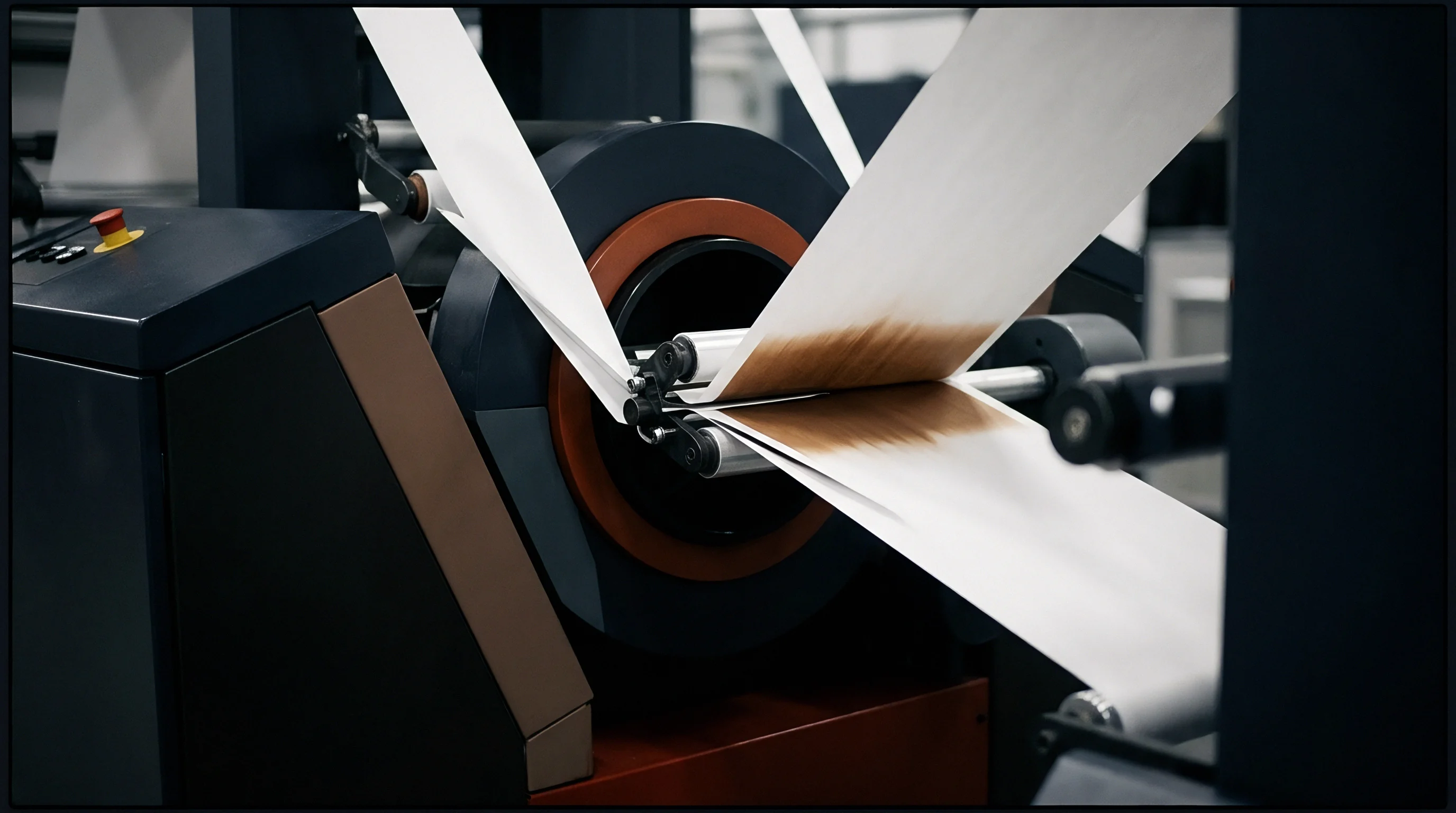
When fiber alignment departs from the machine-direction axis, paperboard webs distort during lamination. The cellulose matrix expands and contracts along its own structural orientation rather than the line’s mechanical grid. As the sheet absorbs heat during lamination or drying, thermal expansion follows this local fiber angle instead of the mechanical travel axis.
Off-axis fibers distort under heat, generating cross-coupled shear forces across the sheet thickness. The resulting torsional strain lifts opposing corners in opposite out-of-plane directions, creating diagonal warping that traditional uniform tension rolls cannot pull flat.

Off Axis Fiber Orientation Mechanics
Machine-direction headbox dynamics dictate how cellulose fibers settle across the forming wire. Because anisotropic board links normal stress directly to shear strain within its elastic matrix, cross-web variations in tensile stiffness angle make the material react unevenly to thermal inputs. As thermal energy enters the web, local expansion vectors align with the fiber polar angle; even a five-degree departure across a two-meter web width produces localized twisting moments under uniform heating.
A three-degree deviation in fiber orientation angle converts uniform cross-direction thermal expansion into localized diagonal torsional strain.

Cross Direction Thermal Gradient Coupling
Moisture variations exiting the drying section alter local heat absorption during secondary processing passes. When top and bottom liners carry unequal moisture levels, cross-web differences in thermal expansion build internal stress gradients through the sheet. The hotter side expands faster than the cooler face, driving localized z-direction bending while shear strain drives diagonal sheet warping.
If the structural stiffness of the laminated assembly fails to counteract these internal moments, the web twists immediately upon leaving the lamination nip.
Ignoring structural fiber anisotropy during hot lamination yields warped blank pallets that jam high-speed folder-gluer feeder belts and trigger automated packaging line rejects.


Draft
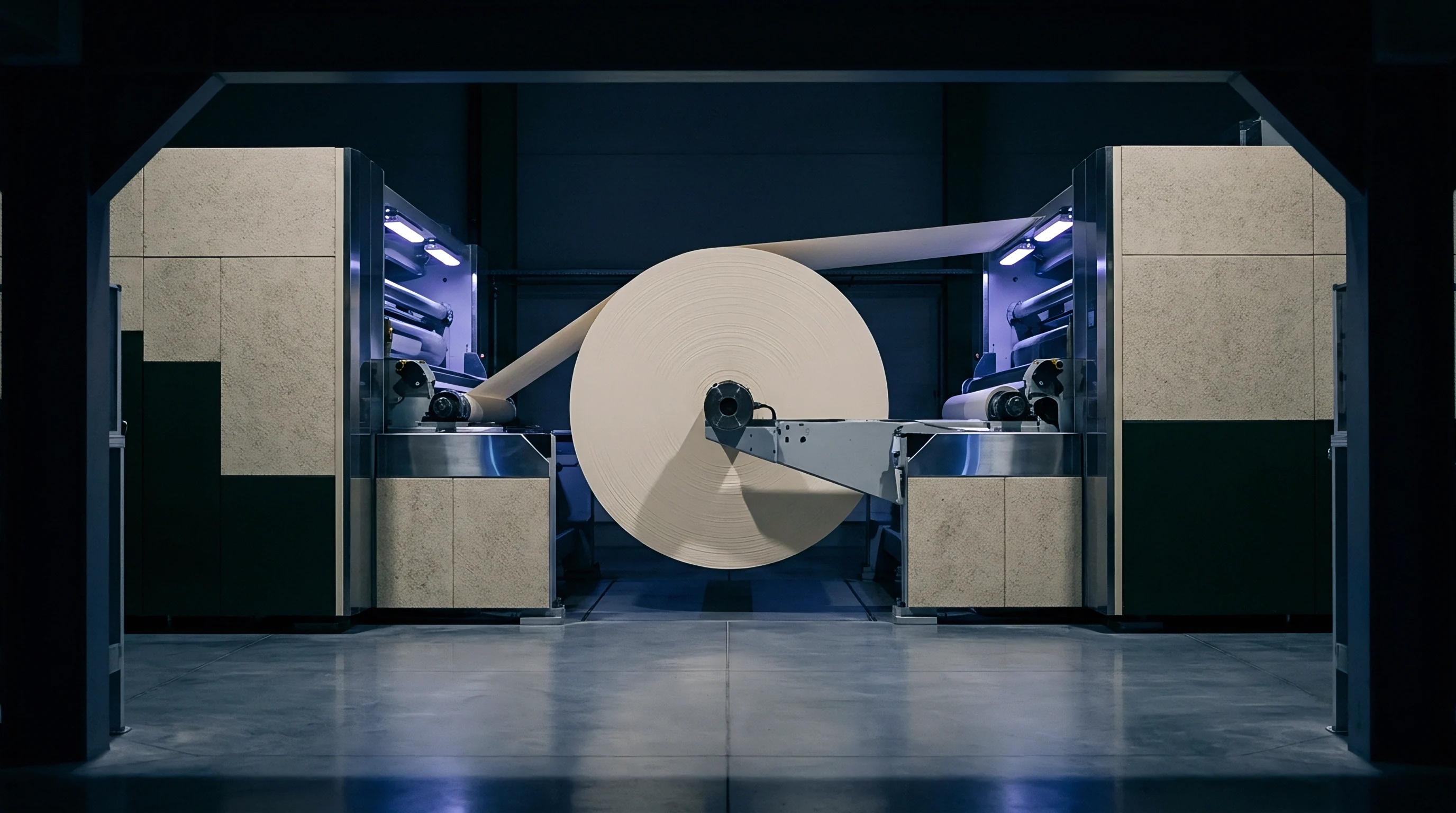
Segmented heating adjusts the web’s thermal profile by applying focused thermal flux across defined cross-machine zones. Introducing differential heat across the transverse width counteracts localized expansion imbalances before permanent twist sets into the board structure. Profiling thermal energy input requires narrow control channels operating independently across the full width of the converting line.
Segmented Radiative and Convective Heating
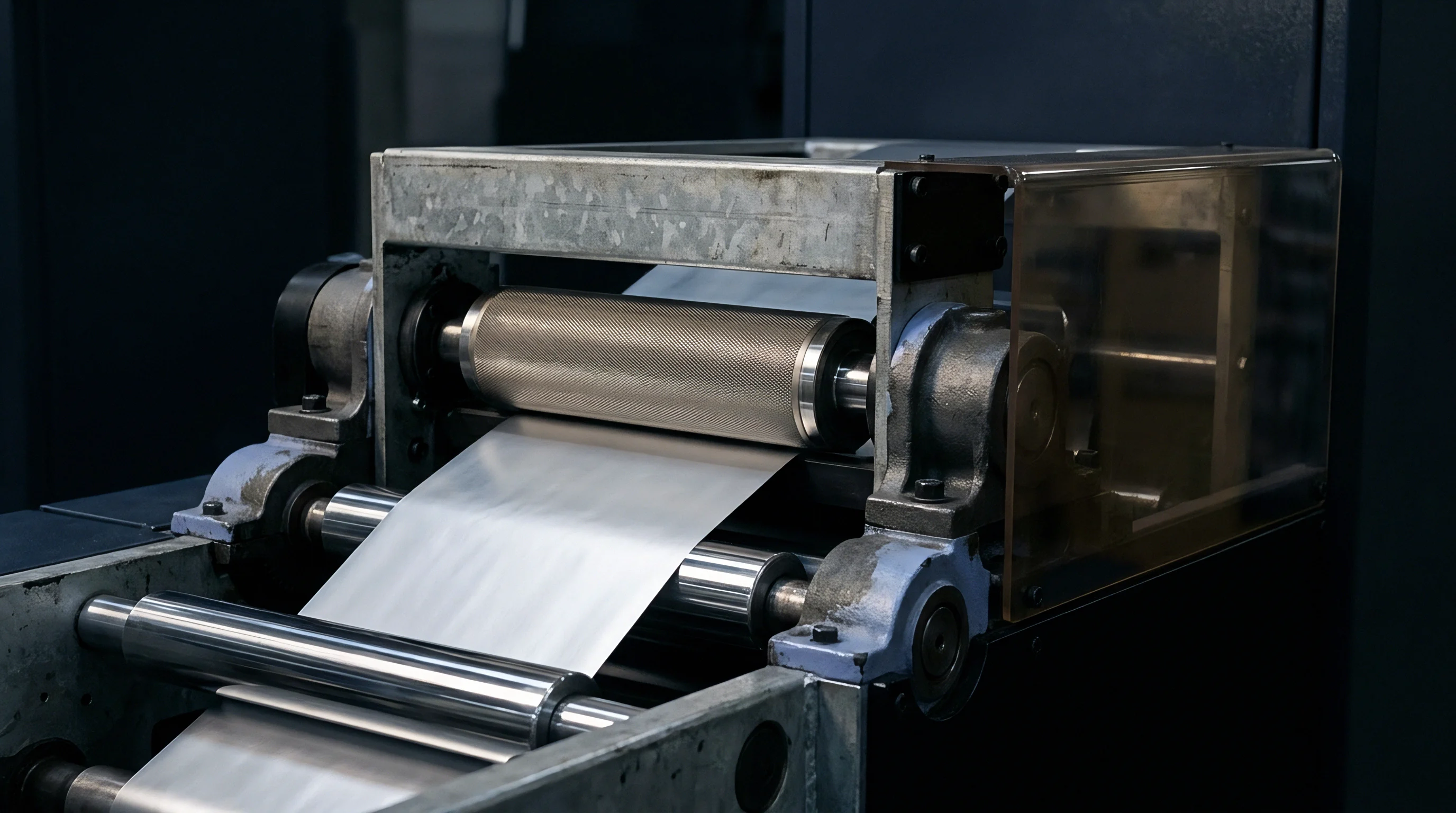
Shortwave infrared emitters transfer energy rapidly to targeted cross-machine positions without heating the surrounding air, responding in milliseconds. Array modules divided into twenty-five millimeter control zones enable exact spatial heat delivery across web widths exceeding two meters. While shortwave elements target surface polymer coatings, medium-wave infrared elements offer deep energy penetration into dense multiply board matrices.
Convective air knives complement radiative arrays by stripping boundary-layer air and adjusting localized cooling rates across opposing web faces.
Thermal zone widths matching the spatial frequency of web tension variations prevent secondary buckle formation.
Thermal Inertia and Boundary Layer Dynamics
Moving webs drag an entrained boundary layer of stagnant air along their surface that impedes conductive thermal equilibrium. This boundary layer air hinders heat transfer, and the resulting thermal response lag destabilizes web control. The thickness of this air film increases with web speed, altering convective heat transfer coefficients across the profile.
High-pressure segmented air knives strip this boundary layer away, enabling rapid surface temperature changes without requiring excessive heating power.
| Zone Tuning Medium | Response Time (s) | Spatial Resolution (mm) | Maximum Heat Flux (kW/m²) | Energy Conversion Efficiency (%) |
|---|---|---|---|---|
| Shortwave Infrared Array | 0.2 | 25 | 80 | 85 |
| Medium-Wave Infrared Module | 1.5 | 50 | 45 | 70 |
| Segmented Chilled Air Knife | 0.8 | 35 | 20 | 60 |
| Variable Temperature Nip Roll | 12.0 | 100 | 15 | 90 |
Applying unmitigated thermal zone oversaturation introduces secondary material defects during converting operations.
- Local Thermal Degradation Polymer surface coatings scorch and lose heat-seal performance when radiative zones operate above two hundred degrees Celsius during line speed drops.
- Blistering and Delamination Moisture trapped inside multiply paperboard vaporizes rapidly under focused energy spikes, blowing internal fiber bonds apart before exit nips engage.
- Web Edge Curl Inversion Excessive convective edge cooling flips transverse tension vectors, causing sharp upward edge rolls along outer web boundaries.
- Foil Stamp Release Failure Overheated substrate zones destroy metallic foil release layers, leaving patchy foil coverage across stamped package panels.
Converting machine vendors frequently attribute unmitigated web twist to raw material lot variation rather than addressing cross-machine control loop thermal latency.

Array
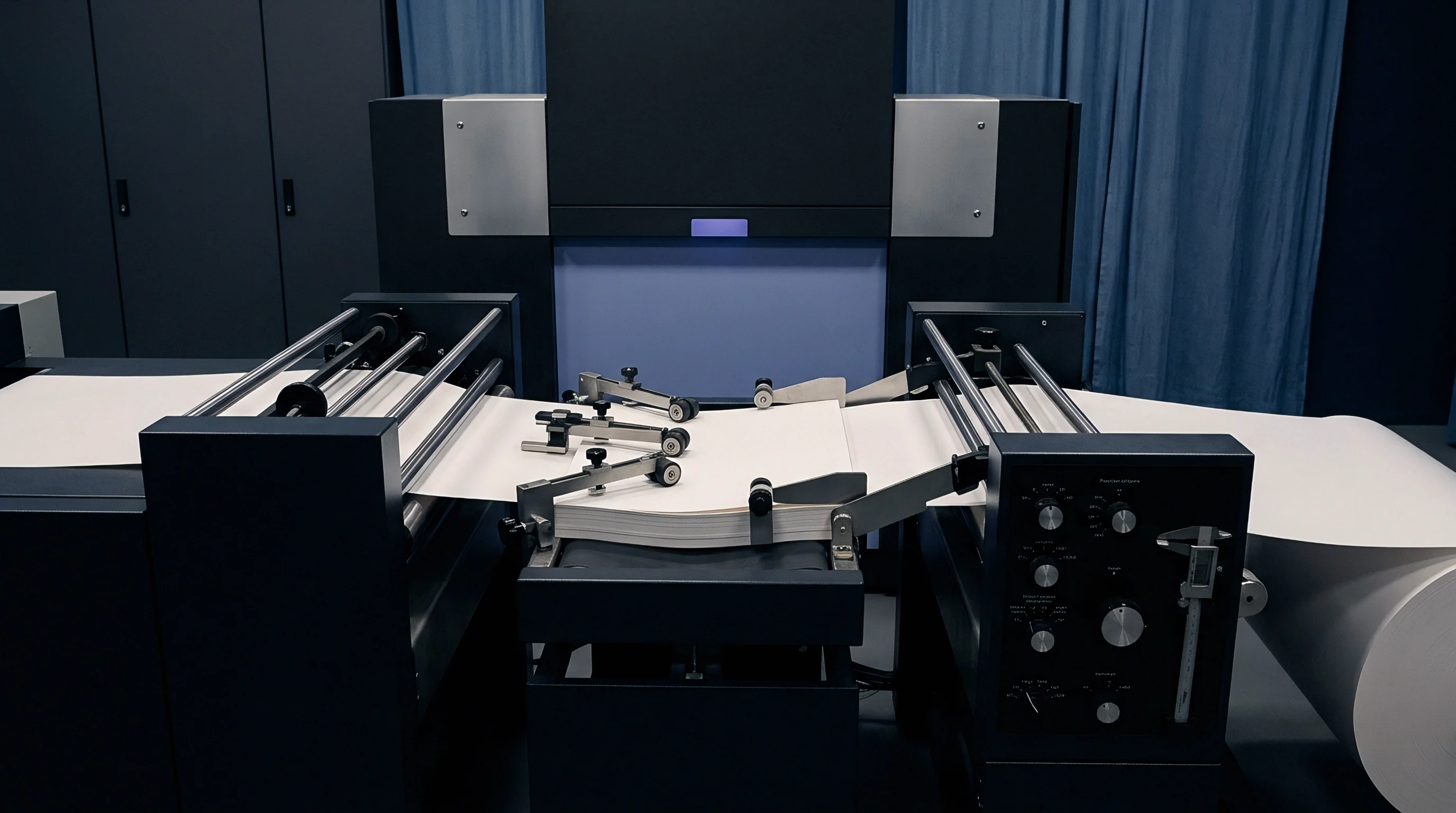
High-resolution metrology hardware maps sheet distortion and thermal topology in real time as the web moves at production speed. Continuous feedback loop architectures demand rapid surface shape inspection to calculate necessary heating adjustments across individual transverse zones. Non-contact optical measuring stations mounted after the cooling nip track geometric web shape constantly.
Can Optical Sensors Isolate Twist from Flute Tilt?
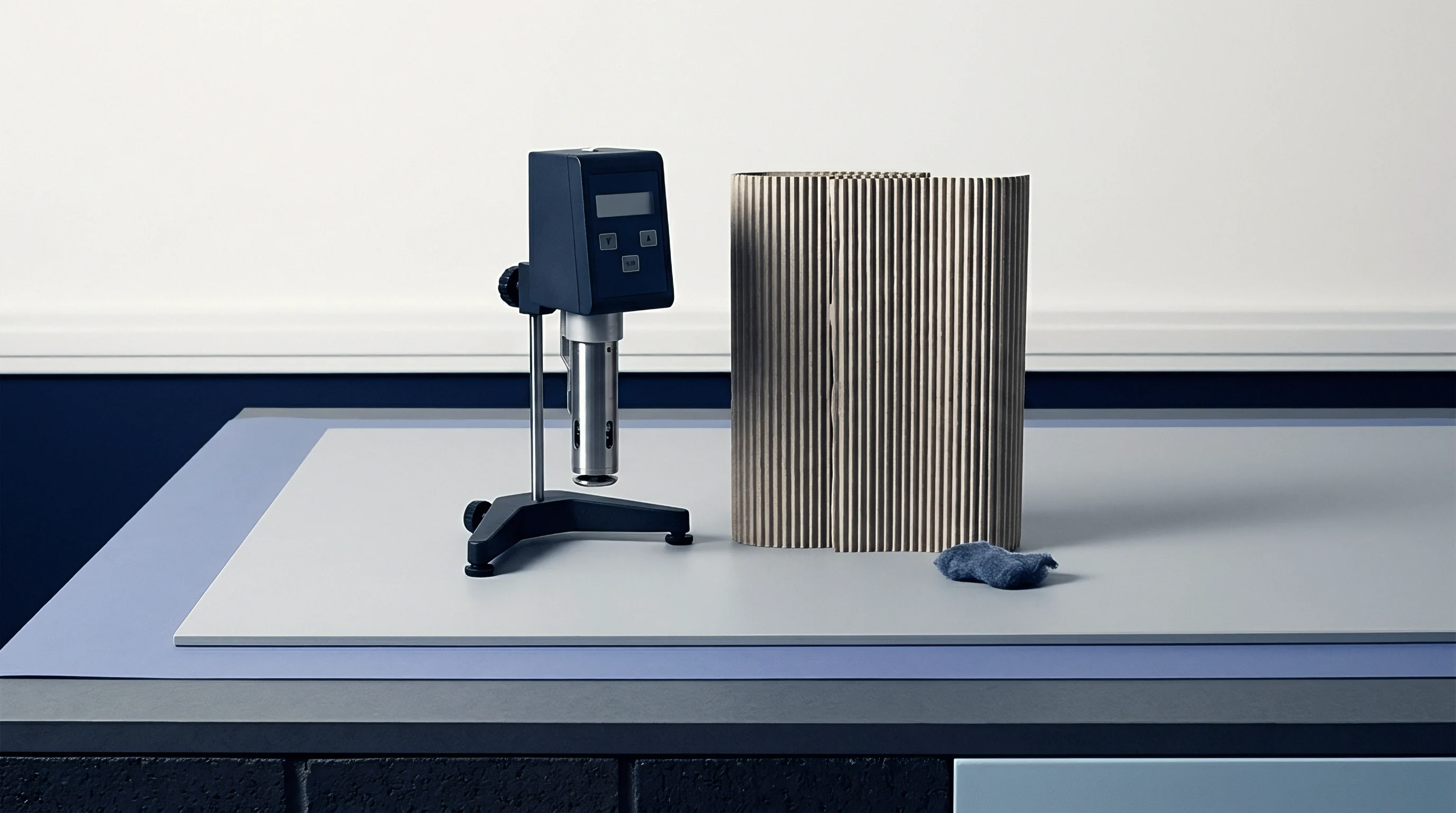
Laser triangulation scanners positioned above and below the processing line distinguish diagonal out-of-plane displacement from uniform board thickness changes. Multiple optical heads sweep or sit across the web width, measuring absolute vertical height relative to a fixed datum beam. Differential height analysis between opposing web edges isolates pure torsional twist from baseline roll deflection or mechanical machine vibration.

Closed Loop Sensor Update Latency
Digital signal processing filters eliminate mechanical machine vibration frequencies from raw distance readings before updating controller algorithms. Control systems calculate dynamic temperature compensation matrix outputs at rates matching line velocity and emitter response times. Because phase lag triggers self-reinforcing web twist, measurement latency that exceeds material transit time between sensing stations and heat zones causes control corrections to overshoot the target shape, amplifying web instability.
Scanning grid intervals wider than fifty millimeters miss micro-twist gradients along board score lines, breaching ISO 11093 specification limits.
| Inspection Technology | Measurement Parameter | Sampling Frequency (Hz) | Spatial Precision (mm) | Calibration Requirement |
|---|---|---|---|---|
| Laser Triangulation Line Scanners | Out-of-plane twist angle | 500 | 0.05 | Shift start zeroing |
| Matrix Infrared Thermography | TD surface temperature profile | 120 | 1.00 | Annual blackbody check |
| Capacitive Thickness Gauges | Caliper variation | 1000 | 0.01 | Substrate dielectric correction |
| Optical Moiré Interferometry | Full 3D surface topography | 60 | 0.02 | Fixed bench alignment |
Maintaining full traceability across closed-loop thermal compensation runs requires consistent logging of operational variables.
- Transverse Temperature Profiles Continuous temperature log records across all spatial heating channels sampled at ten-millisecond intervals.
- Out of Plane Twist Vectors Angular deviation calculations recorded at the web exit nip to verify active compensation efficacy.
- Line Speed Signals Real-time encoder feedback ensuring heating intensity scales down proportionally during machine deceleration.
- Substrate Moisture Data Microwave absorption readings capturing ambient humidity shifts before material reaches the thermal control unit.
Incorporating DIN 53121 bending stiffness verification protocols into supply contracts forces converters to document cross-web thermal stability within two degrees Celsius.

Swell
Fiber dimensional shifts occurring under changing ambient moisture conditions compete directly with thermal expansion strain vectors. Cellulose fibers alter their volume significantly upon absorbing atmospheric water vapor, exhibiting hygro-expansion coefficients five to ten times larger than ordinary thermal expansion coefficients. Controlling web shape demands balancing thermal expansion against moisture-induced dimensional expansion throughout the lamination pass.
Hygrothermal Expansion Balance Equations
Total strain in paper matrices equals the combined sums of elastic stress strain, thermal expansion strain, and moisture expansion strain. Mathematical modeling of total constitutive strain follows the expression where total strain equals elastic strain compliance plus thermal expansion coefficient times temperature change plus moisture expansion coefficient times moisture content change. The thermal expansion coefficient and moisture expansion coefficient vary according to local fiber orientation angle, allowing thermal strain to counteract moisture expansion strain.
Adjusting local temperatures across the web width modifies thermal strain components, neutralizing unwanted moisture expansion forces across asymmetric fiber orientation domains.
A cross-web temperature differential of four point two degrees Celsius neutralizes a zero point fifteen percent moisture gradient across heavy solid bleached sulfate board.
Worked Parameter Model for Heavy Board Converting
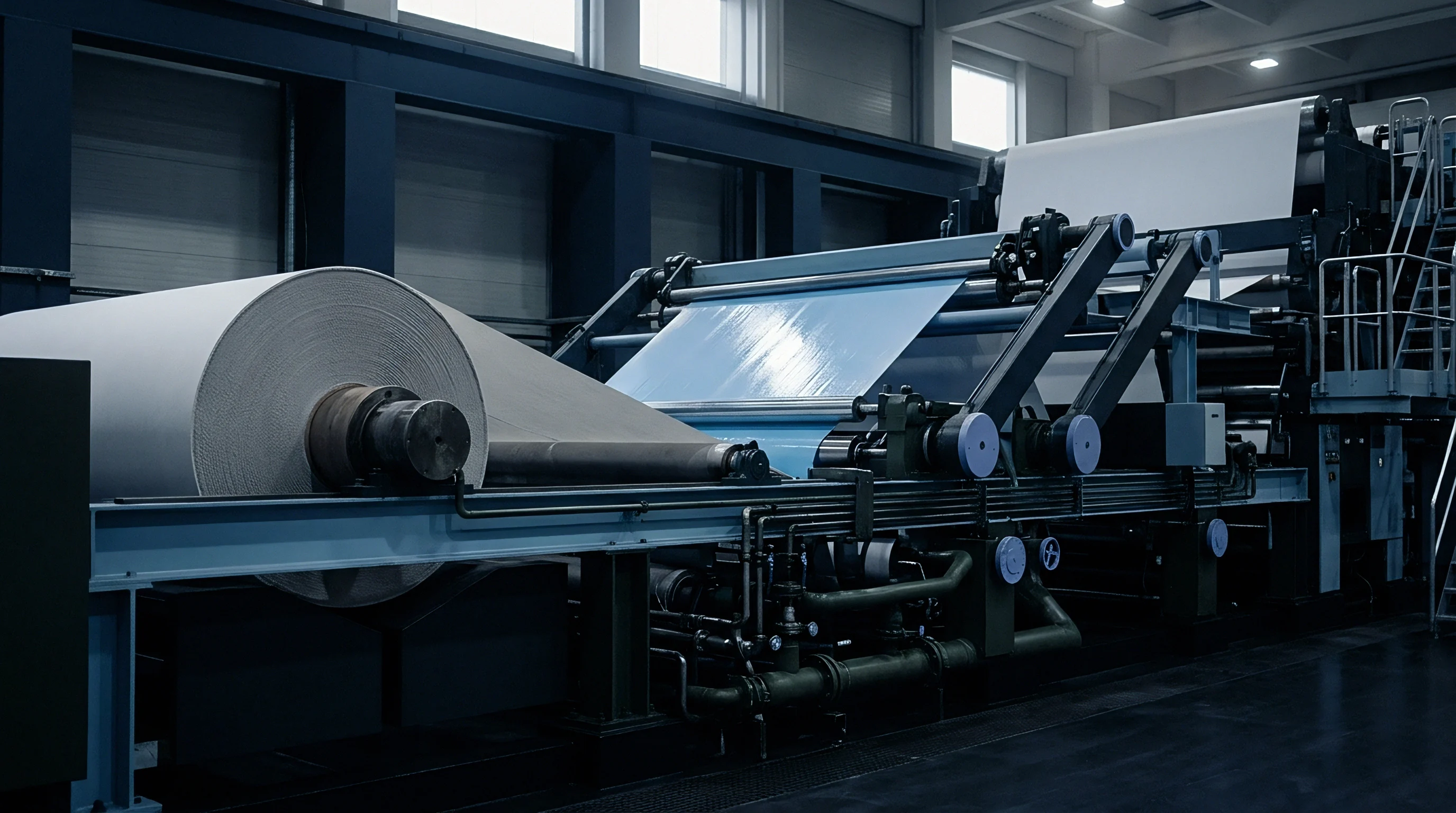
Consider a three hundred fifty gram per square meter solid bleached board web moving at two hundred meters per minute through a thermal lamination nip. The web measures fourteen hundred millimeters in total width. Off-axis fiber orientation testing reveals a tensile stiffness angle skew ranging from plus five degrees at the left edge to minus four degrees at the right edge.
Machine direction thermal expansion coefficient equals six times ten to the minus sixth per Kelvin, while cross-direction expansion coefficient equals twenty-two times ten to the minus sixth per Kelvin.
Uncompensated processing produces an initial out-of-plane twist angle measuring eight point five millimeters per meter of sheet length at the lamination exit. Downstream automated converting machinery accepts a maximum twist tolerance of two point zero millimeters per meter. Engaging the segmented shortwave infrared array applies a dynamic temperature gradient across the width.
The controller sets the left heating zone to plus twelve Kelvin above center-line average temperature and the right zone to minus eight Kelvin relative to the center line.
Applied localized thermal strain reduces shear strain coupling across the anisotropic fiber orientation matrix. Output sheet twist drops from eight point five millimeters per meter to zero point eight millimeters per meter, keeping reject rates down. The board enters downstream folder-gluer passes within acceptable flatness limits, preventing edge jams and unseated carton folds.
Whether high-density bio-based films can maintain structural stability under localized thermal compensation profiles without altering surface barrier porosity remains an open field inquiry.

Toll
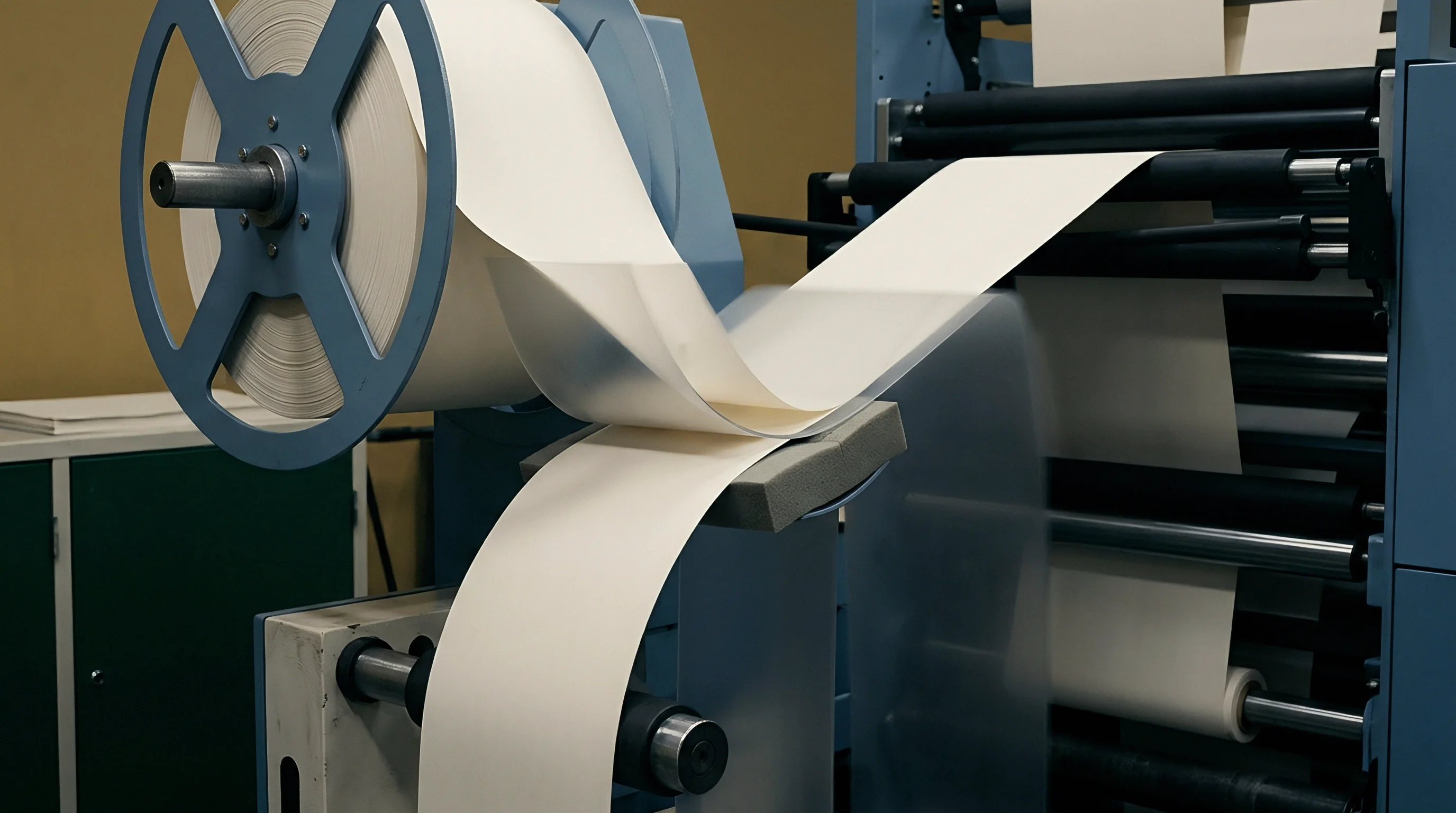
Financial losses on high-speed converting equipment originate largely from substrate waste generated during initial profile stabilization phases. Manual setup attempts rely on operator intuition to adjust cross-machine heating zones, burning hundreds of meters of expensive coated board. Automated closed-loop compensation systems cut material loss by establishing flat sheet baseline delivery shortly after machine bring-up.

Scrap Breakdown across Make Ready and Running Passes
Trimming setup waste during bring-up protects narrow operating margins. Uncontrolled web twist leads to off-center slitting, misregistered print passes, and unbonded lamination areas. Eliminating twisted blank rejects saves direct material costs and prevents downtime on downstream folding and packaging lines.
Higher line operating speeds become achievable when automated temperature loops continuously correct ambient climate fluctuations and raw material batch variance.
Retrofit Capital Payback Model
Installing multi-zone infrared control modules and optical scanner arrays on an existing two-meter lamination line requires substantial initial expenditure. Equipment procurement, installation, and control software integration sum to one hundred eighty thousand Euros. Consider an operational facility processing twelve thousand metric tonnes of paperboard annually at an average substrate valuation of fourteen hundred Euros per tonne.
Baseline production scrap caused by web twist defects averages three point two percent of total plant volume.
Implementing dynamic thermal gradient compensation reduces twist-related scrap to zero point six percent, achieving an annual material savings of four hundred thirty-six thousand eight hundred Euros. Amortization calculations show full capital payback within four point nine months of system commissioning. As faster feedback loops yield flatter board, long-term production gains continue accruing reduced waste dividends across subsequent converting cycles.
- Measure baseline fiber tensile stiffness angle variations across web width using microwave ultrasonic testing.
- Calibrate radiative zone power outputs against infrared surface scanner temperature reads at operating web speeds.
- Set dynamic matrix control feedback limits to maintain surface temperatures below material degradation boundaries.
- Establish automated data logging for transverse thermal profiles to supply compliance verification documents.
Line speeds scaling beyond mechanical stabilization thresholds demand shorter thermal feedback control loops to preserve flat sheet delivery.