Quantifying Dissolved Chemical Oxygen Demand Carryover and Micro-Stickie Agglomeration in Closed White Water Circuits
Closing white water circuits concentrates dissolved chemical oxygen demand and destabilizes colloidal micro-stickies, driving press felt compaction and sheet defects.
Solutes
Closing process water circuits reduces fresh water consumption from twenty cubic metres per tonne of finished paperboard to less than two cubic metres, building up non-volatile organic compounds in the short loop. High-yield recycled furnish ~ mostly old corrugated containers and mixed office waste ~ leaches wood sugars, starch fragments, fatty acids, resin acids, and synthetic adhesives during hydrapulping. These constituents generate dissolved chemical oxygen demand, measured under ISO 15705 by sealed tube photometric oxidation with potassium dichromate at 148 degrees Celsius.
Once fresh water intake drops below three cubic metres per metric tonne, dissolved chemical oxygen demand rises from a baseline of 3,000 milligrams per litre to sustained levels over 18,000 milligrams per litre as evaporation concentrates the ionic charge.
Organic mass accumulation in the white water circuit follows a mass balance governed by fresh water displacement, wire stock consistency, and cylinder evaporation. Dissolved species pass through the forming fabric in the liquid phase, returning to the primary dilution chest via the white water silos. Thermal and mechanical shear degrade surface size press starches into low molecular weight oligomers, accelerating bacterial growth and driving down the system’s redox potential.
A closed white water loop operating at four cubic metres per tonne reaches an equilibrium chemical oxygen demand of 16,500 milligrams per litre at 52 degrees Celsius under neutral pH.
Electrical conductivity climbs as circuit closure increases. Accumulating sodium and calcium ions ~ from biocide breakdown, sulfuric acid neutralization, and dissolved calcium carbonate filler ~ push conductivity past 4,500 microsiemens per centimetre. This ionic strength suppresses electrostatic repulsion; divalent calcium cations screen the negative surface charge of cellulose fibres, weakening cationic wet-end additives and leaving the filtrate a cloudy yellow.
Coagulant demand scales in direct proportion with dissolved organic load at low ionic strength, yet field additions yield diminishing returns once white water conductivity exceeds 3,500 microsiemens per centimetre.
Floc
Micro-stickies ~ colloidal adhesive particles that pass through 100-micrometre laboratory screen slots ~ remain suspended as discrete droplets between 0.45 and 100 micrometres in diameter. They originate from pressure-sensitive adhesives, hot melts, polyvinyl acetates, polyacrylates, ethylene vinyl acetate copolymers, and synthetic latexes introduced during converting. Mechanical shear in refiners and fan pumps strips these tacky polymers from fibres, emulsifying them in the white water loop.
Steric hindrance and negative zeta potentials between negative 25 and negative 45 millivolts maintain the thermodynamic stability of the dispersion.
What Threshold Governs Destabilization of Colloidal Pitch?
Phase separation begins when electrolyte concentrations exceed the critical coagulation threshold of the hydrophobic particles. Dissolved chemical oxygen demand serves as a reservoir of anionic trash that consumes cationic fixatives before they can neutralize micro-stickie droplet charges, while accumulating calcium ions displace protective colloids from particle surfaces.
Interactions between dissolved wood resins and synthetic acrylates generate mixed colloidal phases. At free calcium levels above 400 milligrams per litre, fatty acid salts precipitate as insoluble calcium soaps. These carboxylate complexes act as nucleation sites for suspended polyacrylate droplets, accelerating deposition onto metal machine surfaces.
When salt accumulation collapses steric stabilization, suspended hydrophobic droplets coalesce into tacky agglomerates.
Headbox operating temperatures between 48 and 60 degrees Celsius push synthetic adhesives past their glass transition thresholds. Polyvinyl acetate, which softens near 30 degrees Celsius, becomes highly tacky under typical white water conditions as shear forces tear the polymer. In turbulent zones, viscous drag drives droplet collisions that breach the electrostatic barrier once zeta potential falls below negative 10 millivolts.
| Process Water Parameter | Stable Colloidal Range | Agglomeration Threshold | Analytical Method |
|---|---|---|---|
| Dissolved Chemical Oxygen Demand | 1,500 to 4,000 mg/L | Greater than 9,500 mg/L | ISO 15705 photometric |
| Specific Electrical Conductivity | 800 to 2,200 uS/cm | Greater than 3,800 uS/cm | ISO 7888 platinum electrode |
| Calcium Ion Hardness | 80 to 250 mg/L | Greater than 450 mg/L | TAPPI T 621 EDTA titration |
| Colloidal Cationic Demand | 0.05 to 0.25 meq/L | Greater than 0.70 meq/L | Polyelectrolyte titration Mütek |
| Adhesive Particle Surface Area | 50 to 300 mm2/kg dry pulp | Greater than 1,200 mm2/kg dry pulp | INGEDE Method 4 fractionated |
High-mass cationic starches compound deposition through polymer bridging. Adding cationic polyacrylamides or wet-strength resins without first neutralizing dissolved organic demand causes the polymers to bind with anionic trash rather than fibre surfaces. The resulting complexes precipitate, trapping micro-stickies into agglomerates larger than 150 micrometres that deposit directly onto forming wires, press felts, and dryer cans.
Stock systems with anionic charge demands above six milliequivalents deposit tacky agglomerates across the drying section regardless of upstream mechanical screening capacity.
Assay
Measuring micro-stickie mass and dissolved chemical oxygen demand requires clear separation protocols to isolate colloidal fractions from wood extracts and macro-contaminants. Representative sampling targets the white water tray, headbox feed line, and press saveall pans. Centrifuging unfiltered white water at 3,000 gravities for thirty minutes settles long fibres and fillers while keeping colloidal and dissolved components in the supernatant.
Which Analytical Procedures Distinguish Microstickies from Macrostickies?
Passing the supernatant through a 0.45-micrometre cellulose acetate membrane divides it into two fractions. The filtrate contains the dissolved chemical oxygen demand and soluble salts, while the retentate ~ bounded between the 100-micrometre screen cut-off and the 0.45-micrometre membrane ~ holds the colloidal micro-stickies.
Total organic carbon testing on the 0.45-micrometre filtrate establishes the dissolved baseline. Subtracting this value from the total organic carbon of the raw supernatant isolates the colloidal carbon fraction. Gravimetric analysis follows via dichloromethane extraction under TAPPI T 204, which dissolves synthetic polymers, wood resin esters, and tackifiers without attacking cellulose fibrils or native starch.
- Centrifugation yield records document the exact volumetric split between sedimented fines and clear supernatant.
- Potentiometric charge titration logs track the consumption of 0.001 normal polydiallyldimethylammonium chloride required to reach zero millivolts on a streaming current detector.
- Fourier transform infrared spectra confirm characteristic ester carbonyl absorption bands at 1,735 inverse centimetres for polyvinyl acetate and acrylate polymers.
- Gas chromatography peak integrations measure the ratio of wood-derived abietic acids to converting plasticizers, identifying the primary carryover source.
Standard purchase agreements specifying TAPPI T 277 macro-stickie counts fail to protect converters against pinholes caused by colloidal particles smaller than one hundred micrometres.
Cationic charge demand measured on a Mütek PCD-05 device quantifies the interference from dissolved organic contaminants. Because anionic trash consumes coagulant, titration curves identify where colloidal pitch loses its net negative charge, establishing precise dosing limits for wet-end bentonite or talc micro-particles.
The exact threshold where hydrophobic ester concentrations overcome the dispersing capacity of lignosulfonate additives varies considerably across recycled furnish blends.
Felt
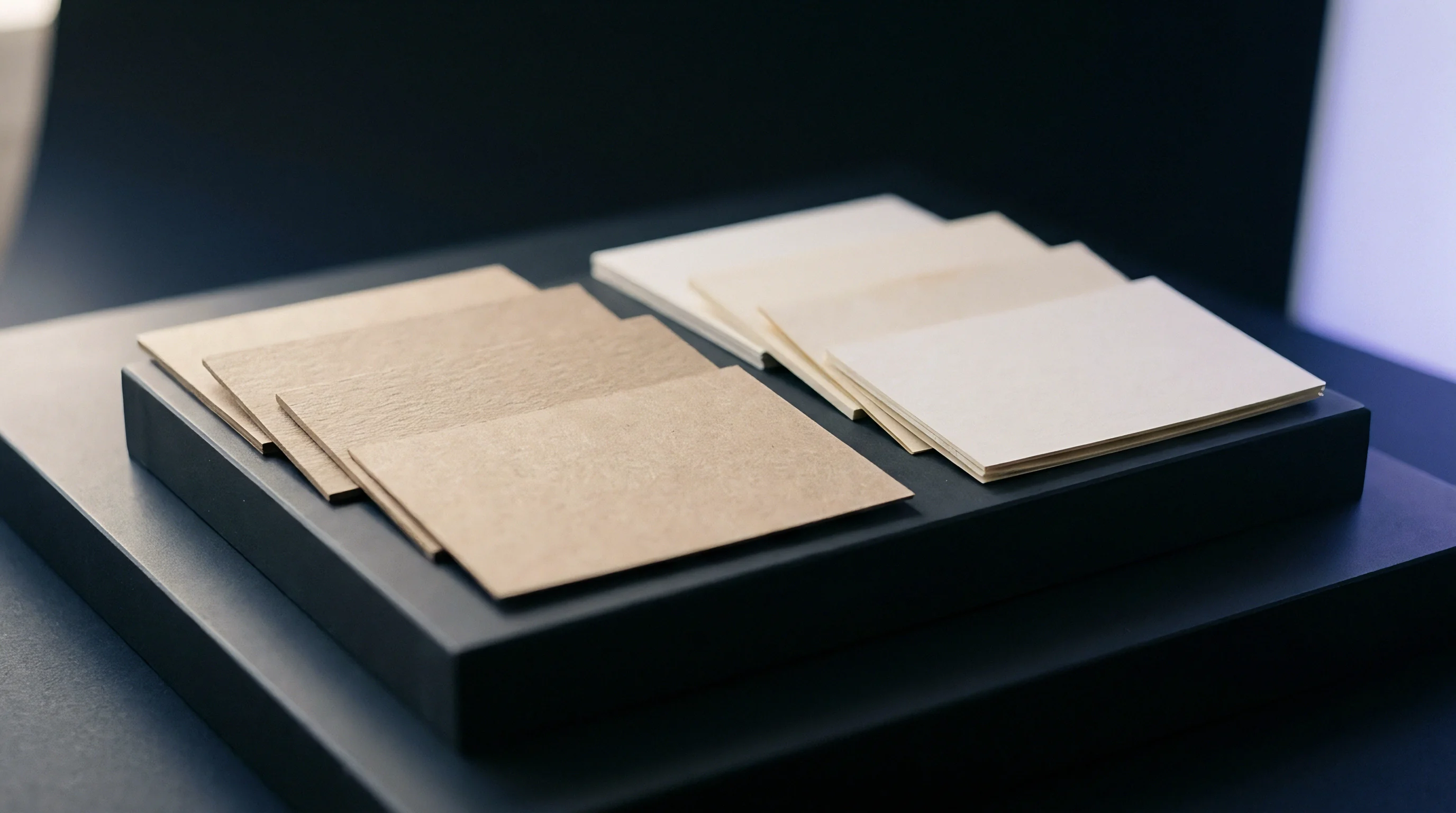
Shoe press fabric compaction accelerates when white water carryover carries sticky polymers into the felt weave. Synthetic batt fibres made of polyamide 6 and polyamide 6-6 filaments have a strong affinity for acrylic polymers and rosin complexes. Under cyclic press loads reaching 1,200 kilonewtons per metre, micro-stickies in the extracted web water adhere directly to the polyamide yarns, plugging interior pore channels.
Fabric permeability ~ measured by air flow in cubic feet per minute at 125 pascals under ISO 9237 ~ drops steadily as colloidal pitch settles inside internal voids. Increased hydraulic resistance restricts water removal during nip contact, causing localized pressure spikes, cross-machine moisture distortion, and wet streaks entering the dryer section.
- Pickout holes disrupt sheet continuity when sticky specks adhere to cast iron drying cylinders and pull fibre bundles from the web, forcing machine shutdowns.
- Blistering and pinholes form in double-coated recycled board when trapped moisture flashes into steam under stickie-clogged base sheets, ruining barrier performance.
- Doctor blade friction drift shows up as an unexplained amp draw increase on dryer drive motors caused by baked-on resin.
- Internal ply delamination occurs during creasing when adhesive agglomerates break hydrogen bonds along the z-axis of multi-ply folding boxboard.
Agglomerated deposits alter dryer fabric surface energy, turning monofilament weaves hydrophobic. As wet web strength drops, sheet flutter worsens through single-tier dryer sections, leading to edge tears and full web breaks.
- The laboratory technician draws a 1,000-millilitre white water sample from the wire pit into a clean polytetrafluoroethylene container.
- The operator records sample temperature and quenches biological activity with 0.5 millilitres of technical glutaraldehyde.
- Centrifugation at 3,000 gravities for twenty minutes separates suspended fines from the colloidal liquid phase.
- The analyst performs streaming current titration using 0.001 normal polydiallyldimethylammonium chloride to determine cationic charge demand.
- The supervisor adjusts polyamine coagulant dosing until white water cationic demand stabilizes at 0.15 milliequivalents per litre.
| White Water COD Range | Felt Life Reduction | Sheet Break Frequency | Average Web Moisture at Reel | Visual Defect Density |
|---|---|---|---|---|
| Below 3,000 mg/L | 0 to 5 percent | 0.4 breaks per 24 hours | 7.2 percent | 0.8 spots per 1,000 m2 |
| 3,000 to 7,000 mg/L | 10 to 18 percent | 1.2 breaks per 24 hours | 7.8 percent | 3.4 spots per 1,000 m2 |
| 7,001 to 12,000 mg/L | 22 to 38 percent | 2.8 breaks per 24 hours | 8.6 percent | 9.1 spots per 1,000 m2 |
| 12,001 to 20,000 mg/L | 42 to 65 percent | 5.4 breaks per 24 hours | 9.9 percent | 24.7 spots per 1,000 m2 |
Sheet breaks multiply across the dryer section.
Press felt void volume loss directly mirrors chemical oxygen demand concentrations in the primary water loop.
Failing to control micro-stickies in the press section forces mills to slow machine speeds, consumes press clothing prematurely, and leaves containerboard reels with latent defects that blister under corrugator heat.
Penalty
Financial losses from dissolved organic carryover and colloidal deposits show up in lost machine speed, higher chemical additive bills, and quality claims on finished board. Consider a containerboard mill running testliner and fluting at 40 metric tonnes per hour on a 5.4-metre trim machine. Operating a semi-closed loop at five cubic metres of effluent per tonne creates an equilibrium dissolved chemical oxygen demand of 12,000 milligrams per litre in the white water.
Heavy organic loads demand aggressive chemical control. Treating the system requires coagulants to neutralize anionic trash, talc or bentonite to detackify micro-stickies, and biocides to stop anaerobic breakdown of starches. Adding 1.8 kilograms of low-molecular-weight polyamine per tonne adds 4.50 euros per tonne.
Bentonite micro-particles at 3.0 kilograms per tonne cost another 2.10 euros per tonne, while biocide dosing for volatile fatty acid control adds 1.80 euros per tonne ~ bringing total chemical stabilization costs to 8.40 euros per tonne of board.
Unchecked micro-stickie growth interrupts production through emergency fabric washes and web breaks. Adding four web breaks per twenty-four-hour period at high organic loading ~ each taking twenty-two minutes to recover and generating 3.2 tonnes of wet broke ~ costs 4,224 euros per day at an operating cost of 120 euros per tonne. That equates to 4.40 euros per tonne across a 960-tonne daily output while sheet caliper drops two microns.
Press felt lifespan drops under heavy polymer compaction. Standard felts costing 28,000 euros last forty-two days in clean white water, but pore blinding from micro-stickies cuts service life to twenty-two days. Replacing felts on this compressed schedule adds 21,333 euros per month in fabric amortization (0.74 euros per tonne) while foam rises in the chest.
Quality claims from converting plants represent the biggest financial risk. A 150-gram testliner order carrying hidden micro-stickies transfers adhesive onto the corrugating rolls of a high-speed plant. As sticky deposits accumulate on flute tips, they tear flutes and jam the web.
The box plant rejects the 40-tonne delivery, returning the board and charging back 8,500 euros for setup time, wasted board, and line downtime.
Supply agreements based on DIN EN 643 purity standards fail to cover liability for colloidal carryover unless the contract sets explicit limits on micro-stickie surface area ~ typically below five hundred square millimetres per kilogram of oven-dry pulp measured by INGEDE Method 4.