Mechanics of Cellulosic Wall Collapse during Micro Scale Tooling
Micro-scale tooling forces hollow cellulosic cell walls past transverse yield, where apex radii under thirty micrometers balance wall densification against fiber shear.
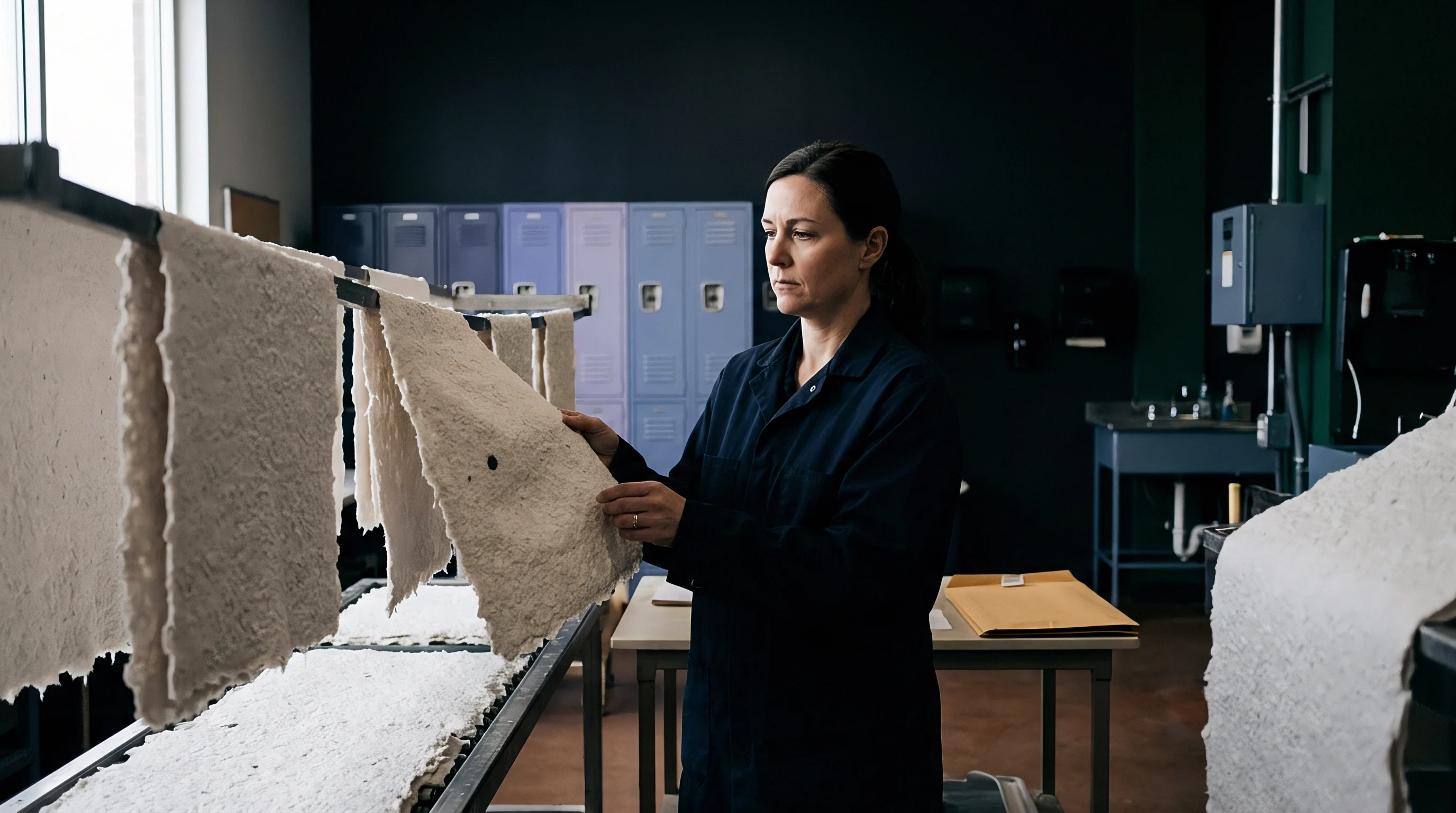
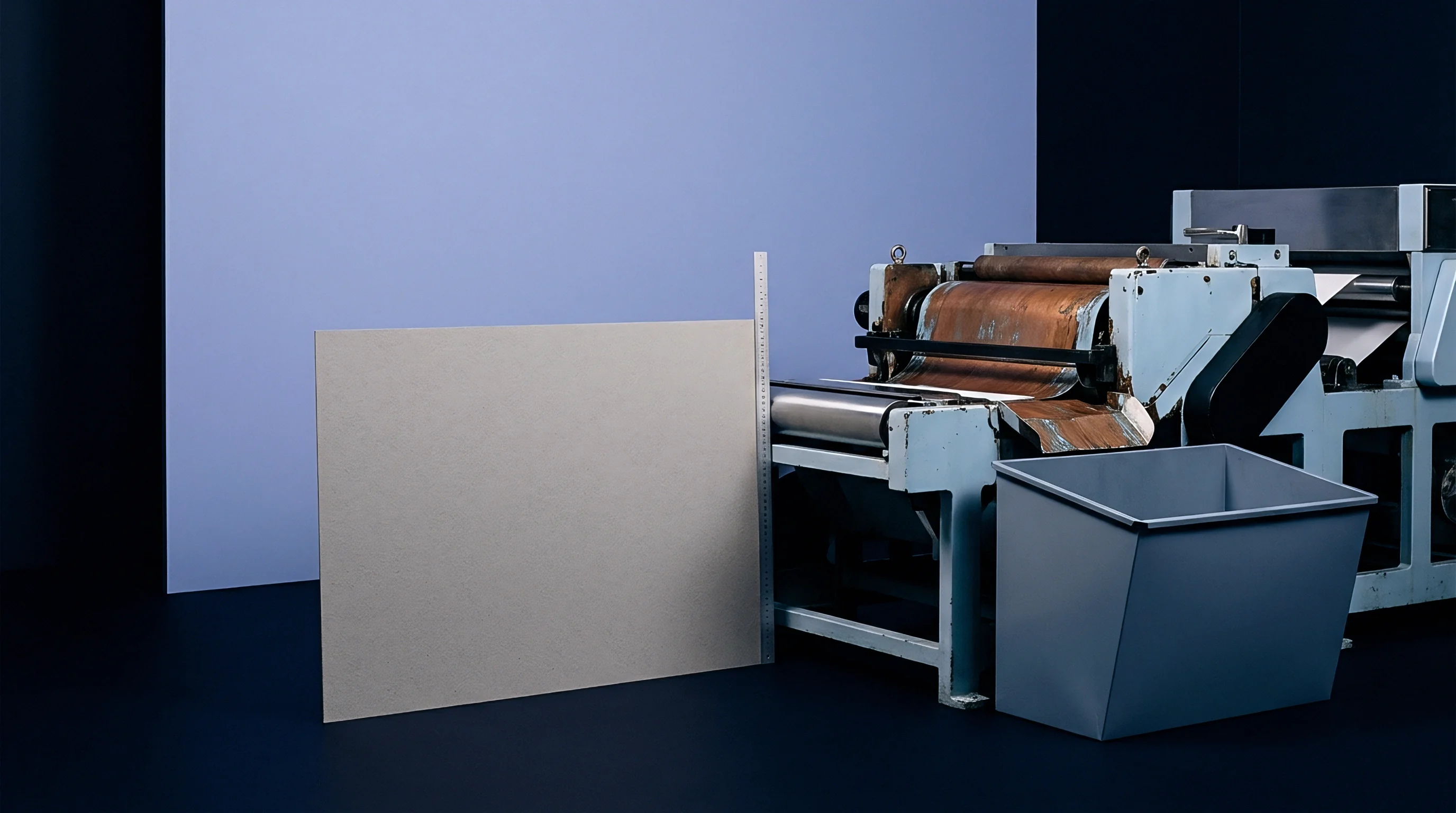
Lumen
Wood fibers entering a high-resolution embossing station resemble hollow cylinders of elliptical cross section rather than solid rods. In a typical bleached softwood kraft sheet, tracheid cells feature outer diameters between twenty and forty micrometers, wall thicknesses between two and six micrometers, and open internal cavities. When the radius of a micro-embossing die apex falls below thirty micrometers, the contact patch engages discrete individual fibers rather than distributing force across the network.
Initial compressive loading forces the hollow central cavity to flatten, generating bending moments at the lateral cell shoulders that exceed the transverse elastic limit of the wall before any macroscopic network compaction occurs.
Transverse elastic modulus in uncompressed wood cell walls ranges between 0.8 and 2.2 gigapascals, compared to axial tensile moduli that often exceed thirty gigapascals along the fiber axis. The concentric secondary wall layer, designated the S2 layer, carries roughly eighty percent of total wall mass and exhibits a microfibril angle oriented between ten and twenty-five degrees relative to the fiber axis. Compression transverse to this fiber axis produces severe shear stress across the amorphous hemicellulose and lignin matrix binding the crystalline cellulose microfibrils.
Once local transverse stress exceeds forty to sixty megapascals, the open cavity collapses completely. Local wall density rises from 0.80 grams per cubic centimeter to the 1.52 grams per cubic centimeter theoretical density of solid crystalline cellulose.
Transverse compression past sixty-five megapascals collapses unbleached softwood tracheid cavities at fifty percent relative humidity.
Solid bleached sulfate compacts predictably.
Local micro-indentation tests indicate three discrete physical stages during micro-scale tooling engagement:
- Initial elastic deflection absorbs low-amplitude contact stress through cross-sectional ovalization while preserving internal cavity geometry.
- Plastic hinge formation develops along the lateral cell shoulders as bending stresses exceed the transverse yield strength of the secondary wall.
- True wall densification compresses the collapsed upper and lower cell walls directly against each other, eliminating free volume within the fiber cross section.
Substrate caliper dictates penetration depth.
Network reorganization happens alongside this single-fiber collapse. Interfiber hydrogen bonds possess fracture energies between two and twelve joules per square meter, depending on refining history and surface sizing. As the micro-tool penetrates the sheet surface, neighboring fibers experience high relative shear displacements.
These local displacements tear interfiber bonded areas before the cell wall reaches full densification, producing irreversible delamination cracks immediately beneath the tool tip that compromise internal cohesion in cartonboard plies.
Whether localized cell wall densification stabilizes the fiber network or acts as a site for progressive micro-fracture during subsequent carton creasing remains an active question in experimental mechanics.

Bevel
Micro-embossing tools machined by direct laser ablation or chemical etching present acute flank angles between sixty and ninety degrees, terminated by apex radii smaller than fifty micrometers. When such geometry strikes a paper surface on a cylinder press, contact stress distribution diverges sharply from classical macroscopic nip mechanics. The initial contact field generates hydrostatic pressures exceeding two hundred megapascals along a line width under twenty micrometers, concentrating strain into a narrow deformation band directly below the die apex.
Apex radius directly governs whether the cellulosic wall yields through plastic compaction or suffers catastrophic shear cutting. An apex radius under ten micrometers concentrates shear stress so intensely that individual cell walls split longitudinally along the fibril orientation before the internal cavity can flatten. Conversely, an apex radius between thirty and fifty micrometers distributes vertical force over a wider contact zone, allowing the upper wall to press against the lower wall without severing microfibril bundles.

Which Transverse Strain Threshold Triggers Fiber Crushing?
Finite element simulations and micro-indentation records demonstrate that cellulosic cell walls enter irreversible yield when transverse compressive strain exceeds four to six percent. Continuing the stroke past this yield point drives transverse strain beyond thirty percent, forcing the internal cavity into total closure. At forty-five percent transverse strain, the crystalline microfibrils within the S2 layer separate from the amorphous matrix, causing permanent cell wall rupture.
Tool wear widens the apex radius.
| Apex Radius | Contact Pressure | Cavity State | Transverse Strain | Dominant Failure Mode |
|---|---|---|---|---|
| 8 µm | 280 MPa | Incomplete closure | 52% | Transverse wall shearing |
| 15 µm | 210 MPa | Complete closure | 44% | Fibrillar slip and splitting |
| 30 µm | 140 MPa | Complete closure | 31% | Homogeneous wall densification |
| 50 µm | 85 MPa | Partial collapse | 18% | Elastic-plastic hinge bending |
| 75 µm | 45 MPa | Elastic ovalization | 7% | Reversible elastic deformation |
Die parameters dictate the boundary between permanent plastic deformation and destructive fiber splitting:
- Apex tip radius establishes the contact area and governs peak shear stress concentration at initial sheet contact.
- Flank angle geometry controls lateral confinement and resists outward material displacement during deep penetration.
- Counter-die clearance defines the shear gap and prevents uncontrolled board tearing during the stroke.
The anvil deflects under load.
Hardened steel triples die life.
Finished cartons crack along the score line when micro fibril bundles rupture beneath the tool tip.
Make-ready technicians frequently attempt to compensate for worn brass dies by adding patching paper beneath the counter die. Increasing pressure on an expanded tool radius elevates global tonnage without restoring the high local shear required for crisp micro-definition. The added tonnage crushes bulk fibers across adjacent non-image zones while failing to set the micro-grooves sharply.
Engravers explain ragged edge definition on high-speed lines by claiming the board simply lacked the surface compressibility required for micro-tooling.
Moisture
Water functions as an internal plasticizer within the amorphous carbohydrate regions of wood fibers. Dry cellulose microfibrils remain rigid, but hemicellulose and amorphous cellulose absorb atmospheric moisture readily, shifting their glass transition temperature downward as relative humidity climbs. Under bone-dry conditions, hemicellulose exhibits a glass transition temperature near one hundred and eighty degrees Celsius.
At nine percent sheet moisture content, typical of fifty-five percent relative humidity at twenty-two degrees Celsius, this thermal transition drops below thirty degrees Celsius, allowing significant molecular chain mobility during room-temperature mechanical tooling.
Hemicellulose softens at room temperature.
High moisture accelerates fiber crushing.
Dwell time under the die nip typically lasts between two and fifteen milliseconds on rotary production equipment, and between twenty and eighty milliseconds on platen presses. At short dwell intervals, viscoelastic relaxation within the fiber wall cannot reach equilibrium. When the tooling lifts, internal stored elastic energy drives immediate springback, restoring up to forty percent of the compressed cavity height if the wall has not sustained permanent molecular rearrangement.
Operating with sheet moisture contents between seven and eight point five percent lowers cell wall yield stress, facilitating permanent plastic deformation without requiring elevated die temperatures.
Tool sharpness accelerates fiber wall shear while generous tip radii promote stable densification without surface tearing.
Springback reaches twelve percent.
Balancing board moisture against press speed requires aligning sheet conditioning with die dwell so that plastic wall flow finishes before tool withdrawal.
Foil
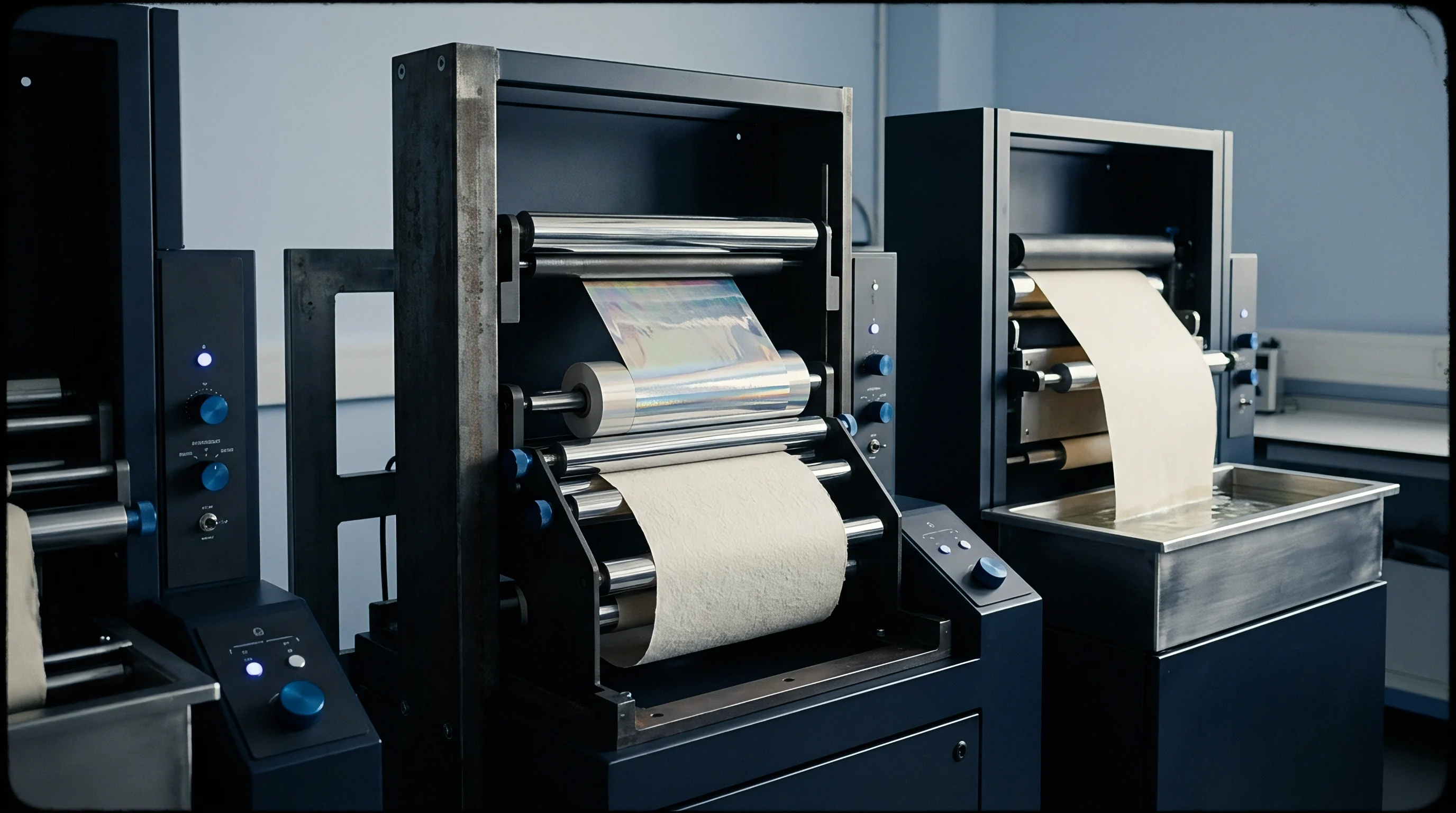
Applying hot stamping foil over micro-tooled paperboard introduces complex interactions between carrier release, adhesive activation, and substrate topography. The stamping foil package consists of a polyester carrier film, a wax or polymer release layer, a vacuum-metallized aluminum layer roughly twenty to thirty nanometers thick, and a thermal adhesive sizing. Micro-scale tooling ridges press through this multi-layer structure, demanding simultaneous thermal activation of the sizing and clean mechanical shearing of the release layer along micro-relief boundaries.
Foil release layers shear cleanly.
When the tool collapses cell walls cleanly without fibrillar tearing, the flattened substrate provides a continuous, highly consolidated surface for adhesive wetting. If the tool induces micro-fissuring and fiber tear, free fiber ends project upward through the adhesive boundary, puncturing the thin aluminum film. These punctures manifest as micro-pinholes, loss of metallic specular gloss, and edge flaking during production runs.
Maintaining intact cell walls during micro-indentation directly governs the optical reflectance and rub resistance of the stamped image.
| Substrate Grade | Coating Structure | Foil Adhesion | Pinhole Count | Recyclability Score |
|---|---|---|---|---|
| Solid Bleached Sulfate | Double mineral coated | 98% retention | 3 per cm² | Grade A PTS-RH 021 |
| Folding Boxboard | Single mineral coated | 94% retention | 12 per cm² | Grade A PTS-RH 021 |
| Coated Unbleached Kraft | Uncoated back, coated top | 91% retention | 28 per cm² | Grade B PTS-RH 021 |
| White Lined Chipboard | Recycled fiber core | 82% retention | 64 per cm² | Grade B PTS-RH 021 |
| Values reflect standard atmospheric testing under ISO 187 with foil tape testing per ASTM D3359. | ||||
Polymer counter dies creep over time.
Unbleached kraft resists transverse compaction.
Secondary finishes affect standard compliance directly. Cell wall ruptures that breach barrier coatings invalidate greaseproof and water-vapor barrier guarantees specified under DIN 53122. In food-contact packaging applications, crushing through the outer ply exposes raw fiber bundles that absorb mineral oil hydrocarbons from processing lubricants, compromising compliance declarations under Regulation EC 1935/2004.
Purchasing agreements governing stamped board invoke ISO 12048 and DIN 55437 to establish that micro-embossing shall not reduce gross carton compression resistance by more than eight percent relative to unworked stock.
Run
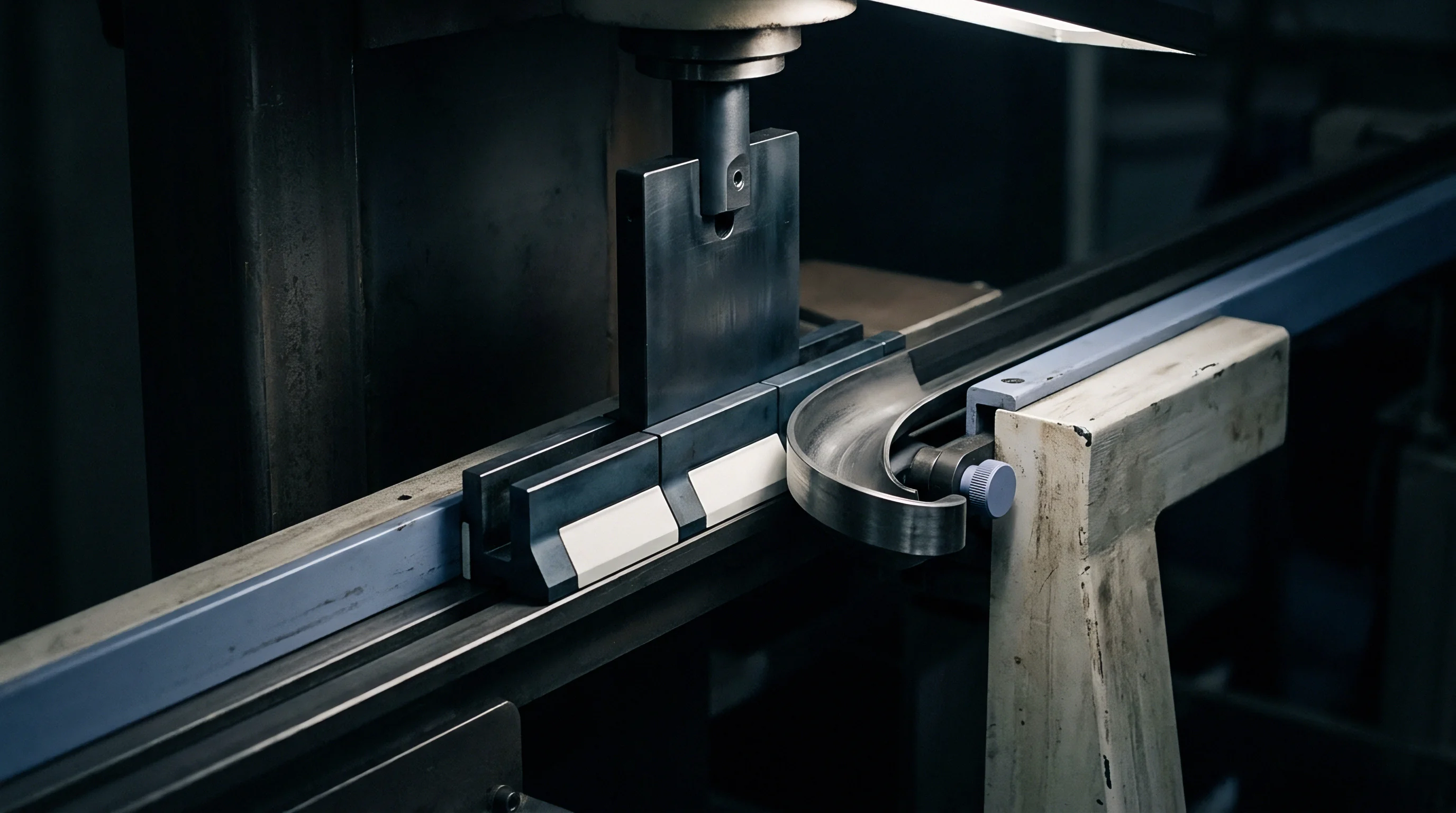
Tooling economics hinge on tool wear rates, make-ready duration, and running waste generated across long press runs. CNC-machined brass dies represent a standard tooling choice for run lengths under fifty thousand sheets. Micro-scale features on brass dies degrade prematurely due to the abrasive action of mineral coating pigments such as calcium carbonate and titanium dioxide embedded in the board surface.
As the sharp apex rounds from fifteen to forty micrometers over forty thousand impressions, contact pressures decline, cell wall collapse transitions into irregular fiber bending, and visual depth fades.
Brass dies wear rapidly.
Extending die life beyond one hundred thousand sheets demands chemical vapor deposition coatings of titanium nitride or hardened tool steel dies machined by micro-electrical discharge machining. While tool steel dies triple initial die expense, they eliminate mid-run register adjustments and prevent gradual definition loss. The financial return becomes evident when calculating make-ready and spoilage costs across a five-hundred-thousand-sheet production cycle.
DIN 53121 bending stiffness guarantees become void when die penetration exceeds forty percent of uncompressed board caliper.
Tracheid walls buckle abruptly.
Assume a high-speed packaging line converting four-hundred-micrometer folding boxboard at seven thousand sheets per hour. Uncontrolled cell wall collapse that shears outer plies elevates running waste from a standard one point five percent up to four point eight percent across an eight-hour shift. The excess waste generates over thirteen hundred spoiled sheets per shift, squandering substrate value, press time, and allocated machine capacity.
Neglecting cell wall yield limits during initial tool design forces operators to run excessive tonnage, which cuts the sheet core, crushes edge stiffness, and induces catastrophic scoreline cracking during automated carton folding.