Mechanical Regulation
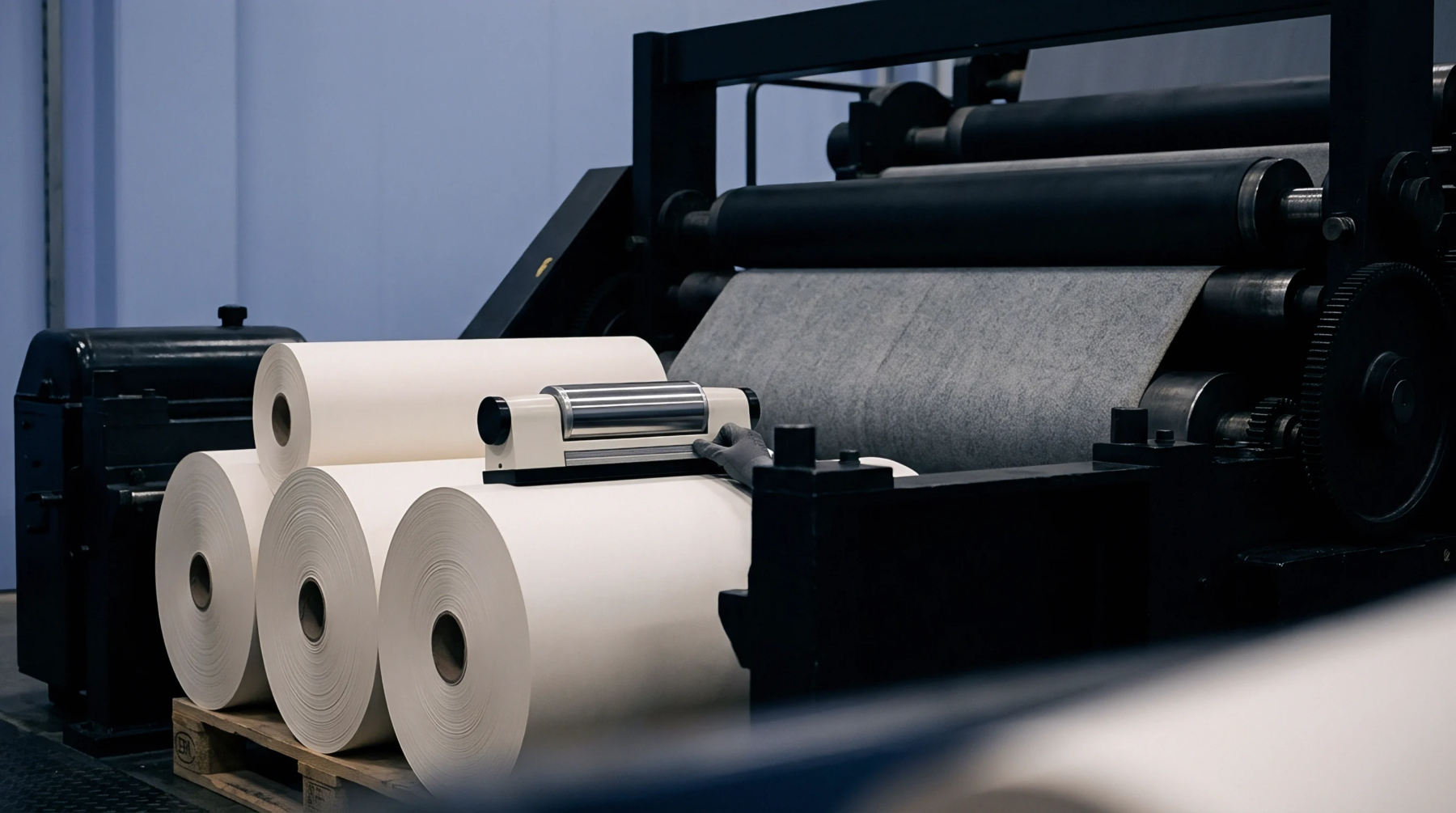
Mechanical regulation holds the physical state of a moving continuous substrate between unwind and rewind stands inside a heavy converting line. Web tension control governs lateral pull forces across long span distances to prevent permanent stretching or outright web rupture during high speed packaging production. Rotary actuators and feedback encoders maintain precise elongation limits on fragile substrates like lightweight linerboard or heavy folding boxboard.
Low friction pneumatic cylinders apply constant braking torque against parent roll inertia while downstream pull rolls draw the material forward at programmed speeds. Uncorrected force fluctuations cause register drift during multi color flexographic printing and lead to telescoped winding defects on finished shipping pallets.
Sensor Feedback
Sensor feedback loops read physical deflection signals from idler roller bearings mounted on strain gauge load cells. Microprocessors evaluate current load signals against preset target values within milliseconds to adjust drive motor torque automatically. Excessive mechanical drag triggers immediate brake release routines to avoid destructive tearing across delicate fiber matrices.
Encoder pulses monitor actual line speed variations while proportional integral derivative algorithms calculate corrective motor outputs instantly. Calibrated load sensors detect microscopic tension spikes caused by eccentric mill rolls before structural damage spreads through the running stock.
Substrate Tolerance
Substrate tolerance defines the maximum longitudinal stress a specific paper grade can endure before plastic deformation ruins the final packaging structure. Tension thresholds depend entirely on cross sectional area and moisture content within the cellulose matrix. High basis weight carton stock permits significantly higher pulling forces than recycled corrugated medium without losing dimensional integrity.
Production engineers calculate allowable load limits using tensile strength test data gathered under standard atmospheric laboratory conditions. Exceeding elastic limits causes permanent caliper reduction and destroys the stiffness required for automatic carton erecting machinery.