Inline Breaker Bar Geometry Optimization and Reverse-Side Fluid Dampening Dynamics
Breaker bar geometry and reverse fluid dampening control film lamination curl by balancing plastic yield strain and z-direction substrate moisture gradients.

Wedge
Single-sided film lamination and high-solid barrier coatings introduce severe structural asymmetry into paper and paperboard webs. As the freshly applied polymer film cools and crystallizes or the coating emulsion cures, dimensional contraction on the top face pulls the substrate into an upward curl. Correcting this curvature during high-speed converting demands precise mechanical intervention at the breaker bar assembly.
The physical geometry of the breaker bar, defined by its contact radius, cross-sectional contour, and web wrap angle, determines the stress profile forced through the sheet caliper. Bending a web over a narrow contact point creates a steep strain gradient across the Z-direction of the board. The laminated top surface experiences localized compression while the unprinted reverse side is driven past its elastic yield limit into plastic tension.
Balancing this strain differential flattens the web prior to sheeting or die-cutting operations.
Nose radius selection governs the intensity of the mechanical bending moment. Standard circular breaker pins ranging from six to twelve millimeters in radius deliver a broad, smooth bending force suitable for lightweight papers under low web tension. Lightweight stock bends cleanly over wider profiles without core structure disruption.
Folding boxboard and heavy solid bleached sulfate substrates above two hundred and fifty grams per square meter require narrower radii to achieve permanent plastic yield in the lower plies. A fixed parabolic wedge profile with a nose radius between one point five and three millimeters concentrates the peak bending moment into a narrow contact zone. This localized stress forces the cellulose fibers on the reverse side to stretch permanently, matching the contracted length of the top-side film.
Mechanics dictate that peak stress scales inversely with nose radius. Excessively sharp bar profiles risk damaging both the paperboard matrix and the protective film layer.
At web tensions above 350 N/m, a 3 mm nose radius induces strain beyond the elastic limit of 230 gsm folding boxboard.
Web wrap angle interacts directly with breaker bar radius to set the net vector force pressing the sheet against the steel contact surface. Wrap angles adjust dynamically on modern laminating lines from fifteen degrees up to ninety degrees through motorized entry roll positioning. Increasing the wrap angle extends the web dwell time over the radiused nose and elevates total normal force.
Web tension between one hundred fifty and six hundred Newtons per meter generates the driving force needed to pull the substrate across the bar nose. Inadequate tension allows the web to ride over the bar without reaching the yield stress point, leaving curl uncorrected. Excessive tension combined with an aggressive wrap angle elevates frictional drag, causing web weave, pitch variance, and localized surface scuffing.
Mechanical decurling through breaker bar geometry introduces distinct structural risks when operating parameters exceed material limits. Improper alignment between web tension and bar profile causes permanent substrate defects that compromise converting performance downline.
- Film micro-crazing occurs when localized tensile strain on the upper lamination boundary exceeds two percent during pin contact.
- Fiber bond failure develops inside the core ply under excessive shear stress caused by narrow wrap angles.
- Cross-web strain divergence appears when breaker bar deflection across wide web widths creates non-uniform edge relief.
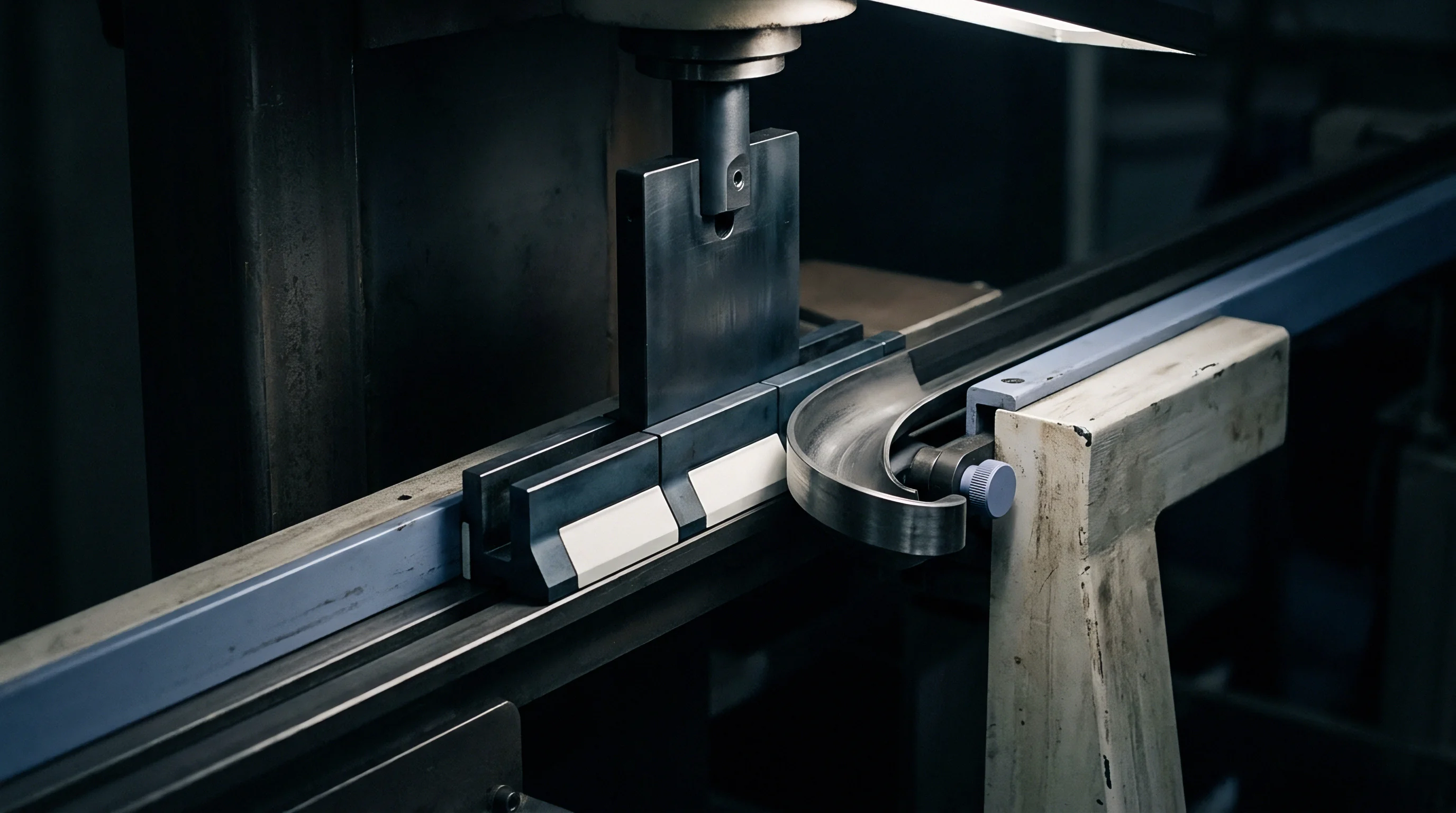
Breaker bar cross-sectional shapes vary based on web speed and material sensitivity. Rotating breaker pins reduce static friction, preventing gloss burnishing on delicate printed surfaces. Fixed tungsten carbide wedges provide superior dimensional rigidity across web widths exceeding one thousand six hundred millimeters, eliminating center-bar deflection that leads to parabolic curl profiles.
The precise contour of the entry and exit facets on a fixed wedge controls the rate of stress application and relief. A gradual entry slope minimizes impact shock as splices pass the bar, while a sharp exit radius sets the final decurling moment. Selecting improper wedge geometry damages surface coatings, fractures top-side gloss barriers, and destabilizes web tracking without permanently removing structural sheet curl.
Imbibition
Mechanical decurling addresses curl through plastic deformation of the fiber matrix, whereas reverse-side fluid dampening works through dimensional swelling of the cellulose structure. Paper and paperboard are hygro-expansive materials that expand as fiber walls absorb moisture and contract as they dry. When single-sided lamination locks the top surface at a fixed dimension and reduces its moisture permeability to near zero, the exposed reverse side remains sensitive to ambient humidity changes.
Applying a controlled micro-layer of fluid directly to the unprinted reverse side induces immediate, localized hygro-expansion. This swelling counteracts the contractive pull of the top-side film. Fluid movement into the substrate follows capillary absorption dynamics dictated by the unprinted surface pore network.
Capillary penetration into the reverse face depends on fluid surface tension, contact angle, surface sizing intensity, and substrate porosity. Liquid intake velocity into porous media follows capillary pressure relationships where smaller pore radii generate higher capillary driving force. Uncoated reverse sides of folding boxboard feature open pore structures that absorb aqueous dampening solutions within milliseconds.
Sized or double-coated reverse sides resist liquid intake, slowing initial fluid wetting and requiring chemical penetration accelerants. Cobb 60 test values quantify this absorption capacity, with typical raw back sides measuring between twenty-five and forty-five grams per square meter of water absorption. Matching the applied fluid volume to the substrate Cobb value prevents surface pooling and ensures rapid absorption before the web reaches the rewind or sheeting station.
Fluid absorption on raw back sides scales directly with capillary pore diameter rather than total wetting volume.
Moisture absorption initiates volumetric swelling primarily in the transverse fiber direction. Cellulose fibers expand up to twenty times more in diameter than in length during water uptake. Because paper webs possess a dominant machine-direction fiber orientation, reverse-side fluid application produces pronounced cross-machine swelling.
This directional expansion directly counteracts cross-machine directional curl, commonly known as gutter curl. Z-direction moisture gradients develop as the applied fluid migrates inward from the reverse surface toward the center core ply. The liquid concentration remains highest near the outer fibers, maximizing expansion at the precise boundary where structural balance requires outward pushing force.
Equilibrium distribution of added moisture across the sheet thickness requires time and controlled atmospheric conditions. Rapid surface absorption provides immediate physical decurling, but internal moisture diffusion continues after the web is sheeted and stacked. If the applied fluid volume exceeds the balance threshold, excess water diffuses toward the core, lowering internal bond strength and causing reverse-curl defects during stack storage.
Fluid dampening chemistry often includes isopropyl alcohol substitutes, ethoxylated surfactants, or glycol solvents to lower dynamic surface tension. Lower surface tension speeds surface wetting and accelerates penetration depth across high-speed webs running up to four hundred meters per minute. Equipment suppliers frequently cite raw-stock sizing inconsistencies across mill supply batches as the primary cause for inconsistent curl correction when dampening settings remain fixed.
Hysteresis
Paperboard exhibits viscoelastic material behavior, combining elastic memory with time-dependent plastic flow. When a web undergoes mechanical bending over a breaker bar or hygro-expansion from fluid dampening, the immediate structural response does not represent the permanent state of the sheet. Elastic recovery forces attempt to restore the board to its initial post-lamination state over hours or days.
Z-direction stress relaxation occurs continuously within stacked pallets as internal strain redistribution takes place under heavy compressive stack loads. Optimizing inline decurling processes requires accounting for this viscoelastic hysteresis to ensure sheets remain flat through downline die-cutting, folding, and gluing operations.
Stress relaxation kinetics depend heavily on substrate caliper, density, and moisture content. Thick boxboard grades above four hundred micrometers possess significant internal structural stiffness. Bending a heavy sheet over a narrow breaker bar generates high strain values at the outer surfaces while the neutral axis experiences zero stress.
If the applied strain remains below the proportional limit of the fiber network, the sheet recovers its original curl as soon as web tension releases. Pushing the strain past the yield threshold permanently repositions cellulose fibers relative to one another through hydrogen bond breaking and reformation. This plastic yield threshold decreases as substrate moisture increases, making combined mechanical breaking and fluid dampening highly effective.
| Substrate Caliper (μm) | Grammage (gsm) | Breaker Radius (mm) | Elastic Yield Strain (%) | Residual Curl Radius (m) |
|---|---|---|---|---|
| 210 | 180 | 6.0 | 1.15 | 0.42 |
| 300 | 250 | 4.0 | 1.45 | 0.85 |
| 420 | 350 | 2.5 | 1.80 | 1.60 |
| 550 | 450 | 1.5 | 2.20 | 2.10 |
Frictional heat generated at the contact point between the high-speed web and a fixed breaker bar alters viscoelastic behavior. As web speeds pass two hundred fifty meters per minute, friction elevates temperature at the bar nose above sixty degrees Celsius. Heat transfers into the thin polymer film and top-side adhesive layer, temporarily reducing their elastic moduli.
Thermal softening allows the laminated film to yield more readily during reverse bending, altering the balance point between film tension and substrate resistance. Line operators who adjust breaker bar depth on a cold machine frequently observe curl drift as the line warms up to operating temperature and friction levels stabilize.
Time-dependent creep recovery inside sheet stacks presents a ongoing challenge for quality control. Sheets that measure perfectly flat immediately after the sheeter delivery table can develop upward or downward bow after twenty-four hours of pallet storage. This post-converting movement stems from Z-direction moisture equilibration and stress relaxation within the compressed fiber matrix.
High stack weight exerts uniform vertical pressure that locks the sheet edges in place while internal moisture redistribution alters ply dimensions. Decreasing the dynamic breaker bar radius becomes mandatory as substrate caliper increases if equivalent Z-axis plastic strain gradients are to be maintained.
Metering
Precision liquid delivery systems are required to apply reverse-side fluid dampening uniformly across wide webs at fluctuating line speeds. Liquid application rates typically range between zero point three and three point zero grams per square meter of water equivalent. Undermetering leaves curl uncorrected, while overmetering weakens core fiber bonds, causes web tracking instability, and risks sheet blocking in stacked pallets.
The two principal hardware architectures for high-speed inline dampening are chambered flexographic roll dampeners and dynamic rotor spray systems.

Does Reverse Dampening Neutralize Lamination Curl Permanently?
Flexographic dampening systems utilize an anilox roll paired with a chambered doctor blade to apply a continuous, metered liquid film to the web. Anilox cell volume determines the precise fluid transfer volume, offering exact volumetric control at constant line speeds. Varying fluid film thickness on a flexographic dampening system requires changing the anilox roll or altering fluid viscosity and doctor blade nip pressure.
Rotor spray systems utilize spinning disc atomizers mounted inside a enclosed spray manifold across the web width. Centrifugal force atomizes liquid fed to the center of each disc, creating a overlapping curtain of ultra-fine droplets directed onto the moving web face.
Rotor spray technology enables fast response to line speed changes through fluid feed pump modulation. Digital control loops monitor encoder feedback from the laminator main drive and adjust spray pump displacement in real time, maintaining a constant coat weight during line acceleration and deceleration. Droplet size control remains essential during atomization.
Droplet diameters between fifteen and forty-five micrometers ensure rapid surface wetting and smooth film formation without airborne misting or droplet drip defects. Larger droplets create localized moisture spots that lead to visible cockling on lightweight papers.
- Establish baseline web tension at 200 N/m before engaging hydraulic decurling rolls.
- Measure unlaminated sheet curl radius using a standard sample plate under controlled ambient humidity.
- Adjust breaker bar nose engagement in two-millimeter increments until primary bow flattens.
- Enable reverse-side rotor spray dampening at 0.8 g/m2 delivery rate to eliminate residual edge lift.
Fluid chemistry optimization enhances fluid transfer efficiency and controls drying kinetics. Pure water application often struggles to wet highly hydrophobic or smooth back sides due to high surface tension measuring seventy-two millinewtons per meter. Formulating the dampening fluid with alcohol-free wetting agents reduces static surface tension below thirty millinewtons per meter.
This rapid surface tension reduction promotes instantaneous fluid spreading across the raw board surface, preventing droplet bead-up and accelerating penetration into the outer fiber layer. Water-glycol blends slow surface evaporation, preserving moisture content within the paper structure during heat-assisted film lamination processes.
Substrate delivery contracts specifying ISO 187 atmospheric conditioning void curl performance guarantees if moisture additions exceed two percent by weight.
Quality parameters specified in converting contracts govern acceptable limits for reverse-side moisture addition. European standard EN 20187 and TAPPI T 410 define standard atmospheres for paper testing at twenty-three degrees Celsius and fifty percent relative humidity. Standard contract language stipulates that moisture added via reverse-side dampening must not shift the equilibrium moisture content of the converted packaging beyond specified limits upon delivery.
Exceeding these limits risks rejection of delivered pallets due to soft edges, dimensional drift, or adhesive failure during automated carton packaging operations under standard purchasing specification clauses.
Tolerance
Maintaining flat sheets across an entire production run requires setting process operating windows that accommodate web speed ramps, substrate roll transitions, and ambient room humidity shifts. High-speed laminating lines frequently execute speed changes from fifty meters per minute during reel changes up to four hundred meters per minute at full operating capacity. Web tension and decurling forces shift dynamically across this velocity envelope.
Mechanical breaker bars with fixed mechanical settings apply excessive breaking force at low speeds due to higher relative web dwell time and elevated static web tension, causing severe reverse curl. At full operational velocity, insufficient dwell time over the bar nose leads to uncorrected top-side curl.
Automated process control integrates motorized breaker bar positioning and variable fluid metering into a closed-loop system. Real-time web curvature sensors positioned after the sheeter delivery table measure sheet tail-edge lift using laser displacement sensors. Sensor signals feed predictive control algorithms that adjust breaker bar penetration depth and rotor spray pump frequency simultaneously.
Closed-loop control narrows curl variance tolerances from +/- fifteen millimeters down to +/- three millimeters across a complete mill roll run. Automated adjustments drastically decrease make-ready waste created during thermal stabilization and line speed transitions.
| Line Velocity (m/min) | Decurling Method | Bar Penetration (mm) | Spray Volume (g/m²) | Tail Lift Variance (mm) |
|---|---|---|---|---|
| 100 | Fixed Mechanical Bar | 8.0 | 0.0 | +18 / -4 |
| 100 | Dynamic Closed-Loop | 3.5 | 0.4 | +2 / -1 |
| 300 | Fixed Mechanical Bar | 8.0 | 0.0 | +6 / -12 |
| 300 | Dynamic Closed-Loop | 6.2 | 1.2 | +3 / -2 |
Substrate moisture variations within individual mill rolls complicate tolerance management. Roll profiles often contain moisture streaks, where center-to-edge moisture content varies by up to two percent. Mechanical decurling alone applies uniform physical stress across the web width, which fails to correct localized moisture-induced curl variations.
Zone-controlled rotor spray systems split the fluid dampening manifold into independently metered cross-web zones. Each zone receives discrete fluid volume adjustments based on cross-web sheet flatometer readings, selectively targeting wet or dry lanes to maintain flat lay-flat performance across the full web width.
Process audits establish clear rules for selecting decurling methods based on material specifications and convertor operational capabilities.
- Substrate caliper threshold dictates whether mechanical radius bending creates core delamination before achieving flatness.
- Barrier layer density limits reverse-side liquid absorption when double-coated back sides resist water intake.
- Line drying capacity determines maximum allowable fluid application volume without extending stack cure times.
Evaluating long-term web flatness stability requires assessing whether dynamic mechanical breaker positioning can achieve reliable curl compensation across rapid line speed transitions without causing web tension hunting.
Settlement
Selecting decurling infrastructure involves analyzing equipment capital cost, operational expenditure, energy consumption, and product recyclability grading. Mechanical breaker bar systems represent low capital outlay and require zero direct energy inputs during operation. Operational costs connect strictly to tool wear, drive load friction, and substrate scrap generated during manual make-ready adjustments.
High-performance tungsten carbide breaker bar assemblies carry an initial capital expense of fifteen thousand to thirty thousand Euros, but yield long service lives with zero chemical or thermal energy running costs.
Mechanical decurling consumes no thermal drying energy but increases substrate scrap during line speed transitions.
Reverse-side fluid dampening systems demand higher initial investment and carry ongoing variable operating costs. Commercial rotor spray installations cost between sixty thousand and one hundred twenty thousand Euros depending on web width and cross-web zone metering capabilities. Operational expenditure includes raw water purification, chemical wetting additives, fluid pump power, and downline drying energy if infrared web heating is required.
Applying one gram per square meter of water to a web running at three hundred meters per minute across a one-meter web width requires evaporating eighteen liters of water per hour, consuming thermal drying energy if sheets enter high-speed die-cutters immediately downline.
Commercial packaging fee structures governed by extended producer responsibility schemes penalize complex, non-recyclable multi-material packaging constructions. The European standard EN 13430 defines criteria for packaging recoverable by material recycling. Heavy functional barrier coatings applied to back sides to block moisture migration or reduce curl can drop paperboard recyclability scores below the eighty-five percent fiber yield threshold, triggering significant extended producer responsibility financial surcharges.
Plain water or low-concentration surfactant dampening adds zero non-recyclable mass to the package, preserving standard paperboard recycling classification and avoiding packaging fee penalties.
Consider a practical operational example comparing total pass-attached costs for a fifty-thousand-sheet packaging run of three hundred fifty gram per square meter folding boxboard film-laminated on one side. Mechanical breaker bar decurling alone yields an average make-ready scrap rate of three point five percent, generating one thousand seven hundred fifty wasted sheets at a board cost of zero point twenty-five Euros per sheet, totaling four hundred thirty-seven Euros and fifty Cents in material scrap. Implementing dynamic reverse-side rotor spray dampening reduces make-ready scrap to one point two percent, saving six hundred sheets and one hundred fifty Euros in direct material waste per run.
Chemical additive and fluid metering costs total twelve Euros for the job, while additional electrical energy for spray pumps and inline moisture monitoring adds eight Euros. Net savings per fifty-thousand-sheet run amount to one hundred thirty Euros, providing a rapid payback period on automated fluid metering equipment across high-volume converting facilities.