Air Coupled Transducer Integration for Inline Carton Score Verification Systems
Air-coupled ultrasonic transducers evaluate internal cartonboard score delamination inline at high speeds without surface contact or web marking.


Beam
Non-contact acoustic verification of score lines in folding boxboard relies on high-frequency ultrasound transmitted through air without fluid couplants. Solid bleached board and folding boxboard possess acoustic impedance values near 1.8 to 2.2 million Rayls, whereas ambient air presents an acoustic impedance of approximately 415 Rayls. The acoustic impedance disparity between air and cellulose board creates a transmission loss at each interface that exceeds 40 decibels.
Air-coupled transducers overcome this attenuation gap through high-efficiency piezoelectric elements or capacitive micromachined ultrasonic transducers operating at focused excitation frequencies between 200 kilohertz and 500 kilohertz.
When an ultrasonic wave encounters a cartonboard score line, sound propagation changes according to the structural condition of the cellulose matrix. Creasing a paperboard substrate creates a controlled internal delamination zone. Fiber bonds break.
This deliberate internal shear fracture reduces the local out-of-plane bending stiffness, enabling clean carton folding along the score axis. Uncreased board presents a uniform, dense fiber network that transmits zero-order symmetric Lamb waves and longitudinal bulk waves with predictable phase velocity and minimal damping. A properly creased score line introduces air-filled micro-voids between internal plies, altering acoustic wave velocity and scattering sound energy across the score channel.

Acoustic Transmission Mechanics across Paperboard Substrates
Air absorbs energy. Higher ultrasonic frequencies suffer greater atmospheric attenuation, which limits inline carton testing systems to frequencies under 1 megahertz. High-pressure acoustic beams generated by focused concave transducers narrow the ultrasonic spot size to match typical score groove widths ranging from 0.8 millimeters to 1.6 millimeters.
Transmitting transducers positioned above the board pass sound through the sheet to receiving transducers situated beneath the packaging web, operating in a pitch-catch architecture.
| Substrate Grade | Nominal Caliper (µm) | Grammage (g/m²) | Sound Velocity (m/s) | Uncreased Attenuation (dB) | Creased Attenuation (dB) |
|---|---|---|---|---|---|
| Solid Bleached Board | 350 | 270 | 2150 | 34.2 | 46.8 |
| Folding Boxboard | 450 | 310 | 1850 | 38.5 | 53.1 |
| Coated Recycled Board | 500 | 380 | 1620 | 41.7 | 58.4 |
| Kraft Backed Board | 600 | 420 | 1980 | 43.0 | 60.2 |
Density governs speed. In uncreased solid bleached board, sound moves along the board plane at speeds determined by the elastic modulus of the fibers and matrix density. Score creation forces the male die rule into the female channel, causing permanent shear deformation and partial layer separation in the middle plies.
This mechanical rupture creates acoustic scattering sites that significantly lower the amplitude of the transmitted ultrasonic wave. Measuring the drop in signal amplitude across the score width yields a quantitative profile of internal ply rupture without touching the moving sheet.
At 300 kilohertz excitation, sound attenuation through uncreased 450-micrometer folding boxboard exceeds 38 decibels under standard room conditioning of 23 degrees Celsius and 50 percent relative humidity.
Exceeding the yield stress of the outer liner during scoring causes surface cracking, which destabilizes the acoustic beam reflection. Excessive die penetration splits top-ply fibers, creating deep open fissures that allow acoustic energy to leak through air passages rather than scattering through internal delamination. Defective scores with cracked outer liners exhibit anomalous high-amplitude leakage spikes interspersed with sharp phase delays, distinguishing surface fractures from ideal internal ply delamination.
Improper matching of transducer focal length to board plane distance leads to acoustic beam broadening, which dilutes signal resolution across narrow score channels and allows uncreased shoulder areas to corrupt the score measurement data.


Mounting
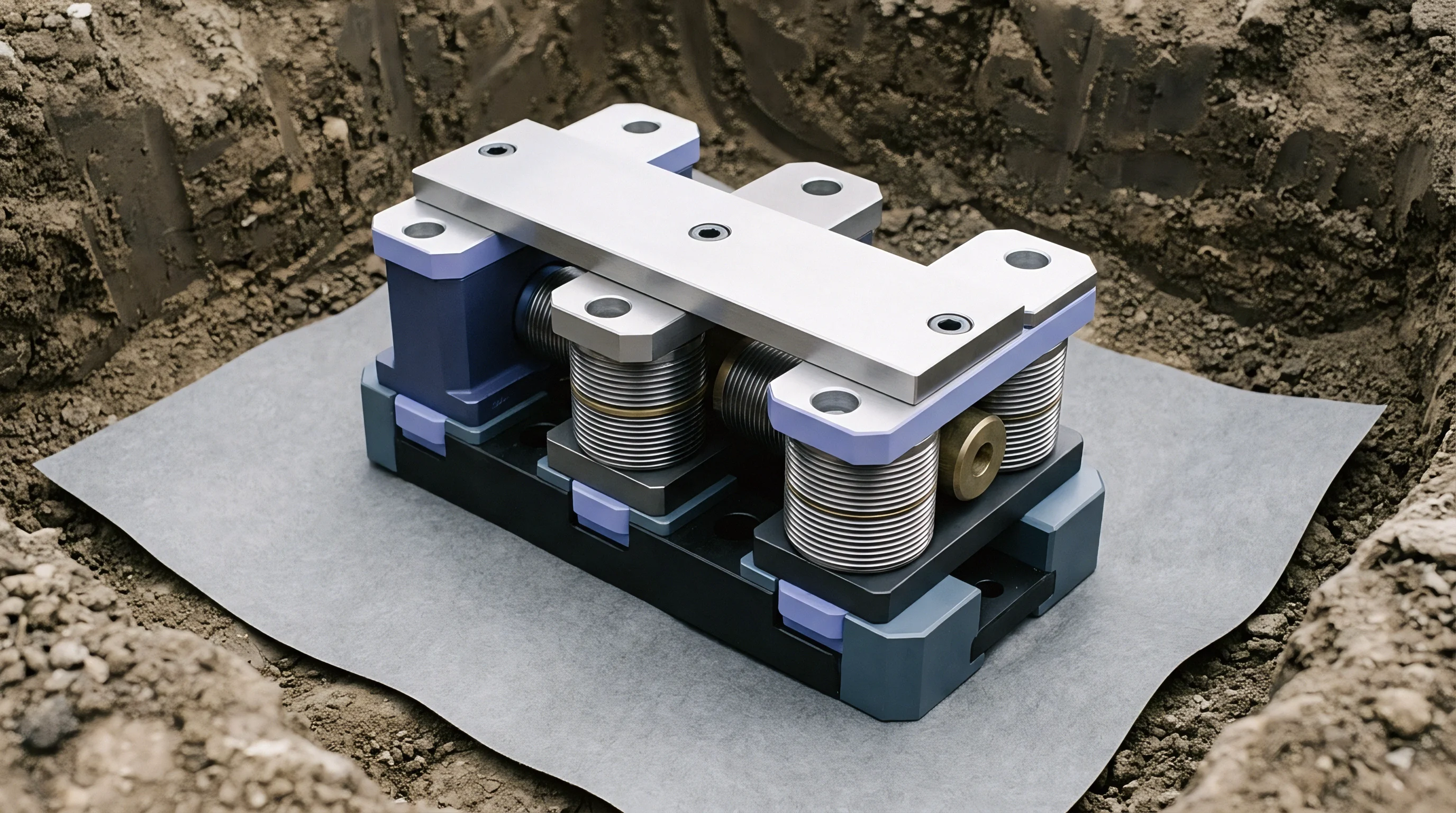
Positioning transducer hardware on high-speed folding-gluer lines or printing presses requires rigid vibration isolation and precise mechanical alignment. Converting lines operating at speeds up to 500 meters per minute generate substantial web chatter and vertical displacement. Because air-coupled acoustic signals attenuate rapidly over small distance variations, maintaining a fixed standoff distance between the sensor head and the moving board surface dictates system accuracy.
Precision mounting frames employ air-bearing stabilization shoes or non-contact vacuum platens to damp vertical web flutter within a tolerance band of plus or minus 50 micrometers.
Aerodynamic Boundary Layer Interference Control
Motion distorts position. High-speed board transport drags a boundary layer of turbulent air along the upper and lower sheet surfaces. Air curtains stabilize flow.
Turbulent air eddies cause ambient pressure fluctuations that scatter ultrasonic signals, introducing acoustic phase noise into inline measurements. Integrating aerodynamic air shrouds and laminar flow deflectors around the transducer focal zone sweeps turbulent boundary air away from the acoustic path, maintaining a stable medium for wave transmission.
- Position the primary support gantry over a vibration-isolated section of the gluer frame to prevent line harmonics from coupling into the transducer mount.
- Adjust the vertical micrometer stage to set the transducer face standoff distance exactly to the calibrated focal length of 30 millimeters from the target board plane.
- Align the acoustic beam axis perpendicular to the cartonboard surface using an optical alignment laser secured inside the transducer housing.
- Connect air shroud supply lines to deliver filtered, low-pressure laminar air across the sensor gap at 0.2 bar to purge boundary layer turbulence.
- Lock mechanical stage position clamps and perform dynamic web tracking verification at operational line speed with unprinted reference stock.
Transducer alignment angles must account for Snell’s Law when utilizing oblique incidence pitch-catch configurations. Launching Lamb waves into the board requires angling the transmitter relative to the normal axis to match the phase velocity of the selected wave mode in the cellulose sheet. A angular drift of single half-degree drops signal reception efficiency below usable signal-to-noise thresholds on heavy board calipers.
Transducer focal spots placed closer than five millimeters to the web edge suffer aerodynamic instability from turbulent air entrainment.
Line integration failure occurs when mechanical vibration causes transducer mounting frames to resonate at frequencies overlapping the sensor sampling rate. Installers who neglect acoustic isolation pads between the sensor bracket and the folder-gluer frame discover that motor drive vibration completely swamps the low-amplitude acoustic signals passing through creased paperboard, rendering the verification system incapable of distinguishing score quality variations.


Signal
Raw acoustic waveforms captured by receiving transducers pass through low-noise preamplifiers and bandpass filters prior to digital signal conversion. Processing algorithms analyze three primary parameters from each ultrasonic pulse: peak amplitude attenuation, time-of-flight delay, and spectral energy distribution. Uncreased board yields high peak amplitudes and fast arrival times.
A correctly creased score lengthens the sound travel path due to internal void routing and scatters acoustic energy, causing a measurable delay in arrival time alongside a drop in peak signal voltage.

Does Spectral Damping Distinguish Internal Delamination from Surface Rupture?
Phase shifts reveal cracks. Frequency domain transformation reveals how different score defect modes alter the acoustic spectrum. Internal delamination acts as a low-pass filter, preferentially absorbing high-frequency sound components while allowing lower frequencies to pass through the altered fiber network.
Outer liner cracking removes structural resistance entirely along the crack line, causing broad-spectrum acoustic attenuation combined with irregular phase shifts. Real-time fast Fourier transform analysis tracks spectral energy ratios between high-frequency and low-frequency bands, giving operators direct visibility into internal matrix integrity versus surface fiber damage.
| Score Condition | Peak Amplitude Ratio (%) | Time-of-Flight Shift (µs) | High-Frequency Damping (dB) | Score Quality Classification |
|---|---|---|---|---|
| Uncreased Board | 100 | 0.0 | 0.0 | Baseline Board |
| Shallow Score | 82 – 95 | +0.4 to +0.8 | -2.1 to -4.5 | Under-creased (High Springback) |
| Optimal Delamination | 45 – 65 | +1.8 to +3.2 | -8.5 to -14.2 | Correct Score (Low Stiffness) |
| Over-creased Matrix | 20 – 40 | +3.5 to +5.1 | -15.0 to -21.0 | Excessive Rupture Zone |
| Cracked Top Liner | 5 – 18 | +5.5 to +8.0 | -22.5 to -30.0 | Rejected (Surface Fracture) |
Caliper changes alter amplitude. Variations in raw board thickness across a single mill roll influence baseline acoustic transmission. Inline systems apply real-time caliper compensation by combining air-coupled acoustic data with optical thickness measurements from downstream laser displacement sensors.
Normalizing acoustic attenuation against instantaneous board caliper isolates score delamination effects from raw mill board thickness tolerances.
Compliance with DIN 55437 for score stiffness evaluation mandates continuous verification of internal ply delamination without surface liner fracture.
Environmental humidity changes shift air density and acoustic velocity inside the sensor gap, altering wave phase relationships. When temperature and relative humidity move away from calibration setpoints without active environmental compensation in the signal processor, the inline verification system misinterprets atmospheric velocity changes as board score defects, triggering unearned line stops?


Threshold
Defect detection depends on establishing precise upper and lower acceptance windows for acoustic signal parameters. Inline score verification algorithms compare real-time acoustic signal profiles against empirical springback force measurements obtained from laboratory score quality testers. A score exhibiting insufficient internal delamination retains high bending stiffness, causing carton blanks to resist square-up on automatic packing lines.
Excessively creased scores suffer complete structural breakdown, leading to fish-tailing, panel bulge, and glue-seam misregistration during high-speed folding operations.

Inline Score Rejection Root Causes
Setting rejection thresholds balancing quality assurance against false scrap generation requires identifying the physical drivers of score degradation across production runs.
- Cracked Top Liner ~ Fiber splitting along the outer printed surface created by excessive die rule penetration or overly narrow female channel width, destroying barrier coatings and package visual appearance.
- Unbroken Internal Matrix ~ Insufficient die rule depth or worn female channel rails failing to induce required shear delamination, resulting in high carton springback force and gluer jams.
- Anisotropic Caliper Drift ~ Mill-lot thickness variations altering the compression ratio during scoring, pushing acoustic attenuation outside preset tolerance bands despite stable tooling geometry.
- Asymmetric Bead Offset ~ Male die rule eccentricity relative to the female groove center, producing unequal delamination zones that cause skewed folding alignment downstream.
Liner integrity dictates strength. Signal processing units output direct digital reject signals to high-speed pneumatic air-blast ejectors or mechanical gate deflectors positioned after the scoring station. Signal processing latency must remain under 2 milliseconds to ensure target defective blanks are cleanly removed at line speeds exceeding 400 meters per minute without disturbing adjacent acceptable cartons.
Ejection timing stays critical. Triggering verification windowing uses optical registration sensors reading the leading edge of each carton blank. The signal analyzer gates the acoustic acquisition window to cover precisely the length of the creased score line, ignoring trailing edges and cutouts that would otherwise register as total signal loss defects.
Standard packaging purchasing contracts state that delivering folding carton lots containing more than 0.1 percent defective scores exhibiting outer liner cracking or springback forces exceeding 120 millinewtons yields complete lot rejection at the customer packaging facility.


Outlay
Integrating non-contact ultrasonic score verification requires comparing capital equipment costs against scrap reduction and downstream liability savings. Traditional score quality assurance relies on offline destructive testing, where operators pull sample sheets every 30 to 60 minutes to measure score bending resistance on lab instruments. Offline sampling leaves thousands of cartons produced between test intervals vulnerable to undetected score defects caused by die rule wear, matrix tape lifting, or board moisture shifts.
Comparative Financial Analysis of Score Inspection Technologies
False rejects inflate waste. Inline optical profile systems capture score surface geometry but cannot evaluate internal ply delamination hidden beneath unbroken top liners. Mechanical tactile probes track score depth physically but scratch high-gloss printed or film-laminated surfaces at operational line speeds.
Air-coupled ultrasound provides complete non-contact evaluation of internal fiber rupture state without marking sensitive coatings.
Tooling wears continuously. Consider a converting plant running three high-speed folder-gluers producing 150 million pharmaceutical and food cartons annually. Operating line speeds average 350 meters per minute on 400-micrometer folding boxboard stock.
Assume an uninspected line experiences a 1.2 percent average reject rate due to score springback failures and liner cracking caught only at final packaging lines or offline lab checks. Implementing inline air-coupled transducer systems reduces total internal scrap and customer return claims through real-time defect isolation.
| Evaluation Metric | Manual Offline Lab Sampling | 2D Optical Surface Profiling | Air-Coupled Ultrasound System |
|---|---|---|---|
| Initial Hardware & Integration Cost | €12,000 | €45,000 | €78,000 |
| Annual Operating & Calibration Labor | €38,000 | €6,500 | €8,200 |
| Undetected Score Defect Scrap Rate | 1.20% | 0.65% | 0.08% |
| Annual Defect Waste Cost (€25/1k packs) | €45,000 | €24,375 | €3,000 |
| Customer Line Jam Claim Exposure | High | Moderate | Minimal |
| Net Three-Year Landed Cost | €147,000 | €118,125 | €102,600 |

Sourcing Parameters for Inline Acoustic Verification
Specifying transducer systems for new packaging lines requires evaluating specific hardware integration criteria to ensure long-term stability.
- Acoustic Focal Resolution ~ Transducer beam spot diameter must match maximum score channel width to prevent edge scattering corruption.
- Aerodynamic Shroud Geometry ~ Enclosed housing design must effectively deflect board boundary layer air currents without touching moving web surfaces.
- Signal Processing Latency ~ Electronic response speed must evaluate full score profiles and fire rejection hardware within 2 milliseconds.
- Board Moisture Sensitivity ~ Signal compensation software must adjust threshold gates based on ambient environmental humidity inputs.
Investment payback on high-speed carton lines arrives within fourteen months when preventing a single automated packaging line shutdown caused by stiff carton scores.