Sensor Profile
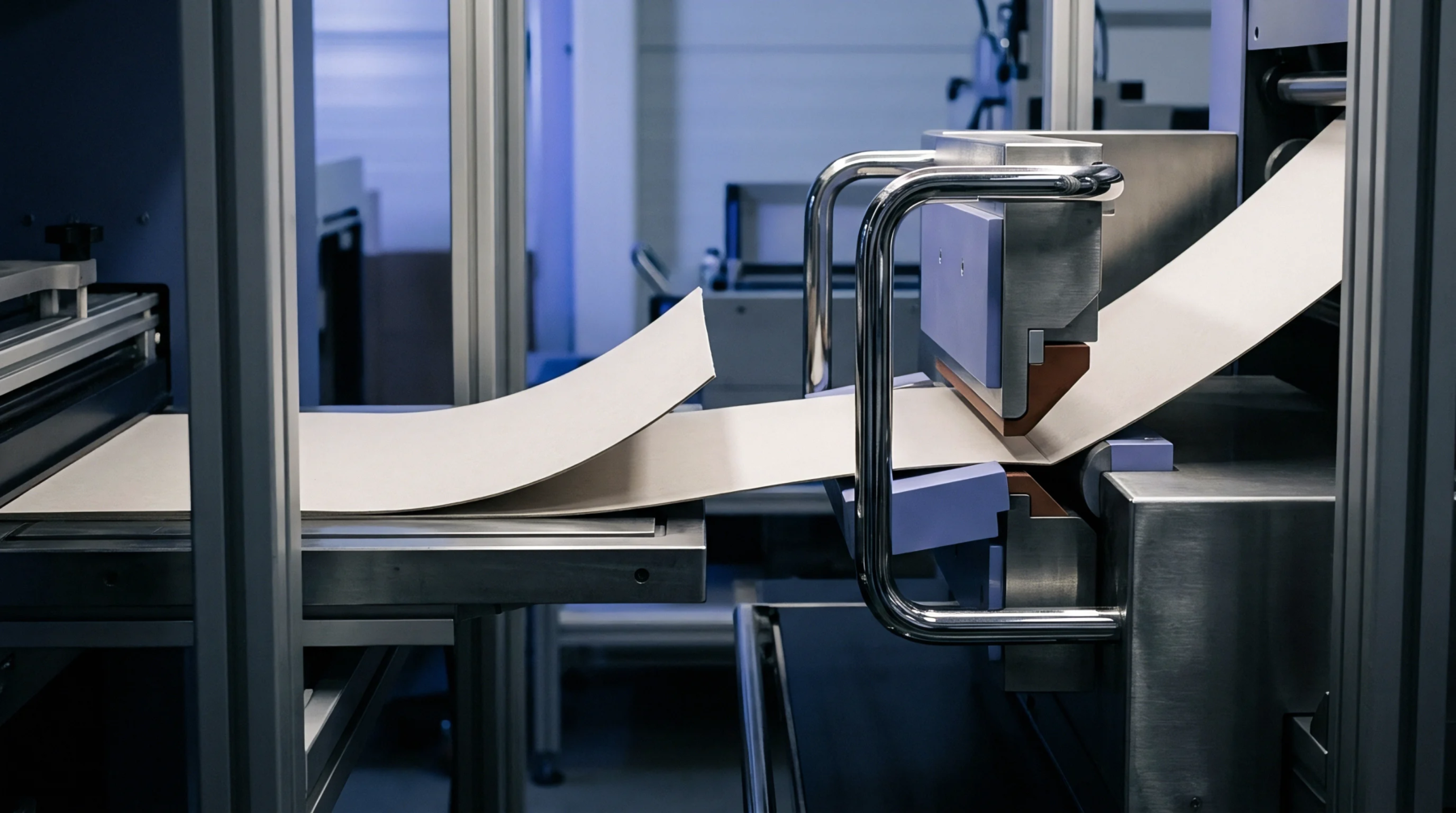
Non-contact electroacoustic devices measure elastic properties across moving webs by transmitting ultrasound across an ambient gas layer without fluid couplants. An air coupled transducer operates by converting electrical excitation into pressure waves that travel across an open atmospheric gap to excite mechanical vibrations in running paperboard. The equipment monitors out-of-plane and in-plane stiffness constants along high-speed paper machines, stopping at solid boundaries where severe impedance mismatches extinguish airborne signal reception.
Signal Generation
Piezoelectric elements matched with low-density quarter-wave impedance layers drive high-amplitude acoustic energy through atmospheric air into moving fibrous sheets. During board production, the air coupled transducer pairs an emitter above the web with a receiver aligned directly beneath it. Pulse frequencies between fifty kilohertz and five hundred kilohertz isolate elastic moduli without marking moist or coated surfaces.
Microphonic reception captures the transmitted energy, tracking fiber orientation profiles across both machine direction and cross direction. Signal processing algorithms extract time-of-flight values, converting transit delays into continuous specific stiffness readouts across the full width of the parent reel. Caliper fluctuations alter the ambient transmission gap, requiring automated distance tracking sensors to decouple geometric changes from raw web modulus shifts.
Operational Limit
Excessive ambient air turbulence disrupts the acoustic beam path between transmitter and receiver. Under high machine speeds exceeding one thousand meters per minute, boundary-layer air currents scatter acoustic wavefronts, degrading signal-to-noise ratios on an air coupled transducer. Heavy sheet basis weights above six hundred grams per square meter also induce severe signal attenuation that prevents transmission across dense multi-ply solid bleached boards.