Folding Boxboard Calendering Gradient Dynamics and Mechanical Bulk Preservation
Temperature gradient calendering preserves FBB mechanical bulk by softening surface fibres while keeping core BCTMP below glass transition to protect stiffness.

Gradient
Thermal diffusion through paperboard obeys transient conduction limits that govern where deformation occurs across the sheet thickness. When a multi-layer web contacts a heated calender roll, thermal energy moves from the surface toward the centre according to the thermal diffusivity of the fibrous network, typically measured between 0.10 and 0.14 square millimetres per second for virgin mechanical pulps at five percent moisture. The contact duration inside a roll nip ranges from one to five milliseconds at production speeds between 600 and 1,200 metres per minute.
This brief duration restricts thermal penetration to the top twenty to forty micrometres of the sheet, leaving the central furnish layers near incoming ambient temperature.
Surface moisture application enhances this localization by modifying the glass transition temperature of hemicellulose and amorphous lignin. In dry states, native wood lignin exhibits a thermal transition threshold near 140 to 160 degrees Celsius. Introducing moisture drops this softening boundary below 70 degrees Celsius in the outer plies.
When roll surface temperatures reach 180 to 220 degrees Celsius, the outermost fibres exceed their softened state immediately upon contact. The dry interior retains its glassy, unsoftened state throughout the nip transit.
A surface moisture increase of three percent lowers the outer ply glass transition temperature by forty degrees Celsius under standard web tensions.
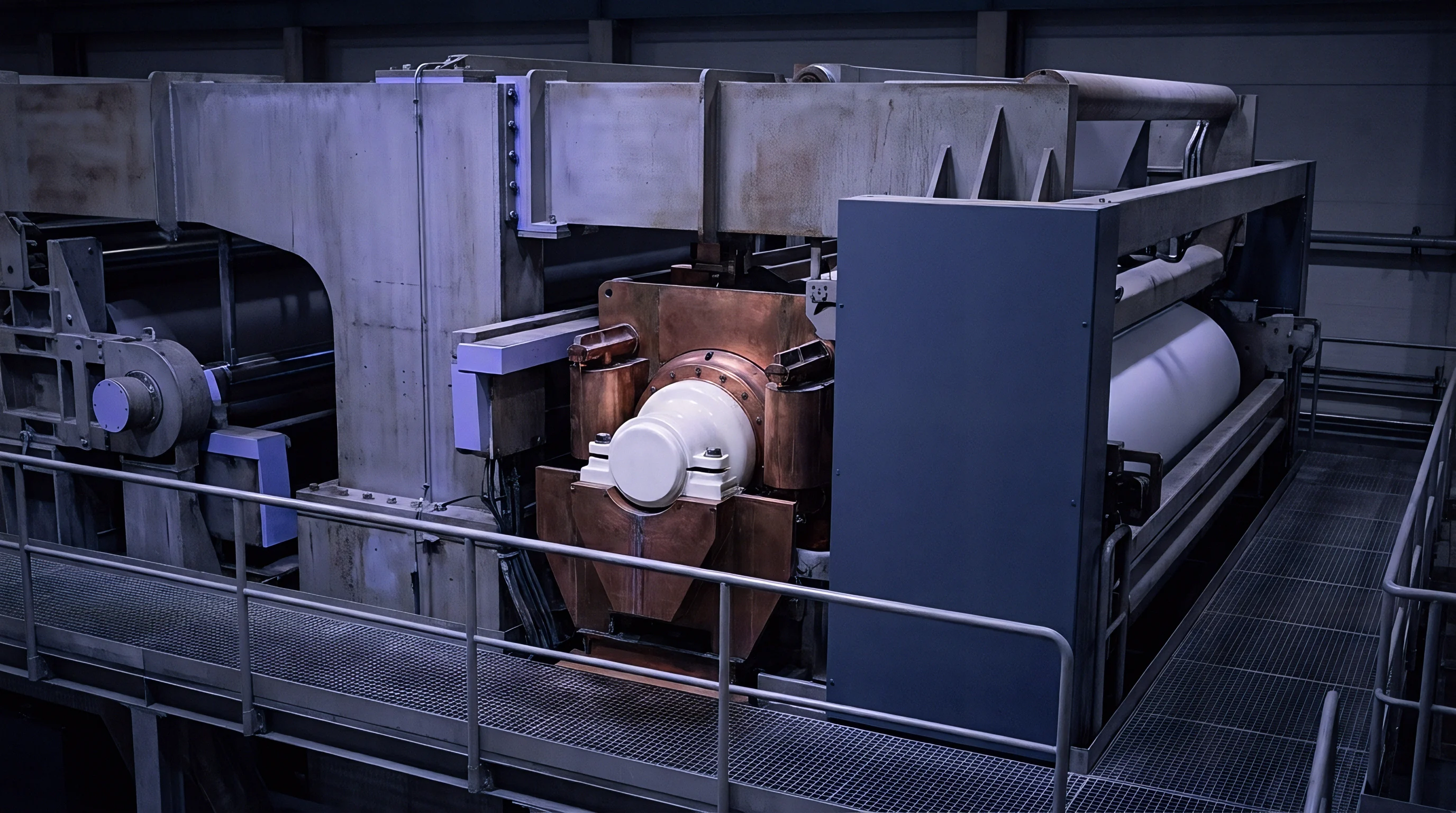
Pressure application acting on this thermal and moisture condition produces differential compaction. The softened outer bleached kraft fibres deform under localized roll contact, filling voids between fibres and generating surface smoothness without requiring excessive peak pressure. Because the central mechanical pulp fibres never reach their transition boundary, their high elastic modulus prevents permanent plastic collapse.
Removing nip pressure allows the unsoftened interior to spring back elastically, retaining total caliper while the outer surface retains its smoothed contour.
Papermakers execute this differential softening using steam showers or water application units positioned immediately ahead of the calendering stack. Applying steam condensation deposits a thin liquid film that plasticizes surface fibres without penetrating the interior. The web enters the nip within milliseconds of wetting.
Heat penetration follows Fourier thermal diffusion. Moisture depresses the glass transition temperature. The core fibres stay elastic.
Operating outside these thermal parameters shifts deformation inward toward the central ply. Excessive dwell times allow heat to conduct into the core fibres, softening lignin within the chemi-thermomechanical pulp and causing unrecoverable compaction. Insufficient cylinder temperature requires higher mechanical line pressures to achieve target Parker Print-Surf values, which crushes the elastic core mechanically.
Balancing roll surface temperature, web speed, and nip width confines plastic strain to the boundary layers.
Ply
Multi-ply folding boxboard structures derive structural performance from separating two dense, stiff outer layers across a lightweight, bulky middle layer. Bleached chemical kraft pulp comprises the top and back plies to deliver high tensile strength, pure whiteness, and clean folding properties without surface cracking. The core ply incorporates mechanical pulp, usually chemi-thermomechanical pulp or stone groundwood, characterized by stiff, lignin-rich fibres and high specific volume.
This construction functions identically to an engineering I-beam, where the outer chemical layers resist applied tension and compression during bending, while the central mechanical layer resists internal shear stress and maintains layer separation.
Stiffness drops with thickness cubed. Equationally, board bending stiffness equals the elastic modulus multiplied by the moment of inertia, making structural performance directly dependent on sheet thickness raised to the third power. Compacting the middle mechanical ply by ten percent reduces total bending resistance by nearly twenty-seven percent, even if sheet grammage remains identical.
Preserving the thickness of this central mechanical furnish during finishing constitutes the primary operational objective when manufacturing folding boxboard.
- Mechanical pulp screening removes shives and oversized fibre bundles that produce surface irregularities requiring excessive roll pressure to smooth during subsequent web finishing.
- Moisture profile equilibration across multi-cylinder dryer sections prevents dry streaks that resist softening while wet streaks suffer localized sheet crushing.
- Steam shower application deposits forty to sixty milligrams of water per square metre onto the top liner to plasticize surface chemistry prior to roll contact.
- Controlled nip passage subjects the board to peak compressive forces below the critical yield strength of unsoftened interior mechanical fibres.
Chemical pulp in the top ply readily flattens under moderate mechanical loads due to thin cell walls and extensive internal fibrillation achieved during refining. Mechanical pulp fibres within the core remain tubular, rigid, and resistant to permanent deformation when maintained below their glass transition threshold. Subjecting these thick-walled mechanical fibres to high moisture and sustained mechanical pressure fractures the rigid cell walls, collapsing lumens permanently and eliminating the voids responsible for high bulk.
| Board Grade | Top Layer Furnish | Middle Layer Furnish | Grammage (g/m²) | Caliper (µm) | Bulk (cm³/g) | MD Stiffness (mN·m) |
|---|---|---|---|---|---|---|
| Standard FBB (GC2) | Bleached Chemical Kraft | Groundwood / TMP Blend | 250 | 375 | 1.50 | 19.8 |
| High-Yield FBB (GC1) | Bleached Chemical Kraft | Optimized BCTMP | 250 | 415 | 1.66 | 26.2 |
| Solid Bleached Board (SBB) | Bleached Chemical Kraft | Bleached Chemical Kraft | 250 | 310 | 1.24 | 12.5 |
| White Lined Chipboard (WLC) | Bleached Chemical Kraft | Recycled Fibre Blend | 250 | 335 | 1.34 | 14.1 |
Differences between virgin chemi-thermomechanical pulp and recycled fibres become apparent under calendering loads. Recycled furnish in chipboard layers contains previously collapsed fibres, mineral fillers, and residual starch that lack elastic springback. Virgin mechanical fibres preserve their original cross-sectional geometry, enabling the core to recover thickness once compressive loads release.
Calendering operations must preserve these uncollapsed lumens to maintain targeted yield targets.
When converters complain about stiffness variations across consecutive deliveries, board mills state that incoming seasonal wood chip density dictated a temporary increase in calender line loads to maintain surface roughness targets.
Compression
Mechanical stress distribution within a rolling nip determines the degree of permanent thickness reduction across board layers. Traditional calenders utilize hard chilled-iron rolls that produce narrow nip widths between five and fifteen millimetres. These narrow contact zones generate brief contact periods and extreme peak pressures, often exceeding thirty to fifty megapascals.
Under these severe line pressures, compressive stresses exceed the yield point of the central mechanical pulp fibres, crushing core lumens regardless of interior temperature.
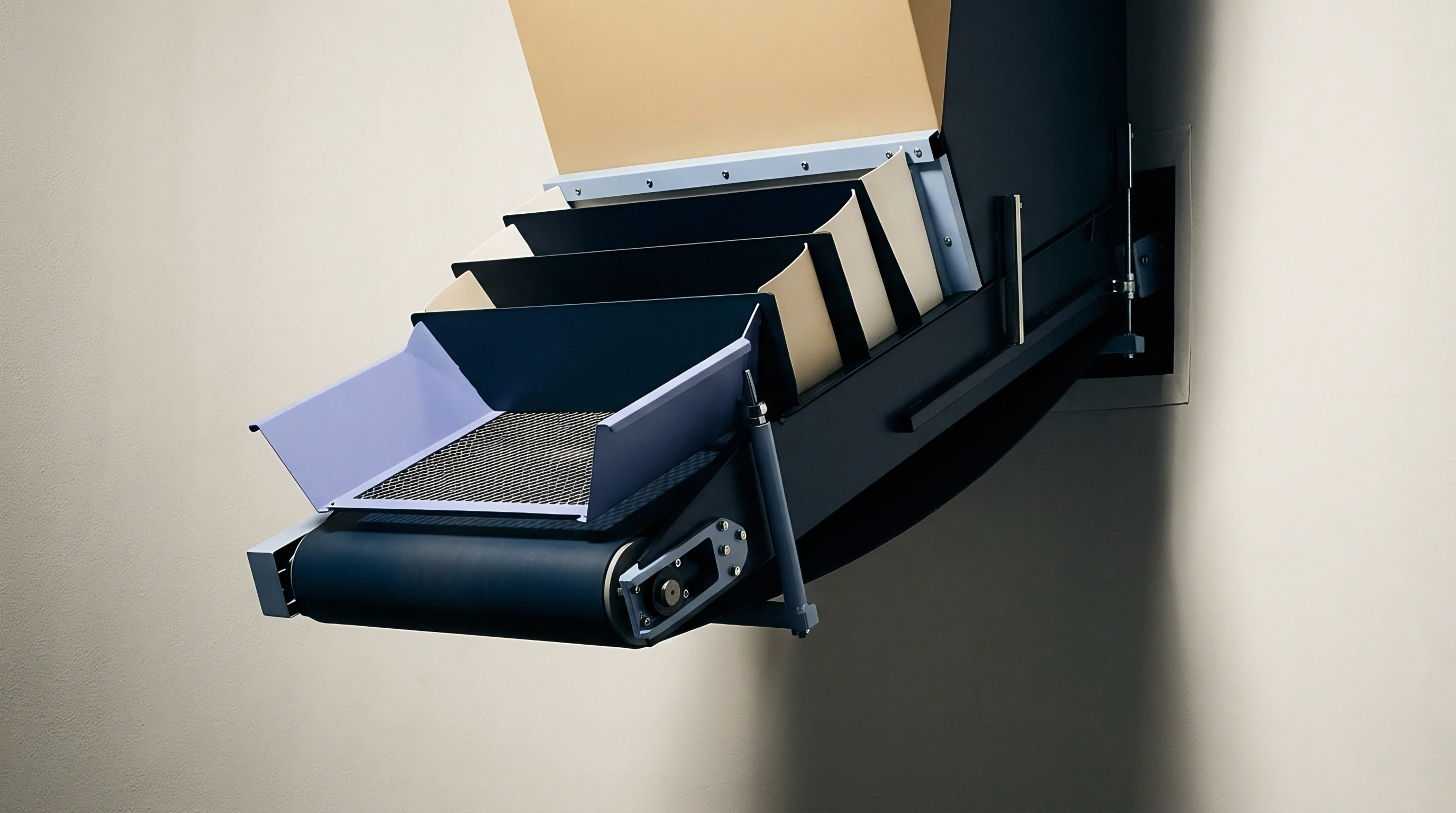
Soft-nip calenders address this issue by replacing one chilled-iron cylinder with a roll covered in an elastic synthetic polymer, typically polyurethane or composite elastomer with a hardness between 88 and 93 Shore D. Roll deflection increases the contact footprint to twenty-five or forty millimetres. Spreading the total applied load across a wider contact area reduces peak mechanical pressure to ten to twenty megapascals while preserving the total linear force required to flatten surface asperities. Surface plasticization demands rapid thermal transfer.
Line pressure crushes the centre.
ISO 534 testing confirms that soft-nip finishing delivers thirty percent lower caliper reduction than hard-nip finishing at identical Parker Print-Surf roughness values.
Does Extended Nip Residence Preserve Z-Direction Density?
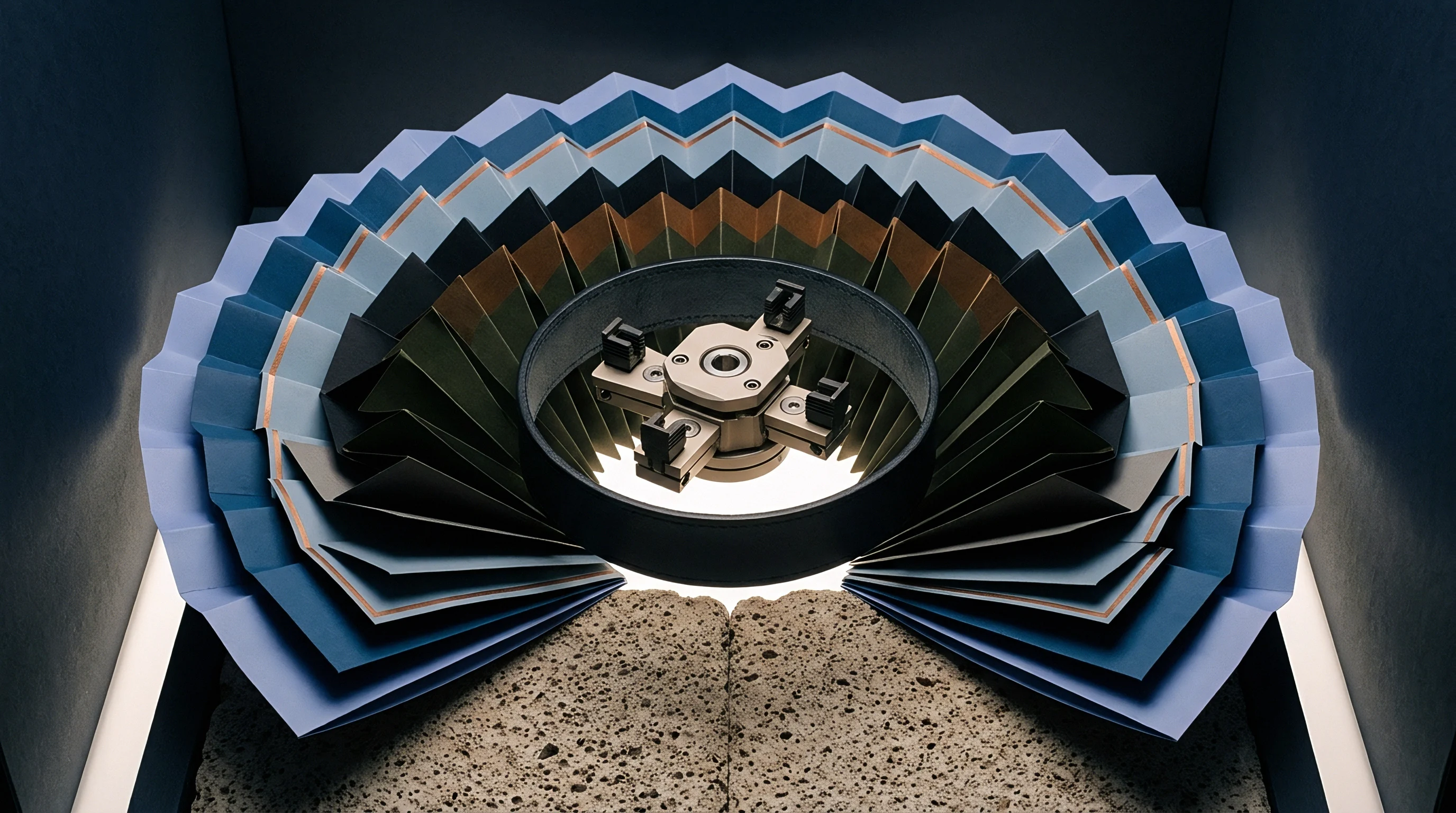
Extended nip configurations, commonly designated as shoe calenders, utilize an engineered concave stationary shoe loaded hydraulically against a rotating flexible belt and heated counter roll. Contact widths expand beyond one hundred to two hundred and fifty millimetres, extending web dwell time up to thirty to fifty milliseconds. Compressive stress remains uniformly distributed at moderate peak levels between two and six megapascals.
Shoe nips prolong dwell time. This prolonged dwell permits distinct thermal tuning. Operating shoe calenders at roll temperatures above 200 degrees Celsius allows complete surface smoothing under light peak stresses that never exceed the compressive elastic limit of the central mechanical layer.
Z-direction density profiling shows that density increases remain confined to the outermost fifteen percent of sheet thickness, while central ply density stays unchanged from the drying section exit.
- Core lumen collapse occurs when peak compressive stresses exceed twenty-two megapascals in unheated mechanical pulp plies, permanently reducing sheet thickness and bending resistance.
- Fibre micro-fracturing develops under rapid pressure transitions in narrow hard nips, separating inner ply bonds and causing blister defects during subsequent printing passes.
- Surface micro-cracking emerges when over-dried top liners undergo excessive tensile strain over small-radius calender rolls without adequate steam conditioning.
- Z-direction delamination arises when shear stresses inside wide shoe nips exceed the internal bond strength of the multi-ply interface, leading to blister formation during offset drying.
Failing to regulate mechanical peak pressure across the contact zone destroys the structural integrity of the inner mechanical cushion, causing finished folding cartons to bulge, fail vertical compression tests, and jam high-speed cartoning packaging lines.
Stiffness
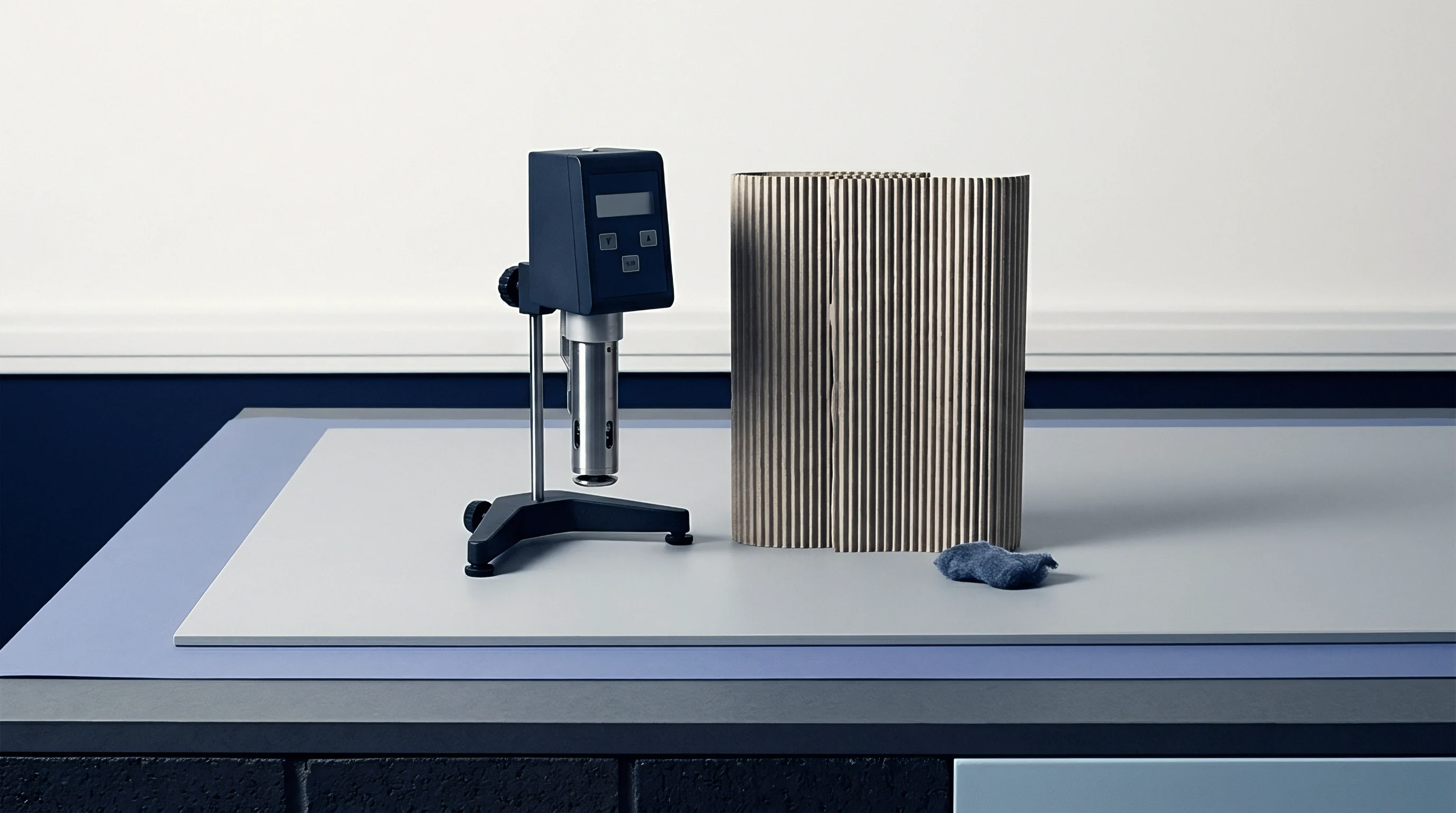
Bending resistance governs carton performance during erect, fill, and seal packaging operations. Packaging converters measure this mechanical property according to ISO 2493 using two-point or four-point bending resistance protocols, or according to TAPPI T 489 using Taber stiffness instruments. Cartons must resist outward bulging induced by internal product weight while maintaining flat panels across retail displays.
Top-to-bottom compression strength, quantified by the Box Compression Test, correlates directly with board bending stiffness and perimeter dimensions rather than raw basis weight.
What Critical Peak Pressure Compresses Bulk?
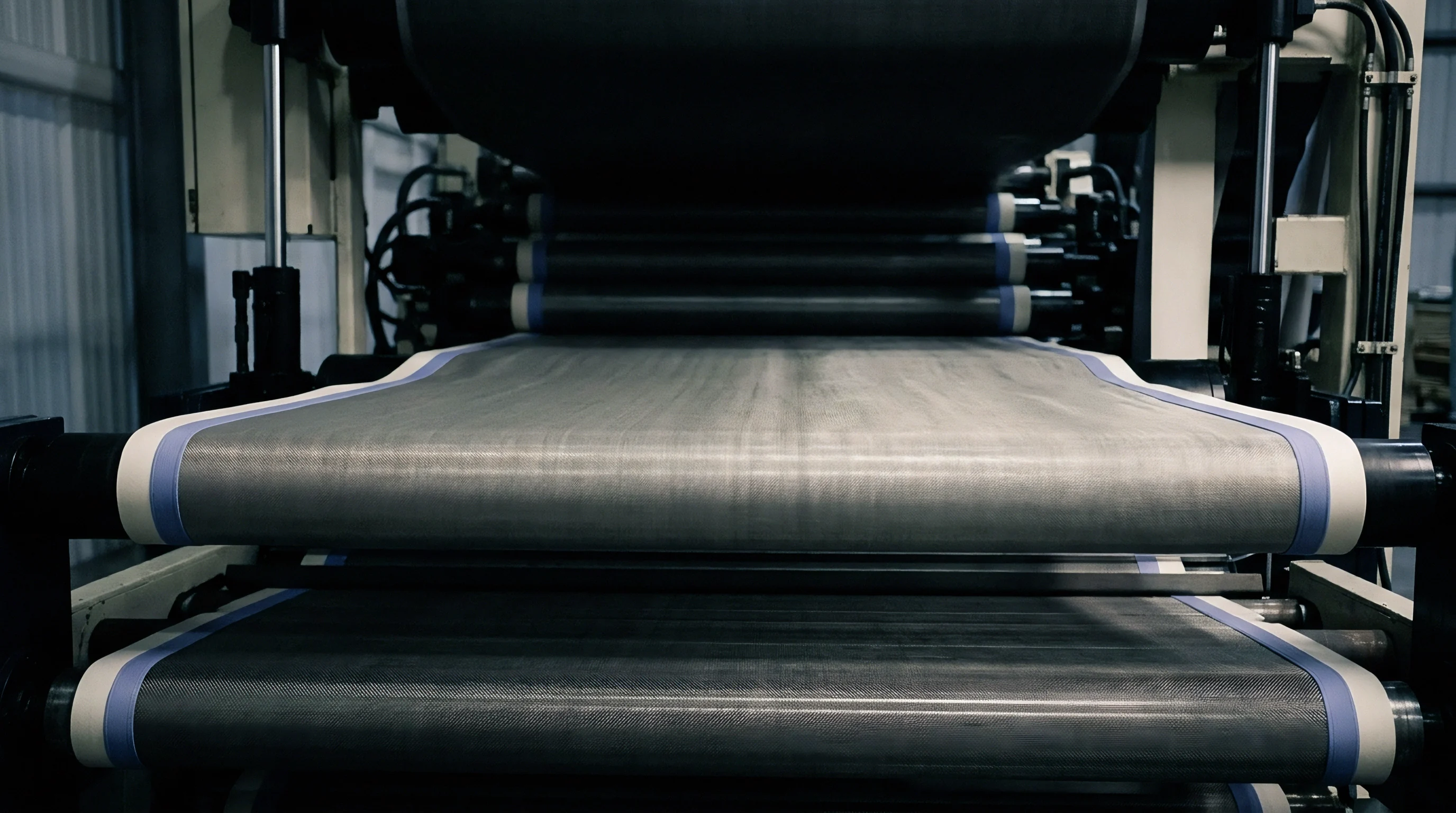
The transition between elastic deformation and permanent plastic collapse depends on peak mechanical loading. Experimental compression curves show that chemi-thermomechanical core plies behave elastically up to eight to twelve megapascals of compressive stress at moisture contents between seven and eight percent. Exceeding fourteen megapascals initiates plastic collapse of middle-ply fibre walls.
Caliper loss destroys panel rigidity. Bulk delivers carton yield.
Preserving board bulk provides the primary path toward grammage reduction in packaging design. A high-yield folding boxboard manufactured at 215 grams per square metre with a specific bulk of 1.65 cubic centimetres per gram achieves a caliper of 355 micrometres, delivering a cross-direction bending stiffness of 12.0 millinewton-metres. Achieving identical bending resistance using solid bleached sulphate board requires a grammage of 250 grams per square metre due to its lower bulk of 1.22 cubic centimetres per gram.
| Calender Setup | Roll Temp (°C) | Peak Pressure (MPa) | Dwell Time (ms) | Bulk Loss (%) | PPS Roughness 1.0 MPa (µm) |
|---|---|---|---|---|---|
| Two-Roll Hard Nip | 80 | 38.5 | 1.8 | 14.8 | 1.85 |
| Two-Roll Soft Nip | 150 | 16.2 | 4.2 | 8.4 | 1.30 |
| Heated Shoe Calender | 205 | 4.5 | 38.0 | 3.1 | 1.15 |
| Uncalendered Base | 23 | 0.0 | 0.0 | 0.0 | 4.20 |
Maintaining the middle ply thickness also governs the creasing performance of finished board blanks. During die-cutting, male creasing rules depress the board into matching female channels, delaminating the internal sheet structure in a controlled hinge pattern without rupturing surface plies. If calendering crushes the core prematurely, internal shear planes bond too tightly, preventing clean delamination and forcing outer liner layers to split during ninety-degree carton erection.
A sheet that preserves thickness during manufacturing bends without breaking across converter creasing dies.
Carton panel stiffness tracks the third power of thickness regardless of raw furnish spend.
Finish
Print quality demands high surface smoothness and uniform ink absorption across the top coated layer. Papermakers quantify surface topography using Parker Print-Surf instruments according to ISO 8791-4, which measures air leakage between a precision measuring land and the board surface under clamping pressures of 0.5, 1.0, or 2.0 megapascals. Folding boxboard intended for premium offset lithography or rotogravure printing requires Parker Print-Surf roughness values below 1.2 micrometres under 1.0 megapascal clamping.
The I-beam structure collapses.
Achieving this level of surface perfection on uncalendered board requires heavy pigment coating formulations or intense calendering action. Heavy mineral coating applications add non-structural weight and increase manufacturing costs without contributing to flexural stiffness. Temperature-gradient calendering smooths the base board prior to coating, enabling mills to reduce mineral coat weights while achieving uniform coating thickness across surface micro-contours.
Uniform base smoothness prevents uneven ink vehicle drainage that produces print mottle across dense solid print areas.
- Target Parker Print-Surf verification ensures surface roughness remains below 1.2 micrometres under 1.0 megapascal clamping for lithographic offset work.
- Coating thickness uniformity checks verify that base board smoothness variations do not generate dry coating weight variations exceeding one gram per square metre.
- Core caliper retention verification confirms delivered board bulk remains above 1.55 cubic centimetres per gram against nominal specification limits.
- Internal bond strength testing under ISO 16260 verifies that Scott Bond delamination energy exceeds one hundred and fifty joules per square metre following hot calendering passes.
Specular gloss measurement according to ISO 8254-1 at seventy-five degrees provides an additional assessment of surface finish. Elevated calender roll temperatures increase coating gloss by smoothing pigment particles without requiring high mechanical compression. Low dwell times restrict heat.
Mill certificates report Parker Print-Surf. The trade-off between optical finish and structural bulk preservation remains an active operational challenge as printers push for higher specular gloss while brand owners enforce strict grammage reductions.
The operational balance between coating gloss development and elastic core preservation leaves open the question of how future hybrid coating formulations will perform under ultra-low calendering line pressures.
Margin
Substrate choices directly control carton manufacturing yield and landed material costs. Purchasing paperboard by the metric tonne means that higher bulk delivers more surface area per purchased weight unit. A packaging buyer specifying 250 grams per square metre standard folding boxboard receives 4,000 square metres of usable substrate per tonne.
Upgrading the specification to high-yield folding boxboard at 215 grams per square metre with identical thickness yields 4,651 square metres per purchased tonne, representing an immediate yield gain of 16.3 percent.
Commercial assessment requires evaluating substrate yield against unit price differentials. High-yield folding boxboard typically carries a price premium per tonne over standard white lined chipboard or basic folding boxboard grades. Calculating total financial impact requires converting raw metric tonne pricing into delivered sheet costs across the target carton footprint.
Converting operations also realize secondary savings across freight, handling, and extended pallet counts when running lighter grammage stock through die-cutters.
| Substrate Option | Grammage (g/m²) | Substrate Yield (m²/tonne) | Tonnage Required (tonnes) | Delivered Price (€/tonne) | Total Substrate Cost (€) | Cost per 1,000 Blanks (€) |
|---|---|---|---|---|---|---|
| Solid Bleached Board (SBB) | 250 | 4,000 | 10.00 | 1,420 | 14,200 | 28.40 |
| Standard FBB (GC2) | 230 | 4,348 | 9.20 | 1,310 | 12,052 | 24.10 |
| High-Yield FBB (GC1) | 205 | 4,878 | 8.20 | 1,360 | 11,152 | 22.30 |
| White Lined Chipboard (WLC) | 280 | 3,571 | 11.20 | 980 | 10,976 | 21.95 |
A buyer procuring substrate for pharmaceutical or cosmetic packaging lines must balance raw material cost against converting line waste. White lined chipboard provides low price per tonne, but requires higher grammage to achieve necessary panel stiffness, yielding fewer blanks per tonne and increasing freight costs. Recycled furnish also exhibits wider moisture variations that induce sheet curl, causing feeder jams on automated cartoning lines operating at four hundred cartons per minute.
High-yield folding boxboard reduces shipping weights, maintains creasing reliability, and lowers environmental fee liabilities tied directly to pack weight.
A procurement specification stating that delivered board caliper must vary within three percent of nominal values under ISO 534 while maintaining minimum bending resistance under ISO 2493 establishes binding grounds for lot rejection if calender over-compression compromises sheet stiffness.