Mechanical Refining Impact on Multi Ply Boxboard Z Direction Tensile Development
Controlled low energy refining of middle ply mechanical pulp yields superior Z direction tensile development without caliper loss in multi ply boxboard.


Fibril
Processing high-yield mechanical pulps like Bleached Chemithermomechanical Pulp (BCTMP) or Thermo-mechanical Pulp (TMP) for multi-ply folding boxboard requires targeted mechanical energy input. The middle ply of a boxboard sheet supplies structural volume, giving the pack its bending stiffness. Stiff mechanical fibers generate this bulk, but their intact, rigid cell walls offer low native fiber-to-fiber bonding capability.
Without mechanical refining, the core layer exhibits weak internal cohesion, leading to total structural failure under low perpendicular forces.

Mechanical Action on Wood Fiber Structures
Discs rotating at high velocity introduce cyclic compressive stress into damp lignocellulosic matrices. Bars on opposed refining plates shear, crush, and flex individual fibers as stock passes through the refining zone at consistencies between 3 percent and 5 percent for low-consistency systems, or 25 percent to 35 percent for high-consistency applications. Specific edge load controls impact intensity.
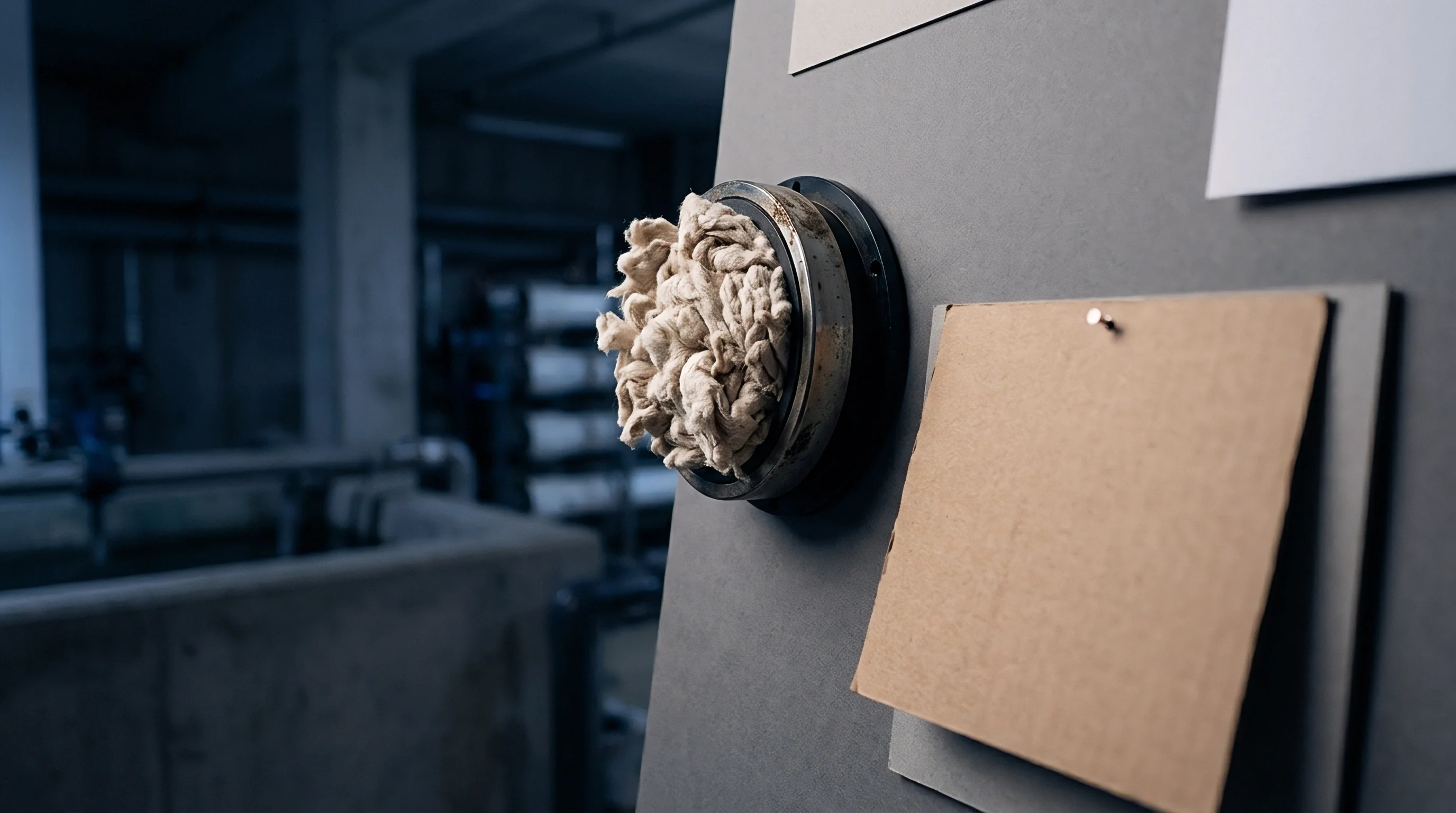
The primary wall and the outer layer of the secondary wall peel away under bar impact. Exposing the inner secondary wall unveils hydrophilic hydroxyl groups capable of forming inter-fiber hydrogen bonds during sheet consolidation and water removal.
Intensity of refining dictates whether stock undergoes gentle surface peel or destructive structural cutting. Specific Edge Load (SEL), expressed in Joules per meter (J/m), quantifies the energy delivered per bar edge impact, while Net Specific Energy (NSE), measured in kilowatt-hours per tonne (kWh/t), measures total work performed on dry fiber solids. Softwood mechanical pulps targeted for middle-ply boxboard demand low to moderate SEL levels between 0.8 J/m and 1.5 J/m to promote delamination without severe fiber cutting.
Hardwood BCTMP, comprising shorter native fiber elements, requires lower edge loads around 0.3 J/m to 0.6 J/m to avoid micro-fragmentation.
Specific Edge Load kept between 0.4 J/m and 0.8 J/m at 120 kWh/t net specific energy raises middle-ply TAPPI T 541 Z-direction tensile strength from 140 kPa to 230 kPa conditioned at 23 C and 50 percent relative humidity.
High net specific energy causes extensive cell wall breakdown. Fiber flexural rigidity decreases as internal delamination proceeds, allowing stiff mechanical rods to flatten into thin ribbons during wet pressing. Ribbon-like fibers present expansive surface area contact, increasing optical density and bonding sites.
This structural flattening is the principal driver of Z-direction tensile strength, defined as the peak perpendicular stress a paperboard sample withstands before internal ply failure or inter-ply separation occurs under TAPPI T 541 or ISO 15754 test conditions.

Internal Fibrillation and Specific Surface Expansion
Delamination within the secondary cell wall releases S2 microfibrils, increasing swell potential. Water molecules enter the newly opened internal voids, swelling the fiber wall and raising the Water Retention Value (WRV). Unrefined spruce BCTMP typically displays a WRV of 1.1 g/g to 1.3 g/g, whereas refined BCTMP stock reaching optimal Z-direction tensile development reaches WRV values between 1.7 g/g and 2.1 g/g.
Higher water retention confirms greater internal cell wall hydration and wall compliance, translating to higher sheet density and cohesive strength across the board thickness.
External fibrillation creates sub-micron hair-like filaments that project from the fiber surface. These fibrillar filaments extend into inter-fiber voids during wet web pressing, interlocking mechanically and increasing the effective contact area for hydrogen bonding upon drying. Excessive refining generates collateral fines, defined as particles passing through a 200-mesh screen during Bauer-McNett classification.
Controlled fines production helps fill voids in the bulky mechanical fiber matrix, creating continuous stress-transfer bridges between coarse mechanical fibers.
| Net Energy (kWh/t) | Edge Load (J/m) | CSF Freeness (mL) | WRV (g/g) | Bulk (cm3/g) | ZD Tensile (kPa) | Scott Bond (J/m2) |
|---|---|---|---|---|---|---|
| 0 (Unrefined) | 0.0 | 450 | 1.18 | 2.45 | 115 | 85 |
| 60 | 0.6 | 360 | 1.42 | 2.18 | 165 | 120 |
| 120 | 0.6 | 270 | 1.78 | 1.92 | 235 | 175 |
| 180 | 0.6 | 180 | 2.05 | 1.68 | 290 | 225 |
| 240 | 1.4 | 110 | 2.28 | 1.46 | 310 | 240 |
| Methodology: BCTMP spruce/fir furnish tested under ISO 187 standard conditioning (23 C, 50% RH). ZD Tensile measured via TAPPI T 541; Scott Bond measured via TAPPI T 569. | ||||||
Over-refining causes severe structural degradation. Pushing net energy input past 200 kWh/t cuts long structural fibers, reducing average fiber length and lowering the tear index of the stock. Canadian Standard Freeness drops rapidly, shifting stock from a free-draining 400 mL CSF down to less than 150 mL CSF.
Drain resistance on the paper machine wire rises exponentially, forcing machine operators to reduce wire speed or lower headbox consistency, which compromises formation uniformity and increases production costs per tonne.
A gentle refining action focused on internal delamination rather than fiber length reduction delivers the required bond strength without sacrificing total core yield.

Stratum
Web ply build up across multi-wire formers determines how individual layers interact during dewatering. Modern folding boxboard machines generate structural weight through three to five distinct web layers combined in the wet end. Bleached chemical softwood pulp forms the bottom ply for high tensile strength and reverse-side printability, while bleached chemical hardwood pulp forms the top ply to yield an ultra-smooth coated printing surface.
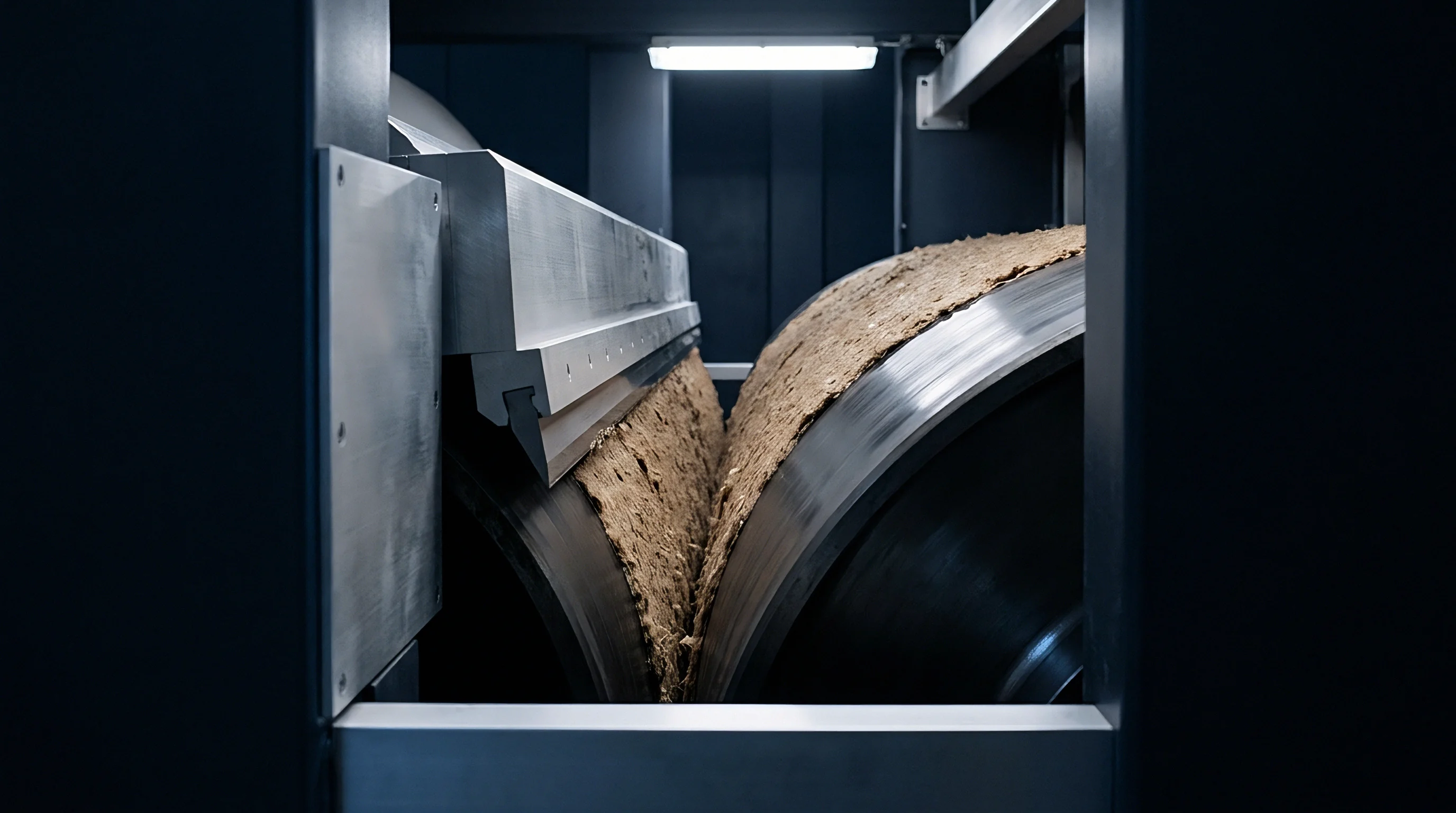
Mechanical pulp occupies the bulky center. Each layer emerges from an independent headbox onto its own forming wire before wet-combining at the couch press nips.

Inter-Ply Interface Formation and Starch Distribution
Combining separate wet mats at the couch roll creates a boundary zone where free water drains through overlapping fiber networks. The mechanical pulp core possesses low initial wet web strength. Drainage forces pulled by vacuum flatboxes and couch rolls cause fine fibers and added papermaking chemicals to redistribute through the sheet thickness.
Inter-ply bonding strength depends on physical interlock between chemical pulp fibers from the outer layers and mechanical fibers at the core boundaries.
Application of spray starch directly onto wet webs prior to ply consolidation supplements mechanical interlock. Native or modified corn and potato starches sprayed between 1.5 percent and 3.0 percent solids concentration cook during thermal cylinder drying, forming an adhesive film that bridges the interface boundary. When mechanical refining of the middle ply is insufficient, the core layer acts as a mechanical plane of weakness, causing the board to split internally even if the chemical-to-mechanical inter-ply boundary remains intact under starch adhesion.
Non-compliance with ISO 15754 inter-ply adhesion minimums voids board delivery contracts when converting score line cracking exceeds level two visual standard under ISO 12647 press conditions.
The density profile across multi-ply board exhibits steep step changes. Chemical top and bottom plies undergo intensive mechanical refining (often achieving 25 to 30 SR Schopper-Riegler or 300 mL CSF), yielding dense, tightly bonded outer skins with densities exceeding 0.85 g/cm3. The middle mechanical ply operates at densities between 0.45 g/cm3 and 0.60 g/cm3.
The transition zone between these dense chemical skins and the open mechanical core represents an extreme gradient in elastic modulus, concentrating shear stresses at the exact boundary where structural delamination typically initiates during conversion.

Fines Separation across Formers and Drainage Nips
Small particulate fragments pass through forming fabrics during vacuum-assisted dewatering. This filtration mechanism leaves the wire side of individual plies depleted of fine particles, while the top side accumulates a fines-rich layer. When plies join top-side to wire-side at the couch nip, asymmetric fines distribution alters local hydrogen bonding potential across the joint, leading to directional variation in Z-direction performance depending on board orientation during converting operations.
To prevent localized delamination and ensure consistent Z-direction performance across all converting operations, mills must control key process parameters across stock prep and wet-end forming:
- Specific edge load thresholds maintained below 0.8 J/m prevent micro-cutting of BCTMP fibers while expanding internal surface area.
- Headbox consistency settings kept below 0.8 percent for middle-ply formers improve sheet formation and reduce density fluting across the web profile.
- Wet press nip pressure gradient adjusted progressively across press positions avoids crushing the bulky mechanical core before initial wet-web bonds establish.
- Inter-ply spray starch coverage applied evenly at 2.0 to 3.5 g/m2 dry basis bridges mechanical interlock gaps at ply boundary interfaces.
- Recirculated white water fines content monitored continuously prevents localized drainage blinding and uneven z-axis density profiles.
Control of these wet-end variables ensures that mechanical refining inputs translate into uniform structural strength rather than localized density defects.
Standard delivery contracts enforce compliance with minimum Z-direction tensile specifications via TAPPI T 541, stipulating that any master reel exhibiting mean internal bond values below 180 kPa across ten test points faces immediate rejection or automatic re-classification to non-structural packaging grades.

Shear
Stresses acting perpendicular to the sheet plane challenge internal structural integrity during creasing and high-speed folding. When a packaging carton passes through an automated cartoning line, score lines undergo sharp 90-degree or 180-degree bending folds. The outer chemical pulp ply experiences pure tension, while the inner chemical ply experiences severe compression.
The middle mechanical core must absorb massive internal shear deformation without delaminating prematurely or cracking along the fold outer corner.
Where Does Mechanical Refining Fail to Prevent Ply Delamination?
Processing lignocellulosic material past critical energy limits cuts long structural units without expanding bonded contact points. When BCTMP refining applies excessive Specific Edge Load, fiber shortening dominates over internal delamination. Short, rigid mechanical fiber fragments lack the spatial length necessary to bridge micro-cracks that form within the middle ply during scoring.
The board exhibits brittle structural behavior: Z-direction tensile strength may show an initial slight increase due to higher sheet density, but energy absorption capacity under impact drops significantly, leading to catastrophic ply splitting during folder-gluer operations.
When middle-ply mechanical fibers are under-refined, they retain high wall stiffness and resist compressive consolidation in the wet press section. The result is a sheet with high bulk but poor internal bond strength, displaying TAPPI T 541 ZD tensile values below 120 kPa. During creasing, the male creasing rule pushes the board into the female channel, generating extreme tensile stresses perpendicular to the sheet thickness.
If internal bond strength is deficient, the middle ply splits uncontrollably away from the score zone, spreading delamination into the main panel and destroying package wall stiffness.
Preserving structural bulk through low energy mechanical refining requires chemical wet-end retention aids to maintain inter-ply hydrogen bonding without increasing overall sheet density.
Over-refining mechanical pulps introduces an equally damaging failure mode: loss of caliper and bending stiffness. Flexural rigidity of multi-ply board scales with the square of middle ply thickness and elastic modulus. Refining reduces bulk from 2.2 cm3/g down to 1.5 cm3/g.
While Z-direction tensile rises from 130 kPa to 280 kPa, sheet caliper drops by 20 percent for the same grammage. Bending stiffness drops by over 35 percent, failing the structural load requirements of auto-bottom carton designs.

Caliper Trade-Offs in Bending Stiffness Calculations
Preserving sheet volume maintains physical resistance to flexural deformation across package panels. Papermakers manage an absolute trade-off between Z-direction tensile strength and sheet bulk when refining middle-ply mechanical pulps. Higher energy inputs increase fiber flexibility, density, and internal bonding at the direct expense of sheet thickness.
The optimal operating window balances the minimum acceptable ZD tensile value (typically 180 kPa to 220 kPa for standard folding boxboard) against the maximum achievable bulk (target above 1.8 cm3/g for BCTMP cores).
| Ply Position | Furnish Type | Grammage (g/m2) | Refining Energy (kWh/t) | Density (g/cm3) | ZD Tensile Contribution |
|---|---|---|---|---|---|
| Top Ply | Bleached Hardwood Kraft | 45 | 45 | 0.88 | 20% (Surface cohesive skin) |
| Under-Top Ply | Bleached Softwood Kraft | 30 | 65 | 0.78 | 25% (Inter-ply bridge zone) |
| Middle Core Ply | Spruce BCTMP / Mechanical | 165 | 110 | 0.52 | 30% (Critical failure plane) |
| Back Ply | Bleached Softwood/Hardwood | 60 | 50 | 0.82 | 25% (Tension surface skin) |
To evaluate the financial impact of over-refining, consider a worked calculation for a mill producing 50,000 tonnes per annum of 300 g/m2 folding boxboard specified to a target Taber bending stiffness of 15.0 mNm in the cross direction.
Assuming baseline BCTMP middle-ply refining operates at 90 kWh/t, yielding a core bulk of 2.00 cm3/g and total sheet caliper of 400 micrometers (0.400 mm). The sheet achieves a CD bending stiffness of 15.2 mNm and ZD tensile of 175 kPa. If the mill increases mechanical refining energy to 170 kWh/t to elevate ZD tensile to 240 kPa, middle-ply core bulk collapses from 2.00 cm3/g to 1.65 cm3/g.
Total sheet caliper drops from 400 micrometers to 342 micrometers at the same 300 g/m2 grammage.
Because flexural rigidity correlates with caliper to the third power, sheet bending stiffness collapses from 15.2 mNm down to 9.8 mNm under the increased refining condition. To rebuild the required 15.0 mNm stiffness target at the lower core bulk, the mill must increase total sheet grammage from 300 g/m2 to 345 g/m2 by adding 45 g/m2 of additional BCTMP core fiber. On a 50,000-tonne production run, this 15 percent grammage penalty requires purchasing 7,500 additional tonnes of BCTMP pulp annually.
At a pulp market cost of 720 USD per tonne, over-refining the mechanical core imposes a direct furnish cost penalty of 5,400,000 USD per year to maintain panel stiffness specifications.
Operating a mechanical stock refining system past the optimum bulk-to-bond threshold destroys converting yield and forces massive furnish over-engineering to recover lost structural caliper.

Clamp
Standardized fixtures hold boxboard specimens rigid during perpendicular tension testing. Accurately measuring Z-direction tensile strength requires isolating internal fiber-to-fiber cohesiveness from specimen mounting artifacts. TAPPI T 541 defines the standard procedure for measuring the ultimate tensile strength of paperboard perpendicular to the plane of the sheet, utilizing metal test platens attached to double-sided pressure-sensitive adhesive tape.

Standardized Testing Procedures for Z-Direction Strength
Laboratory measurement of cohesive performance perpendicular to the sheet surface requires rigid platen attachment. Test specimens are conditioned according to ISO 187 standards at 23 degrees Celsius and 50 percent relative humidity for a minimum of 24 hours prior to prep. Platen faces must be ground perfectly flat and parallel to eliminate flexural peel forces during crosshead displacement.
Double tape holds the outer faces. A mechanical assembly applies uniform pressure across the tape-board-tape sandwich to establish full contact without pre-damaging fragile mechanical cores.
Testing parameters heavily dictate peak force readouts during laboratory evaluations:
- Cut test specimens to precisely 50.0 mm by 50.0 mm or 25.4 mm by 25.4 mm dimensions using a precision square die cutter to prevent edge delamination or fiber fraying.
- Clean stainless steel mounting platens with technical-grade isopropanol to remove skin oils, residual adhesives, or dust contamination before tape application.
- Apply high-tack double-sided pressure-sensitive film tape (conforming to TAPPI T 541 requirements) smoothly to both platen surfaces without trapping air bubbles.
- Place the conditioned boxboard sample between the taped platens and position the assembly within a pneumatic or hydraulic pre-pressing fixture.
- Apply a uniform compression load of 0.35 MPa to 0.40 MPa across the platen area for exactly 15 seconds to achieve full adhesive wet-out into board surface pores.
- Mount the compressed platen assembly into the universal testing machine crosshead, ensuring perfect axial alignment along the vertical tension vector.
- Initiate crosshead separation at a constant velocity of 2.5 mm/min or continuous loading rate of 100 kPa/s until total structural failure occurs.
- Record peak force at failure, calculate stress in kilopascals (kPa), and visually inspect the failure plane to verify pure middle-ply or inter-ply rupture.
Failure must occur cleanly within the boxboard layer. If delamination occurs at the tape-to-board or tape-to-platen interface, the test is invalid and the technician must discard the readout.

Double-Sided Tape Rheology and Sample Preparation Errors
Adhesive pressure-sensitive films used in platen bonding exhibit viscoelastic creep under load. Tape selection directly governs stress distribution during initial tensile loading. Low-tack packaging tapes shear prematurely, yielding false low Z-direction readouts.
Oversaturated, solvent-heavy tapes penetrate deeply into the outer bleached chemical plies, artificially reinforcing top and bottom zones and shifting the failure plane into an unrepresentative region of the core.
Different test methodologies report distinct aspects of internal cohesion:
| Standard Method | Measured Property | Deformation Rate | Primary Failure Mode | Typical Value Range |
|---|---|---|---|---|
| TAPPI T 541 / ISO 15754 | Peak Axial Tensile Stress | 2.5 mm/min (Quasi-static) | Middle-ply tensile rupture | 140 – 320 kPa |
| TAPPI T 569 (Scott Bond) | Dynamic Impact Energy | High velocity pendulum impact | Internal shear/delamination | 100 – 280 J/m2 |
| ISO 1924-3 (Axial Tensile) | Z-Axis Elastic Modulus | Constant strain rate | Micro-bond failure | 0.2 – 0.8 GPa |
Scott Bond internal bond testing (TAPPI T 569) measures total energy absorbed during dynamic pendulum impact rather than maximum static stress. Clamping pressure alters tape adhesion. While static ZD tensile (TAPPI T 541) correlates strongly with score line cracking resistance under slow bending, Scott Bond values reflect dynamic shock resistance during rapid folder-gluer operations and offset printing press ink-tack stripping.
Scott Bond impact energy measurements exhibit high sensitivity to internal fiber orientation and local fines density gradients across the machine direction web profile.
To ensure consistent mechanical refining feedback, mill personnel must control refining variables through a systematic compliance checklist:
- Target Canadian Standard Freeness limits specified within a narrow plus or minus 15 mL band prevent wire dewatering fluctuations.
- Continuous specific edge load monitoring utilizing online power meters prevents plate wear from shifting energy from delamination to fiber cutting.
- Differential pressure tracking across refiner plates alerts operators to cavitation or steam blinding within high-consistency refining zones.
- Periodic wet-end pH and charge density checks ensure cationic starch additives adsorb effectively onto refined mechanical fiber surfaces.
Adhering to strict testing and refining control protocols eliminates false lab readings and prevents poor board performance on customer converting lines.
Low Z-direction test results frequently stem from sample preparation errors, inadequate tape dwell pressing, or ambient humidity spikes within customer converting plants rather than structural deficiencies in middle-ply mechanical refining energy delivery.
Friction
Web traction across converting rollers imposes localized forces on board surfaces. On high-speed offset printing presses, tacky inks exert severe pull-off forces perpendicular to the board plane during print nip exit. High ink tack at press speeds exceeding 15,000 sheets per hour generates localized Z-direction tensile stress.
If the middle-ply mechanical pulp lacks sufficient internal bonding from targeted refining, the tacky ink film plucks the top chemical ply completely away from the core, causing picking, blistering, or total web delamination within the printing press.

Converting Line Dynamics under High High Shear Stress
Fast-moving packaging equipment subjects folded scores to intense multi-axial deformation. In heatset web offset printing or high-temperature carton lamination, rapid heating volatilizes moisture trapped inside the middle mechanical ply. High steam pressure builds within internal micro-voids.
If mechanical refining was sacrificed to maximize bulk, the porous core cannot resist internal vapor expansion, resulting in widespread internal delamination known as moisture blistering across printed panels.
Adjusting refining intensity on the paper machine demands balancing immediate Z-direction strength against downstream converting performance. Increasing Specific Edge Load enhances inter-fiber bonding, helping board withstand ink tack shear forces and moisture vapor pressure. Excess energy input reduces sheet bulk, creating a limp, easily deformed boxboard that jams in high-speed cartoning machines.
Precise control of net specific energy in mechanical stock preparation remains the single most effective lever for optimizing the delicate balance between structural stiffness and internal bond performance.

Press Nip Consolidation and Web Tension Limits
Mechanical dewatering units compact the moist multi-layer sheet before thermal drying cylinders. Press nip loading applies high compressive force, forcing damp mechanical fibers into close contact while water drains into press felts. Higher press loading increases wet-web consolidation and boosts Z-direction tensile development, reducing the energy demand placed on stock prep refiners.
High nip pressure reduces caliper across all plies, requiring precise optimization between mechanical refining energy and press nip loading to achieve target density profiles.
Effective management of middle-ply BCTMP refining guarantees consistent boxboard performance across print shop and converting environments. Controlling Specific Edge Load, monitoring net energy input, and verifying internal bond strength via TAPPI T 541 ensures that multi-ply folding boxboard maintains maximum structural bulk while completely resisting inter-ply delamination, score line cracking, and surface picking under severe converting stress.