Real Time in Line Autocorrelated Web Defect Control under Non Normal Tensile Distributions
Dynamic Weibull residual filtering of autocorrelated web tension data eliminates false alarms and stops non-normal tensile defect propagation in high-speed converting.
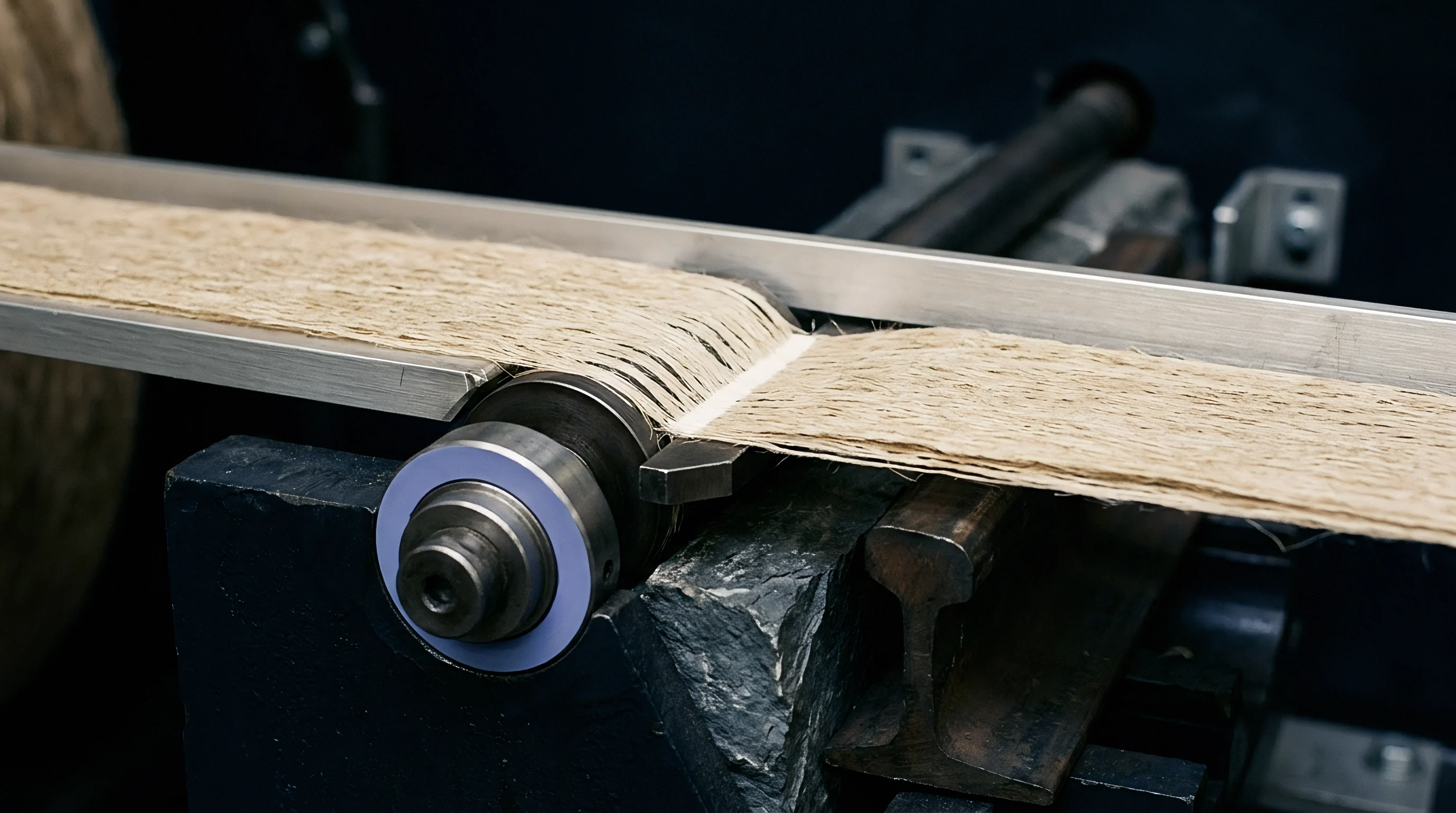
Flaw
Cross Direction Serial Correlation Realities
High-speed paperboard converting machines, processing continuous rolls at speeds exceeding 600 meters per minute, frequently register severe transient tension spikes that propagate along the machine direction. Traditional statistical quality management protocols treat these web events as independent, normally distributed departures from nominal tensile thresholds. Real converting line data demonstrates that tensile readings exhibit pronounced serial autocorrelation coupled with heavily skewed, non-Gaussian distributions governed by localized basis weight variance, moisture profiles, and fiber orientation.
Line tension records show significant lag correlations, where an initial micro-tear or localized mechanical relaxation event induces structured downstream variations lasting through dozens of successive linear meters. When a control system assumes independent observations, the rate of false web-break alarms surges, prompting unnecessary line speed reductions that degrade overall converting efficiency. Conversely, persistent low-level micro-strains evade detection when averaged across arbitrary time windows.
The resulting defects pass unflagged into winding stages, delivering out-of-specification reels directly to downstream package forming operations.
The physical rupture of a paperboard web occurs when localized stress exceeds the lower tail of the Weibull tensile strength distribution under dynamic boundary conditions.
The core operating challenge requires an algorithmic framework capable of filtering autocorrelated tension dynamics in real time while mapping tensile break limits against asymmetric, heavy-tailed empirical distributions. Processing raw sensor streams through autoregressive integrated moving average time-series models isolates deterministic process variation from true structural fiber breakdown.

Model

Non Gaussian Distribution Mapping
Uncoated kraftliner and recycled testliner substrates exhibit mechanical properties that deviate significantly from standard Gaussian bell curves. Tensile strength and elongation at break routinely follow two-parameter Weibull or generalized extreme value distributions, characterized by thick lower tails representing scattered wood pulp shives, recycled fiber hornification, and uneven internal sizing distribution. Standard three-sigma control limits fail in these conditions, systematically underestimating failure probabilities in the vulnerable lower quartile.
Implementing non-normal statistical control requires continuous calculation of modified extreme value parameters from moving sample windows. Let the localized tensile index data stream be transformed via Johnson transformation systems or fitted directly to Weibull shape parameters (beta) and scale parameters (eta) updated at kilohertz frequencies. Operating lines track shifts in beta rather than arithmetic means; a drop in beta below 4.5 indicates expanding structural heterogeneity in the base sheet, signaling an imminent low-tension tear risk even if nominal line pull remains within gross operational bounds.
| Substrate Grade | Basis Weight (g/m²) | Dominant Distribution Form | Typical Shape Parameter | Autocorrelation Length (m) |
|---|---|---|---|---|
| Virgin Kraftliner | 125 to 175 | Two-Parameter Weibull | 5.8 to 7.2 | 14 to 28 |
| Recycled Testliner II | 140 to 200 | Generalized Extreme Value | 3.2 to 4.6 | 45 to 80 |
| Solid Bleached Board (SBB) | 220 to 350 | Three-Parameter Weibull | 8.1 to 10.4 | 8 to 18 |
| Folding Boxboard (FBB) | 180 to 300 | Lognormal / Weibull Mix | 4.1 to 5.5 | 22 to 50 |
Autocorrelation lengths expand dramatically when running high-recycled-content papers due to cyclical retention chemical build-up and screen basket pulsation patterns at the supplying paper mill. A single localized defect event correlates with upstream web attributes over physical lengths exceeding fifty meters.
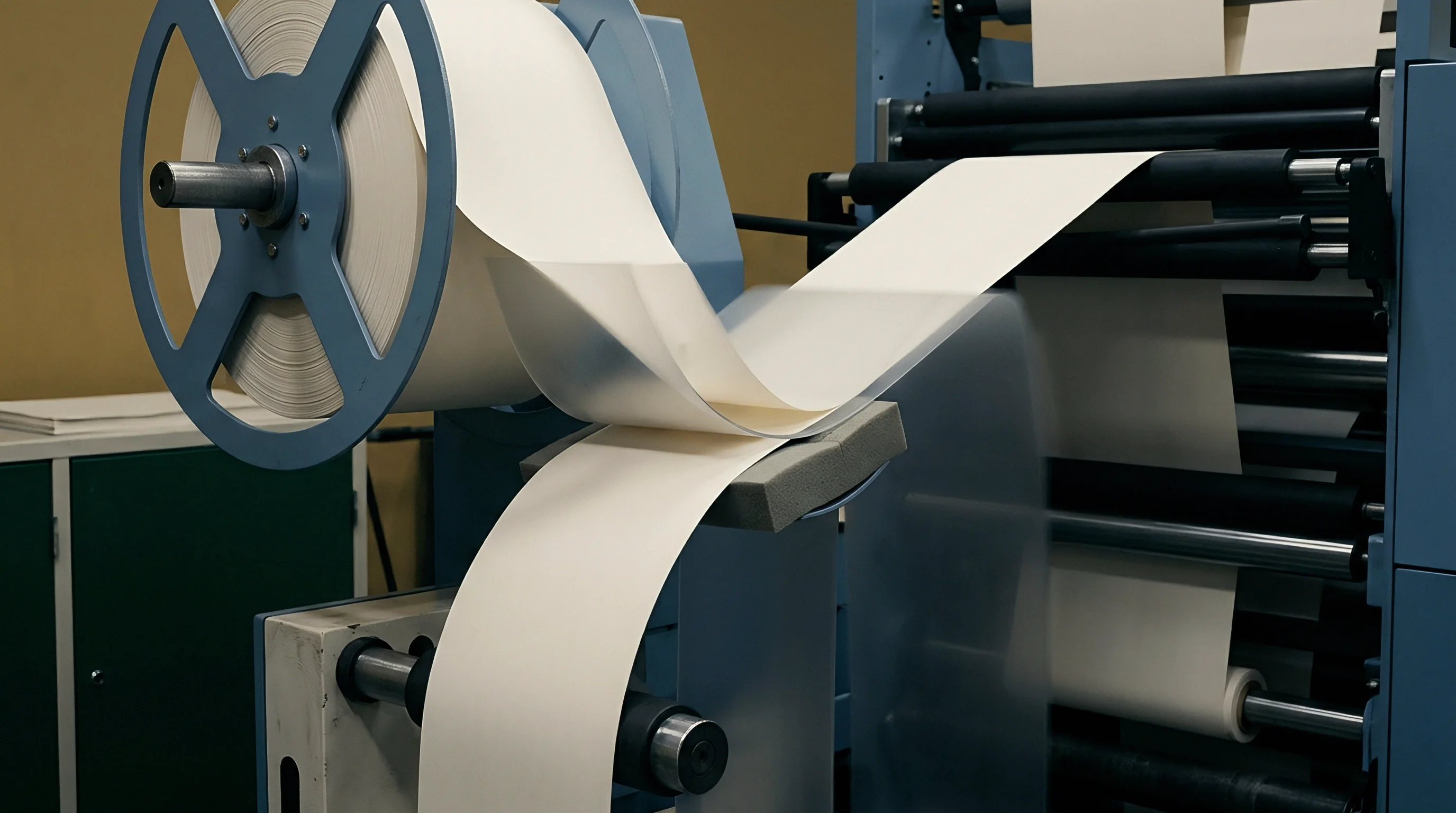
Dynamic Autoregressive Filtering Architecture
To eliminate serial dependence from the sensor telemetry without damping true failure signals, converting control algorithms deploy autoregressive moving average (ARMA) filters configured to the line velocity. The sensor residual, defined as the difference between the observed tensile tension and the one-step-ahead ARMA prediction, forms a series of independent, identically distributed variables. The control engine applies extreme value thresholding directly to these residuals rather than raw load cell signals.
The filtering framework operates under strict processing latency limits. Line controllers must compute the predictive state estimation, derive the standardized residual, and execute a pneumatic dancer roll tension trim within an 8-millisecond loop cycle to prevent tension spikes from reaching the critical tear propagation threshold at the unwinding nip.

Sensor

Line Scan Optical Triangulation and Load Transducers
Extracting high-frequency tensile deformation data requires combining physical load cells with optical laser triangulation and high-speed line-scan cameras. Load cells mounted on low-inertia carbon-fiber measuring rolls capture gross machine-direction tension, while optical triangulation gauges track localized cross-directional neck-in profiles. A sudden cross-direction neck-in narrowing exceeding 0.15 percent across a 100-millimeter web segment marks localized plastic yielding prior to complete web separation.
High-resolution complementary metal-oxide-semiconductor (CMOS) line-scan cameras operating at 80 kHz line rates inspect the moving sheet under calibrated darkfield illumination. The image processing array detects pinholes, fiber bundles, moisture streaks, and edge cracks down to 50 micrometers in cross-machine dimension. Each classified visual defect generates an immediate software interrupt that temporarily adjusts the local tensile safety factor in the statistical process limit calculation.
EN ISO 1924-2 standardizes paperboard tensile property evaluation at constant elongation rates, defining the baseline against which high-speed dynamic line calibration offsets operate.
Optical defect identification integrates directly with time-series analysis to account for defect propagation risks:
- Edge Crack Classification isolates shear cuts deeper than 0.8 millimeters, instantly derating allowable peak web tension by up to forty percent to avert catastrophic web breaks.
- Shive Concentration Indexing monitors unrefined raw pulp clumps, calculating the cumulative cross-sectional flaw density per square meter of continuous web.
- Streak Moisture Mapping detects localized water streaks from wet-end wire drainage problems, predicting elastic modulus drops across targeted slitting paths.
- Pin-Hole Clustering Assessment tracks micro-porosity spikes in barrier-coated substrates, flagging barrier layer delamination risks during subsequent converting operations.
Signal acquisition hardware routes both optical classification vectors and load-transducer voltages into an industrial edge processor running hard real-time Linux kernels. Sensor drift from mechanical thermal expansion or dust accumulation on optical receiver windows undergoes automatic zero-offset calibration during reel-change intervals.

Tuning
Adaptive Thresholding under Shifting Web Regimes
Fixed statistical control envelopes fail when web properties shift across master roll splices or during machine acceleration ramps. An effective in-line control engine updates its residual alarm limits through continuous recursive maximum likelihood parameter estimation. When changing from a virgin fiber outer liner to a high-yield recycled medium, the software shifts baseline parameters without operator intervention, dynamically adjusting Weibull boundary percentiles to maintain a constant false-positive alarm rate of less than one per operational shift.
The adjustment routine tracks the moving coefficient of variation alongside auto-mutual information decay rates. If auto-mutual information between consecutive 10-meter web windows remains elevated, the controller increases the order of the autoregressive compensation filter, preventing low-frequency roll out-of-roundness oscillations from triggering emergency deceleration cycles.
| Residual Score Range | Defect Co-Occurrence | Actuator Output | Downstream Splicing Action |
|---|---|---|---|
| Z less than 2.0 | None detected | Zero adjustment | Pass to standard rewinding |
| Z between 2.0 and 3.5 | Minor shive clusters | Dancer roll trim -3% tension | Flag roll coordinate in manifest |
| Z between 3.5 and 5.0 | Edge notch under 1.0mm | Active brake derate -12% line pull | Trigger automated tab marking |
| Z greater than 5.0 | Cross-directional crack | Emergency dancer lift and line idle | Initiate automatic reject cut-out |
Converting lines without dynamic tuning parameters routinely suffer web-break downtime averaging forty minutes per incident. Unplanned downtime costs rapidly accumulate in high-volume industrial converting operations, driven by lost machine output, blade re-threading labor, and wasted substrate tonnage.

Audit
Chain of Custody and Substrate Conformity Dossiers
Paperboard tensile reliability directly intersects regulatory compliance dossiers and raw material chain-of-custody verification. Mill-level furnish variations that generate non-normal tensile anomalies often reflect uncontrolled shifts in fiber sourcing, such as unauthorized additions of unrefined post-consumer recovered paper into virgin-grade orders. When tensile distribution parameters drift outside certified mill specification envelopes, quality assurance teams cross-examine supply declarations against public certification registries.
Under standards like FSC-STD-40-004 and PEFC ST 2002, chain-of-custody validity requires continuous reconciliation between incoming certified material volumes and outgoing packaging claims. If an unannounced furnish change introduces low-tensile recycled fiber into a certified virgin food-packaging production run, the integrity of the material claim collapses at the importing customs boundary.
A delivery manifest claiming virgin kraftliner status must match both the public registry certificate scope and the physical fiber composition profiles recorded during converting.
Verifying compliance requires a structured administrative protocol:
- Certificate Scope Verification matches the exact paperboard grade designation against the active public database listing of the supplying mill, checking for past suspensions or scope exclusions.
- Batch Test Report Reconciliation examines raw mill inspection certificates against in-line converting tension metrics, flagging discrepancies in reported modulus and burst strength values.
- Transfer System Traceability Checking audits whether the supplier applies the physical separation, percentage, or credit method to trace fiber inputs through converting steps.
- Food Contact Barrier Verification confirms that base sheet structural anomalies have not caused micro-fractures in polyolefin or water-based dispersion barrier coatings under compliance protocols of Regulation 1935/2004.
Submitting an uncertified or incorrectly declared substrate batch exposes the importing brand owner to severe market surveillance sanctions, including mandatory product recalls, extended port container holds, and immediate forfeiture of Extended Producer Responsibility fee discounts under evolving European Packaging and Packaging Waste Regulation criteria.
Cost
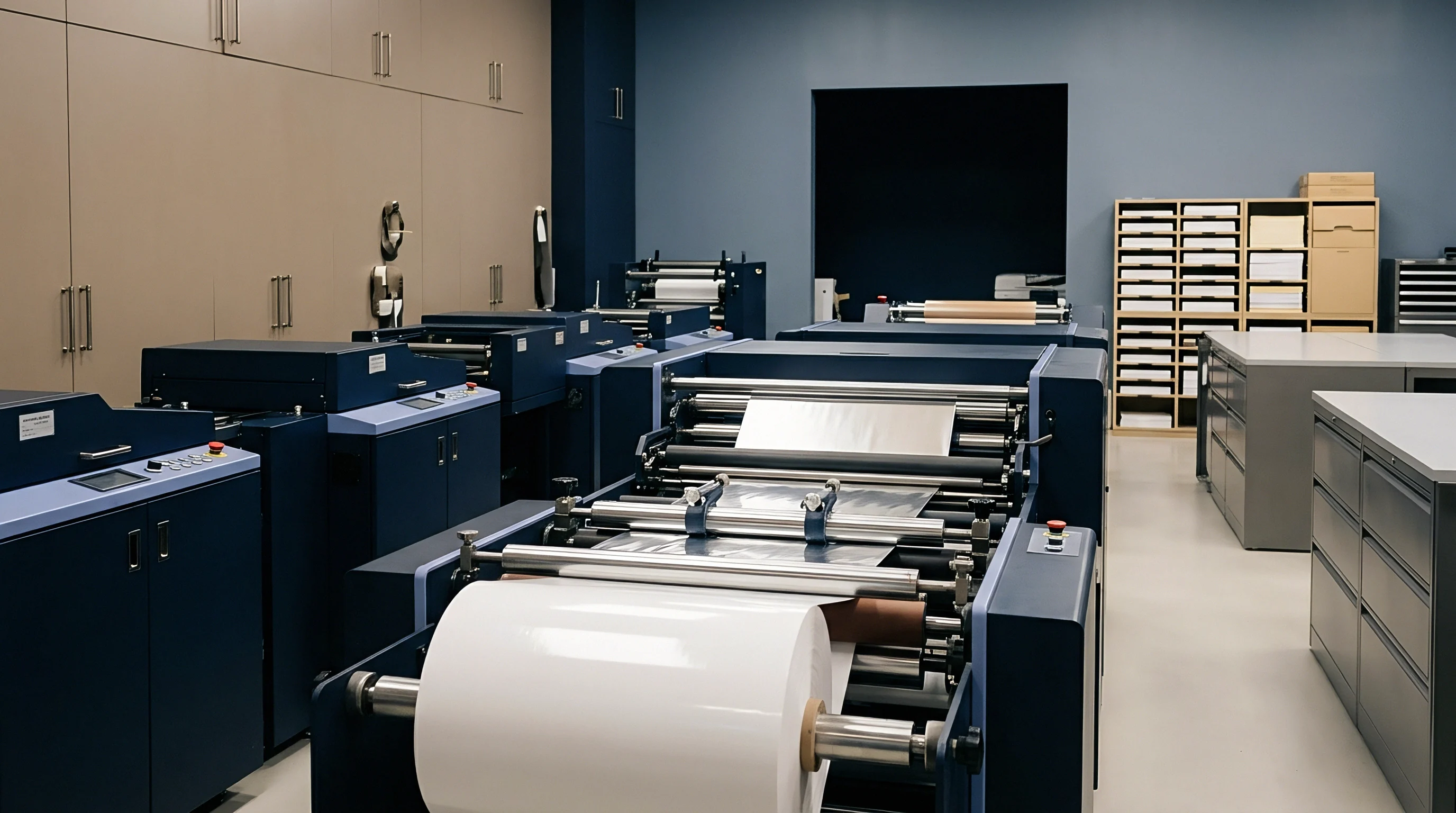
Should Converters Reclaim Uncontrolled Defect Batches?
When high-speed in-line sensors flag an autocorrelated string of tensile defects across thousands of running meters, operations managers face an economic decision between rejecting the roll or slitting out identified defect zones. Discarding a full five-tonne master roll of premium virgin folding boxboard incurs direct material loss, freight disposal fees, and packaging production schedule delays. Conversely, rewinding and slitting defective web segments demands secondary labor, knife setup time, and secondary slitting edge-quality degradation.
Calculating the true financial exposure requires balancing the guaranteed scrap cost of off-specification parent rolls against the compound liability of downstream packaging machine failures. A single web break occurring on a high-speed customer cartoning line running at 120,000 units per hour triggers direct contractual penalties, lost client billing, and potential warranty damage claims under commercial supply agreements.
Assume a converting line runs an 80-tonne lot of 250 g/m² folding boxboard at a raw material cost of 1,200 euros per tonne. In-line predictive analytics flag three distinct autocorrelated defect zones spanning a total of 1,800 linear meters, representing 2.2 tonnes of structurally compromised board. Slitting and splicing these sections out on a secondary rewinder costs 180 euros per hour across a four-hour operation, plus three percent secondary trim loss.
Total recovery costs reach approximately 720 euros in labor plus 80 euros in yield loss, preserving 2,640 euros worth of prime substrate while guaranteeing that zero out-of-specification material enters the finished carton supply chain.
A supplier delivering off-specification reels often argues that occasional tensile dips represent unavoidable natural variations inherent to recycled fiber streams. Inserting clear statistical process control clauses into packaging procurement contracts shifts financial liability for micro-tear downtime directly back to the material vendor, establishing unambiguous acceptance thresholds governed by dynamic Weibull parameter limits rather than static bulk averages.