Bio Based Polyhydroxyalkanoate Binder Viscoelastic Yield Dynamics in Low Temperature High Speed Folding Passes
Polyhydroxyalkanoate binder passes require copolymer formulations with hydroxyvalerate fractions above twelve percent to prevent fold cracking at five degrees.
Chill
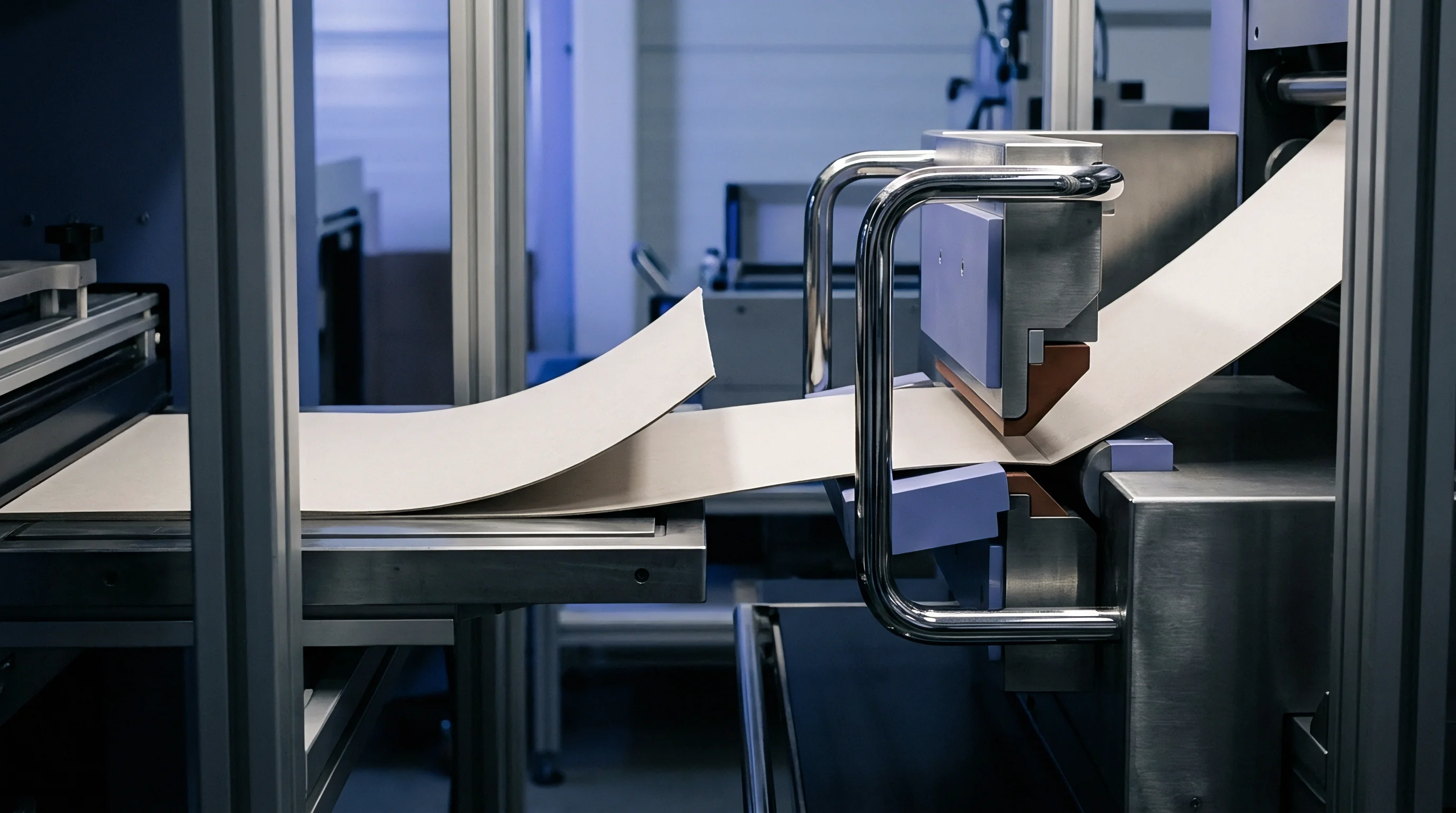
Low ambient temperatures in converting plants drastically alter the viscoelastic behavior of bio-based binder films. Polyhydroxyalkanoate resins synthesized via bacterial fermentation consist of semi-crystalline polyester structures whose molecular mobility depends heavily on ambient thermal conditions. Polyhydroxybutyrate homopolymer features a glass transition temperature ranging between 5 and 10 degrees Celsius.
When converting facilities run high-speed folder-gluers during cold months without localized climate control, substrate surface temperatures drop directly into this thermal transition zone. Temperature drops shift glass transition. The polymer fractures clean.
High line speeds elevate strain. Converting folding passes operating between 300 and 500 meters per minute exert localized deformation rates at the score line reaching strain rates well above 1000 reciprocal seconds. Under these dynamic conditions, polymer chains within the coating matrix cannot undergo spatial rearrangement within the brief millisecond timeframe of the mechanical folding stroke.
Homopolymer variants crack under strain. Polyhydroxybutyrate exhibits low plastic elongation. The binder matrix shifts from a ductile, stress-relaxing state into a rigid, brittle solid.
At 5 degrees Celsius, polyhydroxybutyrate binder films exhibit a tensile elongation at break below 1.8 percent when evaluated at strain rates exceeding 1000 reciprocal seconds under ISO 527 guidelines.
Thermal Sensitivity of Bio-Based Polymer Chains
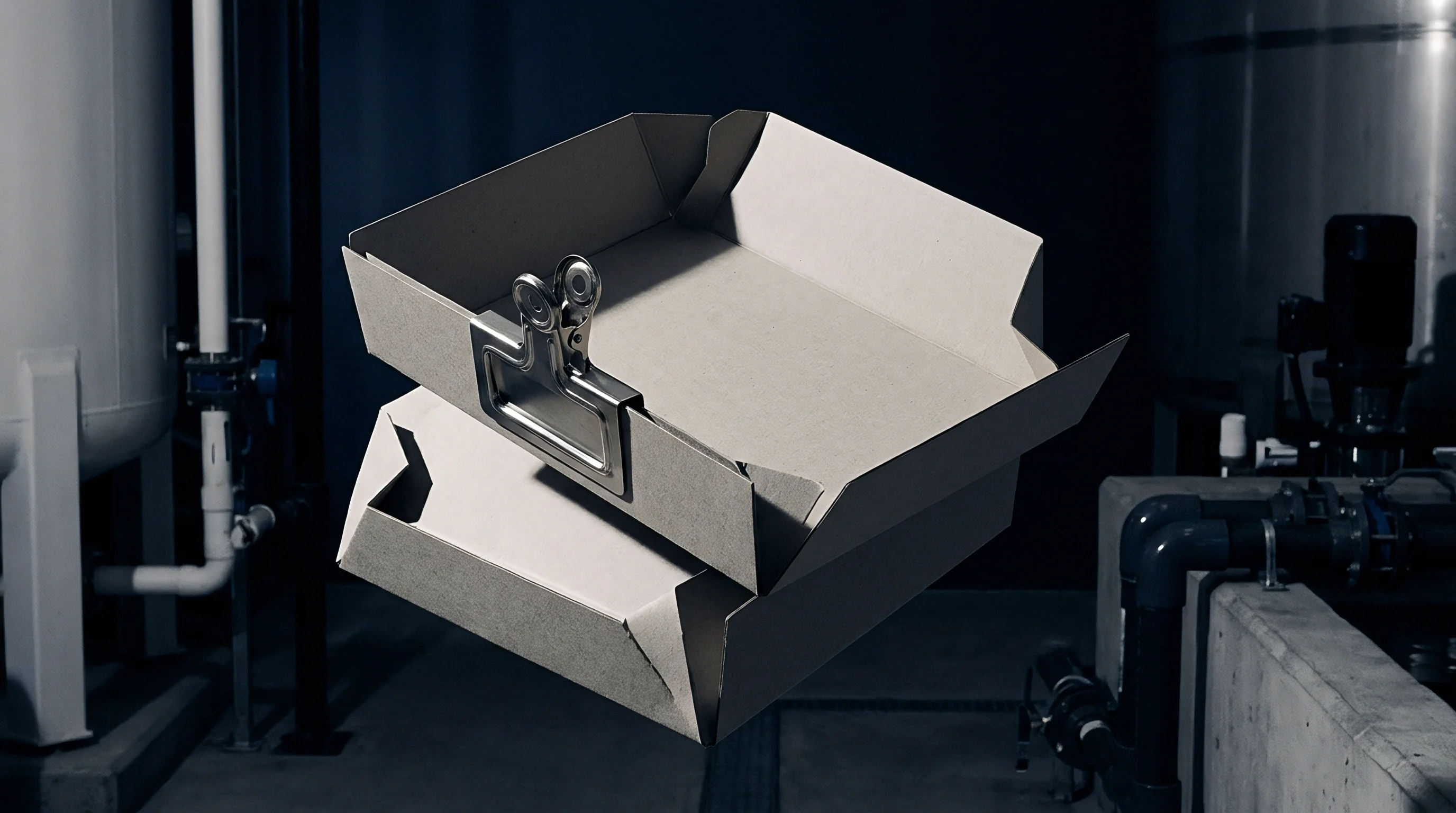
Polymer backbone modifications determine whether a bio-based binder withstands severe mechanical deformation in cold converting environments. Incorporating random copolymer units such as 3-hydroxyvalerate or 4-hydroxybutyrate into the polyhydroxybutyrate backbone disrupts crystal packing density. Poly(3-hydroxybutyrate-co-3-hydroxyvalerate) containing 8 to 15 mole percent hydroxyvalerate reduces overall crystallinity from approximately 70 percent down to 45 percent.
This chemical alteration depresses the glass transition temperature to minus 5 degrees Celsius. Softer matrix domains retain chain mobility under low thermal conditions, allowing the binder film to yield plastically across the outer radius of a creased paperboard blank.
When line operators attempt high-speed folding of unheated, homopolymer-coated board, tensile stresses concentration along the outer creasing ridge exceeds the yield strength of the binder phase. Surface micro-fissures initiate at the interface between the inorganic pigment coating layer and the bio-based polymer binder. These micro-fissures propagate rapidly along the fold line, severing surface fibers and exposing the raw cellulose base stock beneath the barrier layer.
Water vapor barrier integrity drops instantly upon crack initiation. Standard packaging specifications that ignore cold room converting temperatures cause full pallet rejections at downstream automated cartoning lines, where cracked score lines burst open under high-speed mechanical plunger inserts.
Strain
Deforming a coated paperboard blank through a 180-degree folding sequence forces surface coatings into localized mechanical deformation. Dynamic viscoelasticity governs binder behavior during high-speed scoring and folding passes. The material response depends directly on the Deborah number, defined as the ratio of polymer structural relaxation time to the operational timeframe of the folding pass.
When the Deborah number exceeds unity, the binder matrix behaves predominantly as an elastic solid, storing mechanical energy until brittle failure occurs. When the Deborah number remains well below unity, molecular chains slide past one another, dissipating applied force through viscous flow without physical tearing. Cold room temperatures slow relaxation.
Viscoelastic solids fracture under stress.
High-speed folding operations reduce deformation time to values between 0.5 and 2.0 milliseconds per crease. Under such rapid stroke times, polyhydroxyalkanoate formulations require rapid structural relaxation rates to prevent stress concentration. Standard polyhydroxybutyrate homopolymer displays a characteristic structural relaxation time of roughly 15 milliseconds at 5 degrees Celsius, generating a Deborah number near 15 during a high-speed pass.
Polymer chain entanglement points act as rigid crosslinks, concentrating tensile stress along the outer fold crown.

Why Does Glass Transition Acceleration Trigger Microcracking at Folding Creases?
Coated paperboard moving through a folder-gluer at 400 meters per minute undergoes deformation within a time window under two milliseconds. Rapid strain application prevents amorphous binder segments from dissipating mechanical energy through rotational chain movement. The effective glass transition temperature of semi-crystalline polymers shifts upward by approximately 3 to 5 degrees Celsius for every order of magnitude increase in applied strain rate.
A polyhydroxyalkanoate formulation displaying a static glass transition temperature of 5 degrees Celsius under standard laboratory testing exhibits an effective dynamic glass transition temperature near 20 degrees Celsius when subjected to folder-gluer strain rates of 1500 reciprocal seconds.
| Binder Formulation | Molar Ratio (%) | Glass Transition (°C) | Tensile Elongation at 23°C (%) | Tensile Elongation at 5°C (%) | Yield Stress at 1000 s⁻¹ (MPa) |
|---|---|---|---|---|---|
| Poly(3-hydroxybutyrate) Homopolymer | 100 P3HB | 8.5 | 2.1 | 0.8 | 48.2 |
| Poly(3-hydroxybutyrate-co-3-hydroxyvalerate) | 8 HV / 92 P3HB | 1.2 | 14.5 | 3.4 | 32.1 |
| Poly(3-hydroxybutyrate-co-3-hydroxyvalerate) | 15 HV / 85 P3HB | -4.8 | 28.0 | 11.2 | 21.5 |
| Poly(3-hydroxybutyrate-co-4-hydroxybutyrate) | 15 4HB / 85 P3HB | -8.1 | 145.0 | 42.0 | 14.8 |
| Mechanical values determined via ISO 527 at a strain rate of 1000 s⁻¹ following conditioning according to ISO 187 at 50% relative humidity. | |||||
Poly(3-hydroxybutyrate-co-4-hydroxybutyrate) copolymers containing 15 mole percent 4-hydroxybutyrate exhibit exceptionally low yield stress under elevated strain rates. The presence of flexible 4-hydroxybutyrate units lowers the rubbery plateau modulus, providing molecular compliance across cold converting environments. Uncoated board folds without cracking.
Polyhydroxyalkanoate coatings accept repulping water.
High folder speeds force the bio-based polymer film to respond as an elastic solid rather than a viscoelastic liquid during score folding.
Chemical suppliers routinely attribute cold fold splitting to insufficient moisture conditioning within the raw paperboard stock rather than admitting the thermal glass transition limit of their binder resin.


Nip
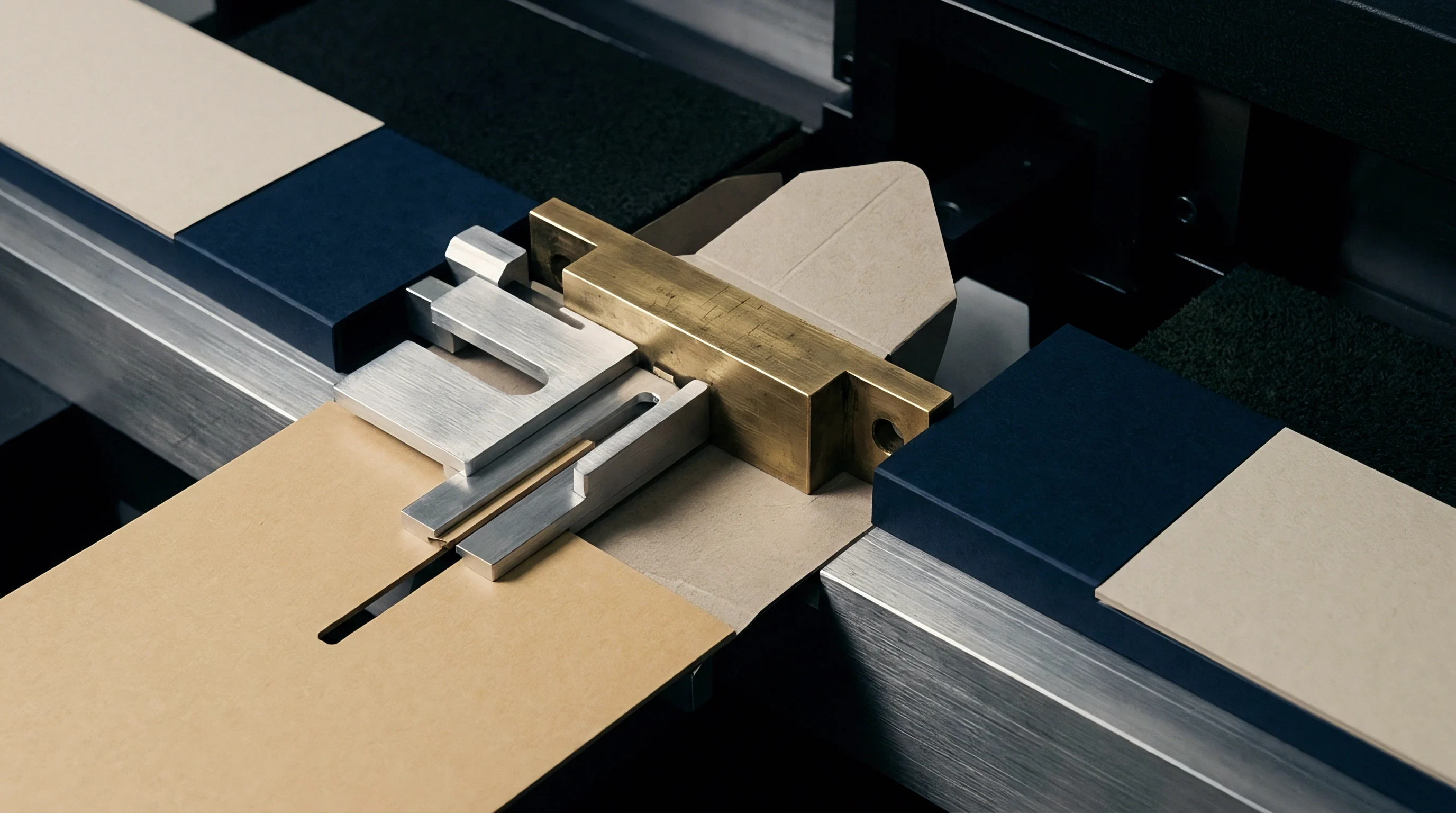
Mechanical folder-gluer setups govern the geometry of force application across paperboard scoring channels. Die geometry, counter-matrix channel dimensions, and nip roll pressure determine the precise shear and tensile distributions imposed on the bio-based binder layer. Incorrect matrix clearance forces the board to crush rather than delaminate internally along pre-cut score planes, shifting tensile strains directly into the surface barrier coating.
Matrix depth dictates bend radius. Deep scores prevent surface splitting. Cold starch binders fail first.
When male scoring rules force the paperboard blank into female matrix channels, the outer liner of the board experiences intense tensile elongation while inner layers collapse in controlled compression shear. If female channel width measures less than the combined board caliper and rule thickness plus 0.2 millimeters, the binder film suffers severe transverse compression before entering the folding section. Compression pre-damage creates structural micro-voids within the bio-based matrix, which act as crack nucleation sites during subsequent 90-degree and 180-degree folding passes.
- Measure substrate moisture content and surface temperature using calibrated infrared sensors before feeding blank stacks into the folder-gluer.
- Select creasing matrix channel widths equal to 1.5 times the board caliper plus the rule thickness to prevent excessive tensile stretching of the surface binder layer.
- Install heated pre-break belts operating at 40 degrees Celsius to raise coating local temperatures above the glass transition threshold prior to primary folding passes.
- Reduce belt speed settings by fifteen percent during initial cold morning bringing up sequences until friction warming stabilizes folder temperature profiles.
- Verify crease hinge stiffness using two-point bending resistance meters to confirm zero structural delamination along score axes.
Score Rule Geometry and Anvil Calibration
Proper alignment between the male rule die and female counter-matrix defines the ultimate stretch ratio of the coated surface. Standard two-point creasing rules featuring a rounded edge radius of 0.71 millimeters produce uniform stress dissipation across 300 to 350 grams per square meter folding boxboard substrates. When creasing rule tips feature sharp edge radii below 0.50 millimeters, localized point loading pierces the bio-based surface binder coating, resulting in mechanical pinholes along the score center line.
Standard DIN EN 13430 recycling criteria require paperboard coating residues to separate during pulping without forming sticky macro-contaminants.
Standard purchase contract addendums based on ISO 5628 creasing stiffness specifications enforce complete lot credit adjustments whenever scores exhibit micro-cracking greater than fifty micrometers under ten-times optical magnification.
Pass
Evaluating binder behavior across high-speed converting sequences demands an explicit comparison between technical throughput and material waste. A technical evaluation of binder chemistry balances resin costs against production line yield losses. Standard polyhydroxybutyrate homopolymer coatings cost approximately 3.20 Euros per kilogram, whereas modified copolymer resins containing 15 mole percent 4-hydroxybutyrate cost 4.10 Euros per kilogram.
Plant conversions using cheaper homopolymer resins incur high waste volumes during cold seasonal operations.
A worked example demonstrates the economic balance over a 100,000-unit production pass of 350 grams per square meter folding boxboard cartons (blank size 400 by 600 millimeters, total area 24,000 square meters) converted at 6 degrees Celsius ambient bay temperature. The job utilizes a 12 grams per square meter dry coat weight of bio-based binder dispersion, requiring 288 kilograms of solid resin.
- Glass transition window indicates the minimum converting temperature where polymer chain mobility prevents brittle micro-fracturing across score lines.
- Elastic elongation capability measures the tensile strain limit of the dry coating matrix before physical surface rupture occurs during folding deformation.
- High strain rate yield stress defines the mechanical force required to initiate plastic flow when deformation occurs within millisecond timescales.
- Repulpability index score determines the efficiency of binder fiber separation during standard hydrapulper stock preparation passes.
Running the pass with polyhydroxybutyrate homopolymer requires reducing folder-gluer speed from 380 meters per minute down to 220 meters per minute to lower applied strain rates, extending job run time by 2.1 hours. Material spoilage due to fold cracking reaching downstream automated packing inspection arrives at 8.5 percent, ruining 8,500 completed blanks valued at 0.18 Euros per unit, totaling 1,530 Euros in scrap loss. Additional press time costs 378 Euros at an operational hourly rate of 180 Euros.
Substituting polyhydroxyalkanoate copolymer containing 15 mole percent 4-hydroxybutyrate increases raw resin expenditure for the job by 259 Euros. Spoilage drops to 0.4 percent (400 ruined blanks, costing 72 Euros), and the line operates at full rating of 380 meters per minute with zero time penalty. Total scrap savings of 1,458 Euros minus the extra resin expense yields a net cost advantage of 1,199 Euros per job run.
| Binder System Type | Coat Weight (g/m²) | Line Speed (m/min) | Cold Crack Waste (%) | Resin Cost (€/1000 packs) | Net Landed Cost (€/1000 packs) |
|---|---|---|---|---|---|
| Polyhydroxybutyrate Homopolymer | 12.0 | 220 | 8.50 | 9.22 | 31.42 |
| PHBV Copolymer (8 mol% HV) | 12.0 | 310 | 2.10 | 10.37 | 16.85 |
| P3HB4B Copolymer (15 mol% 4HB) | 12.0 | 380 | 0.40 | 11.81 | 13.83 |
| Conventional SB Latex Control | 12.0 | 400 | 0.15 | 6.50 | 8.20 |
Modulated fees change carton economics. Binders with lower thermal transition points and higher copolymer ratios eliminate fold cracking without requiring mechanical line speed adjustments.
Ledger
Commercial accounting for bio-based packaging coatings extends directly into environmental compliance fees and end-of-life processing yields. Extended Producer Responsibility financial frameworks within European Union jurisdictions impose variable packaging surcharges based on certified material recyclability grades. Paperboard substrates containing non-separable synthetic plastic laminates face financial penalties exceeding 350 Euros per tonne of placed material under national packaging register schedules.
| Coating System Chemistry | Fiber Yield (%) | PTS-RH 021/97 Pass Status | EPR Classification Level | EPR Fee Surcharge (€/tonne) |
|---|---|---|---|---|
| Uncoated Virgin Kraftboard | 98.2 | Pass Category A | Standard Green Base | 0.00 |
| Polyhydroxyalkanoate Dispersion | 92.5 | Pass Category A | Modulated Eco-Discount | -45.00 |
| Crosslinked Acrylic Latex Dispersion | 84.1 | Pass Category B | Standard Neutral Grade | 65.00 |
| Polyethylene Extrusion Lamination | 71.0 | Fail (Requires Separation) | High Penalty Tier | 380.00 |
Increased hydroxyvalerate monomer incorporation within the polyhydroxyalkanoate copolymer chain prevents micro-cracking by shifting the thermal transition point below ambient plant temperatures.
Paper packaging schemes evaluate barrier-coated board according to fiber recovery rates during standard aqueous repulping. PTS-RH 021/97 certification testing subjects converted packaging samples to mechanical disintegration at 40 degrees Celsius for 20 minutes at 5 percent stock consistency. Polyhydroxyalkanoate dispersion coatings break down into discrete particles under standard hydrapulper shear forces without clogging 150-micrometer slotted screening plates.
The bio-based polymer particles adhere to fine fiber fragments and discharge cleanly during standard flotation de-inking stages, allowing greater than 92 percent cellulosic fiber recovery without thermal pre-treatment or organic solvent extraction passes.
Bio-based polyhydroxyalkanoate binder systems offer a complete pathway to single-material paperboard packaging that satisfies both cold converting mechanical thresholds and stringent European recycling directives.