Dynamic in Line Impression Control for Basis Weight Variations in Low Fibre Board
Dynamic in-line impression control stabilizes print transfer on low-fibre board by continuously adjusting cylinder clearances to counteract web caliper swings.
Drift
Reel moisture swings, uneven short-fibre distribution, and high ash contents introduce significant grammage variance across recycled cartonboard and low-substance liner runs. When mill furnish incorporates heavy percentages of mixed waste paper, mechanical pulp fractions, or de-inked slurries, local web consistency wavers. Machine direction basis weight regularly wanders within a margin of plus or minus five percent, while cross-direction profiles develop stubborn bands of mass disparity.
Standard testing under ISO 536 registers the gross ream mass, yet bench data hides rapid metre-by-metre fluctuations that pass straight into the press nip.
Low fibre containerboards, notably testliners below 110 grams per square metre and white lined chipboards with high recycled filler levels, exhibit heightened sensitivity to mass variations. Less refined furnishes lack the interlocking structural web typical of virgin kraft grades. A drop in local fibre mass directly reduces substrate bulk and compressional resistance under load, leading to immediate density shifts.
The calender stacks at the paper mill attempt to level these differences by smoothing the sheet surface, but uneven compaction creates hard and soft spots across the reel. Caliper profiles governed by ISO 534 vary independently from grammage, producing a substrate that behaves unpredictably during high-speed printing operations.
Under ISO 536 conditioning at 23 degrees Celsius and 50 percent relative humidity, a nominal 105 gram recycled linerboard can fluctuate by 6.2 grams across a single 500-metre web stretch.
Traditional printing units set mechanical impression cylinders at fixed clearances based on an initial gauge reading taken from the leading edge of a reel. This manual baseline setup fails the moment uneven furnish feeds into the station. When the board substrate thins, transfer pressure drops below the minimum required for uniform liquid penetration.
Conversely, sudden heavy spots crowd the plate gap, inducing catastrophic mechanical shock throughout the printing deck. Operating press lines without continuous thickness correction forces printers to over-impress the entire job. Heavy impression ruins tonal rendering, accelerates mechanical wear, and permanently crushes the fragile internal geometry of lightweight board grades.
Why Do Low Fibre Substrates Display Severe Caliper Swings?
Pulp slurries derived from post-consumer recovered fibre contain variable distributions of hornified cells, short fines, and inorganic mineral fillers like calcium carbonate and clay. In water suspension, these fragmented components drain unevenly across the forming fabric, creating patchy flocculation before the press section dewaters the mat. High-speed fourdrinier wires or multi-ply formers struggle to distribute secondary fibres with absolute uniformity.
The resulting dry sheet presents uneven cross-sectional void ratios. Localized structural collapse occurs wherever filler particles outnumber long softwood structural spines.
Calipers collapse under load.
Converting facilities observe these variations when running fast flexographic or offset packaging lines. A cartonboard blank with insufficient internal fibre entanglement yields plastically under modest compressive forces. If the sheet passes into an embossing, creasing, or print impression zone with rigid settings, the high spots absorb the full mechanical energy of the nip.
The structural failure of the board core occurs internally, destroying the boxboard flexural rigidity measured under ISO 5628 long before the printed packaging reaches the folder-gluer.
| Substrate Classification | Furnish Blend Ratio | Nominal Grammage (g/m²) | Cross-Direction Mass Tolerance (%) | Mean Caliper Spread (µm) | Bendtsen Roughness Range (ml/min) |
|---|---|---|---|---|---|
| Recycled Testliner 3 | 100% Mixed Waste Paper | 90 | ±6.8 | 18 | 850 – 1250 |
| Semi-Chemical Fluting | 70% Virgin Hardwood / 30% Waste | 105 | ±3.4 | 11 | 600 – 900 |
| White Lined Chipboard (WLC) | 80% Recycled / 20% Virgin Surface | 230 | ±5.2 | 24 | 250 – 480 |
| Lightweight Kraftliner | 100% Unbleached Virgin Kraft | 115 | ±2.1 | 7 | 350 – 550 |
The gap between nominal specification values and true web performance remains an active point of conflict between paper agents and line managers. Mills regularly deliver shipments that conform strictly to average roll weight tolerances while carrying micro-variations that wreck inline runnability. A buyer specifying low-fibre board relies on precise mill certificates, but bulk variation within individual reels remains unaccounted for in standard documentation.
The unresolved dispute centers on whether basis weight drift below three percent should be managed by the papermaker through headbox dilution controls or mitigated by the converter through closed-loop mechanical intervention.

Squeeze
Fluid ink transfer relies on an exact compressive strain threshold across the substrate surface contact zone. The printing nip forces liquid ink out of anilox cells or plate relief margins into the fibrous micro-cavities of the board face. On an uneven substrate, transfer fails entirely when thickness slips beneath the engineered interference boundary.
Inadequate contact yields patchy, mottled coverage and broken text. Excessive force produces the characteristic squashed halo along character perimeters and causes uncontrolled tone value increase in half-tone dot structures.
Dynamic impression regulation systems address this challenge by treating nip engagement as an active variable rather than a locked dimension. Automated print units monitor instantaneous mechanical resistance or displacement across the cylinder bearings. When mass drops, servo drives or piezoelectric positioners adjust cylinder centerlines, sustaining constant interface pressure.
This continuous repositioning eliminates the need to run the press at extreme static pressures to cover occasional low spots.
A print cylinder clearance variation of twenty micrometres can alter flexographic dot gain by eight percent in the mid-tone tonal band.
Low-substance sheets cannot withstand arbitrary crushing forces. Virgin kraft boards maintain an internal spring back behaviour because intact cellulose walls rebound elastically after exiting a mechanical nip. Low-fibre furnishes, loaded with recycled material, experience brittle failure of inter-fibre hydrogen bonds under moderate excess pressure.
Over-pressing a 100 g/m² recycled testliner reduces the flat crush resistance evaluated by ISO 3035 and cuts final box compression strength values. The printer must achieve clean dot fidelity while protecting the delicate skeletal architecture of the sheet.
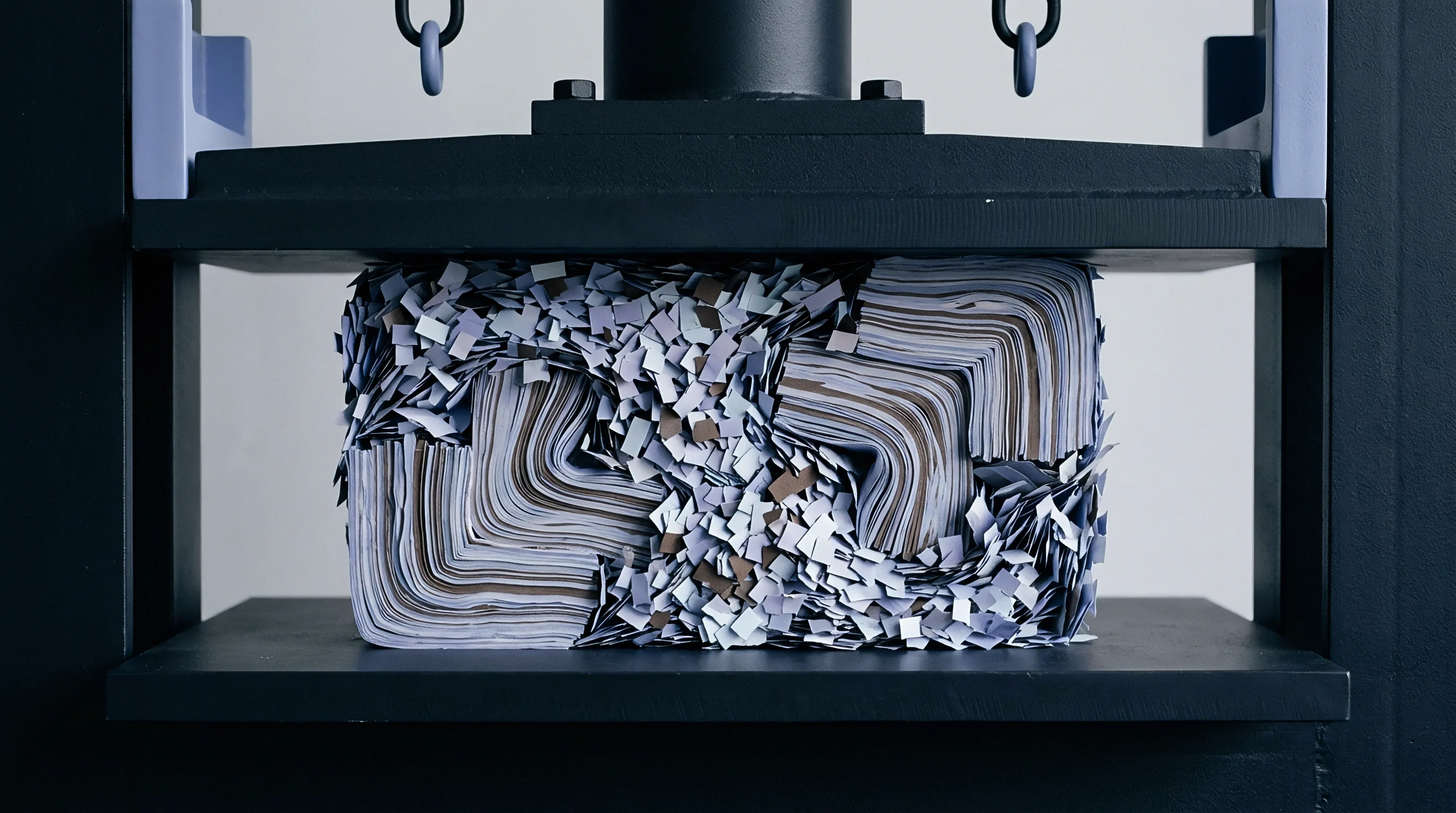
Can Dynamic Tooling Protect Substrate Caliper?
Piezoelectric actuators and high-frequency servo motors mount directly to the eccentric sleeves of impression cylinders. These mechanical positioners operate within response intervals measured in milliseconds, shifting the heavy steel cylinders along precision linear guides. When an incoming thick spot strikes the printing deck, the dynamic mount relaxes outward, preventing structural crushing of the cellulose mat.
As the board caliper thins out, the assembly drives inward to maintain ink film split stability.
Dot gain climbs unchecked.
Plate composition interfaces directly with dynamic mechanical squeeze. Photopolymer plates possessing high Shore A hardness ratings demand strict, tight positional control because hard polymers exhibit zero tolerance for over-impression. Softer elastomer plates absorb small substrate variations through material compliance, yet they distort graphic screening elements under load.
Modern high-speed printing presses align dynamic cylinder movement with specific plate durometer ratings to preserve print contrast across variable substrates.
- Hydraulic Positioners deliver immense holding stiffness on wide-web corrugated machinery, countering high deflection forces during heavy cartonboard production runs.
- Direct-Drive Ball Screws execute rapid, repeatable linear adjustments on narrow to mid-web carton presses, tracking high-frequency caliper changes with minimal backlash.
- Piezoelectric Actuators provide micro-metric displacement corrections at extreme operational frequencies, absorbing millisecond-scale substrate spikes on ultra-lightweight papers.
- Pneumatic Bladders generate passive compliance along the lower impression cylinder bed, damping mechanical shocks on older multi-wall bag lines.
Plate life falls rapidly.
A machine operator relying on visual inspection alone cannot counteract high-speed caliper fluctuations. By the time an operator spots missing dots or excessive edge gain on a printed pull sheet, thousands of square metres of packaging material have accumulated as waste. Dynamic nip control removes human latency from the mechanical feedback loop, compensating for substrate flaws before ink drying occurs.
The operational penalty for failing to control nip dynamics is the immediate rejection of finished cartons due to structural creasing, flute flattening, or illegible barcoding.


Feedback
Modern printing decks integrate in-line optical sensors, laser triangulation displacement heads, and real-time densitometers directly into the press frame. Laser micrometres measure web thickness directly before the sheet enters the print zone, capturing raw caliper variations at line speeds up to 600 metres per minute. Simultaneously, downstream multispectral line cameras monitor ink transfer efficiency, solid ink density, and micro-dot formation across the printed surface.
These paired sensors stream spatial and structural data continuously into the line control computer.
Algorithms parse the incoming data to separate structural substrate issues from ink delivery irregularities. When an optical camera detects an unexpected drop in solid ink density across a specific cross-directional zone, the control software cross-references the location with upstream caliper scans. If the laser displacement head confirms a corresponding reduction in board caliper, the system commands the impression actuators to advance the cylinder.
If thickness remains nominal, the system flags an ink supply or viscosity failure, avoiding unnecessary mechanical adjustments.
Edge halo marks every halftone.
The physical positioning of measurement arrays dictates control system efficiency. Placing scanning heads too far upstream introduces transit time delays, forcing the system to predict rather than react to high-speed substrate variations. Locating sensors immediately adjacent to the print zone subjects sensitive electronics to ink mist, cleaning solvents, and thermal wash.
Industrial printing lines position robust non-contact displacement arrays less than one metre before the impression cylinder nip, balancing environmental protection against minimum sensor response times.
What Sensor Frequencies Catch Rapid Web Fluctuations?
Substrate anomalies move past the print station within fractions of a second. An optical or laser measurement sensor operating at a low sampling rate smooths over sharp local defects, averaging out severe high and low peaks. Industrial sensor heads execute continuous sampling cycles at frequencies between 5 kHz and 20 kHz.
This high sampling rate maps microscopic surface craters and rapid machine-direction basis weight shifts before the mechanical unit engages the board.
The press stalls.
Beta gauges and soft X-ray transmission sensors measure absolute basis weight directly through the moving web. Unlike laser displacement tools that monitor outer surface boundaries alone, radioactive decay and X-ray absorption profiles quantify total mass per unit area regardless of sheet aeration or bulk variations. Combining mass transmission readings with laser thickness data yields real-time apparent density measurements, providing deep analytical insight into the physical structure of the incoming stock.
| Sensor Technology | Primary Target Metric | Sampling Rate | Spatial Resolution (CD/MD) | Downstream Control Latency |
|---|---|---|---|---|
| Laser Triangulation | Total Sheet Caliper | 10 – 25 kHz | 0.5 mm / 1.0 mm | < 15 ms |
| X-Ray Transmission | Mass Basis Weight | 1 – 5 kHz | 5.0 mm / 10.0 mm | 50 – 120 ms |
| CMOS Line Scan Camera | Tonal Value & Coverage | 40 – 80 kHz | 0.1 mm / 0.1 mm | < 30 ms |
| Piezo Bearing Load Cell | Dynamic Nip Force | 5 – 15 kHz | Total Bearing Span | < 5 ms |
| Values reflect industrial testing setups on automated reel-fed corrugated flexo lines operating at 350 m/min. | ||||
Integrating high-speed sensor arrays with closed-loop motion control demands robust communication backbones. Industrial Ethernet protocols transmit coordinate packets and correction demands between sensors, controllers, and motor drives without packet jitter. If network latency delays an actuation signal by even fifty milliseconds, the mechanical cylinder moves too late, compressing a section of board that has already cleared the nip.
Precision clock synchronisation binds sensor inputs to machine encoder cycles, ensuring mechanical movement matches the exact physical location of the substrate defect.
Converters frequently discover that material suppliers dismiss density-driven print flaws by attributing the variation to normal manufacturing tolerances outlined in trade association guidelines.

Compensation
Executing accurate mechanical compensation requires calculating the exact bulk compressibility curve for every qualified board furnish. When the feed roll introduces recycled testliner with an uneven ash ratio, the material does not deform linearly. Initial compression collapses surface roughness peaks, followed by rapid stiffening as the cellulose structure compacts under the nip.
Dynamic software algorithms load distinct stress-strain matrices based on the board grade, adjusting the servo stroke depth according to the instant compressibility profile of the running stock.
Consider an operational printing scenario running a 105 g/m² recycled board lot through a flexographic press station. Assume a baseline nominal caliper of 145 micrometres, a web speed of 300 metres per minute, and a local caliper drop of 18 micrometres extending across a two-metre section of the web. Without dynamic correction, the print nip clearance remains fixed at 125 micrometres to deliver a target plate relief squeeze of 20 micrometres.
When the low-caliper zone hits the print deck, plate squeeze drops to two micrometres. Ink transfer fails completely, causing dry pick and unprinted speckle across packaging solids.
With an active dynamic positioning loop in operation, the upstream laser sensor detects the 18-micrometre thinning fifteen milliseconds before web entry. The motion controller commands the eccentric sleeve servos to advance the plate cylinder inward by 16 micrometres, preserving an effective 18-micrometre interference fit. Dot gain remains stable within three percent of target, while overall nip pressure stays safely below the critical limit that crushes the lightweight furnish.
Ink film transfer remains uniform across rough boards once dynamic nip pressure stays locked within five percent of target force.
Dynamic impression control also shields the printing apparatus from sudden mechanical shock loads. High-basis-weight knots, splices, and wet lumps within low-grade recycled boards strike printing units with enough force to shatter ceramic anilox rolls or score central impression drums. Dynamic load monitoring on cylinder journals registers rapid force spikes within microseconds, triggering instantaneous emergency back-off routines.
The cylinder moves outward to clear the physical obstruction, returning to position immediately after the defect clears the nip.
The engineering challenge lies in balancing mechanical system stiffness against the response velocity of the cylinder assembly. Heavy cast-iron press units possess substantial inertia, resisting high-frequency oscillation. Positioning lightweight tooling mandrels and composite plate sleeves directly on high-speed linear motors resolves this trade-off, enabling the machine to track rapid substrate changes without causing frame resonance or gear chatter marks.
- Mechanical Profiling determines the base elasticity, dynamic recovery, and compressibility limits of the specific packaging board under controlled hydraulic laboratory press loads.
- Sensor Calibration zeroes the laser triangulation heads against polished steel master cylinders, establishing true reference datums across the operational width of the press web.
- Feedback Synchronization correlates web transit times with encoder pulses, matching incoming thickness spikes to actuator positions within fractions of a millimetre.
- Closed-Loop Validation cross-checks optical surface density data against target Lab colour tolerances, confirming that mechanical compensation preserves correct visual print characteristics.
Line stops generate heavy scrap.
Tolerances compound across printing decks.
Multi-colour printing presses demand separate dynamic compensation loops for each print station. The first station applies sizing, primer, or heavy backing white inks, fundamentally changing the moisture profile and compressive modulus of low-fibre board before it reaches subsequent colour decks. Second and third stations encounter a modified sheet that yields more readily under nip pressure than the raw stock at the unwinder.
Dynamic control platforms process each print station independently, calculating individual mechanical offsets based on downstream moisture pickup and ink saturation levels.
Standard delivery contracts specifying DIN 19306 packaging tolerances eliminate buyer claims for registration and density dropouts unless dynamic nip control records verify that substrate fluctuations exceeded machine compensation thresholds.
Exposure
Financial margins in high-volume packaging converting depend entirely on managing raw material yields, machine runnability, and waste generation. Downgauging from a 125 g/m² virgin kraftliner to an 85 g/m² recycled testliner cuts base sheet expenditures per thousand square metres substantially. If the press room lacks dynamic in-line impression tooling, that initial raw material saving evaporates in excessive spoilage, press downtime, and customer claims.
High-speed presses running variable low-fibre boards without automated impression systems regularly report make-ready and running waste levels exceeding eight percent.
Yield gains vanish under spoilage.
Operating a dynamic nip regulation system cuts substrate-related running waste down to predictable levels below two percent. Consider a high-speed corrugated press converting 20,000 tonnes of packaging board annually at an average material price of 650 euros per tonne. A four percent reduction in substrate waste via dynamic impression management saves 520,000 euros per year in raw paper tonnage alone.
The investment required for retrofit servo systems and sensor arrays amortizes rapidly across the first year of production.
The commercial calculation involves more than base material savings. Premium brand owners specify stringent delta E color limits and strict barcode scan grades under ISO/IEC 15416. Variable impression on low-fibre substrates leads to out-of-spec dot expansion, drifting solid densities, and downgraded bar codes.
When pallets arrive at an automated distribution depot with Grade F barcodes, the entire consignment faces rejection and commercial chargebacks. Dynamic mechanical impression systems protect product convertibility, opening up lightweight substrate options for cost-critical packaging designs.
Sourcing engineers face real trade-offs when committing to low-fibre packaging substrates. Purchasing low-cost, variable board grades shifts operational pressure directly onto converting machinery. If the converting plant operates rigid, manually adjusted presses, the buyer must stick to higher-cost, consistent virgin grades to avoid press room gridlock.
Dynamic in-line impression control decouples substrate cost from print fidelity, allowing converters to run inexpensive, sustainable recycled boards without compromising operational yields or end-product structural performance.
Board stiffness drops sharply.
A supplier will point to reel test averages to contest liability for web breaks and print dropouts.