Bleached Kraft Pulp Refining Freeness Control for Mechanical Greaseproof Paper Manufacture
Hydrating kraft pulp to 78-84 degrees Schopper-Riegler via low specific edge load refining eliminates paper porosity to achieve grease resistance without chemical additives.
Fibrillation
Chemical pulp processing for non-chemical grease barriers demands severe mechanical alteration of cell walls. Softwood and hardwood bleached kraft pulps arrive at the mill with unrefined freeness levels between 600 and 700 ml Canadian Standard Freeness, corresponding to approximately 13 to 15 degrees Schopper-Riegler. In this raw state, pulp fibers possess high stiffness, low flexural compliance, and insufficient specific surface area to form a non-porous paper matrix.
Manufacturing mechanical greaseproof paper without fluorochemical size or synthetic polymer coatings requires driving pulp hydration to extreme limits. The primary mechanism relies on forcing water into the secondary wall structure, breaking internal hydrogen bonds, and expanding the fiber wall volume until the fibers collapse into flexible, ribbon-like elements during web consolidation.
Hydration Mechanics in Kraft Furnish
Water uptake within the crystalline matrix expands the lumen and softens the primary cell structure. Bleached Softwood Kraft, harvested predominantly from northern pine or spruce species, provides the long-fiber foundation necessary to build web tensile strength under intense mechanical working. Northern softwood fibers exhibit cell wall thicknesses that withstand heavy shear stresses without instantaneous cleavage.
Bleached Hardwood Kraft, derived from eucalyptus or birch, introduces short fibers that fill inter-fiber voids, reducing average pore radii across the consolidated sheet. Hydration alters pulp behavior. Water remains trapped.
Softwood fibres supply strength.
Cell wall swelling increases the Water Retention Value from an initial unrefined state of approximately 90 percent to values exceeding 220 percent under ISO 23714 testing conditions. As water penetrates the S2 layer of the cell wall, the fiber swells coaxially. This volumetric expansion softens the lignin-free cellulose matrix, rendering individual fibers highly conformable under press pressure.
Without this swelling, fibers retain their tubular cross-section, leaving interstitial voids that allow oil and grease molecules to pass through the finished sheet via capillary transport.
Water Retention Value measured under ISO 23714 reaches 235 percent at 82 degrees Schopper-Riegler when conditioned at 23 degrees Celsius and 50 percent relative humidity.
Internal Delamination and External Fibril Development
Shear stresses applied during disc contact break internal hydrogen bonds between adjacent microfibrils. Internal delamination occurs when cyclic compression and decompression forces cause concentric layers of the secondary wall to separate. This separation increases internal flexural flexibility without drastically reducing fiber length.
Simultaneously, external action peels back the primary wall and outer secondary wall layers, exposing microfibrils that project into the surrounding aqueous phase.
Fibril development dramatically increases specific surface area from approximately 1.0 square meter per gram in unrefined pulp to over 8.0 square meters per gram in fully hydrated stock. The exposed fibrils interact through hydrogen bonding during sheet drying, contracting the fiber network into an almost continuous film. High specific surface area binds free water within the stock suspension, changing stock rheology and escalating drainage resistance on the paper machine wire table.
| Furnish Type | Schopper-Riegler (deg SR) | Water Retention Value (%) | Tensile Index (Nm/g) | Tear Index (mN m2/g) |
|---|---|---|---|---|
| Bleached Softwood Kraft Unrefined | 14 | 92 | 28.5 | 18.2 |
| Bleached Softwood Kraft Hydrated | 78 | 215 | 88.0 | 7.1 |
| Bleached Hardwood Kraft Unrefined | 16 | 85 | 22.0 | 8.5 |
| Bleached Hardwood Kraft Hydrated | 84 | 240 | 62.5 | 4.2 |
| 70/30 Softwood/Hardwood Blend | 81 | 225 | 79.4 | 5.8 |
Fiber shortening cuts tear. Operating refiners at excessive edge loads cuts long softwood fibers before internal swelling completes. Cut fibers lower the network stretch capacity and create loose fines that plug the forming fabric without contributing to grease barrier integrity.
Excessive fiber cutting leads to brittle sheets that crack along fold lines during bag converting operations.

Freeness
Drainage resistance serves as the primary inline control variable for monitoring fiber hydration. In mechanical greaseproof manufacturing, the target freeness operating window sits between 75 and 86 degrees Schopper-Riegler, equivalent to a Canadian Standard Freeness range of 90 down to 30 milliliters. Operating within this narrow band ensures sufficient fiber swelling to eliminate sheet porosity while maintaining the absolute minimum drainage capacity required for wet-end web formation.
Schopper Riegler Drainage Monitoring
Standardized testing under ISO 5267-1 quantifies the rate at which a dilute pulp suspension parts with water through a wire screen. A two-gram bone-dry equivalent sample is prepared at 0.2 percent consistency and 20 degrees Celsius. The funnel measures split flow rates between a central orifice and a side orifice.
As hydration advances, stock drainage slows, redirecting the bulk of the filtrate through the side tube into a graduated cylinder calibrated directly in degrees Schopper-Riegler.
Controlling freeness within a precision window of plus or minus 1.5 degrees SR is mandatory for line stability. Dewatering resistance climbs rapidly. Small drifts in pulp refining intensity cause massive shifts in drainage velocity on the Fourdrinier wire.
A drop in freeness from 80 to 84 degrees SR doubles the water retention time on the gravity drainage section, forcing operators to pull higher vacuum levels and slow down the paper machine drive speed.
- Sample Extraction continuously draws stock from the refiner discharge manifold at a stabilized line pressure of 250 kilopascals to avoid cavitation.
- Consistency Normalization dilutes the sampled pulp using temperature-compensated white water to achieve an exact 0.20 percent consistency target.
- Temperature Correction adjusts measured values back to the standard 20.0 degrees Celsius reference frame using empirical calibration curves for highly beaten stock.
- Chamber Washout flushes the measuring screen with high-pressure water sprays every three minutes to clear residual fine fibers and pitch deposits.
Calibration and Consistency Drift in Online Sensors
Optical and differential pressure measuring loops suffer signal degradation when fines accumulate along the sensor housing. Fines fractions in greaseproof furnish exceed 25 percent by mass under ISO 10307 classification. These micro-particles blind sampling screens in continuous online freeness analyzers, creating false readings that indicate higher drainage resistance than the bulk stock actually possesses.
Consistency variations in the refiner feed stock directly corrupt inline freeness measurements. A consistency drift of 0.1 percent at a nominal 4.0 percent refiner feed concentration alters the specific energy applied per tonne of dry fiber by 2.5 percent. Online freeness control loops must integrate real-time microwave consistency sensors mounted upstream of the refiner feed pumps.
These sensors update the mass flow calculations continuously, dynamically adjusting the refiner disc positioner motors to hold specific energy application constant.
Drainage rate limits on Fourdrinier wet ends restrict maximum line speed when stock freeness exceeds 82 degrees Schopper-Riegler under ISO 5267-1 testing conditions.
Equipment vendors frequently claim their optical inline freeness sensors require calibration only once per quarter regardless of furnish changes. Operational reality shows that pitch accumulation, chemical additive shifts, and hardwood ratio adjustments cause sensor calibration curves to drift within seven days of continuous service.

Mesh
Dewatering dense, highly beaten stock requires specialized table layouts on the Fourdrinier section. Standard packaging paper grades release ninety percent of their water through free gravity drainage over the first three meters of the forming table. Mechanical greaseproof furnish releases less than thirty percent of its water content under gravity alone.
The wet end configuration relies on targeted vacuum application, low-angle hydrofoils, and specialized synthetic forming fabrics to pull water through an increasingly impermeable fiber mat.
Do Online Freeness Sensors Reliably Predict Greasehold?
Continuous monitoring instruments track stock drainage speed rather than sheet pore architecture. While a Schopper-Riegler measurement of 82 degrees indicates high average fiber hydration, it cannot detect localized fiber flocculation or pinhole formation caused by uneven headbox flow distribution. A stock slurry may register the target freeness value, yet yield a paper sheet with poor grease holdout if micro-flocs create low-density pathways between dense fiber zones.
Online freeness sensors provide an indispensable metric for refiner control, but offline grease barrier verification remains necessary to guarantee sheet performance.
Dewatering Dynamics on High Hydration Webs
Water release rates fall sharply as stock density and swelling increase. The initial forming zone uses low-angle ceramic hydrofoils angled between 0.5 and 1.0 degrees to induce gentle, high-frequency pressure pulses. High-amplitude pulses must be avoided because they disrupt the fragile wet web, driving fine fibers deep into the forming fabric and causing sheet sealing.
Sheet sealing creates an impenetrable skin on the wire side of the web, preventing water removal from the upper layers of the sheet.
High-vacuum flat boxes take over dewatering as the web passes the wet line. Vacuum levels ramp step-wise from 5 kilopascals up to 28 kilopascals across a series of eight to twelve suction box slots. Applying maximum vacuum prematurely seals the sheet structure and causes high drag loads, accelerating fabric wear and increasing drive motor power consumption.
Top wire formers or blade-assisted assist units are deployed to remove water upward through the top sheet surface, maintaining structural symmetry and minimizing two-sidedness in grease resistance.
The following routine outlines wet end vacuum optimization for slow-dewatering stock:
- Establish headbox slurry consistency between 0.25 and 0.35 percent bone-dry solids to ensure uniform formation.
- Set blade angles on the first three hydrofoil banks to 0.5 degrees to generate gentle micro-turbulence without wire marking.
- Adjust early suction box vacuum levels to a maximum of 6 kilopascals to prevent structural sheet sealing at the wire interface.
- Increase vacuum sequentially across mid-table boxes in increments of 3 kilopascals, monitoring sheet translucency at each transition.
- Target a dry line position exactly two meters prior to the couch roll to maximize consolidation before web transfer.
Press Nip Consolidation without Wet Crushing
Mechanical pressing removes water remaining after the vacuum section while consolidating the web structural density. Sheet moisture entering the press section ranges between 80 and 83 percent, compared to 78 percent for standard kraft papers. The high water content coupled with low freeness leaves the wet web highly susceptible to wet crushing, a failure mode where hydraulic pressure within the nip exceeds the structural strength of the fiber network, tearing the web apart.
Wide-nip shoe presses deliver extended press residence time, allowing hydraulic pressure to dissipate gradually without destroying web integrity. Pressing loads increase across three nip positions, ramping from 70 kilonewtons per meter in the first suction press up to 1000 kilonewtons per meter in the primary shoe press. High pressure squeezes web.
Sheet density rises. The physical compression forces water out of swollen fiber walls and forces microfibrils into intimate contact, establishing the dense sheet matrix required for barrier performance.
A wide-nip shoe press operating at 1000 kilonewtons per meter peak pressure increases sheet solids to 46 percent without inducing hydraulic crushing on 80 degrees SR stock.
A gentle pressure profile in the early press nips prevents structural collapse in webs carrying high hydraulic loads.


Porosity
Sheet air permeability correlates directly with oil barrier performance in non-coated greaseproof papers. By eliminating air passages through intense refining and press consolidation, the sheet establishes a physical barrier that prevents fluid migration. Standard air resistance testing conducted under ISO 5636-5 using a Gurley densometer measures the time in seconds required for 100 milliliters of air to pass through a specific sheet area under constant pressure.
Greaseproof specifications demand Gurley values exceeding 15,000 seconds per 100 milliliters, with high-performance grades exceeding 35,000 seconds.
Pinhole Mitigation and Sheet Density
Microscopic voids in the paper matrix allow fat molecules to migrate across the sheet under thermal load. Pinholes form due to entrained air in the headbox stock, localized fine flocculation, or incomplete fiber swelling during refining. Apparent sheet density serves as a key physical indicator of void elimination.
Unrefined kraft paper exhibits a density around 0.60 grams per cubic centimeter, whereas fully consolidated mechanical greaseproof reaches apparent density values between 1.10 and 1.28 grams per cubic centimeter.
Achieving densities above 1.15 grams per cubic centimeter compresses the void volume below the physical size of long-chain fatty acid molecules. Sheet density dictates barrier. Thermal calendering following the dryer section further densifies the sheet surface, using heated steel rolls operating at temperatures up to 180 degrees Celsius and linear loads of 250 kilonewtons per meter to plasticize surface fibers and seal remaining surface pores.
- Entrained Air Void creates spherical channels through the sheet caliper due to poor headbox deaeration, dropping Kit values below 4.
- Floc Density Variance leaves low-grammage zones between fiber flocs, allowing rapid oil penetration during high-temperature testing.
- Wire Mark Cavity leaves deep surface topography on the fabric side, requiring intense supercalendering to flatten and seal.
- Drying Blister Failure occurs when rapid steam generation in early dryer cans ruptures the dense, low-permeability sheet surface.
Pinene and Kit Test Standard Correlations
Evaluation protocols under TAPPI T 559 measure surface repellency against hydrocarbon mixtures of varying surface tensions. The test uses twelve distinct solutions composed of castor oil, toluene, and n-heptane, numbered sequentially from Kit 1 (lowest aggressiveness) to Kit 12 (highest aggressiveness). Mechanical greaseproof paper produced through refining alone routinely achieves Kit ratings between 6 and 9 without relying on fluorochemical treatments or surface polymer barrier coatings.
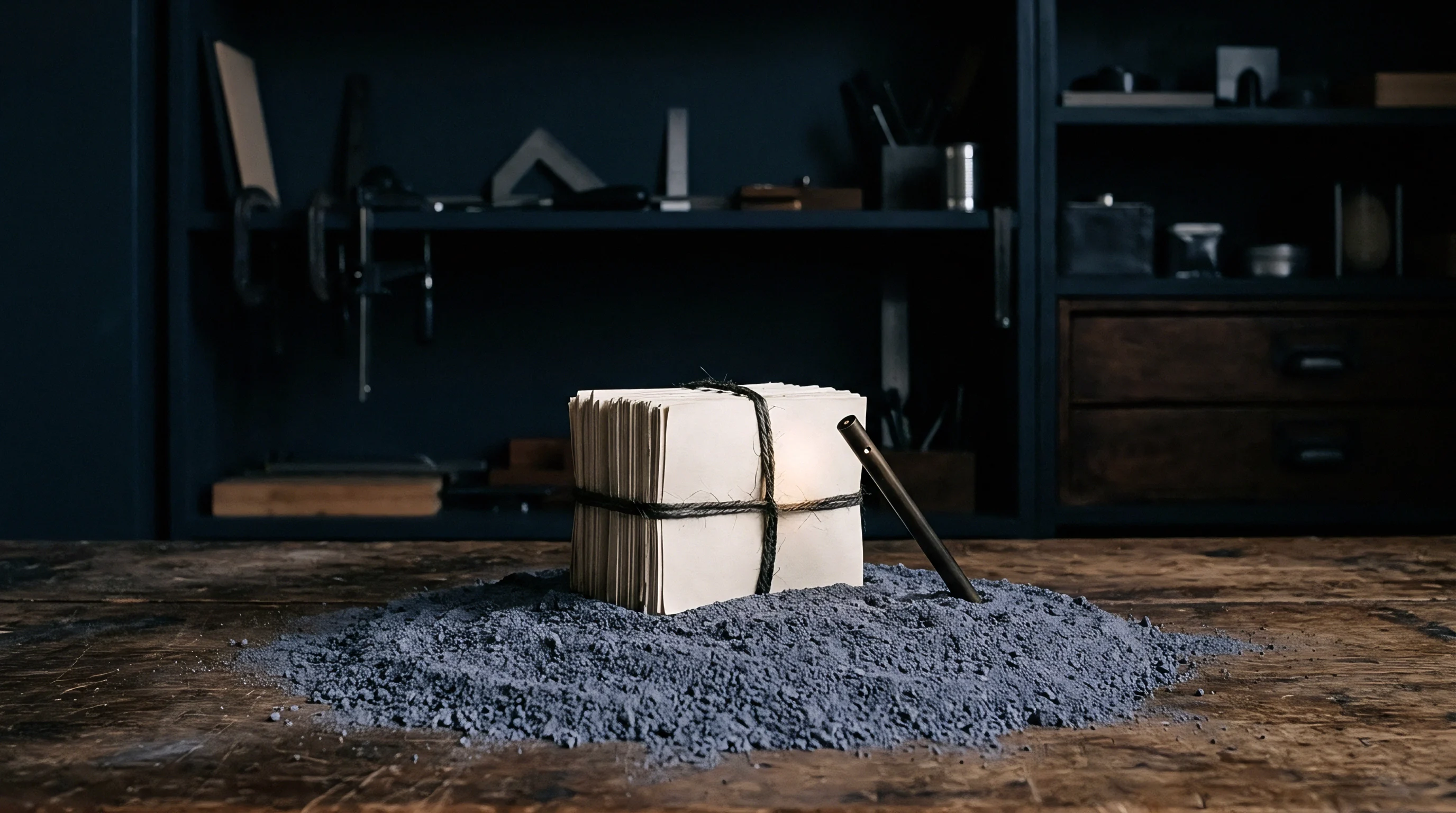
Turpentine testing under ISO 16532-1 provides a quantitative measure of oil penetration time across the sheet caliper. A saturated sand pile containing pinene-based turpentine sits on the paper sample surface, supported by a silica indicator sheet beneath. The test measures the elapsed time until turpentine penetrates the paper and stains the underlying sheet.
Mechanical greaseproof specifications require turpentine resistance times exceeding 1800 seconds at ambient room temperature.
| Refining Freeness (deg SR) | Apparent Density (g/cm3) | Gurley Air Resistance (s/100 ml) | TAPPI T 559 Kit Rating | ISO 16532-1 Penetration (s) |
|---|---|---|---|---|
| 45 | 0.78 | 450 | Kit 1 | 120 |
| 65 | 0.95 | 3,200 | Kit 3 | 450 |
| 75 | 1.12 | 16,000 | Kit 6 | 1,800 |
| 82 | 1.22 | 38,000 | Kit 8 | 3,600 |
| 86 | 1.27 | 60,000 | Kit 10 | 7,200 |
Delivery contracts for commercial food packaging paper explicitly state that any delivered batch failing to achieve a minimum ISO 16532-1 oil penetration threshold of 1800 seconds shall be rejected at the converter dock at full mill expense.

Power
Specific electrical consumption during stock treatment governs both capital efficiency and final sheet density. Refining kraft furnish to freeness levels above 80 degrees SR consumes tremendous electrical energy per metric tonne of dry pulp. Total specific refining energy requirements range from 380 to 520 kilowatt-hours per tonne for pure softwood furnishes, and up to 600 kilowatt-hours per tonne for tough softwood and hardwood blends.
Controlling power distribution across multiple refining stages is necessary to avoid destroying fiber strength while maximizing hydration efficiency.
Specific Edge Load Optimization
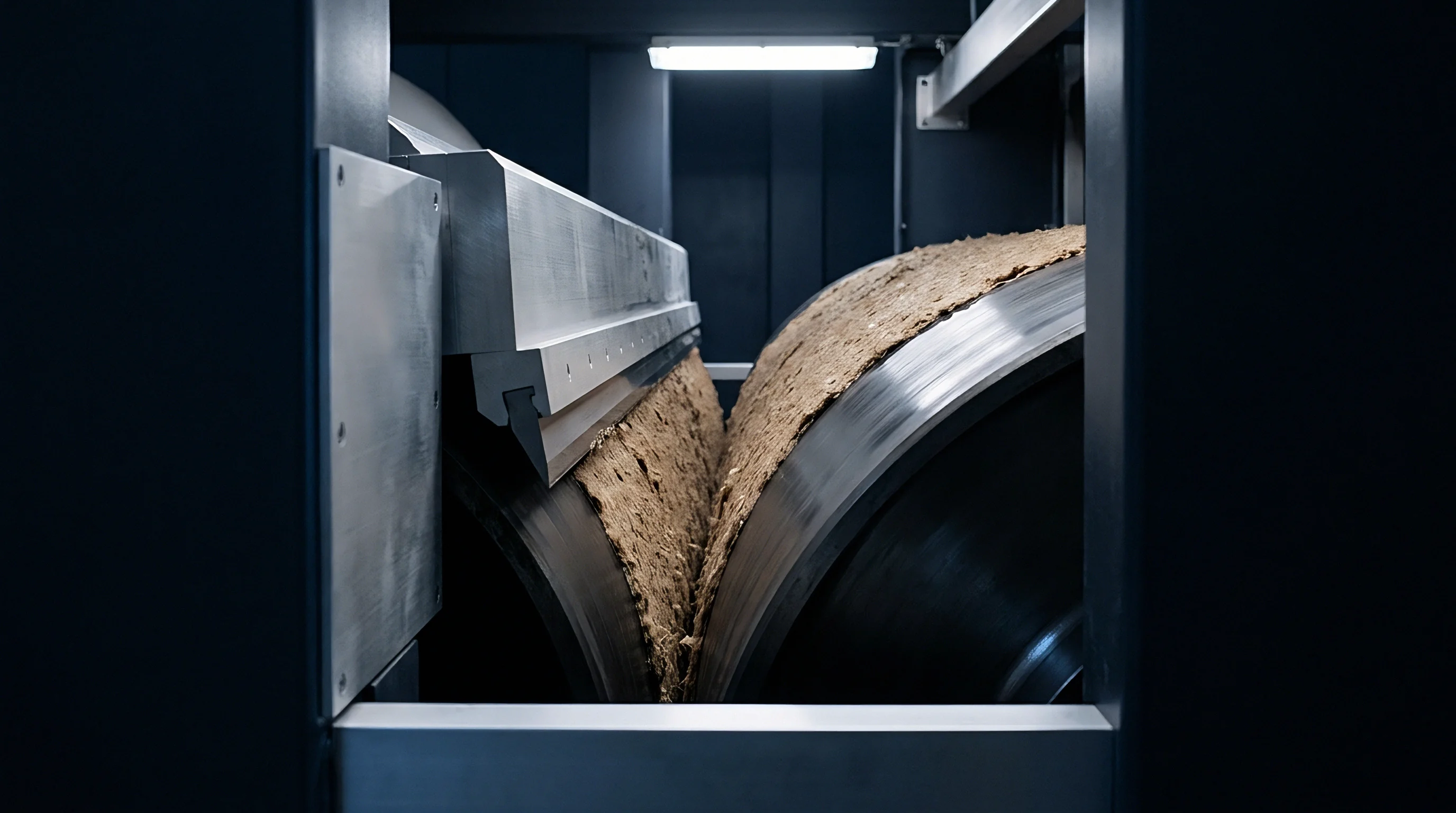
Intensity calculations divide net refiner power by the product of rotor speed and edge length per second. Specific Edge Load, expressed in Joules per meter, defines the mechanical impact energy imparted to the fiber bundle during each bar-crossing event. Refining mechanical greaseproof requires low specific edge loads to promote fiber swelling and internal delamination while minimizing fiber cutting.
Softwood kraft stock refining operates most efficiently at Specific Edge Load values between 0.5 and 0.8 Joules per meter. Hardwood kraft components require even gentler treatment, operating between 0.2 and 0.4 Joules per meter. Running refiners at elevated intensities above 1.2 Joules per meter cuts fibers rapidly, dropping stock freeness through fines generation rather than true wall hydration.
Refiner plates wear down. Energy costs scale exponentially.
- Plate Pattern Geometry selects bar widths between 1.2 and 1.6 millimeters and groove widths of 1.5 millimeters to maximize cutting edge length.
- No-Load Power Determination measures idling electrical draw with water passing through the refiner housing at operating pressure to isolate net refining energy.
- Specific Surface Load Calibration calculates power applied per unit bar area in Kilowatt-seconds per square meter to prevent thermal degradation of stock.
- Hydraulic Gap Control maintains disc separation distances using automated positioning motors calibrated to within 5 micrometers of target clearance.
Multi Stage Refining Energy Balance
Distributing work across three or four refiners in series prevents excessive temperature rise and localized fiber destruction. Single-pass refining to high SR levels causes severe thermal build-up within the refiner housing, raising stock temperatures above 65 degrees Celsius. Elevated temperatures reduce water viscosity, decrease fiber swelling efficiency, and accelerate thermal degradation of cell wall polymers.
A four-stage refining circuit applies energy progressively. Primary disc refiners operate at moderate consistency (4.0 to 4.5 percent) and low specific edge load to initiate cell wall unraveling. Secondary and tertiary units run at slightly lower consistencies (3.5 to 4.0 percent) with ultra-fine pattern disc plates to achieve uniform microfibrillation across the entire furnish blend.
| Refining Stage | Net Power Input (kWh/t) | Specific Edge Load (J/m) | Inlet Freeness (deg SR) | Outlet Freeness (deg SR) |
|---|---|---|---|---|
| Primary Stage 1 | 120 | 0.75 | 15 | 38 |
| Secondary Stage 2 | 140 | 0.60 | 38 | 58 |
| Tertiary Stage 3 | 130 | 0.45 | 58 | 74 |
| Quaternary Stage 4 | 110 | 0.30 | 74 | 83 |
Specific refining energy consumption totaling 500 kilowatt-hours per tonne drives stock freeness from 15 to 83 degrees Schopper-Riegler under controlled 0.4 Joule per meter edge loads.
Whether energy efficiency can be substantially improved through biological enzymatic pre-treatment without sacrificing the tensile burst strength of high-density mechanical greaseproof sheets remains an open question across commercial operations.

Yield
Production economics for dense technical papers depend on line velocity, drying energy, and parent sheet conversion ratios. Highly hydrated pulp holds bound water tenaciously, severely restricting paper machine drainage and forcing significant line speed reductions compared to standard paper grades. A paper machine capable of running sack kraft at 600 meters per minute operates at speeds between 220 and 320 meters per minute when manufacturing 40 gram per square meter mechanical greaseproof paper.
Speed Penalties from Low Freeness Dewatering
Machine drive speeds drop when web moisture entering the dryer section exceeds fifty-eight percent. The combination of low initial dewatering on the forming fabric and high water retention inside swollen fiber walls reduces press section efficiency. As line speed drops, fixed mill overhead costs per metric tonne increase proportionally, driving up the landed manufacturing cost of the parent roll.
Drying steam demand spikes. Evaporating water from a dense, highly refined sheet requires between 3.8 and 4.8 tonnes of steam per tonne of dry paper produced. The low sheet permeability creates an insulating boundary layer of trapped steam within the dryer pocket spaces, slowing heat transfer from the dryer can surface into the web core.
Drying steam demand spikes. Trim margins narrow fast. Slime growth clogs wire.

Landed Sheet Costs and Waste Coefficients
Converting losses during slitting, sheeting, and bag fabrication compound the high manufacturing cost of hydrated papers. Dense greaseproof paper exhibits elevated stiffness and low tear resistance under high-speed converting stress. Edge cracks or micro-tears in parent reels cause frequent web breaks during high-speed flexographic printing and bag forming operations, generating converting spoilage rates between 6 and 11 percent.
Calculating the true yield of landed converted greaseproof packaging requires accounting for refining energy, machine speed penalties, drying steam loads, and converting trim waste. Take a 50-tonne production run of 40 gram per square meter greaseproof paper as a baseline reference calculation.
Assume a parent machine speed reduction of forty-five percent compared to standard packaging grades, elevating base machine operating costs from 420 Euros per tonne to 760 Euros per tonne. Refiner power consumption adds 500 kilowatt-hours per tonne. At an industrial electricity tariff of 0.12 Euros per kilowatt-hour, refining energy adds 60 Euros per metric tonne.
Steam consumption of 4.2 tonnes per tonne of paper at a steam generation cost of 35 Euros per tonne adds 147 Euros per metric tonne. Combining furnish costs of 720 Euros per tonne with energy, steam, and machine run-time overheads yields an unconverted parent reel manufacturing cost of 1687 Euros per metric tonne.
Converting the parent reels into finished die-cut greaseproof sheets introduces further yield losses. Edge trim on the slitter-winder removes 3.5 percent of the web width. Make-ready spoilage and web-break waste during converting consume an additional 5.5 percent of the total tonnage.
The net finished yield stands at 91 percent of parent reel mass. Dividing the parent reel cost of 1687 Euros per tonne by the net yield factor of 0.91 raises the landed material cost to 1853 Euros per metric tonne of finished product.
For a standard packaging specification calling for 40 gram per square meter sheet stock, one metric tonne yields 25,000 square meters of usable barrier paper. At a landed material cost of 1853 Euros per tonne, the direct substrate cost equals 74.12 Euros per thousand square meters delivered to the converting floor.