Viscoelastic Polypropylene Shear Failure and Interfacial Adhesive Delamination under Rapid Crease Strain
Polypropylene lamination delaminates at high crease strain rates because viscoelastic stiffening elevates shear stress beyond interfacial adhesive bond strength.

Groove
Platen die-cutters cycling at eight thousand sheets per hour bend paperboard along scorelines in less than fifteen milliseconds. That brief impact exposes laminated biaxially oriented polypropylene to localized strain rates exceeding two hundred reciprocal seconds. When a male creasing rule forces twenty-micron film and three-hundred-micron board into a steel counter-channel, deformation concentrates along the outer shoulder of the fold.
Elastic stretch rapidly crosses into plastic displacement. High line speed compresses dwell time.
Converters running folding boxboard and solid bleached sulphate observe film whitening and bubble formation along carton edges within hours of cutting. The outer polymeric film separates from the underlying dispersion coating or ink layer, creating an unsightly milky ridge. Mechanical failure presents in two distinct modes across the fold geometry: cohesive shear fracture within the polypropylene bulk and interfacial debonding at the adhesive boundary.
Tool geometry dictates the initial stress tensor.
| Board Caliper (microns) | Rule Thickness (pt) | Channel Width (mm) | Channel Depth (mm) | Theoretical Peak Strain (percent) |
|---|---|---|---|---|
| 250 | 2.0 (0.71 mm) | 1.10 | 0.36 | 12.4 |
| 350 | 2.0 (0.71 mm) | 1.30 | 0.50 | 16.8 |
| 450 | 3.0 (1.05 mm) | 1.80 | 0.64 | 21.5 |
| 600 | 4.0 (1.42 mm) | 2.40 | 0.86 | 28.2 |
Scoring channel width governs the bend radius of the polypropylene skin. If an operator mounts a matrix channel narrower than the sum of the rule width plus 1.4 times the board caliper, shear stresses escalate sharply across the lamination profile. The outer fiber plies of the paperboard delaminate intentionally to form an internal hinge.
During this inward hinge formation, the polypropylene skin remains under severe uniaxial and planar biaxial tension. The scoreline buckles.
The adhesive manufacturer routinely claims that running speeds above six thousand impressions per hour exceed the mechanical envelope of standard polyurethane chemistry.

Relaxation
Biaxially oriented polypropylene displays rate-dependent mechanics dictated by macromolecular mobility. Polypropylene possesses an amorphous phase glass transition temperature situated between minus ten and zero degrees Celsius. At ambient factory temperatures of twenty degrees Celsius, the polymer operates in its rubbery-to-leathery transition regime.
High-speed folding forces the molecular chains to respond along timescales far shorter than their natural reptation times.
How Rapid Strain Displaces Viscoelastic Yield?
The Deborah number, defined as the ratio of polymer relaxation time to experimental observation time, shifts from low values during slow manual creasing to values well above unity during rotary converting. High Deborah numbers prevent polymer chains from slipping past one another through normal disentanglement. Under these rapid rates, yield stress climbs by fifty to eighty percent compared to quasi-static pull rates.
The polymer behaves as a brittle glassy solid. Strain energy cannot dissipate through viscous flow.
Dynamic mechanical thermal analysis confirms that the storage modulus of biaxially oriented polypropylene increases from 2.2 gigapascals at quasi-static rates to more than 4.5 gigapascals under impact conditions of one hundred reciprocal seconds. Instead of yielding smoothly over a wide radius, the film stores mechanical energy elastically until shear bands nucleate at surface microscopic flaws. Once shear bands form, catastrophic micro-cracking propagates through the film thickness.
Temperature shifts the relaxation curve.
Storage modulus reaches 4.6 gigapascals when measured at twenty-three degrees Celsius under an oscillatory frequency of one hundred hertz.
Time-temperature superposition principles apply directly to the converting line. An unheated scoring die operating in a cold pressroom running at fifteen degrees Celsius shifts the effective mechanical response toward cryogenic brittleness. Supplying radiant heat directly to the creasing rule lowers the Deborah number by lowering molecular relaxation times.
Heated rules operating between forty-five and fifty-five degrees Celsius preserve plastic flow within the polymer skin during impact. Die wear compounds the defect.
The unresolved physical question centers on whether secondary beta-relaxation in isotactic polypropylene chains contributes meaningfully to micro-void formation along the primary shear band before interfacial separation begins.
Interface
Mechanical stress generated within the film transfers immediately into the laminating adhesive layer. Thermal lamination processes melt an extruded ethylene-vinyl acetate or polypropylene copolymer layer directly onto the print face. Wet lamination deposits water-based acrylics or two-component polyurethane adhesives at coat weights between 1.2 and 2.8 grams per square meter.
The interface must balance shear resistance against peel propagation.
- Corona Pretreatment Energy decays on stored polypropylene reels, dropping from forty-four dynes per centimeter down to thirty-six dynes over eight weeks of warehouse storage.
- Solvent Retained in Ink Layers plasticizes acrylic adhesive films, reducing their cohesive glass transition temperature by fifteen degrees. This softening induces creeping delamination under hinge tension.
- Pigment Surface Volume Concentration above critical limits leaves unbound mineral pigments at the ink surface, generating a weak boundary layer that shears under crease strain.
- Crosslinker Stoichiometry in two-component polyurethane formulations alters network density, where an excess of isocyanate creates an excessively brittle boundary line.
Interfacial shear stress peaks directly at the shoulder of the creasing channel. As the folding flap rotates ninety degrees, mode II shear stresses dominate the interface, transitioning into mode I normal peel tension as the carton travels downstream through the folder-gluer. If the work of adhesion between the polyurethane primer and the corona-treated film falls below eighty joules per square meter, delamination initiates instantly.
Delamination spreads along the crease.
A low corona dyne reading guarantees adhesive failure along scored flaps regardless of adhesive coat weight.
Surface chemistry governs interfacial durability during rapid deformation. Polypropylene provides zero active chemical groups without electrical discharge treatment. Corona discharge oxidizes methyl and methylene groups into hydroxyl, carbonyl, and carboxylic acid moieties, elevating total surface free energy.
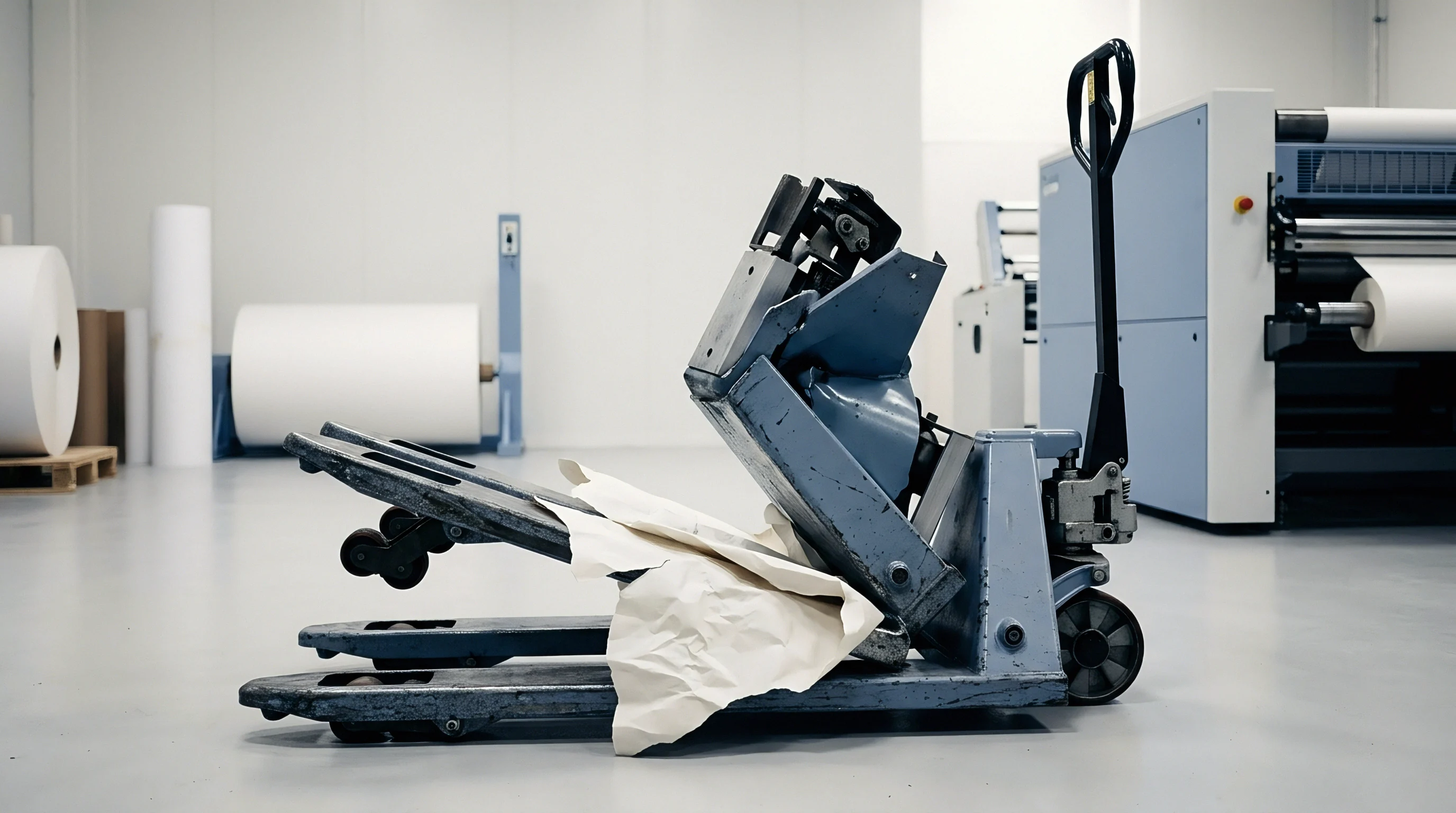
If treating occurs improperly, low molecular weight oxidized material forms a friable boundary layer. Under sudden shear, this friable layer shears cleanly away from the bulk polypropylene matrix.

Appraisal
Verifying crease resistance requires quantifying both dynamic peel adhesion and post-crease optical whitening. Standard peel tests conducted under ASTM D3330 or ISO 8510 pull specimens at five millimeters per second. Those slow speeds fail to replicate rotary die-cutting dynamics by four orders of magnitude.
Converting plants require high-rate analytical procedures that expose the full laminate structure to production-level strain rates.
What Triggers Interfacial Peeling along Crease Flaps?
Dynamic delamination testing pairs high-speed digital imaging with mechanical spring-loaded creasing rigs. Cartons are creased at three distinct rule velocities, folded through one hundred and eighty degrees, and measured for optical density loss along the score apex. Microscopic inspection reveals whether the white streak represents internal fiber pull, cohesive failure within the adhesive matrix, or clean interfacial release from the treated polypropylene surface.
| Adhesive Chemistry | Corona Level (mN/m) | Static 180-Degree Peel (N/25mm) | Crease Delamination Width (mm) | Observed Failure Mode |
|---|---|---|---|---|
| Water-Based Acrylic | 38 | 2.1 | 1.85 | Interfacial film release |
| Water-Based Acrylic | 44 | 3.8 | 0.45 | Cohesive adhesive split |
| Solventless 2K Polyurethane | 38 | 4.2 | 0.90 | Interfacial film release |
| Solventless 2K Polyurethane | 44 | 6.5 | 0.00 | Substrate fiber tear |
| Thermal EVA Copolymer | 42 | 5.1 | 0.20 | Partial fiber tear |
| Test specimens conditioned at 23 degrees Celsius and 50 percent relative humidity according to ISO 187; creasing performed on 350-micron folding boxboard. | ||||
A rigorous inspection sequence isolates mechanical variables systematically:
- Measure board surface moisture using capacitive sensors to confirm equilibrium between 6.5 and 7.5 percent water content.
- Apply dyne test pens conforming to ISO 8296 directly to incoming polypropylene rolls to establish treating levels above forty-two millinewtons per meter.
- Cross-section creased carton flaps with a microtome blade and evaluate adhesive line continuity under polarized light microscopy.
- Subject folded cartons to four-point reverse bending while tracking recovery force decay across twenty-four hours.
Consider a production run of two hundred thousand pharmaceutical folding cartons converted from 300-micron board laminated with 15-micron glossy polypropylene. The make-ready technician sets rule penetration forty microns too deep into the female counter matrix. Localized strain reaches twenty-two percent instead of the anticipated fourteen percent.
Dynamic shear stresses immediately exceed interfacial bond strength across sixty percent of the scoreline length. The fold snaps open.
Carton delivery specifications governed by DIN 55437-1 enforce maximum permissible crease delamination widths of 0.25 millimeters on all primary display panels.
Tariff
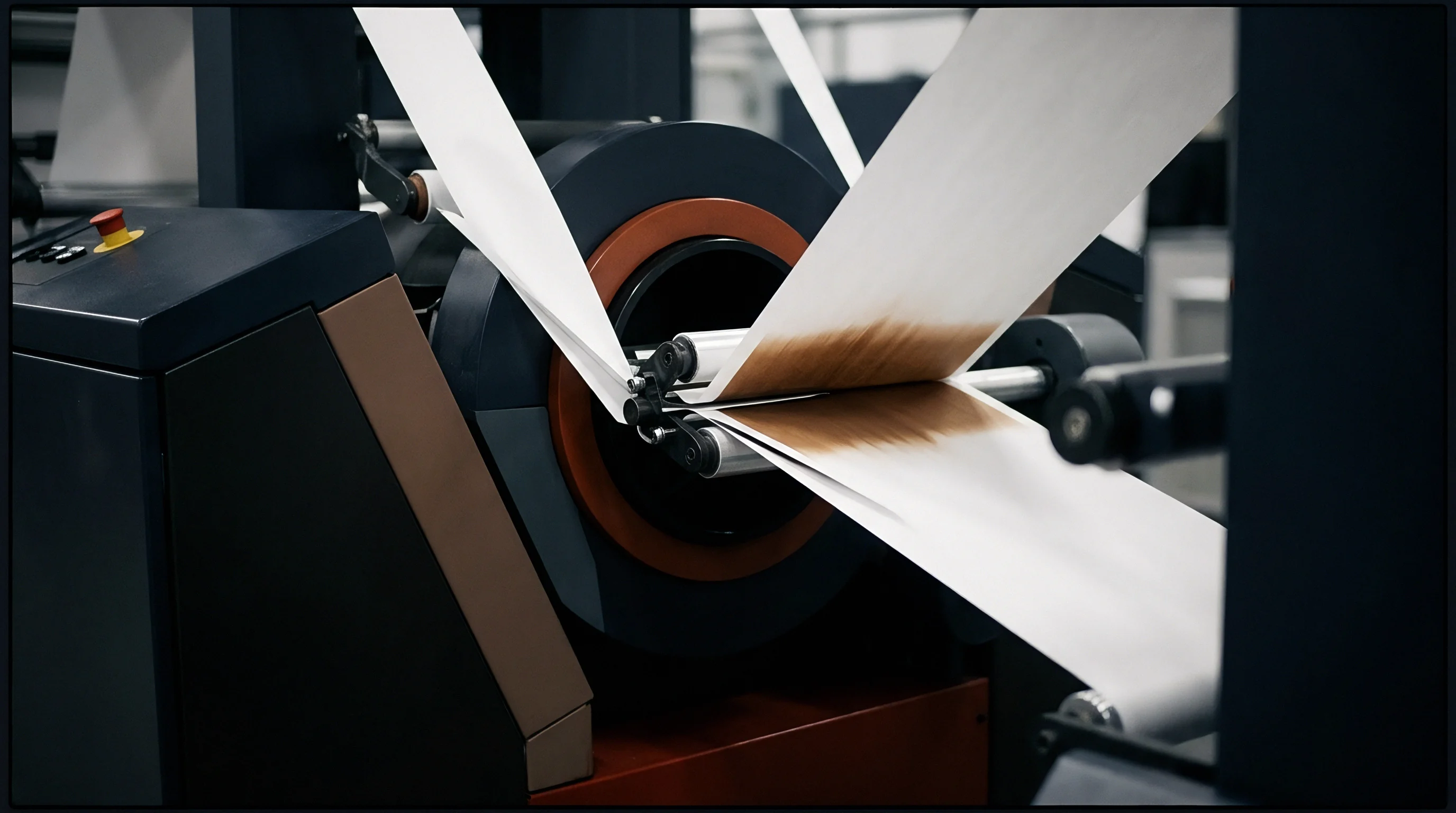
Lamination adds substantial production costs that extend beyond the raw cost of polymer film and liquid adhesive. Each laminating pass introduces machine make-ready waste, thermal energy consumption, and labor overhead. When laminated board cracks or delaminates along flap creases during final cartoning, packing lines jam at speeds of four hundred packs per minute.
Downstream packaging downtime drives claims back to the print converter.
Extended producer responsibility schemes penalize composite paper-film packaging structures through modulated fee systems. Under European packaging guidelines aligned with EN 13430 and CEPI recyclability protocols, double-sided film lamination drops pulp recovery yields during hydrapulping operations below eighty-five percent. Fiber recovery rates fall because tenaciously bonded polypropylene films trap cellulose fibers during screening.
Unbonded or delaminated film pieces break into small flakes that clog fine pulper screens.
Environmental fee structures penalize laminated cartonboard heavily compared to aqueous-coated alternatives. In jurisdictions applying modulated eco-contributions, cartons carrying two-sided polypropylene film face disposal surcharges exceeding one hundred and eighty euros per metric ton. Single-sided laminated cartons perform slightly better during repulping trials, yet sorting facilities still reject them when near-infrared optical sensors detect external polymer skins across the package surface.
Direct costs accumulate across each processing phase:
- Thermal Lamination Tooling adds twelve hundred euros per die set for heated creasing rules designed to suppress polymer brittleness.
- Make-Ready Waste Allowance rises from three percent on unlaminated board to six percent on laminated sheets due to tension calibration passes.
- Downstream Line Rejection penalties average forty-five hundred euros per production shift when automated packing lines suffer recurring carton jamming.
Bypassing high-rate mechanical testing and specifying substandard adhesive coat weights produces full pallet rejections at client filling plants, triggering complete remakes and chargebacks covering the wasted board stock, machine hours, and transport expenses.