Evaluating Crease Matrix Delamination Resistance and Z-Directional Tensile Limits under High-Humidity Storage Conditions
Elevated humidity reduces Z-directional tensile limits by forty percent, demanding wider matrix channels and pressure-sensitive tape with high tack shear adhesive.
Strata
Cellulose fibres absorb atmospheric moisture through amorphous capillary regions, driving a sharp reduction in hydrogen bond density across adjacent sheet plies. Moisture alters bond mechanics. In multi-ply packaging boards such as folding boxboard, solid bleached board, and coated recycled board, the distribution of water molecules inside the fibre web creates uneven expansion strain.
As relative humidity rises from standard room conditions of fifty percent to tropical storage levels of eighty-five percent or higher, the moisture content of paperboard climbs from roughly six percent to over eleven percent by weight. This uptake plasticizes inter-fibre connections, lowering the board’s structural stiffness and compromising its internal bond strength.
Z-directional tensile resistance measures the internal cohesive strength of paperboard normal to the plane of the sheet. When creasing matrix strips are applied to the top liner and subjected to cyclic mechanical shearing during die-cutting, forces translate directly into this Z-axis. Solid bleached board relies on long softwood fibres in its central structural layers, retaining higher tensile coherence under wet conditions.
Coated recycled board contains short mechanically processed fibres and filler materials that retain water in capillary pockets. Moisture weakens these short-fibre networks rapidly, dropping the internal shear plane into the middle recycled plies during scoring operations.
Z-directional tensile resistance drops by forty-two percent when boxboard moisture content shifts from six percent to eleven percent under eighty-five percent equilibrium conditions.
Hygroexpansivity and Interply Hydrogen Bond Degradation
Fibre swelling occurs anisotropically across the sheet. Cellulose wall dimensions increase significantly in thickness while remaining relatively stable along the longitudinal fibre axis. This differential hygroexpansion creates localized transverse shear stresses between the discrete plies of a multi-ply board construct.
The top liner, heavily sized and pigment-coated, expands at a different rate than the bulkier mechanical or recycled middle plies. Internal stresses build up at the interply boundaries long before any external folding mechanical force touches the converting blank.
When moisture plasticizes the hemicellulose matrix binding individual fibres, the energy needed to initiate interply cleavage drops precipitously. Under standard test conditions of twenty-three degrees Celsius and fifty percent relative humidity, a standard three-hundred-and-fifty micron folding boxboard exhibits Z-directional tensile strength between three hundred and fifty and four hundred and fifty kilopascals. Exposure to an eighty-five percent relative humidity environment for forty-eight hours drops this resistance below two hundred and twenty kilopascals.
The reduced structural integrity allows the creasing rule to push the linerboard downward into the matrix groove, but the internal structural core separates prematurely across the weakened shear plane instead of forming a defined internal bead.
The table below provides comparative measurements of internal bond strength and Z-directional tensile values for three distinct four-hundred-micron board grades conditioned across two humidity regimes, following ISO 187 conditioning protocols and evaluated per TAPPI T 541.
| Substrate Grade | Conditioning State | Equilibrium Moisture Content (%) | ZDT Strength (kPa) | Scott Bond Energy (J/m²) |
|---|---|---|---|---|
| Solid Bleached Board (SBB) | 23°C / 50% RH | 6.2 | 485 | 210 |
| Solid Bleached Board (SBB) | 38°C / 85% RH | 11.4 | 310 | 145 |
| Folding Boxboard (FBB) | 23°C / 50% RH | 6.8 | 390 | 175 |
| Folding Boxboard (FBB) | 38°C / 85% RH | 12.1 | 215 | 98 |
| Coated Recycled Board (CRB) | 23°C / 50% RH | 7.4 | 320 | 130 |
| Coated Recycled Board (CRB) | 38°C / 85% RH | 13.5 | 160 | 62 |
| Data recorded following TAPPI T 541 Z-directional tensile testing and ISO 15754 internal bond energy testing. Samples conditioned for 72 hours per environment prior to mechanical evaluation. | ||||

Moisture Equilibrium across Multi-Ply Fiber Networks
Water vapor transport through a sheet follows both vapor diffusion across pores and bound-water migration along fibre surfaces. In high-humidity storage environments, the edges of stacked board pallets absorb ambient moisture faster than the center of the stack. This moisture gradient produces differential Z-directional strength profiles across a single parent sheet.
When convertors process sheets harvested from unconditioned pallet perimeters, creasing matrix performance fluctuates across the die platen.
Fibre length distribution dictates how effectively the sheet matrix redistributes local stress concentration. Softwood kraft pulps present average fibre lengths exceeding two point five millimetres, creating an interwoven structural web that maintains mechanical friction even after hydrogen bonds loosen. Hardwood pulps and recycled mechanical furnish present fibre lengths below one point two millimetres.
Plies separate under pressure. In high-moisture conditions, short fibres slip past one another under minimal normal stress, causing the central furnish layers to yield prematurely when creasing rules impact the sheet face.
Whether additional chemical wet-strength agents incorporated into the mechanical middle plies can fully offset atmospheric moisture sorption without raising end-of-life repulping energy remains an open question for mill chemists.
Anchorage
Pressure-sensitive adhesive backings on synthetic creasing strips face competing mechanical forces during high-speed platen die-cutting. Tape adhesion decays quickly. The adhesive strip holds the matrix locator channel firmly onto the cutting plate or counter plate while enduring repeated impact loads from the creasing rule.
High relative humidity destabilizes this interface through two independent paths: water molecules diffuse through the creasing matrix shoulder to swell the underlying adhesive mass, and moisture alters the surface energy of the board’s top liner.
Die-cutting platens operating in unconditioned converting plants experience surface condensation during ambient temperature shifts. Water films on metal counter plates prevent the acrylic or rubber-based pressure-sensitive adhesive from achieving intimate surface contact. When matrix locator strips undergo positioning, the initial tack strength drops significantly.
During long die-cutting production runs at six thousand sheets per hour, lateral shear stresses from moist paperboard drag the matrix strips sideways, causing crease misalignment, score cracking, or complete matrix release from the steel plate.
Compliance with ISO 187 conditioning guidelines prevents false acceptance of pressure-sensitive matrix tape batches that degrade above seventy-five percent ambient moisture.
Adhesive Shear Mechanics on Moisture-Softened Liners
Matrix tape performance depends on maintaining high shear modulus within the adhesive polymer under elevated temperature and humidity. Acrylic adhesives absorb minor amounts of water, which acts as an internal plasticizer, softening the polymer chains and reducing cohesive strength. When high-grammage board impacts the matrix shoulder during scoring, the matrix experiences a combination of downward compression and horizontal pushing forces.
Softened adhesives deform plastically under this horizontal vector, sliding along the counter plate.
Failure modes on the converting floor shift when board moisture exceeds ten percent. On dry board, matrix failure occurs via adhesive debonding from the metal plate. On humid board, the adhesive bond to the top liner board coat can prove stronger than the internal cohesive strength of the moisture-softened top liner itself.
When the matrix strip releases during removal or production shifts, it tears the top liner coating off the board sheet, exposing raw fibres and ruining the printed surface.
Liner Tear Resistance versus Matrix Carrier Release
The interaction between matrix tape carriers, release papers, and moisture-laden board substrates introduces operational vulnerabilities during press set-up. The list below identifies critical failure pathways encountered when operating creasing matrix systems under elevated atmospheric humidity:
- Adhesive plasticization reduces the internal cohesive shear strength of rubber-based backing tapes, allowing lateral matrix migration during high-speed scoring.
- Condensation interfacial barriers form microscopic liquid films on cold steel counter plates, preventing complete wet-out of pressure-sensitive adhesives upon application.
- Top liner coat picking happens when high-tack adhesive strips pull moist clay coating layers off the board surface during matrix repositioning.
- Delamination of base paper occurs when matrix removal strips tear weakened recycled furnish plies instead of peeling cleanly from the platen metal.
- Locator channel swelling expands plastic matrix guide channels, altering channel width tolerances and introducing register drift across carton blanks.
Matrix manufacturers frequently claim that elevated storage humidity acts as an uncontrollable external factor that nullifies standard adhesive performance guarantees. They argue that pressroom air conditioning must remain locked at twenty-one degrees Celsius and fifty percent relative humidity to maintain tape warranty coverage.

Channel
Die-cutting steel rules compress paperboard into recessed counters to establish clean hinge lines without fracturing outer print coatings. The width and depth of the female creasing matrix channel govern the folding behavior of the finished carton blank. Under high-humidity storage conditions, paperboard caliper swells while Z-directional tensile limits collapse.
Maintaining channel geometry calculated for dry board stock causes severe structural failure when processing moist board sheets.
Standard industry equations for matrix channel width base their calculations on board thickness and rule width. A standard formulation sets channel width equal to one point four times board caliper plus the creasing rule width. When moisture inflates board caliper by eight to twelve percent, the effective displacement volume inside the matrix groove diminishes.
Moist board compressed into an undersized matrix channel cannot form a clean male bead. The excess board volume jams against the rigid shoulders of the matrix strip, driving destructive horizontal shear forces straight into the weakened Z-axis layer of the sheet.
Where Does Matrix Shear Failure Originate under Elevated Relative Humidity?
Shear breakdown initiates at the bottom corner edges of the female channel shoulder. Counters shift under load. As the creasing rule forces moist paperboard downward, the board undergoes severe localized bending and compression.
When internal bond strength has been degraded by moisture absorption, the board plies split internally before the crease bead reaches the bottom of the matrix channel. This premature internal cleavage spreads outward horizontally, weakening the entire score line area and leaving the finished box blank with soft, ill-defined edges that buckle during high-speed gluing.
Correcting channel depth becomes necessary when board moisture elevates. Moisture increases the compressible bulk of mechanical pulps in folding boxboard. A rule depth that provided perfect crease bead definition at six percent sheet moisture over-compresses the board core at twelve percent moisture.
Excess compression crushes the cellulose walls inside the crease bead, permanently destroying the dynamic hinge stiffness required for automated packaging equipment.
| Board Caliper (µm) | Moisture State (% RH) | Rule Width (pt / mm) | Matrix Channel Depth (mm) | Calculated Channel Width (mm) |
|---|---|---|---|---|
| 350 | 50% Standard | 2 pt (0.71 mm) | 0.40 | 1.20 |
| 350 | 85% Moist | 2 pt (0.71 mm) | 0.50 | 1.35 |
| 420 | 50% Standard | 2 pt (0.71 mm) | 0.50 | 1.30 |
| 420 | 85% Moist | 2 pt (0.71 mm) | 0.60 | 1.50 |
| 500 | 50% Standard | 3 pt (1.07 mm) | 0.60 | 1.75 |
| 500 | 85% Moist | 3 pt (1.07 mm) | 0.70 | 1.95 |
| Channel dimensions calculated for high-humidity runs incorporate an expanded width multiplier (1.6x caliper) to accommodate hygroexpansive swelling and prevent ply delamination. | ||||
Groove Dimensions and Crease Bead Volume Integrity
Adjusting creasing parameters for high-moisture production requires systematic press preparation. The following procedure outlines the exact mechanical calibration steps needed to establish matrix channel clearance on moist board stock:
- Measure sheet moisture content at three points across the delivered pallet using a calibrated surface resonance moisture meter.
- Determine actual swollen sheet caliper with a micro-gauge anvil operating under standard TAPPI T 411 contact pressure specifications.
- Select a creasing matrix channel depth equal to the measured swollen board caliper plus zero point zero five millimetres to prevent internal fiber crushing.
- Calculate channel width using a high-humidity multiplier factor of one point six times swollen caliper plus creasing rule thickness.
- Clean the counter plate with isopropyl solvent to eliminate water films before mounting the new press matrix strips.
- Perform a single test impression on a production sheet at slow press speed to verify matrix channel alignment.
- Inspect the cross-section of the formed crease bead under ten-times magnification to confirm clean internal ply delamination without surface coat cracking.
Thicker board calipers demand wider counter channels when high atmospheric moisture softens the central recycled plies.
If press technicians ignore sheet moisture inflation and maintain standard dry-board matrix dimensions on high-humidity stock, severe shear fractures travel outward into the printed panel area, rendering entire carton lots unusable on automated filling lines.
Bench
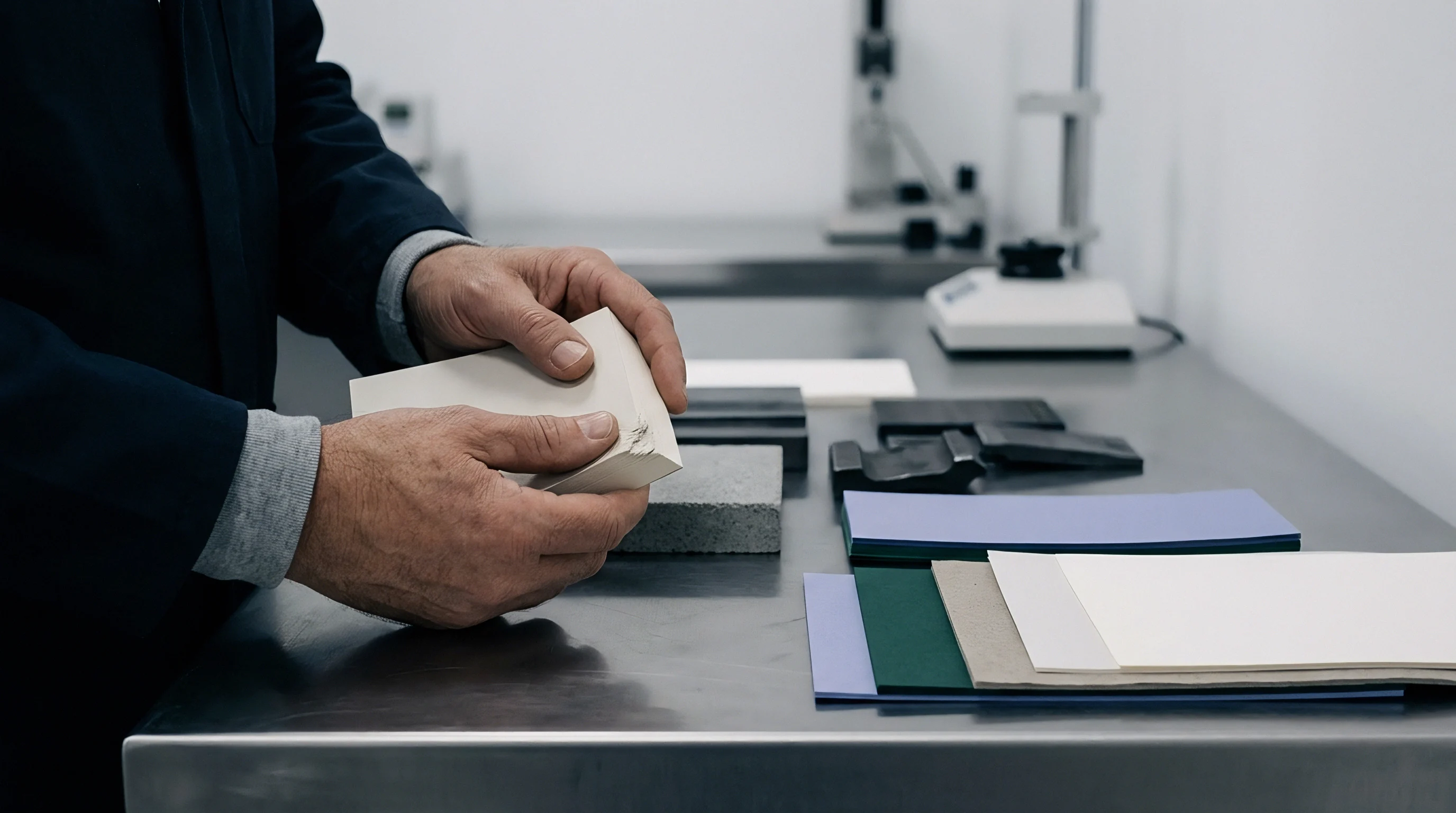
Laboratory evaluation of internal bond integrity requires double-sided adhesive tape fixtures calibrated to isolate internal fibre cleavage from surface tape failure. Standardized laboratory testing provides quantifiable metrics for qualifying substrate lots prior to full pressroom release. TAPPI T 541 defines Z-directional tensile testing procedure, while ISO 15754 establishes protocols for internal bond strength via dynamic pendulum impact energy.
Evaluating substrates under standard twenty-three degree Celsius and fifty percent relative humidity conditions fails to predict converting performance in unconditioned or tropical packaging plants.
Simulating actual storage conditions requires extended pre-conditioning inside environmental chambers maintained at thirty-eight degrees Celsius and eighty-five percent relative humidity for a minimum of seventy-two hours. Testing samples immediately upon removal from environmental chambers prevents ambient moisture loss during specimen clamping. Measurements conducted under accelerated moisture absorption reveal distinct failure thresholds for virgin versus recycled fibre furnishes.
Internal delamination during creasing converts sharp hinge lines into rounded rolling scores that jam automatic cartoning machinery.

Z-Directional Tensile Protocol Parameters
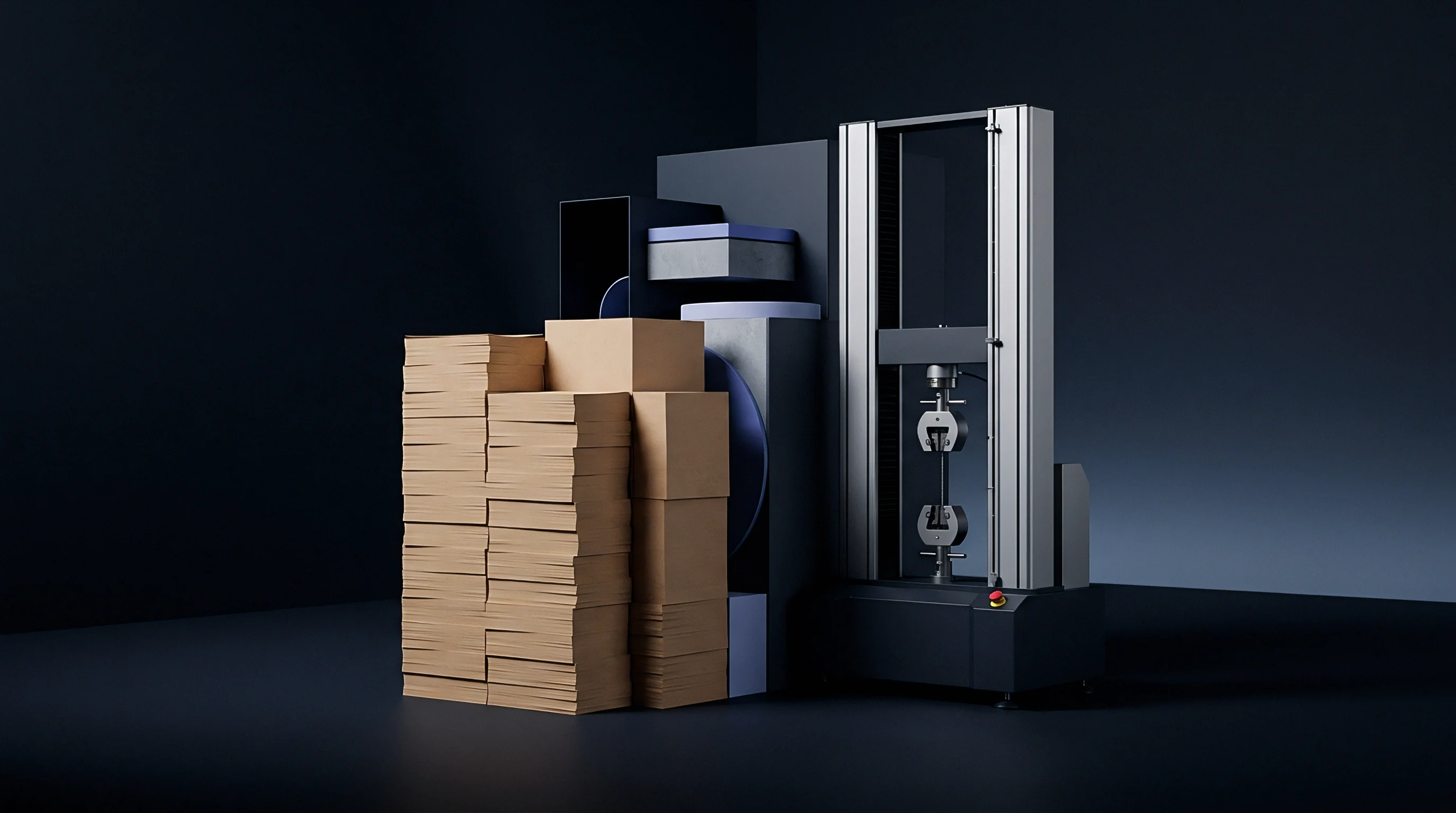
TAPPI T 541 testing applies a uniform tensile force perpendicular to the plane of a square paperboard sample anchored between two metallic platens using high-tack double-sided tape. The rate of loading, platen alignment, and clamping pressure directly influence the measured ultimate stress at failure. Calibration prevents scrap claims.
Unconditioned board swells quickly. When testing high-moisture samples, tape adhesion to the wet outer coating must exceed six hundred kilopascals to ensure failure occurs strictly inside the internal fibre core rather than at the tape interface.
Scott Bond testing per ISO 15754 utilizes a heavy pendulum hammer impacting an aluminum angle specimen glued to the paperboard surface. The measured energy loss reflects the dynamic internal tearing resistance of the sheet. Dynamic impact testing shows higher sensitivity to moisture plasticization than static tensile testing.
Dynamic tests reflect the rapid deformation rates experienced on die-cutting platens operating at several thousand impressions per hour.
Scott Bond Impact Energy versus Static Pull Testing
Correlating static tensile testing with dynamic Scott Bond impact data yields a precise picture of substrate mechanical stability. A complete qualification protocol for board stock destined for tropical or high-humidity storage must verify specific physical limits across both testing regimes:
- ZDT ultimate tensile limit must maintain a minimum threshold of two hundred and fifty kilopascals after seventy-two hours exposure to eighty-five percent relative humidity.
- Scott Bond energy threshold must remain above one hundred joules per square metre under elevated moisture states to prevent high-speed crease splitting.
- Delamination plane position must stay within the middle third of the sheet thickness during pull tests to confirm balanced ply bond strength.
- Moisture sensitivity coefficient defined as the percentage drop in ZDT per percentage increase in water content must not exceed eight percent per point.
Purchasing specifications incorporating standard ISO 187 conditioning clauses without supplemental high-humidity testing clauses allow mills to supply board that satisfies nominal bench testing but fails on humid converting floors.
Ledger
Financial losses in folding carton converting trace directly to unbudgeted line stoppages and elevated scrap ratios during humid production runs. Delamination stops the gluer. When creasing matrix strips lose anchorage or paperboard suffers uncontrolled internal Z-axis delamination, converting speeds drop by thirty to fifty percent.
High-speed folder-gluers cannot fold cartons accurately when crease lines exhibit variable bending stiffness caused by uneven moisture absorption.
Grade selection directly dictates financial risk exposure. Solid bleached board commands a market price premium of fifteen to twenty-five percent over coated recycled board per metric tonne. However, solid bleached board retains higher Z-directional tensile limits under extreme moisture conditions.
Evaluating landed sheet cost per thousand finished units requires factoring potential downtime, matrix replacements, and scrap rates into the initial substrate purchasing decision.
Worked Example Yield Arithmetic across Board Grades
To quantify the economic impact of substrate selection under high-humidity storage conditions, consider a production run of one million folding cartons manufactured from four-hundred-micron board stock. The job requires forty metric tonnes of substrate at a nominal basis weight of three hundred and twenty grams per square metre. The model compares Coated Recycled Board (CRB) against Folding Boxboard (FBB) operating in an unconditioned converting facility experiencing eighty-five percent ambient relative humidity.
Assume a base substrate cost of eleven hundred US dollars per tonne for Coated Recycled Board and fourteen hundred and fifty US dollars per tonne for Folding Boxboard. During humid converting conditions, the recycled board experiences a six percent matrix failure and score fracture scrap rate due to low Z-directional tensile limits. The higher-strength folding boxboard holds scrap to one point two percent under identical environmental conditions.
Furthermore, press running speeds on recycled board must be reduced from eight thousand to five thousand sheets per hour to prevent matrix displacement, increasing press hour charges.
| Cost Vector / Operational Parameter | Coated Recycled Board (CRB) | Folding Boxboard (FBB) | Variance / Impact |
|---|---|---|---|
| Base Substrate Price per Tonne | $1,100 | $1,450 | +$350 / tonne (+31.8%) |
| Raw Tonnage Required (including setup) | 42.5 tonnes | 40.5 tonnes | -2.0 tonnes (-4.7%) |
| Substrate Invoice Cost | $46,750 | $58,725 | +$11,975 (+25.6%) |
| Converting Press Running Speed | 5,000 sheets/hr | 7,500 sheets/hr | +2,500 sheets/hr (+50%) |
| Die-Cutting Press Hours ($250/hr rate) | 32.0 hours | 21.3 hours | -10.7 hours (-33.4%) |
| Press Machine Hourly Cost | $8,000 | $5,325 | -$2,675 (-33.4%) |
| Matrix Strip Replacement Sets | 4 full resets | 1 initial set | 3 extra matrix resets |
| Matrix Material & Downtime Cost | $1,800 | $300 | -$1,500 (-83.3%) |
| Folder-Gluer Scrap Rate (%) | 6.0% | 1.2% | -4.8% scrap reduction |
| Cost of Wasted Printed Stock | $2,805 | $705 | -$2,100 (-74.8%) |
| Total Landed Converting Cost | $59,355 | $65,055 | +$5,700 net premium |
| Landed Cost per 1,000 Cartons | $59.35 | $65.05 | +$5.70 per 1,000 units |
Contractual Limits for High Humidity Resistance
Tension tears wet liners. While virgin folding boxboard carries a higher initial invoice price per tonne, the net cost gap narrows substantially when factoring machine downtime, tool replacement, and material waste during humid operational conditions. On long-run packaging jobs destined for unconditioned tropical warehouses, specifying higher ZDT limits eliminates unbudgeted converting losses.
Writing explicit mechanical guarantees into substrate purchasing contracts protects converters against moisture-induced delamination claims. Sourcing dockets must specify minimum Z-directional tensile limits tested under eighty-five percent relative humidity conditions alongside traditional grammage and caliper tolerances.
Upgrading to a virgin fibre substrate grade provides reliable operational insurance whenever board storage conditions exceed seventy-five percent relative humidity for extended periods.