Dispersion Barrier Performance in Folding Boxboard Substrates
Aqueous dispersion barrier performance depends on wet coat weight uniformity, film drying coalescence, and creasing matrix geometry that prevents score line cracking.
Latex
Aqueous polymer suspensions applied to virgin folding boxboard (FBB) create functional liquid and grease barriers without lamination. The primary challenge in replacing extruded polyethylene (PE) or fluorochemical treatments lies in achieving continuous film coverage over a porous, textured paperboard surface. On triple-coated GC1 and GC2 boxboard grades, where the surface base coat consists of kaolin clay, calcium carbonate, and synthetic binder systems, clay coat porosity governs initial wetting.
Substrate Surface Architecture and Dispersion Chemistry
Primary virgin boxboard grades feature top pigment layers designed for graphic printing rather than polymer film deposition. The binder content in the base coating determines capillary suction, which directly pulls water from the wet aqueous dispersion before polymer particles coalesce. High calcium carbonate ratios increase pore diameter, leading to premature water loss and incomplete film formation.
Synthetic polymer emulsions formulated for dispersion barriers utilize acrylic copolymers, styrene-butadiene rubber (SBR), or bio-based polyesters such as polyhydroxyalkanoates (PHA). Each binder chemistry exhibits distinct glass transition temperatures (Tg) and surface energies, with shear-thinning behavior reducing viscosity during application.
Styrene-butadiene emulsions provide flexibility and water resistance economically, but offer weak resistance to free fatty acids. Acrylic copolymers protect well against grease and oil, though low water vapor transmission rates (WVTR) require heavier coat weights. Blending hydrophobic acrylics with high-aspect-ratio talc or kaolin platelets forces vapor through a tortuous path; how those fillers orient depends on the coater, as blade shear aligns mineral platelets parallel to the sheet while curtain coaters leave unaligned pigment structures.
Polymer Emulsion Surface Tension and Wetting Dynamics
Adding surfactants balances wet surface tension to ensure uniform dry coat distribution. Standard clay-coated FBB has a surface energy between 38 and 44 mN/m. Complete wetting without cratering or pinholes requires the dispersion’s dynamic surface tension to sit at least 5 mN/m below that of the substrate.
Overloading surfactant, however, leaves hydrophilic residues in the dried polymer matrix that lower water resistance and impair surface adhesion through binder migration.
| Polymer Base | Dry Coat Weight (g/m²) | Wet Surface Tension (mN/m) | Glass Transition Temp (°C) | Cobb 1800s Value (g/m²) |
|---|---|---|---|---|
| Styrene-Acrylic Copolymer | 7.5 | 34 | 12 | 8.2 |
| Styrene-Butadiene Emulsion | 6.0 | 31 | -5 | 12.5 |
| Talc-Filled Acrylic System | 9.0 | 36 | 18 | 4.1 |
| Polyhydroxyalkanoate (PHA) | 8.0 | 38 | 5 | 9.8 |
| Test conditions: Substrate 280 gsm GC1 FBB; Cobb testing per ISO 535 at 23 °C and 50 % Relative Humidity. | ||||
Dispersion barriers are applied via air-knife, metering rod, or curtain coating stations. Rod coaters manage high-solids emulsions up to 60 percent dry mass, but nip pressure drives liquid into the board pores, thinning the effective barrier film. Curtain coating lays an uninterrupted liquid sheet onto the moving FBB web without mechanical contact, maintaining a uniform polymer skin across surface contours.
Edge-wicking liquid failures often stem from post-converting ambient humidity fluctuations rather than variations in wet binder distribution across the web profile.


Film
As aqueous coatings evaporate, capillary forces draw suspended polymer particles together until they coalesce into a continuous phase, where any pinhole ruins barrier performance. Maintaining a defect-free layer across a moving board web requires careful heat transfer profiles in the dryer section. Evaporating water too quickly at the tunnel entrance causes micro-foaming and skinning, trapping liquid beneath a dry outer crust that craters when steam vents.
Coalescence Physics and Thermal Drying Profiles
Thermal evaporation drives water from the applied emulsion, raising solid concentration until suspended polymer spheres touch. The minimum film formation temperature (MFFT) marks the threshold where thermal energy overcomes particle rigidity, allowing polymer chains to interdiffuse across particle boundaries. If web temperature inside the dryer remains below the MFFT, the dispersion dries as a fractured, powdery layer lacking cohesion.
Infrared drying zones applied immediately after the coater head raise wet coat temperature to the MFFT threshold before high-velocity air impingement nozzles accelerate water removal, as drying speed directly governs film density.
Web temperatures above 120 degrees Celsius cause steam blistering inside the mechanical pulp core of folding boxboard. Expanding moisture in the middle layer pushes against the top clay coat, rupturing the curing dispersion. Staged drying profiles split the tunnel into three heat zones: medium-intensity infrared pre-heating, constant-rate evaporation under moderate 80-degree hot air, and a final 105-degree curing zone to finish particle coalescence.
Barrier Integrity and Defect Quantification
Surface defects form when trapped air or unevaporated moisture breaks through the drying polymer film. Pinholes and microcracks allow liquid chemicals, water, and fats to bypass the polymer skin, reaching the hydrophilic cellulose fibers below. Defect frequency drops as dry coat weight increases up to a critical threshold, past which added coating mass brings diminishing returns.
Water vapor transmission rates measured at 23 degrees Celsius and 50 percent relative humidity double when coat weight drops below 6.5 grams per square meter on triple-coated FBB.
Quantifying barrier continuity involves microscopic pinhole detection alongside standardized solvent drop penetration tests. Standard failure modes observed during quality audits include:
- Bubble Entrapment occurs when high agitator shear in the coating supply tank introduces micro-air bubbles that fail to defoam before metering bar application.
- Blade Streak Micro-voids form when dislodged clay agglomerates lodge behind the doctor blade, dragging narrow, sub-micron coating voids along the machine direction.
- Thermal Shock Cracking develops when rapid cooling after oven discharge contracts the outer polymer skin faster than the underlying FBB fiber network can relax.
- Fiber Absorption Wick happens when elevated surface fibers penetrate completely through a thin wet coating layer before film coalescence finishes.
Insufficient coating continuity permits grease migration through board fibers, causing structural carton failure and staining secondary transport packaging.
Strain
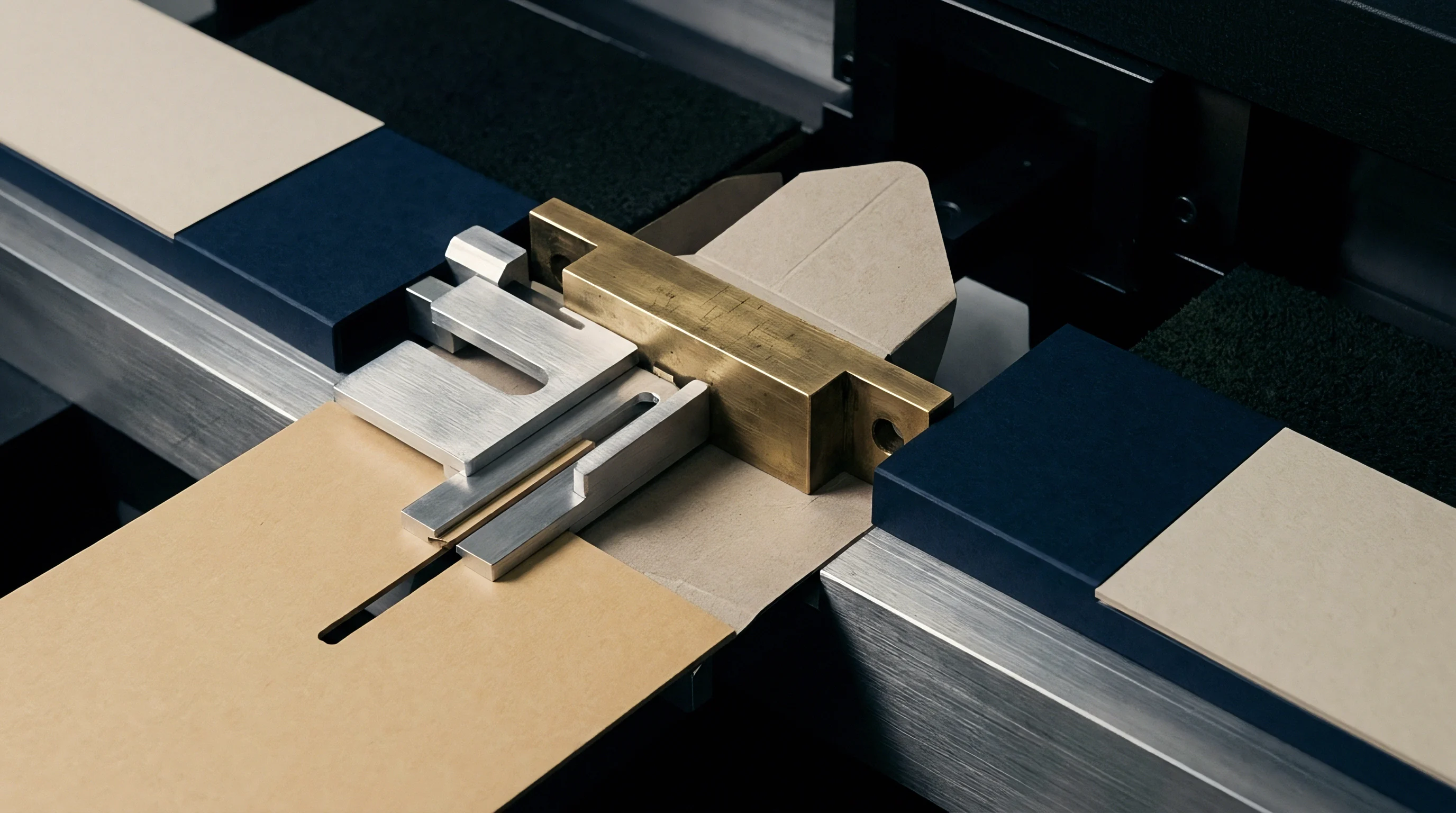
Mechanical folding on high-speed packaging lines subjects surface barrier coatings to tension forces up to three hundred percent along score creases. Converting tools score the board to rupture internal fiber bonds within the mechanical pulp core, allowing clean 90-degree and 180-degree folds. Because female creasing matrix width governs stress distribution, a dispersion polymer lacking sufficient elongation at break will crack along the outer crease spine.

Crease Matrix Geometry and Polymer Elongation
Deforming multi-ply folding boxboard requires controlled ply separation inside the mechanical pulp layer while stretching the top liner. Bending radius depends on male creasing rule selection and female matrix groove depth, where excessive depth shears surface fibers. Narrow matrix grooves heighten compression stress on the top liner, forcing the polymer to stretch sharply over an acute radius; wider grooves spread bending forces, lowering local polymer strain at the expense of a wider score.
| Male Blade Width (mm) | Female Channel Width (mm) | Channel Depth (mm) | Barrier Fracture Rate (%) | Post-Fold Cobb 60s (g/m²) |
|---|---|---|---|---|
| 1.05 | 1.40 | 0.50 | 14.2 | 48.0 |
| 1.05 | 1.70 | 0.45 | 3.1 | 12.4 |
| 1.05 | 1.90 | 0.40 | 0.2 | 2.8 |
| 0.71 | 1.60 | 0.40 | 1.5 | 6.1 |
High-speed folder-gluers process cartons at line speeds up to 400 meters per minute, where the impact of folding belts creates localized dynamic stress peaks well above static limits measured in laboratory tests. Formulations with glass transition temperatures above 15 degrees Celsius fracture brittely under these dynamic line conditions. Incorporating plasticizing monomers or soft acrylic phases lowers composite Tg below 0 degrees Celsius, maintaining elongation during cold-chain packaging operations.
Folder-Gluer Headroom and Glue Line Compatibility
Adhesion speed on side-seam gluer belts depends on surface energy alignment between the dispersion coating and cold water-borne adhesives, as cold glues struggle on non-porous surfaces. Because standard dispersion coatings block water absorption from poly-vinyl acetate (PVAc) glues, set times stretch from 1.5 seconds on uncoated board to over 12 seconds on barrier-coated flaps, forcing operators to slow gluer lines.
Polymer elongation must exceed the outer ply tensile elongation of the board base to prevent barrier rupture during female-matrix folding.
Executing reliable glue bonds requires specialized high-solids PVAc adhesives modified with monomeric tackifiers, or the installation of mechanical line-skiving equipment. Mechanical skivers physically grind away a 15-millimeter strip of the dispersion coating along the glue lap flap immediately before adhesive application, exposing the raw absorbent cellulose fibers. Skiving eliminates adhesive set-time delays but produces fine airborne polymer dust that requires dedicated extraction systems to prevent coater head contamination.
A sequence of press-room setup adjustments maintains structural integrity during carton conversion:
- Crease Depth Calibration sets the penetration distance of the male rule to exactly two-thirds of total FBB thickness, preventing top-ply fiber shear.
- Female Matrix Width Selection matches the channel clearance to twice the board thickness plus the male rule diameter to distribute outer liner tension uniformly.
- Folding Belt Speed Adjustment synchronizes transfer belt ratios to eliminate rotational twisting moments along longitudinal creasing lines.
- Glue Seam Compression Verification applies continuous pressure over the side-seam joint for at least 0.8 seconds to secure fiber-tear bond development.
The long-term fatigue limit of high-elongation acrylic dispersion barriers under cyclical climatic humidity expansion remains an open technical variable for frozen food packaging applications.
Proof
Quality control relies on standard lab methods measuring water absorption, oil penetration, and water vapor transmission. Baseline water resistance is evaluated via Cobb values per ISO 535 across intervals from 60 to 1800 seconds, though horizontal edge wicking into the uncoated mechanical core can distort uptake figures meant strictly for top-face evaluation.
Standardized Barrier Testing Protocols and Conditioning Sensitivity
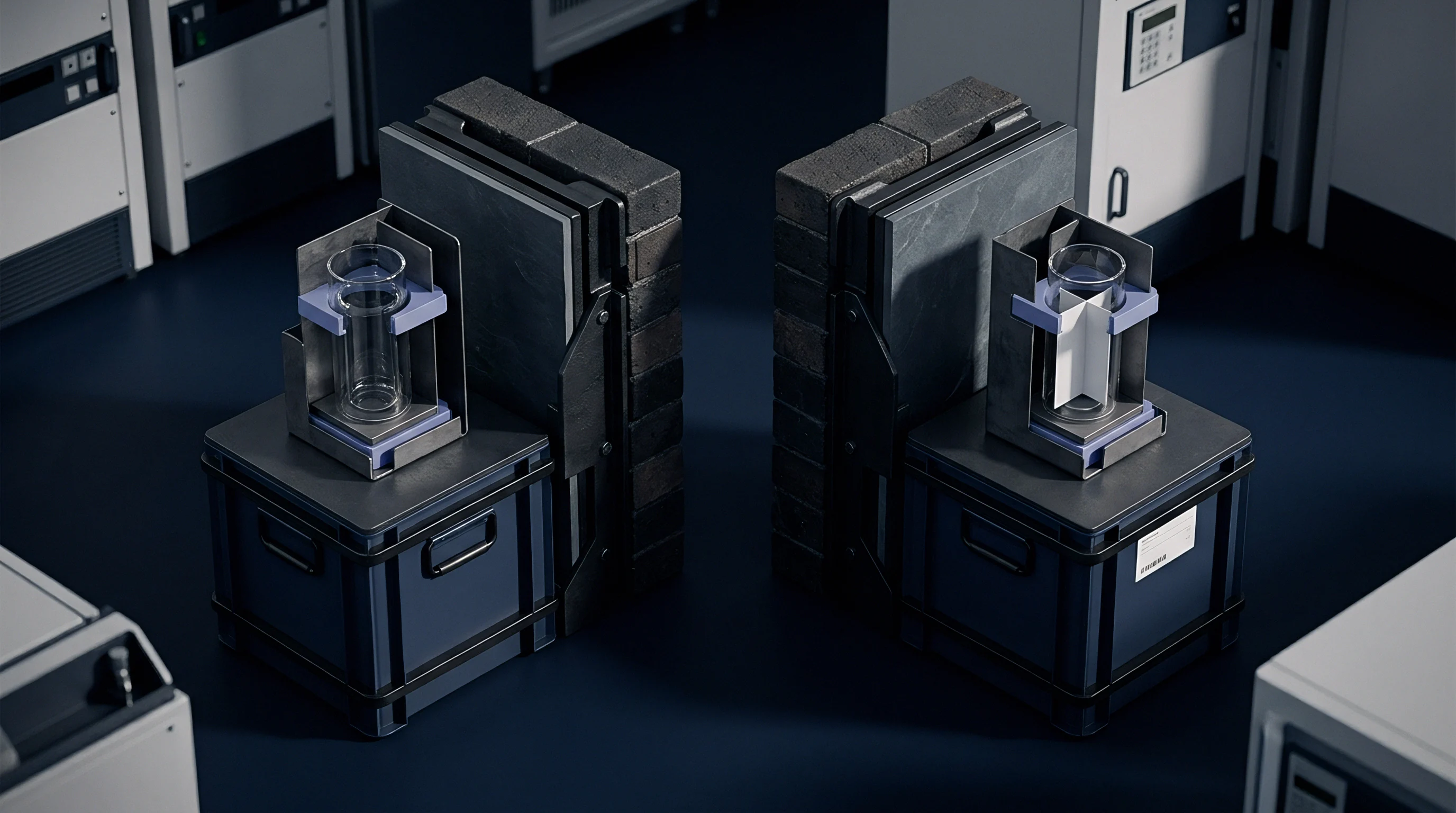
Test specimens conditioned under ISO 187 standard atmosphere (23 degrees Celsius and 50 percent relative humidity) establish baseline water resistance, but ambient moisture shifts these values significantly. Exposure to 90 percent relative humidity relaxes internal hydrogen bonds in the board, swelling cellulose fibers and cracking rigid polymer top layers. Tropical testing at 38 degrees Celsius and 90 percent relative humidity reveals performance drops that remain hidden in standard lab climates.
Oil and grease resistance testing utilizes the TAPPI T 559 Kit test protocol, employing a series of twelve hydrocarbon liquid mixtures of varying surface tensions. Castor oil, toluene, and n-heptane solutions range from Kit 1 (lowest aggressive penetration) to Kit 12 (highest solvency power). Standard acrylic dispersion barriers on FBB typically achieve Kit ratings between 6 and 9.
For direct food packaging applications, EN 13676 tests long-term grease penetration using palm kernel fatty acid mixture at 60 degrees Celsius for 24 hours.

Is Double Bar Application Necessary for Sub-10 Cobb Values?
Achieving water absorptiveness below ten grams per square meter over thirty minutes requires uniform coat mass distribution. Single metering rod coater heads leave micro-thin valleys over the irregular topography of mechanical pulp middle layers. Applying a double-coat sequence—first a 4 g/m² priming layer to seal surface pore openings, followed by a 4 g/m² top layer to build continuous surface skin—consistently lowers Cobb 1800 values below 5 g/m².
Standard delivery specifications requiring PTS-RH 021/97 repulpability compliance trigger automatic lot rejection if coarse screen rejects exceed two percent of dry fiber mass.
Executing accurate Cobb 1800 absorption measurements follows a strict lab sequence:
- Condition test samples at 23 degrees Celsius and 50 percent relative humidity for a minimum of 24 hours per ISO 187 standard environment.
- Cut circular test specimens measuring exactly 125 square centimeters to fit the ISO 535 test clamping apparatus securely.
- Clamping the specimen exposes 100 square centimeters of coated surface to 100 milliliters of distilled water at room temperature.
- Pour out liquid at exactly 1770 seconds, blot excess water using standard 200 gsm absorbent blotting paper, and roll twice with a 10 kg metal cylinder.
- Weigh the sample within four seconds to determine total water mass absorbed per square meter over thirty minutes.
Contractual compliance under EN 13676 standard grease testing mandates zero stain breakthrough across ten random test cutouts after two hours at 60 degrees Celsius.
Ledger
Commercial viability hinges on balancing raw material solids costs against converting yields and end-of-life fees. While polymer price dominates overall sheet economics ~ with waterborne dispersions costing significantly more per dry kilogram than polyethylene resin or FBB pulp ~ tonnage yield helps offset chemical expenses. Trimming coat weight down to the minimum required for barrier compliance prevents wasted chemical expense across production runs.
Yield Arithmetic and Substrate Downgauging Mechanics
Substrate specification choices dictate total dry mass cost per thousand converted folding cartons. Consider a benchmark production run of 100,000 unit frozen food cartons (blank dimensions 200 mm x 300 mm, parent sheet yielding 12 cartons per sheet). Compare a standard 350 gsm GC1 FBB board laminated with 18 g/m² polyethylene against a downgauged 320 gsm GC1 FBB board carrying an 8 g/m² aqueous acrylic dispersion coating.
The 320 gsm board base offers higher bulk efficiency, delivering equivalent bending stiffness at lower basis weight. Raw substrate mass savings reach 30 grams per square meter across the parent sheet area. Calculating raw board cost at €1,400 per tonne for GC1 board, polyethylene lamination application at €0.22 per square meter, and dry acrylic dispersion chemical at €3.80 per dry kilogram demonstrates the landed board sheet cost delta.
| Board Specification | Coating Type | Coat Weight (g/m²) | Landed Board Cost (€/1000 sheets) | EPR Eco-Fee (€/tonne) | Total Pack Cost (€/1000 packs) |
|---|---|---|---|---|---|
| 350 gsm GC1 FBB | Extruded Polyethylene (PE) | 18.0 | 382.50 | 240.00 | 34.10 |
| 320 gsm GC1 FBB | Single-Bar Aqueous Acrylic | 8.0 | 371.10 | 50.00 | 31.40 |
| 300 gsm GC2 FBB | Double-Bar Talc Acrylic | 9.5 | 358.00 | 50.00 | 30.20 |
| 350 gsm Recycled CRB | Styrene-Butadiene Emulsion | 10.0 | 325.00 | 85.00 | 28.10 |
EPR Modulation Fees and Recycling Stream Yields
Extended Producer Responsibility (EPR) fee structures in European markets heavily penalize non-repulpable poly-laminated cartonboard waste, favoring repulpable stock. Standard PE-laminated boards face peak eco-fee penalty tiers because plastic film yields substantial reject mass during hydrapulping. Conversely, dispersion-coated formats passing PTS-RH 021/97 repulpability standards qualify for basic monomaterial paper recycling rates.
Sourcing dispersion-coated virgin board reduces EPR packaging surcharges while shifting quality risk entirely to scoring matrix setup precision.
Processing dispersion-coated boards through standard mill hydrapulpers yields over 98 percent usable pulp fiber without requiring high-temperature chemical cooking or specialized mechanical plastic extractors. Eco-fee savings of up to €190 per tonne fully absorb the higher chemical price of aqueous dispersion formulations. The net commercial landed cost per thousand packs drops by over seven percent when accounting for end-of-life recycling fee modulations.
Optimizing barrier coat weight to the minimum required for target shelf life generates greater margin returns than negotiating volume mill discounts on raw FBB board base.