Dual Axis Decurling Impact on Recycled Board Bending Resistance
Dual-axis decurling restores sheet flatness by plastic strain but degrades recycled board bending resistance by 12 to 23 percent via core ply micro-delamination.
Asymmetry
Recycled paperboard possesses an inherent structural imbalance driven by multi-ply sheet formation and non-uniform fiber length distribution. Mechanical pulping residuals, mixed post-consumer waste streams, and recycled furnish layers expand at different rates when exposed to ambient relative humidity changes. Machine-direction orientation dominates the outer liner layers, whereas internal recycled filler plies contain shorter, highly hornified fibers with low directional orientation.
Moisture gradients across these distinct strata generate differential hygroscopic strain, producing pronounced sheet curvature.
Top-liner coatings and single-sided film laminations compound this hygroscopic instability. When a polyolefin film or aqueous barrier coating is applied to the top liner, water vapor transport is restricted on the treated face while remaining open on the reverse uncoated liner. Relative humidity fluctuations alter the moisture content of the uncoated back ply, inducing dimensional expansion that the impermeable top ply resists.
The resulting internal shear stresses generate curl vectors along both the machine axis and the transverse cross-axis.
A two percent differential in ply moisture regain between top and back liners produces a cross-direction curl radius under eighty millimeters on 350 gsm recycled board.
Twist curl develops when machine-direction and cross-direction curl forces couple across the anisotropic sheet tensor. Linear decurling methods designed for single-axis corrections fail on these complex geometries. Attempting to remove cross-direction warp using a single inline breaker bar merely shifts the internal stress field, transforming simple curl into compound diagonal torque that twists the sheet on conversion lines.
Mill technical bulletins frequently frame compound warp as an unavoidable raw material characteristic stemming from furnish origin variations. Converter experience proves that uncoordinated web manipulation during finishing passes converts manageable moisture strain into permanent physical sheet defects.
Nip
Correcting dual-axis curvature requires applying controlled plastic strain across orthogonal web directions. Primary inline decurling units utilize small-diameter breaker rolls or radius bars positioned perpendicular to web travel to reverse-bend the board in the machine direction. Secondary decurling stations employ angled or parabolic crowning rolls to impart transverse strain, bending the sheet edges relative to the center crown.
Web tension pulls the moving paperboard over small radii, creating localized compression on the ply contacting the bar surface and tensile strain on the opposing ply. Outer fiber layers must be stressed beyond their elastic limit to achieve permanent dimensional recovery. Elastic recovery brings the sheet back toward a flat plane once web tension releases, provided the applied strain overcomes the initial curl radius without reaching ultimate tensile failure.
| Breaker Radius (mm) | Web Tension (N/m) | Wrap Angle (deg) | Outer Ply Strain (%) | Internal Shear (kPa) |
|---|---|---|---|---|
| 6.0 | 280 | 45 | 1.45 | 310 |
| 8.0 | 350 | 60 | 1.12 | 245 |
| 12.0 | 420 | 90 | 0.78 | 175 |
| 15.0 | 500 | 120 | 0.52 | 120 |
Cross-axis manipulation relies on active web stretching across curved or segmented expander rolls. Imparting mechanical elongation in the cross-machine direction requires high web tension to force the board against the angled roll profile. Shear forces migrate through the middle recycled filler plies during cross-directional flexing, disturbing weak fiber-to-fiber hydrogen bonds.
- Web enters the primary machine-direction breaker station under calibrated load cell control.
- The board bends over a small-radius steel bar, forcing outer liner extension.
- Sheet transitions to the secondary cross-direction station featuring adjustable bow rollers.
- Transverse web stretching opposes cross-direction moisture cup and edge curl.
- Decurled web passes through driven nip rolls to re-establish uniform planar tension.
Compliance with DIN 53121 requires flexural stiffness measurements to be executed on pristine, non-deformed test pieces taken across full web width.
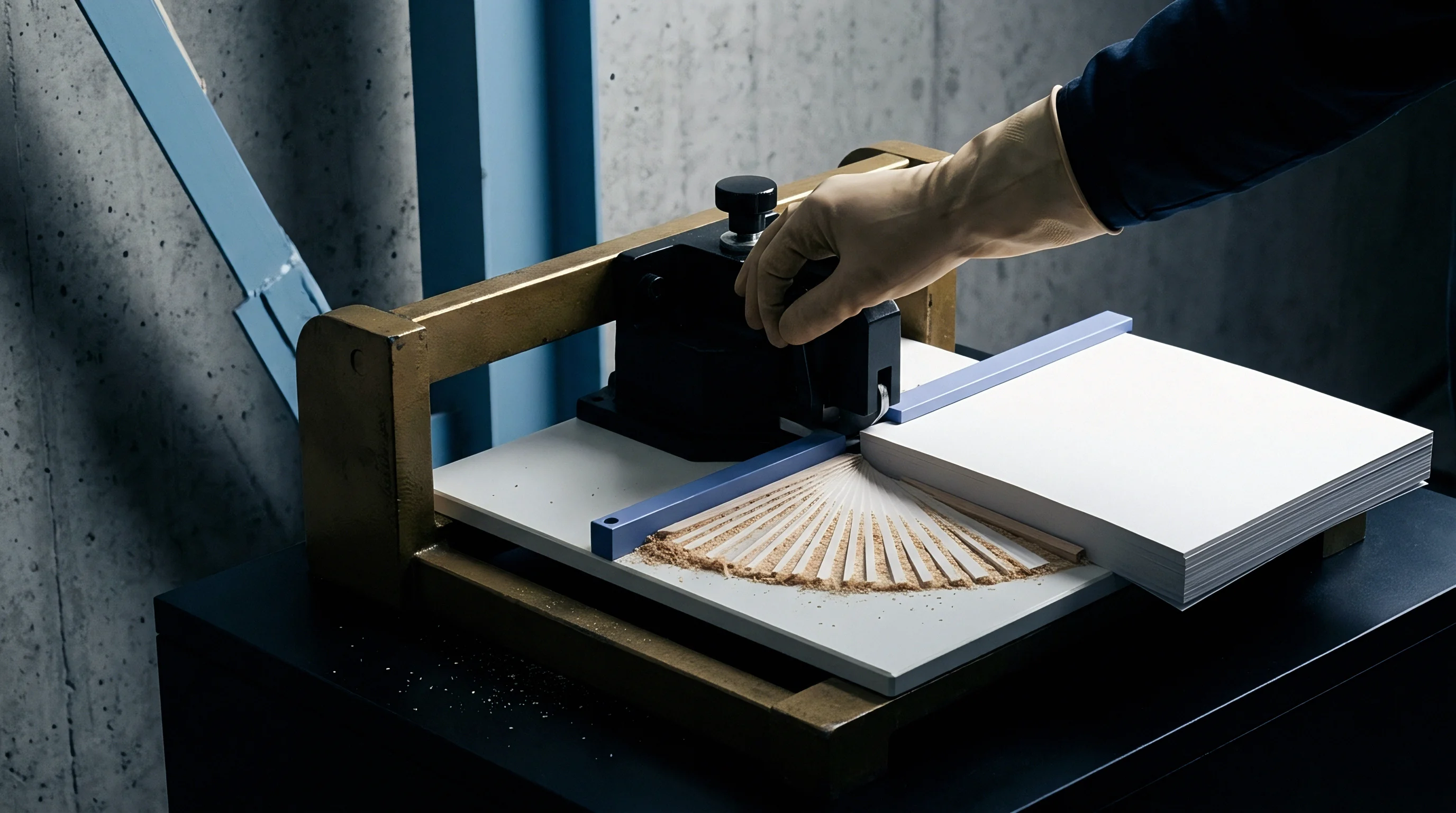
Excessive wrap angles or aggressive breaker radii generate inter-ply delamination. When shear stress across internal boundaries exceeds the z-directional bond strength of recycled filler plies, the board suffers irreversible internal structural failure that destroys bending stiffness before reaching die-cutting lines.
Flexure
Bending resistance in paperboard functions according to beam mechanics, where the outer liner plies handle maximum tensile and compressive stresses while the central core plies maintain structural separation between the outer faces. Bending stiffness scales with the third power of caliper when elastic modulus remains constant. Dual-axis decurling severely degrades this mechanical relationship by fracturing internal inter-fiber bonds and crushing the middle ply matrix.
Microstructural Fiber Bond Degradation
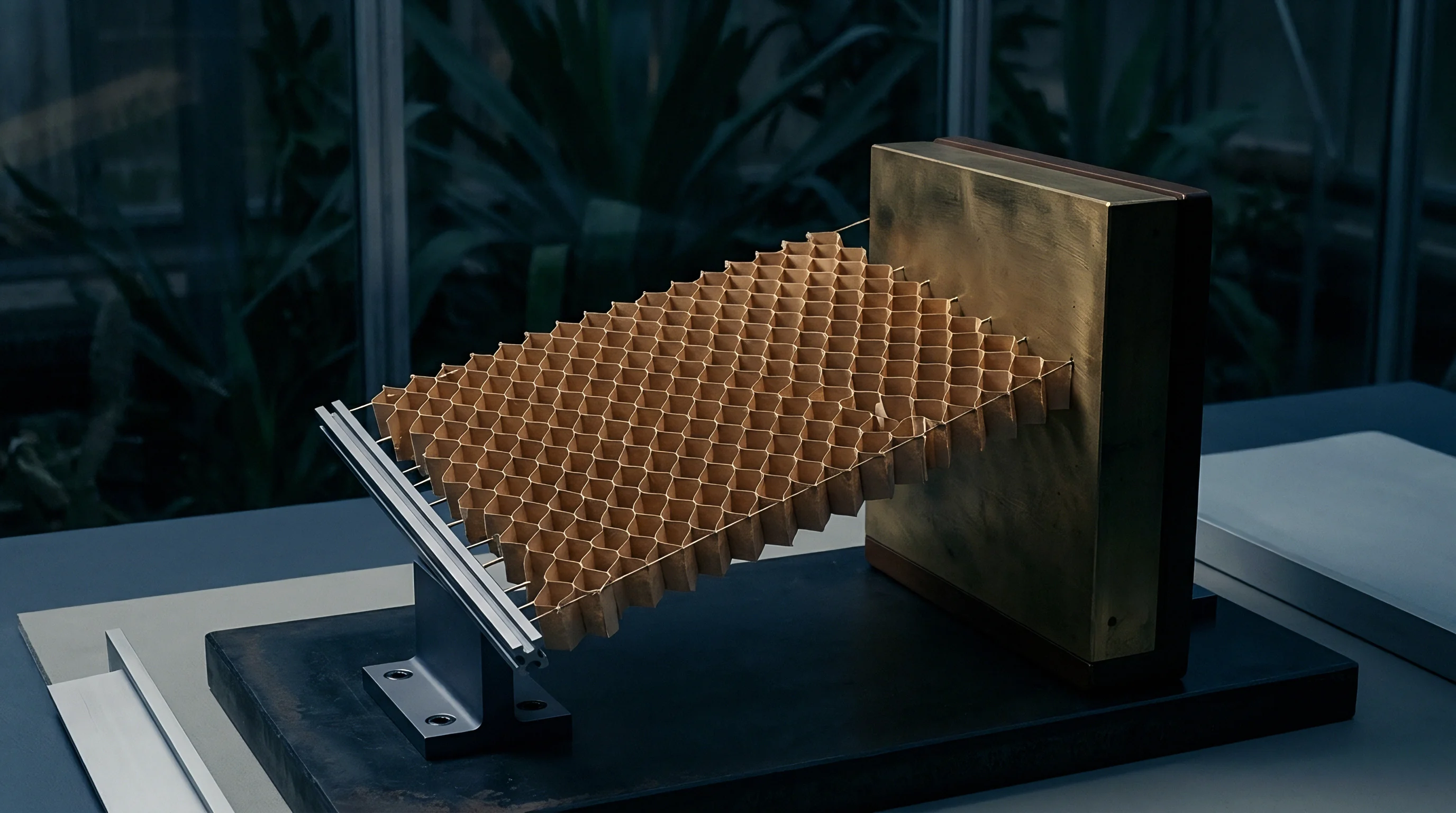
Reverse bending forces the board core through severe shear cycles. Short recycled fibers in the filler layers possess limited individual conformability and weak bonding area. Over-straining these layers disrupts hydrogen bonds, creating micro-voids and local ply separation along the mid-plane of the board structure.
Elastic modulus drops rapidly following mechanical decurling. While the board surface appears flat to the naked eye, the internal elastic core loses its capacity to transfer shear stress between top and bottom liners. Under load, the degraded board demonstrates premature buckling during scoring and folding operations.
Planar flatness achieved by mechanical fiber bond destruction yields flat sheets that fail under vertical stacking loads.

Can Decurling Parameters Preserve Structural Stiffness?
Balancing web tension against decurling bar radii limits microstructural damage to acceptable engineering thresholds. Process trials demonstrate that small bar diameters paired with low wrap angles concentrate plastic strain in the outer five percent of the caliper thickness, preserving core integrity.
Higher web tension coupled with large bar radii distributes shear strain deeply into the recycled filler plies, causing widespread stiffness loss. Operators setting up finishing lines must minimize total wrap angle on dual-axis units to protect cross-direction bending resistance.
Consider a 450 gsm coated recycled board with an initial caliper of 580 micrometers, exhibiting an un-decurled Taber 15-degree bending resistance of 28.5 mN·m in the machine direction and 13.2 mN·m in the cross-direction. The board is processed through a high-intensity dual-axis decurling station operating at a 10 mm bar radius and 90-degree wrap angle.
Assumed parameter variations and resulting physical changes:
- Initial Caliper 580 micrometers drops to 562 micrometers due to physical core compression across nip stations.
- Effective Caliper Loss 3.1 percent caliper reduction results in a theoretical 9.0 percent loss in bending stiffness based on cubic caliper proportioning.
- Elastic Modulus Retention Internal micro-delamination reduces the effective core shear modulus by 14.5 percent.
- Final Machine Direction Bending Resistance Measured Taber value drops from 28.5 mN·m to 23.1 mN·m, representing an overall 18.9 percent loss in stiffness.
- Final Cross Direction Bending Resistance Measured Taber value drops from 13.2 mN·m to 10.1 mN·m, representing a 23.5 percent loss in stiffness.
- Top-Load Box Compression Impact Calculated box compression strength decreases by 11.2 percent based on McKee formula predictions.
Processing recycled board through aggressive dual-axis decurling units permanently degrades the structural performance of converted packaging. Line operators who over-decurl to eliminate cosmetic sheet curl deliver visually flat blanks that lack the flexural rigidity necessary to meet top-load warehouse specification limits.
Excessive mechanical decurling turns rigid paperboard into a flexible, compromised web.

Assay
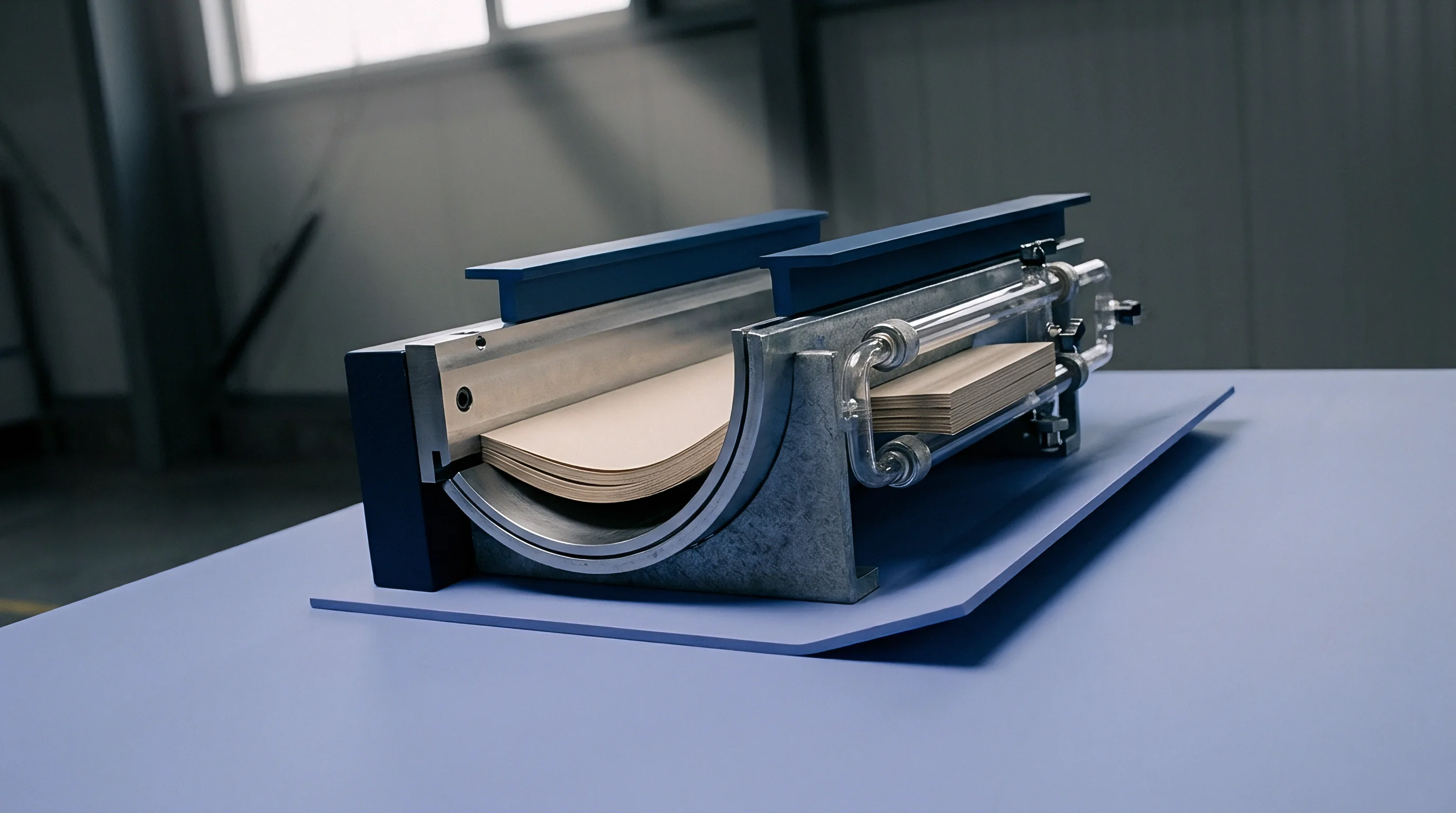
Evaluating decurling damage requires precise laboratory measurement under standardized atmospheric conditions. Testing un-decurled samples against post-decurl production sheets highlights the degradation of structural integrity. Testing must follow ISO 187 conditioning protocols at 23 degrees Celsius and 50 percent relative humidity, as moisture content changes skew bending resistance data.

Standardized Bending Resistance Measurement
Bending stiffness evaluation relies on standardized instruments such as L&W 15-degree testers or Taber V-5 instruments operating under ISO 2493 guidelines. Standard 15-degree deflection tests isolate the initial elastic response of the board, capturing the direct effect of core ply delamination. Comparative measurements reveal that cross-direction stiffness suffers greater percentage losses than machine-direction stiffness under dual-axis treatment.
| Grade | Basis Weight (gsm) | Test Standard | Pre-Decurl MD/CD (mN·m) | Post-Decurl MD/CD (mN·m) | Stiffness Loss (%) |
|---|---|---|---|---|---|
| CRB GD2 | 350 | ISO 2493-2 (Taber 15°) | 14.2 / 6.1 | 11.8 / 4.8 | 16.9 / 21.3 |
| CRB GT2 | 400 | ISO 2493-2 (Taber 15°) | 21.5 / 9.4 | 18.1 / 7.6 | 15.8 / 19.1 |
| Triplex Recycled | 450 | ISO 2493-1 (L&W 15°) | 450 / 210 (mN) | 385 / 170 (mN) | 14.4 / 19.0 |
| Kraft Back Recycled | 300 | ISO 2493-1 (L&W 15°) | 220 / 95 (mN) | 192 / 79 (mN) | 12.7 / 16.8 |
Nondestructive Shear Modulus Profiling
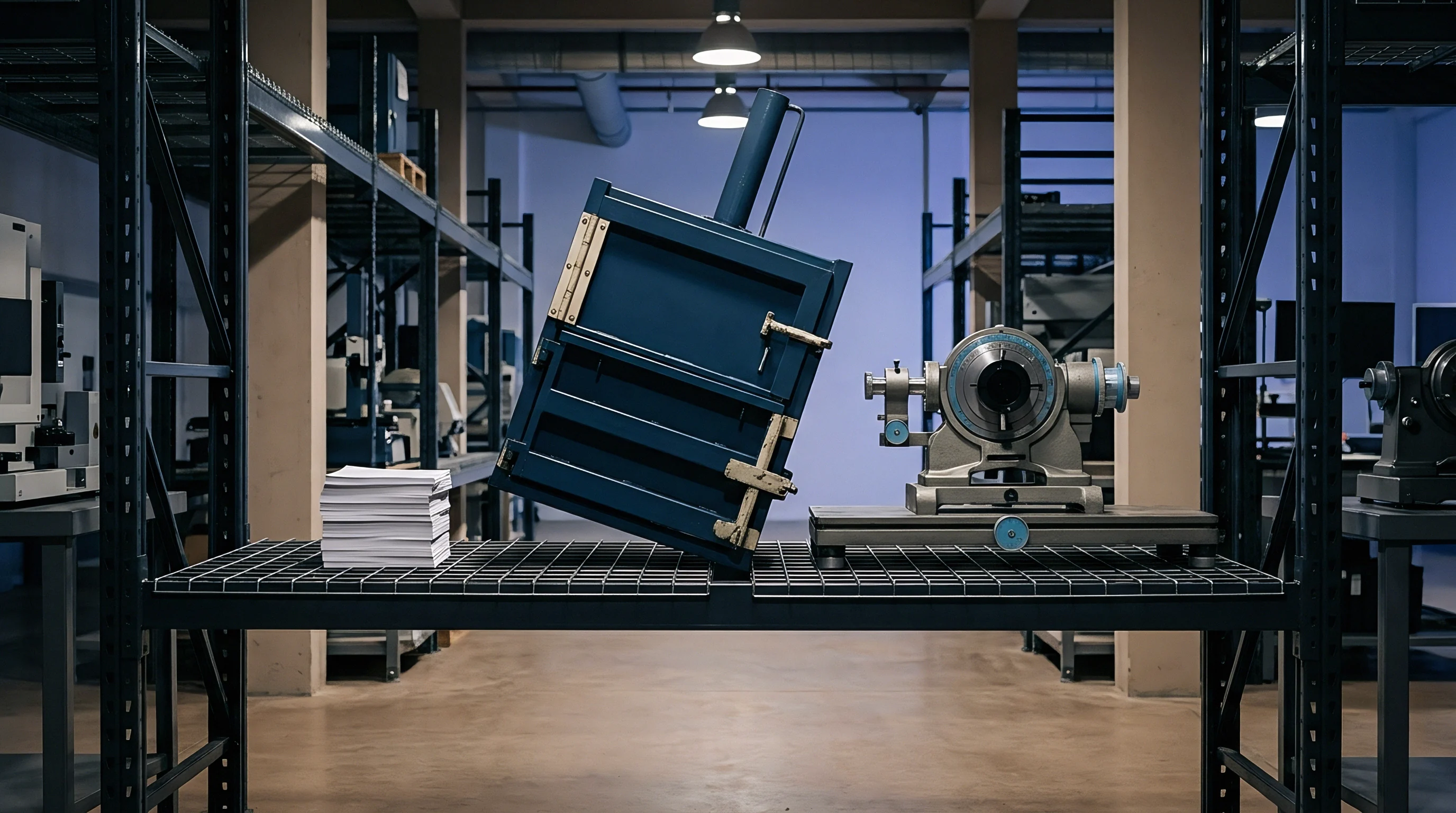
Ultrasonic testing provides rapid assessment of internal fiber structure damage without destruction of the test piece. Tensile Stiffness Index measurements along machine and cross directions determine the directional stiffness anisotropy of the sheet. Ultrasonic wave propagation speed drops significantly when sound encounters micro-voids created by core delamination during decurling.
Ultrasonic velocity attenuation across cross-machine samples directly correlates with the density of ruptured hydrogen bonds in internal filler plies.
Setting decurling parameters without compromising physical board specifications requires a strict qualification sequence on production equipment.
- Baseline Curl Measurement Measure initial un-decurled sheet curvature across three samples across the web width using ISO 11093-9 curvature metrics.
- Minimal Tension Setup Set web tension to the lowest stable running value that maintains web tracking through finishing nips.
- Incremental Radius Selection Select the largest available decurling bar radius that achieves acceptable sheet flatness at nominal line speed.
- Destructive Flexure Auditing Pull post-decurl samples every three thousand sheets and verify L&W bending resistance against baseline figures.
- Delamination Strain Limit Discontinue wrap angle escalation if CD bending resistance drops more than twelve percent below baseline values.
Purchase contracts carrying explicit ISO 2493 compliance provisions require certified bending resistance limits to be met after all finishing passes, invalidating mill certificates that document properties prior to converting line decurling.

Toll
Compensating for stiffness losses caused by aggressive decurling increases total converting and raw material expenditure. Box plants frequently increase board basis weight to offset stiffness degradation, moving from 350 gsm to 400 gsm grades to maintain required carton top-load performance. This strategy raises tonnage costs while failing to address the root cause of mechanical core destruction.

Yield Loss and Grammage Compensation Mechanics
Increasing board caliper to mask decurling damage penalizes job yields. Moving up one grammage step reduces sheet yield per tonne by eleven to fourteen percent, driving up unit costs on long volume runs. Precision control of decurling geometry avoids this material surcharge.
| Strategy | Board Grade | Yield (sheets/tonne) | Raw Material Cost (€/k sheets) | Top-Load Margin (%) | Line Spoilage (%) |
|---|---|---|---|---|---|
| Grammage Step-Up | 400 gsm CRB | 3,570 | 336.10 | + 4.2 | 2.1 |
| Standard Decurl (Aggressive) | 350 gsm CRB | 4,080 | 294.10 | – 11.5 | 6.8 |
| Precision Dual-Axis Control | 350 gsm CRB | 4,080 | 294.10 | + 1.8 | 1.2 |
High-speed cartoning machines reject packaging blanks with diminished CD bending resistance. Blanks lacking flexural rigidity buckle under folder-gluer pushers, creating jam-ups that stop packaging lines. Downstream customer claims for line stoppages far exceed the cost of calibrating finishing line decurling units.
Waste arithmetic proves that optimizing decurler geometry saves significant capital across annual production runs. Operating with precise wrap angles and larger breaker radii preserves fiber matrix integrity, delivering flat, rigid recycled board that satisfies structural top-load mandates and high-speed converting demands.