Evaluating Pulp Yield Losses from Extrusion Coated Board in Industrial Hydro-Pulpers
Polyethylene-coated board yields drop 8 to 22 percent in industrial pulpers as unseparated fiber bundles exit screens bound to rejected plastic film.

Furnish
Polyethylene extrusion-coated board brings an engineered barrier into contact with industrial hydropulper water, presenting an immediate physical obstacle to fiber rehydration. Mill procurement contracts frequently buy liquid packaging board or single-sided polycup stock on gross weight delivered. When calculating raw material intake, treating gross tonnage as pulp equivalent creates an instant operating deficit.
The polymer film, applied at coating weights between 12 and 35 grams per square meter, contributes dead mass while preventing the rotor shear field from contacting the underlying cellulose uniformly across the sheet profile.
Cellulose rehydration requires water penetration through open edges, capillary channels, and unlaminated surfaces. In standard unprinted uncoated bleached kraft board, fiber separation occurs within 8 to 12 minutes under low consistency operation at 4 to 6 percent solids. Double-sided polyethylene coatings restrict liquid ingress entirely to raw sheared trim edges.
The pulper rotor cannot tear the sheet into individual fibers until the liquid boundary layer manages to seep into the internal fiber matrix, swelling the fiber network and weakening the hydrogen bonding between plies.
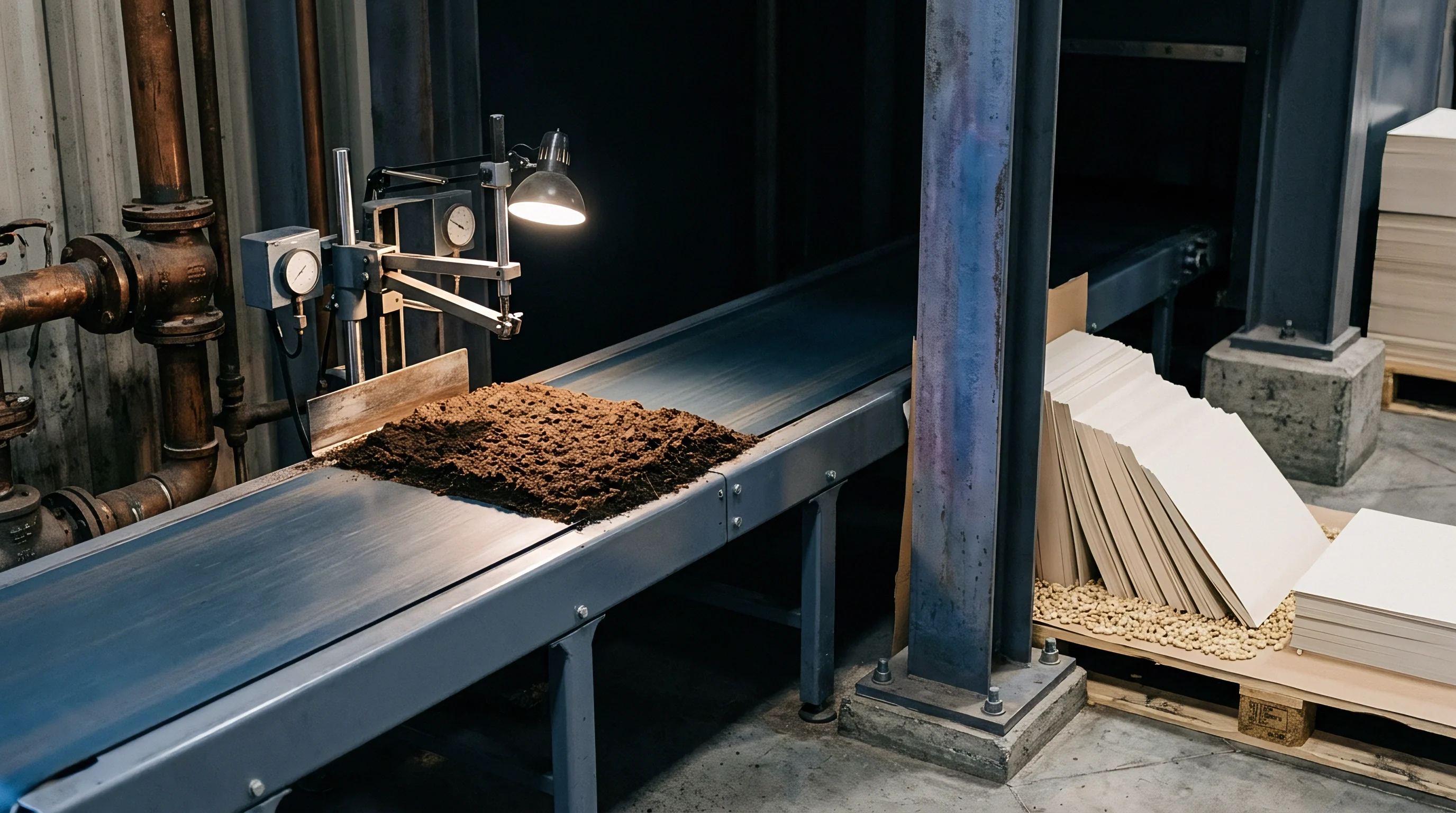
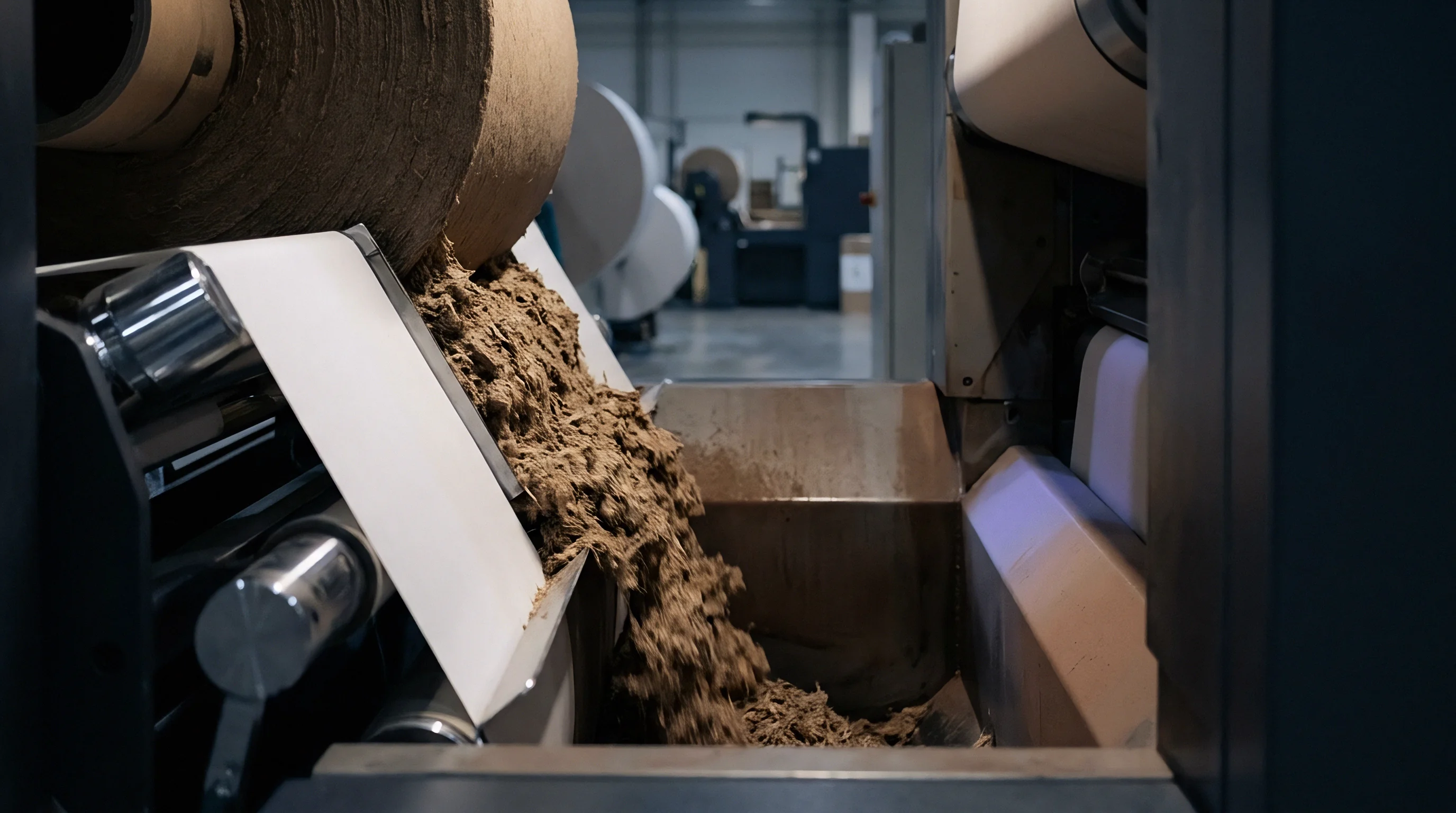
Unseparated fiber remains adhered directly to the non-polar polyolefin sheet. When the mass leaves the extraction zone, large sheets of film carry substantial coats of intact cellulose flakes straight into the coarse reject line. In continuous hydropulpers equipped with extraction plates carrying holes between 8 and 12 millimeters, unseparated flakes stay pinned to plastic skins and exit via the ragger or junk trap.
Yield loss includes the mass of the extruded synthetic polymer alongside this captive, unrecovered virgin fiber stock.
Coated board furnishes consistently surrender between 8 and 22 percent of their initial fiber mass directly to the coarse reject stream as unpulped flakes.
Virgin chemical pulp represents the high-value component within extrusion-coated packaging grades. The bleached sulphate furnish typically exhibits initial Canadian Standard Freeness values exceeding 450 milliliters and retains high individual fiber strength. Losing these long, intact pine or birch fibers to landfill or incineration incinerates operating margins.
The financial penalty scales directly with the difference between the landed cost per ton of clean virgin pulp and the disposal cost of wet, fiber-laden polymer refuse.
Mills running virgin folding boxboard conversion trims face less resistance than mills repulping post-consumer beverage cartons. Internal converting trim exhibits raw edges with dry fiber networks ready for capillary uptake. Post-consumer containers have endured compressed wet storage, internal crease lines, and potential exposure to microbiological contamination that complicates wetting kinetics.
Both material streams demand specific rotor designs and extended residence profiles to liberate fiber without pulverizing the polyethylene barrier into fine debris.
Mechanical fragmentation of the polymer layer dictates the absolute operational boundary of the pulping cycle. Running an aggressive helical rotor at high rotational speeds forces wetting through kinetic impact, yet tears the plastic film into fragments small enough to pass the coarse extraction plate. Polyethylene particles under 2 millimeters cannot be cleared cleanly by pressure screens, resulting in polymer carryover into the formation section of the paper machine.
The mill operator balances fiber recovery against the economic threat of polymer dirt specks inside the final re-formed paper sheet.
Rotor
Rotor tip velocity and tub consistency dictate the shear field required to strip cellulose from the plastic barrier. Low consistency pulping, operated between 4 and 6 percent solids, utilizes a high-profile V-rotor or helical impeller to drive velocity gradients across static tub baffles. High consistency hydropulpers operate between 12 and 18 percent solids, transferring mechanical energy via direct fiber-to-fiber friction under lower rotational velocities.
In both mechanical configurations, detachment requires the local hydraulic shear stress to exceed the adhesive peel strength of the extruded polymer layer.
Extrusion coating forms a mechanical anchor into the surface topology of the paperboard. Molten polyethylene, forced against the paper web at temperatures between 280 and 320 degrees Celsius under a chilled steel nip roll, penetrates open surface pores. It mechanically locks around superficial fibers.
Hydrodynamic pulping action fails to peel this polymer cleanly if the surrounding cellulose remains dry. Water must diffuse through the unlaminated reverse side of the board to weaken fiber-to-fiber bonds immediately adjacent to the resin interface. The rotor must produce gentle hydraulic washing rather than brutal impact cutting.
| Process Regime | Tub Consistency | Rotor Tip Speed | Tub Temperature | Mean Retention | Rejects Plastic Fraction |
|---|---|---|---|---|---|
| Low Consistency Batch | 4.5 to 5.5 percent | 16 to 19 m/s | 45 to 55 deg C | 25 to 40 min | 42 to 58 percent |
| Low Consistency Continuous | 3.5 to 4.5 percent | 14 to 17 m/s | 40 to 50 deg C | 15 to 25 min | 28 to 44 percent |
| High Consistency Batch | 13.0 to 16.0 percent | 4.5 to 7.0 m/s | 50 to 65 deg C | 30 to 55 min | 60 to 76 percent |
| Drum Pulper Continuous | 14.0 to 18.0 percent | 1.8 to 2.4 m/s | 55 to 65 deg C | 20 to 35 min | 68 to 82 percent |
| Data observed under mechanical defibering of 18 gsm single-side low density polyethylene coated bleached kraft board. Rejects plastic fraction indicates polymer purity on a bone-dry basis exiting the primary coarse separation device. | |||||
High consistency batch pulpers deliver superior fiber detachment while preserving large film sizes. The dense stock forms a high-viscosity mass where fibers rub past each other under the sweeping action of a broad helical screw. This frictional attrition rolls the plastic film back upon itself, stripping off attached fibers without introducing high-velocity metal impacts.
The separated polymer sheets remain large, frequently exceeding 25 square centimeters, enabling nearly complete capture on downstream coarse vibrating screens.
Continuous low consistency hydropulpers frequently sacrifice yield to maintain plant throughput. Because stock exits continuously through bottom extraction plates, retention time follows a broad exponential distribution. An incoming portion of coated board escapes through the extraction holes minutes after addition, bearing thick layers of intact fiber flakes.
The mill must route these heavy flakes through secondary deflakers, screen reject sorters, or secondary pulping systems to prevent massive yield rejection at the primary stages.
Operating temperature alters this separation boundary. Elevated temperatures between 50 and 65 degrees Celsius accelerate water penetration into the core board plies and drop water surface tension. Temperatures exceeding 70 degrees Celsius soften low-density polyethylene films, shifting their mechanical behavior from elastic stiffness to ductile compliance.
Softened films drape and wrap over rotor edges or extrude through extraction plates under pressure. This causes plate blinding, alters hydraulic flow paths, and introduces microscopic polymer contamination into downstream accepts.
Chemical aids can shorten pulping cycles. Wetting agents and non-ionic surfactants lower interfacial tension, driving process water rapidly into tightly wound trim cuts. Sodium hydroxide additions between 0.5 and 1.5 percent on dry fiber swell the cellulose network by converting hydroxyl groups into alcoholates, increasing hydration volume and forcing physical separation from the inert polyethylene skin.
Alkali darkening remains a risk for bleached packaging grades. Adding alkali also mandates downstream pH neutralization before the refined stock reaches the forming wire.
A simple field assessment tracks reject cleanliness. Grabbing a handful of rejects off the primary screen and squeezing reveals whether the discarded film feels greasy or stiff. A thick, white, spongy coating across the surface demonstrates that the hydropulper surrendered valuable virgin fiber straight to the refuse skip.
Screening
Coarse screening defines the boundary where pulp yield loss becomes irreversible. Industrial recovery systems rely on multistage separation loops consisting of primary perforated screens, secondary slotted pressure screens, and reject sorters to strip residual fibers from polymer films. Slurry entering the screening line carries a mixture of isolated cellulose fibers, unpulped board flakes, suspended plastic film fragments, and hybrid composite particles.
Every fraction rejected from this screening chain carries fiber across the system boundary directly to waste handling.
Separation efficiency hinges on screen basket geometry and pressure drop across the barrier. Primary coarse screening typically employs perforated screen plates featuring round holes between 1.6 and 2.4 millimeters in diameter. Slotted screens installed in secondary stages use narrow apertures between 0.15 and 0.25 millimeters.
Slotted baskets separate contaminants by shape and stiffness rather than sheer envelope size. Highly flexible polyethylene film fragments orient parallel to flow streamlines and pass narrow slots under high pressure differentials, entering the accepted stock loop.
Operators frequently increase reject rates on pressure screens to prevent slot plugging from accumulating film fragments. Raising the reject volumetric flow rate from 10 percent to 25 percent protects screen operation and maintains accept cleanliness. This operational choice flushes massive quantities of good, spinnable cellulose down the reject stream unless robust tertiary recovery stages run in continuous closed-circuit balance.
Without dedicated tailing screens, operational stability is bought directly at the cost of fiber recovery.
Standard ISO 5263 wet disintegration methods consistently underestimate industrial flake losses by providing infinite wetting dwell without screen-slot reject purges.
A typical three-stage screening loop relies on specific mechanical units to balance fiber recovery against final furnish cleanliness:
- Primary Hole Screens clear massive macrocontaminants, intact polymer sheets, and heavy debris using continuous reject bleeding to prevent plate blockage.
- Secondary Slotted Screens isolate smaller film particles down to 0.15-millimeter profiles while operating under controlled rotor pulse frequencies to minimize flake acceptance.
- Reject Sorter Trommels wash captive fiber free from heavy polymer reject masses via continuous high-pressure dilution showers and internal tumbling vanes.
- Tertiary Vibrating Screens catch final oversized solids, returning washed, recovered fiber accepts back into the hydropulper charging well.
Tail-end reject washing dictates total fiber loss. When polymer films emerge from the primary and secondary screens, they enter vibrating screens, rotating dewatering trommels, or screw presses. If wash water spray nozzles plug, or if wash residence time inside the trommel falls below 45 seconds, wet fiber bundles cling tenaciously to the discharged plastic surfaces.
Fiber recovery requires vigorous water shearing to peel wet, softened cellulose flakes away from the hydrophobic polyethylene substrate before dewatering forces bind them together again.
Dewatering presses introduce an additional point of yield loss. Discharged reject streams pass through twin-wire or screw presses to elevate solids content from 4 percent to over 50 percent for economical transport to disposal facilities. High mechanical pressures squeeze cellulose fines and fragmented short fibers straight through the press filter fabric alongside the expressed white water.
If this press filtrate returns to dirty pulper charging lines, recovery is maintained; if routed to effluent treatment plants, that fiber fraction registers as immediate yield loss.
Mills processing wet-strength treated board face compounded screening losses. Liquid packaging board routinely contains polyamide-epichlorohydrin resins added at the wet end during base board manufacturing. These resins crosslink under heat to form water-insoluble covalent bonds between cellulose fibers, arresting fiber release even after the plastic barrier is peeled.
The unpulped flakes mimic small plastic sheets, floating over screen slots and exiting alongside polyethylene debris. Overcoming wet strength demands high thermal energy or chemical oxidation, both of which introduce substantial operational costs.
Measurement
Are Laboratory Methods Predicting Industrial Reject Rates?
Determining true pulp yield begins by measuring raw material moisture and coating content before the hydropulper charge. Bales of extrusion-coated converting scrap or post-consumer board carry variable moisture levels and diverse coating grammages. Laboratory sampling under ISO 187 standard atmosphere establishes baseline equilibrium moisture.
Subtracting the mass of the non-fibrous coating layers, determined by gravimetric dissolution or dry-peel separation under solvent exposure, sets the theoretical maximum fiber content present within the raw incoming furnish.
Testing laboratory pulping yield typically relies on standardized procedures such as the PTS method RH 021/97 or the CEPI European Harmonised Recyclability Test Scheme. In these standard procedures, a disintegrated board sample passes through a laboratory Somerville fractionator equipped with 0.15-millimeter slots. Material retained on the screen plate is classified as unpulped flakes, while the accepted fraction represents usable pulp.
The laboratory flake content percentage reflects unliberated fiber, providing a baseline metric for recyclability evaluations.
| Fraction Stream | Mass Share of Raw Stock | Fiber Share (Dry Basis) | Polymer Share (Dry Basis) | Ash and Filler Share |
|---|---|---|---|---|
| Furnish Input Total | 100.0 percent | 84.5 percent | 13.5 percent | 2.0 percent |
| Primary Pulper Ragger/Junk | 4.5 percent | 1.2 percent | 3.2 percent | 0.1 percent |
| Coarse Screen Rejects | 16.2 percent | 7.8 percent | 8.1 percent | 0.3 percent |
| Fine Screen Reject Purge | 3.1 percent | 1.4 percent | 1.5 percent | 0.2 percent |
| Effluent Sludge (Fines/Ash) | 2.8 percent | 1.9 percent | 0.1 percent | 0.8 percent |
| Accepted Clean Pulp Yield | 73.4 percent | 72.2 percent | 0.6 percent | 0.6 percent |
Discrepancies arise between controlled laboratory fractionation and industrial pulper performance. Industrial hydro-pulpers operate under strict time, energy, and throughput constraints. A laboratory Somerville test disintegrates board for up to twenty minutes with zero throughput limits, achieving comprehensive fiber detachment that mill production cycles cannot commercially justify.
Field recovery loops drop continuous furnish into secondary systems where hydrodynamic forces differ radically from static laboratory screens.
The true mass balance of an industrial hydropulper installation is established through rigorous gravimetric field sampling across every input and output stream:
- Bale intake mass is recorded and adjusted for core moisture content and gross polyolefin coating weight.
- Coarse reject discharge streams undergo quantitative flow measurement and continuous collection over a complete processing cycle.
- Sample cakes collected from reject dewatering presses are dried at 105 degrees Celsius until mass stabilization to determine total dry solids output.
- Dried reject solids undergo Soxhlet solvent extraction with hot toluene to dissolve and separate the polyethylene fraction from residual cellulose.
- Residual non-soluble organic matter is washed, dried, and weighed to identify captive fiber flake mass lost to rejects.
- Muffled combustion at 525 degrees Celsius according to ISO 1762 determines inorganic filler and coating ash mass.
- Accepted pulp slurry flow volume and consistency are continuously integrated at the machine storage chest inlet.
Failure to measure reject composition leads to profound accounting errors. A mill might report a gross mechanical pulper yield of 80 percent, assuming the missing 20 percent comprises entirely discarded polyethylene and moisture. Chemical extraction of that reject stream often reveals that over 40 percent of the discarded dry cake consists of high-quality cellulose fiber locked to plastic.
The actual cellulose recovery yield in such a scenario sits under 73 percent of the incoming furnish potential.
Variations in base board internal sizing further complicate mass balance calculations. Boards treated with high levels of alkyl ketene dimer or rosin sizing resist moisture penetration, shifting the fiber detachment curve. Without running continuous consistency checks and reject chemical extractions across multiple production shifts, mill procurement teams miscalculate net fiber acquisition costs, overpaying for poor-yielding secondary furnish lots.
The supplier will maintain that the furnish delivers an eighty-five percent usable fiber yield whenever standard laboratory beater tests confirm clean separation on a single hand sheet.
Yield
The economic impact of unrecovered fiber scales with furnish throughput. Consider an industrial folding carton or tissue mill running a hydropulper line fed with 100 metric tons per day of poly-coated kraft board scrap. The incoming material carries a certified composition of 85 percent virgin bleached chemical pulp, 12 percent low-density polyethylene film, and 3 percent moisture and mineral fillers.
The theoretical maximum recoverable fiber total equals exactly 85 metric tons of bone-dry cellulose per operating day.
A poorly managed continuous pulping cycle, operating with cold white water at 25 degrees Celsius and a brief 18-minute retention time, typically yields 18 metric tons of dry reject cake per 100 tons of furnish. Analytical solvent separation demonstrates that this dry reject cake consists of 52 percent polyolefin film and 48 percent unseparated fiber flakes. Daily captive fiber loss to the refuse stream reaches 8.64 metric tons.
An additional 2.5 metric tons of fine fiber fragments and dissolved organics escape through washing filtrates into the mill wastewater plant.
Net accepted fiber delivered to the paper machine chest settles at 73.86 metric tons daily. Gross fiber recovery efficiency hits 86.9 percent of available cellulose, resulting in an absolute raw material yield loss of 11.14 tons of virgin pulp every single day. At a conservative market valuation of 850 dollars per metric ton for prime bleached softwood kraft pulp, unpulped fiber loss bleeds 9,469 dollars per operating day straight into the landfill reject bin.
Landfill and incineration disposal costs compound these balance losses. Wet reject cakes from processing poly-coated board carry significant absorbed water, typically exiting dewatering presses at 45 to 50 percent moisture. The mill must pay freight and gate fees on roughly 36 metric tons of wet waste daily per 100 tons of processed furnish.
Landfill tipping charges averaging 80 dollars per ton add an extra operational penalty of 2,880 dollars per day, driven heavily by captive water locked within unrecovered cellulose flakes.
| Parameter | Cold Low-Consistency | Heated Low-Consistency | High-Consistency Batch | High-Consistency Drum |
|---|---|---|---|---|
| Tub Water Temperature | 25 deg C | 50 deg C | 55 deg C | 60 deg C |
| Consistency Profile | 4.5 percent | 4.5 percent | 14.0 percent | 16.5 percent |
| Daily Virgin Fiber Losses | 11.14 tons | 6.20 tons | 3.15 tons | 1.85 tons |
| Daily Fiber Financial Loss | $9,469 | $5,270 | $2,677 | $1,572 |
| Wet Rejects Mass to Landfill | 36.2 tons | 24.8 tons | 18.4 tons | 15.2 tons |
| Daily Reject Disposal Cost | $2,896 | $1,984 | $1,472 | $1,216 |
| Net Added Energy Cost | $0 | $1,420 | $1,180 | $940 |
| Total Daily Operating Penalty | $12,365 | $8,674 | $5,329 | $3,728 |
Upgrading to high-consistency batch repulping or continuous rotary drum pulping drastically shifts the economic ledger. Elevating tub consistency to 14 percent and applying waste heat to hit 55 degrees Celsius cuts daily captive fiber loss from 11.14 tons down to 3.15 tons. Daily fiber savings total 7.99 tons, retaining 6,792 dollars worth of stock in the accepts chest.
Deducting the thermal and mechanical energy expenses needed to heat and stir the high-consistency mass, which roughly totals 1,180 dollars daily, nets the operation over 5,600 dollars in daily financial improvement.
Modulated extended producer responsibility fees penalize low-yield recycling systems across international packaging jurisdictions. Regulatory bodies penalize fiber packaging formats yielding less than 80 percent clean pulp during certified recyclability audits. Packaging converters face escalating placement fees when independent test labs document high flake reject rates.
Maximizing hydropulper fiber liberation directly preserves customer accounts and lowers regulatory cost liabilities across the supply chain.
The operational divide hinges on whether the mill ledger prices secondary raw material purely by purchase price per gross ton or correctly balances it against net recovered fiber yield after screen reject accounting.
Pockets
Industrial repulping leaves a critical structural challenge unresolved: microscopic air pockets and internal ply interfaces insulate the polymer-cellulose boundary from uniform wetting during short cycle times. Extruded polyethylene does not coat a paperboard sheet as a detached, planar barrier; it forms a jagged composite interface with cellulose fibrils penetrating deep into the polymer matrix. When board fragments undergo hydraulic shear, water enters micro-cracks along score lines and sheared cut edges, yet trapped air inside internal voids prevents liquid contact along hydrophobic interfaces.
Rotational cavitation can force water into these micro-pockets, but high-energy cavitation disintegrates low-density polyethylene into microplastic specks. High consistency pulpers avoid cavitation by relying on frictional kneading, but kneading requires significant dwell time to allow capillary forces to displace trapped air pockets across laminated edges. In fast-cycle containerboard and recycled paperboard mills, pulper dwell time is compressed to optimize machine hourly production rates, intentionally leaving captive unpulped fiber attached to the rejected polymer matrix.
The industry remains divided on whether mechanical reject deflaking or thermomechanical secondary sorting offers the best route to recover this interfacial fiber without contaminating clean pulp streams with micro-shredded polyolefin fragments. Slotted screen rejects can be routed to high-speed deflakers running narrow clearance bars, but the extreme shear forces inevitably reduce brittle plastic films down to small chips that easily evade downstream fine slotted screens. Alternatively, routing coarse rejects to pressurized thermal digestion units consumes unsustainable volumes of plant steam, eroding the margin gained by liberating the retained virgin fiber.
Contractual furnish specifications regularly resolve this tension by inserting a mandatory moisture-and-reject adjustment clause that shifts the financial burden of unrecovered flakes back to the raw material broker.